

Tour Summary
Beijing is a city of strong geometry.
From the strict north–south axis of the Forbidden City to the angular forms of the CBD skyline, the capital offers powerful lines, layered rooftops, and shifting light throughout the day.
This photography-focused route is designed around light quality and visual contrast. You begin with imperial symmetry in the morning, move into lived-in hutong textures, and end with glass towers catching the sunset.
It’s structured for timing — not just sightseeing.
Route: Forbidden City → Jingshan Park → Lunch → Hutongs → Olympic Park → CBD Skyline
Duration: Full Day (8–9 hours)
Best For: Photography enthusiasts (amateur to advanced), content creators, architecture lovers
Travel Style: Visual exploration + strategic timing
Pace: Steady but Flexible (movement guided by light conditions)
Tour Itinerary
Morning light flatters the golden roofs of the Forbidden City. Midday is better suited to street textures in hutongs. Late afternoon and sunset belong to steel, glass, and skyline reflections.
The rhythm is intentional:
Imperial symmetry → Elevated panorama → Human-scale lanes → Monumental modern lines.
- Forbidden City and Jingshan Park are adjacent.
- Hutongs are nearby and walkable.
- Olympic Park and CBD require vehicle transfers.
- Sunset timing in the CBD may vary seasonally — flexibility helps.
- Advance ticket booking for the Forbidden City is essential.
Morning
Forbidden City
Arrive around 8:00 AM at
Forbidden City.
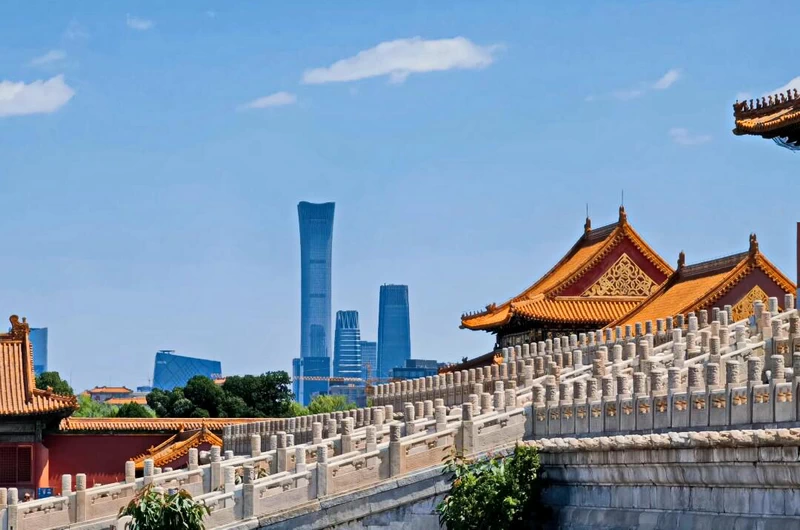
The Skyline of Forbidden City
Morning light enhances:
- Golden roof tiles
- Red palace walls
- Long symmetrical courtyards
- Layered doorways framing depth
This is where you focus on strong lines and central-axis composition.
If possible, position yourself slightly off-center at times — symmetry works, but subtle imbalance can add interest.
Allow 2–3 hours.
Jingshan Park – Elevated Perspective
Around 10:30 AM, walk north to
Jingshan Park.
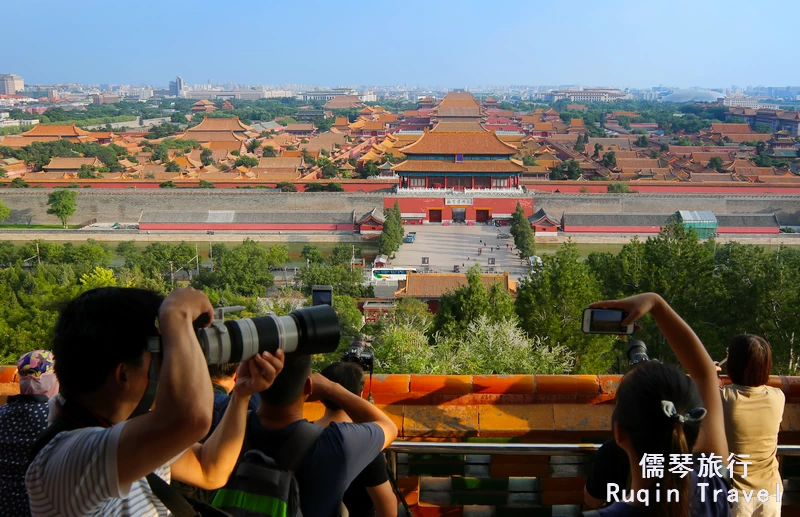
Taking Photos from the top of Jingshan Park
A short climb leads to one of Beijing’s most iconic panoramic views — the full spread of the Forbidden City rooftops.
Morning haze can affect clarity, so adjusting white balance and exposure is helpful.
Allow 45–60 minutes here.
Why this follows: It gives visual context after photographing interior courtyards.
Midday – Lunch & Photo Review
Around 12:00 PM, enjoy a relaxed lunch nearby.
This is a good moment to:
- Review morning shots
- Change batteries
- Switch lenses
- Adjust plans based on weather
Keep lunch light to maintain energy.
Afternoon
Hutongs – Human Texture
Around 1:30 PM, head into traditional hutong neighborhoods in Shichahai Area.
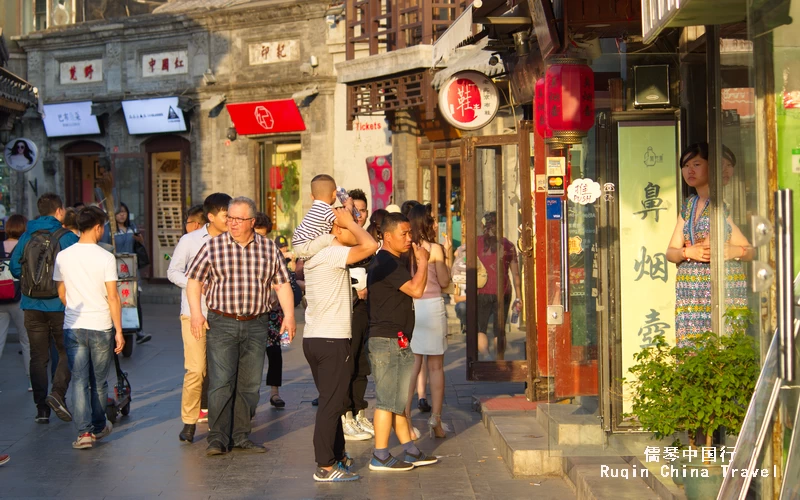
Yandai Xiejie at Shichahai
Unlike the grand symmetry of the palace, hutongs offer:
- Weathered brick textures
- Courtyard door details
- Bicycles against grey walls
- Everyday street moments
This is where patience matters. Watch for light falling into alley corners.
Street photography should always be respectful and unobtrusive.
Allow 1–1.5 hours.
Olympic Park – Architectural Scale
Around 3:00 PM, travel north to the Olympic Park.
Here you’ll photograph:
- Beijing National Stadium (Bird’s Nest)
- Beijing National Aquatics Center (Water Cube)
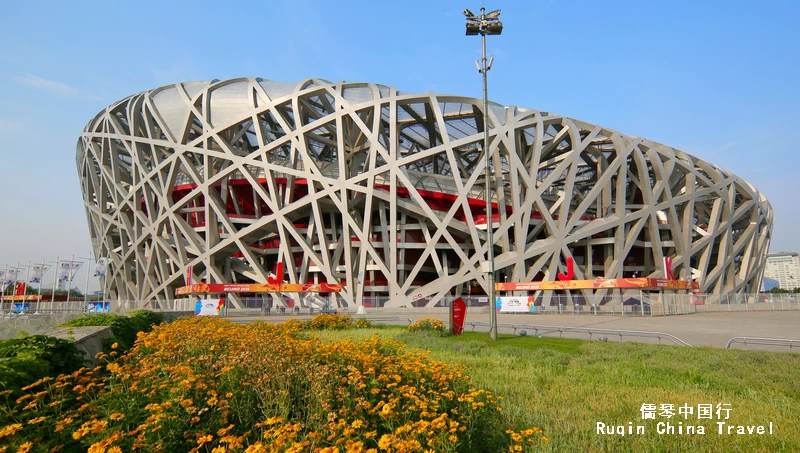
The modern architectural marvel – Bird’s Nest
The Bird’s Nest works well for:
- Pattern studies
- Steel lattice framing
- Reflections in water features
The Water Cube’s geometric facade is especially striking if skies are clear.
Allow about 1 hour.
Evening – CBD Skyline at Golden Hour
Arrive in the CBD around 5:00 PM.
Key landmarks include:
- CCTV Headquarters
- CITIC Tower (China Zun)
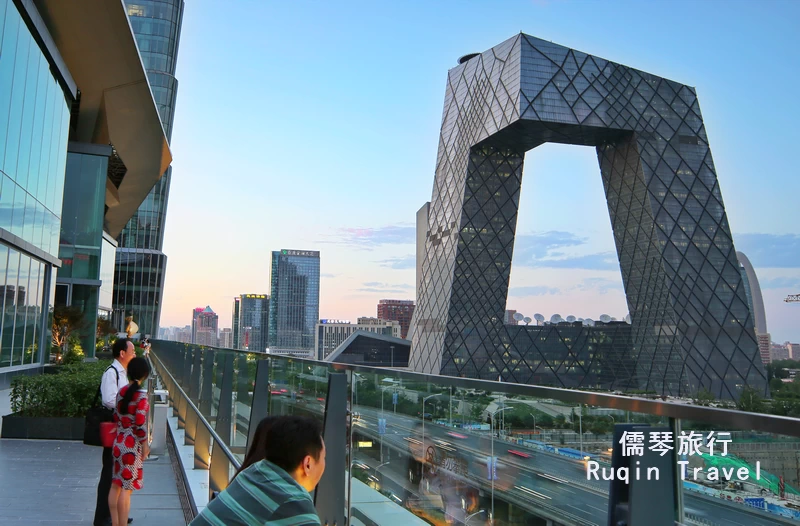
CCTV Headquarters
As the sun lowers, glass surfaces reflect warm tones. Blue hour — shortly after sunset — often produces the most balanced city-light shots.
Allow 45–60 minutes depending on season.
Why end here: Modern lines respond beautifully to changing light.
Practical Notes from Me
- Bring extra batteries and memory cards.
- A wide-angle lens works well for architecture; a mid-range zoom is ideal for hutongs.
- Tripods may be restricted in certain areas — check local rules.
- Air clarity varies seasonally; autumn and early winter often offer crisper skies.
- Start early — Beijing rewards morning discipline.
If you prefer, this route can also be adapted into:
- A sunrise-focused imperial shoot
- A night photography version
- A hutong-only storytelling day
- Or a drone-friendly location consultation (where permitted)
Beijing is visually structured. Once you begin noticing its lines and layers, the city becomes a composition exercise from morning to night.
Further Reading
How to Visit Forbidden City: Maps, Walking Routes and Travel Tips
How to Visit Jingshan Park: Tickets, Maps, Trails & Travel Tips
Beijing Bird’s Nest Stadium & Water Cube: All You Need to Know
Beijing Bird’s Nest Stadium & Water Cube: All You Need to Know
Questions About Planning Your Trip to China
If you still have questions after reading the guides, you’re very welcome to write to me.
I’ve helped many travelers think through routes, train connections, timing between cities, and the small details that make a trip smoother. If something feels unclear — or you’d simply like a second opinion — I’m happy to help.
Just use the short form below and tell me a little about your plan.
There’s no fee for a simple question. No pressure — just a practical reply based on real experience here in China.
If I’m traveling, replies may take a little time. Thank you for your patience.
We respect your privacy. Your details will never be shared or used for marketing.







Hi Howe,
Welcome to the allure of autumn in Beijing!
We suggest the following places for fall colours:
1. Beijing Urban Area
1) Summer Palace
2) Temple of Heaven
3) Beihai Park
4) Jingshan Park
5) Zhongshan Park
6) Fragrant Hiils Park
2. Great Wall:
Badaling. Mutianyu or Jinshanling Great Wall
3. Villages or Old Villages:
1) Cuandixia Village (爨底下村)
Around 90 kilometers west of Beijing
2) Liugou Village (柳沟村)
Around 50 kilometers from Beijing, near Yanqing District
3) Gubeikou Village (古北口村) Also Gubeikou Great Wall
Around 120 kilometers northeast of Beijing
4) Huanghuacheng Village (黄花城村) also Huanghuacheng Great Wall
Around 70 kilometers north from Beijing
5) Xiangshuihu Village (响水湖村) also Xiangshuihu Great Wall
Near the Mutianyu section of the Great Wall, about 60 kilometers from Beijing
6) Jingdong Shilinxia and Diaowo Village (京东石林峡)
About 100 kilometers northeast of Beijing
7) Gubei Water Town ( Simatai Great Wall )
about 120 km northeast of Beijing, a nice place for autumn hues.
Hope the above-mentioned places would be useful planning your photography tour of Beijing in Autumn.
Have a nice trip! Anything we can do just shoot them.