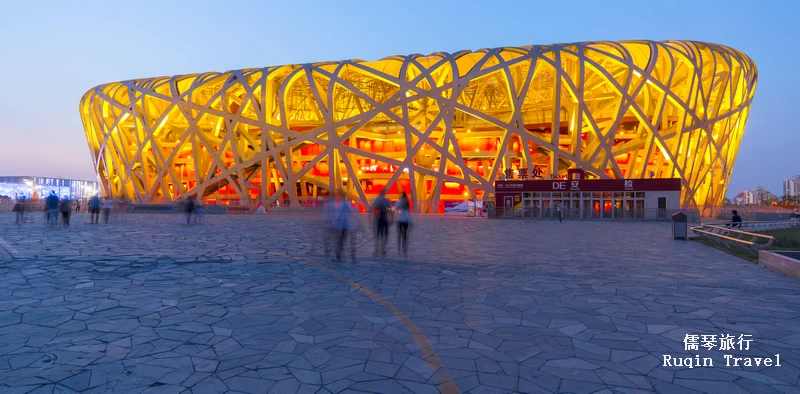

Written and updated by Ruqin
Last updated: April 08, 2026
I still remember stepping into Olympic Park just before sunset—the steel lattice of the Beijing National Stadium glowing warm, while the Beijing National Aquatics Centre slowly lit up in shifting blues. It didn’t feel like “just sightseeing.” It felt open, spacious, and surprisingly calm for such globally famous landmarks.
This Beijing Bird’s Nest Stadium & Water Cube Travel Guide is here to help you move through that space with ease—how to get there, whether to go inside, and how to time your visit so it actually feels worthwhile, not rushed.
1. How to Get There
The first time I went, I overthought it—and then realized it’s actually one of the easiest places in Beijing to reach. I took the subway, switched once, and suddenly emerged into a wide, open boulevard with the stadium already in sight.
The simplest route is on Line 8. Get off at Olympic Park Station for the most direct access, or Olympic Sports Center Station if you don’t mind a slightly longer walk. If you’re coming from elsewhere, just connect via Line 10 at Beitucheng—the transfer is straightforward and well-signposted.
The Olympic Park itself is free to enter, which makes things feel relaxed from the start. Buses like 409, 426, and 645 also stop nearby, but honestly, the subway is far more predictable.
I’d skip taxis if you can. I’ve tried it once—it drops you far out, and you end up walking more than expected anyway.
2. Best Time to Visit
The first time I came here during the day, I appreciated the structure—but it felt a bit exposed. There’s very little shade, and in summer especially, the heat sits heavily over the open plaza.
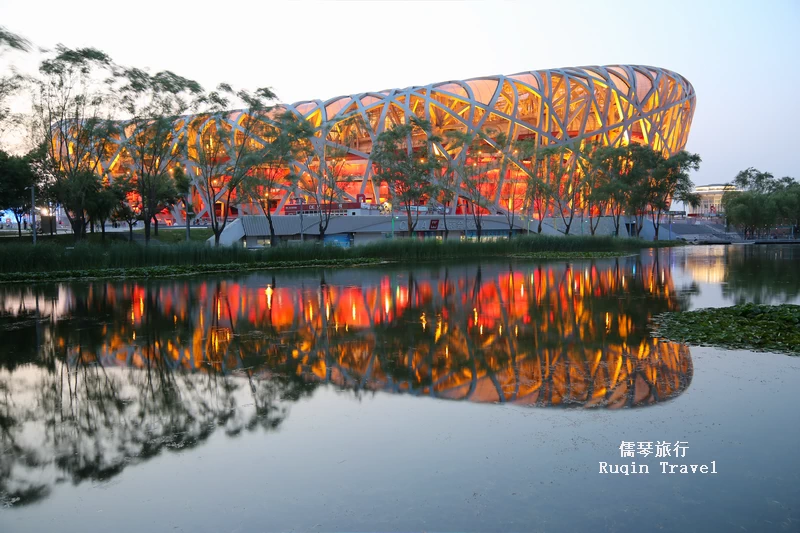
Then I came back at dusk, and everything changed. As the sky darkens, the Beijing National Aquatics Centre begins to glow in shifting blues and purples, while the Beijing National Stadium lights up with a warm, golden lattice. The whole area feels calmer, almost cinematic.
If you can, plan your visit for late afternoon into evening. You’ll see both sides—and enjoy it far more comfortably.
3. External and Internal Tours
The first time I visited, I didn’t go inside—I just walked the entire perimeter, took photos, and honestly, it already felt complete. The scale of the Beijing National Stadium is best appreciated from the outside anyway.
That said, on a later visit, I did step inside—and it gave a different perspective. You see the structure up close, walk through the stands, and understand how massive it really is. The Beijing National Aquatics Centre is more varied: part exhibition, part swimming venue, and even a water park if you’re traveling with family.
In terms of logistics, the Bird’s Nest is open from 9:00 am to 6:00 pm, with an entrance fee of RMB 50. The Water Cube costs RMB 30 for general admission, RMB 50 for swimming, and about RMB 200 for the water park.
If you’re short on time, staying outside is enough. But if you’re curious about the design and want a closer look, going inside is worth it—just try to come on a weekday to avoid the crowds.
4. What the Olympic Park Feels Like Today
What surprised me most wasn’t the stadiums—it was the space around them. The moment you step into Olympic Park, everything opens up. Wide walkways, families strolling, kids on scooters, and the Beijing National Stadium and Beijing National Aquatics Centre sitting quietly at the center of it all.
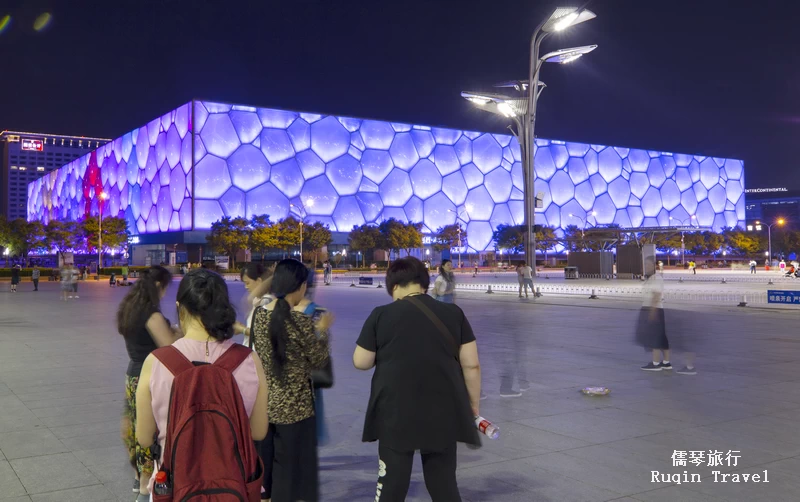
What surprised me most wasn’t the stadiums—it was the space around them. The moment you step into Olympic Park, everything opens up. Wide walkways, families strolling, kids on scooters, and the Beijing National Stadium and Beijing National Aquatics Centre sitting quietly at the center of it all.
Over time, this area has shifted from a pure Olympic site into something more lived-in. Inside the Bird’s Nest, there’s even an Olympic-themed restaurant, and in winter, parts of it turn into a small ski and snow activity zone. The Water Cube has leaned further into fun—it now includes a water park (around RMB 200), alongside its regular admission (RMB 30) and swimming option (RMB 50).
If you keep walking north, the park stretches further than most visitors expect. You’ll pass other Olympic venues—like indoor stadiums and sports fields—and eventually reach the quieter green spaces of the forest park. It’s a nice reminder that this isn’t just a photo stop. It’s a place people actually use.
5. Exploring Beyond the Iconic Duo
While the Bird’s Nest and Water Cube are the highlights, the Olympic Park’s expanse offers more. Stroll around to discover other Olympic venues like the National Indoor Stadium, the archery field, tennis courts, and the hockey rink in the North Olympic Forest Park. These facilities, each with their own Olympic stories, add depth to your visit.
The park itself is a green oasis, perfect for leisurely walks or picnics. It’s a juxtaposition of nature and modern architecture, where locals and tourists alike find a tranquil escape from the city’s hustle. Seasonal events, from flower exhibitions in spring to ice festivals in winter, keep the park vibrant throughout the year.
For food enthusiasts, the area around the park offers a range of dining options. From local Chinese delicacies to international cuisine, there’s something to satisfy every palate. Shopping enthusiasts can find souvenir shops selling Olympic-themed merchandise, perfect for keepsakes or gifts.
6. Visiting with a Wheelchair: What It’s Really Like
The first thing you’ll notice here is space. Olympic Park is flat, wide, and surprisingly easy to move through—I’ve walked it with friends who needed step-free routes, and compared to many older parts of Beijing, this area feels much more manageable.
Both the Beijing National Stadium and the Beijing National Aquatics Centre are equipped with ramps and elevators, so getting inside isn’t the challenge you might expect. The Bird’s Nest also has designated viewing areas, which helps if you’re attending or exploring interior sections.
Accessible restrooms are available in both venues, clearly marked and generally easy to find. That said, distances can be longer than they look on the map—so it’s worth pacing your visit and planning a few natural rest stops along the way.
7. How I Actually Photograph the Bird’s Nest & Water Cube
The first time I came, I took the standard wide shot—and it looked… flat. It wasn’t until I slowed down and started walking around that the photos began to feel like what I was actually seeing.
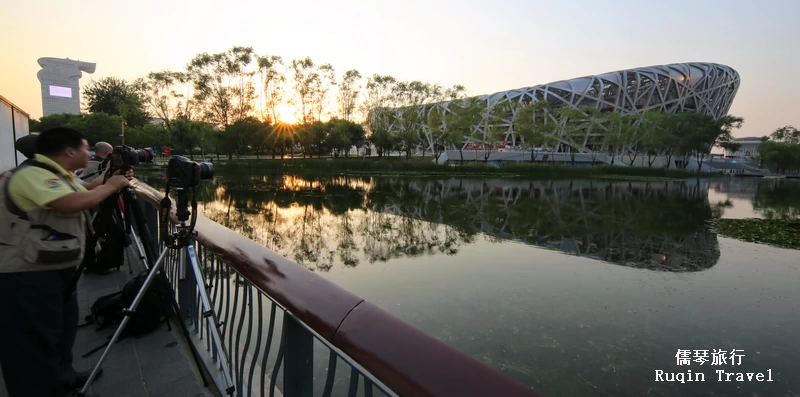
With the Beijing National Stadium, I’ve found that stepping closer and shooting slightly upward works best. The steel structure starts to layer over itself, and suddenly you feel its scale. For the Beijing National Aquatics Centre, it’s the opposite—get closer and focus on the bubble-like surface. The details carry the shot.
Timing makes a bigger difference than camera settings. Late afternoon gives you softer light, but if you stay into the evening, that’s when the Water Cube really comes alive with color. I usually avoid midday—it’s bright, but the light flattens everything and the reflections get harsh.
8. How to Make Your Visit Feel Worth It
The first time I came, I treated this as a quick photo stop—and left a bit underwhelmed. On my second visit, I slowed down, stayed longer, and let the space unfold. That made all the difference.
A few things I’ve learned along the way. First, wear comfortable shoes—the distances here are bigger than they look. Bring water, especially in warmer months, because shade is limited. And before you go, it’s worth quickly checking opening hours and ticket details if you’re planning to enter.
You don’t need a guide to enjoy this place, but if you’re curious about the design and Olympic history, it can add context. Otherwise, just walk. Wander beyond the main square, toward the quieter paths and even up toward the forest park. That’s where the visit starts to feel less like a checklist—and more like an experience.
I’ve been here more than once, and what stays with me isn’t just the architecture—it’s the feeling of space, light, and how the city slows down around these landmarks. The Beijing National Stadium and Beijing National Aquatics Centre may have started as Olympic icons, but today they feel much more open, accessible, and quietly woven into everyday Beijing life.
If you plan it right—arrive a little later in the day, give yourself time to walk, and don’t rush in and out—this visit becomes more than a checklist stop. It becomes one of those places where you pause, look around, and actually feel where you are in the city.
About the Author
Ruqin is the founder of Ruqintravel.com and has spent more than four decades working in China’s travel industry. Drawing on hands-on experience in cities like Beijing and Hangzhou, he personally researches and updates each guide to help international travelers navigate China with confidence.
Further Reading
Modern Architecture in Beijing: Beijing’s Contemporary Landmarks
10 Best Spots to See the Beijing Skyline
The 10 Most Important Buildings in Beijing
Best Photo Spots in Beijing: Where to Capture Stunning Shots