Written and updated by Ruqin
Last updated: June 01, 2026
One of the most common moments of confusion for first-time travelers in China happens at the restaurant table.
You sit down, scan the QR code on the table, open the menu on your phone… and suddenly the translations become more confusing than helpful.
You see dishes called “Lion’s Head 狮子头,” “Saliva Chicken 口水鸡,” “Ants Climbing a Tree 蚂蚁上树,” or “Buddha Jumps Over the Wall 佛跳墙,” and naturally you stop for a second. Most travelers do.
I’ve watched visitors laugh at some of these names, hesitate over others, and sometimes skip ordering a dish completely because the English translation sounded too strange.
And honestly, I understand why.
Some Popular Chinese dish names often don’t describe food directly the way many Western menus do. They are frequently based on appearance, texture, folklore, old family stories, or poetic imagery. The name may sound mysterious in English, but once the dish arrives, it usually makes perfect sense—or at least delicious sense.
So I put together this guide for travelers coming to China who want to feel more confident ordering food. If you’re looking at a menu and wondering what something actually is, this will help.
1. 松鼠桂鱼 — “Squirrel Fish”
This is one of those dishes that makes travelers stop and read the menu twice.
No squirrel is involved.
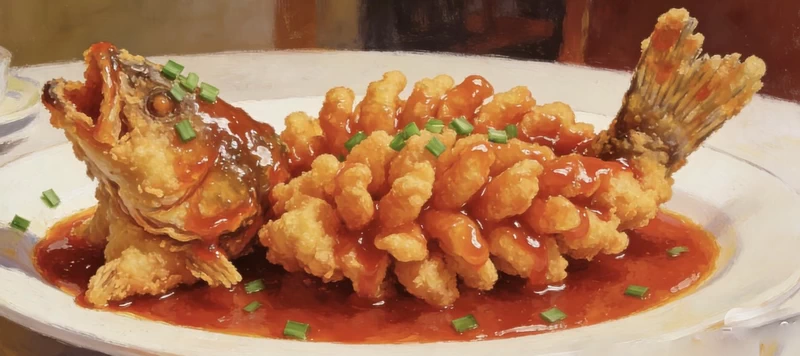
Squirrel Fish
It’s actually a beautifully prepared sweet-and-sour fish dish, most famous in Suzhou and throughout Jiangsu cuisine. The fish is carefully sliced so the flesh opens outward like a flower before being deep-fried until crisp. Then it’s covered in a glossy sweet-and-sour sauce, often with pine nuts or vegetables on top.
The reason for the name comes from its appearance. When plated, the fish fans outward, and the shape is said to resemble a squirrel with its tail raised.
2. 叫花鸡 — “Beggar’s Chicken”
This is one of those dish names that often makes travelers pause when reading a menu.
Despite the unusual name, Beggar’s Chicken is a well-loved traditional Chinese chicken dish, especially famous around Hangzhou. A whole chicken is marinated with soy sauce, Shaoxing wine, ginger, and spices, then wrapped—traditionally in lotus leaves and clay—and slow-roasted until tender.
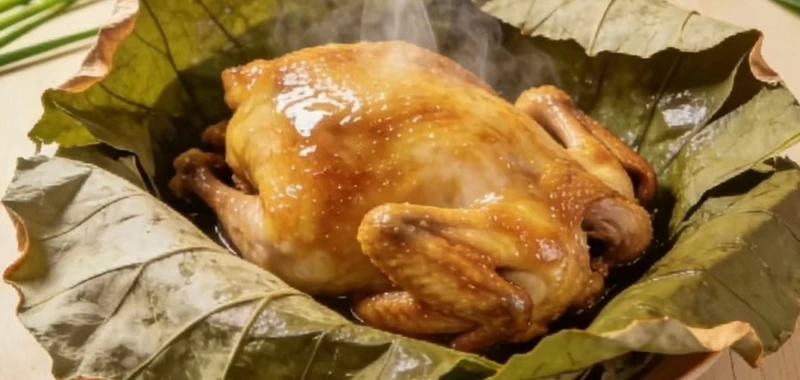
Beggar’s Chicken
When opened, the meat is juicy, fragrant, and full of flavor.
The name comes from an old legend about a beggar who cooked a chicken wrapped in mud over a fire. When the hardened coating was broken open, the chicken inside was perfectly roasted.
There’s no unusual ingredient here—just beautifully slow-cooked chicken with a memorable story behind it. If you see it on a menu, it’s often worth ordering, especially for sharing.
3. 狮子头 — “Lion’s Head”
The menu name that sounds dramatic but is actually very comforting.Lion’s Head is a large braised pork meatball, often slowly cooked and served with napa cabbage in broth or brown sauce.
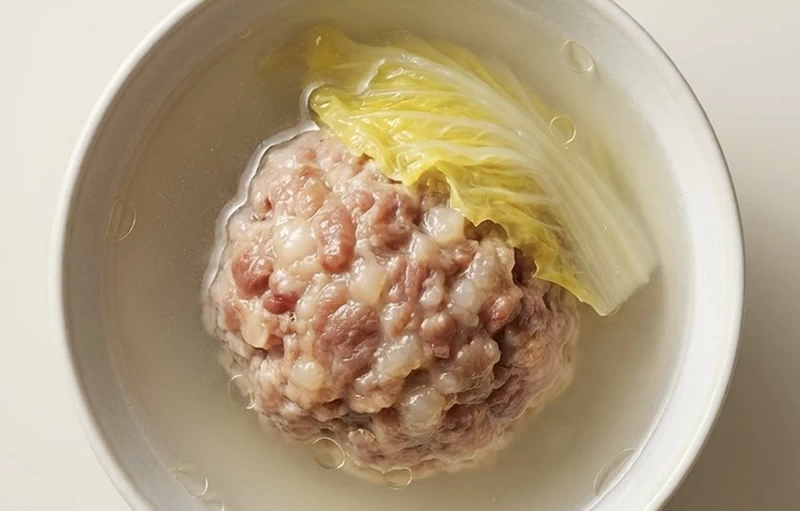
Lion’s Head
The name refers to the size and shape of the meatball, which is said to resemble a lion’s head. The texture is tender, soft, rich, and very home-style.
You’ll often find it in Jiangsu cuisine and around Shanghai.
4. 佛跳墙 — “Buddha Jumps Over the Wall”
This may be the most legendary dish name in Chinese cuisine.
It comes from Fujian cuisine and refers to an elaborate slow-cooked soup made with premium ingredients. Depending on the restaurant, it may include abalone, sea cucumber, scallops, fish maw, mushrooms, ham, or rich broth simmered for many hours.
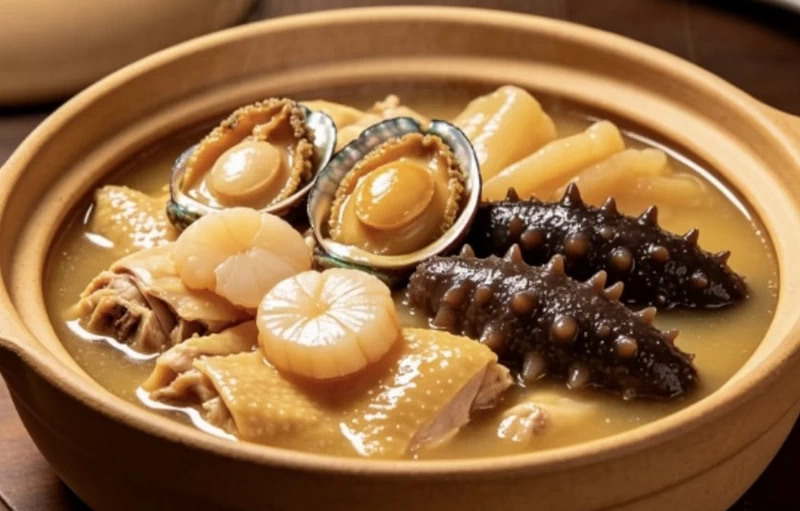
Buddha Jumps Over the Wall
The old story says the aroma was so irresistible that even a Buddhist monk would jump over the monastery wall to taste it.
Whether the story is true or not, it’s certainly memorable.
Travelers should know this dish is usually expensive and often appears at banquet restaurants rather than casual neighborhood eateries.
5. 蚂蚁上树 — “Ants Climbing a Tree”
This is one of the names that almost everyone remembers because it sounds so unexpected.
Despite the translation, the dish has nothing to do with ants. Ants Climbing a Tree is a classic Sichuan stir-fry made with glass noodles and minced pork, usually cooked with garlic, chili bean paste, soy sauce, and sometimes fresh chili.
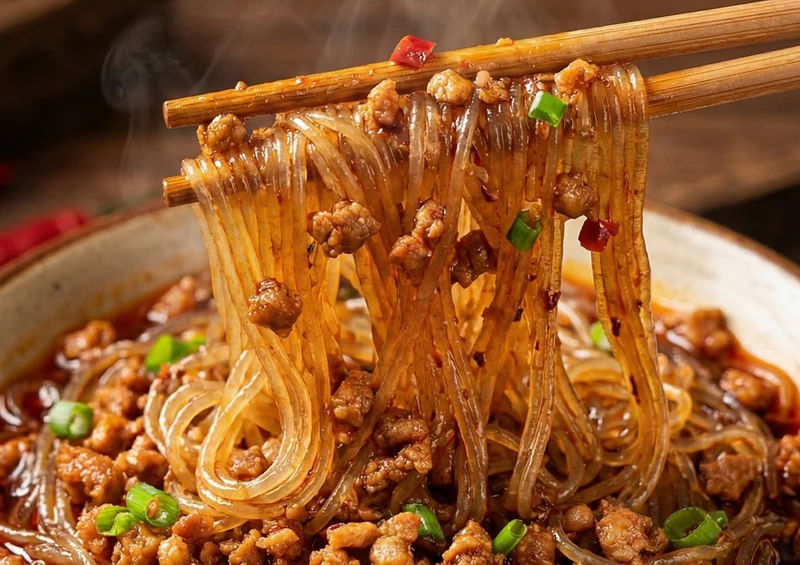
Ants Climbing a Tree
The reason for the name becomes obvious once you see it. Tiny pieces of minced meat cling to the slippery noodles, and in Chinese imagination they resemble ants climbing along branches.
It’s savory, slightly spicy, and very satisfying. If you enjoy noodles and don’t mind pork, this is usually an easy dish to try.
6. 夫妻肺片 — “Husband and Wife Lung Slices”
This is probably the dish name that confuses foreign visitors the most.
The name sounds dramatic, but it has nothing to do with husband and wife literally, and in many restaurants it doesn’t contain lung either.
It’s actually a famous Sichuan cold appetizer made with sliced beef and various beef offal, often including tripe, tongue, or tendon, all dressed in chili oil, garlic, sesame, and Sichuan pepper.
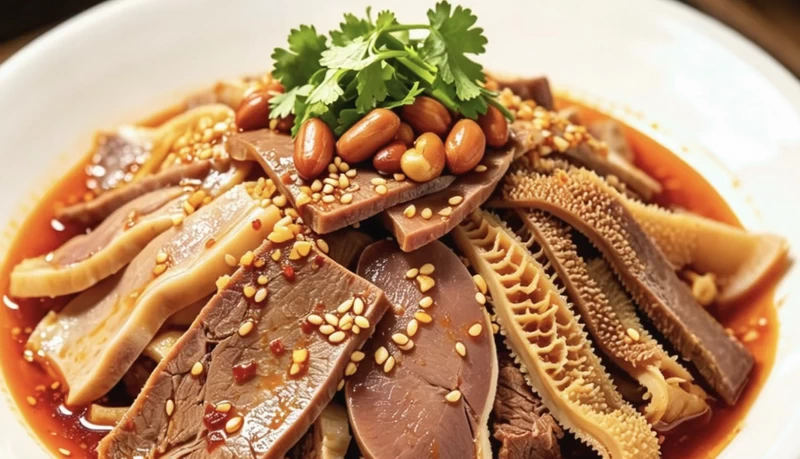
Husband and Wife Lung Slices
The name comes from a Chengdu street-food couple who became famous for serving it many years ago.
If you’re comfortable eating offal, it can be excellent. If you’re not a fan of organ meats, this is one you may want to ask about before ordering.
7. 鱼香茄子 — “Fish-Fragrant Eggplant”
This dish confuses travelers because many expect fish.
Usually there isn’t any.
“Fish-fragrant” refers to a seasoning style made famous in Sichuan cooking—a combination of garlic, chili, soy sauce, vinegar, sugar, and fermented bean paste originally used with fish dishes.
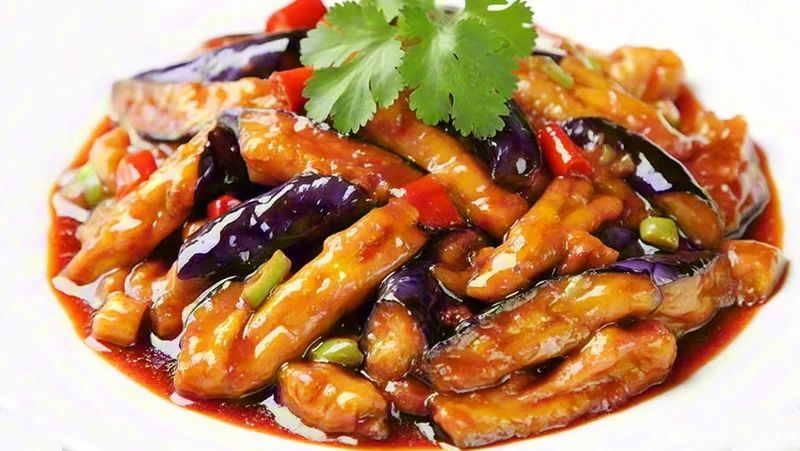
Fish-Fragrant Eggplant
Today that seasoning is commonly used with eggplant, shredded pork, tofu, and other ingredients.
The eggplant version is glossy, soft, savory, slightly sweet, and excellent with rice.
8. 宫保鸡丁 — “Kung Pao Chicken”
This is one Chinese dish many travelers recognize before arriving in China, but the version served here can feel quite different from what they expect.
Kung Pao Chicken is a classic Sichuan stir-fry made with diced chicken, dried chili, peanuts, scallions, and a glossy sweet-salty sauce. Traditional versions often have a gentle heat and the distinctive numbing fragrance of Sichuan peppercorn.
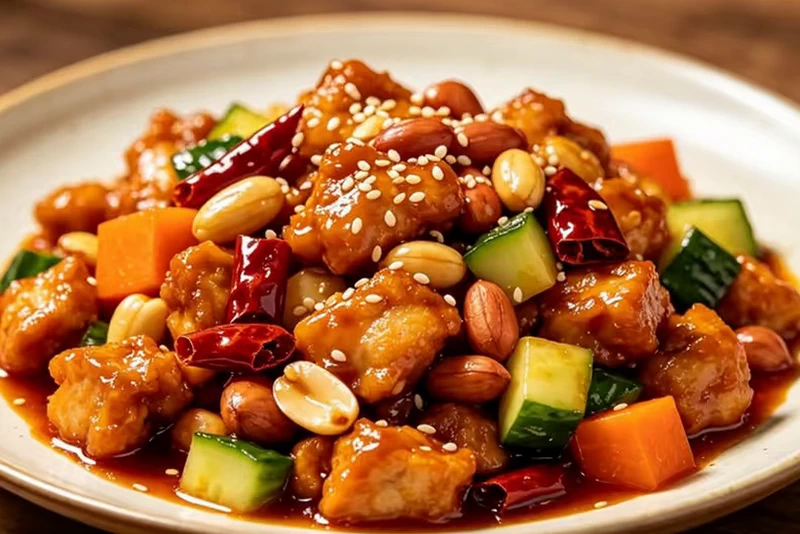
Kung Pao Chicken
The name comes from an old Qing official whose title was Gongbao, or “Palace Guardian.” Over time, the dish became known as Gongbao Chicken.
If you see it on a menu in China, it’s usually a safe and flavorful choice—savory, slightly spicy, and easy to enjoy with steamed rice.
9. 童子鸡 — “Young Boy Chicken”
This dish can sound a little surprising when translated directly on English menus. The Chinese name 童子鸡 literally refers to a young chicken, which is why some menus translate it awkwardly.
In practice, it simply means a tender young chicken prepared whole—often roasted, steamed, or braised depending on the region and restaurant.
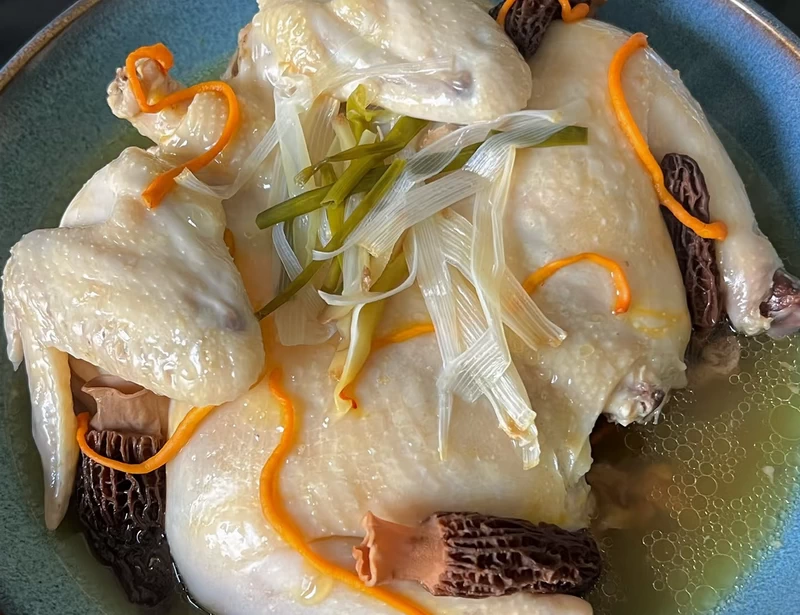
Steamed Young Chicken
Because the bird is smaller and younger, the meat is especially delicate, juicy, and flavorful. It’s often seasoned simply so the natural taste of the chicken stands out.
If you see it on a menu, think of it as China’s version of spring chicken: classic, comforting, and usually a good choice for sharing.
10. 驴打滚 — “Rolling Donkey”
This traditional Beijing dessert has one of the funniest names on any menu.
Thankfully, no donkey is involved.
It’s made from sticky rice dough rolled around sweet red bean paste, then coated in roasted soybean flour.
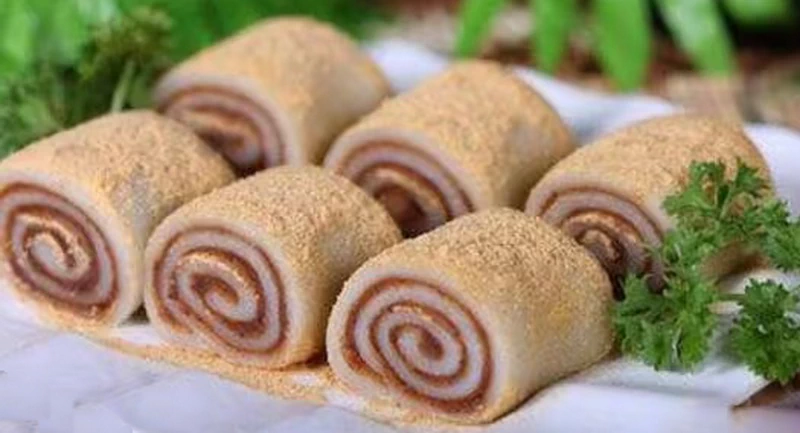
Rolling Donkey
Soft, chewy, slightly sweet, and nutty, it’s one of Beijing’s classic snack desserts.
The soybean powder covering the outside supposedly reminded people of a donkey rolling in dust—hence the name.
11. 狗不理包子 — “Dog Ignores Buns”
This famous Tianjin bun often causes unnecessary concern among visitors. To be clear: it has absolutely nothing to do with dog meat.
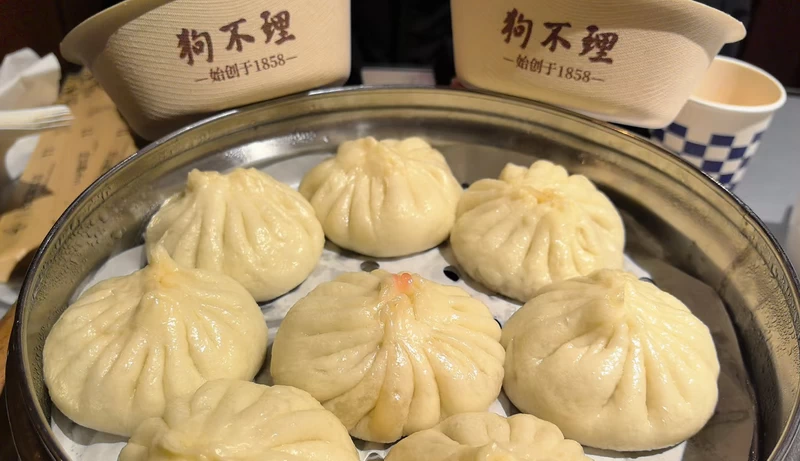
Dog Ignores Buns
It’s the name of a historic steamed bun brand from Tianjin, usually filled with pork and served in small bamboo steamers.
The unusual name comes from a local nickname story connected to the original founder.
If you visit Tianjin, you’ll likely see it advertised everywhere.
12. 口水鸡 — “Saliva Chicken”
This translation alarms many travelers, but the meaning is much less strange than it sounds.
In Chinese, “saliva” here refers to something so fragrant and appetizing that it makes your mouth water.
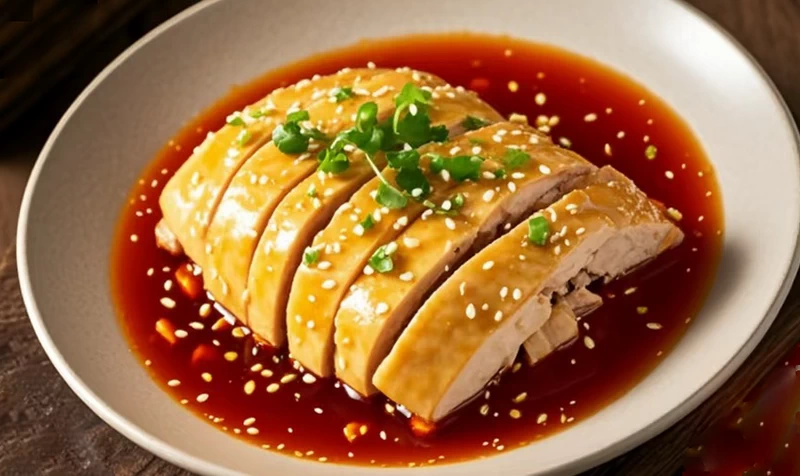
Saliva Chicken
The dish itself is cold poached chicken sliced and served with a bold Sichuan-style sauce made from chili oil, garlic, soy sauce, sesame, and peppercorn.
It’s intensely flavorful—spicy, aromatic, a little numbing, and deeply savory.
Many restaurants garnish it with crushed peanuts or sesame seeds, so it’s worth checking if you have allergies.
13. 老婆饼 — “Wife Cake”
This is a bakery item you’ll see often in southern China, Hong Kong, and Chinese pastry shops. Despite the English translation, it has no connection to wives and it isn’t really a cake in the Western sense.
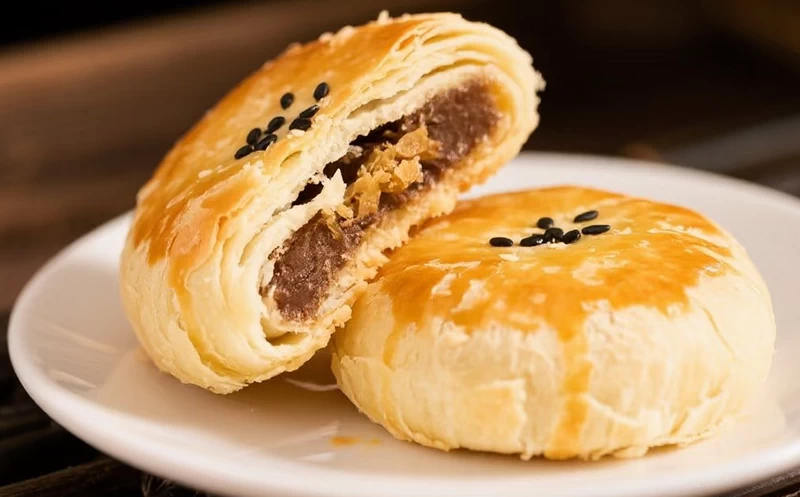
Wife Cake
It’s a flaky pastry with a thin crisp crust and a sweet filling, traditionally made from winter melon paste with sugar and sesame.
The texture is slightly chewy inside and delicate outside.
It pairs beautifully with tea and makes a very nice afternoon snack when walking around older neighborhoods or visiting local bakeries.
14. 麻婆豆腐 — “Mapo Tofu”
This is one of Sichuan’s most famous dishes and one I often recommend—though with one important warning.
Many visitors assume Mapo Tofu is vegetarian because tofu is the main ingredient.
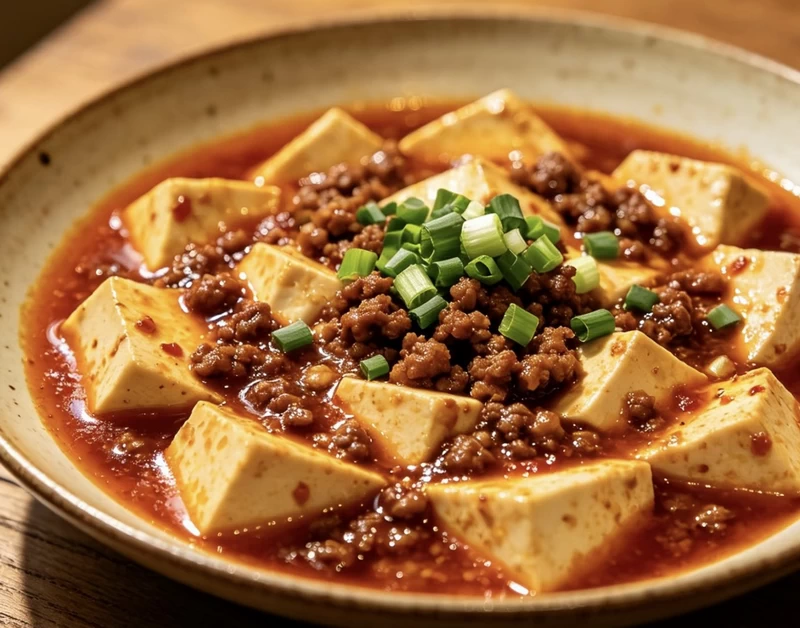
Mapo Tofu
In reality, traditional versions usually include minced pork or beef cooked into the sauce.
The tofu is soft and silky, served in a rich red sauce with chili oil, fermented bean paste, and Sichuan peppercorn. The flavor is spicy, salty, fragrant, and slightly numbing.
If you’re vegetarian, it’s always worth asking the restaurant directly before ordering.
15. 虎皮青椒 — “Tiger Skin Green Peppers”
This dish sounds more exotic than it really is.
It’s simply green peppers blistered in a hot wok until the skins wrinkle and char slightly, then stir-fried with garlic and sauce.
The wrinkled skin gives the peppers a striped appearance, which is where the “tiger skin” name comes from.
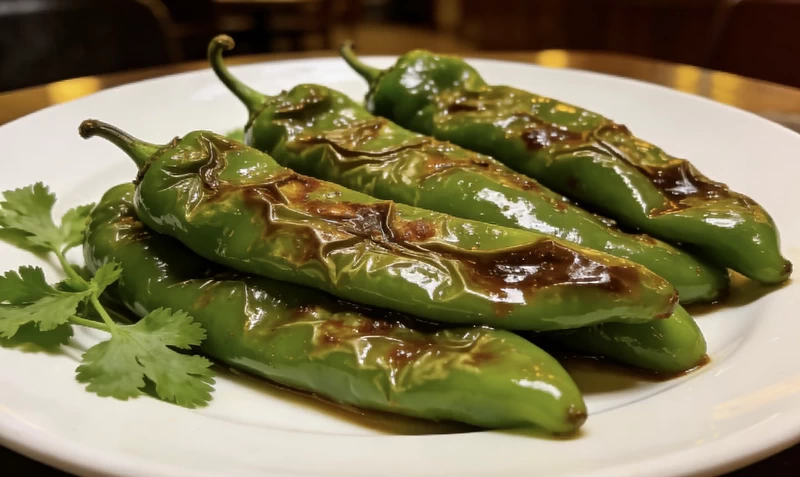
Tiger Skin Green Peppers
It’s smoky, soft, and slightly sweet.
In many restaurants it’s vegetarian, though some kitchens add minced pork for extra flavor.
16. 地三鲜 — “Three Treasures of the Earth”
This is one of northern China’s most reliable comfort dishes.
It usually combines potatoes, eggplant, and green peppers stir-fried together in sauce.
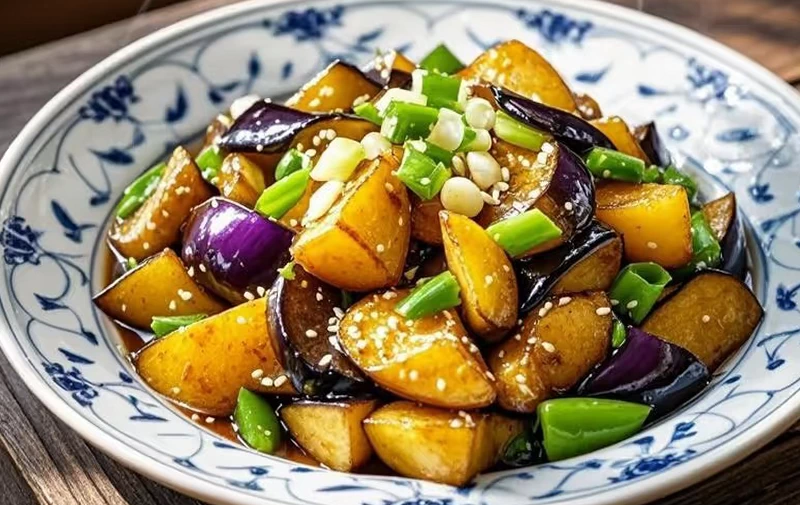
Three Treasures of the Earth
Simple ingredients, but deeply satisfying.
The name refers to the three fresh vegetables harvested from the earth.
It’s often vegetarian and especially popular in Northeast China.
17. 苍蝇头 — “Fly’s Head”
And finally, perhaps the most alarming menu translation of them all.
No flies are involved.
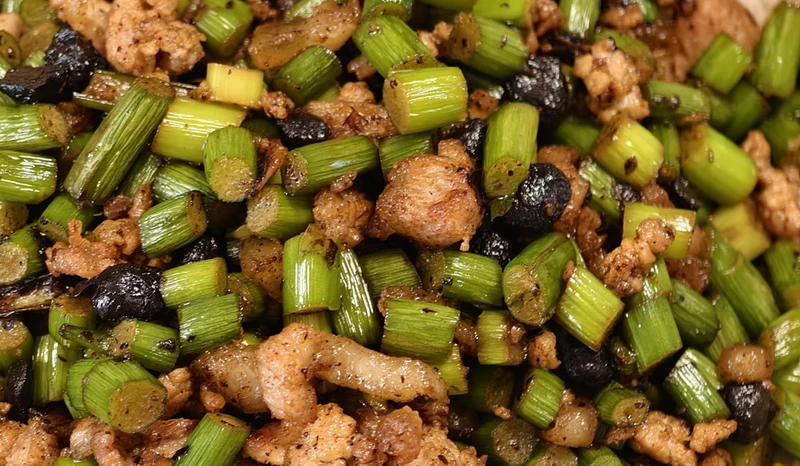
Fly’s Head
This Taiwanese dish is made from minced pork stir-fried with garlic chives, chili, and fermented black beans.
The black beans are tiny and dark, which inspired the unusual name.
It’s salty, fragrant, and excellent with steamed rice.
A Simple Tip Before You Order in China
If a dish name on a Chinese menu sounds strange, don’t assume the translation is literal.
Very often it isn’t.
Sometimes the name is visual. Sometimes historical. Sometimes poetic. Sometimes the English translation is technically correct—but culturally confusing.
When in doubt, I usually recommend doing one of three things:
look at the dish photo if the menu has one,
ask the staff what’s inside,
or use your phone camera to translate the Chinese characters directly.
And if the name still sounds impossible… order it anyway.
Some of the best meals in China come with the strangest names.
About the Author
Ruqin is the founder of Ruqintravel.com, where he shares firsthand travel advice and cultural insights drawn from years of living and working in China. He personally researches and updates every guide to help international travelers explore China with confidence, curiosity, and deeper understanding.
Further Reading
How to Access the Internet in China: VPNs, SIMs, Wi-Fi & Firewall
Essential Mandarin Phrases for Travelers in China
How to Use Alipay or WeChat Pay in China: A Travel Guide
Chinese Laws and Regulations: A Foreigner’s Guide
How to Spot Fake Chinese Money: Simple Tips for Tourists
Food and Dining in China – A Foreigner’s Guide – Ruqin China Travel
Plugs, Sockets, Adaptors & Voltage in China
Currency and Money Exchange in China – A Foreigner’s Guide – Ruqin China Travel
China Customs Regulations – A Foreigner’s Guide – Ruqin China Travel