
Written and updated by Ruqin
Last updated: June 01, 2026
Traveling solo in China can feel intimidating before you arrive, especially if you’ve traveled elsewhere in Asia and are wondering whether China will feel similar. Many travelers reach China after Thailand, Vietnam, or Bali and expect the same backpacker atmosphere—easy hostels, lots of social travelers, and spontaneous travel friendships everywhere they go.
China usually feels different from that.
But different doesn’t mean difficult. And it certainly doesn’t mean you need to join a group tour.
In fact, China can be one of the most rewarding countries to travel alone once you understand how it works. The trains are fast, cities are connected, food is everywhere, and daily travel becomes surprisingly easy once your apps are set up. At the same time, China asks a little more from independent travelers in terms of planning and flexibility.
If you’re considering solo travel in China and wondering whether to go independently or join a group tour, this guide should help you decide.
1. Is China Good for Solo Travel?
Yes—very much so.
China works especially well for travelers who enjoy moving at their own pace and building their own itinerary. It’s one of the few countries where you can have breakfast in one city, board a high-speed train at midday, and be eating dinner in a completely different part of the country by evening.
Independent travel infrastructure is excellent. Trains are reliable, domestic flights are frequent, ride-hailing is easy, and food delivery can reach almost anywhere in major cities. Once you understand the rhythm of traveling in China, getting around becomes much smoother than many people expect.
The part that surprises many first-time visitors is that China doesn’t always feel easy emotionally in the same way that some Southeast Asian destinations do. It can feel more independent, quieter, and sometimes more mentally demanding because of language, apps, and navigating a different digital system.
That’s why solo travel in China tends to suit travelers who enjoy freedom and don’t mind occasional moments of figuring things out alone.
2. Is China Safe for Solo Travelers?
Safety is one of the strongest reasons many travelers feel comfortable going independently in China.
For solo travelers—and especially for solo women—China is generally considered a very safe destination from a personal safety perspective. Violent street crime against tourists is relatively uncommon, public transport is widely used at all hours, and many travelers say they feel comfortable walking around cities in the evening.

That doesn’t mean you should stop using common sense. The usual travel habits still matter. Book accommodation with strong reviews, use licensed taxis or DiDi rather than accepting random rides, avoid getting very intoxicated alone late at night, and keep someone updated if you’re moving between cities.
But overall, most solo travelers describe China as a place where logistics feel more challenging than personal safety.
In other words: your biggest travel problem is usually more likely to be “Why isn’t this QR code scanning?” than “Do I feel unsafe here?”
3. The Biggest Difference: China Is Not a Classic Backpacker Destination
This is probably the most important thing to understand before planning your trip.
China has budget travel, hostels, and independent travelers—but it doesn’t have the same backpacker culture many people know from Thailand or Vietnam.
You probably won’t arrive in every city and immediately meet a group of travelers all heading to the next destination together. You won’t usually find the same hostel-party scene, island-hopping routes, or spontaneous shared minivan travel culture.
Instead, China feels more independent.
Many travelers move quickly between destinations using trains. Domestic tourism is huge, so most hotels and transport systems are designed around Chinese travelers rather than international backpackers.
For some people, this feels refreshing. For others, it feels lonely at first.
The key is adjusting expectations.
If you expect Thailand, China may feel quiet.
If you expect China to be China, it often feels fascinating.
4. Best Places in China for Solo Travelers
Some destinations work especially well for solo travel, either because they’re easy to navigate, naturally social, or simply enjoyable at a slower pace.
1) Yunnan – Best for backpacker atmosphere and slower travel
If you’re hoping for the closest thing China has to a traditional backpacker route, Yunnan is probably where you’ll feel it most.
Places like Dali, Lijiang, and Shangri-La attract more independent travelers, long-term visitors, hikers, and café culture. The pace feels slower than eastern China, and travelers often stay longer than planned.
Dali is especially popular because it’s easy to settle into for several days. There are cafés, mountain views, lakeside cycling, local markets, and guesthouses where meeting people feels more natural than in many Chinese cities.
2) Chengdu – Best all-around city for solo travelers
Chengdu is one of the easiest cities in China to travel alone.
It has a relaxed pace, great food, teahouses, pandas, walkable neighborhoods, and a strong hostel scene compared with most Chinese cities.
It’s also a good place to meet other travelers through food tours, panda day trips, or hostel activities. Even if you stay in a hotel, Chengdu feels socially easier than many large cities in China.
If it’s your first solo trip to China, Chengdu is often an excellent place to begin.
3) Xi’an – Best for history and easy independent sightseeing
Xi’an works especially well for solo travelers because many of the main sights are easy to explore independently.
The city wall, Muslim Quarter, food streets, Bell Tower area, and Terracotta Warriors can all be visited without much planning stress.
It’s also compact enough that you can see a lot without feeling rushed. For many first-time travelers, Xi’an feels manageable, interesting, and easy to navigate.
4) Yangshuo – Best for scenery and a slower pace
Yangshuo is ideal if you want time outdoors.
The dramatic karst mountains, riverside paths, cycling routes, and smaller-scale guesthouses make it especially good for solo travelers who enjoy nature and quiet travel days.
It’s also one of the easier places to simply slow down for a few days between larger cities.
5. Should You Stay in Hostels or Hotels?
This depends less on budget and more on the kind of experience you want.
Many travelers arrive expecting to stay in hostels throughout China, then quickly realize that hotels can be surprisingly affordable. In many cities, the price difference between a dorm bed and a private hotel room is smaller than expected.
Because of that, many solo travelers choose hotels for comfort and privacy.
A private room often means better sleep, your own bathroom, and a place to recharge after busy days navigating Chinese cities.
That said, hostels can still be worthwhile if your main goal is meeting people.
The strongest hostel scenes are usually in Chengdu, Dali, Lijiang, Yangshuo, Xi’an, and parts of Beijing.
My usual recommendation is to choose based on what you need that week. If you feel social, book a hostel with a common area. If you feel tired and want privacy, book a hotel. Mixing both often works very well in China.
6. How to Meet People While Traveling Solo in China
This is where being intentional helps.
China can absolutely be social—but usually not by accident.
A lot of travelers meet people through shared activities rather than randomly in transit.
The easiest places to connect with people are usually food tours, walking tours, cooking classes, tea tastings, day hikes, hostel common spaces, and small-group local excursions.
Food tours work particularly well because people naturally talk while eating, and solo travelers often book them specifically because they want a social evening without joining a full tour group.
Another tip is simply staying longer in one place.
If you move every one or two days, China can feel lonely and exhausting. But if you stay four or five nights somewhere like Chengdu or Dali, you naturally start recognizing faces, returning to the same cafés, and feeling connected to the place.
7. Essential Apps Before You Arrive
For solo travel in China, your phone becomes your most important travel tool.
Before arriving, I strongly recommend setting up:
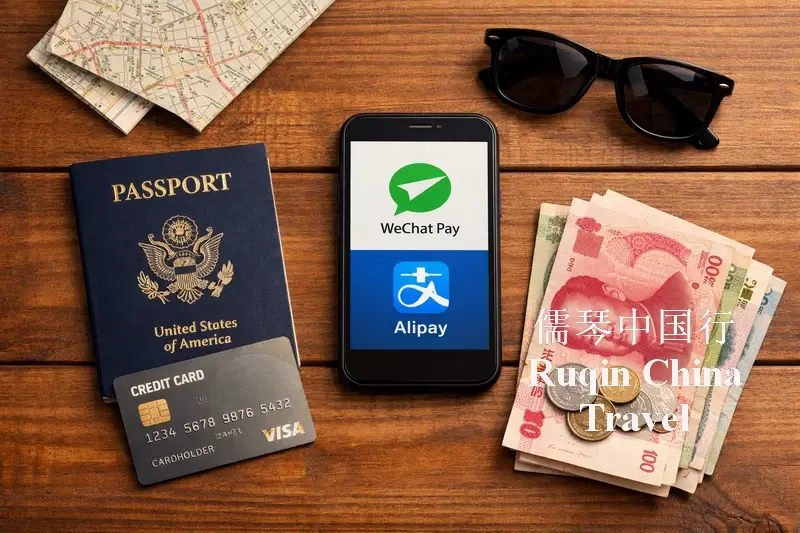
Alipay – for payments almost everywhere
WeChat – messaging, mini-programs, and QR codes
DiDi – ride-hailing
Amap or Baidu Maps – navigation
Trip.com – trains, flights, hotels
Google Translate or another translation app – for menus and conversations
Setting these up before arrival makes the first few days dramatically easier.
If your payments are working, your maps are working, and you can translate basic text, the rest of the trip usually becomes much more manageable very quickly.
8. My Personal Advice for Solo Travel in China
If someone asked me whether to join a full group tour or travel independently in China, I would usually say:
Travel independently—but add social moments into your trip on purpose.
That might mean booking a food tour in Beijing, staying in a guesthouse in Dali, taking a panda day trip in Chengdu, or joining a hiking excursion from Yangshuo.
You don’t need to travel with a group every day to avoid feeling lonely.
China often feels best when you keep your main itinerary flexible but add occasional moments of connection along the way.
Also, don’t over-plan the route.
China rewards slower travel much more than rushed travel.
If you stay longer in fewer places, the country becomes easier, richer, and far less tiring.
Solo travel in China is not the same as backpacking Southeast Asia.
It’s less social by default, more independent, and sometimes a little more demanding in practical ways.
But it’s also incredibly rewarding.
You gain freedom to move at your own pace, spend longer where you love, change plans easily, and experience parts of daily life that group tours often miss completely.
If you come prepared—and with the right expectations—traveling alone in China is not only possible.
For many travelers, it becomes the best way to experience the country.
About the Author
Ruqin is the founder of Ruqintravel.com and has spent more than four decades working in China’s travel industry. Drawing on hands-on experience in cities like Beijing and Hangzhou, he personally researches and updates each guide to help international travelers navigate China with confidence.
Further Reading
How to Access the Internet in China: VPNs, SIMs, Wi-Fi & Firewall
Essential Mandarin Phrases for Travelers in China
How to Use Alipay or WeChat Pay in China: A Travel Guide
Chinese Laws and Regulations: A Foreigner’s Guide
How to Spot Fake Chinese Money: Simple Tips for Tourists
Food and Dining in China – A Foreigner’s Guide – Ruqin China Travel
Plugs, Sockets, Adaptors & Voltage in China
Currency and Money Exchange in China – A Foreigner’s Guide – Ruqin China Travel
China Customs Regulations – A Foreigner’s Guide – Ruqin China Travel