
Written by Ruqin
July 29, 2026
I have visited Zhangjiajie several times, and every trip has taught me something new.
The first time I went, I was amazed by the mountains. The scenery was unforgettable. However, I also discovered that this place has plenty of small traps for first-time visitors.
After I returned home, I kept thinking, “If someone had told me these things earlier, my trip would have been much easier.”
Later, I went back better prepared.
These are the mistakes I see travelers make again and again in Zhangjiajie. Avoid them, and you can spend less time fixing problems and more time enjoying those incredible peaks, forests, and valleys.
1. Thinking You Can Buy Tickets at the Entrance and Getting Stopped
The first time I visited Zhangjiajie, I thought buying tickets would be easy.
I was wrong.
Zhangjiajie is not a place where you simply arrive and buy a ticket at the gate. Tianmen Mountain, especially, requires advance booking.
You usually need to reserve your ticket several days ahead. The system connects your ticket with your passport information and your chosen entry time.
So, imagine this.
You arrive excited, ready to start your mountain adventure. Then the staff scans your passport and says, “There is no booking record.”
Suddenly, you are standing there with no idea what happened.
I have also seen travelers get stuck because of one small mistake: a wrong passport number.
Sometimes, they use a booking service online. Later, they discover the agency entered one incorrect digit. The system cannot match the passport, and the ticket does not work.
Meanwhile, the visitor spends thirty minutes under the hot sun trying to fix the problem.
My advice is simple: finish all ticket arrangements before you leave for Zhangjiajie.
You can book through platforms like Trip.com, Klook, or GetYourGuide. However, check every passport number yourself. Do not assume someone else will catch the mistake.
Bring your physical passport everywhere.
In Zhangjiajie, your passport is more than identification. It is part of your entrance ticket. Some attractions also require passport checks before facial recognition.
Later, when you choose Tianmen Mountain tickets, pay attention to the route options. The A, B, and C routes have different transportation arrangements and directions.
Inside Zhangjiajie National Forest Park, things are a little easier. The Wulingyuan entrance ticket stays valid for four days, so you can enter multiple times.
Finally, remember to check your cable car and Bailong Elevator options when booking. If you choose too few rides, you may need to pay extra later. A little preparation saves a lot of trouble on the mountain.
2. Trying to See Everything in One Day and Turning Your Trip into a Marathon
The first time many visitors arrive in Zhangjiajie, they make the same mistake.
They underestimate the size of this place.
Wulingyuan is not just one mountain. Zhangjiajie National Forest Park, Tianzi Mountain, Yangjiajie, and Yuanjiajie connect into one huge scenic area.
Even moving between cable cars, shuttle buses, and viewpoints can take hours.
I have seen travelers create a “perfect” one-day plan.
Avatar Mountain. Tianzi Mountain. Yangjiajie. Tianmen Mountain. Zhangjiajie Grand Canyon.
They want to see everything.
However, the day quickly becomes a race.
They spend more time waiting, transferring, and checking the clock than actually enjoying the scenery.
Zhangjiajie rewards slow travel.
I usually suggest keeping at least two or three days.
On the first day, explore Wulingyuan. Enter from the East Gate, take the Bailong Elevator up to Yuanjiajie, then continue to Yangjiajie and Tianzi Mountain.
Later, spend another day walking through Golden Whip Stream and Ten Miles Gallery.
Finally, leave Tianmen Mountain for its own day. It deserves your full attention.
You do not need to see every viewpoint.
Sometimes, seeing fewer places slowly creates the better memory.
Meanwhile, choose your entrance carefully.
I recommend entering through the East Gate, also called Wulingyuan Sign Gate. The town is right outside, so finding food and accommodation is easy.
I would avoid entering from the South Gate unless you have a specific reason. The walk toward the main areas can take several hours, and many visitors regret that choice halfway through.
One more small tip: Zhangjiajie does not provide paper maps inside the park.
Before you start your hike, save screenshots of your route.
Mountain signals can disappear when you need them most.
3. Visiting Tianmen Mountain on a Rainy Day and Seeing Only Fog
Tianmen Mountain feels completely different depending on the weather.
On a clear day, the glass walkway and the famous 999-step staircase feel dramatic and unforgettable. However, on a rainy day, the experience can become much harder than expected.
I have seen visitors spend hundreds of yuan on the cable car, only to reach the top and find a wall of fog waiting for them. The mist can become so thick that even trees ten meters away disappear.
You stand on the glass walkway, but there is no valley view below. Just white fog.
Meanwhile, the mountain paths become slippery after rain. Some sections are steep, with slopes reaching around 45 degrees. A careful walk matters more than taking the perfect photo.
Before you go, check the weather forecast and adjust your plan if heavy rain is coming. A flexible schedule can save a disappointing day.
However, do not give up immediately if fog appears after you arrive. Mountain weather changes quickly. Later, the clouds may move away within minutes, and the view can suddenly return.
One more thing: bring a rain jacket instead of only an umbrella. The wind on Tianmen Mountain can be strong, and umbrellas often become more trouble than help.
4. Waiting Two Hours for the Bailong Elevator and Thinking, “That’s It?”
The Bailong Elevator looks much more exciting in photos than it feels in reality.
It is famous as the “world’s highest outdoor elevator,” and the marketing makes the ride look like a once-in-a-lifetime experience. However, many visitors discover a different story after arriving.
You wait in line for one or two hours, finally step inside, and then the whole ride ends in less than two minutes. The cliffs outside the glass windows flash by so quickly that you barely have time to understand what you are seeing.
Later, when you walk out, you may realize something. The time you spent waiting could have been enough to enjoy a beautiful mountain trail.
I am not saying you should skip the Bailong Elevator completely. It is useful, especially if you want to save energy. It works as transportation from the valley to Yuanjiajie, not as a major attraction itself.
Meanwhile, plan your timing carefully. If you want to ride it, arrive early with the first groups entering the park. The morning lines are usually much shorter.
If your fitness level is good, consider walking up instead. The climb takes more effort, but the scenery along the way gives you a much deeper Zhangjiajie experience.
The same idea applies to the Ten Miles Gallery sightseeing train.
Many visitors take the small train for a route that takes only about fifteen minutes by train. However, walking the same distance takes around thirty to forty minutes and gives you much more to see.
The train windows are not always perfect for photos. Reflections on the glass can ruin your shots.
Instead, I prefer walking slowly through the valley. You can stop whenever you want, enjoy the unusual rock formations, and sometimes even spot small monkeys along the path.
In Zhangjiajie, the slower road is often the one you remember.
5. Wearing New Shoes and Ending the Hike with Blisters
Zhangjiajie looks beautiful, but the trails can be demanding.
The paths go up and down constantly. Some sections have steep steps, and some areas do not have railings. I have seen visitors arrive in stylish new shoes, feeling ready for photos, only to struggle halfway through the hike.
After an hour of walking, their heels start hurting. Then blisters appear, and the rest of the day becomes much harder.
Meanwhile, mountain weather changes quickly. Mornings can feel cool, afternoons can become warm, and rain may arrive suddenly before evening.
My biggest advice for Zhangjiajie is simple: wear comfortable shoes you already trust.
Choose broken-in walking shoes or hiking shoes with good grip. Do not test a new pair on these mountains.
Later, think about your clothing too. Layering works best here. A T-shirt with a light jacket lets you adjust easily when temperatures change.
Even in summer, bring a windproof jacket. The mountain air can feel much cooler than the city below.
Finally, if you expect to leave after sunset, carry a small flashlight. Some paths become very dark, and a little preparation makes the walk back much easier.
6. Thinking One Visa Card Will Work Everywhere in Zhangjiajie
Many visitors arrive in China with one simple plan: bring a bank card and pay like they do at home.
Then they reach a small food stall in Zhangjiajie, order a snack, and take out a Visa card.
The seller smiles and shakes their head.
No card machine.
You stand there for a moment, unsure what to do.
Zhangjiajie has become very convenient for digital payments. Even a local grandmother selling corn on the mountain may have a QR code ready. However, China’s payment habits are different from many countries.
Meanwhile, the city has been improving services for international visitors. Major attractions, hotels, and shopping areas now support foreign card payments more widely. The city also provides currency exchange options and a mix of payment methods.
Before your trip, I suggest linking your Visa or Mastercard to Alipay. Later, you can scan QR codes just like local travelers do.
For larger payments, such as hotels and tickets, using a card is usually easiest. For smaller purchases, such as snacks or bottled water, mobile payment works much better.
However, keep some cash with you.
A few hundred yuan is enough for most situations. Some small stalls may still prefer cash, especially in less busy areas.
You can also exchange foreign currency at airports, major attractions, and approved exchange locations. US dollars and euros are usually easy to exchange.
One more thing many visitors forget: China’s internet environment works differently.
Before leaving home, install your VPN and set up your translation apps. Download offline language packs too.
In Zhangjiajie, English support is still limited in many local places. A few simple tools can make your mountain adventure much smoother.
A Note from Ruqin
Zhangjiajie’s mountains are truly something special.
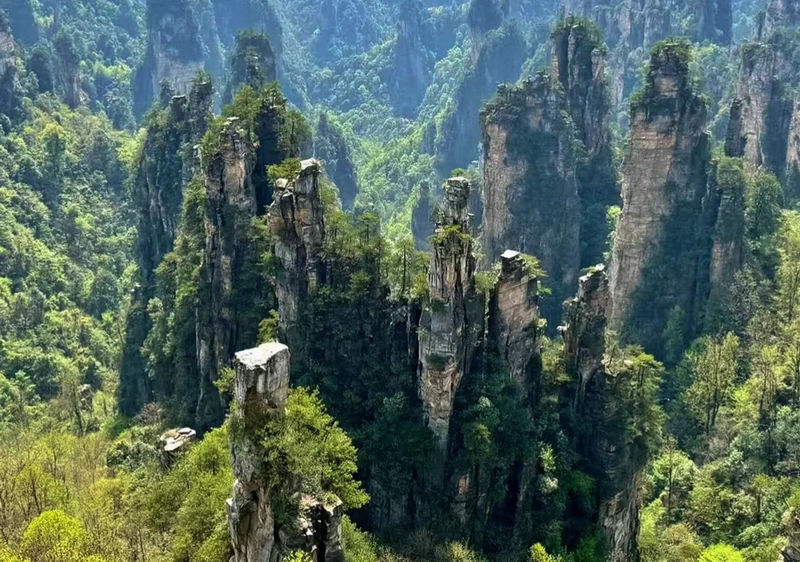
I still remember standing on a viewpoint as the mist slowly moved away. The stone peaks appeared from the clouds, almost floating in the air. In that moment, it became easy to understand why Avatar found inspiration here.
However, these mountains do not reveal everything immediately.
You need to slow down and find your own rhythm. Later, the best views often appear when you stop rushing from one place to another.
See fewer places, but spend more time in each one. Walk the trails, feel the mountain air, and enjoy the quiet moments between viewpoints.
Finally, remember this: Zhangjiajie is not just about reaching the famous spots. It is about experiencing the journey between them.
I’ll be waiting for you on the mountain paths of Zhangjiajie.
About the Author
Ruqin is the founder of Ruqintravel.com and has spent more than four decades working in China’s travel industry. Drawing on hands-on experience in cities like Beijing and Hangzhou, he personally researches and updates each guide to help international travelers navigate China with confidence.
Further Reading
Zhangjiajie Travel Complaints Guide for Foreign Visitors: What to Do
How to Visit Zhangjiajie National Forest Park: Map, Tickets & Tips
How to Book Zhangjiajie Attraction Tickets: All You Need to Know