Written and updated by Ruqin
Last updated: May 24, 2026
The first time I arrived in Chongqing, I remember standing at a street corner, completely disoriented—roads above me, below me, and somehow behind me. That’s when I realized this wasn’t a city you simply “figure out” on the go. You need a bit of grounding, and that’s exactly why I created this Chongqing Travel Guide.
Chongqing doesn’t unfold neatly—it surprises you at every turn, from smoky hotpot alleys to river views that appear out of nowhere. In this Chongqing Travel Guide, I’ll help you navigate the layers, find your rhythm, and actually enjoy the chaos instead of fighting it.
1.When to Visit Chongqing — Embracing the City’s Mist and Spice
If you’re wondering when to visit Chongqing, let me share a little secret. This city doesn’t just have weather—it has personality. Like a dear friend, Chongqing can be fiery and bold one moment, gentle and poetic the next. That’s what makes it unforgettable.
A City of Four Distinct Seasons
First comesspring, from March to May. It’s the most romantic time of year. Temperatures stay between 15–25°C. Flowers bloom on the hillsides. The breeze carries the soft scent of earth and petals. Sometimes, a light rain falls at night—those famous Bashan night rains that inspired ancient poets.
Then comes summer, and Chongqing turns up the heat—literally. From June to August, the thermometer can push past 35°C. But here’s the thing: the hotter it gets, the more alive the city feels. Locals fight fire with fire, dipping chopsticks into steaming, spicy hotpot. Sweating, laughing, cheering—it’s a rite of passage.
In autumn, from September to November, everything softens. The skies clear. The air cools to a perfect 20–28°C. The rivers sparkle, and the city’s dramatic skyline peeks through the fading mist. This is when Chongqing shows off.
Finally, winter arrives—mild and mellow. From December to February, it rarely drops below5°C. It’s the perfect season for soaking in a mountain hot spring or sipping tea while fog curls over the riverbanks.
So When’s the Best Time to Visit Chongqing?
According to this Chongqing Travel Guide, aim for April–May or September–October. Not too hot, not too rainy. Just right.
One last tip—carry an umbrella. Here, the rain doesn’t knock; it dances in unannounced. Now, let’s keep going. This mountain city has so much more waiting.
2. Where to Stay in Chongqing — Unlocking the City’s 3D Magic
Let me tell you a secret—your GPS might get confused here. That’s because Chongqing is no ordinary city. It’s built vertically, layered like a cake carved into mountains. Streets stack on streets. Elevators link neighborhoods. You’ll find light rail soaring through apartment buildings. Yes, really.

If you want to truly experience Chongqing, choosing where to stay is key. This Chongqing Travel Guide will help you pick the perfect base for your mountain city adventure. Each district offers its own vibe. Let’s dive in.
1) Yuzhong District (渝中区): Heart of the City and Soul of the Mountain
This is the beating heart of Chongqing. Imagine a peninsula wrapped by the Yangtze and Jialing Rivers. Welcome to Yuzhong (渝中区).

Here, towering skyscrapers rise beside ancient stone alleys. Every corner hides something unexpected. It’s a beautiful mess—and I love it.
- Hongya Cave (洪崖洞): Think Spirited Away meets neon dream. By day, it looks ordinary. But at night? Pure magic. Pro tip: head to Qiansimen Bridge or the riverside to catch that postcard-perfect shot.
- Qiansimen Bridge (千厮门大桥): This is the best viewing spot for Hongya Cave. Navigate to Chongqing Grand Theatre, then follow the crowd down to the riverbank, where you can capture stunning night views of the bridge and Hongya Cave glowing together in perfect harmony.
- Liziba Station (李子坝轻轨站): A train glides straight through a building. It’s real. It’s surreal. Best viewed from the nearby platform—don’t blink, or you’ll miss the train!
- Jiefangbei (解放碑): This is downtown Chongqing, where shiny towers meet gritty alleys. Come during the day for city buzz, and stay into the night to catch a full-blown cyberpunk dreamscape. Hungry? Try the local hotpot or grab spicy suanlafen at Bayi Gourmet Street.
- Kuixinglou (魁星楼), and Eighteen Ladder (山城步道十八梯): Walk up stone steps, get lost in ancient paths, and suddenly pop out near a modern mall. That’s Chongqing’s time-travel charm.
- People’s Auditorium (重庆人民大礼堂) & Three Gorges Museum (重庆中国三峡博物馆): Stunning architecture meets rich culture. The red domes and blue tiles look almost imperial. From the museum platform, you get the best panoramic view.
Where to Stay:
First time here? Stay around Jiefangbei or Hongya Cave. You’ll be within walking distance of everything—views, food, history, and night lights.
2) Jiangbei District (江北区): Chongqing’s Trendy Face
Cross the Jialing River and you’ll find the city’s fashionable side.

- GuanYinQiao Pedestrian Street (观音桥步行街): The shopping never ends. Trendy shops, street snacks, karaoke bars—it’s alive day and night.
- Beicang Creative Block (北仓文创街区): Converted warehouses now house art studios and indie cafes. It’s hipster heaven.
- Chongqing Grand Theatre (重庆大剧院): Don’t miss the night show. The building glows like a sculpture.
Where to Stay:
Stay here if you love city lights, nightlife, and easy access to shopping. Guanyinqiao (观音桥):has many modern hotels and apartments.
3) Yubei District (渝北区): The City’s Air Gateway
Flying in? You’ll likely land here. Yubei (渝北区) is modern and efficient, built for business and convenience.

- Chongqing Jiangbei International Airport (重庆江北国际机场) + Chongqing North Station (重庆北站): These are major transport hubs. Expect sleek trains and smooth airport transfers.
- Yuanboyuan Park (园博园) & Zhaomushan Forest Park (照母山森林公园): Want to stretch your legs? These parks offer peaceful escapes.
Where to Stay:
Perfect if you’re catching an early flight or high-speed train. Hotels near the airport or rail station are convenient and plentiful. Great for business travelers too.
3) Nan’an District (南岸区): The Best Views in Town
This district feels poetic. It faces the peninsula of Yuzhong, offering unbeatable views of the city skyline.

- Nanshan Yikeshu (南山一棵树观景台): This viewing platform is legendary. At night, the city glows like stars in a bowl.
- Nanbin Road (南滨路): Take a slow walk along the riverside. Watch boats drift past. Snap perfect skyline photos.
- Longmenhao Old Street (龙门浩老街) + Xiahaoli (下浩里): Wander through cobbled lanes. Pass coffee shops and antique bookstores. Watch the light rail wind around the cliffs.
- Chongqing East Railway Station (重庆东站): This brand-new train station eases congestion from the West and North stations.
Where to Stay:
Want peace, views, and a touch of romance? Stay along Nanbin Road (南滨路). Many hotels here offer riverfront rooms with quiet charm.
4) Shapingba District (沙坪坝区): Culture and Youthful Energy
Here’s where the city gets scholarly. Universities, artists, and history live side-by-side.

- Ciqikou Ancient Town (磁器口古镇): Step into the past. Try sesame candy, stroll past lanterns, listen to old Chongqing dialects in the alleys.
- Sichuan Fine Arts Institute (四川美术学院): Famous for its graffiti street. Giant murals cover entire buildings. It’s bold, raw, and unforgettable.
- Chongqing 1949 Theatre (重庆1949大剧院): A rotating stage, aerial stunts, and a roaring retelling of Chongqing’s revolutionary years. It gave me goosebumps.
Where to Stay:
Great for travelers on a budget or those wanting a more local, cultural vibe. Try the guesthouses near Ciqikou—they’re cozy and full of charm.
5) Jiulongpo District (九龙坡区): Where Industry Meets Art
This district once powered Chongqing’s factories. Now, it’s reinvented itself with creativity.

- Traffic Tea House (交通茶馆): Locals sip tea, play mahjong, and swap stories. It’s a slice of real life.
- Zhongshuge Bookstore (钟书阁): A maze of mirrors and books. Feels like stepping into another dimension.
- Chongqing Zoo (重庆动物园): Come early to see the pandas—especially the famous “Four Meatballs.” By afternoon, they’re usually napping!
Where to Stay:
If you’re chasing authenticity and artsy vibes, this is your spot. Affordable and full of surprises.
Final Tips from My Chongqing Travel Guide
Where to Stay in Chongqing? Here’s my golden rule:
- First-time visitors: Stay in Yuzhong (Jiefangbei or Hongya Cave area)
- Business or short stopovers: Go for Jiangbei or Yubei
- Scenic and slow-paced: Nan’an or Shapingba are perfect
- Local charm + affordability: Jiulongpo or Ciqikou area
Also, always check elevation—not just distance. On paper, your hotel might be “5 minutes away.” In reality? That could mean 100 stone steps and three escalators. That’s Chongqing’s first magic trick. And honestly? That’s part of the fun.
3. How to Get to Chongqing — Arriving in the 8D Mountain City
Let me tell you—getting to Chongqing is already part of the adventure. This isn’t your average city. It rises, dips, curves, and folds into the mountains like origami come to life. Even arriving here feels a little magical.
Whether you’re flying in from across the globe, riding high-speed rail through the Chinese heartland, or cruising along the Yangtze River, this Chongqing Travel Guide will help you arrive with ease—and maybe a little awe.
1) Chongqing Jiangbei International Airport 重庆江北国际机场
This is the main air gateway for both international and domestic travelers. It’s sleek, efficient, and surprisingly photogenic. Terminal 3A, nicknamed the “Space Goose,” even became a viral photo spot thanks to its futuristic curves.

You’ll find direct flights to cities like Paris, Sydney, Los Angeles, and major hubs across China.
Location: Lianglu Town, Yubei District (重庆市渝北区两路镇)— about 22km km north of Jiefangbei (city center).
How to Reach Downtown:
- Airport Express Bus: Most convenient! Take K01 to Jiefangbei or K06 to Hongqihegou. It costs 15–25 RMB and runs frequently.
- Metro: Line 10 or Line 3 connects to central Chongqing in about 40 minutes. Only 6 RMB.
- Taxi or Ride-hailing: Takes around 40 minutes. Expect to pay 100–120 RMB.
- Insider Tip: There’s an in-city check-in lounge at the airport—perfect for early flight prep.
2) Chongqing North Railway Station 重庆北站
Locals call it “The Gate of the Mountain City.” The station itself is worth seeing—designed with elements of stilt houses and rice terraces. It connects Chongqing to Chengdu, Guiyang, Wuhan, and beyond.

Location: 51 Kunlun Avenue, Yubei District 重庆市渝北区昆仑大道51号— about 10 km to the north of Jiefangbei ( Chongqing’s City Centre).
How to Reach Downtown:
- Metro: Lines 10, 4, and the Loop Line all stop here. You’ll reach Guanyinqiao in 15 minutes.
- Buses: Routes 105, 119, and more connect to all corners of the city.
- Taxi: About 35 RMB to Jiefangbei.
- Pro Tip: North Station has two main plazas—North and South. Double-check your ticket to avoid last-minute dashes!
3) Chongqing West Railway Station
This is western China’s largest railway terminal. The building flows like a river and reflects the city’s natural curves. High-speed trains to Chengdu, Guiyang, and other southwest cities depart from here.
Location: 168 Fengzhong Road, Shapingba District 重庆市沙坪坝区凤中路168号— 22 km from Jiefangbei (Chongqing’s City Centre).
How to Reach Downtown:
- Metro: Lines 5 and the Loop Line connect seamlessly. About 25 minutes to Shapingba or Jiefangbei.
- Bus: Express Line G01 takes you directly to Jiefangbei.
- Taxi: 20 RMB to Ciqikou Ancient Town.
- Nice Touch: Look out for the “Mountain City Pathways” system inside the station—it helps you get used to Chongqing’s unique elevation changes.
4) Chongqing East Railway Station
Opened in 2024, this brand-new terminal eases congestion from the West and North stations. It’s part of the “rice-grain” shaped high-speed network radiating across China.
Location: East side of Guangmao Avenue, Nan’an District, Chongqing City 重庆市南岸区广茂大道东侧— 22 km from Jiefangbei.
How to Reach Downtown:
- Metro: Line 24 takes you straight to Nanping in 30 minutes.
- Bus: East Station Express lines cover major parts of Nan’an and Banan districts.
- Ride-hailing: Designated pick-up zones make it easy and efficient. The app even tells you where to stand.
5) Chaotianmen Wharf 朝天门码头
This is where the mighty Yangtze and Jialing Rivers meet. It’s the main departure port for the luxurious Three Gorges cruise. If you’re arriving by water, you’ve already stepped into a storybook.
Location: Jiangbin Road, Yuzhong District 重庆市渝中区长江滨江路— just 1 km from Jiefangbei.
How to Reach Downtown:
- Walk: Take a 15-minute stroll along the riverside promenade to reach the city center.
- Metro: Xiaoshizi Station 小什字站 (Line 1) is an 8-minute walk away.
- Bus: Routes 503 and 440 stop nearby.
- Extra Magic: Hop on the Yangtze River Cable Car for a thrilling ride to Nan’an. The aerial view of the two rivers joining is unforgettable.
Quick Tips for Getting to Chongqing
- Arrive Early: Plan to be at the airport or train station at least 2 hours ahead—especially for major holidays.
- Scan & Go: Metro entrances accept WeChat Pay and Alipay. Easy and fast.
- Avoid Traffic: During rush hour, metro is your best friend. Chongqing’s roads can get jammed.
- Double-Check Your Station: The city has multiple major train stations—make sure your ticket matches the one you’re heading to.
Now that you know how to get to Chongqing, your journey is off to a smooth start. But the real fun begins once you’re inside the city.
Next up in this Chongqing Travel Guide, I’ll take you through the incredible internal transport network—light rails, skywalks, and secret staircases.
4. How to Get Around in Chongqing — Navigating the 8D Mountain City
Getting around in Chongqing is not just transportation—it’s an experience. Honestly, I’ve never had so much fun just going places. This isn’t a flat, grid-style city. This is an 8D maze of tunnels, staircases, bridges, skywalks, cable cars, and trains flying through buildings. Sounds wild? It is. And I absolutely love it.
So here’s my personal Chongqing Travel Guide to help you explore the city like a local (or a slightly lost but happy adventurer).
Metro: Chongqing’s Lifeline Through the Mountains
First of all, take the metro. Just do it. It’s clean, fast, cheap, and—more importantly—takes you to most must-see spots.
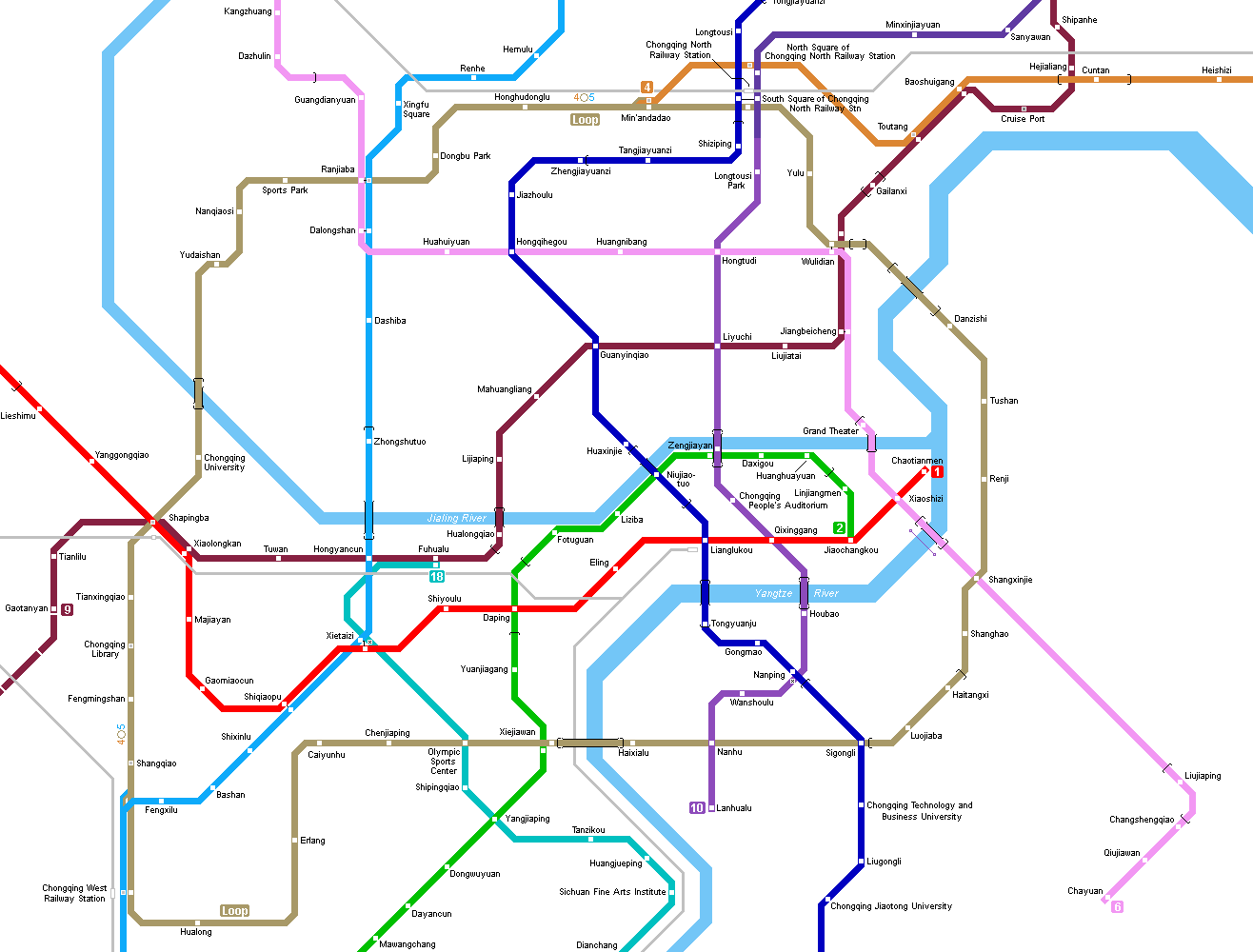
Chongqing Rail Transit Map (urbanrail.net)
Chongqing’s metro isn’t just transportation. It’s a moving sightseeing platform through the cliffs and gorges of the city. As of 2025, it has 13 lines and over 580 km of routes. And yes, some stations feel like they belong in a sci-fi movie.
Operating hours: 6:30 AM – 11:00 PM
Tickets: Single ride tickets, transport cards, or scan directly with Alipay/WeChat
Bonus: Announcements are in Chinese and English, and most stations are accessible
🟥 Line 1: Classic Route
This east-west red line is your go-to for a classic Chongqing day. It connects many of the city’s most iconic spots.
- Xiaoshizi Station 小什字站: The jackpot stop. From here, walk to Jiefangbei, Hongya Cave, the Yangtze Cable Car, and Raffles City.
- Jiaochangkou Station 较场口站: Start the famous Shancheng Pedestrian Trail here. It’s a charming hike through old alleys and steps.
- Eling Station 鹅岭站: Visit Eling Park and Eling Erchang—a cool art zone and café hub.
- Ciqikou Station 磁器口站: Step back in time at the ancient town. Try local snacks and tea.
- University Town Station 大学城站: Stop by Lu Zhongli Art Museum at Sichuan Fine Arts Institute. The giant wall murals are breathtaking.
🟩 Line 2: The Magical Route
This is the green line for visitors. If you’re looking for the “train through the building” moment—this is it.
- Liziba Station 李子坝站: Watch the light rail pierce through a residential tower. Stand on the viewing platform for the perfect shot.
- Yangjiaping Station 李子坝站: Transfer here for a short bus to the zoo. Meet the internet-famous panda “Four Meatballs.”
- Xiejiawan Station 杨家坪站: Visit Zhongshuge (the magical mirrored bookstore) and the old-school Traffic Teahouse.
- Zengjiayan Station 曾家岩站: See Kuixinglou and the iconic Eighteen Ladder district.
- Daxigou Station 大溪沟站: From here, walk to the People’s Auditorium and Three Gorges Museum.
🟦 Line 3: Style Meets Speed
This north-south blue artery connects the airport and several lively urban hubs.
- Guanyinqiao Station 观音桥站: Shop, snack, and vibe at Chongqing’s trendiest pedestrian street.
- Jiujie Station 九街站 : Nightlife central. Bars, BBQ, and buzz till dawn.
- Lianglukou Station 两路口站: Ride the Crown Escalator—the second-longest escalator in Asia.
- Sigongli Station 四公里站: Hop on a bus to Nanshan Mountain. Don’t miss One Tree Hill or Yihuali Night Park for epic skyline views.
💗 Line 6: River Views and Cross-City Charm
This pink line crosses both the Yangtze and Jialing Rivers. The scenery from the train windows? Wow.
- Xiaoshizi Station 小什字站: Same as Line 1, right in the sightseeing heart of the city.
- Shangxinjie Station上新街站 : Visit Longmenhao and Xiahao Old Streets. Think ancient wooden houses, cafés, and mountain vibes.
- Grand Theatre Station 大剧院站: Hands down the best spot to photograph Hongya Cave across the water. Go at sunset!
🟡 Loop Line: For the Full Picture
Want to see the big picture? This yellow line loops around the city and connects key neighborhoods.
- Danzishi Station 弹子石站: Walk through Danzishi Old Street where history meets modern art.
- Haitangxi Station海棠溪站 : Visit the iconic tube buildings featured in Better Days.
- Shapingba Station 沙坪坝站: Cultural and commercial center. Great for shopping and people-watching.
Metro Tips:
- Download the Chongqing Metro App for real-time maps and updates
- Avoid rush hours (7:30–9:00 AM and 5:30–7:00 PM)
- Fares are 2–7 RMB. If you’re metro-hopping all day, get a day pass!
Buses: Into the City’s Veins
Want to experience Chongqing at street level? Hop on a bus. It’s slower, but more local. You’ll ride with grannies hauling groceries and teens with street snacks—and that’s part of the fun.
Operating hours: Usually 6:00 AM – 10:30 PM
Fares: 1 RMB for regular, 2 RMB for AC buses
Payment: Cash, transport cards, or QR code scan
Special Routes:
- T480 Tourist Line: Connects major sights like Hongya Cave, the cable car, and Nanshan.
- Sightseeing Buses: Run along the Yangtze and Jialing Rivers. Hop on/off all day.
- Night Routes: Great for late-night wanderers like me.
Tips:
Use a map app for real-time routes. Some buses take longer between stops, so build in extra time.
Taxis & Ride-Hailing: For Point-to-Point Freedom
Sometimes, stairs and transfers just feel like too much. That’s when I call a car.
Taxis:
- Starting fare: 10 RMB for the first 3 km
- Look for: Yellow cabs, lovingly nicknamed “Tuo’er Che”
- How to hail: Wave one down or wait at a designated taxi spot
Ride-Hailing Apps:
- Platforms: DiDi, Caocao, T3
- Pros: Set prices, route tracking, and no surprises
- Booking Tip: Always pin a well-known landmark. GPS sometimes struggles in Chongqing’s multi-layered topography.
Reminders:
- During peak hours, taxis may be scarce. Take the metro if possible.
- There may be bridge/tunnel fees during your trip.
- Airports and train stations have designated pick-up points—follow signs.
Final Local Tip: Watch the Elevation
Chongqing’s roads are like a puzzle tower. Two locations might look close on your map but require a 10-minute walk, five escalators, and two staircases.
So when using navigation apps, don’t just check the distance—check the altitude. You’ll thank me later.
That’s it for now in this Chongqing Travel Guide. You’re ready to move through the city like a local—with a bit of wonder, a touch of sweat, and a whole lot of stories waiting at every stop.
5. One Day, Two Legs, Eight Sights — The Ultimate Chongqing City Walk
If you only have one day in Chongqing, don’t worry—you can still capture the soul of this mountain city on foot.

This Chongqing City Walk is my personal favorite route, carefully planned to avoid backtracking, maximize the views, and deliver surprises at every turn. We’ll go from cliffs to cable cars, neon lights to ancient stone paths—all in 24 magical hours.
Morning: Start Where the City Beats
📍 Stop 1: Jiefangbei 解放碑 (Liberation Monument)
This is Chongqing’s heart. At dawn, it’s calm, dignified, and almost poetic. It’s where the old and new meet face-to-face. Skyscrapers surround a 1940s monument, as if standing guard over the past.

Pro tip: Grab a bowl of spicy xiaomian at Bayi Gourmet Street nearby. It’s fiery, fragrant, and the perfect way to wake up your senses.
Time here: 30 minutes
Address: No. 177 Minzu Road, Yuzhong District 渝中区民族路177号
Next Stop:
- Distance: ~6 km
- Transport: Metro Line 2
- Route: Board at Linjiangmen Station 临江门站→ Get off at Liziba Station 李子坝站
- Time: 15 minutes
- Fare: 3 RMB
Late Morning: Ride Through a Building
📍 Stop 2: Liziba Station 李子坝站— Where the Train Defies Logic
This is the place that put Chongqing on Instagram. A light rail train literally shoots through a residential building. I’ve seen it dozens of times, and it still feels like a magic trick.

Photo tip: Morning light is best. Head to the official viewing platform and wait for the train to enter the tunnel.
Time here: 20 minutes
Address: Intersection of Jialingxin Road and Guihuayuan Road 渝中区嘉陵新路与桂花园路交汇处
Next Stop:
- Distance: ~820m
- Transport: Taxi (recommended—it’s a steep climb) to Eling Erchang 鹅岭二厂
- Time: 8 minutes
- Fare: ~10 RMB
Midday: Creative Vibes and River Views
📍 Stop 3: Eling Erchang 鹅岭二厂— The Artistic Factory
Welcome to a former printing plant turned creative hub. You might recognize it from the film I Belonged to You. Now it’s home to retro cafés, art shops, and rooftop views of the Jialing River.

Must-do: Order an iced latte and sit on the rooftop terrace. Let the breeze and city views sink in.
Time here: 1 hour
Address: No. 1 Eling Main Street, Yuzhong District 渝中区鹅岭正街1号
Next Stop:
- Distance: ~2km
- Transport: Walk (it’s all downhill)
- Route: Follow Eling Street → Zhongxing Road → Shan Cheng Trail 沿鹅岭正街下行→中兴路→山城步道
- Time: 25 minutes
- Experience: Classic Chongqing—stairs, slopes, alleys, and quiet homes
Lunch: Walking Through Old Chongqing
📍 Stop 4: Shan Cheng Trail (Mountain City Walkway)
This is the real Chongqing. One side hugs the cliffs, the other looks out over the river. Bamboo fences, small temples, old locals sipping tea—this is everyday life, preserved.

Snack stop: Try ironing cakes or sanjiaoba (triangle rice dumplings) from tiny shops along the trail.
Time here: 40 minutes
Address: No. 234 Zhongxing Road, Yuzhong District 渝中区中兴路234号
Next Stop:
- Distance: ~530 meters
- Transport: Walk
- Time: 5 minutes
- Route: Exit trail → walk into Shibati district 山城步道出口→十八梯传统风貌区
- Tip: This part is an easy, scenic stroll
Afternoon: Where Past Meets Present
📍 Stop 5: Shibati Traditional Block 十八梯
It’s not ancient, but it feels that way. Cobbled paths, restored courtyard houses, tea shops, and shadow puppets—it’s a nostalgic escape that honors Chongqing’s roots.

Must-do: Catch a face-changing opera show while sipping jasmine tea.
Time here: 1 hour
Address: Shibati, Yuzhong District 渝中区十八梯
Next Stop:
- Distance: ~1 km
- Transport: Walk
- Time: 15 minutes
- Route: From Shibati → Head south to Xinhua Road Cable Car Station 长江索道新华路站
- Highlight: You’ll pass narrow lanes with locals playing cards and hanging laundry—quiet, authentic moments
Late Afternoon: Fly Across the Yangtze
📍 Stop 6: Yangtze River Cable Car 长江索道
This isn’t just a ride. It’s a time machine. Locals still call it the “air bus.” It sways gently above the river as the skyline unfolds around you.

Ticket: 20 RMB one way, 30 RMB round trip
Time here: 40 minutes (including queue)
Tip: Just buy the one-way ticket. The other side has even more to explore.
Next Stop:
- Distance: ~500 meters
- Transport: Walk
- Route: Exit cable car station → head to Xiahaoli Old Street 下浩里老街
- Time: 8 minutes
- Vibe: You’ll immediately notice a shift—quieter, greener, more historic
Evening: Cobbled Calm and Café Breaks
📍 Stop 7: Xiahaoli Old Street : 下浩里老街
This street is soft and golden at sunset. Lanterns sway above stone paths. Café signs peek out from renovated houses. The air smells like old wood and coffee.

My routine: I always stop here for afternoon tea by the river. Watching the lights flicker on across the water? Pure bliss.
Time here: 1 hour
Address: Xiahao Community, Nan’an District 南岸区下浩社区
Final Stop:
- Distance: ~3 km
- Transport: Metro Line 6
- Route: Board at Shangxinjie Station 上新街站→ Get off at Xiaoshizi 小什字站→ Walk to Hongya Cave
- Time: 20 minutes
- Fare: 3 RMB
Night: The Fairytale Ending
📍 Stop 8: Hongya Cave (Hongyadong)洪崖洞
This is it. The view that launched a thousand selfies. At night, Hongya Cave becomes a glowing fantasy tower above the river. Lights drip from the eaves like molten gold.

Dinner idea: Grab hotpot inside the cave complex. Choose a riverside table if you can—spicy broth, cool breeze, and a million-dollar view.
Best photos: Stand on Qiansimen Bridge or walk across to the riverfront for a full panorama.
Time here: 1.5 hours
Address: No. 88 Jiabin Road, Yuzhong District 渝中区嘉滨路88号
Final Tips for Your Chongqing Walking Route
Step Count: Expect ~15,000 steps. Wear comfortable shoes.
Start Time: 7:30 AM is ideal
Budget:
- Transport: ~30 RMB
- Cable Car: 20 RMB
- Meals: 100–150 RMB
What to Bring: - Sunscreen, umbrella, power bank, camera
- Water bottle (lots of uphill paths!)
So there it is—your full-day Chongqing Walking Route. From sleepy tea shops to neon-lit cliffs, this route packs in everything I love about this city.
6. Beyond the City — Unforgettable Chongqing Side Trips
Sometimes, the best part of a journey begins after you leave the city. And in Chongqing, escaping the skyscrapers and street markets for a couple of days reveals something truly spectacular—ancient stone carvings, thunderous waterfalls, hidden mountain valleys, and cinematic scenery that will leave you speechless.
In this part of my Chongqing Travel Guide, I’ll share my favorite 2-day side trip. It’s a journey from wild nature to timeless culture. So lace up your hiking shoes, charge your camera, and let’s get out of town.
Day 1: Wulong Karst & the Three Natural Bridges 武隆天生三桥奇幻之旅
Distance from Chongqing: ~300 km round trip
Suggested departure time: 7:00 AM
Best seasons: Spring, summer, and fall (especially after rain for waterfalls!)
Total day time: About 10 hours

How to Get There
- Direct Tourist Bus: Highly recommended! Buses leave from Jiefangbei or Hongya Cave.
- One-way: 2.5 hours
- Price: ~80 RMB
- High-Speed Train + Shuttle:
- Train: Chongqing North Station → Wulong Station (~2 hours)
- Then: Shuttle bus to the scenic area (~40 minutes)
- Self-drive:
- Route: G65 Baomao Expressway → Wulong Exit
- Time: About 3 hours
Return Options:
- Tourist bus: Last departure ~5:30 PM
- Train: Last return from Wulong ~7:30 PM
- Self-drive: Leave by 6:00 PM to avoid night driving in mountain roads
Explore the Wonders of Wulong
📍 Three Natural Bridges Scenic Area
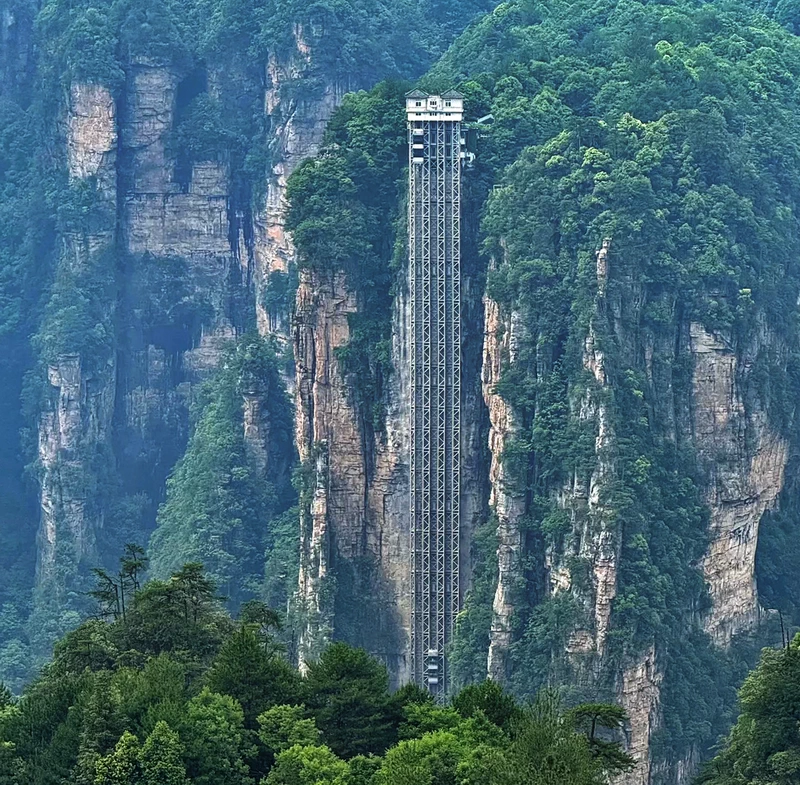
This place is otherworldly. It’s not just one, but three giant natural stone bridges—formed by millions of years of water, wind, and gravity. The canyons are so deep, you take an elevator just to reach the valley floor.
Highlights:
- Tianlong Bridge (天龙桥): The grandest one—235 meters tall, over 300 meters wide. It will make you feel very, very small.
- Qinglong Bridge (青龙桥): Famous for the “sky slit” phenomenon—sunlight streams through a narrow gap like a scene from a dream.
- Heilong Bridge (黑龙桥): Darker, moodier, filled with mist, moss, and waterfalls. I felt like I was in an epic fantasy film.
Fun fact: Scenes from Transformers 4 and Curse of the Golden Flower were filmed here.
Tour Route:
Visitor Center → Elevator to valley → Tianlong → Tianfu Post Station → Qinglong → Heilong
Time needed: 3–4 hours
Lunch in the Valley
You can’t walk all this without a hearty meal!
- Option 1: Local farmhouse restaurants — rustic, tasty, and run by friendly locals.
- Option 2: Tianfu Post Station Restaurant — located right inside a movie set!
Don’t miss these dishes:
- Jiangkou Fish (江口鱼): Freshly caught from the Wu River
- Fried Bacon with Bracken Shoots (蕨粑炒腊肉): Smoky and crispy
- Tofu with Rice (豆花饭): A humble but delicious local staple
Cost: Around 60–80 RMB per person
Tips for Wulong
- Wear non-slip hiking shoes. Some trails are damp and steep.
- Bring a lightweight raincoat—weather shifts fast in the valley.
- Book tickets in advance on the official “Wulong Scenic Area” website.
Day 2: The Spiritual Beauty of Dazu Rock Carvings 大足石刻文化之旅
Distance from Chongqing: ~200 km round trip
Suggested departure time: 8:00 AM
Total time: About 9 hours
Best season: All year round (rain adds a mystical touch)
How to Get There
- Long-distance bus:
- From Caiyuanba or Chenjiaping Bus Station (菜园坝/陈家坪汽车站) → Dazu Bus Station (~2 hours)
- Fare: 45 RMB
- High-speed train:
- From Chongqing West/North → Dazu South (大足南站) (~30 minutes)
- Transfer to local bus to scenic area
- Self-drive:
- Route: G93 Chengdu-Chongqing Ring Expressway → Dazu Exit
- Time: ~1.5 hours
Return Options:
- Last long-distance bus: 6:30 PM
- Latest train: ~8:00 PM
- Self-drive: Start heading back around 5:30 PM
Discover Dazu’s Stone Carving Legacy
📍 Baodingshan Rock Carvings Scenic Area (大足石刻 -宝顶山景区))
This is not just a collection of statues. It’s a story in stone, a journey of spirit, and a masterwork of religious art. UNESCO calls it “the last great monument of China’s cave art.”

What moved me most:
- Thousand-Hand Guanyin: Over 1,000 golden hands, newly restored after 8 years of delicate work.
- Reincarnation Mural: Massive and intricate. A visual guide to Buddhist philosophy and karma.
- The Cow-Herding Scene: So peaceful and vivid, it feels alive.
What to See:
- Main Carving Area on Baodingshan
- Dazu Rock Carving Museum
- 4D Theater with an immersive documentary
Time Needed: Around 4 hours
Lunch in Dazu
There’s nothing fancy here—just honest, flavorful food.
- Vegetarian temple cuisine at the scenic area: light, clean, and meaningful
- Dazu Town eateries offer spicy, crunchy, comforting dishes
Don’t miss:
- Youting Carp (邮亭鲫鱼): Crisp-skinned fish cooked in local spices
- Sanqu Cold Jelly Noodles (三驱田凉粉): Perfect on a warm day
- Dazu Sausage: (大足香肠) Smoked using traditional methods
Cost: 50–70 RMB per person
Tips for Dazu
- Hire a guide or rent an audio tour device—it really deepens your understanding
- Baodingshan and Beishan can be visited with a joint ticket
- Respect the sacred spaces—dress modestly and keep your voice down
Packing List for Your 2-Day Chongqing Side Trip
- Comfy hiking shoes (for Wulong trails)
- A camera—both sites are UNESCO-worthy for a reason
- Light jacket—mornings and evenings can be chilly
- Power bank—you’ll need your phone for photos and navigation
- Some cash—rural areas may have spotty signal
This 2-day side trip combines the breathtaking force of nature with the patient genius of human art.One moment, you’re walking beneath stone bridges carved by time.
The next, you’re tracing a thousand carved hands reaching toward heaven. That’s the magic of Chongqing’s surroundings. That’s why, in every Chongqing Travel Guide, these two places stand out.
7. A Spicy Symphony — Exploring Chongqing Food, One Fiery Bite at a Time
Welcome to foodie heaven.
Honestly, no Chongqing Travel Guide would be complete without diving into the city’s most irresistible adventure—its food. Spicy. Bold. Soul-warming. Chongqing doesn’t just feed you. It challenges you, teases you, and leaves you craving more.
Ready for a full-on Chongqing local flavors tour? Let’s eat our way through it.
Chongqing Hotpot 重庆火锅— A Bubbling Bowl of Brotherhood
If a city had a flavor, Chongqing’s would be hotpot. Spicy, numbing, and fiercely communal.
Locals don’t just eat hotpot—they live it.
Gathered around a nine-grid pot, dipping tripe and tofu, laughing over the heat—that’s the real Chongqing vibe.
Pro tips:
- Go for the red spicy broth if you dare. Not spicy? Choose a “yuan-yang” pot (half spicy, half clear).
- Oil dipping sauce? Go local: sesame oil + garlic + cilantro. Trust me.
Must-tries:
- Fresh beef tripe (七上八下!)
- Duck intestines — quick dip, chewy perfection
- Pig brain — creamy, spicy, unforgettable
- Aorta slices (黄喉) — crisp with every bite
Recommended places: Peijie Hotpot, Zhou Shixiong, Yu Wei Xiaoyu
Chongqing Noodles 重庆小面— A Fiery Hug for Breakfast
Start your day the Chongqing way—with a steaming bowl of Xiaomian 重庆小面
The noodles are springy.
The chili oil is fragrant.
And the toppings? Endlessly customizable.
Go for:
- Pea & minced pork (豌杂面) – the local favorite
- Beef noodles or pork intestine noodles for full flavor
- Dry version if you want intense spice without broth
Best time to eat: Early morning. By noon, most stalls are sold out!
Jianghu Dishes 江湖菜— Wild, Bold, and Unapologetic
This is where Chongqing shows its fierce side. These dishes are loud, dramatic, and bursting with character.
Top pick: Mao xue wang (毛血旺) — a bubbling pot of duck blood, tripe, sprouts, and more.
Pro tip: Always eat with rice. It balances the heat.
Other must-tries:
- Laziji (辣子鸡): Chicken hidden under a mountain of dried chili
- Shuizhu Yu (水煮鱼): Tender fish, numbing spice
- Spring water chicken (泉水鸡): From Nanshan, lighter but still spicy
Street Food — Flavors Around Every Corner
Chongqing’s streets are full of surprises. These snacks are cheap, fast, and unforgettable.
- Suanlafen (酸辣粉): Sweet potato noodles in sour-spicy broth. Add a roujiamo for extra joy.
- Hongyou Chaoshou (红油抄手): Wontons in chili oil. Add vinegar for depth.
- Grilled Fish (烤鱼): Crispy skin, juicy flesh, tons of toppings—perfect for late-night cravings.
River-Style Fish 鱼类特色— Born from Two Rivers
The Yangtze and Jialing Rivers give Chongqing a deep love for fish.
- Wanzhou Grilled Fish (万州烤鱼): Charcoal-grilled until crispy, then simmered in sauce. Choose from spicy, pickled pepper, or garlic flavor.
- Suan Cai Yu (酸菜鱼): Silky-thin fish slices in a sour, spicy broth. Yes, you can drink the soup.
Sweet Breaks — Because You’ll Need Relief from the Heat
After all that spice, let something sweet save your soul.
- Brown sugar glutinous rice cakes (红糖糍粑): Crispy outside, gooey inside, dusted with sugar.
- Tangyuan (小汤圆): Tiny rice balls stuffed with sesame. Try the fermented rice version!
- Bingfen (冰粉): A must in summer. Chilled jelly with raisins, peanuts, and hawthorn. So refreshing.
Foodie Tips from a Local’s Heart
- Spice levels: “Mild” here still means spicy. Be honest with your server.
- Timing: Hotpot is best at night. Noodles? Grab them before noon.
- Drink water, but also try local herbal teas or soy milk to cool your tongue.
From your first bite of xiaomian to your last fiery slurp of hotpot, Chongqing food is a wild ride.
It’s not just about the flavors. It’s about the heat, the laughter, the sweat, and the stories shared across the table.
So come hungry. And bring brave taste buds. In this Chongqing Travel Guide, one truth always holds: you’ll leave full—and full of memories.
From sky-high trains to riverside hotpot, Chongqing is a living, breathing adventure. Every corner hides a story. Every street tastes like something new. Whether you’re here for a day or a week, Chongqing will surprise, challenge, and charm you.
I hope this Chongqing Travel Guide inspires you to explore deeper, walk farther, and eat spicier. The magic of this mountain city isn’t just in the views—it’s in how it makes you feel.
So take that first step. Chongqing is waiting—with open arms and a bubbling pot.
About the Author
Ruqin is the founder of Ruqintravel.com and has spent more than four decades working in China’s travel industry. Drawing on hands-on experience in cities like Beijing and Hangzhou, he personally researches and updates each guide to help international travelers navigate China with confidence.
Further Reading
The Best Chongqing Tour Itinerary
How to Book Chongqing Attraction Tickets: All You Need to Know