
Written and updated by Ruqin
Last updated: May 09, 2026
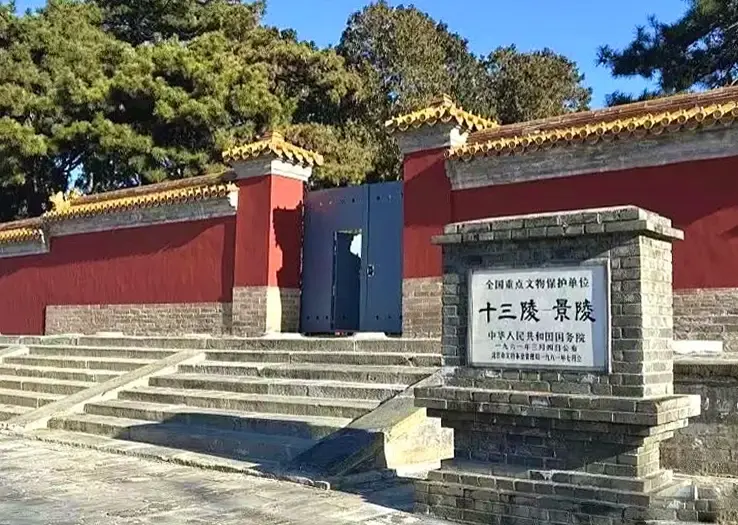
It was a quiet December morning when I heard the news—after nearly six centuries in silence, Jingling Tomb in Beijing (景陵) was finally opening to the public.
As of December 22,2025, visitors can now step into one of the Ming Dynasty’s most well-preserved imperial burial sites.
Hidden beneath the eastern slopes of Tianshou Mountain (天寿山), the Jingling Tomb has stood quietly since 1435.
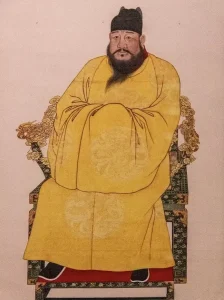
Built for Emperor Xuanzong Zhu Zhanji (明宣宗朱瞻基) and Empress Sun (皇后孙氏), this royal Ming Dynasty tomb spans over 25,000 square meters.
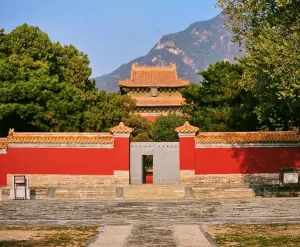
The layout is remarkably intact, with ancient remains of the stele pavilion, Ling’en Hall (祾恩殿遗址), and the striking square fortress and tower that once guarded the soul of the emperor.
Visiting Jingling Tomb isn’t just a walk through history—it’s a rare chance to explore a site long kept from public view. With its official opening, more than half of the Ming Tombs are now open for exploration, revealing deeper layers of China’s imperial legacy.
Discovering the Subtle Beauty of Jingling Tomb
When I first approached Jingling Tomb Beijing, I didn’t expect grandeur. After all, it’s often compared to larger sites like Changling or Dingling. But the closer I got, the more I realized—this tomb tells a quieter, more intricate story.
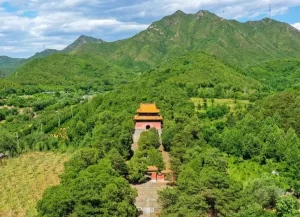
Unlike the more visited Beijing Ming Tombs, Jingling hides its beauty in the details. A peaceful 1.5-kilometer spirit path branches off from the main avenue leading to Changling. It winds gently through the hills, past a single-arch stone bridge, and finally leads you toward the tomb nestled in the mountain’s embrace.
First, I noticed the structure. The layout of this Ming Dynasty tomb in Beijing feels both royal and deeply connected to nature. The burial wall—called Baocheng—was built to match the slope of the land. It’s round at the back, square at the front, blending perfectly into the hillside. Everything here follows a central axis: Ling’en Gate, Ling’en Hall, and the Lingxing Gate all line up with calm precision, just as the emperors intended.
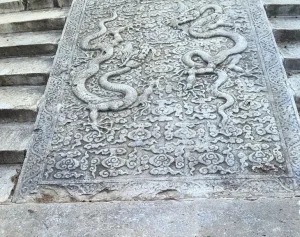
Then, I stepped closer to the ruins of the Ling’en Hall. The stone platform and sacred pathway still remain. The dragon carvings on the path—two dragons playing with a pearl—caught the light. They were sharper, more vivid than I’d seen at other tombs. More expressive than the cloud patterns of Xianling. I paused there for a while, imagining how the grand wooden pillars once stood, each carved with interlocking dragons.
Jingling may be lesser known, but it offers something rare—a quiet, textured glimpse into the craftsmanship and soul of the Ming Dynasty tombs in Beijing.
Why Jingling Tomb Matters—Past, Present, and Beyond
Visiting Jingling Tomb isn’t just about admiring ancient stonework or wandering a quiet path through the forested hills. It’s about stepping into a living piece of history—a rare window into the “Renxuan Prosperity” (仁宣盛世) of the early Ming era.
As I stood among the weathered stones, I could feel it. Jingling isn’t just another stop along the Beijing Ming Tombs route. It’s a cultural revival. By opening this site, Changping District is reconnecting the dots—linking tombs, trails, and dynastic memory into a broader cultural journey.
First, it’s worth knowing that only eight of the thirteen Ming tombs are currently open to the public. The big names—Changling, Dingling, and Zhaoling—see the most visitors. However, sites like Kangling, Yongling, Siling, and now Jingling Tomb Beijing require advance reservations. These lesser-known tombs are slowly becoming vital parts of the historical map.
Next, I learned that by 2030, authorities hope to open all thirteen imperial tombs to the public. That means visiting Jingling Tomb now offers a rare chance to experience this early phase of a much larger project—one that aims to expand UNESCO World Heritage access and deepen understanding of China’s imperial legacy.
Finally, what struck me most was the intention behind it all. Jingling isn’t being restored to impress. It’s being reopened to remember. Through careful preservation and thoughtful presentation, it’s helping tell the fuller story of the Ming—stone by stone, soul by soul.
Planning Your Visit to Jingling Tomb: What to Know Before You Go
Visiting Jingling Tomb Beijing isn’t like walking into a typical tourist site. It still feels raw, quiet, and refreshingly untouched. That’s part of its charm—but also why you’ll need to plan ahead.
First, Jingling Tomb tickets booking is only available online. I made my reservation through the Ming Tombs Scenic Area official Douyin account, though the Changping Cultural Tourism Group WeChat mini program works too. Spots open up starting December 22, but they’re limited—so don’t wait too long.
Next, be aware that all visits must be done with a guided tour. You can’t explore freely yet. I booked mine for 239 RMB per person. It’s a bit more expensive than other tombs, but the guide added a lot—stories, context, and little architectural details I would’ve missed.
Meanwhile, I’ll give you a heads-up: the tomb is still in early stages of being visitor-ready. Paths are uneven, and some areas feel more like a hike than a stroll. Definitely wear sneakers. I did, and I was thankful for it by the time we reached the upper platforms.
Jingling Tomb entrance fee is included in the guided tour booking, so no need to worry about paying extra on site.
The tomb is located on Changchi Road in Changping District, inside the broader Ming Tombs area. It’s open from 8:30 AM to 5:00 PM. Early mornings are especially peaceful.
If you’re looking for a quieter, more meaningful experience at the Ming Tombs—Jingling Tomb Beijing is absolutely worth the effort.
Jingling Tomb Beijing may not be the grandest of the Ming tombs, but it offers something rare—stillness, beauty, and a deep sense of history. Walking its quiet paths felt like stepping into a forgotten chapter of the past.
For travelers seeking more than crowds and photo spots, this is a place to connect with imperial heritage in a meaningful way. If you’re planning a cultural journey through Beijing, don’t overlook the quiet power of Jingling Tomb Beijing.
About the Author
Ruqin is the founder of Ruqintravel.com and has spent more than four decades working in China’s travel industry. Drawing on hands-on experience in cities like Beijing and Hangzhou, he personally researches and updates each guide to help international travelers navigate China with confidence.
Further Reading
How to Get to Ming Tombs: Maps, Buses, How to Visit & Travel Tips
Beijing Changping District Travel Guide: Visitor Centers and Tips
How to Visit Juyongguan Great Wall: Maps, Tickets, Routes & Tips
How to Get to Badaling Great Wall: Buses, Trains, Maps & Tips