
Written and updated by Ruqin
Last updated: May 30, 2026
China always reveals itself in layers. Even after years of traveling across the country, I still come across details that surprise me—something ancient beside something futuristic, or a tradition quietly woven into daily life.
These 10 interesting facts about China (or if you prefer, 10 fun facts about China) offer a small window into what makes this country so fascinating. They go beyond the headlines and into the stories, habits, and contrasts that many travelers notice the moment they arrive.
1. The Great Wall of China is Not a Single Wall
The first time I stood on the Great Wall, what struck me wasn’t just its size—it was how it kept disappearing into the mountains, then reappearing again along the ridgelines. It felt endless. But what many travelers don’t realize is that the Great Wall of China is not one continuous wall.
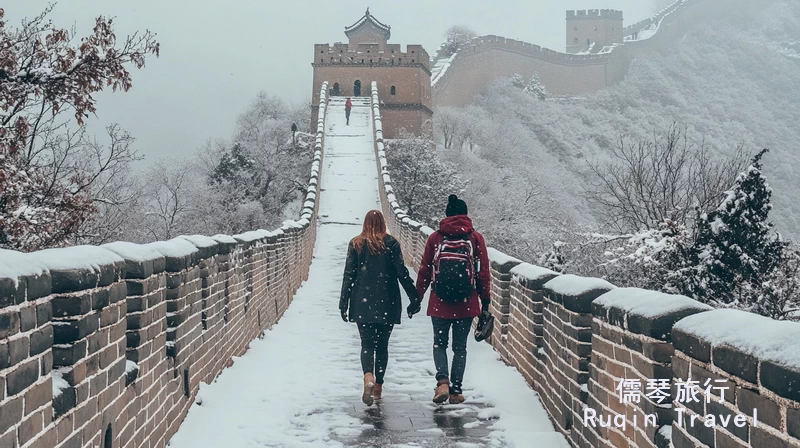
Instead, it’s a vast network of walls, watchtowers, mountain passes, and fortifications built across different dynasties over more than 2,000 years. Altogether, it stretches for over 13,000 miles across northern China. Some sections were built for military defense, while others helped send signals, control borders, and protect important trade routes.
That’s part of what makes the Great Wall so fascinating. It isn’t a single monument—it’s layers of Chinese history built into the landscape. And when you walk along it, you’re not just seeing one wall. You’re walking through centuries of strategy, resilience, and human effort.
2. Chinese New Year Is Celebrated for 15 Days
If you happen to be in China during Chinese New Year, you feel it long before the actual day arrives. Train stations fill up, red lanterns appear in shop windows, and families begin preparing for the biggest holiday of the year. It’s not just New Year’s Day—it’s an entire season.
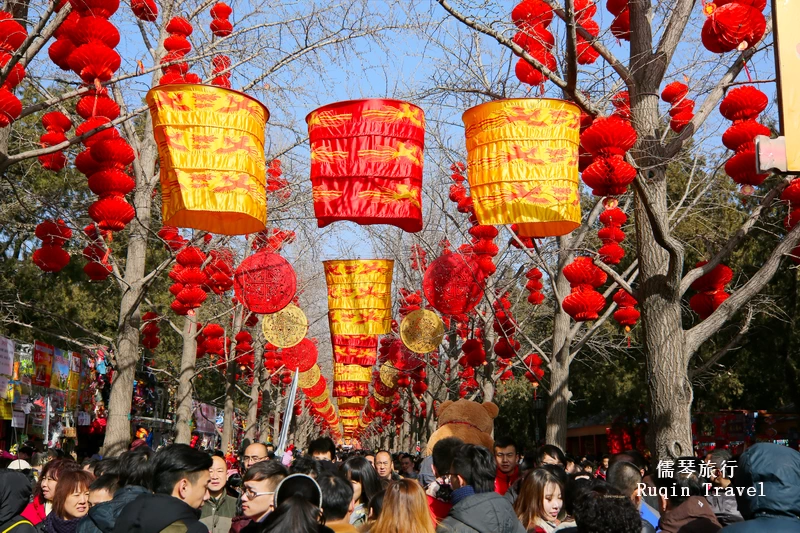
One of the most interesting facts about China is that Chinese New Year celebrations last for 15 days. The holiday begins with family reunion dinners on Lunar New Year’s Eve and continues with visiting relatives, sharing festive meals, giving red envelopes, and setting off fireworks. For many families, it’s the most important time of the year to come home.
The celebration ends with the Lantern Festival on the fifteenth day of the lunar new year. By then, streets and parks glow with lantern displays, and in some places you’ll see dragon dances, lion dances, and evening performances. Each year is also linked to one of the 12 Chinese zodiac animals, which adds another layer of meaning—and a lot of fun—to the celebration.
3. China Has the second Largest Population in the world
One of the first things many travelers notice in China is the sheer scale of everything. A railway station feels like a small city. City avenues seem endless. Even an ordinary weekday in a public park can feel wonderfully full of life. That sense of scale is closely tied to one remarkable fact: China has the second largest population in the world.

For many years, China was the world’s most populous country. That changed in 2023, when India moved into the top position. Even so, China’s population remains enormous, with more than 1.4 billion people spread across a country of huge regional differences, languages, and local traditions.
But numbers only tell part of the story. What travelers often remember is how population shapes daily life in China—from lively morning markets and packed high-speed trains to neighborhoods that stay active late into the evening. At the same time, China is also changing. An aging population and lower birth rates, influenced in part by the former one-child policy, are reshaping the country in visible and quiet ways. It’s one of the many contrasts that makes modern China so fascinating to observe up close.
4. China Gave the World Paper, Printing, Gunpowder, and the Compass
One of the things I often remind travelers is that many objects we use every day without thinking—books, maps, even the compass—connect back to ancient China. It’s easy to admire China’s temples, palaces, and old city walls. But some of China’s greatest contributions are the ideas that traveled far beyond its borders.
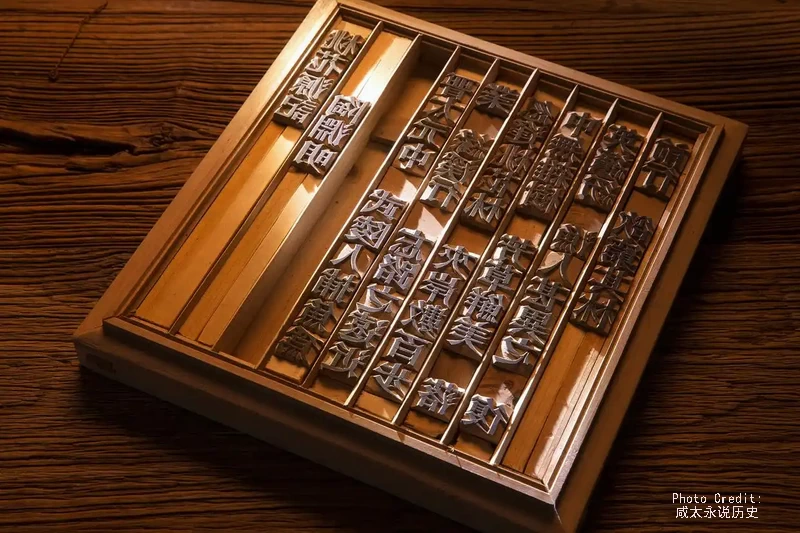
China is famous for what are known as the Four Great Inventions: paper, printing, gunpowder, and the compass. Together, they changed not only Chinese history, but world history.
Paper was developed during the Han Dynasty, replacing heavier writing materials like bamboo strips and expensive silk. Printing followed centuries later, making books more widely available and helping knowledge spread more quickly. Gunpowder, first discovered by Chinese alchemists, transformed warfare—and eventually celebrations too, through fireworks that still light up festival nights across China. Then there’s the compass, which helped sailors navigate with greater confidence and played an important role in global exploration.
When you travel in China, these inventions don’t feel like distant history. You still see their legacy everywhere—in calligraphy shops, temple fairs, bookstores, museums, and Lunar New Year fireworks overhead. Ancient China wasn’t just preserving tradition; it was shaping the world in ways we still live with today.
5. Tea Was Discovered in China
If you spend any time traveling in China, tea finds you quickly. Someone pours you a cup in a guesthouse before you even sit down. A restaurant serves hot tea before the food arrives. In old towns and mountain villages, you’ll see people carrying thermos bottles filled with tea leaves steeping all day. It’s part of daily life in a very natural way.
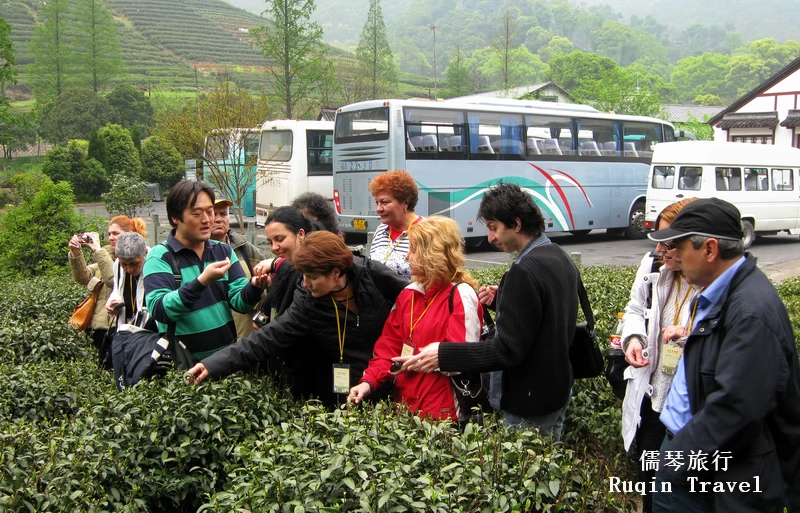
One of the most interesting facts about China is that tea originated here thousands of years ago. China is considered the birthplace of tea, with a tea culture that stretches back over 5,000 years. Green tea, black tea, oolong, white tea, and Pu’er all trace their roots to different parts of China, each shaped by local climate, geography, and tradition.
But in China, tea is more than a drink. It’s a gesture of welcome. It’s part of conversation, family gatherings, business meetings, and quiet moments alone. Different regions are known for different teas—from the delicate green teas of Hangzhou to the rich earthy Pu’er of Yunnan—and many travelers are surprised by how much variety exists within a single cup.
What I love most is that tea in China slows things down. It invites you to pause, sip, and notice where you are. And that may be one of the most beautiful parts of Chinese culture.
6. China Has the World’s Largest High-Speed Rail Network
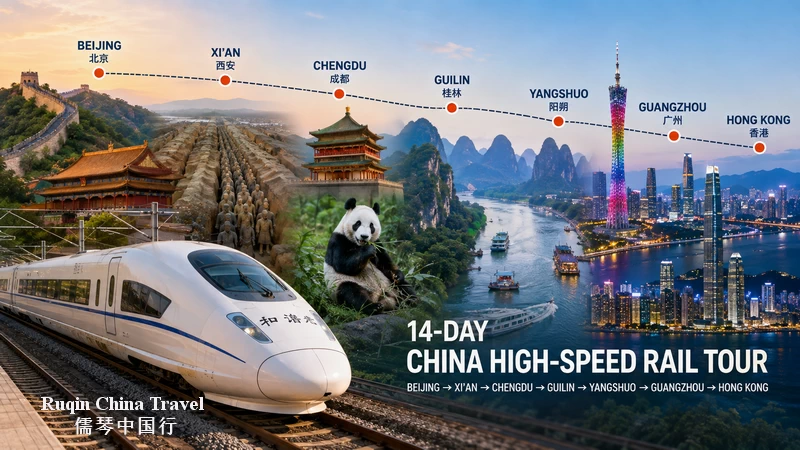
One of the moments that surprises travelers most in China is stepping onto a high-speed train and watching the countryside blur past the window while everything inside stays quiet and remarkably smooth. You can leave one major city after breakfast and arrive in another by lunchtime. It still feels a little futuristic, even after many rides.
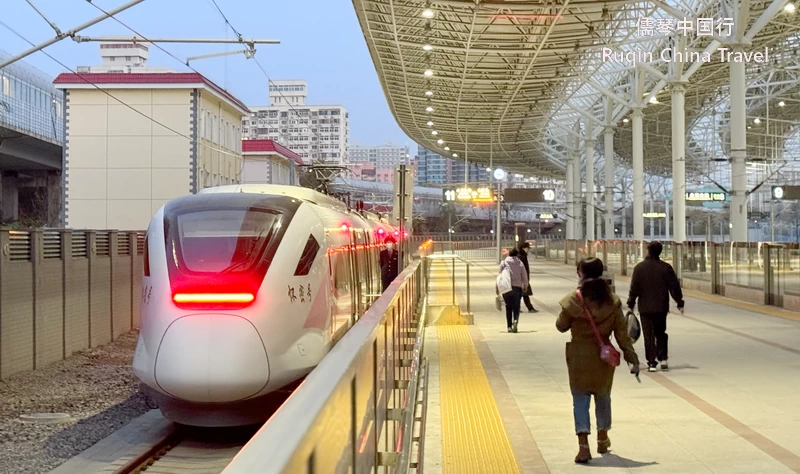
One of the most impressive facts about China is that it has the world’s largest high-speed rail network. In just a relatively short time, China has built an extraordinary system connecting major cities, smaller regional hubs, and places that once took much longer to reach. Many trains travel at speeds of up to 350 km/h, making long-distance travel fast, comfortable, and surprisingly convenient.
For travelers, this changes the way you experience the country. A journey from Beijing to Xi’an or Shanghai to Hangzhou becomes part of the adventure instead of just transportation. You move quickly between ancient capitals, mountain landscapes, modern skylines, and water towns—all without boarding a plane.
To me, China’s high-speed rail is one of the clearest examples of the country’s contrasts: thousands of years of history connected by some of the most advanced transport infrastructure in the world. And once you ride it, it’s hard not to be impressed.
7. China Is Home to 56 Officially Recognized Ethnic Groups
One of the biggest misconceptions travelers have before visiting China is imagining it as culturally uniform. Then they begin traveling—from one province to another—and quickly realize how much China changes across landscapes, languages, food, clothing, and local traditions.
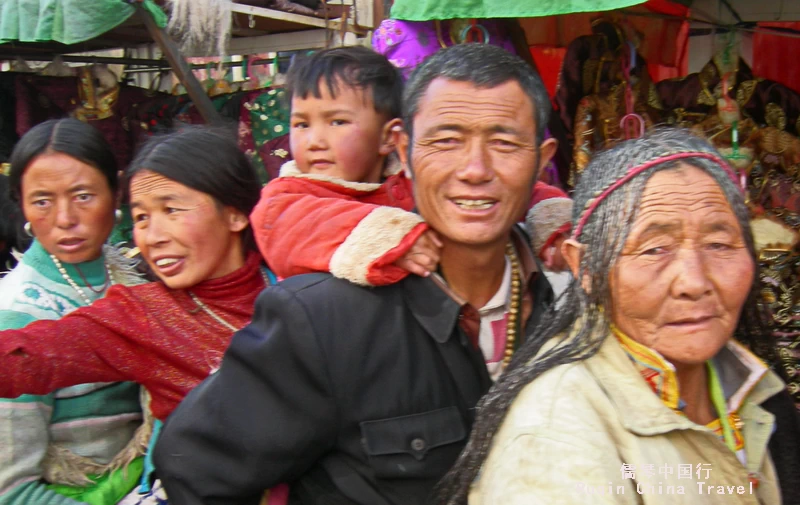
One of the most fascinating facts about China is that the country officially recognizes 56 ethnic groups. Han Chinese make up the majority population, but 55 minority ethnic groups also contribute to the country’s extraordinary cultural richness. Across China, these communities have shaped local identity for centuries through their own languages, architecture, festivals, music, and cuisines.
You can feel this diversity while traveling. In Yunnan, village markets may look and feel completely different from what you see in Beijing. In Tibet, the architecture, spiritual traditions, and mountain culture create a distinct atmosphere. In Inner Mongolia, open grasslands and horseback traditions tell another story altogether. Even within one province, customs can vary from valley to valley.
What makes China so rewarding to explore is that it’s never just one experience. It’s many cultures existing across one vast country—sometimes blending together, sometimes standing beautifully apart. For travelers willing to look beyond the major cities, this cultural diversity becomes one of the most memorable parts of visiting China.
8. China’s Grand Canal Is the Longest Canal in the World
Some of China’s most remarkable places don’t announce themselves loudly. The Grand Canal is one of them. You may find yourself walking beside it in an old town, crossing it by stone bridge, or watching boats drift past without realizing you’re beside one of the greatest engineering achievements in human history.
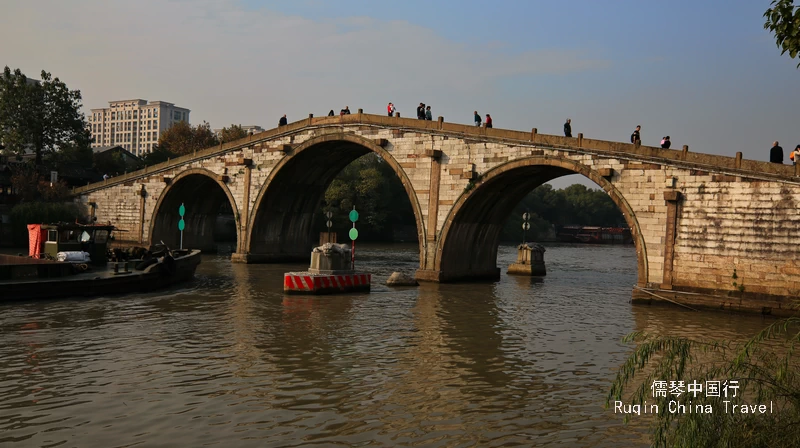
One of the most interesting facts about China is that the Grand Canal is the longest man-made canal in the world. Stretching more than 1,700 kilometers, it links northern and southern China through a vast waterway system that has connected cities, farms, and trading centers for centuries.
Construction began more than 2,000 years ago, and over time the canal became essential to China’s development. Grain, silk, goods, travelers, and ideas all moved along this route. In many ways, it became the country’s historic transport lifeline—long before railways and expressways existed.
What I love about the Grand Canal is how alive it still feels. In places like Hangzhou, Suzhou, or smaller canal towns in Jiangsu and Zhejiang, the water remains part of daily life. Boats still pass under old bridges. Locals gather along the waterfront in the evenings. Tea houses and old lanes open onto the canal just as they have for generations.
It’s easy to see it as just a historic waterway. But when you stand beside it, the Grand Canal feels more like a moving thread that has quietly tied China together for centuries.
9. China Uses Just One Official Time Zone
This is one of those facts about China that surprises almost every traveler the first time they hear it. China is enormous—stretching thousands of kilometers from east to west—yet the entire country follows one official time zone: Beijing Time.
That means whether you’re in Beijing on the east coast or far west in Xinjiang, the clock officially shows the same time.

You don’t usually notice it much in eastern cities like Shanghai, Beijing, or Hangzhou. But farther west, it becomes much more noticeable. Sunrise can feel unusually late, and daylight often lingers well into the evening. Dinner may start later, markets stay active later, and daily routines can feel slightly shifted compared with what the clock says.
For travelers, it’s both practical and fascinating. Trains, flights, hotels, attraction opening hours—all operate on Beijing Time, which makes planning easier across such a large country. But at the same time, local life adapts naturally to daylight in different regions.
I always think this says something important about China itself: it’s one country moving on one shared clock, while daily life still feels wonderfully different depending on where you are.
10. The Forbidden City Was Said to Have 9,999 Rooms
Walking through the Forbidden City for the first time can feel almost unreal. Courtyard after courtyard opens ahead of you, red walls stretch into the distance, and golden rooftops seem to go on forever. No matter how many photos you’ve seen, the scale feels different when you’re standing inside it.
One of the most famous fun facts about China is that the Forbidden City was traditionally said to have 9,999 rooms. According to legend, 10,000 was considered the symbolic number of heaven, so the emperor’s palace was designed with one room fewer—reflecting immense imperial power while still leaving heaven above the emperor.
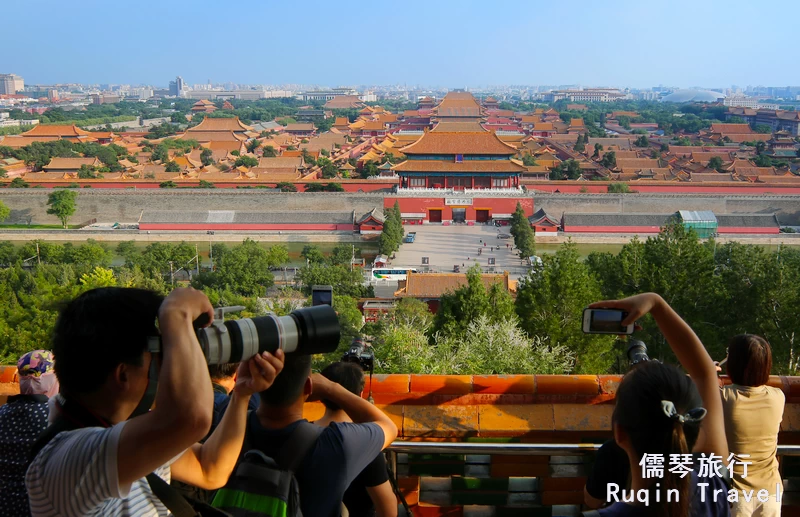
At the heart of Beijing, the Forbidden City served as the imperial palace for nearly 500 years, home to emperors of the Ming and Qing dynasties. It’s an enormous complex of palaces, ceremonial halls, gates, and quiet inner courtyards, carefully arranged to express order, authority, and connection between earthly rule and the cosmos.
But beyond the numbers, what stays with many visitors is the feeling of the place. The vast open courtyards. The deep red palace doors. The sound of footsteps on ancient stone. It’s not just one of China’s greatest historic landmarks—it’s a place where Chinese history feels incredibly close. And for many travelers, it becomes one of the most unforgettable moments in Beijing.
These 10 interesting facts about China offer only a small glimpse into a country that feels endlessly layered. The more time you spend here, the more China reveals itself—through its history, traditions, landscapes, and the rhythms of everyday life.
That’s what keeps China so fascinating to me. Ancient and modern often exist side by side here, and around almost every corner there’s something unexpected waiting to be noticed.
About the Author
Ruqin is the founder of Ruqintravel.com, where he shares firsthand travel advice and cultural insights drawn from years of living and working in China. He personally researches and updates every guide to help international travelers explore China with confidence, curiosity, and deeper understanding.
Further Reading
Chinese Red Envelope Tradition – A Foreigners’ Guide
Traditional Chinese Clothing: A Foreigner’s Guide
Chinese Jade Culture: A Foreigner’s Guide
Chinese Dragon: Myths, History, and Symbolism
Traditional Chinese Festivals – A Foreigner’s Guide
Chinese Seal Carving – A Foreigner’s Guide
Chinese Zodiac Signs Explained – A Foreigner’s Guide
Traditional Festival Handicrafts in China – A Shopper’s Guide
Confucius Philosophy – A Foreigner’s Guide to Confucianism