
Itinerary designed by Ruqin
Last updated: August 17, 2026
Overview
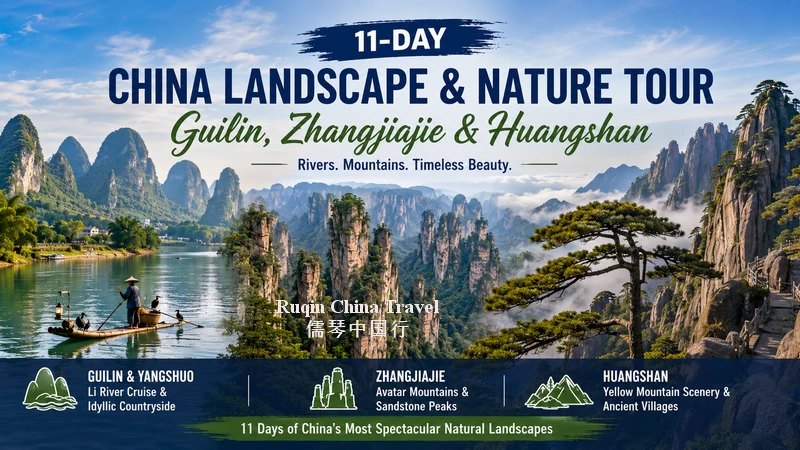
For a first landscape journey through China, I would choose three very different regions: Guilin and Yangshuo, Zhangjiajie, and Huangshan.
The route begins gently in southern China. First, you cruise between Guilin’s limestone peaks and explore the countryside around Yangshuo. Next, you travel north to Zhangjiajie’s dramatic sandstone mountains. Finally, Huangshan brings the journey to a quieter finish among granite peaks, twisted pines, and mountain clouds.
More importantly, the route makes practical sense.
Guilin → Zhangjiajie → Huangshan avoids unnecessary backtracking. Guilin also makes a much better starting point than Zhangjiajie. Travelers can reach Guilin conveniently after visiting Hong Kong or Guangzhou, while Zhangjiajie has fewer useful international connections.
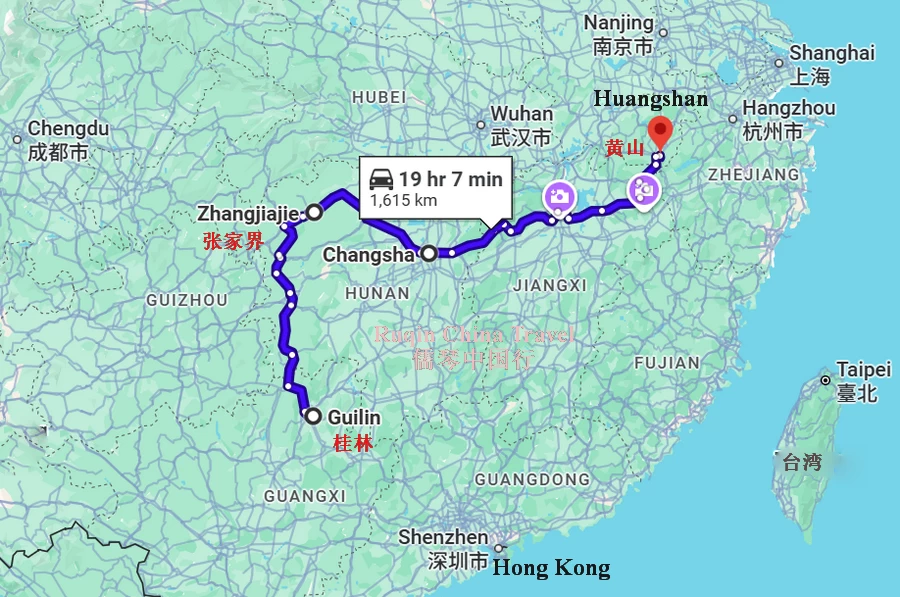
Road Map: Guilin – Zhangjiajie – Huangshan (Google Maps Source)
At the other end, Huangshan connects well by high-speed rail with Hangzhou, Shanghai, and Beijing. For example, Huangshan North to Hangzhou can take around 1.5–2.5 hours, while numerous trains connect Huangshan with Shanghai. Direct high-speed trains also run to Beijing.
So this itinerary works both geographically and practically.
At-a-Glance Route
| Day | Destination | Main Experience | Overnight |
|---|---|---|---|
| Day 1 | Guilin | Arrival & Guilin city | Guilin |
| Day 2 | Guilin → Yangshuo | Li River Cruise | Yangshuo |
| Day 3 | Yangshuo | Yulong River & countryside | Yangshuo |
| Day 4 | Yangshuo → Guilin → Zhangjiajie | High-speed train, about 7 hours | Zhangjiajie |
| Day 5 | Zhangjiajie | Yuanjiajie & Tianzi Mountain | Wulingyuan |
| Day 6 | Zhangjiajie | Golden Whip Stream & Ten-Mile Gallery | Wulingyuan |
| Day 7 | Zhangjiajie | Tianmen Mountain | Zhangjiajie |
| Day 8 | Zhangjiajie → Changsha → Huangshan | High-speed trains via Changsha South | Huangshan |
| Day 9 | Huangshan | Yellow Mountain | Huangshan Mountain |
| Day 10 | Huangshan | Sunrise, mountain walk & descent | Huangshan |
| Day 11 | Huangshan | Hongcun & onward travel | Departure |
Route: Guilin → Yangshuo → Zhangjiajie → Huangshan
Duration: 11 days / 10 nights
Best for: First-time visitors who want China’s signature natural landscapes
Travel style: Nature, scenery, light hiking, photography
Pace: Moderate, with two long rail-transfer days
Best seasons: April–May and September–November
Detailed 11-Day Itinerary
Day 1 – Arrive in Guilin
Welcome to Southern China’s Karst Country
Arrive in Guilin and transfer to your hotel. I would stay near the city center or the Two Rivers and Four Lakes area for the first night.
Keep today easy, especially after a long international journey. In the late afternoon, take a relaxed walk around Ronghu Lake and Shanhu Lake.
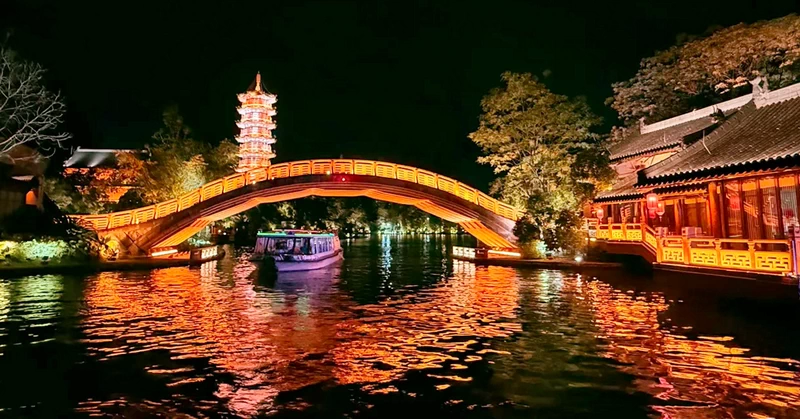
Two Rivers and Four Lakes Night Cruise
Guilin makes a good introduction to this nature itinerary. The city sits among limestone hills, so the landscape begins almost as soon as you arrive.
Why Start in Guilin?
There is also a practical reason.
Guilin works well as an entry point for travelers coming from Hong Kong or Guangzhou. This makes the route easier to combine with a longer journey through southern China.
Overnight: Guilin
Day 2 – Li River Cruise from Guilin to Yangshuo
Morning – Cruise Down the Li River
After breakfast, transfer to the pier and board a Li River cruise to Yangshuo.
This is one of China’s classic landscape journeys. Limestone peaks rise from both sides of the river, while bamboo groves, villages, farmland, and fishing boats appear between them.
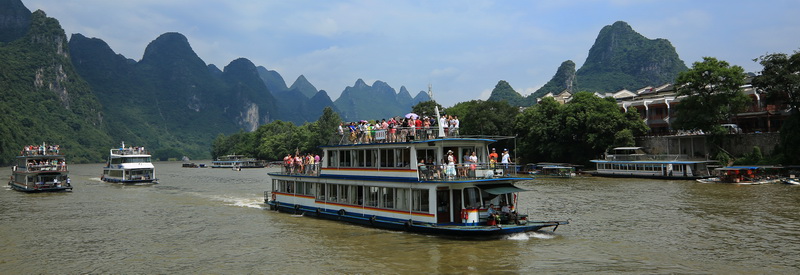
Don’t treat the cruise simply as transportation. The journey itself is today’s main experience.
Spend some time outside on deck when weather permits. The scenery changes constantly as the river bends between the mountains.
Afternoon – Arrive in Yangshuo
After arriving in Yangshuo, transfer to your hotel.
Later, walk beside the river or explore the quieter lanes outside the town center. Yangshuo’s center can become busy, so I prefer staying slightly away from West Street.
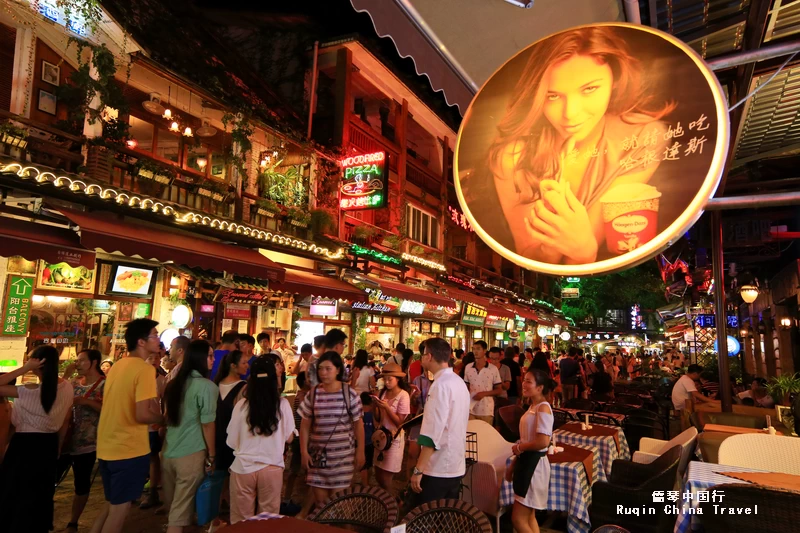
Yangshuo’s West Street
Keep the evening relaxed.
Overnight: Yangshuo
Day 3 – Yulong River & Yangshuo Countryside
Morning – Yulong River
After breakfast, head into the countryside around the Yulong River.
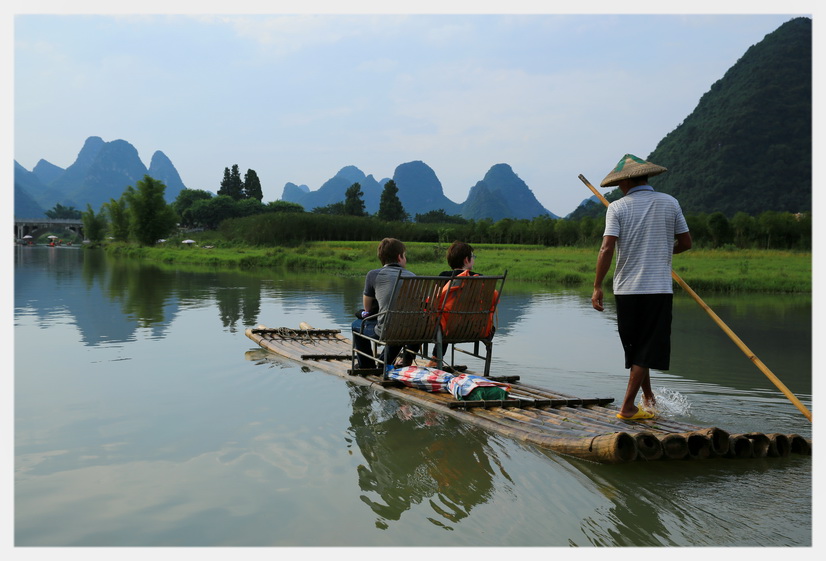
Yulong River bamboo raft
This landscape feels very different from the dramatic mountains coming later. Limestone hills rise gently behind rice fields, small villages, vegetable plots, and quiet country roads.
Take a bamboo raft along a suitable section of the river if local conditions allow. Otherwise, walking beside the river is equally enjoyable.
Afternoon – Explore the Countryside
Later, explore the surrounding countryside by bicycle, e-bike, or on foot.
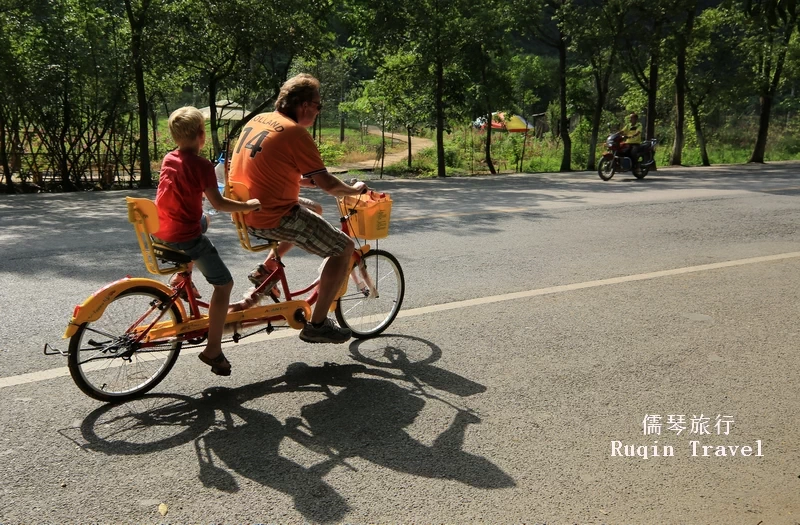
Explore the countryside by bike in Yangshuo
Don’t worry about seeing every named attraction. Around Yangshuo, I find that the landscape between the attractions is often the most memorable part.
Return to your hotel before dark. Then pack tonight because tomorrow begins early.
Overnight: Yangshuo
Day 4 – Yangshuo → Guilin → Zhangjiajie
Early Morning – Return to Guilin
Today is primarily a transportation day.
Leave Yangshuo early and transfer to Guilin Railway Station or Guilin North Railway Station, depending on your booked train.
Allow plenty of time. I would rather spend an extra 30 minutes at the station than risk missing a long-distance train.
High-Speed Train to Zhangjiajie
Take a direct train from Guilin to Zhangjiajie West Railway Station.
Current schedules include direct services taking roughly 7–7.5 hours. For example, recent schedules show D3970 running from Guilin to Zhangjiajie West in about seven hours. Train numbers and times can change, so always check again when booking.
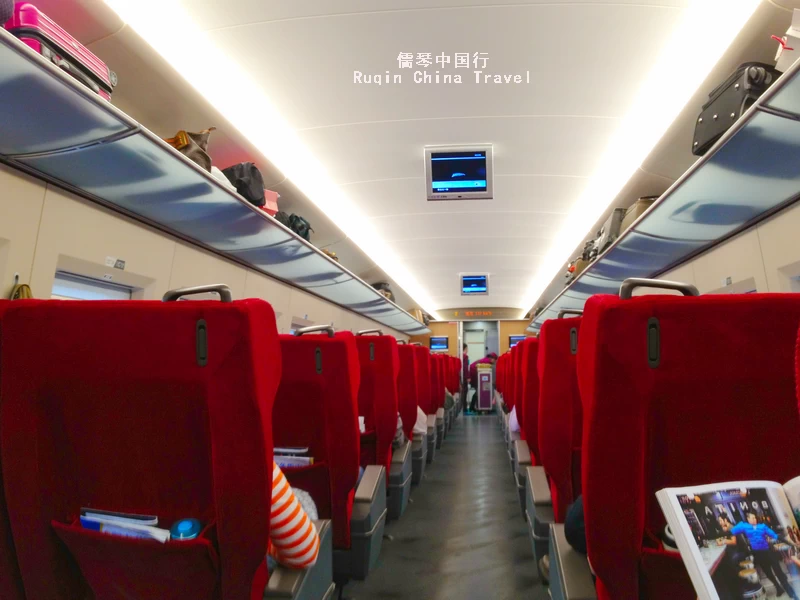
This long rail journey is one reason I would not schedule sightseeing today.
After arriving at Zhangjiajie West, transfer to your hotel. Depending on arrival time, you can stay in downtown Zhangjiajie or transfer directly to Wulingyuan.
Overnight: Zhangjiajie / Wulingyuan
Day 5 – Yuanjiajie & Tianzi Mountain
Morning – Bailong Elevator & Yuanjiajie
Start early and enter Zhangjiajie National Forest Park.
Take the sightseeing bus toward the Bailong Elevator. The dramatic glass elevator saves a long climb and takes you toward the upper scenic area.
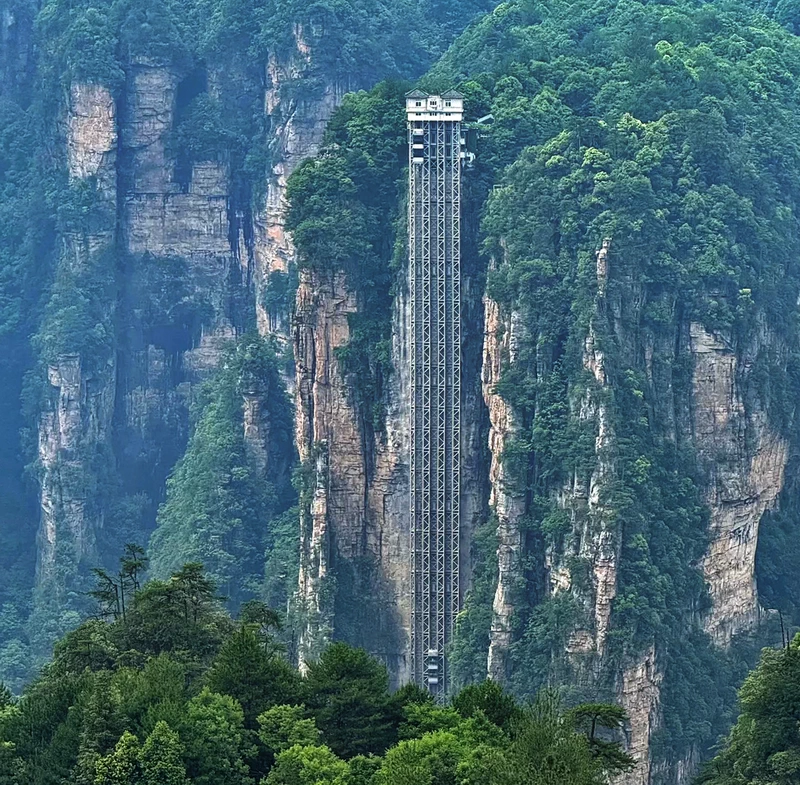
Bailong Elevator
Next, explore Yuanjiajie.
Here you finally meet Zhangjiajie’s signature landscape. Narrow sandstone pillars rise almost vertically from deep forested valleys.
Stop at several viewpoints, but don’t rush between them. When mist moves through the pillars, the landscape can change within minutes.
Afternoon – Tianzi Mountain
Continue toward Tianzi Mountain in the afternoon.
From here, you look across layers of sandstone peaks rather than upward from the valley floor. It provides another perspective on the same extraordinary landscape.
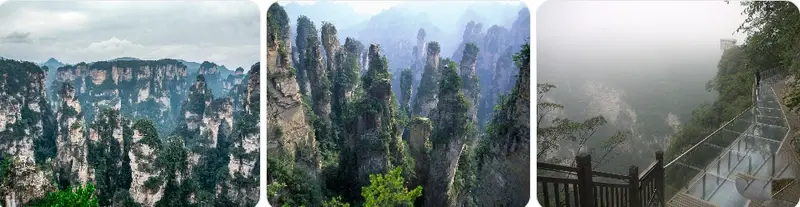
Continue toward Tianzi Mountain in the afternoon
Later, take the cable car down and return to your hotel.
Overnight: Wulingyuan
Day 6 – Golden Whip Stream & Ten-Mile Gallery
Morning – Golden Whip Stream
Today I would deliberately slow the pace.
Walk along part of Golden Whip Stream, where a forest path follows clear water beneath towering cliffs.
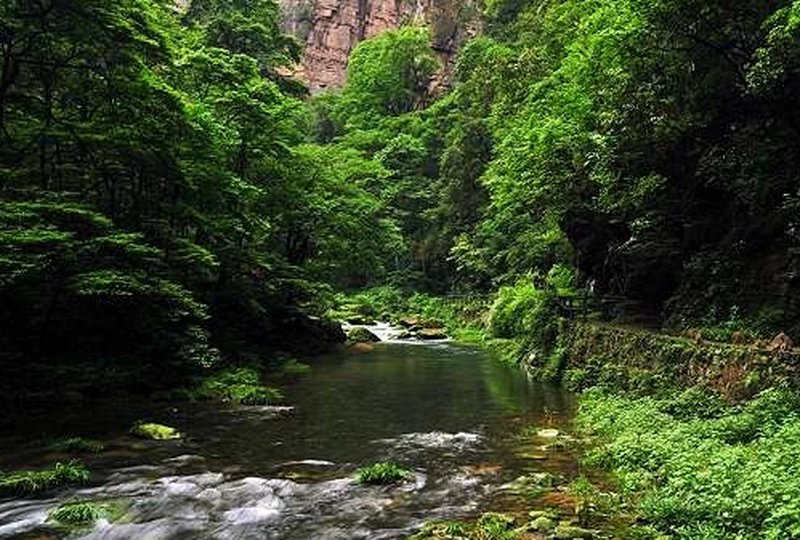
Golden Whip Stream
Yesterday you stood above the sandstone pillars. Today you walk beneath them.
The terrain is gentler than many mountain routes. However, watch your belongings around macaques and never feed them.
Afternoon – Ten-Mile Gallery
Next, continue to Ten-Mile Gallery.
You can walk through the valley or use the sightseeing train. The surrounding peaks have traditional names inspired by their unusual shapes.
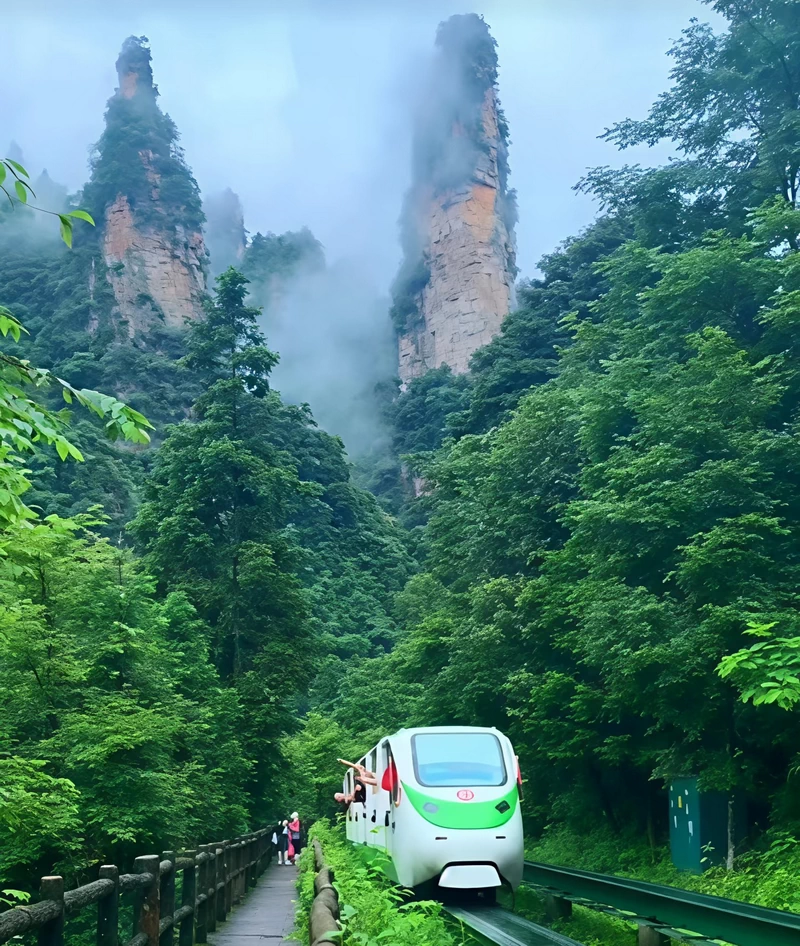
Next, continue to Ten-Mile Gallery
Return to Wulingyuan later in the afternoon. Keep the evening free.
Overnight: Wulingyuan
Day 7 – Tianmen Mountain
Morning – Tianmen Mountain
Check out and transfer back toward downtown Zhangjiajie.
Today, explore Tianmen Mountain, which is separate from Zhangjiajie National Forest Park.
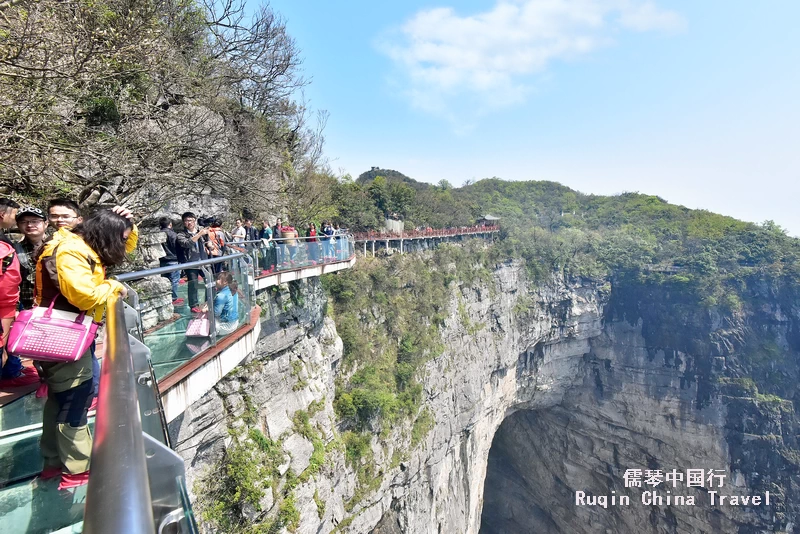
ollow the cliffside paths and forest walkways around the summit
Take the famous cable car into the mountains. Then follow the cliffside paths and forest walkways around the summit.
Some routes include glass walkways. However, they are optional if you are uncomfortable with heights.
Afternoon – Tianmen Cave
Continue toward Tianmen Cave, often called Heaven’s Gate.
The enormous natural arch opens through the mountain above a famous staircase of 999 steps. Escalators and other transport options can reduce the amount of climbing.
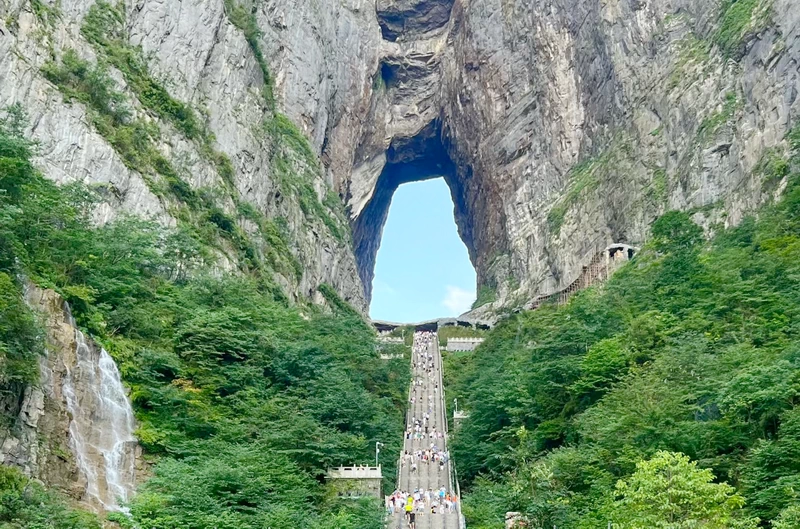
Continue toward Tianmen Cave, often called Heaven’s Gate
After returning to the city, stay near downtown Zhangjiajie or Zhangjiajie West Railway Station.
Get to bed early. Tomorrow is the most demanding transportation day of the itinerary.
Overnight: Zhangjiajie
Day 8 – Zhangjiajie → Changsha → Huangshan
This day needs careful planning.
There is no convenient direct high-speed train from Zhangjiajie to Huangshan for this itinerary. Therefore, I recommend traveling entirely by high-speed rail and changing trains at Changsha South Railway Station.
Early Morning – Zhangjiajie West to Changsha South
Take an early high-speed train from Zhangjiajie West Railway Station to Changsha South Railway Station.
Depending on the service, the journey to Changsha South takes around three hours. Current schedules show several direct G-series trains from Zhangjiajie West to Changsha South in the morning.
Important: Choose Changsha South
Pay close attention to the station name.
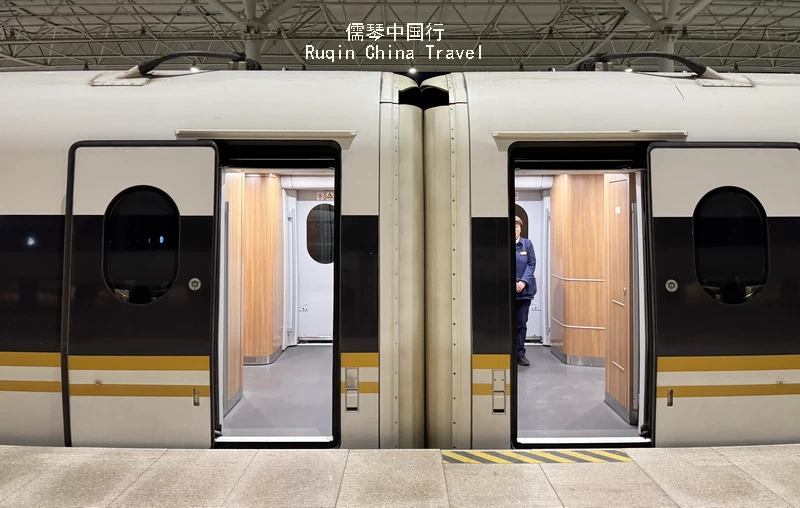
Some Zhangjiajie trains terminate at Changsha Railway Station, while others go to Changsha South Railway Station. For this itinerary, I strongly recommend booking a train arriving at Changsha South, because your onward high-speed train also departs from there.
That avoids crossing Changsha with luggage.
Midday – Change Trains at Changsha South
Allow a comfortable connection at Changsha South Railway Station.
I would not book two trains with a very tight transfer. Delays are uncommon on China’s high-speed network, but navigating a large station still takes time.
Then board your second high-speed train toward Huangshan North Railway Station.
Current rail information shows several daily high-speed services between Changsha South and Huangshan, with journey times varying by train.
For planning purposes, treat Zhangjiajie → Changsha → Huangshan as a full eight-hour-plus travel day, once the connection is included.
Book Both Trains in Advance
This is important.
Book Zhangjiajie West → Changsha South and Changsha South → Huangshan North before your trip, preferably as part of the same travel plan.
Do not arrive in Changsha and assume you can simply buy the next Huangshan ticket. Popular trains can sell out.
Evening – Arrive in Huangshan
After arriving at Huangshan North Railway Station, transfer to your hotel.
For this itinerary, I would stay near Tangkou, at the southern entrance to Huangshan Scenic Area.
Have dinner and prepare a small overnight bag. Tomorrow you go up Yellow Mountain.
Overnight: Tangkou, Huangshan
Day 9 – Huangshan: Up the Yellow Mountain
Morning – Enter Huangshan Scenic Area
Start early and enter Huangshan Scenic Area.
Take the scenic shuttle bus toward the cable-car station. Unless you specifically want a strenuous climb, I recommend taking the cable car up.
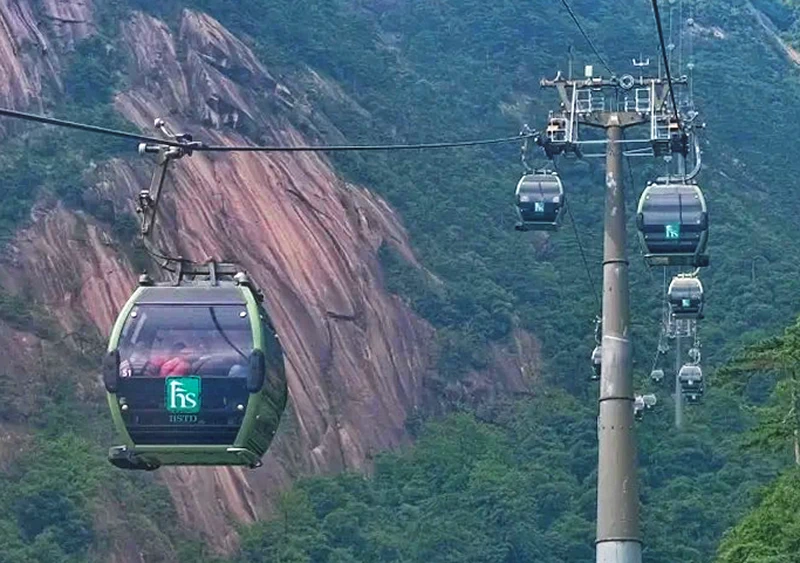
Cable car up to the mountain
After Zhangjiajie, you will immediately notice the difference.
Zhangjiajie is dominated by sandstone pillars. Huangshan gives you granite peaks, twisted pine trees, deep valleys, exposed ridges, and drifting clouds.
Afternoon – Walk Between the Peaks
Spend the afternoon walking between the main viewpoints near your mountain hotel.
Distances can look deceptively short on a map. However, Huangshan has countless stone steps, so allow more time than expected.
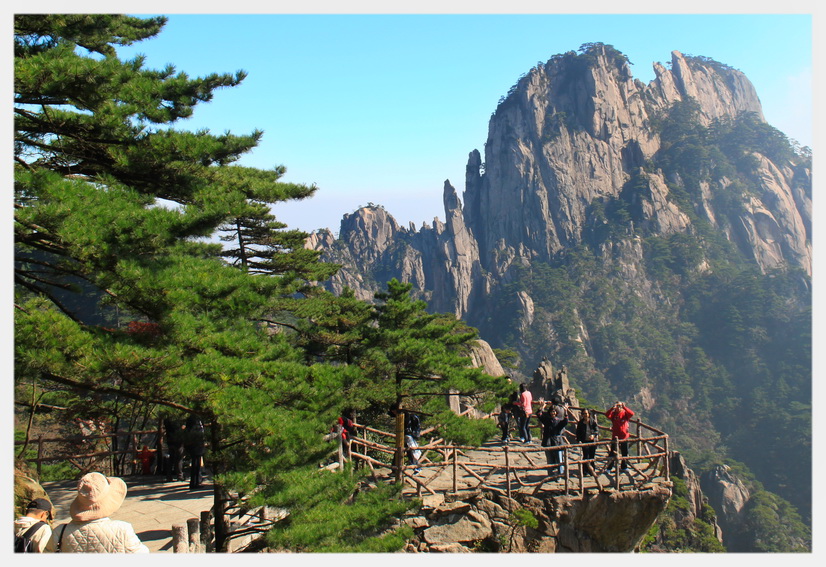
Walk Between the Peaks in Huangshan Mountains
Check into your mountain hotel before evening.
If the weather looks good, walk to a nearby sunset viewpoint. However, don’t exhaust yourself chasing a distant photography spot.
Overnight: Huangshan Mountain
Day 10 – Huangshan Sunrise & Mountain Descent
Early Morning – Sunrise
Wake before dawn if conditions look promising.
A Huangshan sunrise can be magnificent, especially when clouds settle below the peaks. However, mountain weather changes quickly.
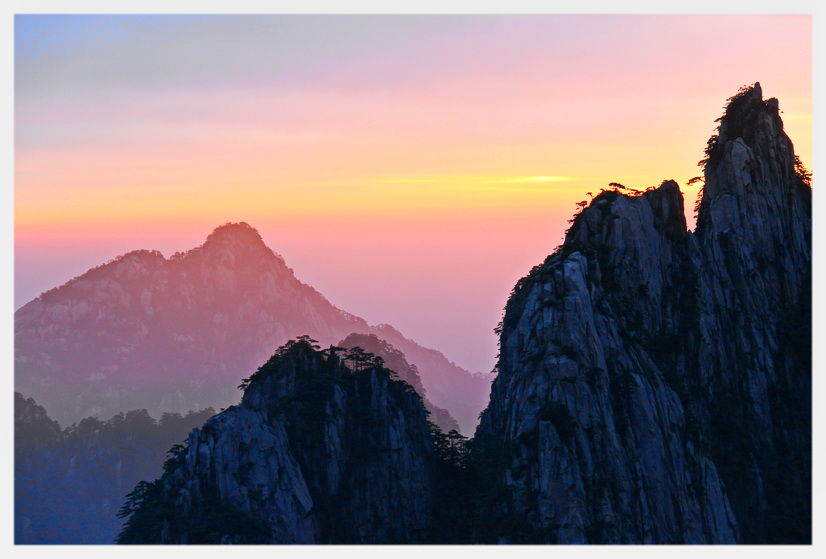
Huangshan Sunrise
Don’t be disappointed by mist. In my experience, clouds moving between the granite peaks can be more atmospheric than a perfectly clear sky.
Morning – Continue Exploring Huangshan
After breakfast, continue walking through nearby scenic areas.
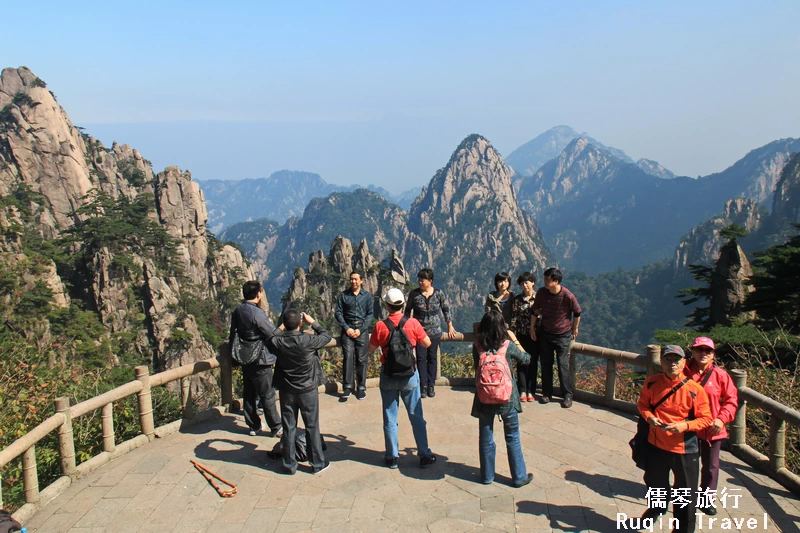
Continue Exploring Huangshan
Take time to notice Huangshan’s famous pine trees and granite formations. The landscape has influenced Chinese painters and poets for centuries.
Later, take the cable car down.
Afternoon – Return to the Mountain Base
Return to Tangkou in the afternoon.
After two days on the mountain, I wouldn’t add another major attraction. Have a proper meal, rest, and prepare for tomorrow.
Overnight: Huangshan area
Day 11 – Hongcun Ancient Village & Onward Travel
Morning – Hongcun
Before leaving Huangshan, visit Hongcun Ancient Village.
This final stop adds a human landscape to the journey. White-walled houses, ponds, narrow lanes, fields, and mountains form a scene that feels remarkably close to a traditional Chinese painting.
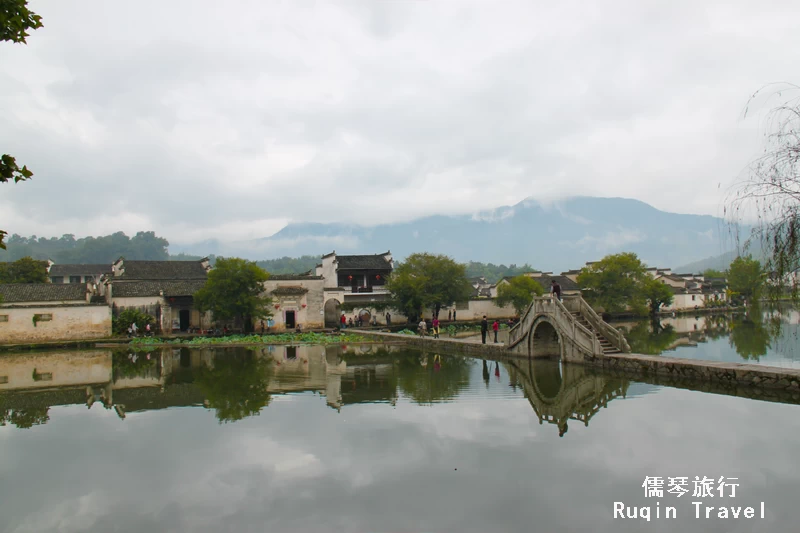
Visit Hongcun Ancient Village
Spend around two to three hours here rather than rushing through.
Afterward, have lunch and continue to the railway station.
Afternoon – Huangshan → Hangzhou, Shanghai or Beijing
Huangshan works particularly well as the final destination of this itinerary.
From Huangshan North Railway Station, high-speed trains provide excellent onward connections. Current schedules show frequent services to Hangzhou and Shanghai, while direct trains also connect Huangshan with Beijing.
As a rough guide:
Huangshan → Hangzhou: around 1.5–2.5 hours
Huangshan → Shanghai: many services, with faster journeys around 2.5–3 hours
Huangshan → Beijing: roughly 5–7.5 hours, depending on the train.
This gives travelers several sensible ways to finish their China trip.
Tickets / Transport / What to Bring
Tickets
Book major scenic attractions ahead during weekends, summer holidays, and Chinese public holidays.
For Zhangjiajie, remember that the main scenic ticket may not include every cable car, elevator, or optional attraction. Likewise, Huangshan requires separate scenic transport and cable-car tickets.
Book the Li River cruise in advance as well. Most importantly, reserve your Huangshan mountain hotel early because accommodation on the mountain is limited.
Transport
Transportation is a key part of this itinerary, so I would summarize it clearly for readers:
| Route | Recommended Transport | Approximate Time |
|---|---|---|
| Hong Kong / Guangzhou → Guilin | High-speed train | Varies |
| Guilin → Yangshuo | Li River cruise | Most of the day |
| Yangshuo → Guilin Railway Station | Private transfer / taxi | Allow generous time |
| Guilin → Zhangjiajie West | Direct high-speed train | About 7–7.5 hrs |
| Zhangjiajie → Wulingyuan | Taxi / private transfer | About 1 hr |
| Zhangjiajie West → Changsha South | High-speed train | About 3 hrs |
| Changsha South → Huangshan North | High-speed train | About 4–5 hrs depending on service |
| Huangshan North → Tangkou | Bus / private transfer | About 1 hr |
| Huangshan → Hangzhou | High-speed train | About 1.5–2.5 hrs |
| Huangshan → Shanghai | High-speed train | About 2.5–3+ hrs |
| Huangshan → Beijing | High-speed train | About 5–7.5 hrs |
Schedules change, so travelers should treat these times as planning guidance rather than fixed timetables.
The Two Train Days Matter
There are two real transfer days in this itinerary:
Day 4: Yangshuo → Guilin → Zhangjiajie
Day 8: Zhangjiajie → Changsha → Huangshan
Don’t try to squeeze major sightseeing into either day. This is especially important on Day 8.
What to Bring
Bring comfortable walking shoes with good grip. You don’t need technical hiking boots, but ordinary dress shoes are unsuitable for Huangshan and Zhangjiajie.
Also pack a small daypack, refillable water bottle, rain jacket, sunscreen, hat, power bank, and light layers. Mountain temperatures can be considerably cooler than Guilin or Yangshuo.
Keep your passport with you during travel days. You will need it for hotels, railway travel, and sometimes attraction entry.
For Huangshan, pack only what you need for one night on the mountain. Leave your larger suitcase at your hotel or arrange luggage storage before going up.
Best Time for This China Landscape Tour
I would choose April–May or September–early November.
Spring brings green mountains, flowing rivers, and mist. Meanwhile, autumn often brings clearer skies and comfortable walking temperatures.
Summer is possible, but Guilin and Zhangjiajie can become hot, humid, and rainy. Huangshan and Zhangjiajie can also become very crowded during major Chinese holidays.
Winter brings fewer visitors and atmospheric mountain scenery. However, cold temperatures and occasional ice make the mountain sections less predictable.
Who Is This Tour Best For?
This itinerary works best for first-time visitors who want China’s natural scenery to be the main theme of their trip.
It also suits photographers, couples, families with older children, and active older travelers. You don’t need serious trekking experience, but you should be comfortable with stairs and several hours of walking.
Travelers looking for wilderness trekking should choose a different route. I would keep that experience for your separate Hiking & Trekking in China category.
Ruqin’s Trip Design Note
When I design a landscape tour, I look at more than the attractions themselves. The route between them matters just as much.
That is why I prefer Guilin → Zhangjiajie → Huangshan. Guilin provides an easier starting point from southern China, especially for travelers coming through Hong Kong or Guangzhou. Zhangjiajie then fits naturally in the middle, while Huangshan gives the trip a strong finish and convenient onward rail connections.
The three landscapes also build naturally. Guilin is gentle and river-shaped. Zhangjiajie is vertical and dramatic. Huangshan is classical and mountainous.
Most importantly, I have kept Days 4 and 8 as genuine transportation days. China is large. A good itinerary should respect distance rather than hide it.
Plan More of Your China Trip
This 11-day route can stand alone or form the nature section of a longer China journey. You can easily connect Guilin with Hong Kong or Guangzhou at the beginning, then continue from Huangshan to Hangzhou, Shanghai, or Beijing at the end.
Use the guides below to plan your trains, hotels, local transport, and other practical details before you travel.
- How to Buy Train Tickets in China Online as a Foreigner
- Best way to pay in China: info for tourists
- Mobile Apps for Travelers in China: A Practical Foreigner’s Guide
- Guilin Travel Guide
- Zhangjiajie Travel Guide
- Huangshan Travel Guide
Questions About Planning Your China Tour
Still have questions about this route? You’re welcome to write to me.
If you need advice on timing, transport, tickets, or adjusting the itinerary, I’m happy to offer a practical suggestion based on my experience in China.
There’s no fee for a simple question. Just use the form below and tell me about your plans.
We respect your privacy. Your details will never be shared or used for marketing.