
Itinerary designed by Ruqin
Last updated: August 19, 2026
Overview
For a first hiking journey in China, I would choose northwest Yunnan.
The route begins in Dali, continues north through Lijiang, crosses the spectacular Tiger Leaping Gorge, and finishes in Shangri-La. It combines mountain walking with Naxi villages, Tibetan culture, old towns, rivers, and highland scenery.
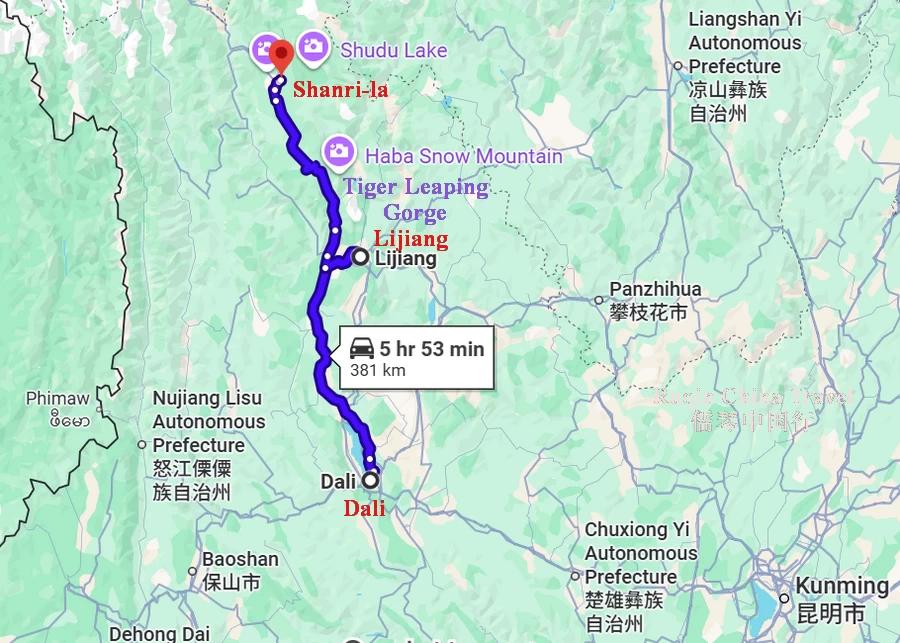
Road Map: Dali – Lijiang ( Tiger Leaping Gorge) – Shangri-la (Google Maps Source)
The centerpiece is the classic two-day Tiger Leaping Gorge High Trail. The route follows the mountainside high above the Jinsha River, between Jade Dragon Snow Mountain and Haba Snow Mountain.
This is real trekking rather than scenic-area sightseeing. The classic trail covers roughly 22–23 kilometers and includes the steep 28 Bends climb, narrow mountain paths and long periods of walking. Most hikers complete it over two days, usually sleeping around Halfway Guesthouse.
However, the whole nine-day trip is not relentlessly difficult. I have deliberately placed easier cultural days before and after the main trek.
That balance matters. A good hiking itinerary should leave you tired enough to feel the journey, but not so exhausted that every mountain becomes another task.
At-a-Glance Route
| Day | Destination | Main Experience | Overnight |
|---|---|---|---|
| Day 1 | Dali | Arrival & Dali Ancient Town | Dali |
| Day 2 | Dali | Cangshan Mountain hiking | Dali |
| Day 3 | Dali → Lijiang | Train to Lijiang & Old Town | Lijiang |
| Day 4 | Lijiang | Naxi villages & foothill walk | Lijiang |
| Day 5 | Lijiang → Tiger Leaping Gorge | Qiaotou → 28 Bends → Halfway | Halfway |
| Day 6 | Tiger Leaping Gorge | Halfway → Tina’s / Middle Gorge | Gorge / Shangri-La |
| Day 7 | Tiger Leaping Gorge → Shangri-La | Travel to Tibetan highlands | Shangri-La |
| Day 8 | Shangri-La | Highland walking & Tibetan culture | Shangri-La |
| Day 9 | Shangri-La | Departure / onward journey | Departure |
Route: Dali → Lijiang → Tiger Leaping Gorge → Shangri-La
Duration: 9 days / 8 nights
Trekking centerpiece: 2-day Tiger Leaping Gorge High Trail
Best for: Active first-time visitors to China
Difficulty: Moderate, with some challenging sections
Best seasons: March–May and September–November
Main hiking environment: Mountains, gorge trails, villages and highland landscapes
Detailed 9-Day Itinerary
Day 1 – Arrive in Dali
A Gentle Start in Yunnan
Arrive in Dali and transfer to your hotel near Dali Ancient Town.
Don’t begin with a serious hike. Yunnan deserves a slower introduction, especially if you have arrived after a long international journey.

Dali Ancient Town
Spend the afternoon walking through Dali Ancient Town. Later, wander beyond the busiest streets toward quieter Bai neighborhoods.
The mountains rise immediately behind the town. Tomorrow, you will start walking among them.
Overnight: Dali
Day 2 – Cangshan Mountain Hiking
Morning – Into the Cangshan Mountains
After breakfast, head toward Cangshan Mountain, which rises dramatically above Dali and Erhai Lake.
Today works as a warm-up rather than an endurance test. Choose a marked scenic trail suitable for current weather and trail conditions.
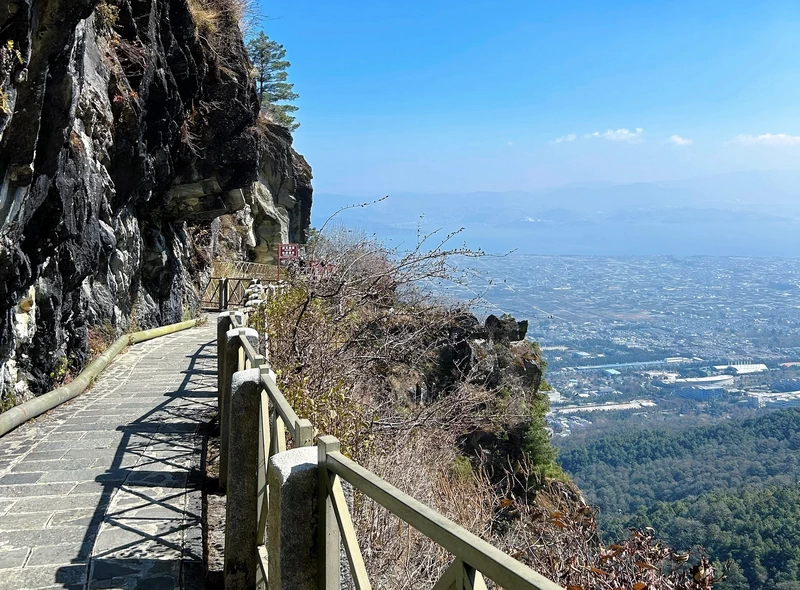
Walking along the mountain paths at Cangshan Mountain
Use the cable car where useful, then spend several hours walking along the mountain paths. On clear days, you can look down toward Dali and across Erhai Lake.
The altitude also gives you an early introduction to higher-elevation walking. However, keep the pace comfortable.
Afternoon – Return to Dali
Descend in the afternoon and return to the old town.
Have a proper dinner and rest. Your legs should feel exercised, not exhausted.
That is exactly what I want from the first hiking day.
Overnight: Dali
Day 3 – Dali to Lijiang
Morning – Travel to Lijiang
After breakfast, take a train from Dali to Lijiang.
This is a short transfer compared with many long-distance journeys in China. Therefore, you still have much of the day available.
After arriving, transfer to your hotel and leave your luggage.
Afternoon – Explore Lijiang Old Town
Spend the afternoon exploring Lijiang Old Town.
The lanes, canals, wooden houses and mountain backdrop make Lijiang one of Yunnan’s most atmospheric places. However, the central streets become very busy.

Lijiang Old Town
Walk beyond the main commercial lanes whenever possible.
This also gives your legs a lighter day before the serious trekking begins.
Overnight: Lijiang
Day 4 – Naxi Villages & Lijiang Foothills
Morning – Leave the Old Town Behind
Today, explore the countryside around Lijiang on foot.
I would choose a village-and-foothill route rather than another major scenic attraction. Areas around traditional Naxi settlements give you a quieter view of the region.
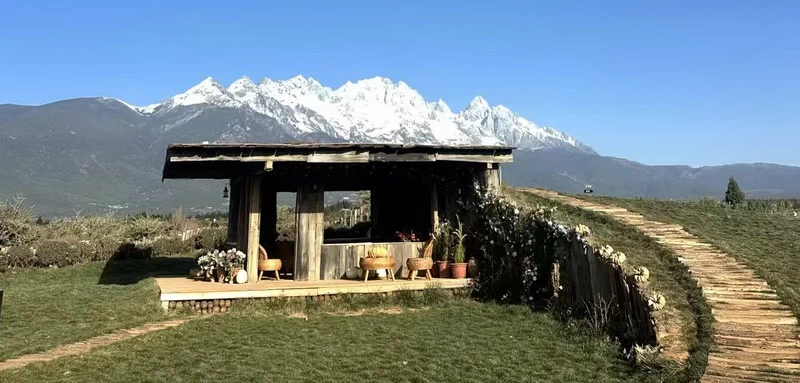
Areas around traditional Naxi settlements
Walk through farmland, village lanes and foothills beneath Jade Dragon Snow Mountain.
You don’t need to turn this into a long trek. Four or five hours of relaxed walking is enough.
Afternoon – Prepare for Tiger Leaping Gorge
Return to Lijiang during the afternoon.
Now reorganize your luggage.
Take only a small hiking pack into Tiger Leaping Gorge. Leave your large suitcase at your Lijiang hotel or arrange luggage forwarding or storage in advance.
Pack carefully tonight. Tomorrow is the hardest day of the journey.
Overnight: Lijiang
Day 5 – Lijiang → Tiger Leaping Gorge: The High Trail Begins
Early Morning – Lijiang to Qiaotou
Leave Lijiang early for Qiaotou, also called Tiger Leaping Gorge Town.
The road journey usually takes around two hours. Public buses and shared transfers operate from Lijiang, although schedules should always be checked shortly before travel.
Complete the entrance formalities and prepare your water before starting.
From this point, forget sightseeing timetables. Your feet determine the day’s rhythm.
Morning – Qiaotou to Naxi Family Guesthouse (纳西雅阁)
The first section hike starts gradually from Qiaotou and leads away from the road and into the mountains.
As you climb, the gorge begins opening beneath you. Meanwhile, Jade Dragon Snow Mountain rises dramatically across the river.
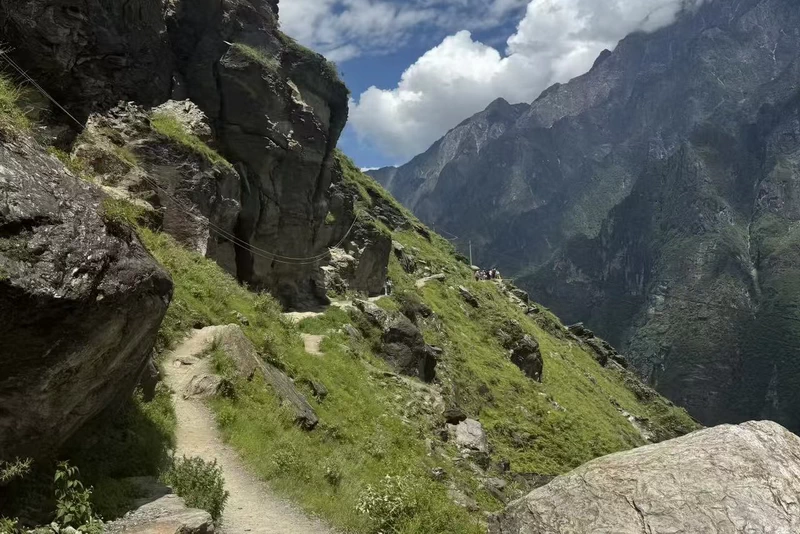
Hiking along the trail
Stop around Naxi Family Guesthouse for water, food and a short rest.
Don’t rush lunch. The hardest climb still lies ahead.
Afternoon – The 28 Bends
Next comes the famous 28 Bends.
This steep series of switchbacks is the physical test of Day 1. Current trekking guides describe the first day’s route as roughly 12 km and around six to seven hours including breaks, although times vary considerably with fitness and starting point.
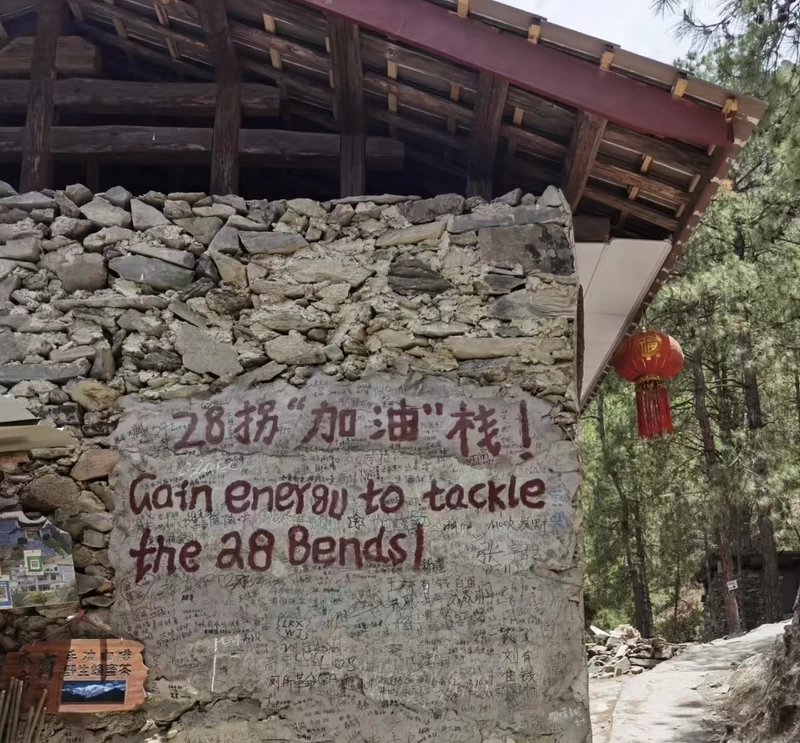
Next comes the famous 28 Bends
Walk slowly and keep your rhythm.
There is no prize for reaching the top first.
Once you clear the climb, the reward arrives quickly. The trail opens onto tremendous views across the gorge toward the snow mountains.
Late Afternoon – Continue to Halfway
Continue along the High Trail toward Halfway Guesthouse.
The walking becomes easier in places, although the trail still requires concentration. You are high above the Jinsha River, and some sections have considerable exposure.
Arrive before dark.
Then put down your backpack, order dinner and sit outside if the weather allows.
After hours on the trail, watching evening light move across Jade Dragon Snow Mountain is one of the simplest pleasures of the journey.
Hiking: roughly 6–7 hours, 12-18km
Difficulty: Moderate to challenging
Overnight: Halfway Guesthouse area
Day 6 – Halfway → Tina’s → Middle Tiger Leaping Gorge
Morning – Wake Above the Gorge
Wake early.
If the weather is clear, watch the morning light reach the mountains across the gorge. Then have breakfast and refill your water.
Today’s main High Trail section is easier than yesterday.
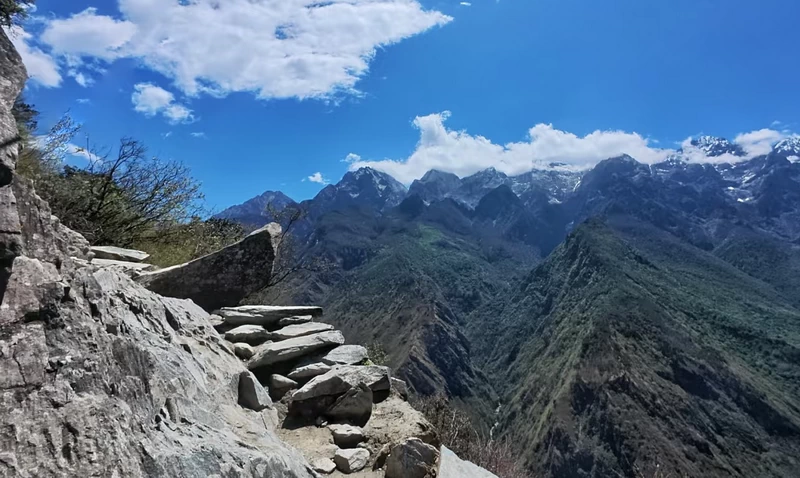
Wake Above the Gorge
Continue toward Tina’s Guesthouse, passing mountain paths, waterfalls and spectacular openings over the Jinsha River.
Recent route descriptions generally put Halfway to Tina’s at roughly two to three hours, although hiking conditions and stops affect the timing.
Midday – Arrive at Tina’s
Reach Tina’s around midday and stop for lunch.
For many travelers, this is a perfectly good place to finish the main two-day High Trail.
You have already completed the classic traverse.
However, strong hikers can add another adventure.
Optional Afternoon – Middle Tiger Leaping Gorge
If weather, trail conditions and your energy level are good, descend toward Middle Tiger Leaping Gorge.
This section takes you much closer to the roaring Jinsha River. However, it is steeper and more demanding than the High Trail.
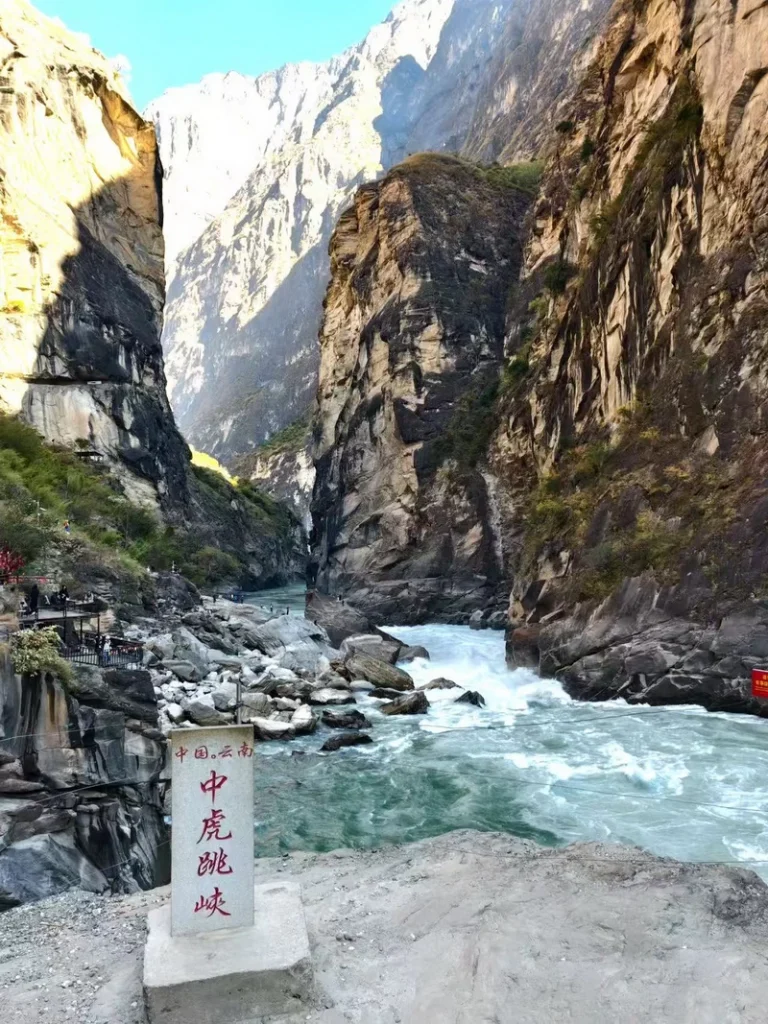
Middle Tiger Leaping Gorge
Some local routes involve very steep steps or ladders. I would not automatically include these for every traveler.
Recent trekking guides likewise treat the Middle Gorge descent as an optional extension rather than an essential part of the standard two-day High Trail.
If your knees are tired, skip it.
The mountain will still be there.
Main hiking: approximately 3–5 hours, 5km
With Middle Gorge extension: considerably longer and harder
Overnight: Tiger Leaping Gorge area or continue toward Shangri-La, depending on transport and timing
Day 7 – Tiger Leaping Gorge to Shangri-La
Morning – Leave the Gorge
After breakfast, transfer by car to Shangri-La.
The road climbs steadily toward the Tibetan plateau. Meanwhile, the landscape changes from deep valleys to broader highland scenery.
Shangri-La sits at around 3,200 meters, so take the altitude seriously.
Do not plan another strenuous hike today.
Afternoon – Dukezong Ancient Town
Check into your hotel and rest.
Later, take a gentle walk through Dukezong Ancient Town.

Dukezong Ancient Town
Walk slowly, drink water and notice how your body responds to the altitude.
After two days in Tiger Leaping Gorge, today’s slower pace is intentional.
Overnight: Shangri-La
Day 8 – Shangri-La Highland Walking
Morning – Songzanlin & Highland Landscape
Today gives the itinerary a very different kind of walking.
Begin around Songzanlin Monastery and the surrounding highland landscape. The architecture, mountains and Tibetan cultural setting feel completely different from Lijiang.

Begin around Songzanlin Monastery
Keep your pace moderate because of the altitude.
Then continue into nearby grassland or village areas, depending on weather and seasonal access.
Afternoon – A Slow Final Walk
Spend the afternoon walking rather than chasing attractions.
This is the final full day, and I prefer ending the journey gently.

Tiger Leaping Gorge gave you cliffs and roaring water. Shangri-La gives you space, high skies and a much quieter horizon.
Return to town before evening.
Overnight: Shangri-La
Day 9 – Shangri-La & Departure
Have a relaxed breakfast.
Depending on your onward plans, continue by high-speed rail toward Lijiang, Dali or Kunming, or use a suitable flight connection.
The opening of the Lijiang–Shangri-La railway has made this part of northwest Yunnan considerably easier to integrate into a larger China itinerary.
If you have more time, you can also reverse the journey and continue deeper into Yunnan.
Tickets / Transport / What to Bring
Tickets
Book your main transportation and Tiger Leaping Gorge accommodation before departure.
For the two-day trek, I particularly recommend reserving your Halfway-area guesthouse. Rooms can fill during the main spring and autumn hiking seasons.
At scenic areas such as Cangshan, individual cable cars and scenic transport may require separate tickets.
Transport
One advantage of this itinerary is its natural geographical flow:
Dali → Lijiang → Tiger Leaping Gorge → Shangri-La
There is very little backtracking.
| Route | Recommended Transport | Approximate Time |
|---|---|---|
| Kunming → Dali | High-speed train | About 2–2.5 hrs |
| Dali → Lijiang | Train | About 1.5–2.5 hrs |
| Lijiang → Qiaotou | Bus / shared transfer / private car | About 2 hrs |
| Qiaotou → Halfway | Hike | Most of Day 5 |
| Halfway → Tina’s | Hike | About 2–3 hrs |
| Tiger Leaping Gorge → Shangri-La | Bus / private transfer | Varies by starting point |
| Shangri-La → Lijiang | Train | For onward connections |
| Shangri-La → Kunming | Train / flight | Check current schedules |
The transport days are much easier than those in your Guilin–Zhangjiajie–Huangshan landscape itinerary.
That is another reason Yunnan works so well for a dedicated hiking tour.
What to Bring
For Tiger Leaping Gorge, equipment matters more than it does on an ordinary China sightseeing trip.
Bring:
- Proper hiking shoes or lightweight hiking boots with good grip
- Small 20–30L backpack
- Lightweight rain jacket
- Quick-dry clothing
- Warm layer
- Sun hat
- Sunglasses
- Sunscreen
- At least 1.5–2 liters of water when starting longer sections
- High-energy snacks
- Basic first-aid supplies
- Blister treatment
- Trekking poles if you normally use them
- Power bank
- Offline map
- Passport
- Small amount of cash
Do not carry your full travel suitcase through Tiger Leaping Gorge.
A light pack changes the entire experience.
Best Time for This Yunnan Hiking Tour
I recommend March to May and September to November.
These months generally provide the best balance of temperatures, visibility and trail conditions. Current 2026 trekking guidance likewise identifies spring and autumn as the preferred seasons for Tiger Leaping Gorge.
I would be much more cautious during the summer rainy season.
Heavy rain can make the trail slippery and increase the risk of falling rocks, landslides and other mountain hazards. Recent guidance specifically advises avoiding the main monsoon period for the High Trail.
Winter can be beautiful and quiet. However, cold temperatures and changing mountain conditions require more preparation.
How Difficult Is This Tour?
I would rate the overall itinerary moderate, with Tiger Leaping Gorge Day 1 reaching moderate to challenging.
You do not need mountaineering experience.
However, you should already be comfortable walking for six or seven hours, climbing steep trails and carrying a small backpack. The 28 Bends section includes sustained climbing, and parts of the High Trail have significant exposure above the gorge.
This is therefore not the right itinerary for travelers with serious knee problems, poor balance, severe fear of heights, or very limited hiking experience.
A Note About Safety
Tiger Leaping Gorge is a mountain environment, not a landscaped city park.
Check the weather locally before starting. Do not hike during heavy rain, thunderstorms or when local authorities or guesthouses advise against using the trail.
Wear proper footwear and start early enough to reach your overnight stop before dark.
For first-time foreign hikers who are uncomfortable with navigation or local logistics, I recommend using a local guide. Travel insurance that covers hiking and emergency treatment is also sensible.
Most importantly, don’t let a fixed itinerary overrule conditions on the mountain.
Who Is This Tour Best For?
This itinerary suits active first-time visitors who want to experience China beyond cities and famous monuments.
It works particularly well for hikers who want a memorable multi-day trek without committing to a remote expedition. Tiger Leaping Gorge offers mountain scenery and genuine trail walking while retaining guesthouses and road access at key points.
Serious trekkers looking for multi-day wilderness, glaciers or high-altitude expeditions should choose a more demanding route.
That would be another category of trip entirely.
Ruqin’s Trip Design Note
For a flagship Hiking & Trekking in China itinerary, I would not try to include the Great Wall, Huangshan, Zhangjiajie and Yunnan simply because they are all famous hiking destinations.
That creates a collection of hikes, not a coherent journey.
I prefer Dali → Lijiang → Tiger Leaping Gorge → Shangri-La because the landscape builds naturally as you travel north. You begin beside Erhai Lake, move beneath Jade Dragon Snow Mountain, walk through Tiger Leaping Gorge, and finally emerge onto the Tibetan highlands.
More importantly, Tiger Leaping Gorge gives this itinerary a clear identity. It is a real two-day trek, yet guesthouses make it achievable for fit travelers who are visiting China for the first time. Current hiking guides consistently identify the classic High Trail as a roughly two-day, 22–23 km trek and one of Yunnan’s standout hiking experiences.
I also deliberately added easier days around the main hike. On an adventure itinerary, recovery time is not wasted time. It is part of good trip design.