Written and updated by Ruqin
Last updated: April 15, 2026
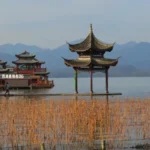
Welcome to the Hangzhou Travel Guide, your gateway to one of China’s most enchanting cities. Often called “heaven on earth,” Hangzhou blends ancient charm with modern vibrance. From misty tea mountains to the poetic calm of West Lake, every corner invites slow discovery.
In this Hangzhou Travel Guide, I’ll walk you through quiet alleys scented with Longjing tea, willow-lined shores, and hidden gems beyond the tourist trail. Whether you’re chasing culture, nature, or simply a peaceful escape, Hangzhou’s timeless beauty will leave you dreaming long after you’ve gone. Let’s begin this journey together.
1. The Rhythm of the Seasons: Best Time to Visit Hangzhou
In my eyes, Hangzhou is like a graceful woman from Jiangnan—elegant, gentle, but full of personality. She lives by the rhythm of nature. Her moods shift with each season. And if you understand her temperament, you’ll find yourself in harmony with her beauty.
Before I visited, I kept wondering—when is the best time to visit Hangzhou? The answer? It depends on what you seek. Hangzhou doesn’t just have “good weather” or “bad weather”—each season here has its own poetry.
Let me walk you through the moods of this city, season by season. Whether you’re reading this Hangzhou Travel Guide to plan your spring escape or a winter retreat, you’ll find a time that speaks to your soul.
1) Spring (March–May): Hangzhou Wakes in Bloom
Spring in Hangzhou feels like a dream just beginning. The chill of winter fades. The city begins to exhale. By late March, the air turns soft and scented. Willows sway beside the lake. Tea leaves glisten on misty hills.
Temperatures start around 10°C and rise gently to a perfect 25°C by May. It rains often, yes—but don’t let that discourage you. The drizzle is usually light, like a silk veil hanging over West Lake. I always carry a pretty umbrella. It keeps me dry and adds charm to every photo.

Mornings can be cool, while afternoons feel warm. I usually dress in layers—long sleeves, a light jacket, and always, always sun protection. Even in spring, the sun sneaks up on you.
But more than anything, spring here feels alive. This is when Su Causeway wakes in soft green light. Birdsong weaves through the air at Orioles Singing in the Willows. It’s also the golden season to taste the year’s first harvest of Longjing tea—fresh, delicate, unforgettable.
2) Summer (June–August): Hangzhou in Full Bloom—and Full Heat
Now, if spring is a gentle poem, summer is a passionate love letter.
Hangzhou gets hot. And humid. Locals call it a “small oven” for good reason. In July and August, temperatures soar to 35°C, but with humidity, it feels even hotter. I learned quickly: early mornings and late evenings are my best friends.

There are quick afternoon storms too—sudden bursts of thunder and rain that disappear almost as fast as they arrive. In June, the city slips into plum rain season, with grey skies and steady showers.
I wear the lightest cotton and linen I can find. My summer survival kit? A wide hat, sunglasses, and SPF50+ sunscreen. West Lake reflects sunlight like a mirror, so protection is a must.
Despite the heat, summer offers its own magic. I still remember my first glimpse of lotus blossoms stretching across the lake—leaf after green leaf, pink petals glowing in the sun. It was worth every drop of sweat. During the hottest hours, I escape to cool museums or sip tea in quiet teahouses.
3) Autumn (September–November): Golden Days, Blue Skies
Autumn, though—autumn is when I truly fell in love.
By September, the air turns crisp. The sky brightens into a perfect blue. Temperatures hover around 25°C in early autumn, then dip toward 10°C by November. Rain fades. The sun stays soft.

This is the best time to visit Hangzhou, hands down. Every walk feels like a scene from a painting. Leaves turn golden on Beishan Road. The scent of osmanthus—sweet and surprising—drifts through the parks. It’s the season of light jackets, denim, and day-long bike rides.
I often find myself wandering under trees, stopping every few steps just to breathe it all in. And the sunsets? Don’t get me started. They melt into the lake like watercolor.
4) Winter (December–February): Quiet Beauty in the Chill
Winter in Hangzhou is not snowy magic—it’s a different kind of stillness.
Yes, it gets cold. The thermometer might say 5°C, but the damp air wraps around your bones. I learned quickly: layers are essential. A down coat, a cozy scarf, gloves that let you hold your phone without freezing your fingers.

But here’s the secret—winter is when the city slows down. Fewer tourists. Quieter streets. A hush falls over West Lake, and if you’re lucky, you’ll see the famous Broken Bridge in the snow. I only caught it once, and I still think about that morning.
There’s something soothing about ducking into a teahouse on a gray afternoon. The windows fog up. The tea steams in your cup. It’s a different kind of beauty—introverted, serene, unforgettable.
So… What’s the Best Time to Visit Hangzhou?
Honestly? Spring and autumn win the crown. From late March to early May, and again from late September to early November, the weather is just right. Not too hot. Not too cold. And the scenery? Absolutely dreamy.
But if you love lotus flowers and long, lazy days, summer will charm you—just plan around the heat. And if you’re after quiet, spiritual reflection, winter is deeply rewarding.
Hangzhou doesn’t need to compete with the seasons. She becomes them.
No matter when you come, she’ll greet you with open arms. All you have to do is choose the rhythm that calls to your heart—and begin.
Let this Hangzhou Travel Guide be your companion as you discover not just when to come, but how to fall in love with this timeless city.
2. Where to Stay in Hangzhou: My Complete Neighborhood Guide
One of the first things I realized when planning my trip was this—where you stay in Hangzhou shapes your entire experience. Do you want to wake up to the soft shimmer of West Lake?
Wander through ancient alleyways with a hot bun in hand? Or maybe sip coffee in a converted canal-side warehouse, watching boats drift by?

Choosing the right area felt like choosing which version of Hangzhou I wanted to meet. And trust me, she wears many faces—each more beautiful than the last.
So in this Hangzhou Travel Guide, let me share what I’ve learned, from peaceful lakefront mornings to lantern-lit strolls through hidden neighborhoods. Whether it’s your first time or your fifth, here’s how to find the perfect place to call home in Hangzhou.
1) West Lake District (西湖区): Poetry at Your Doorstep
West Lake District is the soul of Hangzhou. If you’re dreaming of misty mornings, quiet waters, and willow-lined walks, this is where it all begins.
My first stay in Hangzhou was here—and honestly, I still daydream about it. I woke up to birdsong. I fell asleep to the soft splash of oars. Every evening, I’d walk along the shore, watch the sunset behind Leifeng Pagoda, and feel completely at peace.
Some of Hangzhou’s most iconic spots are right here:

- West Lake: Boating across it at dusk is magic.
- Lingyin Temple: Ancient, fragrant, and full of quiet power.
- Xixi Wetlands: Wild and serene, with soft reeds and winding waterways.
Even though the district doesn’t have a train station or airport, getting around is easy with subways and buses.
Best Places to Stay in West Lake District:
- East side of the West Lake (Hubin Road, Nanshan Road): Super convenient. Walk out and you’re already by the lake. There’s shopping, food, and even musical fountain shows at night. Downside? It’s popular and pricier.
- West side (Yang Gong Causeway, Maojiabu Village): More local. Fewer crowds. I stayed in a guesthouse here once—tucked between tea fields and quiet lanes. Waking up to fog rolling through the hills? Pure bliss.
2) Shangcheng District (上城区): History, Street Food, and Storybook Streets
If West Lake is Hangzhou’s face, Shangcheng District is its heart.
This is where emperors once ruled and markets still hum with life. I spent hours here just wandering—getting lost in the rhythm of daily life, ducking into tiny noodle shops, and stumbling onto street musicians playing traditional tunes.
Top places not to miss:

- Southern Song Imperial Street 南宋御街: Walk an 800-year-old road. Seriously.
- Hefang Street 河坊街: Yes, it’s touristy—but also packed with charm.
- Hu Qing Yu Tang 胡庆余堂: A traditional Chinese pharmacy that feels like a museum.
- Chenghuang Pavilion 城隍阁: For sweeping views of West Lake and the city skyline.
- Dama Lane 大马弄: A secret spot for street eats and local color.
It’s also home to Hangzhou Station 杭州站(城站 ) (Chengzhan)—a super convenient hub if you’re arriving by train.
Best Places to Stay in Shangcheng:
Around Imperial Street or Hefang Street: You’ll wake to lanterns swinging in the morning breeze. At night, the streets quiet down and feel magical. I once stayed in a restored heritage inn here—wooden beams, creaky floors, and hot soy milk for breakfast.
Shangcheng District(上城区)·Qianjiang New City 钱江新城 (North Bank of the Qiantang River)
Area Highlights:
This is Hangzhou’s Central Business District (CBD) and administrative heart. The area is sleek, modern, and full of towering skyscrapers. It has the polished feel of a global metropolis, showcasing the grand and sophisticated side of Hangzhou.

Top Attraction: City Balcony 城市阳台:
This is the area’s iconic landmark. It’s a massive elevated platform that stretches out over the Qiantang River. From here, you can watch the stunning Qianjiang New City light show up close and feel the dramatic energy of modern architecture.
Best Places to Stay in Qianjiang New City, Shangcheng:
This area is dominated by high-end five-star hotels and luxury serviced apartments. Staying here means indulging in top-tier amenities, breathtaking riverfront night views, and the vibrant pulse of city life.
3) Gongshu District (拱墅区): Artsy, Authentic, and Along the Canal
Now, this area? It’s for the romantics and the creatives.
Cut through by the Grand Canal, Gongshu District carries whispers of old trades and water-town life. But it’s also being reborn—warehouses turned into cafes, bookshops, and studios. There’s a nostalgic charm here, mixed with a fresh, artsy pulse.
Places that stole my heart:

- Xiaohe Straight Street 小河直街: Tiny courtyards, red lanterns, and tea in porcelain cups.
- Qiaoxi Historic Block 桥西历史街区 : Photogenic at every turn. I couldn’t stop taking photos.
- Umbrella, Fan & Scissors Museums 中国伞/刀剪/扇博物馆: Quirky, hands-on, and surprisingly fun.
- Night cruise on the Grand Canal 京杭大运河夜游: A calm, glowing journey through old and new.
There’s no train station here, but subways run smoothly.
Best Places to Stay in Gongshu:
- Xiaohe Street or Dadou Road 小河直街或大兜路历史文化街区: I stayed in a renovated traditional house here once. The old stone walls, the courtyard full of osmanthus trees—unforgettable. Perfect for travelers craving culture and atmosphere.
4) Binjiang District (滨江区)South Bank of the Qiantang River)
Often referred to as the “Silicon Valley of Hangzhou,” Binjiang District is home to the headquarters of major tech companies such as Alibaba. The district is filled with a youthful, innovative, and energetic atmosphere, making it the ideal place to experience the pulse of Hangzhou’s digital economy.
Key Attractions:

- Olympic Sports Center “Big and Little Lotus” 奥体中心“大小莲花”:
The main venue for the 2023 Asian Games, these futuristic architectural landmarks are especially stunning during the evening light shows. - China Animation Museum 中国动漫博物馆:
A must-visit for animation enthusiasts, offering rich interactive experiences and exhibitions. - Cherry Blossom Runway 樱花跑道:
A scenic riverside path that becomes especially romantic in spring when the cherry blossoms are in full bloom, perfect for cycling or walking.
Accommodation Experience:
The area offers a wide variety of hotel options, ranging from upscale business hotels to mid-range chains. It is particularly well-suited for business travelers or those looking to experience Hangzhou’s modern, tech-savvy atmosphere.
5) Xiaoshan District (萧山区): Where Hangzhou Begins and Ends
Xiaoshan is more than just Hangzhou’s air-rail hub—home to both Xiaoshan International Airport and Hangzhou South Railway Station—it’s also full of hidden charm.

Explore the peaceful Xiang Lake, a quiet sister to West Lake, perfect for cycling and lotus viewing. Families will love Hangzhou Paradise Park and Changqiao Polar Ocean Park. For city views, head up Hangzhou Gate and take in the Qiantang River and Olympic Sports Center.
With top-tier transportation, Xiaoshan is ideal for early flights or short stays. It’s also perfect for families and travelers who want a mix of urban energy and lakeside calm.
Include Xiaoshan in your Hangzhou Travel Guide—it’s where convenience meets discovery.
6) Yuhang District (余杭区): Deep Roots, Tea Fields, and Temples
Finally, we head northwest, to where time stretches far, far back.
Yuhang District is the cradle of civilization in this region. And now? It’s also where tech meets tradition. I came here for history—and left with a deep sense of calm.
Places to explore:

- Liangzhu Ancient City Ruins 良渚古城遗址公园: 5,000 years old. Totally blew my mind.
- China National Archives of Publications and Culture 国家版本馆: A literal work of art.
- Jingshan Temple 径山寺: Hidden in tea mountains. Gentle, serene, and spiritual.
It’s also home to Hangzhou West Station, connecting you to Shanghai, Nanjing, and beyond.
Best Places to Stay:
- Near Liangzhu or Jingshan: Choose a boutique inn near tea fields or temples. You’ll wake to incense smoke and birdsong. Ideal for slow travel and self-reflection.
The Best Places to Stay in Hangzhou
So… where should you stay in Hangzhou?
- If it’s your first visit, choose East West Lake or Shangcheng. They balance nature, culture, and convenience. You’ll save time and see the best of the city.
- For a second trip, or something more artsy? Try Gongshu. The canal-side charm and slower pace are hard to beat.
- Traveling with family, or flying in and out? Xiaoshan or Binjiang are smart, modern, and well-located.
- On a budget? Head west of West Lake or near university zones like Zhejiang University. Quiet, affordable, and still well-connected.
I hope this part of my Hangzhou Travel Guide helps you feel confident about where to stay. For me, choosing the right place in Hangzhou always sets the tone for a truly unforgettable trip.
So… which version of Hangzhou will you wake up to? Let your heart decide—and let the journey begin.
3. How to Get to Hangzhou – A Smooth Arrival Awaits
Welcome to this next chapter of my Hangzhou Travel Guide—and welcome (soon!) to Hangzhou itself.
One of the best parts about planning a trip here? Getting to Hangzhou is surprisingly easy. Whether you’re flying in from abroad or zipping in by high-speed train, this city opens its arms with convenience and efficiency.
So let me walk you through everything I learned about arriving in Hangzhou, from airport tips to navigating the sprawling train network—no stress, just smooth landings.
Flying into Hangzhou
If you’re coming by air, you’ll land at Hangzhou Xiaoshan International Airport (HGH). It’s located in Xiaoshan District, 30km southeast of the city center.

I arrived here early in the morning, and even after a red-eye flight, I was impressed. The signs were clear, the airport was modern, and within minutes, I found myself heading toward the city.
How to get from the airport to downtown Hangzhou?
Here are your best options—I’ve tried them all:
Metro: The most efficient and reliable way
This is my go-to. You just follow the signs from the arrivals hall to the subway station. It’s well-marked and easy, even with luggage.
- Line 1 takes you straight to downtown spots like Longxiangqiao (near West Lake), Hangzhou East Railway Station, and more. The ride takes around 50–70 minutes.
- Line 7 connects the airport to Hangzhou Railway Station (Chengzhan) and Wushan Square, also near West Lake.
- Line 9: Hangzhou Metro Line 19 (Hangzhou Airport Express Line) is the city’s first express metro line. It officially opened on September 22, 2022, with a total length of 59.14 kilometers. The line connects Tiaoxi Station 苕溪站 (in Yuhang District) to Yongsheng Road Station 永盛路站 (in Xiaoshan District), linking major transport hubs such as Hangzhou East Railway Station, Hangzhou West Railway Station, and Hangzhou Xiaoshan International Airport, as well as key areas like Xixi Wetland and the Future Sci-Tech City.
Fares range from just 6 to 10 RMB—a total bargain.
Airport Shuttle Bus: Great if your hotel is nearby
If you’ve got heavy bags or your hotel is close to a bus drop-off point, this is a good alternative. Just head outside the terminal to find the ticket office and boarding area.
The most popular route? The Wulinmen Line 武林门线, which ends in central Hangzhou near shopping and hotels. The ride takes about 60–90 minutes and costs around 20 RMB.
Taxi or Ride-Hailing: Direct but pricier
For door-to-door convenience, taxis or DiDi (China’s Uber) work well.
From the airport to the West Lake area, expect to pay 100–150 RMB and spend 45–60 minutes on the road, depending on traffic.
Arriving by High-Speed Train
If you’re already in China, arriving by high-speed rail might be the most convenient option. I absolutely love traveling this way—it’s fast, comfortable, and gives you a front-row seat to China’s ever-changing landscape.
But here’s the thing: Hangzhou has four major train stations, and they are not close to each other. Double-check your ticket before departure! Let me break them down for you:
1) Hangzhou East Railway Station (杭州东站)
The city’s busiest and most connected station

- Where it is: Shangcheng District, on Tiantang Road. 杭州市上城区天城路1号
- Why it matters: This is Hangzhou’s main high-speed rail hub, with trains from Beijing, Shanghai, Guangzhou, Shenzhen, Nanjing—you name it.
- Getting downtown:
- Take Metro Lines 1, 4, 6, or 19 directly from the station.
- You can reach Longxiangqiao 龙翔桥 (near West Lake) on Line 1 in about 30 minutes.
- A taxi takes about 20–30 minutes to the lakefront.
2) Hangzhou Railway Station (杭州站 / Chengzhan)
The most central station—closest to West Lake
- Where it is: Shangcheng District, on Huancheng East Road. 杭州市上城区环城东路1号
- Why it matters: Though it’s older, it was recently renovated and is the closest station to West Lake. It mainly serves regular-speed trains and some high-speed lines from nearby cities like Shanghai and Nanjing.
- Getting downtown:
- Metro Lines 1 and 5 stop here.
- West Lake is just one metro stop away or a 10–15 minute taxi ride.
- You can even walk to the lake in about 30 minutes.
3) Hangzhou West Railway Station (杭州西站)
The newest, sleekest option—gateway to the west
- Where it is: Yuhang District, Cangqian Subdistrict. 杭州市余杭区仓前街道老宣杭线仓前站北
- Why it matters: Opened in 2022, this futuristic station serves trains from Hefei, Wuhan, and Huangshan. It’s perfect if you plan to visit Liangzhu Ancient City or stay near the Alibaba Xixi Campus or Future Sci-Tech City.
- Getting downtown:
- Take Metro Lines 3 or 19.
- Line 19 is a fast-track airport line that also connects to West Lake Cultural Square and Hangzhou East Station.
4) Hangzhou South Railway Station (杭州南站)
The local hub for Xiaoshan District
- Where it is: Xiaoshan District, on Zhanqian Road. 杭州市萧山区站前路1号。
- Why it matters: Mostly serves cities within Zhejiang province, like Ningbo, Wenzhou, and Jinhua. If your plans include Xiang Lake or Hangzhou Paradise, this station is super handy.
- Getting downtown:
- Use Metro Line 5, which connects easily to city center stations.
A Few Quick Travel Tips
- Best arrival station for most travelers?
Hangzhou East Station wins for convenience and the number of connections.
If you’re headed straight for West Lake, Hangzhou Station (Chengzhan) is also a great pick. - Double-check your station!
With four to choose from, make sure your train ticket matches your destination—especially if you’re being picked up or planning transfers. - Take the metro—it’s a lifesaver.
Hangzhou’s metro system is fast, clean, and the best way to get from stations to your hotel. Almost every scenic area is now connected by metro.
I hope this chapter of my Hangzhou Travel Guide makes your arrival as smooth as silk. The journey may start with a train or a plane, but once you’re here, Hangzhou does the rest.
Next up, I’ll share how to get around the city once you’ve arrived—from subways to boats, and everything in between. Let’s keep going!
4. How to Get Around in Hangzhou — Your Local-Style Travel Guide
If you’ve just arrived, welcome again! This part of my Hangzhou Travel Guide is all about one essential question: How do you get around in Hangzhou without stress?
Good news—Hangzhou’s transportation is a dream. It’s clean, efficient, foreigner-friendly, and surprisingly scenic. Whether I was gliding under the city on the metro or cycling along West Lake’s edge, I found every mode of transport part of the adventure.
Let me walk you through what I learned—so you can get around like a local, and not miss a thing.
Metro: My Go-To for Getting Around
If you only remember one thing—take the metro.
It’s fast. It’s on time. It’s cheap. And nearly everything in Hangzhou connects to it.
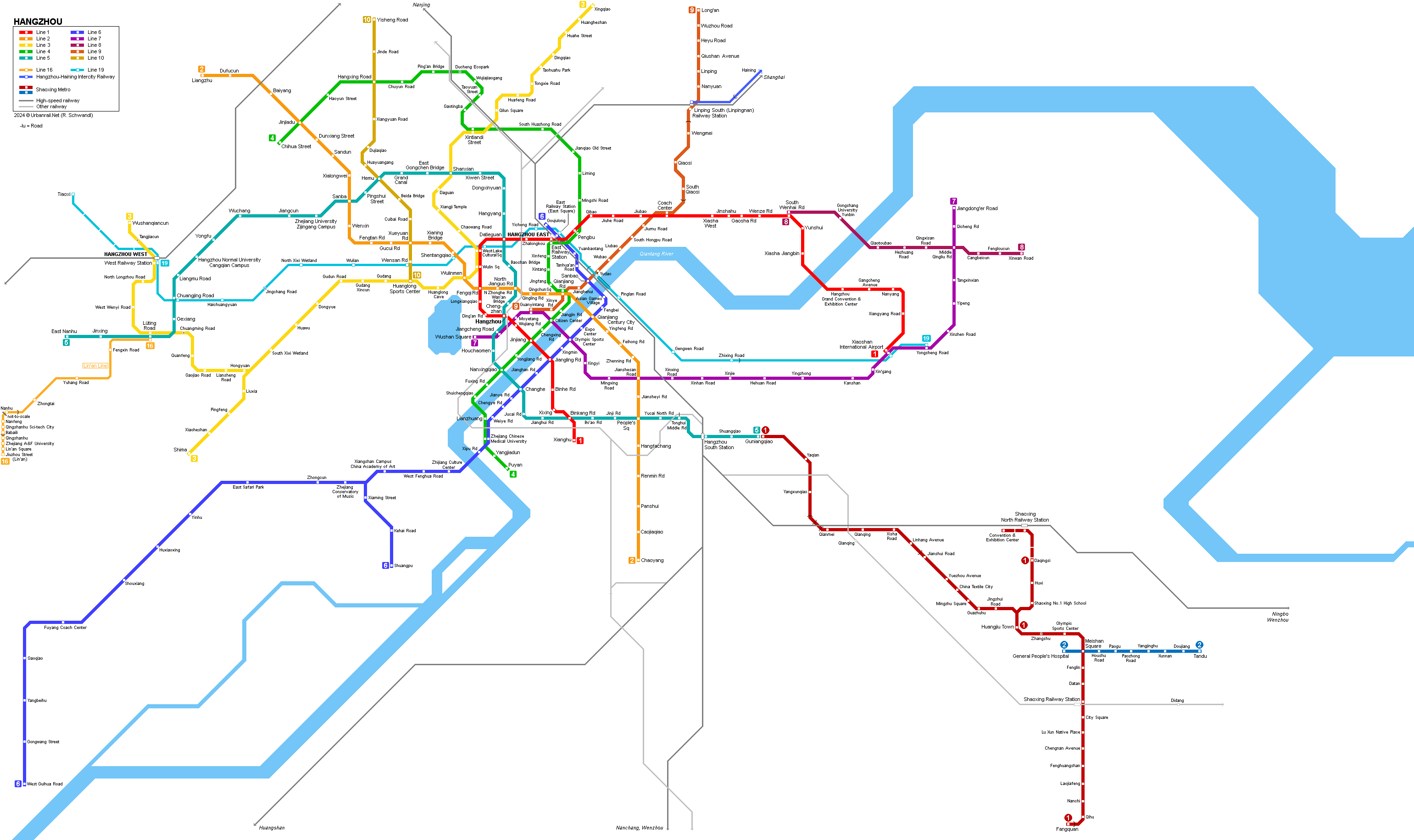
Stations are clearly marked in English. You can tap your phone (via Alipay or WeChat) to enter. And trains come every few minutes. No stress, no language barrier, no problem.
Key Lines I Used Most:
Line 1 (Red Line): The Backbone of the City
This line is a lifesaver. It cuts across Hangzhou east to west and connects most major spots:

- Longxiangqiao Station 龙翔桥站— This is the station for West Lake. I stepped out and was instantly in Lakeside Park, just minutes from the Broken Bridge and the musical fountain.
- Chengzhan Station 城站— Handy for Hangzhou Railway Station (the old city station).
- Hangzhou East Station 火车东站— The city’s busiest train hub.
- Xiaoshan Airport Station 萧山国际机场站— You can get to the airport directly!
- Wulin Square Station 武林广场站— Great for shopping and downtown access.
Traveling along Line 1 gave me a solid feel for the city’s rhythm. It was my daily lifeline.
Line 19: The Speed Demon (and Airport Hero)
This new line opened in 2022, and wow—it’s fast. It links big hubs across the city:
- Hangzhou West Station 火车西站— Perfect if you’re staying near Alibaba or the tech zone.
- West Lake Cultural Square 西湖文化广场站— A convenient transfer point to Line 1.
- Hangzhou East Station 火车东站— Zip over in minutes.
- Xiaoshan International Airport 萧山国际机场站— Direct access, no shuttle needed.
I used this when I landed—it made airport transfers totally painless.
Other Handy Lines:
- Line 5 (Teal Line) — Took me to Hangzhou South Station and Gongchen Bridge, a historical gem along the Grand Canal.
- Line 7 (Purple Line) — Another route to the airport, and super convenient for Wushan Square, close to the lively Hefang Street.
Buses & Taxis / Ride-Hailing Apps
While I leaned heavily on the metro, buses gave me another layer of experience. They go where the metro doesn’t—and let you feel the city breeze along tree-lined streets.

I loved riding the bus around West Lake. The scenery was gorgeous, and it connected me to lakeside spots like Leifeng Pagoda and Su Causeway easily.
A few tips:
- Alipay or WeChat is your best friend—scan and ride.
- Some buses get crowded during rush hour. Grab a window seat if you can!
For door-to-door ease, I also used DiDi, China’s version of Uber.
Taxis and ride-hailing are great for:
- Late-night returns
- Traveling with luggage
- Heading to places a bit off the metro map
Most scenic areas and train stations have designated pick-up and drop-off zones. Prices are fair, and you can pay right in the app.
Hidden Gem: Public Bicycles
Did you know? Hangzhou was China’s first city to roll out a public bike-sharing system.
And it shows—they’ve got it down to a science.

Riding a bike here felt like pure freedom. I cruised around West Lake and along the Grand Canal, stopping whenever something caught my eye (which was often).
You just:
- Use the Alipay app to scan and unlock
- Get the first hour free!
It’s perfect for short trips, photo stops, and sunny afternoons. Plus, no traffic jams.
Quick Guide: How I Got to West Lake (From Everywhere)
Getting to West Lake is easy—if you know your starting point. Here’s what I used:
From Xiaoshan Airport:
- Line 1 to Longxiangqiao — About 70 minutes, 7–9 RMB
- Line 19 + transfer to Line 1 — Faster, about 50 minutes, 8–10 RMB
- Taxi or DiDi — 45–60 mins, around 100–150 RMB
From Hangzhou East Station:
- Line 1 to Longxiangqiao — 40 minutes, 4 RMB
- Taxi/DiDi — 20–30 mins, 30–40 RMB
From Hangzhou Station (Chengzhan):
- Line 1 to Longxiangqiao — 15 minutes, 2 RMB
- Taxi — 10–15 mins, or walk 30 mins if you’re traveling light
From Hangzhou West Station:
- Line 19 + transfer to Line 1 — About 50 minutes, 8 RMB
- Taxi/DiDi — 40–50 mins, 80–100 RMB
From Hangzhou South Station:
- Line 5 + transfer to Line 1 — Around 45 minutes, 6 RMB
- Taxi/DiDi — 30–40 mins, 50–60 RMB
Final Travel Tips for Getting around in Hangzhou
- Metro times include transfers and wait times—plan for a little cushion.
- Taxi times assume light traffic. During rush hour, allow extra time.
- Longxiangqiao Station is the closest stop to West Lake’s core. I loved stepping out and being right at the water.
Getting around Hangzhou wasn’t just easy—it was part of the experience. One moment, I was zooming through underground tunnels. The next, I was coasting past willows on a bike.
Wherever I needed to go, Hangzhou got me there—with grace and ease. And that’s why, when people ask me how to get around in Hangzhou, I tell them:
Just follow the rhythm of the city—it knows the way.
5. Top 10 Attractions in Hangzhou – My Personal Guide to the City’s Heart and Soul
If Hangzhou were a poem, these ten places would be her most moving lines. Each one holds a story. Some whisper of ancient dynasties, while others sing in neon lights across the Qiantang River. Together, they show a city that’s both timeless and alive.
In this chapter of my Hangzhou Travel Guide, I’m sharing the Top 10 Attractions in Hangzhou—not just with facts, but with the emotion of being there. I’ve walked the paths, sipped the tea, and stood still in the breeze. And now, I’ll take you with me.
NO.1 — West Lake (西湖)
Cultural Theme: West Lake Culture
If you’ve heard anything about Hangzhou, it’s probably this: “Heaven is in the sky, and on Earth, there is Hangzhou and Suzhou.” It’s true. And West Lake is the reason.

I’ve seen lakes all over the world, but nothing compares. Mountains circle the water like guardians. Willow branches dip low. And every season transforms the lake into a new kind of magic.
In spring, I watched petals fall on Su Causeway. In summer, I stood by lotus ponds at Quyuan Garden. Autumn brought gold to the trees near Pinghu Qiuyue, and winter? I caught snow on the Broken Bridge, just like in old legends.
- Location: West Lake District
- Metro: Line 1, Longxiangqiao Station
- Hours: Open all day
- Admission: Free (some spots like Leifeng Pagoda or Yue Fei Temple charge small fees)
- Must-See: Broken Bridge, Leifeng Sunset, Three Pools Mirroring the Moon
- Tip: Rent a bike or take a boat—you’ll feel like part of a painting.
NO.2 — Hangzhou City Balcony (杭州城市阳台)
Cultural Theme: Qiantang River Culture
After all the quiet charm of West Lake, I craved a glimpse of modern Hangzhou—and I found it here.

Standing on the City Balcony, I watched skyscrapers light up across the river in Qianjiang New Town (钱江新城)in Shangcheng District. It was like Hangzhou put on a futuristic light show just for me. The buildings danced in color, and the breeze carried the scent of something new, something bold.
- Location: Shangcheng District, Zhijiang Road
- Metro: Line 4, Citizen Center Station
- Hours: Open all day (light shows at 19:30 & 20:30)
- Admission: Free
- Must-See: Full river view, light show, “Sun and Moon” twin towers
- Tip: Light shows happen Tuesday, Friday, and Saturday—arrive early for the best spot.
NO.3 — The Grand Canal (京杭大运河)
Cultural Theme: Canal Heritage
I took a boat ride here one evening, and it felt like drifting through time.

The Grand Canal—a UNESCO World Heritage Site—has flowed for over a thousand years. Today, it weaves past ancient docks, stone bridges, and lantern-lit alleys. I boarded a traditional barge, listened to the water slap gently at the sides, and watched the city glow from both banks.
- Location: Gongshu District
- Metro: Line 5, Grand Canal Station
- Hours: Open all day; boats run 9:00–21:00
- Admission: Free entry; boat tickets from 60 RMB
- Must-See: Gongchen Bridge, Qiaoxi Historic Block, canal at night
- Tip: Go after dark—reflections and lanterns make it feel like a dream.
NO.4 — Liangzhu Ancient City Ruins Park (良渚古城遗址公园)
Cultural Theme: Ancient Civilization
Few places have left me speechless. Liangzhu did.

This site proves Chinese civilization is at least 5,000 years old. I walked through peaceful fields once lined by ancient city walls. I visited royal tombs, touched sun-warmed stones, and fed gentle deer in the park’s sanctuary. It was peaceful and profound.
- Location: Yuhang District
- Metro Line 2 to Liangzhu, then Bus 1222M
- Hours: 9:00–17:00
- Admission: 60 RMB
- Must-See: Mojiao Hill Palace, Deer Park, Fanshan Tomb
- Tip: The park is big—hop on the sightseeing tram (20 RMB) to save your legs.
NO.5 — Lingyin Temple & Feilai Peak (灵隐寺与飞来峰)
Cultural Theme: Buddhist Culture
Nestled in green hills, this ancient temple feels like it belongs in another realm.

I arrived early, incense rising through the mist. The chants were soft. The Lingyin Temple itself was alive with color and calm, while Feilai Peak Grottoes—covered in ancient carvings—seemed to whisper history through its stone.
- 📍Location: West Lake District, Fayun Lane
- 🚌 Bus 103 or 121 to Lingyin Stop
- ⏰ Hours: 7:30–17:30
- 🎫 Admission: 45 RMB (Feilai Peak) + 30 RMB (Temple)
- 📸 Must-See: Grand Hall, Carvings, 500 Arhats Hall
- 💡 Tip: Go in the morning. It’s quieter and more spiritual.
NO.6 — Xixi National Wetland Park (西溪国家湿地公园)
Cultural Theme: Eco Culture
Unlike anywhere else in Hangzhou, Xixi Wetlands are wild, winding, and full of life.
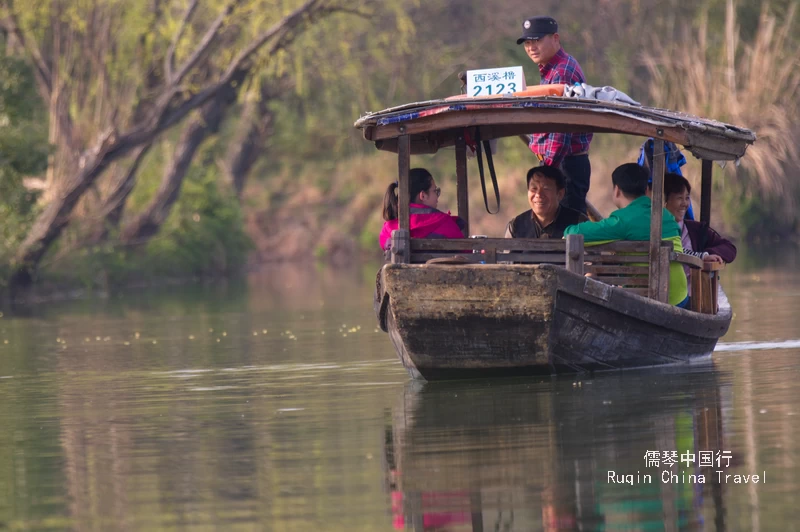
I took a slow boat through reed-fringed streams. The boatman sang softly. Herons flew overhead. The wetland is known as the “green lungs” of the city, and here, I could finally breathe.
- 📍Location: West Lake District, Tianmushan Road
- 🚇 Metro Line 3 or 19 to Xixi Wetland South Station
- ⏰ Hours: 8:00–18:00
- 🎫 Admission: 80 RMB
- 📸 Must-See: Deep Pool Mouth, Smoke and Water Fishing Village
- 💡 Tip: Hire a rowing boat (100 RMB/hour) for a quieter, more local experience.
NO.7 — Longjing Village (龙井村)
Cultural Theme: Tea Culture
I love tea—but Longjing turned love into obsession.
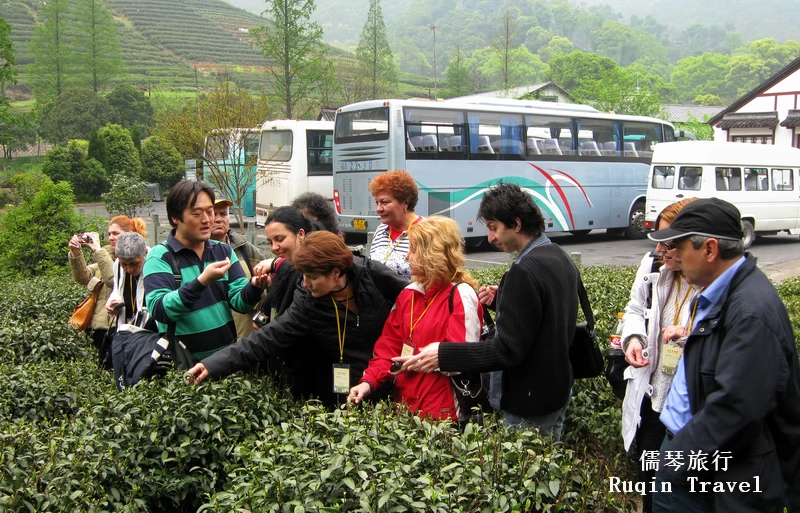
Here, Longjing (Dragon Well) tea grows on hills that roll like waves. I wandered through rows of tea bushes, watched farmers picking leaves, and sat on a wooden stool, sipping tea brewed from leaves just picked minutes before.
- Location: West Lake District
- Bus 27 to Longjing Tea Room Stop
- Hours: Open all day
- Admission: Free
- Must-See: Imperial Tea Trees, endless tea fields
- Tip: Visit during spring harvest—you can try tea picking yourself.
NO.8 — Hefang Street (河坊街)
Cultural Theme: Local Life Culture
Some streets feel like stages. Hefang Street is one of them.
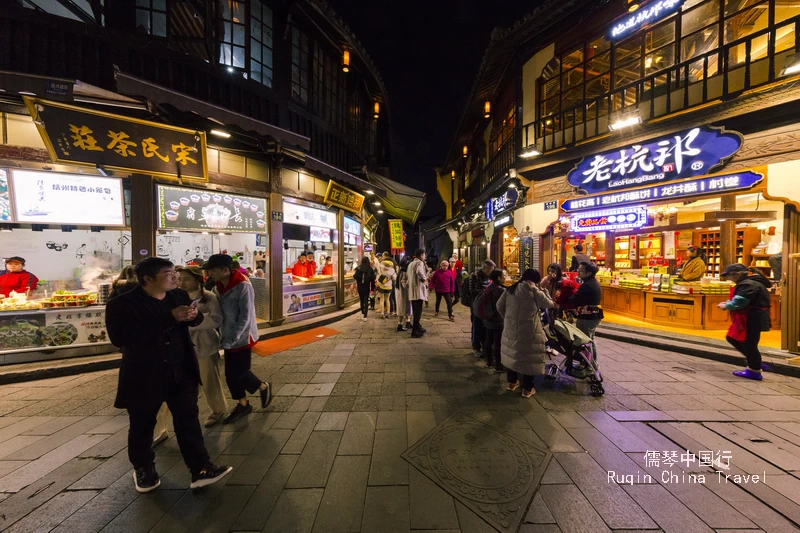
I walked past herbal shops, old-school candy makers, and stalls selling savory pancakes and sweet rice cakes. It smelled like childhood and sounded like old Hangzhou. Every few steps, I found something delicious—or something handmade.
- Location: Shangcheng District
- Metro Line 1, Ding’an Road Station
- Hours: All day (shops usually 9:00–22:00)
- Admission: Free
- Must-See: Hu Qing Yu Tang Pharmacy, Scholar’s Hall
- Tip: Don’t miss local snacks like Dingsheng Cake and Scallion Pancakes.
NO.9 — Xiaohe Straight Street (小河直街)
Cultural Theme: Historical Heritage
Quiet and poetic, Xiaohe Straight Street is my secret escape.

This canal-side street kept its old charm—white walls, gray tiles, stone bridges. But now, artists and baristas breathe new life into old homes. I drank coffee beside an old courtyard, lanterns swinging gently above.
- Location: Gongshu District
- Bus 76 or 1 to Changzheng Bridge
- Hours: All day
- Admission: Free
- Must-See: Lanterns at night, vintage houses
- Tip: Visit at dusk. As the lights come on, the whole street glows.
NO.10 — Liuhe Pagoda (六和塔)
Cultural Theme: Ancient Architecture
I ended one of my days at Liuhe Pagoda, and it felt like a perfect closing note.
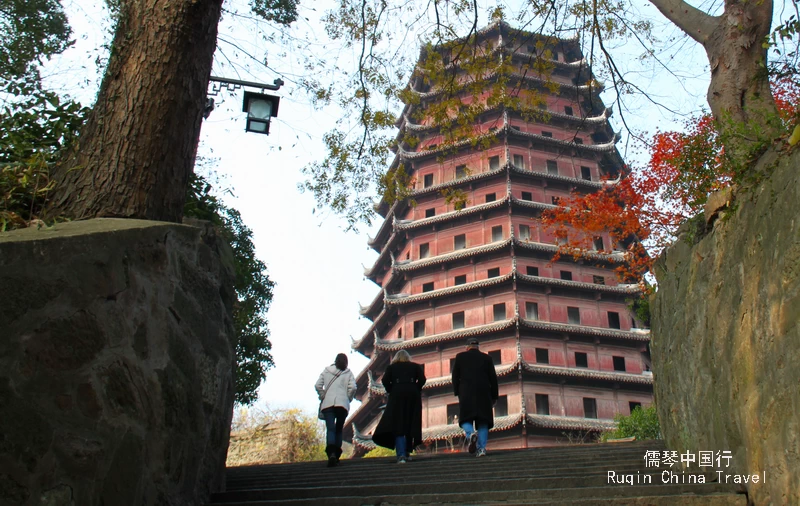
Built in the Song Dynasty, this towering pagoda stands beside the roaring Qiantang River. I climbed to the top and saw the Liuhe Bridge stretch across the water below. Wind tugged at my hair. The city sparkled in the distance.
- Location: West Lake District, Zhijiang Road
- Bus 118 or 190 to Liuhe Pagoda
- Hours: 8:00–17:30
- Admission: 30 RMB (extra 10 RMB to climb the tower)
- Must-See: Full pagoda view, river sunset
- Tip: The climb is worth it—panoramic river views await.
One City, Ten Stories
These weren’t just sights. They were moments.
Each one gave me a new way to know Hangzhou—through water, tea, stone, silence, and song.
So whether you’re chasing ancient history or sunset selfies, let this list from my Hangzhou Travel Guide be your compass. These Top 10 Attractions in Hangzhou truly reveal the soul of this poetic, layered, unforgettable city. Let’s keep going—there’s still so much more to uncover.
6. Souvenirs to Savor: Hangzhou Local Specialties to Bring Home
In every journey, there are a few things I long to carry home—not just objects, but memories wrapped in flavor, fabric, and craft. In this part of my Hangzhou Travel Guide, I’ll share some of the Hangzhou local specialities that truly captured my heart.
First, of course, is West Lake Longjing tea. I visited the tea fields in Longjing Village and watched locals gently pluck the delicate green leaves. When brewed, the tea was light, fragrant, and somehow calming. If you’re here in spring, try the “Mingqian” harvest—it’s precious.
Next came silk. I picked up a hand-painted scarf at China Silk Town. Soft as a whisper, it now lives in my suitcase as my favorite travel accessory.

Then I discovered the West Lake silk umbrella—light, artistic, and collapsible like bamboo. Mine has tiny cranes flying over a lake, and I still get compliments when I use it on rainy days.
For snacks, I brought home West Lake lotus root starch (great for my grandma), and Dingsheng Cake, a sweet with a proud Song Dynasty backstory.
And who knew I’d get excited about scissors? But the legendary Zhang Xiaoquan brand changed that. I bought a pair of travel scissors—yes, they’re TSA-safe!
Before I left, I wandered Hefang Street, where I found fan shops, radish pickles, and even handmade brushes once ordered by Lu Xun himself.
Hangzhou’s soul lives in its details. These keepsakes? They’re tiny time capsules—each one carrying a little piece of Jiangnan warmth home with me.
7. Hangzhou on a Plate: The Best Hangzhou Traditional Food I Tasted
Food in Hangzhou isn’t just something you eat. It’s something you feel.
Every bite carries a story. Every dish reflects the city’s soul—elegant, balanced, and steeped in centuries of tradition. In this part of my Hangzhou Travel Guide, I want to take you on a flavorful journey through the best Hangzhou traditional food I discovered. Trust me, I tasted everything—and loved every moment.
1) Lake Fresh, Light and Elegant
West Lake Vinegar Fish 西湖醋鱼 was my first must-try. Legend says it honors a folk hero from the Song Dynasty. It’s made from fresh grass carp, simmered in sugar, soy sauce, and vinegar. The result? A silky, sweet-sour dish with flavors that linger like poetry.

Then came Longjing Shrimp 龙井虾仁—delicate river shrimp stir-fried with Dragon Well tea leaves. The shrimp were pearl white, the tea bright green. Together, they tasted like spring.
And I’ll never forget Song Sister Fish Soup 宋嫂鱼羹. A famous widow once served this to an emperor, and now it comforts diners like me, with tender fish slices, mushrooms, and just a hint of spice.
2) Meaty, Melt-in-Your-Mouth Classics
Dongpo Pork 东坡肉 might be the most famous bite in town. Braised in Shaoxing wine, this slow-cooked pork belly was soft, rich, and deeply comforting. One spoonful of sauce over rice? Heaven.

Beggar’s Chicken 叫化童鸡 was wrapped in lotus leaves and baked in clay. When they cracked it open at my table, steam floated up like incense. Inside, the chicken was fall-off-the-bone tender, with hints of herbs and sweetness.
And Honey-glazed Ham 蜜汁火方—a jewel-toned slice of Jinhua ham steamed with rock sugar—was both sweet and salty, best enjoyed sandwiched in a soft bun.
3) Seasonal Vegetarian Treasures
In spring, I fell hard for Braised Spring Bamboo Shoots 油焖春笋. Cooked with sugar and soy, they were crunchy, sweet, and addictively good. The best ones came straight from Lin’an.

I also tried a warm bowl of West Lake Water Shield Soup 西湖莼菜羹—a silky, slippery plant found only in these parts, paired with chicken shreds and ham. It tasted like something a scholar might sip while writing poetry by the lake.
4) Noodles and Street Food You Can’t Miss
No visit is complete without a bowl of Shrimp and Eel Noodles 虾爆鳝面. At Kuiyuan Guan, the eels are deep-fried and then stir-fried again, poured over chewy hand-pulled noodles. I slurped every strand.

Then there’s Pian’er Chuan 片儿川 —noodles with pickled vegetables, pork slices, and bamboo shoots. It’s humble but deeply satisfying. I found the best at Juying Noodle Shop 菊英面店 , where locals lined up out the door.
I also fell for Cat’s Ear Noodles 猫耳朵, named for their shape. Tossed with shrimp, scallops, and a rich broth, they were playful and comforting.
And when the weather cooled down, I ordered Old Duck with Dried Bamboo Shoot Soup 笋干老鸭煲. The broth was deep and mellow. Perfect with a side of steamed rice.
Don’t skip the Crispy Fried Shrimp 油爆虾, either. Popped whole into your mouth, shells and all—they’re crunchy, sweet, and surprisingly addicting.
Where to Eat in Hangzhou
Here’s what I found:
- Louwailou 楼外楼 and Shanwai Shan 楼外楼 for traditional, historic meals.
- Kuiyuan Guan 奎元馆 for noodles worth a detour.
- New Bailu 新白鹿, Grandma’s House 外婆家, and Green Tea Restaurant 绿茶 for affordable, tasty, everyday dishes.
Seasonal Eating in Hangzhou
- Spring: Longjing Shrimp, Bamboo Shoots
- Summer: Water Shield Soup, Fried Shrimp
- Autumn: Vinegar Fish, Soy Duck
- Winter: Old Duck Soup, Honey Ham
Foodie Tips to Eat Like a Local
- Order Dongpo Pork per person—it’s rich and filling.
- Customize your noodles—you can ask for softer or firmer strands.
- Pair oily dishes with West Lake lotus root starch—it’s cooling and light.
From imperial dishes once served to emperors to roadside snacks that warm the heart, Hangzhou food tells stories. It bridges dynasties and neighborhoods, rivers and palates.
And if you ask me, the best way to understand this city… is to sit down, take a bite, and savor every slow, soulful mouthful. That’s the flavor of Hangzhou. And it’s unforgettable.
8. Hangzhou Practical Travel Tips — My Personal Guide to a Smooth, Joyful Trip
Every time I return to Hangzhou, I learn something new about how this city moves, breathes, and welcomes travelers. So in this part of my Hangzhou Travel Guide, I want to share the Hangzhou practical travel tips that helped me explore with ease. Some tips saved me time. Others saved me money. All of them helped me feel less like a visitor and more like someone who truly belonged.
1) Getting Around: Move Like a Local
First, trust the metro. It’s clean, simple, and wonderfully efficient. Hangzhou now has nine metro lines, and most scenic spots sit right along them. I usually just scan with Alipay, step inside, and relax.
Next, for West Lake, I sometimes take the cute WE1314 bus—its name means “one life, one world.” It loops around the lake and makes sightseeing feel effortless. And when I want freedom, I ride a shared bike. The first hour is free, and gliding under willow trees never gets old. Just remember to park only in marked zones.
However, do stay alert around transportation hubs. Ignore drivers who approach you directly; instead, call a DiDi car for safety and fair prices. And if you try a pedicab, agree on the fare before you hop in.
Parking near West Lake is expensive and limited, so I rarely drive there.
2) Sightseeing Wisdom: Save Time, Skip Crowds
I learned quickly that mornings are magic. At West Lake, I often arrive around 6:30 a.m. The mist hangs low. The paths are empty. And I feel like the lake belongs only to me.
For Lingyin Temple, I go on weekday mornings or even on rainy days. The raindrops make the stone carvings glow, and the crowds stay away. At Leifeng Pagoda, if elevator lines stretch too long, I simply climb. The hill is gentle, and the view along the way feels like a secret.
Whenever tickets are needed, I book through official channels like the West Lake Tourism account. And for boats, I use only licensed docks. Private boats can sometimes overcharge or skip safety rules.
Temples provide free incense inside—no need to buy any outside.
3) Shopping Smart: Bring Home the Best, Avoid the Rest
For tea, I go straight to Longjing Village or Meijiawu. The quality speaks for itself. For silk, China Silk City has the widest selection, but I always check for “100% mulberry silk” on labels. Classic gifts like Zhang Xiaoquan scissors or Wangxingji fans are reliable and beautiful.
However, I never fall for “special price tea” outside scenic spots—real early-spring Longjing is never cheap. And I’m cautious with “free tea tastings,” which sometimes lead to awkward high‑pressure sales.
I always compare prices. And I always ask for a receipt.
4) Eating Out: Taste Hangzhou the Right Way
I often start with old favorites like Louwailou for vinegar fish or Kuiyuan Guan for shrimp-and-eel noodles. For affordable meals, I go to New Bailu or Grandma’s House. But when I want truly local flavors, I follow friends to tiny places like Fuyuanju or Hang San Jie Mei.
In Hangzhou, eating with the seasons matters. I choose bamboo shoots in spring, lotus dishes in summer, crab in autumn, and duck soup in winter.
Most dishes come in moderate portions, so I order just enough to savor without waste. And for a slow afternoon, I sit at Lakeside Teahouse, drink Longjing tea, and watch the world drift by.
5) Weather, Etiquette, and Everything Else
Spring brings soft rain, so I keep a light jacket and umbrella with me. Summer is hot and humid, so I protect my skin and carry mosquito spray. Autumn is dreamy—clear skies and cool nights. Winter, though, bites with wet cold, so I bundle up well.
Tourist centers at major attractions offer maps and storage. Police posts and medical stations are easy to spot. And most big sites have accessible entrances.
In temples, I dress modestly and keep my voice low. I queue politely for boats and cable cars. And I keep West Lake clean—no smoking, no littering.
With these tips in mind, your days in Hangzhou will flow more smoothly, like the gentle ripples on the lake. This city rewards those who slow down, breathe deeply, and let its beauty unfold one quiet moment at a time. I hope your journey here is as peaceful and memorable as mine.
About the Author
Ruqin is the founder of Ruqintravel.com and has spent more than four decades working in China’s travel industry. Drawing on hands-on experience in cities like Beijing and Hangzhou, he personally researches and updates each guide to help international travelers navigate China with confidence.
Further Reading
How to Book Hangzhou Attraction Tickets: All You Need to Know
West Lake, Hangzhou: Walking Route, Map & Must-See Highlights
Feilai Feng Grottoes: Map, Walking Route & Highlights
Baoshi Mountain: Hiking Route, Map & Must-See Highlights
Xiling Seal Art Society: Map, Walking Route & Highlights
Hupao Spring: Walking Route, Map & Must-See Highlights
Liuhe Pagoda: Map, Walking Route and Highlights
How to Visit Hangzhou – Your Complete Guide
The Best Hangzhou Tour Itinerary
Best Places to See Fall Colors in Hangzhou