
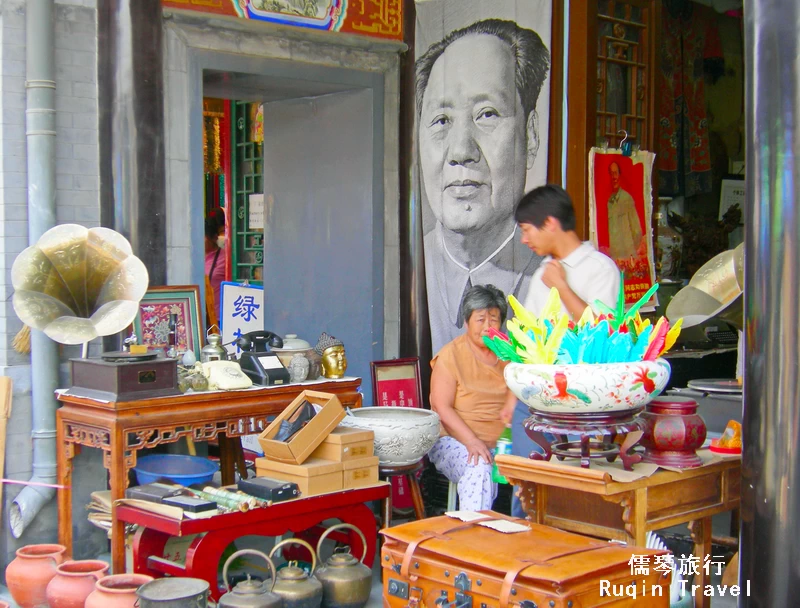

Written and updated by Ruqin
Last updated: April 14, 2026
The first time I stepped into one of Beijing’s markets, I wasn’t sure where to look—rows of silk, tea, antiques, and souvenirs all competing for attention. It felt chaotic at first, but that’s exactly where the experience begins. This guide to the Top 10 Beijing Markets helps you focus on what actually matters.
As I explored more, I realized each market has its own personality. Some are built for browsing, others for bargaining. Once you understand the rhythm, navigating them becomes part of the fun—not the frustration.
1. Panjiayuan Antique Market
Panjiayuan Antique Market, a haven for antique enthusiasts, is a must-visit destination in Beijing. Known for its vast collection of Chinese cultural and historical artifacts, this market is akin to a treasure trove waiting to be explored.
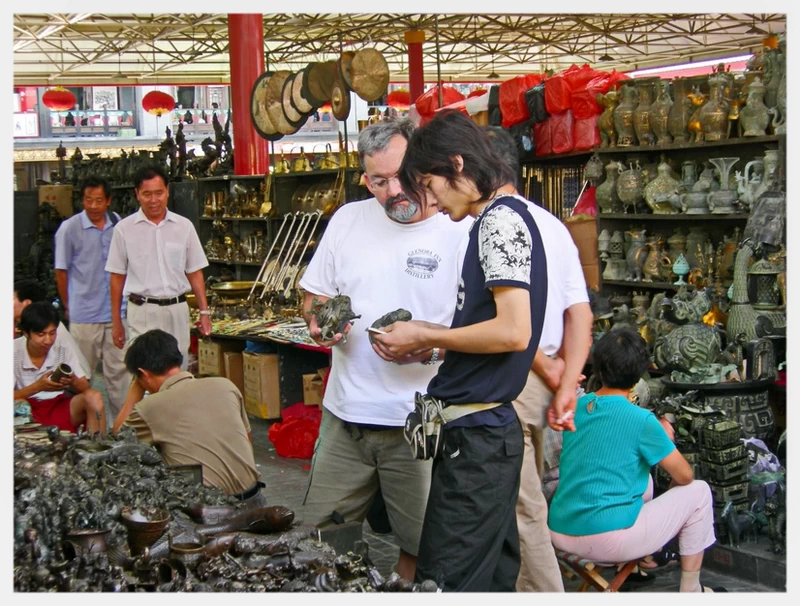
From exquisite porcelain to memorabilia from the Cultural Revolution, the range of items available is staggering. The market truly comes alive on weekends, starting as early as 4:30 am, when vendors from across China gather to display their collections on simple blankets spread out on the ground.
Location and Directions
Panjiayuan is located at No.18, Huaweili Road, a short walk from the Panjiayuan Bridge along the southeastern section of the Third Ring Road.
The simplest way to get to Panjiayuan Market is to take subway line 10 to Panjiayuan Station and exit at Exit C1. Once outside, turn around and head north along the sidewalk for about 30 meters. You’ll see the East Gate entrance to Panjiayuan Antique Market (also known as the “Ghost Market”) on your left.
Panjiayuan Ghost Market Opening Hours
Wednesday: 9:00 – 23:00 all year round
Friday: 9:00 – 23:00 all year round
Panjiayuan Antique Market Opening Hours
Summer Time ( April 8- Oct 7); Winter Time (Oct 8-April 7)
Monday and Tuesday: 90:00 – 21:00 ( Summer Time ); 9:00 – 20:00 ( Winter Time)
Thursday: 90:00 – 21:00 ( Summer Time ); 9:00 – 20:00 ( Winter Time)
Saturday and Sunday: 90:00 – 21:00 ( Summer Time ); 9:00 – 20:00 ( Winter Time)
Note: For the best experience, visit on Wednesdays and Fridays when the market is particularly active.
2. Daliushu Flea Market
Daliushu Market is known as the largest flea market in Beijing. It is said that there are things here you’ve never seen before and nothing you can’t find. If you’re looking for quality items at reasonable prices or simply enjoy treasure hunting, this is the place to visit.
Daliushu Market is renowned for its extensive selection of antiques and second-hand goods. You can find items such as porcelain, paintings, furniture, and bronze wares. These items not only hold historical value but also have significant collectible value.
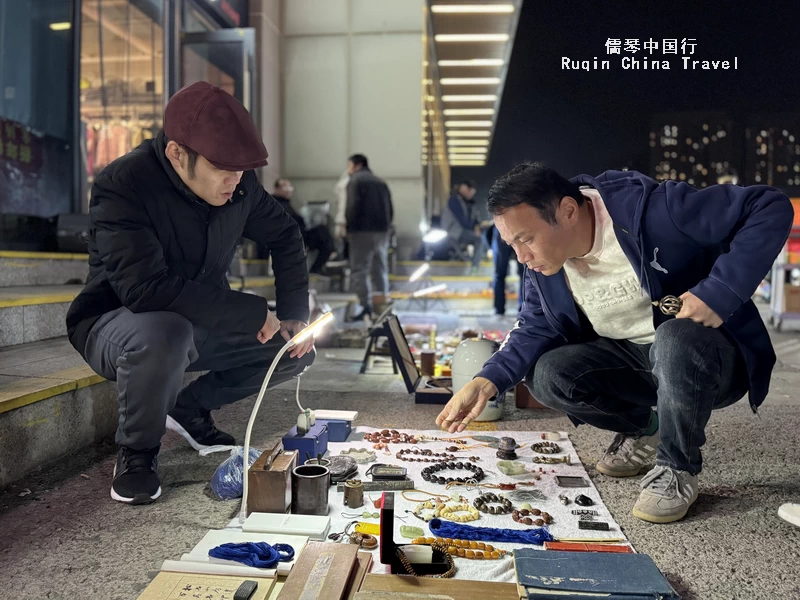
The market is a paradise for collectors. You can find stamps, coins, medals, old books, and more. Many collectors discover their prized possessions here.
Location and How to Get There
The address: located between Daliushu Road and Xiaowuji Road in Chaoyang District, Beijing
位于北京市朝阳区的大柳树路与小武基路之间
You can take Line 7 and get off at “Nanlouzizhuang” Station (南楼梓庄站), exit at Exit C ( Southeast). Then walk on the sideway to the north and then the east along Daliushu Road for 200-350 meters, you will see the huge market complex.
Opening Hours
The street is accessible throughout the day.
Day Market: 8:00 – 17:30
Night Market ( Ghost Market ):
( Tuesday): 17:00 – Midnight
(Thursday): 17:00 – Midnight
3. Silk Street Market
Silk Street ( 秀水街 Xiùshì Jiē), aka Silk Market, is an iconic shopping destination in Beijing. Whether you’re shopping for traditional Chinese gifts, stylish clothing, or simply indulging in exquisite local food, Silk Street offers a complete cultural and shopping experience
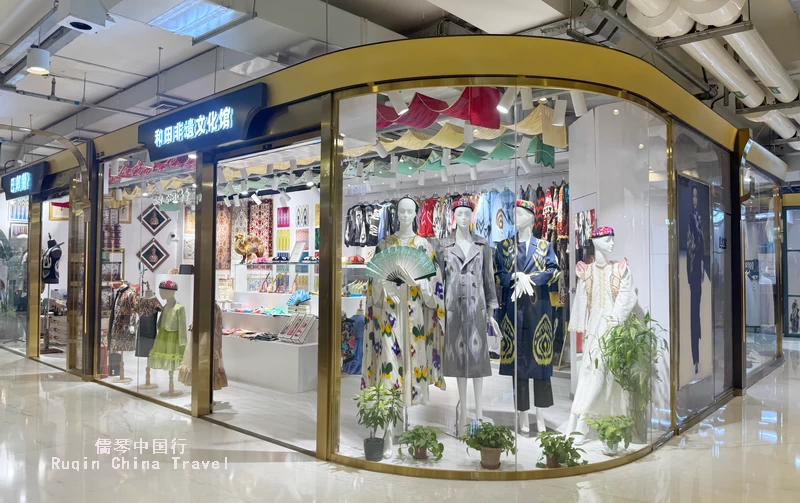
After recent renovations, Silk Street is now a sleek shopping complex with two underground levels and six floors above ground. It’s even more welcoming to both tourists and locals.
Location and How to Get There
Located at 8 Xiushui East Street in the Chaoyang District, the Silk Street Market is easily accessible. The most convenient way is by subway: take line 1 to Yonganli Station and exit from Exit A. For bus travelers, routes 1, 9, 28, 37, 43, 120, 126, 403, 639, 640, 668, 728, and 729 stop at Yonganli Station.
Opening Hours
The market is open daily from 9:30 am to 9:00 pm, making it a flexible shopping destination for both early birds and night owls.
4. Hongqiao Market (Pearl Market)
Hongqiao Market, often referred to as the Pearl Market, is a vibrant shopping destination in Beijing. While it’s famous for its vast selection of pearls, the market offers much more, including electronics, clothes, toys, and souvenirs.
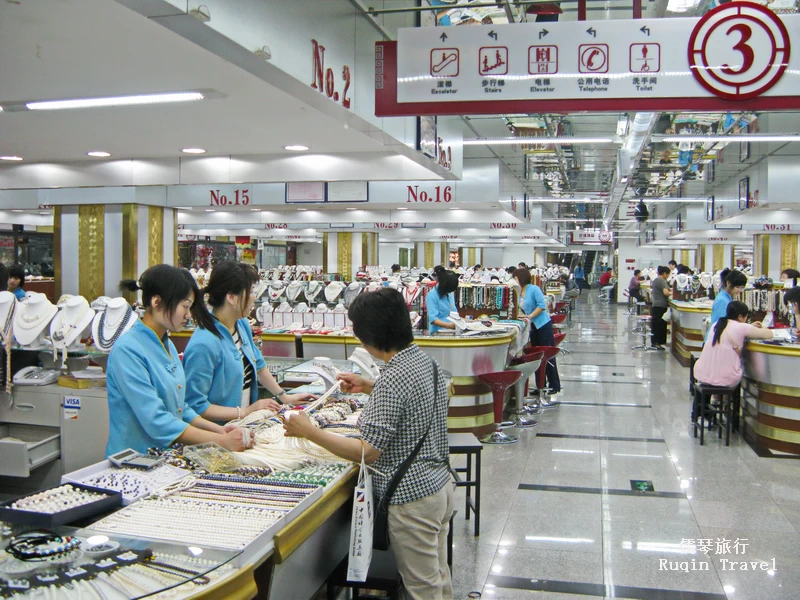
Spanning four floors, each level of the market caters to different shopping needs, making it an ideal place for diverse and comprehensive shopping experiences. It’s a popular spot for both tourists and locals looking for quality products and gifts.
Location and How to Get There
Situated at 9 Tiantan Donglu in the Dongcheng District, just opposite the east gate of the Temple of Heaven, Hongqiao Market is easily reachable. The best way to get there is by subway, taking Line 5 to Tiantandongmen (East Gate of Temple of Heaven) Station. Buses 39, 43, 60, 116, and 610 also stop nearby.
Opening Hours
The market operates from 8:30 am to 7:00 pm daily, offering ample time for visitors to explore its extensive range of products.
5. Niujie Muslim Market 牛街
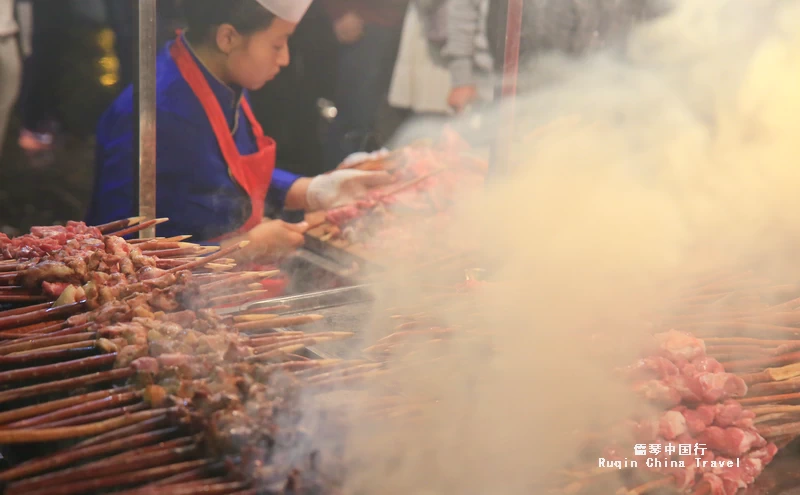
Niujie Muslim Market offers a unique cultural experience in Beijing’s Muslim Quarter. This bustling market is known for its halal food and Islamic goods, reflecting the rich heritage of the city’s Muslim community.
From savory lamb dishes to sweet pastries, the market provides an array of authentic halal cuisine that tantalizes the taste buds.
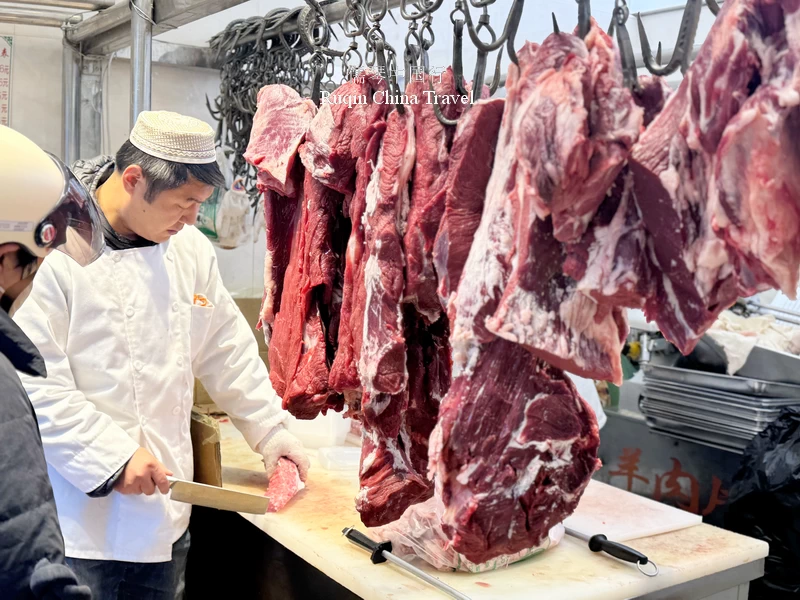
It’s not just a place for food; the market also features a variety of Islamic books, clothing, and other cultural items, making it a hub for both shopping and cultural immersion.
Location and How to Get There
To reach Niujie, the most convenient subway line is Beijing’s Line 19. Get off at Niujie Station and exit from Gate C. From there, simply walk across the street in the south to reach Niujie.
There are also two nearby subway stations on Line 7: Guang’anmennei Station and Caishikou Station.
Guang’anmennei Station is closer to Niujie. It is about 830 meters to the west of Niujie Street, and exiting from Gate C is the most convenient way to get to Niujie.
Caishikou Station, also on Line 7, is about 950 meters to the east of Niujie Street. Though slightly farther, it is still a viable option for reaching Niujie.
Opening Hours
The market is typically open from early morning until late evening. The best time to visit is during the day when all stalls and shops are open and bustling with activity.
6. Dazhalan Shopping Street (Dashilan)
Dazhalan Shopping Street, also known as Dashilan, is one of Beijing’s oldest and most historic commercial streets, dating back over 600 years.
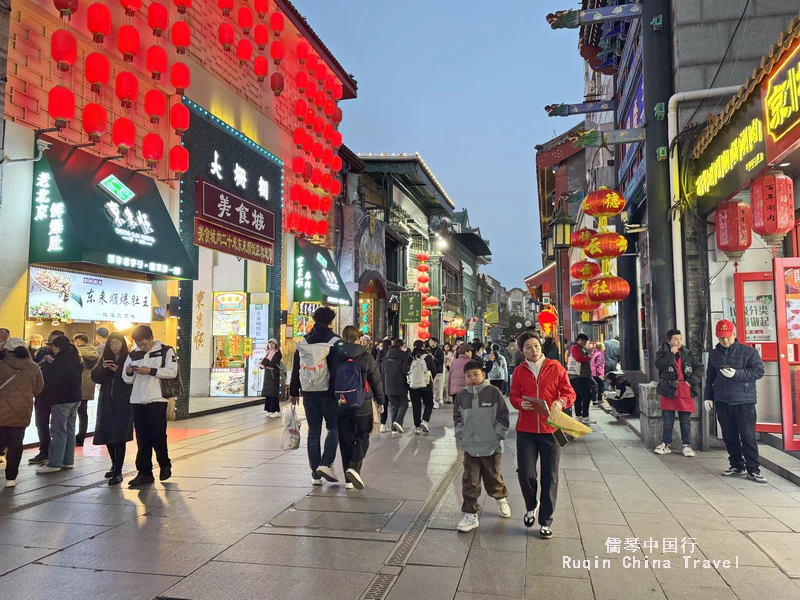
Located near the Qianmen area, it offers a rich variety of traditional Chinese goods, including silk, shoes, tea, and handicrafts. This bustling pedestrian street is home to several long-established shops that have served the city for centuries, offering visitors a glimpse into Beijing’s cultural heritage.
How to get there by subway: Take Line 2 or Line 7 to Qianmen Station. From Exit B or C, walk south for about 10 minutes to reach Dazhalan Shopping Street.
7. Yandai Xiejie Market
Yandai Xiejie, also known as Yandai Byway or Old Pipe Street, is a historical gem nestled in the heart of Beijing. Dating back to the Yuan Dynasty (1271 – 1368), this street has evolved while maintaining its authentic charm, making it a window into Beijing’s rich past.
Once famous for its numerous shops selling smoking pipes, hence its name “Yandai,” the street today is a blend of tradition and modernity.
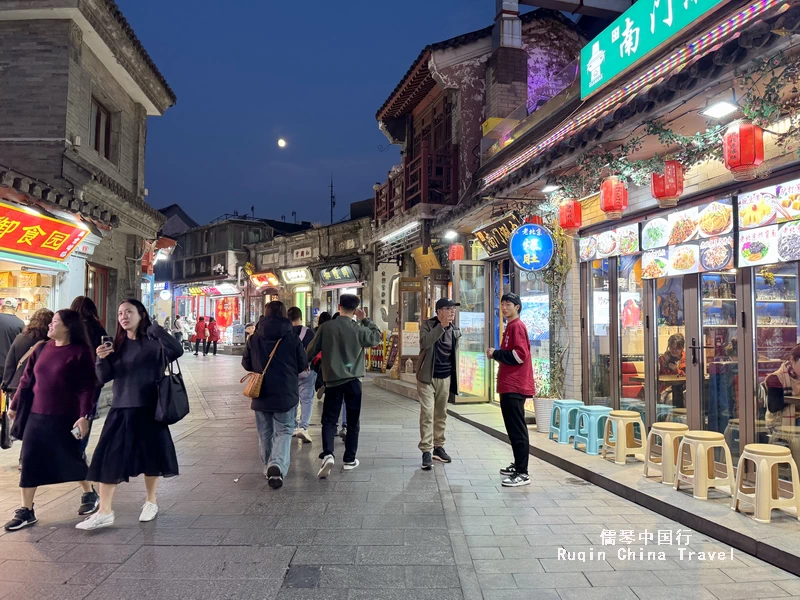
Visitors can explore shops selling antiques, jade, silk, and traditional Beijing snacks, interspersed with trendy bars and quaint eateries, all set against a backdrop of typical Northern Chinese architecture.
Location and How to Get There
Yandai Xiejie is conveniently located just about 50 meters south of the Drum Tower. This 232-meter-long market street is easily accessible on foot from many central locations in Beijing.
Take Subway Line 8 and get off at Shichahai Station, exit from Exit C and walk approximately 5-10 minutes to reach Yandai Xiejie. Or
Take Subway Line 2 and get off at Gulou Dajie Station, exit from Exit G and walk about 10-15 minutes to reach Yandai Xiejie.
Opening Hours
The street is open throughout the day, but the best time to visit is during the late morning or afternoon when all shops and eateries are open, and the street is buzzing with activity. The bars and some restaurants also offer a lively evening atmosphere.
8. Liulichang Culture Street 琉璃厂
Liulichang Culture Street, located in the Xicheng District, is a renowned cultural landmark in Beijing, famous for its traditional Chinese stone dwellings housing an array of antique shops and art studios.
The street is a treasure trove for collectors and enthusiasts, offering a wide variety of collectibles, including woodblock prints, historic paintings, calligraphy, and more.
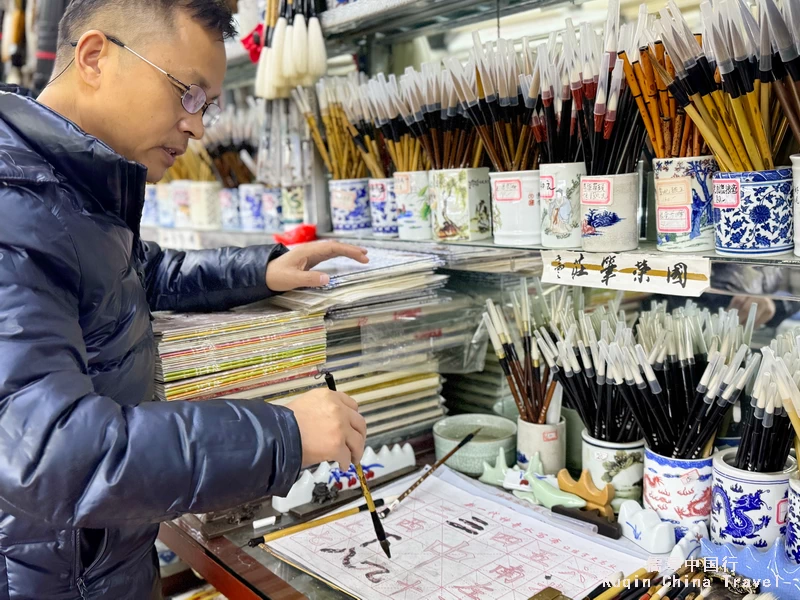
It’s also the perfect place to find traditional Chinese art supplies like ink, brushes, and paper. A stroll down this street feels like a walk through history, with each shop and stall telling its own unique story.
Location and How to Get There
To visit Liulichang Antique Street, take subway line 2 to Hepingmen Station, exiting from C2. This brings you directly to the west section of Liulichang Street, where the main attractions are located. Several buses, including numbers 6, 14, 15, 25, 50, 53, 57, 102, and 105, also stop near Liulichang.
Opening Hours
The street and most of its shops are open from 8:30 am to 7:00 pm. The best time to visit is during the day when the street is bustling with activity and all shops are open.
9. Sanyuanli Market (Grocery)
Sanyuanli Market, nestled in the Chaoyang District, is a vibrant and bustling hub that caters to the daily needs of locals and visitors alike. Established in 1992, this market has become a go-to place for fresh produce, meats, seafood, and a variety of other groceries.
It’s not just about the freshness and quality of the products; the market is also known for its friendly atmosphere and the interaction between local vendors and customers.
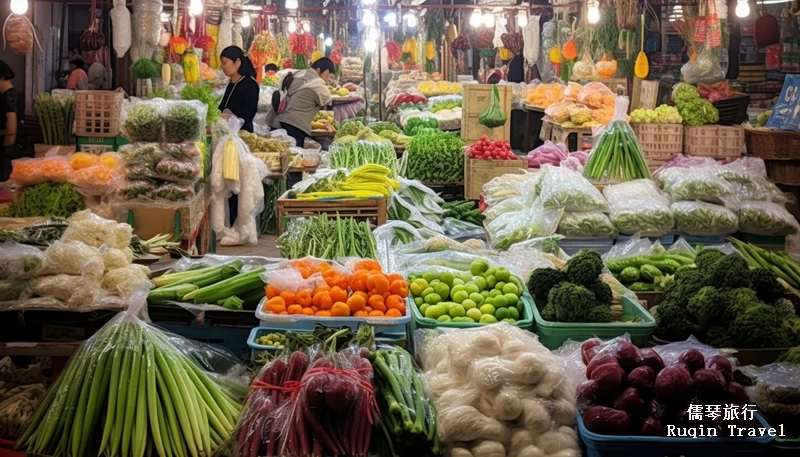
Sanyuanli Market serves as a fascinating insight into the daily life and culinary habits of Beijing’s residents.
Location and How to Get There
Sanyuanli Market is located on the left side of Building 2, Shunyuanli, along the East Third Ring Road. To reach the market, take bus routes 403 or 300, alighting at Sanyuanqiao Station, or subway line 10 to Liangmaqiao Station, which is a short walk away.
Opening Hours
The market operates daily, usually opening early in the morning around 6:00 am and closing in the late evening. The best time to visit is in the morning when the produce is freshest.
10. Shilihe House Building Materials City (Home Depot-like outlets)
Shilihe House Building Materials City is an expansive, one-stop destination for all home improvement needs in Beijing. With its vast array of stores resembling a cluster of Home Depot-like outlets, it’s the largest of its kind in the city.
Whether you’re a do-it-yourself enthusiast or looking for professional design and decor services, this market has everything from basic building materials to stylish home furnishings.
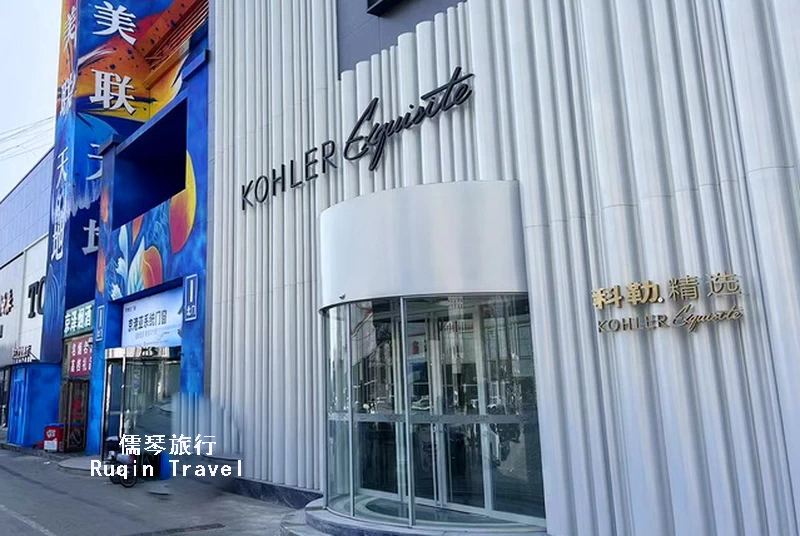
It’s a place where both locals and expatriates converge to find everything needed for home upgrades and renovations.
Location and How to Get There
Located in the southeast corner of Beijing’s Third Ring Road, Shilihe House Building Materials City is easily accessible by subway. Take line 10, 14, or 17 and get off at Shilihe Station, exiting at K2 or J. The market is just a 100-meter walk east from the Shilihe Bridge.
Opening Hours
The market is open daily, usually from early morning around 9:00 am until late in the evening. It’s best to visit during weekdays as weekends can be quite crowded.
By the time I worked through the major Beijing Markets, I realized they’re not just about what you buy—they’re about how the city feels up close. Some are loud and crowded, others surprisingly local and calm, but each one shows a different side of Beijing.
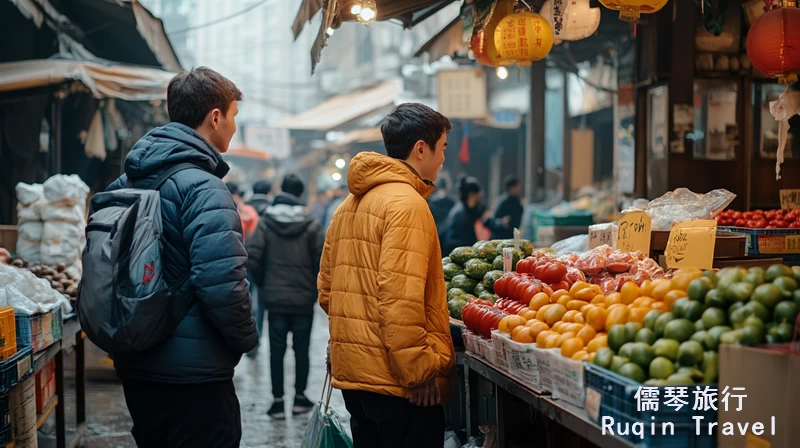
If you go in with a bit of curiosity—and a willingness to slow down—you’ll get far more than souvenirs. The Top 10 Beijing Markets become small windows into daily life, one stall, one conversation at a time.
About the Author
Ruqin is the founder of Ruqintravel.com and has spent more than four decades working in China’s travel industry. Drawing on hands-on experience in cities like Beijing and Hangzhou, he personally researches and updates each guide to help international travelers navigate China with confidence.
Further Reading
Daliushu Market, Daliushu Ghost Market: Map, Hours, Price & Tips
Panjiayuan Antique Market: Map, Opening Hours, Items and Tips
Shopping for Kids in Beijing
Qianmen Street Beijing: Map, Food, Shopping & Local Tips
Beijing Dashilan Street: Map, Food, Shopping, Hotels & Travel Tips
Yandai Xiejie Street (Yandaixie): Map, Shops, Food, Sights & Tips












Where is number 6?
Hi Joseph,
Thanks for having pointed out the missing Number 6! The Market Number 6 is Dazhalan Shopping Street (Dashilan). Dazhalan Shopping Street, also known as Dashilan, is one of Beijing’s oldest and most historic commercial streets, dating back over 600 years. Located near the Qianmen area, it offers a rich variety of traditional Chinese goods, including silk, shoes, tea, and handicrafts. This bustling pedestrian street is home to several long-established shops that have served the city for centuries, offering visitors a glimpse into Beijing’s cultural heritage.
How to get there by subway: Take Line 2 or Line 7 to Qianmen Station. From Exit B or C, walk south for about 10 minutes to reach Dazhalan Shopping Street.