
Written and updated by Ruqin
Last updated: April 14, 2026
I still remember stepping through the quiet red walls of Wuhou Temple after the noise of Chengdu’s streets—it felt like walking straight into a different century. If you’re wondering how to visit Chengdu Wuhou Temple without feeling lost or rushed, you’re not alone. The layout, the history, even the entrance flow can be a little confusing at first.
This guide walks you through what actually matters: what to see, how to move through the site, and how to connect the stories of Zhuge Liang and Liu Bei to what you’re standing in front of.
1. A Brief History of Wuhou Temple
The first time I walked through Wuhou Temple, I expected just another historic site—but the deeper I went, the more I realized this place carries real emotional weight for locals. It dates back to the Three Kingdoms period (220–280 AD), built to honor Zhuge Liang—a figure you’ll see everywhere in China, not just in history books but in everyday admiration for his wisdom and loyalty.
But it’s not only about him. As you move through the halls, you’ll also encounter the legacy of Liu Bei and other Shu Kingdom figures. The buildings you see today have been rebuilt over centuries, yet the respect people feel here hasn’t changed—and that’s something you can genuinely sense as you walk through.
2. What to See Inside Wuhou Temple
When you visit Wuhou Temple Chengdu, you’ll encounter a variety of historical and cultural landmarks. Here’s a breakdown of the main highlights:
1)Triple-Success Stele
Upon entering, one of the first sights is the famous Triple-Success Stele, erected in honor of Liu Bei, Zhuge Liang, and Zhuge Liang’s son, Zhuge Zhan. The stele is unique for its historical importance and exquisite calligraphy. Additionally, it reflects the virtues of the Shu Kingdom leaders, including loyalty, wisdom, and benevolence.
2) Liu Bei Temple
Next, make your way to the Temple of Liu Bei. This temple is dedicated to the founder of the Shu Kingdom, Liu Bei. His tomb, known as the Tomb of Liu Bei, is located behind the main hall. This site is revered as a symbol of respect and admiration for Liu Bei, who is remembered as a compassionate and honorable ruler.
3) Zhuge Liang Temple
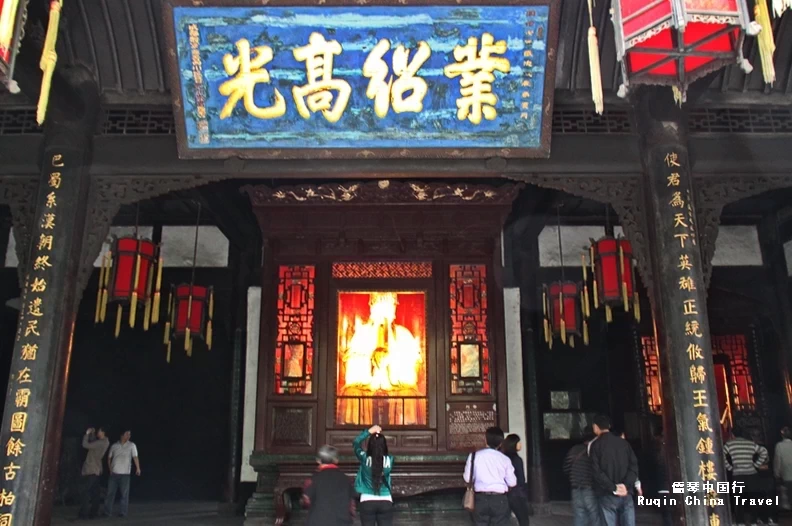
At the heart of Wuhou Temple is the Temple of Zhuge Liang. This temple is dedicated to the legendary military strategist, Zhuge Liang, whose wisdom and brilliance in battle earned him the status of a cultural icon. You’ll find statues of Zhuge Liang and historical artifacts that recount his achievements.
4) Sanyi Temple
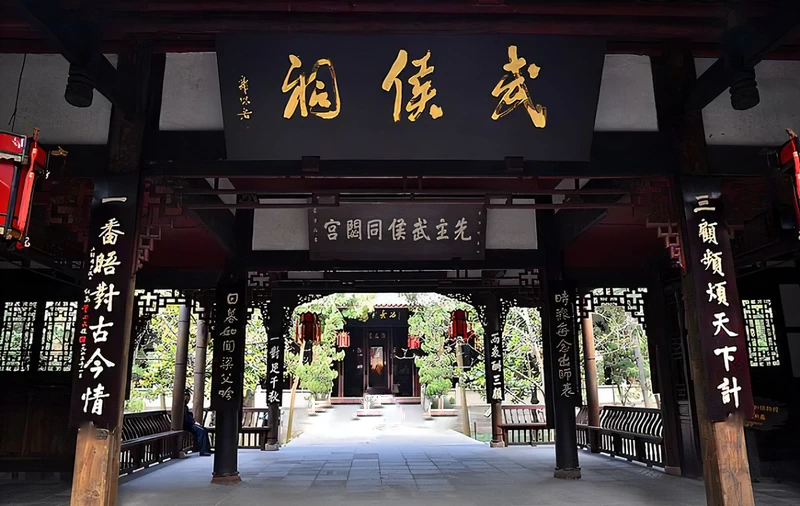
Another significant landmark is the Sanyi Temple, also known as the Temple of the Three Righteous Ones. This temple honors the Oath of the Peach Garden, a legendary alliance between Liu Bei, Zhuge Liang, and Guan Yu. The temple symbolizes their unwavering loyalty and friendship.
5) Tomb of Liu Bei
One of the most important stops on your tour is the Tomb of Liu Bei, which is located in a peaceful garden behind the main temple. The tomb is a simple but solemn structure that reflects Liu Bei’s humble nature. The surrounding gardens offer a tranquil place for reflection.
3. Recommended Route for Visiting Wuhou Temple
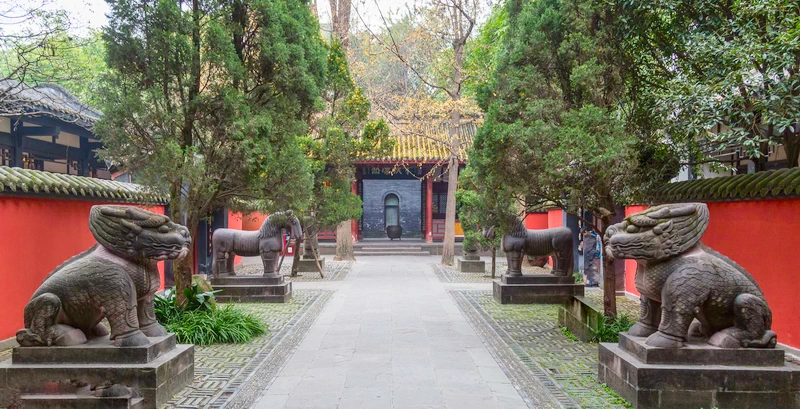
To make the most of your visit, follow this recommended route – Enter the Wuhou Shrine from the Main Gate in the south, then walk towards north and visit the four major sights in the shrine: Liu Bei Temple ( Hall ), Zhuge Liang Temple ( Hall), Sanyi Temple and end st the Tomb of Liu Bei. After finishing the tour of Wuhou Shrine, you will enter the famous ancient street of Jinli Street.
- Start at the Entrance: Begin by viewing the Triple-Success Stele (Tang Stele), which will give you a sense of the temple’s historical significance.
- Proceed to the Liu Bei Temple ( Liubei Hall ): Visit the Temple of Liu Bei to learn more about the founding emperor of the Shu Kingdom.
- Visit Zhuge Liang Temple (Zhuge Liang Hall): Take your time to explore the Temple of Zhuge Liang, which holds the essence of the temple complex.
- Stop at Sanyi Temple: Reflect on the story of friendship and loyalty among the three heroes at the Sanyi Temple.
- End at the Tomb of Liu Bei ( Hui Mausoleum): Complete your tour by visiting Liu Bei’s tomb, surrounded by lush gardens.
This route will help you navigate the temple efficiently while ensuring that you see the key highlights.
4. How to Get to Wuhou Temple Chengdu
Reaching Wuhou Temple is relatively easy. The temple is located in the Wuhou District, about 5 kilometers from the city center. Here are a few transportation options to get there:
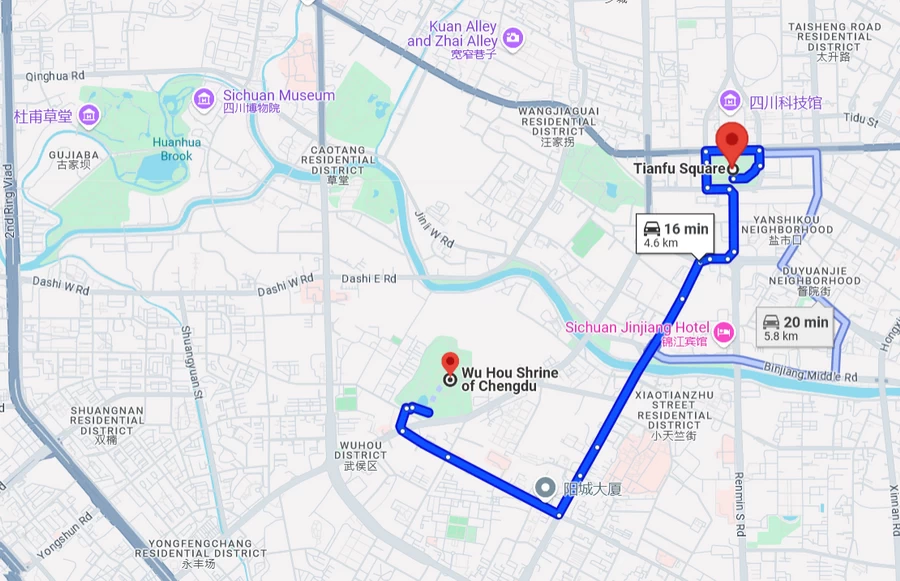
Wuhou Temple is located about 5 km to the southwest of Chengdu City centre ( Tuanfu Square )
Address: No.231 Wuhouci Street, Chengdu, China
Tel:+86-028-85552397
1. By Metro:
The most convenient way to get to Wuhou Temple is by Chengdu Metro. Take Line 3 and get off at Gaoshengqiao Station. From there, it’s a 10-minute walk to the temple.
2. By Taxi:
If you prefer a more direct route, taking a taxi is another option. The fare from Tianfu Square (the city center) to Wuhou Temple is around 20-30 RMB, depending on traffic.
3. By Bus:
For budget travelers, Chengdu’s public bus system is also efficient. You can take Bus No. 57, 82, 334, or several other lines that stop near the temple. Make sure to check the exact routes ahead of time.
5. Useful Wuhou Memorial Temple Travel Tips
Visiting Wuhou Temple Chengdu can be an enriching experience, especially if you’re well-prepared. Here are some practical tips to help you make the most of your trip:
1) Opening Hours:
The temple is open daily from 8:00 AM to 6:00 PM. It’s best to visit in the morning to avoid crowds, especially during weekends and holidays.
2) Ticket Prices:
The entrance fee is 50 RMB for adults, and there are discounts available for students and seniors. Tickets can be purchased at the entrance or online.
- 📍 Address: 231 Wuhou Shrine Street, Wuhou District
- 🚇 Metro: Line 3 to Gaoshengqiao Station, Exit D → 10-minute walk
- 📞 Phone: +86-28-85552397
3) Best Time to Visit:
The ideal time to visit is in the spring (March-May) or autumn (September-November) when the weather is mild. Chengdu summers can be hot and humid, making outdoor activities less enjoyable.
4) Wear Comfortable Shoes:
The temple grounds are extensive, and you’ll be doing a fair amount of walking. Wear comfortable shoes to explore the various sections without discomfort.
5) Photography:
Photography is allowed in most parts of the temple, but remember to be respectful of religious artifacts and visitors. Avoid using flash when taking photos indoors.
By the time I left, Wuhou Temple didn’t feel like just another stop—it felt like a quiet conversation with history. If you’re figuring out how to visit Chengdu Wuhou Temple, the key isn’t just logistics. It’s slowing down enough to notice the details, the statues, and the stories behind them.
With a bit of planning, the visit is easy to navigate and deeply rewarding. More importantly, it gives you a grounded way to understand Zhuge Liang and Liu Bei beyond textbooks—right where their legacy still feels alive.
About the Author
Ruqin is the founder of Ruqintravel.com and has spent more than four decades working in China’s travel industry. Drawing on hands-on experience in cities like Beijing and Hangzhou, he personally researches and updates each guide to help international travelers navigate China with confidence.
Further Reading
Top 10 Attractions in Chengdu – A Visitor’s Guide
What to Buy in Chengdu: Best Souvenirs, Snacks & Gifts
How to Get Around Chengdu: Subway, Bus, Taxi, Bike & Tips
Chengdu Nightlife Guide: Best Bars, Clubs & Night Spots
Chengdu Panda Base: Tickets, Transport and Travel Guide
Must-Try Local Dishes in Chengdu
How to Visit Chengdu Wuhou Temple: Your Complete Guide
Jinsha Site Museum Chengdu: Tickets, Highlights, Map & Tips
Dujiangyan Irrigation System, Chengdu: Your Complete Guide
Chengdu Kuanzhai Alley: Your Complete Guide
How to Visit Leshan Giant Buddha from Chengdu