
Written and updated by Ruqin
October 30, 2026
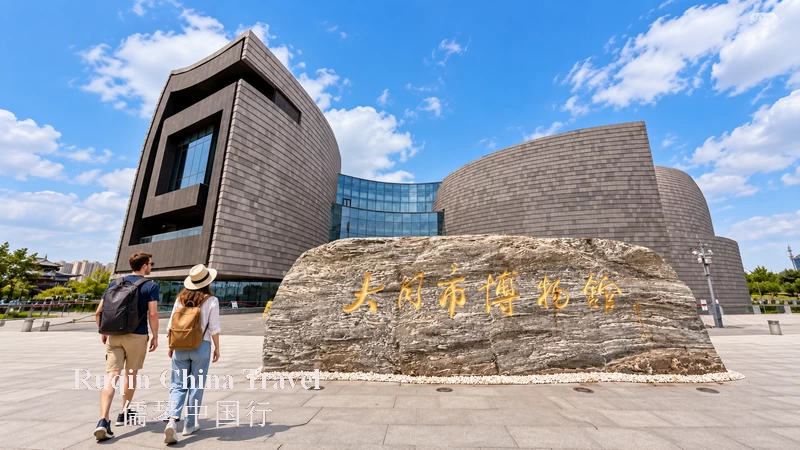
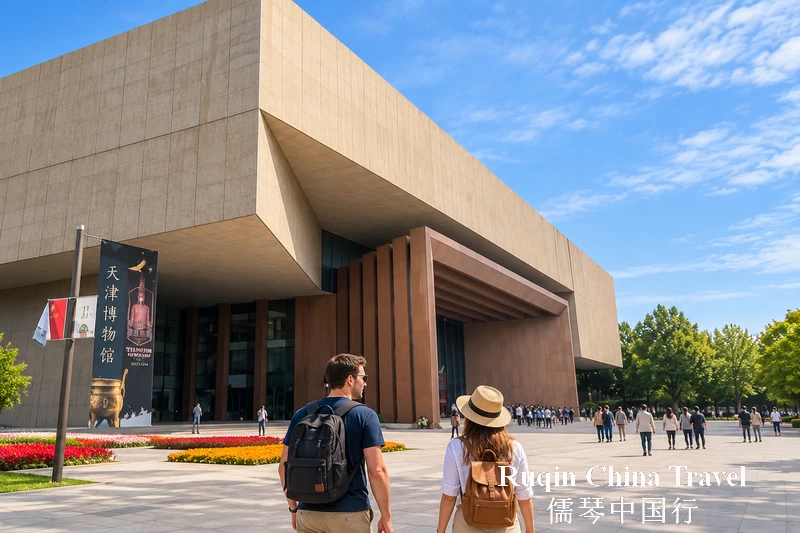
Tianjin Museum (天津博物馆) is one of the best places to start exploring the city’s history and culture. If you’re wondering how to visit Tianjin Museum, this guide covers everything from free tickets and reservations to metro directions, exhibition highlights and practical visiting tips.
The museum brings together ancient Chinese treasures, traditional Tianjin crafts and fascinating exhibits tracing the city’s development into a major commercial centre. It is a useful first stop before exploring Tianjin’s historic streets and buildings.
Admission is free, although some temporary exhibitions may charge a fee. Advance reservations are generally required for individual visitors. The museum normally opens from 9:00 a.m. to 4:30 p.m., Tuesday to Sunday, and closes on Mondays except during certain public holidays.
For first-time international travelers, I recommend allowing two to three hours. Start with the permanent exhibitions, especially the second-floor collection of rare treasures and the third-floor displays exploring Tianjin’s modern history.
In this guide, I’ll explain how to visit Tianjin Museum, book your tickets, find the museum on a map, get there by metro and choose the most interesting exhibitions without spending your entire day indoors.
1. How to Get to Tianjin Museum: Metro, Bus and Taxi
Tianjin Museum (天津博物馆) is located in Hexi District (河西区), inside the Tianjin Cultural Center (天津文化中心).
Address: No. 62 Pingjiang Road, Hexi District, Tianjin (天津市河西区平江道62号).
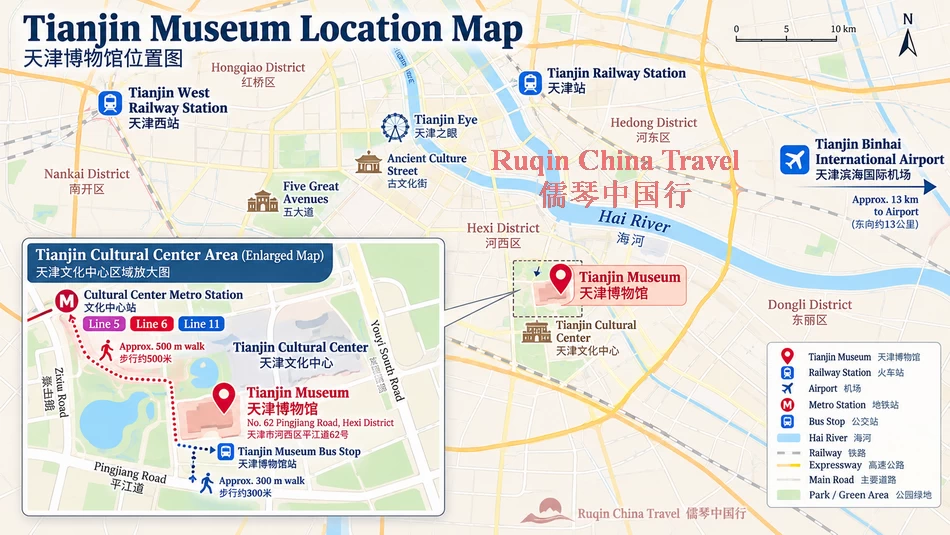
Tianjin Museum Location Map
The museum has a distinctive swan-shaped design, making it easy to recognize. Nearby are Tianjin Art Museum (天津美术馆), Tianjin Library (天津图书馆) and several other cultural attractions.
You can easily combine a museum visit with a walk around the cultural centre. However, do not confuse Tianjin Museum with Tianjin Art Museum or Tianjin Natural History Museum (天津自然博物馆). They are separate institutions.
By Metro: The Easiest Option
For most international travelers, I recommend taking the Tianjin Metro.
Take Metro Line 5 or 6 to Cultural Center Station (文化中心站). Use Exit F or K, then walk approximately 500 metres to Tianjin Museum. Allow around 5–10 minutes, depending on your walking speed.
Metro Line 11 is another option. Since June 28, 2026, a new underground passage has connected Lines 5, 6 and 11 at Cultural Center Station. You can now transfer between these three lines without leaving the paid station area.
After exiting, follow the signs toward Tianjin Museum or search 天津博物馆 in Amap (高德地图). Check the most convenient exit on your travel day, as station access arrangements can change.
By Bus
Several public buses stop near Tianjin Museum.
The most convenient stop is Tianjin Museum Stop (天津博物馆站), approximately 300 metres from the entrance.
Bus routes serving this stop include:
- Bus 655
- Bus 668
- Bus 686
- Bus 868
- Bus 912
Buses are useful if you are staying nearby. However, routes and stops can change, so check Amap before traveling.
For first-time visitors unfamiliar with Tianjin’s bus system, the metro is usually simpler.
By Taxi or DiDi
A taxi or DiDi is a convenient alternative, especially for families, senior travelers or visitors carrying luggage.
Enter the following destination in your navigation app or show it to your driver:
天津博物馆(天津市河西区平江道62号)
Vehicles can normally drop passengers off near the museum’s main entrance.
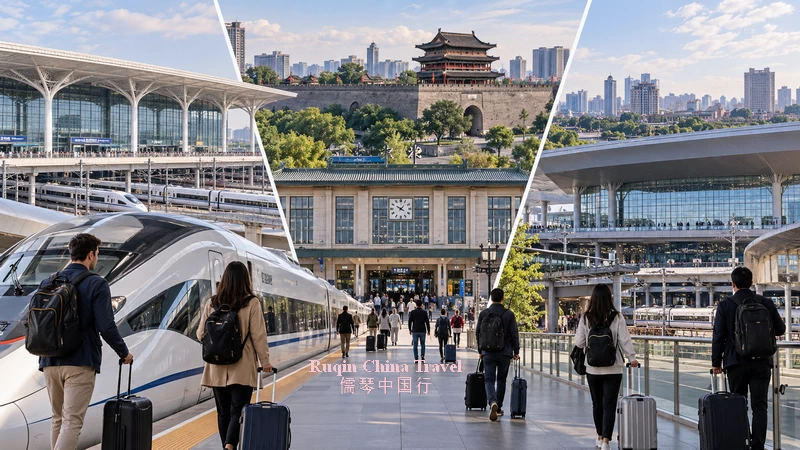
For reference, here are approximate taxi journeys from Tianjin’s two major railway stations:
| Starting point | Distance | Travel time | Estimated fare |
|---|---|---|---|
| Tianjin Railway Station (天津站) | 7 km | 20 minutes | ¥18–22 |
| Tianjin West Railway Station (天津西站) | 10 km | 25 minutes | ¥25–30 |
These are reference estimates for normal traffic. Actual fares and journey times depend on traffic, pickup location and any additional charges.
Ruqin’s Practical Tip: If you are visiting on a weekend or public holiday, I recommend taking the metro. Roads around the Tianjin Cultural Center can become busy, especially when several museums or cultural venues attract visitors at the same time.
2. Opening Hours and Admission
The museum’s regular visiting arrangements are:
| Item | Details |
|---|---|
| Tuesday–Sunday | 9:00 a.m.–4:30 p.m. |
| Last admission | 4:00 p.m. |
| Monday | Closed, except designated holidays |
| General admission | Free with reservation |
| Special exhibitions | Some require separate paid tickets |
The museum currently uses three reservation periods: 9:00–11:00, 11:00–14:00 and 14:00–16:00.
Choose a morning reservation if you want to explore several floors. An afternoon visit is fine for a shorter tour, but remember that admission stops at 4:00 p.m.
Opening hours may change during public holidays and special events. That summer arrangement should not be assumed to continue in October.
3. How to Reserve Tianjin Museum Tickets
Tianjin Museum offers free admission, but visitors must make a real-name reservation. You can book up to 7 days ahead, with three entry periods: 9:00–11:00, 11:00–14:00 and 14:00–16:00. Same-day reservations close at 4:00 p.m.
Online Reservation
You can reserve through four official channels:
- WeChat: Search 天津博物馆 or 天津博物馆TJM, then select 参观天博 → 免费预约.
- WeChat Mini-Program: Search 天博票务.
- Meituan (美团): Search 天津博物馆 and choose the reservation option.
- Official website: Visit www.tjbwg.cn and scan the reservation QR code.
Choose your date, entry period and identity document, then save your booking QR code.
Reservations for Foreign Visitors
Foreign visitors can select Passport (护照) when booking online. Bring your original passport and reservation QR code for manual verification at the entrance.
No Chinese phone number? You can request same-day registration at the museum’s staffed service counter. Bring your passport. Admission depends on remaining availability, so arrive early.
For assistance, call +86 22 8388 3000.
Ruqin’s Practical Tip: I recommend booking online whenever possible, especially during weekends and Chinese public holidays. Walk-in registration is not guaranteed.
5. What to See at Tianjin Museum: Floor-by-Floor Guide
Tianjin Museum has five above-ground floors, with permanent and temporary exhibitions spread across several levels.
You do not need to visit every gallery. If you have limited time, concentrate on the first three floors, then choose one or two exhibitions on the upper levels.
Recommended exhibition order
| 1st Floor | Origins of Tianjin — 天津人文的由来 |
| 2nd Floor | Rare Treasures — 耀世奇珍 |
| 3rd Floor | A Century of Modern Tianjin — 中华百年看天津 |
| 4th Floor | Selected temporary and special exhibitions |
| 5th Floor | Folk crafts, jade, calligraphy and other exhibitions |
First Floor: Origins of Tianjin (天津人文的由来)
Start here if you want to understand Tianjin before it became a major port and commercial city.
The exhibition traces the region’s early human activity and historical development. It provides background on the area’s geography, settlements and cultural traditions.
For visitors unfamiliar with northern China’s history, this is a useful introduction. Allow around 20–30 minutes.
Second Floor: Rare Treasures (耀世奇珍——馆藏文物精品陈列)
This is the floor I would prioritize for travelers interested in Chinese art and historical objects.
The collection includes ancient bronze vessels, porcelain, jade, paintings and calligraphy. The museum’s official exhibition catalogue identifies several particularly important objects.
Taibao Ding (太保鼎), Western Zhou Dynasty
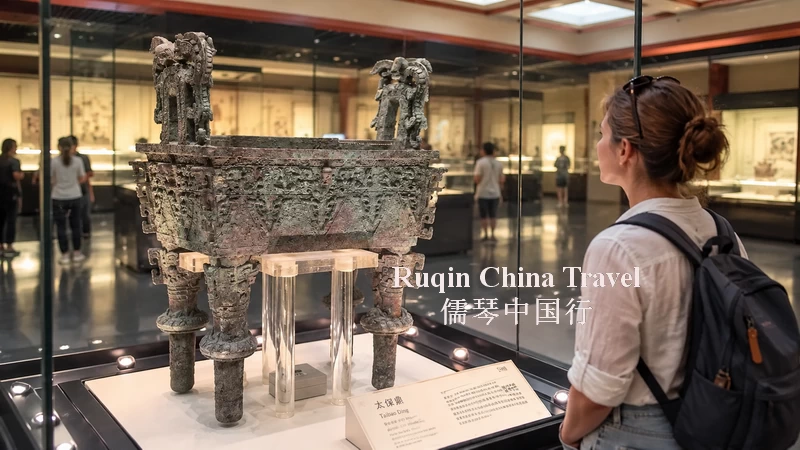
Taibao Ding (太保鼎), Western Zhou Dynasty
A distinctive bronze ritual vessel with elaborate decoration and an unusual form. It illustrates the sophisticated bronze casting techniques of ancient China.
Jadeite Cabbage with Grasshoppers (翡翠蝈蝈白菜), Qing Dynasty
A carved jadeite cabbage featuring two grasshoppers and a praying mantis. The artist used the natural variations in the stone to create the leaves and insects.
Qianlong Enamelled Porcelain Vase with Peonies and Pheasants (乾隆款珐琅彩芍药雉鸡图玉壶春瓶)
A finely decorated Qing Dynasty porcelain vase combining flowers, birds, poetry and imperial craftsmanship.
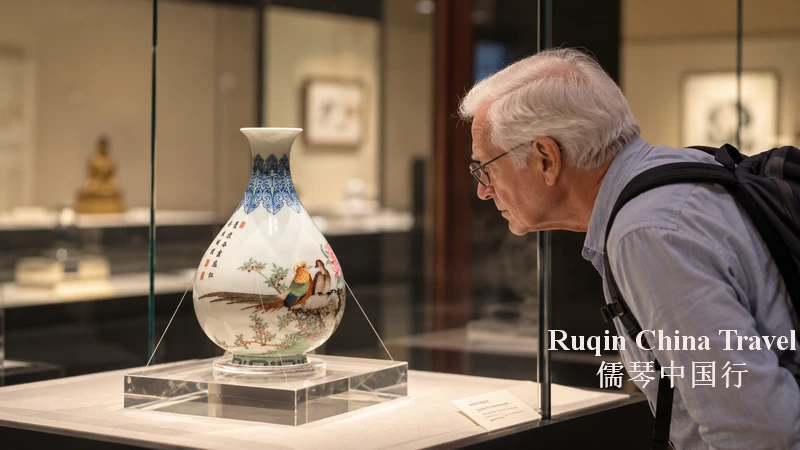
Qianlong Enamelled Porcelain Vase with Peonies and Pheasants
These objects are among the museum’s documented collection highlights. However, important artifacts may be rotated or temporarily removed for conservation. Check the current displays if you are visiting specifically to see one object.
Allow around 45–60 minutes for this floor.
Third Floor: A Century of Modern Tianjin (中华百年看天津)
This exhibition is especially useful for international travelers.
It examines Tianjin’s development during the century between the Opium Wars and the founding of the People’s Republic of China in 1949.
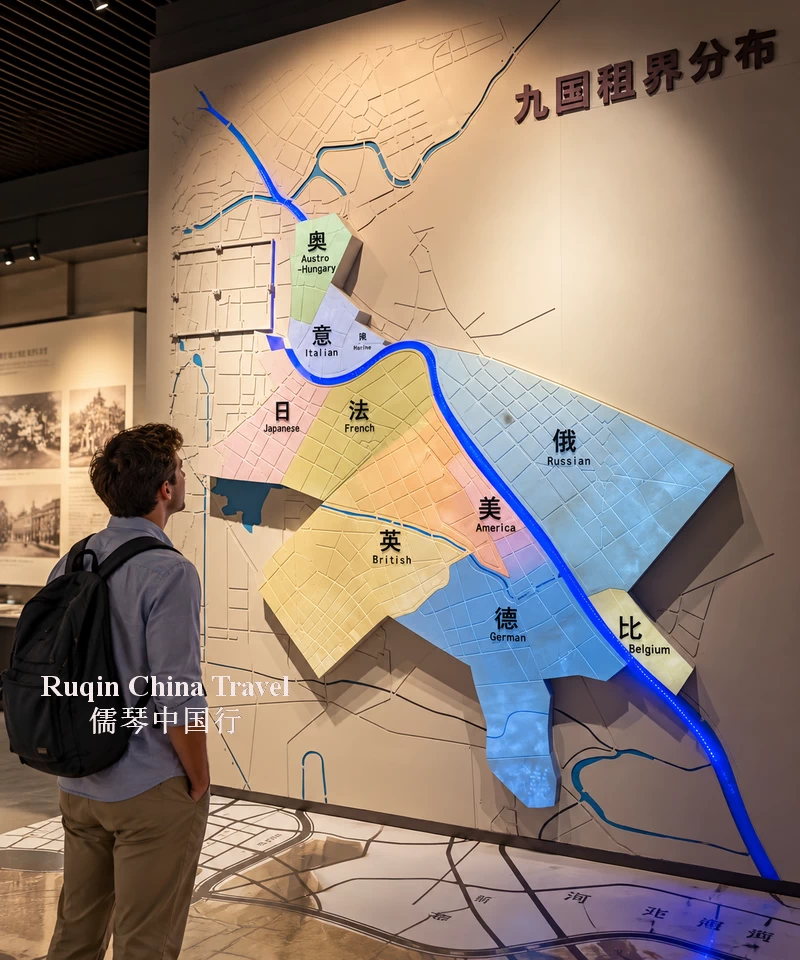
The nine foreign concessions division map
You will learn how foreign concessions, trade, industry, political change and cultural exchanges shaped modern Tianjin.
This background helps explain why the city has European-style buildings, old commercial streets and a distinctive urban layout.
I recommend spending 30–45 minutes here, especially before exploring Tianjin’s historic neighbourhoods.
Fourth Floor: Temporary Exhibitions
The fourth floor hosts changing exhibitions. Some are free, while others require paid tickets.
For example, the museum’s 2026 exhibition programme included The Crown of Glory: Treasures of the 18th-Century Savoy Court (荣耀之冠——18世纪意大利萨沃伊王朝宫廷珍宝展) and an immersive oracle-bone script exhibition (契刻流光——甲骨文沉浸式互动体验数字大展).
Both were listed as paid exhibitions on the museum’s website. Check their current status and admission charges rather than assuming they will still be available during your visit.
Fifth Floor: Tianjin Folk Crafts and Traditional Art
The fifth floor is worth visiting if you have time after the main historical galleries.
The museum lists exhibitions covering Tianjin folk crafts, traditional jade objects, painting and calligraphy.
One particularly relevant exhibition is Folk Crafts of Tianjin (沽上风物——天津民间工艺展).
Other exhibitions have featured Yangliuqing New Year Prints (杨柳青年画) and Niren Zhang Painted Clay Figurines (泥人张彩塑).
These are useful introductions to local artistic traditions that you may also encounter in Tianjin’s craft shops.
6. A Practical Two-and-a-Half-Hour Museum Route
You can enjoy the main collections without spending the entire day inside.
Here is a suggested route for a morning reservation.
| Time | Suggested Activity |
|---|---|
| 9:00–9:15 | Arrive, security check and orientation |
| 9:15–9:40 | First floor: Origins of Tianjin |
| 9:40–10:35 | Second floor: Rare Treasures |
| 10:35–11:15 | Third floor: Modern Tianjin |
| 11:15–11:45 | Fifth floor: Folk crafts or jade exhibition |
| 11:45–12:00 | Rest, museum shop and exit |
This is a suggested schedule, not a guided tour timetable.
If you enjoy ancient porcelain or calligraphy, spend longer on the second floor. If Tianjin’s modern history interests you more, give additional time to the third floor.
Do not rush through every temporary exhibition simply because it is available.
7. Facilities, Photography and Accessibility
Free Luggage Storage
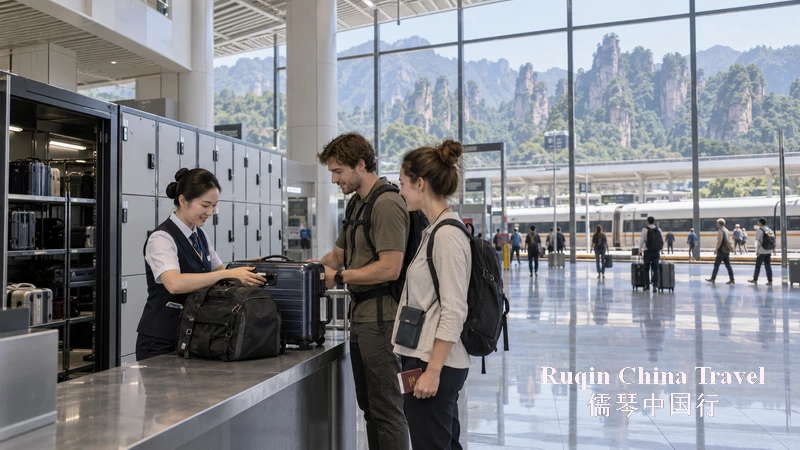
Tianjin Museum provides free luggage storage near the entrance, on the right-hand side as you enter.
- Small bags: Use the self-service lockers. There are currently 264 compartments across 11 locker units.
- Large suitcases: Use the staffed luggage-storage counter. Large bags are not allowed inside exhibition galleries.
- Valuables: Keep passports, cash and other valuables with you. The museum does not accept valuables for storage.
Storage is subject to availability, especially during busy periods.
Photography Rules
You can generally take photos with your smartphone inside the museum without special permission.
However, flash photography, tripods, video recording and personal livestreaming are prohibited in exhibition galleries.
Keep your phone on silent, avoid touching exhibits and follow any additional photography restrictions displayed in individual galleries.
Senior Travelers and Accessibility
Tianjin Museum offers several facilities for senior travelers and visitors with limited mobility.
- Visitors aged 65 and above: Can register at the staffed security entrance with valid identification and receive priority entry. Accompanying visitors must reserve separately.
- Wheelchairs: Manual wheelchairs are available to borrow free of charge. Standard-compliant electric wheelchairs are also permitted.
- Step-free access: The museum has wheelchair ramps, accessible elevators, spacious gallery corridors and accessible toilets with handrails and emergency call buttons.
- Assistance: Visitors with mobility difficulties can ask museum staff about volunteer assistance.
Senior visitors who cannot use online booking may also request same-day registration at the staffed entrance, subject to availability.
Ruqin’s Practical Tip: For senior travelers, I recommend choosing three or four main galleries rather than trying to see everything. Allow time for breaks, especially if you plan to spend two or three hours inside the museum.
Ruqin’s Practical Advice
For first-time international travelers, I recommend Tianjin Museum if you enjoy history, traditional Chinese art or learning about the city before exploring it on foot.
The best approach is to reserve a morning visit, take the metro to Cultural Center Station and spend two to three hours on the permanent exhibitions.
If your schedule is short, concentrate on the second-floor treasures and third-floor modern history exhibition. These offer the strongest combination of Chinese art and Tianjin-specific historical background.
The museum is also a sensible option on a rainy, cold or particularly hot day. Just remember to confirm your reservation and passport entry arrangements before traveling.
You May Also Like
Tianjin Travel Guide: Map, Top Attractions, City Walks and Tips
How to Get to Tianjin Cruise Port from Beijing
How to Visit Tianjin – Your Complete Guide
Cruising on the Haihe River in Tianjin, China
2-Day Beijing Tianjin Tour