


Written and updated by Ruqin
Last updated: May 22, 2026
Just a few hours from Beijing, Datong offers a peaceful escape into China’s ancient past. This Datong Travel Guide will take you beyond the usual tourist trails—into Buddhist cave temples, along crumbling city walls, and through quiet alleys where locals still live much like they did centuries ago.
Datong surprised me. Known as a coal town, it’s also full of art, history, and soul. From sunrise over Yungang Grottoes to late-night bites in the old town, every corner has a story. Come along—this journey into northern China’s forgotten gem might just steal your heart.
1. Best Time to Visit Datong: The Painted Seasons
One thing I love about writing this Datong Travel Guide is sharing how this northern gem changes with the seasons. Each one feels like a hand-painted scroll—full of color, texture, and mood.

Spring (March–May) arrives with a gentle breath. The wind can be playful—warm one moment, crisp the next. I walked the city wrapped in a light scarf, watching the old town awaken under a bright blue sky. Rain is rare, and the air smells fresh. It’s peaceful. Fewer tourists. Perfect for quiet wandering.
Then, summer (June–August). Don’t expect the sweltering heat you’ll find in other Chinese cities. Datong stays cool—like nature’s air conditioning. Some days, a soft rain misted the stone paths. I loved exploring the Yungang Grottoes in the drizzle. Bring an umbrella, though. The weather likes surprises.
Autumn (September–October) is Datong at its finest. Golden poplars. Fiery red maples. Crisp skies. This is the season for photographers and dreamers. I climbed the Great Wall ruins, wind in my face, camera in hand. Chilly mornings, warm afternoons—layers are your best friend.
Finally, winter (November–February) wraps the city in silence and snow. Sub-zero days? Yes. But also frozen lakes, snow-dusted rooftops, and steaming hot bowls of lamb stew. Magical. Just dress for it—thick coats, gloves, boots. You’ll be fine.
So when’s the best time? May, September, and October are my top picks—mild weather and gorgeous views. But really, every season in Datong has its own story. Pack well, stay curious, and let the city surprise you.
2. Datong City Layout: Where to Stay in Datong
One of my favorite things about Datong is how each district feels like a chapter in a story. Datong isn’t just a city—it’s a beautifully layered map of culture, history, and local life.

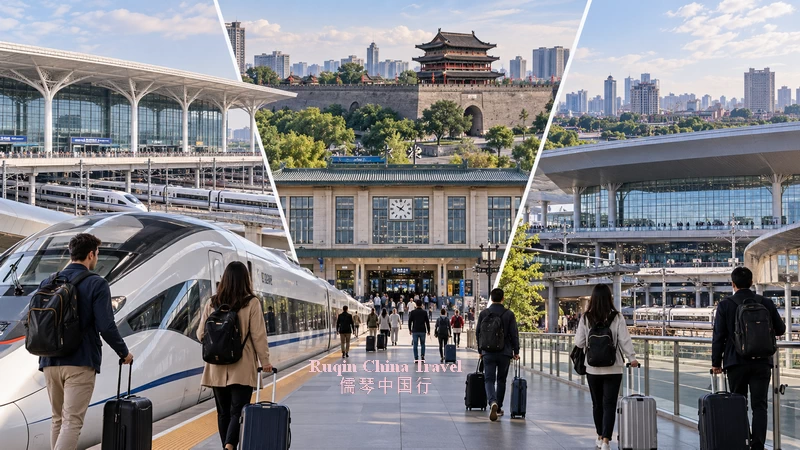
First, there’s Pingcheng District (平城区), the true heart of the city. This is where old meets new. I wandered through restored Ming dynasty walls by day, then sipped coffee in modern cafés by night. Here you’ll find the majestic Huayan Monastery, peaceful Shanhua Temple, and the bustling Drum Tower Market. Everything feels close. Both Datong Railway Station and the high-speed South Station are here. So is every kind of stay—from cozy homestays to international hotels. If you’re wondering where to stay in Datong, this is it.
Next, head west to Yungang District (云冈区). It’s quieter, more contemplative. But it holds the city’s crown jewel: the Yungang Grottoes. Carved into cliffs over 1,500 years ago, these Buddhist caves left me speechless. Light streams through, revealing faces frozen in stone prayers. It’s perfect for a day trip—just 30 minutes from Pingcheng.
Then, there’s Hunyuan County (浑源县), home to the gravity-defying Hanging Temple. Built into a cliffside, it feels more dream than real. Add in the towering peaks of Mount Heng nearby, and it’s a full-day adventure worth every step.
Finally, Yunzhou District (云州区) is where the airport sits—convenient and quiet, about 30 minutes east from downtown.
Wherever you go, Datong welcomes you with open arms. But trust me—stay in Pingcheng, and let the rest unfold from there.
3. How to Get to Datong: Paths into the Past
Getting to Datong feels like entering a chapter of Chinese history—and thankfully, it’s easier than ever. In this Datong Travel Guide, I’ll walk you through the smoothest ways to arrive, whether by train, plane, or something in between.
First, the classic route: Datong Railway Station (大同站).
📍 Address: No. 4 Zhanqian Street, Pingcheng District 山西省大同市平城区站前街4号
This station feels nostalgic. It’s small, local, and full of stories. Located just 3 km from the old city, it’s perfect if you prefer slow travel. I once walked from the station to the ancient walls, suitcase in hand, soaking in morning street life. Taxis cost about 10–15 RMB. Or take Bus 4 or 15 for just a couple of yuan.
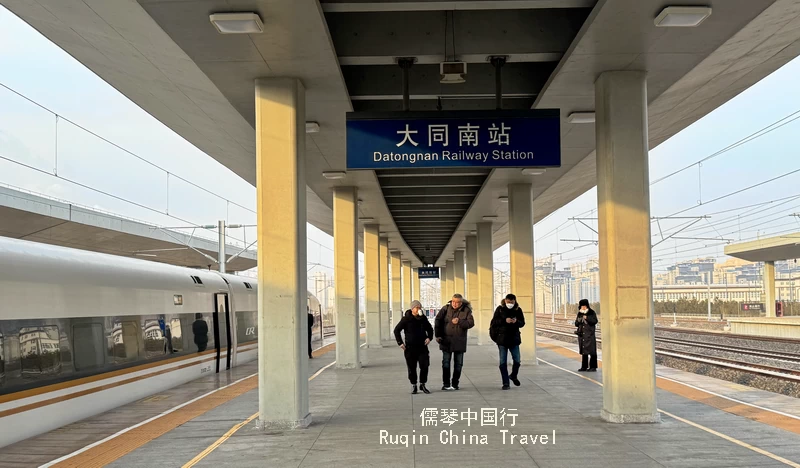
Next, the modern option: Datong South Railway Station (大同南站).
📍 Address: Kaiyuan Street, Pingcheng District 山西省大同市平城区开源街
This is Datong’s high-speed gateway. Sleek, bright, and fast. Trains from Beijing take just 2 hours. I love watching the sun set behind the mountains during the ride. From here, it’s 20 minutes to the city center by taxi (25–35 RMB), or hop on Bus 61 or 66.
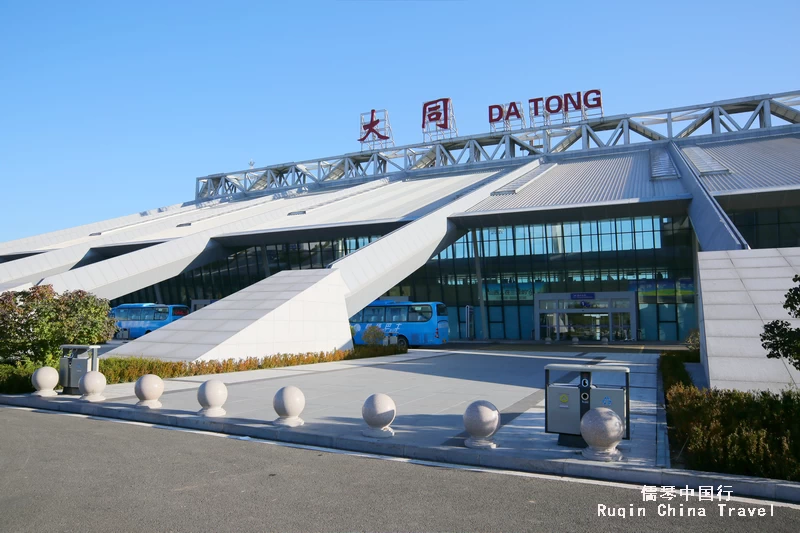
Prefer flying? You’ll land at Datong Yungang Airport (大同云冈机场).
📍 Address: Yunzhou District, 15 km southeast of downtown 山西省大同市云州区
Airport buses (15–20 RMB) stop across town. Taxis take 30 minutes and cost around 40–50 RMB. Easy and scenic.
Tip: Book train tickets early—especially on holidays. And if you’re leaving from Beijing, aim for an afternoon train. The golden light across the plains is unforgettable.
Wherever you come from, Datong is ready—its temples, caves, and city walls waiting with open arms.
4. How to Get Around Datong Like a Local
One thing I quickly learned in Datong? Getting around is part of the adventure. Let me show you how locals travel—with ease, comfort, and charm.
First, buses. They’re everywhere. These quiet, green electric buses glide through the city like veins of life. I often rode them just to watch daily life pass by the window. Best part? You can pay with coins, WeChat, or Alipay—no need to fumble for change.
Most buses run from 6 AM to 9 PM, some even later. And if you’re like me and hate waiting blindly, download the “Che Laile” app (下载”车来了”APP). It shows real-time bus locations.
Next, taxis. Blue or green, clean and comfy. I loved hopping into one after a long day exploring. The base fare is 7 RMB for the first 3 km, then 1.6 RMB per km. You can hail one easily or ask your hotel to call. I always kept my destination written in Chinese—it made things smoother.
Prefer apps? Didi works great in Datong. No need to speak—just pin and go.
To Yungang Grottoes, take Bus 3. It’s a scenic 40-minute ride from Datong Station or Hongqi Square. No need to worry—you’ll know when to get off. It’s the last stop. Most importanntly, Datong South Railway Station has direct shuttle buses going to Yungang Grottoes.
To Hanging Temple, it’s a bit more complex—but totally worth it. First, take a bus to Datong East Bus Station, then a long-distance bus to Hunyuan County (25 RMB, 1.5 hrs). From there, grab a local bus or taxi.
No matter how you move through the city, Datong will guide you—just like it has guided travelers for centuries.
5. Datong One Day City Walk — A Step Through Time
Dear traveler, today, I invite you to take a slow, soul-stirring walk with me—through ancient gates, under temple eaves, across centuries of silence and stories.

This Datong One Day City Walk isn’t just about visiting sights. It’s about stepping into the living heart of one of China’s most underrated cities. So, lace up your shoes, charge your camera, and let your curiosity lead the way.
Stop 1: A Quiet Morning at Datong Museum
📍 506 Taihe Road, Pingcheng District 大同市平城区太和路506号
🎟️ Free (reservation required)
🕰️ Allow 2 hours
🚍 Take Bus 65 directly from the city center
Let’s start with knowledge. I arrived just as the museum opened—morning light streamed through the glass walls, and the halls were quiet. It felt sacred. This museum isn’t just a building. It’s a beautifully curated time capsule. I stood in front of glazed relics from the Northern Wei, and for a moment, the past felt startlingly present.
Don’t miss the Pingcheng Era (平城时代) exhibit. It helped me understand the soul of the city I was about to walk through. It’s the perfect introduction to Datong’s layered history.
Stop 2: Riding the Wind on Datong Ancient City Wall
📍 Heyang Gate, Pingcheng District 大同市平城区和阳门
🎟️ Free
🕰️ Allow 1.5 hours
🚕 Taxi from museum, ~15 minutes
Next, I headed straight to the Heyang Gate (和阳门), where the ancient city wall begins. One of the best-preserved in China, it felt majestic and grounded at the same time. I rented a bike at the gate and began to circle the city—7 kilometers of breezy joy.

Spring winds brushed against my cheeks as I rode. To my left, gray-tiled roofs and red lanterns swayed over narrow lanes. To my right, modern buildings shimmered in the distance. It was like riding between two worlds.
Stop 3: Finding Stillness at Fahua Temple
📍 137 Dadong Street, Pingcheng District 大同市平城区大东街137号
🎟️ Free
🕰️ Allow 1 hour
🚶♀️ A short walk from Heyang Gate
Just next to the city wall stood Fahua Temple (法华寺)—easily missed, but deeply calming. The white pagoda inside, known as the Fahua Tower, glowed in the late morning light. I walked three slow circles around it, as locals do, whispering a quiet wish each time.
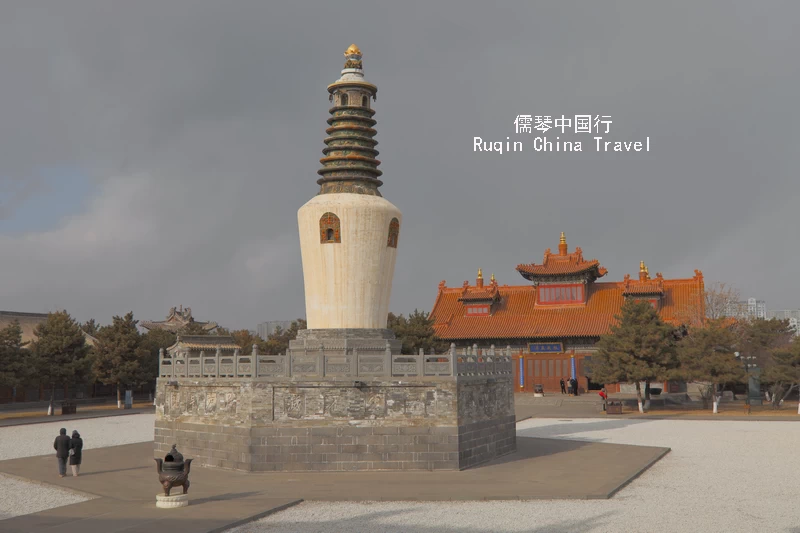
Compared to other temples, this place felt almost untouched by time. Peaceful. Humble. And the perfect midpoint for this journey.
Stop 4: Dragons in Stone — The Stunning Nine-Dragon Wall
📍 18 Dadong Street, Pingcheng District 大同市平城区大东街18号
🎟️ RMB 15
🕰️ Allow 30 minutes
🚶♀️ Just 10 minutes on foot from Fahua Temple
A few steps away, the energy shifted. The Nine-Dragon Wall (九龙壁) stood blazing in the sunlight. Dragons of deep blue, golden yellow, and emerald green writhed across glazed tiles—alive in motion, frozen in art.
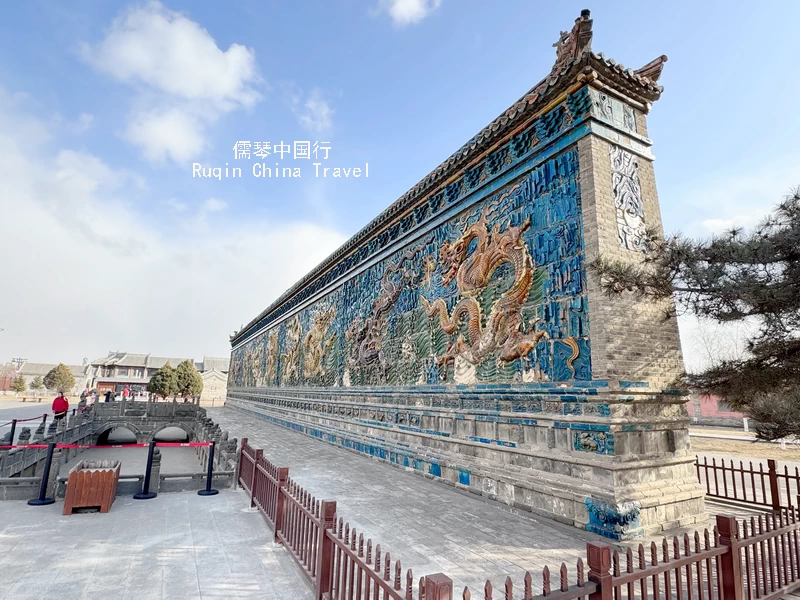
I stood there for a while, soaking it all in. Every detail held a story. Every scale was a brushstroke. This wall from the Ming dynasty is the largest of its kind in China. And yes—bring your camera. You’ll want that perfect angle.
Optional: Across the street, you’ll see the elegant Prince Dai’s Mansion (代王府 )(🎟️ 50 RMB). If you enjoy quiet corners and grand courtyards, it’s worth exploring—especially for photography lovers.
Stop 5: Bell Tower Echoes in the Afternoon
📍 20 Daxi Street, Pingcheng District 大同市平城区大西街20号
🎟️ Small fee via QR code
🕰️ Allow 1 hour
🚶♀️ Walk 6 minutes from the Nine-Dragon Wall

As the day stretched into afternoon, I found myself beneath the Bell Tower (大同钟楼). This iconic building sits at a busy crossroads, yet once you climb up, everything hushes. You get a full view of the old town rooftops and distant hills. It’s not hard to imagine the rhythmic drumbeats once echoing here, marking the passing hours of ancient Datong.
Stop 6: Golden Light at Huayan Monastery
📍 459 Xiashi Po Street, Pingcheng District
🎟️ 50 RMB
🕰️ Allow 1.5 hours
🚶♀️ Just 10 minutes from the Bell Tower
Finally, as the sun dipped low, I walked to Huayan Monastery (华严寺)—my favorite place in the whole city. Built during the Liao and Jin dynasties, it holds within it a deep, still beauty. The frescoes. The wood carvings. The stunning “Hands-Clasped, Smiling Bodhisattva”, often called the Eastern Venus. It took my breath away.
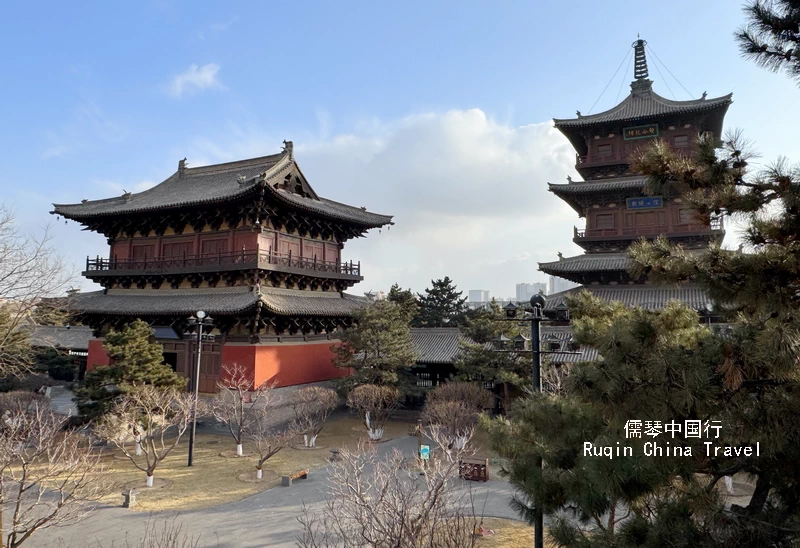
I sat quietly in a shaded corner of the courtyard, watching birds glide above the temple roof. It was the perfect end to the day.
6. Datong One Day Side Trip – A Pilgrimage Through Time
Some days feel like dreams stitched together by mountains, temples, and silence. This Datong One Day Side Trip (230 km) was exactly that.

I left the bustle of Datong city just after sunrise. The sky was soft with morning mist. My driver—a kind local recommended by the hotel—smiled and said, “You picked the perfect day.” He wasn’t wrong.
We had three legendary stops ahead. Each one whispered stories from a thousand years ago. I had snacks, sunscreen, a camera—and a heart ready for wonder.
First Stop: Yungang Grottoes – A Carved Testament to Faith
📍 Yungang Town, Yungang District 大同市云冈区云冈镇
🎟️ 120 RMB (Apr–Oct), 100 RMB (Nov–Mar)
🕰️ Recommended: 2 hours
🚗 15 km to the east of Datong city, about 30 minutes
We arrived just as sunlight began to kiss the cliffs of Wuzhou Mountain (武周山). That moment alone was worth the early wake-up. Golden light streamed across the rock face, making the statues almost glow.
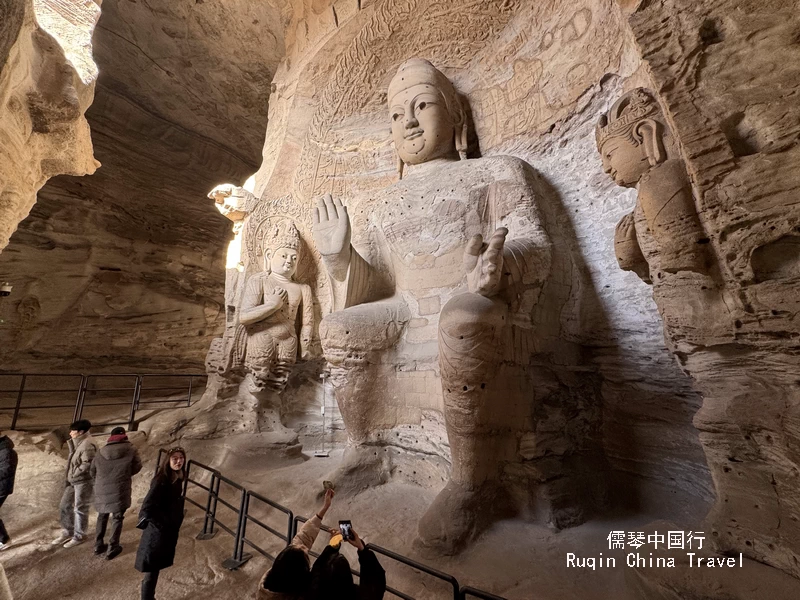
Carved during the Northern Wei dynasty, the Yungang Grottoes (云冈石窟) are a staggering treasure—45 main caves, over 50,000 Buddha statues. I stepped into Cave 20, where the enormous seated Buddha looked down with a gaze both soft and timeless.
I felt small. Humbled. Grateful.
The guide I hired (100 RMB well spent) walked me through legends etched in stone. In Cave 5, a 17-meter Buddha loomed, serene and grand. In Cave 6, colorful reliefs told tales of the Buddha’s life in stunning detail. And between Caves 9 to 13, faded murals still burst with color.
Tip: Go early. You’ll avoid the crowds and see the caves in their best light.
Second Stop: Yingxian Wooden Pagoda – A Tower of Legends
📍 Inside Fogong Temple, Yingxian County, Shuozhou
🎟️ 50 RMB
🕰️ Recommended: 1 hour
🚗 86 km south of Yungang Grottoes, about 1 hour and 20 minutes
By late morning, golden sunlight lit up the wooden ribs of the Yingxian Pagoda (应县木塔). I stood beneath it in awe.
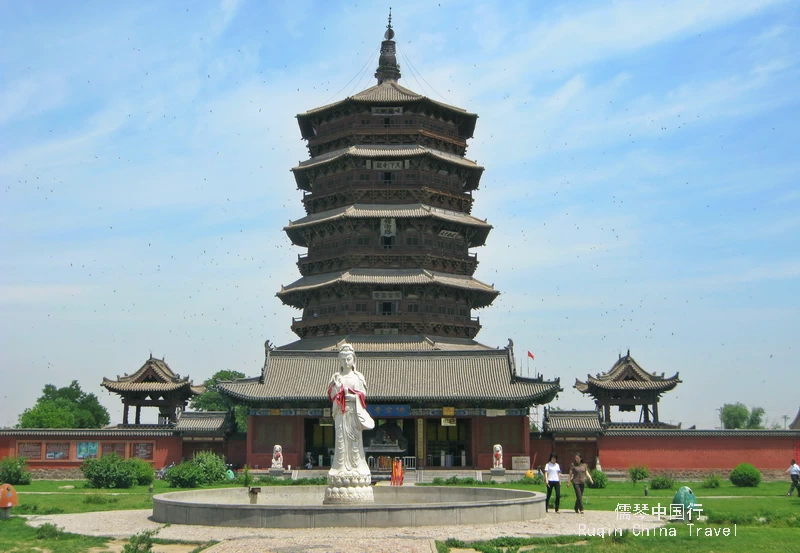
Built in 1056 during the Liao dynasty, this is the world’s tallest and oldest wooden pagoda—67.31 meters high, built entirely without nails. No steel. No screws. Just wood. And yet it has survived wars, earthquakes, and centuries of silence.
The original Shakyamuni Buddha still sits peacefully inside, worn but dignified. I didn’t climb (upper floors are closed), but the lower level was enough. Every beam and bracket told a story.
Bonus: We passed through Yingxian town on the way. If you have time, stop for a quick bowl local liangfen (cold mung bean jelly). It’s refreshing, savory, and perfect after temple-hopping.
Third Stop: Hanging Temple – A Cliffside Miracle
📍 Hengshan foothills, Hunyuan County
🎟️ 15 RMB entrance, 100 RMB to climb
🕰️ Recommended: 1.5 hours
🚗 55 km west of Yingxian Pagoda, about 45 minutes
The road curved through ochre hills and narrow valleys, a journey through the loess landscape of northern Shanxi. Suddenly, the Hanging Temple (悬空寺) came into view—clinging to a cliff, 60 meters above the ground, like a myth made real.
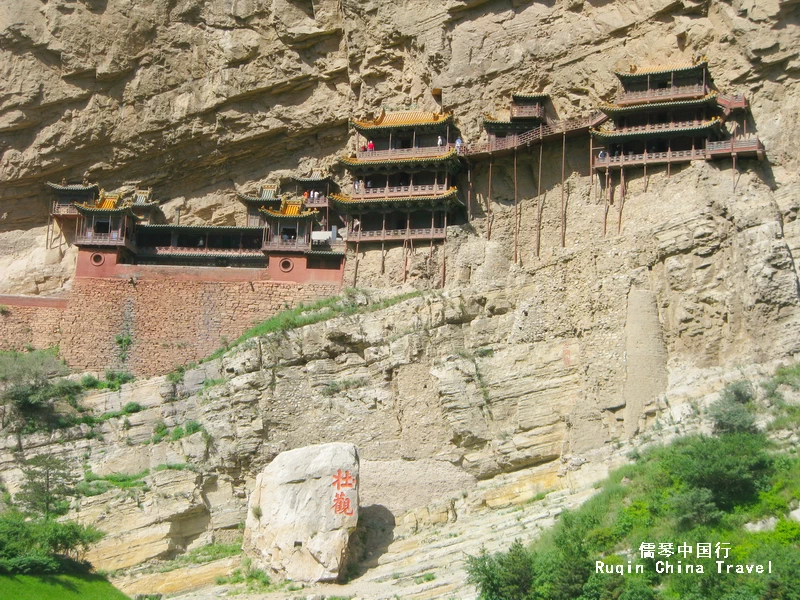
Built over 1,500 years ago, this wooden temple defies logic. From afar, it looks like a miniature pinned to the mountainside. Up close, it feels like a daring piece of poetry.
I climbed slowly along creaking wooden walkways. The wind whispered and boards gently groaned beneath my feet. Looking down, my knees wobbled—but I couldn’t stop smiling.
Inside, the San Jiao Hall (三教殿) quietly unified Buddhism, Taoism, and Confucianism under one roof. I paused there, surrounded by incense and ancient quiet.
Before leaving, I crossed to the viewing platform opposite the temple. There, I finally captured the iconic photo—temple, cliff, and sky, all in one perfect frame.
Important: Check weather reports. Rain can close the temple. I was lucky with clear skies.
Return to Datong – Full Heart, Dusty Shoes
🚗 75 km back to Datong, about 1 hour and 20 minutes
🕰️ Departure: around 5 PM
The sun dipped low as we drove back to Datong. Hills turned gold. My camera was full, my legs tired, my heart incredibly full.
Back at my hotel, I sat with a hot meal and let the day sink in. Three UNESCO-worthy sites. One day. One unforgettable journey.
Practical Tips for Your Datong One Day Side Trip
🚗 Transport:
- Hire a private car (400–500 RMB/day for 4 people)
- Most Drivers cannot speak English,you may hire a tour guide (RMB 330 -800 per day).
- Book through your hotel or a trusted local agency the day before
🥟 Food:
- Have breakfast in Datong before departure
- Grab lunch in Yingxian Town or Hunyuan Town (try local noodles or dumplings)
- Pack water, snacks, and maybe fruit for the road
📸 What to Bring:
- Camera (trust me—you’ll want more than phone photos)
- Comfortable walking shoes
- Sunscreen and a light hat
🕘 Timing:
- Leave by 7:30 AM
- Return by 7 PM
- Each stop includes time to explore and rest
7. A Taste of Time — Eating My Way Through Ancient Datong
Dear traveler, if Datong’s temples are for the soul, then its food is for the heart. And mine? It was stolen within the first bite.
In this part of my Datong Travel Guide, I want to take you on a journey through the city’s flavors—rich, bold, and unforgettable. Datong doesn’t whisper with subtle spices. It sings with sizzling pans, steamy bowls, and vinegar-soaked memories. So loosen your belt and follow your nose—we’re about to eat our way through a thousand-year-old city.
The Big Flavors: Dishes You Simply Can’t Miss
Guo You Rou (过油肉) — The Signature Dish of Datong
If you only try one thing, let it be guo you rou (过油肉). Every local restaurant has it. Every local craves it.

It’s simple at first glance—thin slices of pork tenderloin, flash-fried until just the right tenderness. But then comes that final drizzle of aged Shanxi vinegar, sizzling on the hot pan, sending up clouds of sweet and sour aroma that hit like a memory you didn’t know you had.
Yang Za (羊杂汤) — Breakfast with Soul
I’ll be honest—I hesitated. A bowl of sheep offal stew doesn’t exactly sound like a gentle morning. But once I dipped that first spoon in, I was hooked.
The broth is red with chili oil but surprisingly mellow. It’s fragrant, not fiery. And the richness? Pure comfort.
Try it at:
- Feng Lin Ge (great for first-timers) 凤临阁
- Qiaobi Yangguan (spicy and bold) 峭壁羊倌
- De Wei (huge portions, small prices) 德味
Locals pair it with a 焙子 (a round wheat bun). Dip it in. It’s breakfast that hugs you from the inside out.
The Kingdom of Carbs: Welcome to Noodle Heaven
Dao Xiao Mian (刀削面) — Blade-Shaved Perfection
You haven’t really been to Datong until you’ve watched someone shave noodles into boiling broth with a blade.

There are two main camps:
Minced Meat Style (肉沫派):
- Xi Jin Dao (喜晋道)– I call this the “Hermès” of shaved noodles.
- Dongfang Mian Guan (东方削面)– Local chain, fast and reliable.
Chunky Pork Style (肉块派):
- Er Ban Mian Guan (二板削面)– Smoky broth, fat chunks of pork belly. Heavy? Yes. Worth it? Absolutely.
Each bowl is hearty, handmade, and wildly satisfying. And always served with a generous splash of vinegar.
Dou Mian (豆面) — The Underdog You’ll Love
Less famous, but perhaps more soulful. Dou mian (豆面) is made from bean flour—soft, chewy noodles paired with chunky meat sauce.
Top spots:
- Liu Laolao’s Pork Dou Mian (刘姥姥家)– A local legend.
- Fuxing Zhai (福兴斋) – Try their beef version. Spicy and deep.
Snacks & Street Eats: Small Bites, Big Joy
Shao Mai (烧麦)
Unlike any shumai I’ve tried before. Big, bold, and bursting with lamb or chicken.
Try:
- Long Ju Xiang (龙聚祥)– Their pan-fried lamb shao mai has a crispy base that crackles when you bite.
- Feng Lin Ge (凤临阁)– Multiple fillings, order just one or two if you’re eating alone. Perfect for solo foodies!
Liang Fen (凉粉)
Cold jelly noodles, yes—but the magic is in the chili oil.

Go to:
- Yu Lan’s Shop (玉兰家)– Fragrant and friendly for first-timers.
- Shun Yi (顺意家)– Rich chili flavor, two branches inside the old city.
- Ping Ping’s Liang Fen (萍萍家) – For spice lovers only. One bite, you’ll know.
Whole Grains, Whole Heart: Datong’s Rustic Soul Food
You Mian (莜面)
Coarse grain noodles, native to Shanxi. Nutritious, yes—but in Datong’s kitchens, they become deeply flavorful art.
I loved:
- Long Ju Xiang’s Sand Onion You Mian (龙聚祥)– Sweet, spicy, and fresh.
- 369 Coarse Grain House (369粗粮馆)– Homey eggplant-and-potato you mian.
- Northwest You Mian Village (西北莜面村)– Get the platter. Sample multiple versions with both hot and cold broths.
Surprising Favorites: For the Brave & Curious
Rabbit Head (卤兔头)
Braised, not spicy like Chengdu’s version. Fall-apart tender. Rich and rewarding. Not for everyone—but I loved it.

Try:
- Long Ju Xiang (龙聚祥)
- 369 Coarse Grain House (69粗粮馆)
Both places clean and prepare them with care—no gamey aftertaste.
Local Dining Tips
- Order Small, Share More – Portions are huge. Go light so you can try more.
- Avoid Peak Times – Locals dine from 12:00–13:00 and 18:00–19:00.
- Spice It Your Way – Most places adjust heat on request. Just ask.
- Vinegar Is Your Friend – Cuts richness, aids digestion. Always on the table.
8. Datong Travel Tips — Little Things That Make a Big Difference
Dear traveler, before you set off on your journey, let me pass along a few things I wish I’d known earlier. Consider this your pocket-sized companion—full of gentle nudges, quiet wisdom, and all the things your future self will thank you for.
1) Sightseeing Smarts
At Yungang Grottoes, book tickets on the official WeChat account. Avoid 9:30–11:00, when tour groups pour in. I went later, around 2 PM. The light was soft, and the caves were calm.
Don’t touch the statues. Feel them with your eyes and your heart. That’s how we help protect a thousand years of art. Hiring a guide? Absolutely worth it. For about 100 RMB, history comes alive.
Meanwhile, for the Hanging Temple, buy tickets at least 3 days early during peak season. Only 3,000 visitors per day are allowed.
Afraid of heights? Don’t worry. The best views are actually across the valley, from the viewing platform. Wear grippy shoes. Hold the rails. And remember—every step was once carved by hand.
2) Where to Stay
I loved staying near the old city wall. Close enough to walk everywhere, but just far enough to sleep peacefully. Try:
- Datong Garden Hotel
- Yungang International Hotel
Avoid staying right inside the ancient core—it can get loud with early morning tours and late-night bars.
3) Getting Around
I biked the alleys on a shared yellow bike—wind in my hair, sunlight on stone. It cost almost nothing. Or hop on the local tourist bus (just 1 RMB!). Of course, nothing beats walking. Every turn hides a surprise.
4) Food Tips
Say “please go light on the salt”—chefs appreciate the kindness. Eat shaved noodles hot. Pair lamb stew with a warm bei zi bun. That’s the real Datong way.
And whatever you do, try sea buckthorn juice. It’s tangy, bright, and oh-so refreshing.
5) Cultural Courtesy
Inside temples, whisper. Some Buddha statues can’t be photographed—look for signs. Dress respectfully. I always carry a light scarf for temples.
And if you come across a ceremony, just observe quietly from a respectful distance. Presence is enough.
6) Health & Safety
Spring and autumn call for light jackets and scarves. Summer needs sunscreen and a hat—shade is rare. In winter, bundle up! I wore snow boots and still felt the bite of northern cold.
Datong’s air is dry. I kept lip balm and water on me at all times. Most of all, wear good walking shoes. You’ll thank me later.
Dear traveler, as you prepare to step into this ancient land, I hope this Datong Travel Guide becomes more than a plan—it becomes a companion.
Let curiosity lead you through stone grottoes and along quiet temple paths. Let your senses feast—from the clang of noodle knives to the hush of wind on city walls.
Here, every smile is a story. Every corner holds a surprise. May Datong leave a soft glow in your memory. When the journey ends, may you carry its warmth, long after the road fades. Now, it’s your turn—go write your own Datong story.
About the Author
Ruqin is the founder of Ruqintravel.com and has spent more than four decades working in China’s travel industry. Drawing on hands-on experience in cities like Beijing and Hangzhou, he personally researches and updates each guide to help international travelers navigate China with confidence.
Further Reading
Beijing to Datong High-Speed Train Day Trip: A DIY Guide
How to Get from Beijing to Datong – Your Complete Guide
Datong to Xi’an High‑Speed Train: Tickets, Tips & What to Expect
How to Book Datong Attraction Tickets: All You Need to Know
The Best Datong Tour Itinerary – Ruqin China Travel
Beijing Datong 2-Day Tour









very helpful set of info. easy to navigate with. thank you.
Hi Anna, I’m glad you found it helpful and easy to navigate. Thanks so much for your kind feedback!