Written and updated by Ruqin
Last updated: May 22, 2026
If you’ve already ticked off Beijing’s Great Wall and savored crispy roast duck, then this Pingyao Travel Guide is your next adventure. Just a few hours by high-speed train, Pingyao whisks you into a world frozen in time. With its ancient city walls, grey bricks, red lanterns, and narrow alleyways, this UNESCO-listed gem tells the story of China’s legendary merchant era.
As I wandered beneath the watchful towers and along stone-paved streets, I was drawn into the charm of old Shanxi. Locals greeted me with warm smiles, the scent of street food filled the air, and the city’s simple rhythm wrapped around me like a cozy blanket.
1. Best Time to Visit Pingyao Ancient City
When I first walked through the gates of Pingyao Ancient City, camera ready and heart open, I realized one thing—the seasons shape the soul of this place. That’s why in this Pingyao Travel Guide, I want to help you find the perfect time to visit. Because here, every season tells a different story.
Located in northern Shanxi, Pingyao has a temperate continental climate—cold winters, hot summers, and crisp transitions in between.
Spring (April to May)
Spring (April to May) is the season of soft light and new beginnings. Temperatures range from 15°C to 25°C. The ancient walls wake from winter, willow branches stretch out in green, and courtyards fill with quiet blossoms. I loved walking slowly, camera in hand, catching the morning sun filtering through red lanterns. Sometimes a light rain falls, turning the city misty and magical.
Summer (June to August)
Summer (June to August) brings heat and energy. Daytime temperatures can climb above 30°C, especially in July and August. It’s also the rainy season—expect a few dramatic thunderstorms to roll through and cool things down. I followed the locals: explored in the morning, rested at noon, then wandered again at dusk when the lanterns lit up the alleys. Don’t forget sunscreen, a hat, and lots of water!
Autumn (September to October)
Autumn (September to October) is the crown jewel. It’s often called the Best Time to Visit Pingyao Ancient City—and I couldn’t agree more. With temperatures between 10°C and 25°C, the air feels fresh, the skies are high and blue, and every photo feels like a painting. After the October holiday rush, the town quiets down, and that’s when I felt Pingyao’s true spirit.
Winter (November to February)
Winter (November to February) is cold and dry, with temperatures dropping to -10°C or lower. But don’t let that stop you. When snow falls, the old rooftops turn white, the alleys fall silent, and suddenly, you’re not just visiting Pingyao—you’re walking through time. Come during Lunar New Year, and the city lights up with red lanterns, firecrackers, and the joy of tradition.
No matter when you come, Pingyao will greet you in her own way—sometimes bold, sometimes quiet, but always unforgettable.
2. Where to Stay in Pingyao
Before arriving, I had no idea Pingyao Ancient City was part of a bigger picture. As I explored more, I discovered that Pingyao County is beautifully split into three clear areas: the ancient city, the west side, and the east side. Understanding this made everything easier—especially when choosing where to stay.

Let’s start in the heart: Pingyao Ancient City. This is the soul of it all. A walled Ming-Qing city frozen in time. No cars are allowed inside (except the occasional sightseeing buggy), so it’s a quiet, walkable world of stone alleys, wooden shopfronts, red lanterns, and hidden courtyards. This is where I spent most of my time—and honestly, where the magic lives.
Next, just outside the walls, is the West District (城西区). It’s lively, practical, and busy. This is where most visitors arrive first. Both major train stations sit here—Pingyao Railway Station 平遥站 (just a 10-minute walk to the west gate), and Pingyao Gucheng High-Speed Station (平遥古城站), around 8 km southwest of the old town.
Finally, there’s the East District (城东区)—quieter, more local. This area has government buildings, real neighborhood restaurants, and the Pingyao long-distance bus station. It feels less touristy, more lived-in.
So, Where to Stay in Pingyao?
If you want an immersive, time-travel experience—stay inside the ancient city walls. Sleep on a kang bed in a converted merchant’s home. Wake before the crowds.

Watch red lanterns glow at dusk, steps from your door. However, rooms are smaller, and you may hear the street outside.

Pingyao Ancient City Yunjincheng Mansion
Located at No. 56 West Street inside the walled city. This five-star hotel is themed around Jin merchant culture. It was transformed from a grand residence of a wealthy merchant family from the Ming and Qing dynasties and boasts a history of nearly 300 years.
For more comfort and easy access—stay in the West District. It’s modern, convenient, and ideal if you’re arriving by train or have heavy luggage. But you’ll trade a bit of atmosphere for convenience.
In this Pingyao Travel Guide, one thing is clear—where you sleep shapes how you dream. Choose wisely.
3. How to Get to Pingyao
When I first planned my trip to Pingyao Ancient City, I imagined complicated transfers, confusing train stations, and long taxi rides. But to my surprise, getting to this ancient gem was easier than I ever expected. In fact, Pingyao felt like an old Shanxi merchant—gracious, welcoming, and already holding the door open.
So in this Pingyao Travel Guide, I’ll walk you through every option to help you arrive smoothly—and with a bit of charm.
First Choice: High-Speed Train – Fast, Comfortable, and Easy
For foreign travelers, high-speed rail is hands down the best way to reach Pingyao. Trains are modern, clean, and run on time. Station signs are in English and Chinese, and the journey itself is often part of the adventure.
From Beijing:
This is one of the most popular routes. Take the train from Beijing Fengtai Station or Qinghe Station. In just 2.5 to 3.5 hours, you’ll glide from capital skyscrapers to Ming Dynasty walls. The scenery changes subtly—from wide plains to loess hills. Blink, and you’re there.
From Xi’an:
From Xi’an North Station, the high-speed train gets you to Pingyao in 2 to 2.5 hours. It’s like time-traveling from Tang Dynasty grandeur to Qing-era elegance in one smooth ride. I loved how the route stitched together two of China’s most historic cities.
From Taiyuan:
If your flight lands in Taiyuan, you’re in luck. Hop on a high-speed train at Taiyuan South Station—you’ll be in Pingyao in just 30 minutes. This was the shortest leg of my journey, but one of the most scenic.
From Datong:
After visiting the Hanging Temple and Yungang Grottoes, I headed south. From Datong South Station, the ride to Pingyao took about 2.5 to 3 hours. It gave me a sweeping view of Shanxi’s shifting landscapes.
Bus from Taiyuan – A Slower, Cheaper Backup
If you’re on a very tight budget or traveling spontaneously, you can catch a long-distance bus from Jiannan Bus Station (建南汽车站) in Taiyuan. The ride takes 1.5 to 2 hours. However, I’ll be honest—it’s not as comfy or reliable as the train. Personally, I’d only consider this as a backup.
Arrival in Pingyao: What Happens Next?
Okay, now you’ve made it to Pingyao. But how do you get from the station to the ancient city itself? Here’s where the adventure gets practical.
1) Pingyao Gucheng Station 平遥古城站 (High-Speed Rail Station)
Location: About 8 km southwest of the Pingyao old city walls, in a modern development area.
Best Option: Take Bus 108—a tourist-friendly line that runs directly to the north gate of the ancient city. It costs just 1 RMB! It also stops near Pingyao Railway Station, so you can choose where to get off based on your hotel.

Quickest Option: Take a taxi or ride-hailing app like Didi. Expect to pay 20–30 RMB, and the ride takes 15–20 minutes.
2) Pingyao Railway Station平遥站 (Regular Trains)
Location: Just 1 km northwest of the west gate (Phoenix Gate) of Pingyao Ancient City.
Best Option: Walk! As I stepped out, I could already see the city wall.

After passing through a lively street full of snack stalls and souvenir shops, I reached the ancient gate in about 10–15 minutes. My suitcase wobbled over the cobblestones, but I didn’t mind—every step felt like a gentle slide into the past.
3) Pingyao Bus Station 平遥汽车站
Location: About 1.5 km northeast of the ancient city.
Options: You can either walk 20 minutes to the north or east gate—or take a fun little “bangbang car” (local electric tricycle).

These three-wheelers are cheap and cheerful, but always agree on the price first. For just a few yuan, they’ll drop you off right at your guesthouse door.
4. Pingyao City Walk: A One-Day Journey Through Time in Pingyao Ancient City
If you’re like me—someone who loves walking slowly, listening to the whispers of old stone walls—then this one’s for you. This was my perfect day walking through Pingyao Ancient City, a route I’ve lovingly pieced together after tracing its alleys, archways, and memories.

This city walk begins in the northeast, winds south into the beating heart of Pingyao’s “Wall Street“, then fianally curves northeast into Pingyao County Government Office and Lei Lvtai’s Former Residence. It’s designed to be smooth, immersive, and efficient—with almost no backtracking.
🧭 A quick note: The city itself is free to enter! But if you want to visit the 22 key historical sites—including temples, banks, and government halls—you’ll need a combo ticket (125 RMB, valid for 3 days). It’s well worth it. Every site below is included.
1) The Ma Family Compound 马家大院
📍 Majia Alley, northeast corner of Pingyao Ancient City 平遥古城内(马家巷)
This was my first real stop of the day, and it set the tone perfectly. I recommend arriving early. Ma Family Compound was the largest mansion in Pingyao, and it shows.

Courtyards unfold one after another. Wood carvings and intricate stonework decorate every doorway. The rooftop viewing platform offers a sweeping view of Pingyao’s iconic grey tiled roofs and city walls in the distance. It took my breath away.
2) Ming-Qing Street (South Street) & Financial District Cluster 明清街(南大街) & 核心景点群
📍 Central axis of Pingyao Ancient City 平遥古城的中轴线
By mid-morning, I was in the thick of it. This stretch—often called “China’s Wall Street”—was alive with history.
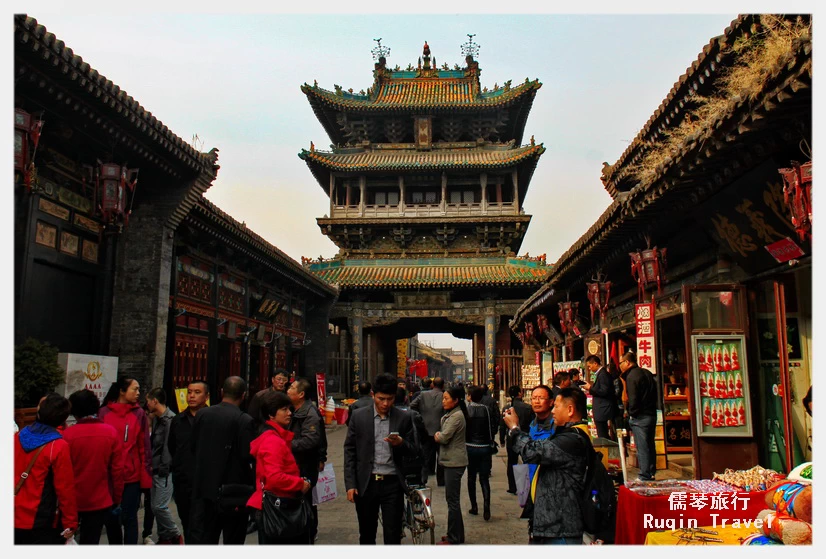
Here’s what not to miss:
Rishengchang Exchange House (日升昌票号)
This is the star attraction, and the symbolic birthplace of modern Chinese banking. It’s humbling to see where the first “bank drafts” began, and imagine the waves it created across Asia.

Xietongqing Bank (协同庆钱庄)
Don’t skip the underground silver vault. Standing there, I could almost feel the weight of fortunes long gone.
China Escort Agency Museum (镖局博物馆)
Learn about the muscle behind the money. Armed escorts were crucial to protecting the silver and banknotes that moved across imperial China.
3) Chenghuang Temple & Confucius Temple 城隍庙 & 文庙
📍 Chenghuang Temple Street, east part of the city 平遥古城内(城隍庙街)
Walk south then southeasdt, I visited these two stand almost side by side. First, Chenghuang Temple dazzled me with its colorful glazed tiles and lively guardian statues. Every roof corner and doorway was like a painter’s brushstroke.
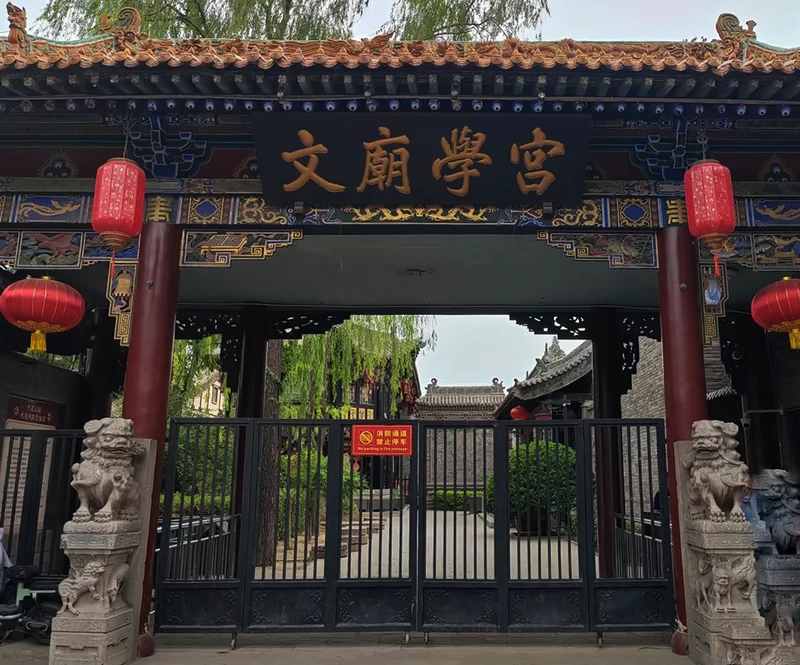
Then I stepped into the Confucius Temple next door, which was its polar opposite—calm, respectful, symmetrical. Its Song Dynasty Dacheng Hall is one of the oldest in China. The contrast between the two was stunning: one celebrates gods and protection, the other wisdom and virtue.
4) Pingyao County Government Office (County Yamen) 平遥县衙
📍 Zhengfu Street, southwest part of the city 平遥古城内(政府街)
Walk: 5 minutes from Chenghuang Temple
If you’re lucky, you’ll catch a reenactment of a Qing Dynasty court session—robes, gongs, drama and all! It’s a vivid crash course in how justice worked in ancient China.

Plus, the layout of offices, jail cells, and judge’s quarters paints a full picture of old bureaucracy.
5) Lei Lvtai’s Former Residence 雷履泰故居
📍 Shuyuan Street, inside Pingyao Ancient City
Just south of the County Government Office 平遥古城内(书院街)
🕒 5–10 minutes walk from the County Government Office
This was the residence of Lei Lvtai (雷履泰), the founder of Rishengchang, China’s first draft bank. Compared to the grand mansions you’ll see later, this one is understated—but that’s what makes it special.

It feels like a place where big ideas were born in silence. I could almost hear ink brushes on paper and the rustle of silver notes being passed hand to hand.
6) Evening: A Stage Like No Other
✅ “See Pingyao Again” Immersive Theatre (又见平遥)
📍 Near Lei Lvtai’s Former Residence
154 Shuncheng Road within the ancient city 平遥县顺城路154号
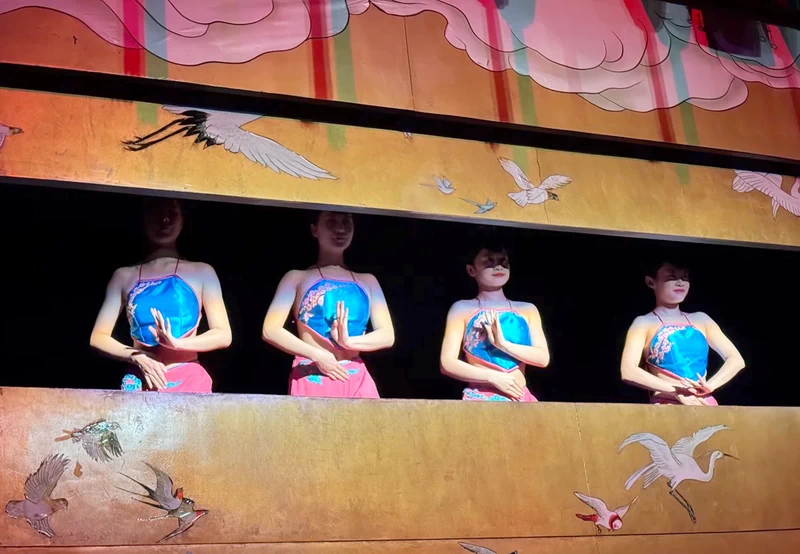
If you only see one show in China, let it be this one. “See Pingyao Again” isn’t your typical sit-and-watch performance. It’s an immersive experience. I followed the actors through multiple stages, walking alongside them as a story of duty, family, and home unfolded. The lighting, music, and energy were unlike anything I’d ever seen. Be sure to book ahead—and note: no shows on Mondays.
A Final Note Before You Go
Wear comfortable shoes—seriously. The cobbled streets of Pingyao may be charming, but they’ll give your feet a proper workout. I didn’t regret a single step.
This was my perfect one-day Pingyao City Walk, where history met emotion, and every turn brought a new chapter. I hope this section of my Pingyao Travel Guide helps you walk not just through a city, but through time itself.
5. Pingyao Side Trips: Two Days Beyond the Ancient Walls
If Pingyao Ancient City is the soul of Shanxi, then its surroundings are the heartbeats that give it life and depth. After soaking up every alley and lantern-lit night inside the old walls, I set out to explore what lay beyond. And wow—those two days became some of the most memorable chapters in my China journey.
In this part of my Pingyao Travel Guide, I’ll walk you through a two-day side trip packed with ancient mansions, exquisite temples, colorful sculptures, and a mysterious underground fortress. Ready? Let’s go.
Day 1: Mansions of Wealth & Temples of Art
This route forms a perfect triangle—efficient, scenic, and deeply cultural. I chose to hire a car for the day (about 400–500 RMB). The freedom was worth every yuan. My driver knew the roads, the shortcuts, and even the best noodle stop for lunch. No waiting for buses or fumbling with transfers. Just door-to-door comfort and lots of time saved.
Stop 1: Qiao Family Compound (乔家大院)
📍 Qiaojia Village, Dongguan Town, Qixian County, Jinzhong City 山西省晋中市祁县东观镇乔家堡村
🕒 About 40 km northeast of Pingyao, 1 hour 20 minutes by car
🎟️ ~115 RMB
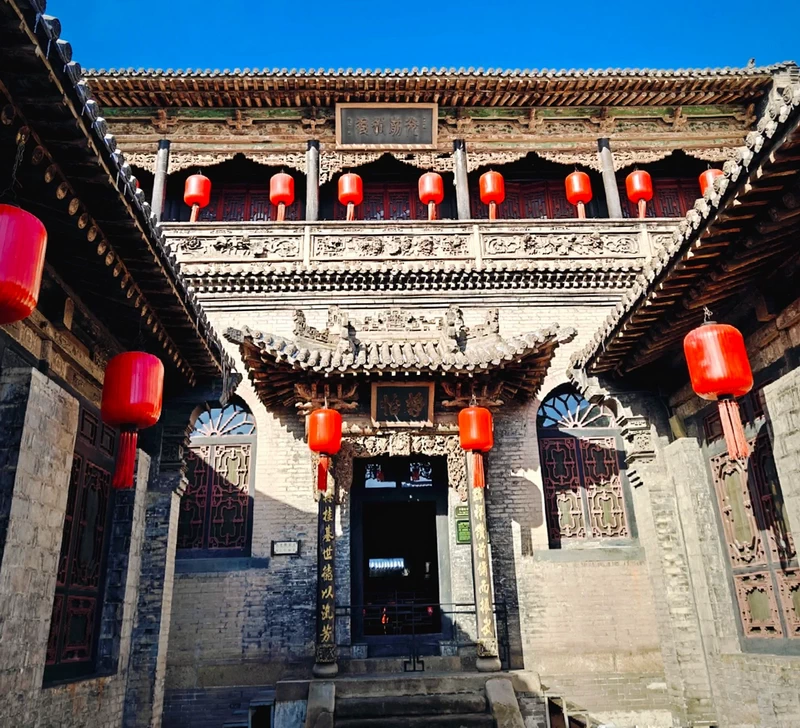
You’ve probably seen this mansion before—maybe in Zhang Yimou’s film Raise the Red Lantern. But nothing prepared me for seeing it in person. The compound unfolds like a private fortress, built with precision and pride. Six large courtyards, designed in the shape of the Chinese character “囍” (double happiness), whisper stories of family honor and merchant power.
Every wall was carved, painted, or etched with beauty. The stone, wood, and brick carvings are astonishing. Although smaller than the more famous Wang Family Compound, Qiao’s layout and preservation are impeccable. It felt like walking through a living painting.
Stop 2: Zhenguo Temple (镇国寺)
📍 Haodong Village, Xiangyuan Township, Pingyao County 山西省晋中市平遥县襄垣乡郝洞村
🕒 24 km from Qiao Compound, ~36 minutes by car
🎟️ ~25 RMB
Next came the real treasure: Zhenguo Temple. It’s one of the oldest surviving wooden structures in all of China. The Ten Thousand Buddha Hall, built in 963 AD, is quiet, humble, and jaw-droppingly significant.

Inside, the faded Five Dynasties-era clay sculptures stood silently in the half-light, their flowing robes and serene expressions full of grace. Unlike newer temples, this one felt untouched, raw, and deeply sacred. There were no crowds. Just me, a faint incense scent, and the quiet presence of a thousand years.
🍜 Lunch Tip:
We stopped at a roadside family-run restaurant on the way to the next temple. I ordered Shanxi-style youmian (oat noodles) and guoyourou (fried pork slices)—simple, hearty, and full of flavor.
Stop 3: Shuanglin Temple (双林寺)
📍 28 Shuanglin Main Street, Qiaotou Village, Pingyao County 山西省晋中市平遥县桥头村双林正街28号
🕒 20 km from Zhenguo Temple, ~27 minutes by car
🎟️ ~33 RMB
The final stop of the day, and maybe the most moving. Shuanglin Temple is a hidden gem known as a “treasure house of painted sculptures.” Over 2,000 life-size clay figures, spanning from the Song to Qing dynasties, fill the halls.

But these weren’t just gods—they felt human. Some smiled. Others frowned. A few looked as though they might speak. The statue of Weituo, with his fierce posture and piercing eyes, stopped me in my tracks. It’s considered one of the finest in the country—and I believe it.
By sunset, we drove the short 8 km back to Pingyao. I watched the city walls rise in the distance, tinged with gold. It was the perfect ending to a day filled with power, artistry, and quiet awe.
Day 2: The Grand Mansion and the Hidden Fortress
If day one was about beauty and devotion, day two was all about scale and mystery. We drove west this time—deeper into Shanxi’s rural heart. Again, I booked a private car (around 500–600 RMB) for the full-day trip.
Stop 1: Wang Family Compound (王家大院)
📍 Jingsheng Town, Lingshi County, Jinzhong City 山西省晋中市灵石县静升镇。
🕒 About 50 km southwest of Pingyao, ~1 hour drive
🎟️ ~55 RMB

Forget everything you know about “courtyards.” The Wang Family Compound is a fortified city, carved into the hillside like a scene from Game of Thrones. Locals call it the “Forbidden City of the People,” and once you enter, you’ll see why.
It spans 250,000 square meters—10 times larger than Qiao’s. Walking through its five alleys, six fortresses, and one main street, I kept forgetting this was once a home. It felt more like an empire. The carvings here are exquisite, and the architecture strikes a balance between elegance and power. Every doorway told a story; every window framed a view.
Stop 2: Zhangbi Ancient Fortress (张壁古堡)
📍 Zhangbi Village, Longfeng Township, Jiexiu City, Shanxi 山西省晋中市介休市龙凤乡张壁村
🕒 20 km east of Wang Compound (~30 min), 42 km from Pingyao
🎟️ ~60 RMB
If Wang’s mansion left me in awe, Zhangbi Fortress left me speechless. Above ground, it looks like a sleepy ancient village with stone homes and narrow lanes. But beneath? A labyrinth of tunnels, stretching for over 10 kilometers, spread across three levels.

Built as early as the Sui and Tang dynasties, these hidden passageways were used for defense, storage, and hiding troops. Crawling through the narrow, dim tunnels felt like being in a movie. The silence was thick. Occasionally, I’d run my hand along the cold stone and imagine what life was like down here during a siege.
The village above is also worth exploring. Its layout is based on traditional Chinese astrology, with homes and temples aligned to celestial patterns.
🍽️ Lunch Tip:
Eat in Zhangbi Village before or after the fortress. The locals are kind, the food is home-cooked, and the setting is as authentic as it gets.
Tips for a Smooth Side Trip:
- Confirm everything in advance. Talk to your driver the night before—agree on the itinerary, total price, and any tolls or parking fees.
- Wear comfortable shoes. The Wang Compound has hills and steps; Zhangbi’s tunnels are narrow and uneven. My feet were grateful I wore sneakers!
- Stay curious. Look closely at carvings, ask questions, and don’t rush. These places are filled with stories—if you take the time to listen.
So, if you’ve already wandered every lane inside Pingyao Ancient City, take a breath, look to the horizon, and go deeper. These two days of Pingyao side trips expanded my understanding of Shanxi—of merchants, monks, warriors, and artists. I came back dusty, tired, and totally enchanted. And that, to me, is what travel should feel like.
6. Pingyao Local Flavors
Dear traveler, if you’ve followed my footsteps through the dusty alleys of Pingyao Ancient City, then you already know—it’s a place where time lingers. But what surprised me most wasn’t just the silence of old walls or the glow of red lanterns. It was the flavor of history.
In this part of my Pingyao Travel Guide, I invite you to let your taste buds step into “time-travel mode” too. Because here, food is more than a meal—it’s a memory wrapped in vinegar and simmered in stories.
Pingyao Beef: A Bite of the City’s Soul 平遥牛肉
You’ll smell it before you see it. That rich, savory aroma drifting down the street? It’s Pingyao beef, the pride of the city. Slowly marinated and braised using traditional methods, each slice is tender yet structured, with a deep, almost caramel-like flavor.
Locals eat it the authentic way—dipped in a dish of aged Shanxi vinegar. First, I hesitated. Then I dipped. And wow—the sharpness of the vinegar cut through the beef’s richness, unlocking a depth I didn’t expect. I went back for seconds. Maybe thirds.
Beef Copper Hotpot: Comfort in a Clay Courtyard 牛肉铜火锅
One chilly evening, I found myself in a candlelit courtyard, steam curling up from a bronze pot. Inside, slices of Pingyao beef simmered with glass noodles, cabbage, and tofu. The broth bubbled softly over glowing charcoal.
This was the signature dish at Tian Yuan Kui Restaurant (天元奎饭店), and it felt like a warm hug after a long day. The beef melted in my mouth, and the soup was rich without being heavy. Add a few drops of vinegar, and you’ve got the perfect balance of warmth and brightness.
Dragon Eggplant: Where Taste Meets Theater 长龙茄子
When the dish arrived, I laughed—it looked like a curled-up dragon on the plate. A whole eggplant, fried golden and crispy, then drizzled with a sweet and sour sauce that shimmered in the light.
The outside was crunchy, the inside soft and silky. It reminded me of the classic yuxiang flavor but with a more playful presentation. Definitely one of the most photogenic—and delicious—dishes I tried.
Yellow Millet Rice Cake: Sweet, Soft, and Surprising 黄米凉糕
I have a sweet tooth, and this dessert won my heart. Layers of golden millet and white glutinous rice, with a hidden core of sweet red date paste. A drizzle of osmanthus syrup on top added floral notes and a delicate finish.
Served cold, it was refreshing and light—the perfect break between bites of rich beef and vinegar-drenched everything.
Vinegar-Fried Eggs: Simple, Yet Brilliant 香醋鸡蛋
I know what you’re thinking—eggs? But trust me. These golden pan-fried eggs, splashed with a dash of aged Shanxi vinegar at the perfect moment, were something else. The sizzle, the aroma, the contrast of creamy yolk and tangy sauce—perfection.
Locals call it a “rice killer,” and I can confirm: one bite, and you’ll be reaching for your bowl.
Kao Lao Lao with Beef Gravy: The Shape of Tradition 牛肉栲栳栳
Kao Lao Lao looks like little spiraled tubes, made from oat flour and steamed till chewy. On their own, they’re earthy and firm. But once drenched in beef gravy, they soak up every drop of flavor. I loved the bite, the chew, and the soul-soothing depth of it all.
The name translates to “sturdy and reliable”—and that’s exactly how it tasted.
Guo You Rou (Quick-Fried Pork): Shanxi’s Favorite Stir-Fry 山西过油肉
This is the soul dish of Shanxi, and every bite tasted like comfort. Thin pork slices, flash-fried for tenderness, then tossed with wood ear mushrooms, green garlic, and onions, all kissed with vinegar. The flavor was savory, tangy, and just a little smoky—perfect with rice.
Pingyao Beef Soup: Ending on a Gentle Note 平遥牛肉羹
After all those strong flavors, I ended my feast with a bowl of beef soup. It was light, clear, yet deeply satisfying. Inside, tender beef morsels floated alongside soft tofu and thin strips of local vegetables. It wasn’t flashy—but it felt like a warm farewell.
Cold Buckwheat Noodle Jelly (Liangban Wantuo) 凉拌碗托
On a hot afternoon, nothing hit the spot like a bowl of liangban wantuo. Made from buckwheat, these soft, jelly-like noodles were tossed with garlic, cucumber shreds, vinegar, and chili oil. It was cool, zesty, and the perfect refresher between temple visits and city walks.
Where to Eat: Tian Yuan Kui Restaurant (天元奎饭店)
If you only have one night in Pingyao, make it here.
📍 No. 73/86, South Street, Pingyao Ancient City
Set inside a traditional merchant courtyard, Tian Yuan Kui is more than just a restaurant—it’s an experience. Wooden beams, lantern light, and the smell of sizzling vinegar in the air.
The staff were kind, patient, and happy to help me navigate the menu. The must-tries? Beef copper hotpot, dragon eggplant, yellow millet cake, and vinegar eggs. Honestly, though, everything was delicious.
7. Pingyao Travel Tips
Before you zip up your suitcase and step into the time tunnel that is Pingyao Ancient City, take a few minutes with me. I’ve gathered these small but mighty tips from my own experience—and from the kind locals I met along the way. Consider this part of my Pingyao Travel Guide a whispered blessing from the city itself.
1) Walking, Riding & Wandering: Getting Around the Ancient City
First things first: walk. The best way to experience Pingyao is on foot. Every cobblestone, every red lantern, every quiet alley tells a story. So pack your most comfortable shoes—they’re your real “vehicle” here.
Next, try the electric carts. When your legs get tired (and they will), hop on one of the local battery-powered carts. They cost around 10–20 RMB per ride. You can hail them at key locations or hire one by the hour. Just agree on the price before you go.

Prefer wheels? Rent a bike. Some guesthouses offer bicycle rentals. Riding through the city at your own pace, especially during early mornings or golden hours, is pure joy. Plus, it helps you discover quiet corners most tourists miss.
2) Where to Stay: Atmosphere or Convenience?
If you want immersion—stay inside the city walls.
I slept in a converted Qing-era courtyard with wooden beams and carved doors. Morning mist curled outside my window. At night, I walked home under a sky of red lanterns. Magical.
Pro tip: Want peace and value? Book a guesthouse in a quiet side alley—away from South Street and West Street. These spots are often more charming, quieter, and surprisingly affordable.
If you need comfort and convenience—stay just outside.
Modern hotels near the west or south gates offer better amenities (hello, strong showers and thick walls) and easy access to train stations. Plus, you’re still just a 5-minute walk from the heart of the ancient city.
3) Free Shows & Cultural Gems
Catch the County Magistrate Court Drama at the County Yamen.
📍 Pingyao County Government Office
🕒 9:30, 11:00, 15:30 (extra show at 16:50 on holidays)
It’s theatrical, funny, and educational—think Qing Dynasty courtroom meets live performance. Arrive 10–15 minutes early to grab a good spot.
Stay for the 3D Light Show at the South Gate (Yingxunmen). 迎薰门(南门)广场。
📍 Yingxun Gate Square
🕒 Every night at 9:00 PM
Important: The South Gate closes at 8:00 PM! Either leave before then, or walk around via Xiadongmen or Xiaonanmen (小南门或上东门). The show is worth it—modern lights telling Pingyao’s ancient tale, projected onto the very walls that lived it.
Extra Pingyao Travel Tips from My Notebook
- Tickets: The city itself is free, but the combo ticket (125 RMB) includes access to 22 historical sites, valid for 3 days. Keep your ticket safe—there are no reissues if lost.
- Shopping: Bargaining is expected in local souvenir shops. Be polite, smile, and don’t be shy. It’s part of the fun!
- Dining: Of course, eat at the iconic Tian Yuan Kui, but also peek into smaller alleyway eateries. Some of my best meals came from places with plastic stools and handwritten menus.
- Vinegar = magic. Whether in noodles, soup, or even eggs—Shanxi aged vinegar is a must. Just a splash changes everything.
- Get lost—on purpose. My favorite moments came when I wandered aimlessly: a grandpa feeding birds, a child chasing bubbles, a crumbling doorway bathed in morning sun.
I hope my Pingyao Travel Guide helps you feel a little more at home in this ancient, poetic city. Pingyao isn’t just a place you visit—it’s a place that visits you back.
Walk slow. Eat well. Stay curious. And may your time here be as layered and lasting as the city itself.
About the Author
Ruqin is the founder of Ruqintravel.com and has spent more than four decades working in China’s travel industry. Drawing on hands-on experience in cities like Beijing and Hangzhou, he personally researches and updates each guide to help international travelers navigate China with confidence
Further Reading
How to visit Pingyao Ancient City
How to Book Pingyao Attraction Tickets: All You Need to Know
The Best Pingyao Tour Itinerary
How to Get to Pingyao from Beijing: Train, Bus, Self-Driving & Tips
Beijing Pingyao Tour to Ancient City and Wang Family Courtyard 2 Day Tour