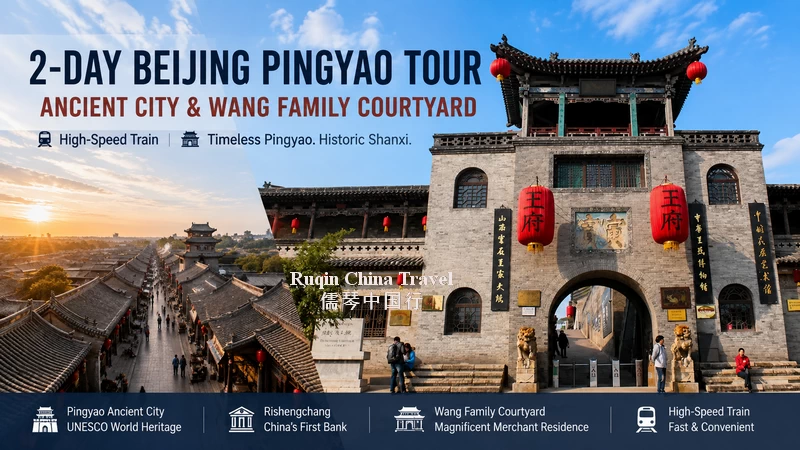

Itinerary designed by Ruqin
Last updated: August 15, 2026
2-Day Beijing to Pingyao Tour Overview
Pingyao is one of my favorite choices for a two-day side trip from Beijing. Unlike many historic districts, Pingyao preserves the basic form of an entire traditional walled city.
Inside the walls, narrow lanes lead past courtyard homes, temples, shops, government offices, and former financial institutions. The city played an important role in China’s commercial history during the Ming and Qing dynasties.
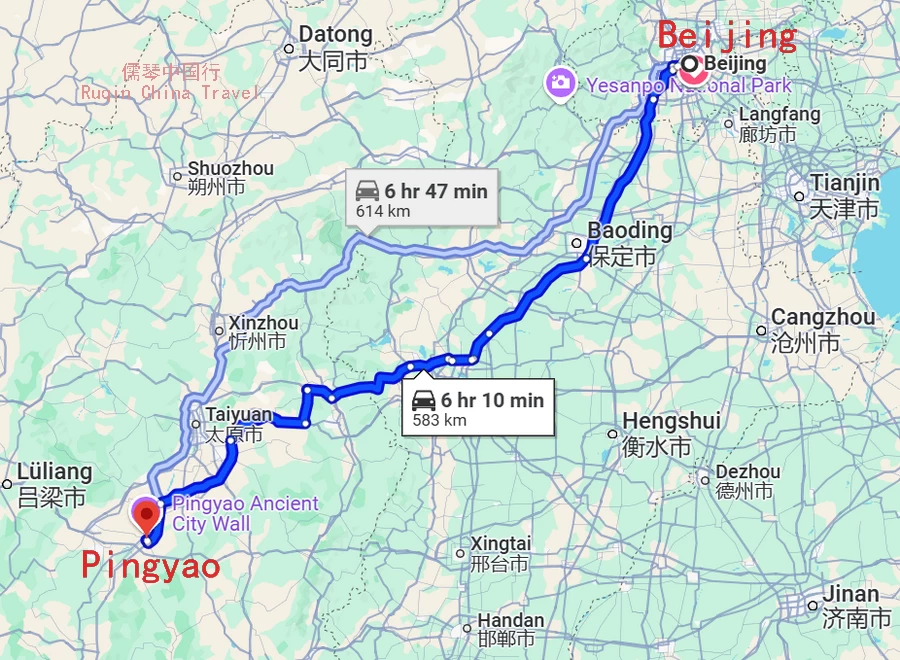
Beijing to Pingyao Travel Route Map — Map Source: Google Maps
High-speed trains have also made Pingyao much easier to reach from Beijing. Most useful services take roughly four hours, although journey times vary.
On Day 1, I would concentrate entirely on Pingyao Ancient City. Then, on Day 2, visit the magnificent Wang Family Courtyard before returning to Beijing.
Who Is This Side Trip For?
I recommend this itinerary for travelers interested in traditional Chinese towns, architecture, merchant culture, and everyday urban history.
It also suits photographers. Early morning and evening are especially rewarding, when day-trip crowds thin and the old streets become quieter.
However, Pingyao requires plenty of walking. Comfortable shoes matter much more than formal clothes here.
Beijing to Pingyao 2-Day Tour at a Glance
Day 1 — Beijing → Pingyao Ancient City
Beijing → High-Speed Train → Pingyao Gucheng Station → Ancient City → City Wall → Rishengchang Exchange House → Old Streets → Evening Walk
Suggested departure: Around 7:30–8:30 am
Train journey: Roughly 3½–4½ hours
Main sights: Pingyao Ancient City, City Wall, Rishengchang
Overnight: Traditional courtyard hotel inside Pingyao Ancient City
Day 2 — Wang Family Courtyard → Beijing
Pingyao → Wang Family Courtyard → Return toward Pingyao → Lunch → Pingyao Gucheng Station → High-Speed Train → Beijing
Main sight: Wang Family Courtyard
Suggested departure from Pingyao: Mid-to-late afternoon
Arrival in Beijing: Evening
Day 1: Beijing to Pingyao Ancient City
6:30–7:00 am — Leave Your Beijing Hotel
Start early.
High-speed trains to Pingyao may depart from different Beijing stations, depending on the service. Therefore, check your ticket carefully before travel day.
Do not automatically go to Beijing West Railway Station.
Depending on the current timetable, your train may use Beijing North, Qinghe, Beijing Fengtai, or another Beijing station.
I recommend reaching the correct station around 45–60 minutes before departure. Keep your passport easily accessible for railway identification.
Around 8:00 am — High-Speed Train to Pingyao
Take a morning high-speed train to Pingyao Gucheng Railway Station (平遥古城站).
Useful daytime services generally take around 3½–4½ hours. Choose one that reaches Pingyao around noon if possible.
Second class is perfectly comfortable for most travelers.
Bring breakfast or buy something at the station. Then settle in and watch northern China’s modern cities gradually give way to the landscapes of Shanxi.
Around 12:00 pm — Arrive at Pingyao Gucheng Station
Do not confuse Pingyao Gucheng Station with Pingyao Railway Station.
Pingyao Gucheng handles high-speed trains and lies several kilometers from the old city. Pingyao Railway Station serves conventional trains and sits much closer to the historic center.

Arrive at Pingyao Gucheng Station
From Pingyao Gucheng Station, take a taxi or other local transport toward the Ancient City.
The journey usually takes around 15–20 minutes, depending on traffic and your drop-off point.
12:30–1:30 pm — Check In & Have Lunch
For this trip, I recommend staying inside Pingyao Ancient City.
Choose a traditional courtyard guesthouse or hotel. Many occupy restored historic-style compounds built around small courtyards.

Pingyao Ancient City Layout Map (Google Maps Source)
You will sacrifice some of the standardization of a modern chain hotel. However, you gain something more valuable for a one-night visit: atmosphere.
Leave your bag and have lunch nearby.
Try a simple Shanxi meal. Pingyao beef, noodles, dumplings, and local vegetable dishes are easy places to start.
1:30–2:30 pm — Walk the Pingyao Ancient City Wall
Begin your exploration with the Pingyao Ancient City Wall.
The wall forms a complete defensive enclosure around the historic town. From the top, you can understand Pingyao’s layout much better than from street level.

Look down over tiled roofs, courtyard compounds, lanes, and gate towers.
Modern development sits outside. Meanwhile, the old urban pattern remains clearly visible within the walls.
You do not need to walk the entire circuit.
Spend about an hour on the wall, then descend into the streets below.
2:45–3:45 pm — Rishengchang Exchange House
Next, visit the Rishengchang Exchange House (日昇昌票号).
At first glance, it looks like another traditional courtyard compound. However, this building tells one of Pingyao’s most important stories.

Rishengchang Exchange House (日昇昌票号).
Rishengchang became a pioneering piaohao, or draft bank, during the Qing dynasty. Its network helped merchants transfer funds across long distances without physically carrying large quantities of silver.
For foreign visitors, this is one of the best places to understand why Pingyao became wealthy.
The city was not merely beautiful. It was a serious financial center.
Walk through the courtyards and notice how business spaces, living quarters, and security features fit together.
4:00–5:30 pm — Explore Pingyao’s Old Streets
Now slow down.
Walk along South Street, often called Ming-Qing Street, and then wander into some of the smaller lanes.
The main commercial streets contain restaurants, souvenir shops, old storefronts, and traditional buildings. They can become busy during the day.
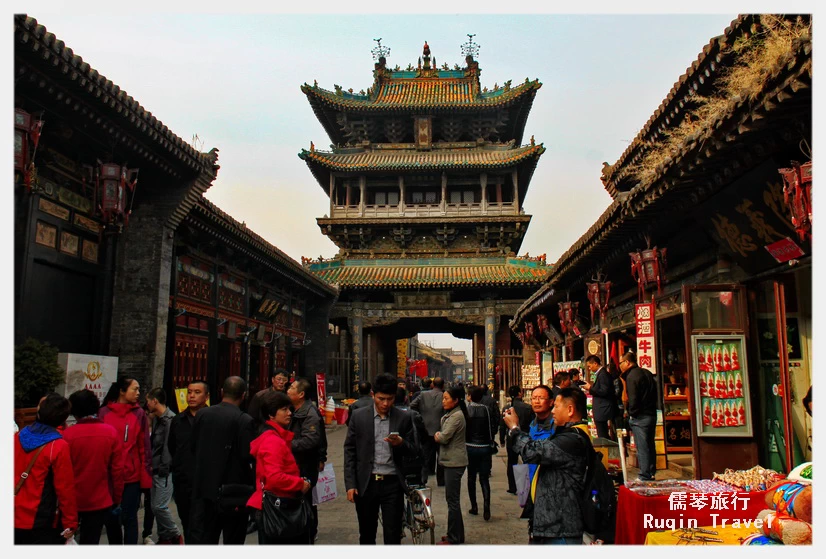
Explore Pingyao’s Old Streets
However, do not stay only on the main street.
Turn into quieter side lanes occasionally. You will see courtyard doors, brick walls, bicycles, local homes, and a less polished side of Pingyao.
This is where the city begins to feel lived-in rather than staged.
5:30–6:30 pm — Optional Historic Sites
If you still have energy, visit another historic site included in your old-city sightseeing route.
The Pingyao County Government Office is a good choice. Its courtyards, offices, prison areas, and administrative spaces reveal how a traditional county government functioned.

Pingyao County Government Office
Alternatively, visit one of Pingyao’s historic temples or merchant compounds.
However, do not try to visit every ticketed attraction.
After several hours, traditional courtyards can begin to blur together.
6:30–8:00 pm — Dinner in Pingyao
Have dinner inside the Ancient City.
This is a good time to try Pingyao beef (平遥牛肉), one of the town’s best-known foods.
Shanxi is also famous for noodles and vinegar. You will find many variations throughout the old city.
Keep the evening relaxed.
The best part of Day 1 comes after many daytime visitors leave.
8:00–9:00 pm — Pingyao After Dark
Take another walk after dinner.
Red lanterns illuminate old shopfronts, while the streets gradually become quieter. The atmosphere feels very different from midday.
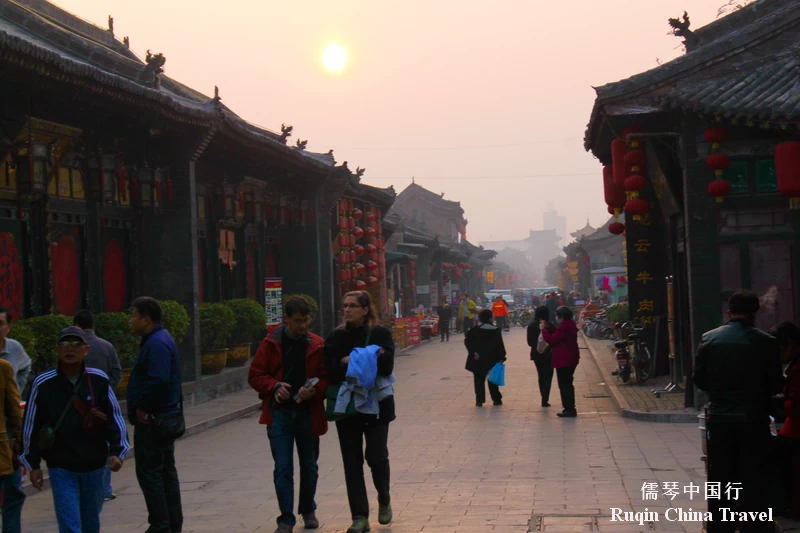
Pingyao Ancient City in sunset glow
This is one reason I recommend sleeping inside the old city.
Day visitors see the monuments. Overnight visitors also experience Pingyao when the pace slows.
Walk without a strict route for a while.
Then return to your courtyard hotel and rest.
Day 2: Wang Family Courtyard & Return to Beijing
7:00–8:00 am — Early Morning Walk
If you wake early, go outside before breakfast.
This may become your favorite hour in Pingyao.
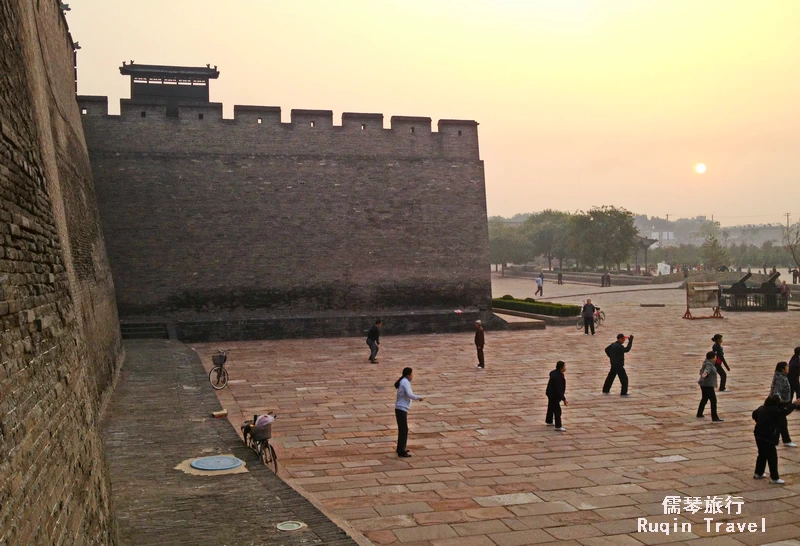
Early Morning Walk in and outside the city wall
The main streets are quieter, shopkeepers begin opening their doors, and residents move through the lanes before tour groups arrive.
Photography also becomes easier.
You do not need a sightseeing checklist. Simply walk for 30–45 minutes and watch the old city wake up.
Then return for breakfast.
8:00–8:30 am — Breakfast & Departure
Have breakfast and check out.
Ask your hotel to hold your luggage if you plan to collect it later. Alternatively, arrange your transport so your bag travels with you.
Then leave for the Wang Family Courtyard (王家大院).
The complex lies outside Pingyao, so I recommend arranging a private car or reliable local transfer.
8:30–9:30 am — Drive to Wang Family Courtyard
The drive generally takes around an hour, depending on your starting point and traffic.
You will leave the compact world of Pingyao behind and travel through the Shanxi countryside.
The change of setting is useful.
Yesterday you explored a merchant city. Today you will see how one wealthy merchant clan lived.
9:30 am–12:00 pm — Explore Wang Family Courtyard
Give the Wang Family Courtyard at least two hours.
Calling it a “courtyard” almost understates its scale.
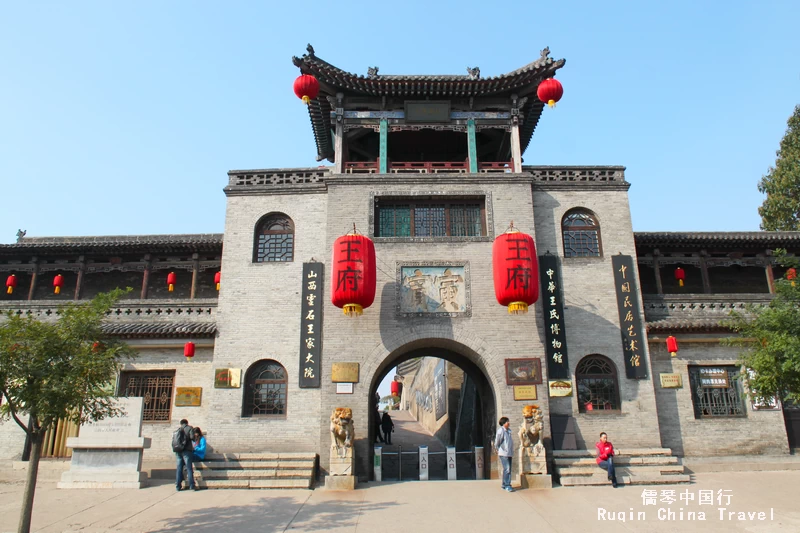
The main entrance to Wang Family Courtyard
The complex contains interconnected courtyards, gateways, halls, stairways, lanes, and defensive walls. It developed over generations as the Wang family became increasingly prosperous.
Walk slowly.
Look at the stone carvings around doorways, brick decorations, wooden screens, roof details, and carefully organized courtyards.
These details often carried symbolic meanings related to prosperity, education, longevity, and family continuity.

Explore Wang Family Courtyard
However, the architecture also served practical purposes.
The arrangement reflects hierarchy within the family, privacy, security, and the daily routines of a large traditional household.
Climb to higher viewpoints where access permits.
From above, the repeating roofs and enclosed courtyards reveal the true scale of the complex.
12:00–1:00 pm — Lunch
Have lunch after your visit.
Depending on your train schedule, you can eat near the Wang Family Courtyard or return toward Pingyao first.
Keep the meal reasonably simple.
You still need enough time to reach Pingyao Gucheng Railway Station without rushing.
1:00–2:30 pm — Return Toward Pingyao
Drive back toward Pingyao.
If your train leaves later and you stored luggage at your hotel, return to the Ancient City to collect it.
However, do not use every spare minute for more sightseeing.
Leave a comfortable buffer before your train.
Around 3:00–4:30 pm — High-Speed Train Back to Beijing
Take a mid-to-late afternoon high-speed train from Pingyao Gucheng Railway Station.
Arrive at the station well before departure.
Your passport will again serve as your main travel identification.
Once aboard, relax.
After two days of stone lanes, city walls, courtyards, and Shanxi history, four hours sitting down may feel surprisingly welcome.
Around 7:00–9:00 pm — Arrive in Beijing
Your exact arrival time depends on the train you choose.
Return to your Beijing hotel and keep the evening free.
You have packed a great deal into two days without turning Pingyao into a race.
Tickets, Transport & What to Bring
Beijing–Pingyao High-Speed Train Tickets
For a two-day trip, I strongly prefer the high-speed train over conventional overnight trains.
The high-speed journey generally takes around 3½–4½ hours on useful daytime services. Regular trains can take roughly 10 hours or more.
Book ahead, particularly for weekends and Chinese public holidays.
Most importantly, check both your Beijing departure station and Pingyao arrival station carefully.
Schedules, fares, and departure stations can change. Therefore, use the current railway timetable when planning your exact dates.
Pingyao Gucheng Station vs. Pingyao Railway Station
This distinction confuses many first-time visitors.
Pingyao Gucheng Railway Station (平遥古城站) serves high-speed trains. Despite its name, it is not inside the Ancient City.
Pingyao Railway Station (平遥站) mainly serves conventional trains and sits much closer to the old town.
If you arrive by high-speed train, plan onward transport from Pingyao Gucheng Station.
Getting Around Pingyao Ancient City
Pingyao is primarily a walking destination.
That is part of its appeal.
Once inside the old city, most major attractions sit within reasonable walking distance. Local sightseeing carts may also operate on designated routes.
However, comfortable shoes are essential.
Old paving stones can become tiring after several hours.
Getting to Wang Family Courtyard
For a short two-day itinerary, I recommend a private car or arranged transfer.
Public transport may cost less, but schedules and transfers can make Day 2 unnecessarily complicated.
A car also allows you to leave early and control your return time.
If several people travel together, the cost becomes easier to justify.
Pingyao Ancient City Tickets
Walking through much of Pingyao Ancient City itself does not necessarily mean entering every individual historic attraction.
A combined sightseeing ticket may cover major sites such as the City Wall, Rishengchang, government offices, and other compounds.
Ticket systems, included attractions, validity periods, and admission procedures can change.
Therefore, check current arrangements shortly before your visit.
Carry your passport.
Wang Family Courtyard Tickets
The Wang Family Courtyard has separate admission arrangements.
Book ahead during busy periods and Chinese public holidays.
Allow at least two hours inside.
The complex is much larger than it first appears.
Where to Stay
For this itinerary, stay inside Pingyao Ancient City.

Sleep on a kang bed
I prefer a traditional courtyard-style hotel or guesthouse around the central streets, but not directly above the busiest nightlife.
This gives you easy access to evening and early-morning walks.
It also makes the overnight stay part of the travel experience.
What to Bring
Travel with a small overnight bag rather than heavy luggage.
Bring comfortable walking shoes, your passport, phone, charger, and portable power bank.
Summer can be hot, so carry sunscreen, a hat, and water. Meanwhile, spring and autumn mornings can feel cool.
Winter in Shanxi becomes genuinely cold. Bring proper layers, gloves, and warm footwear.
A camera is particularly worthwhile here.
However, leave some time to look at the streets without viewing everything through a screen.
Ruqin’s Trip Design Note
Pingyao works differently from Xi’an or Datong.
There is no single monument that dominates the entire trip. The attraction is the old city as a whole.
That is why I would not rush through Pingyao for three hours and leave.
Stay overnight inside the walls.
Walk the City Wall and visit Rishengchang in the afternoon. Then have dinner, wander under the lanterns, sleep in a courtyard hotel, and step outside again early the next morning.
Those slower hours help you understand the place.
I also think the Wang Family Courtyard belongs naturally on Day 2.
After seeing where Shanxi merchants conducted business in Pingyao, you travel into the countryside and see the kind of grand family compound that merchant wealth could create.
The two places tell different parts of the same story.
Pingyao shows you the commercial city. The Wang Family Courtyard shows you the family world behind that prosperity.
That connection is what makes this two-day route much more than a collection of old buildings.
Plan More of Your Beijing & Pingyao Trip
Use Ruqin China Travel’s practical guides to prepare for China high-speed trains, Pingyao transport, attraction tickets, mobile payments, internet access, Shanxi food, and independent travel in China.
If you have a third day, I would slow down rather than add another distant city. Spend more time exploring Pingyao’s temples, merchant compounds, quieter lanes, and local life before returning to Beijing.
Pingyao Travel Guide: Map, Walking Routes, Highlights and Tips
How to visit Pingyao Ancient City
How to Book Pingyao Attraction Tickets: All You Need to Know
The Best Pingyao Tour Itinerary
How to Get to Pingyao from Beijing: Train, Bus, Self-Driving & Tips
Beijing Pingyao Tour to Ancient City and Wang Family Courtyard 2 Day Tour
Questions About Planning Your Beijing to Datong Trip?
Still have questions about this route? You’re welcome to write to me.
If you need advice on timing, transport, tickets, or adjusting the itinerary, I’m happy to offer a practical suggestion based on my experience in Beijing and Pingyao.
There’s no fee for a simple question. Just use the form below and tell me about your plans.
We respect your privacy. Your details will never be shared or used for marketing.