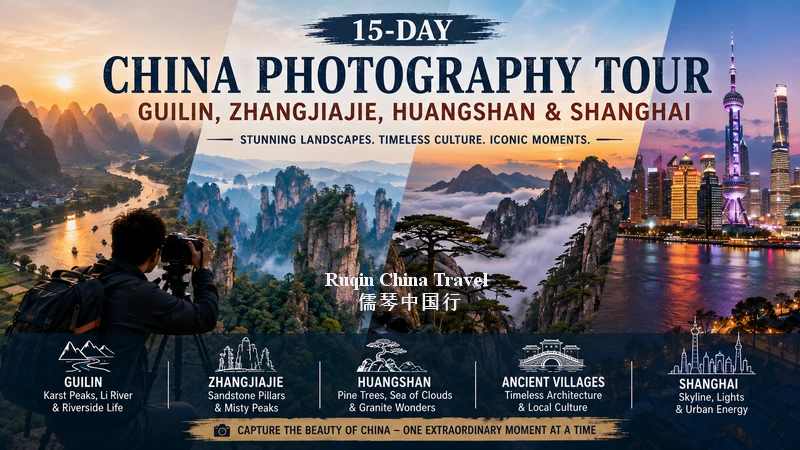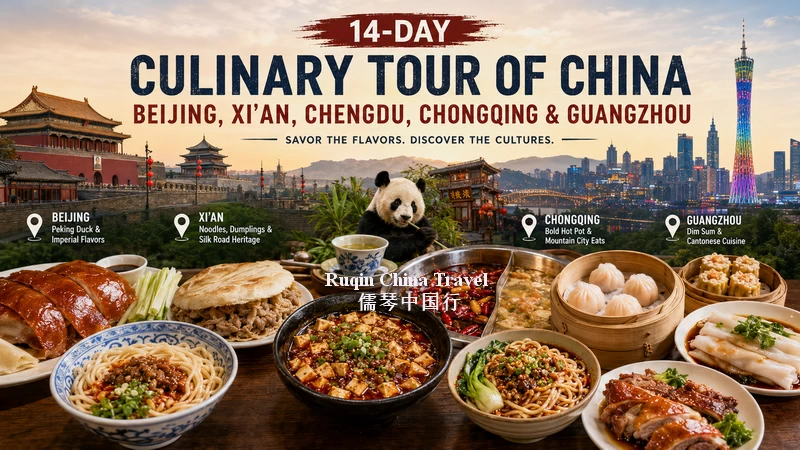

Itinerary designed by Ruqin
Last updated: August 20, 2026
Overview
China is too large to understand through one cuisine. Beijing roast duck, Xi’an noodles, Sichuan dishes, Chongqing hot pot and Cantonese dim sum come from very different landscapes and culinary traditions.
That is why I designed this 14-day route as a journey through China’s regional food cultures, rather than simply a tour of famous restaurants. You will visit markets, old neighborhoods, teahouses and small local eateries. Meanwhile, major historical sights give each meal a cultural setting.
The route also works well geographically. High-speed trains connect Beijing, Xi’an, Chengdu and Chongqing. Then a flight or suitable rail connection takes you south to Guangzhou.
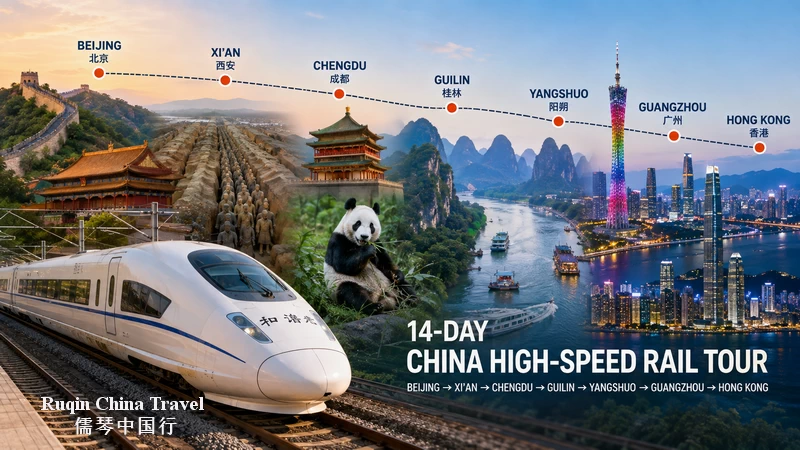
Route: Beijing → Xi’an → Chengdu → Chongqing → Guangzhou
Duration: 14 days / 13 nights
Best for: First-time visitors, food lovers and travelers interested in regional Chinese culture
Travel style: Food + culture + markets + local neighborhoods
Pace: Moderate
Main transport: High-speed rail + one longer transfer to Guangzhou
At-a-Glance Route
| Day | Destination | Main Experience | Food Focus |
|---|---|---|---|
| Day 1 | Beijing | Arrival & neighborhood walk | First Beijing flavors |
| Day 2 | Beijing | Forbidden City & hutongs | Beijing home-style food |
| Day 3 | Beijing | Great Wall | Roast duck dinner |
| Day 4 | Beijing → Xi’an | High-speed train | Xi’an noodles & roujiamo |
| Day 5 | Xi’an | Terracotta Warriors | Shaanxi cuisine |
| Day 6 | Xi’an | Old City & Muslim Quarter | Street food & dumplings |
| Day 7 | Xi’an → Chengdu | High-speed train | Sichuan small dishes |
| Day 8 | Chengdu | Pandas & old neighborhoods | Sichuan classics |
| Day 9 | Chengdu | Market & teahouse | Snacks, tea & cooking |
| Day 10 | Chengdu → Chongqing | High-speed train | Chongqing hot pot |
| Day 11 | Chongqing | Mountain city exploration | Xiaomian & street food |
| Day 12 | Chongqing → Guangzhou | High-speed train or flight | Cantonese dinner |
| Day 13 | Guangzhou | Old Guangzhou | Dim sum & Cantonese cuisine |
| Day 14 | Guangzhou | Morning food experience | Final breakfast & departure |
Detailed 14-Day Itinerary
Day 1 – Arrive in Beijing
Arrival and Your First Chinese Meal
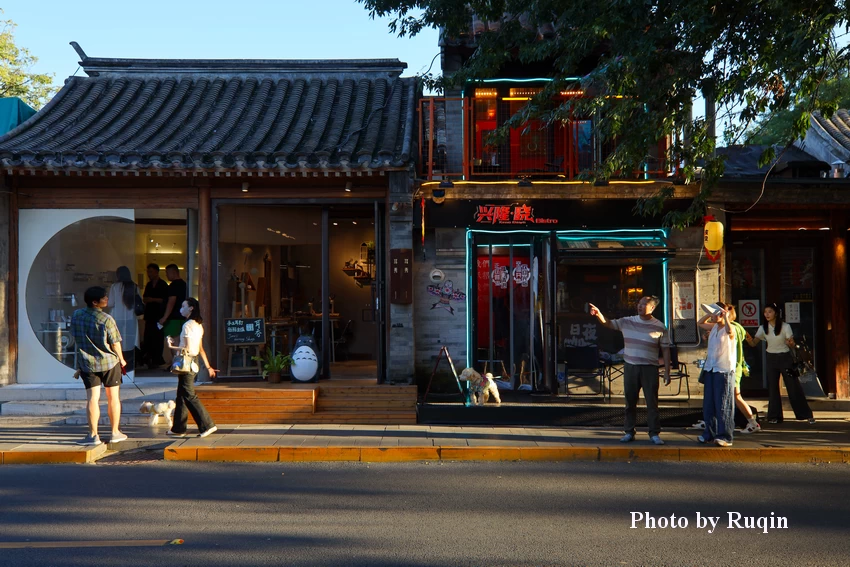
Keep the first day easy. After checking into your hotel, walk around the surrounding neighborhood rather than crossing Beijing for a famous restaurant.
For your first meal, I suggest something simple: jiaozi (饺子), noodles or a few Beijing-style dishes shared around the table.
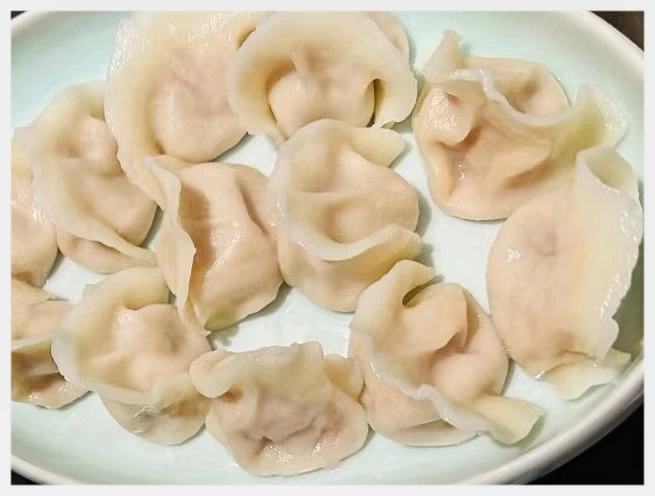
I suggest something simple: jiaozi (饺子)
This first dinner also introduces an important part of eating in China. Chinese meals are usually communal. Several dishes arrive in the middle, and everyone shares them.
Try today:
Jiaozi, zhajiangmian, seasonal vegetables
Overnight: Beijing
Day 2 – Imperial Beijing & Traditional Beijing Food
Morning – Tiananmen Square & Forbidden City
Start with Tiananmen Square and the Forbidden City. Allow most of the morning for the palace complex.
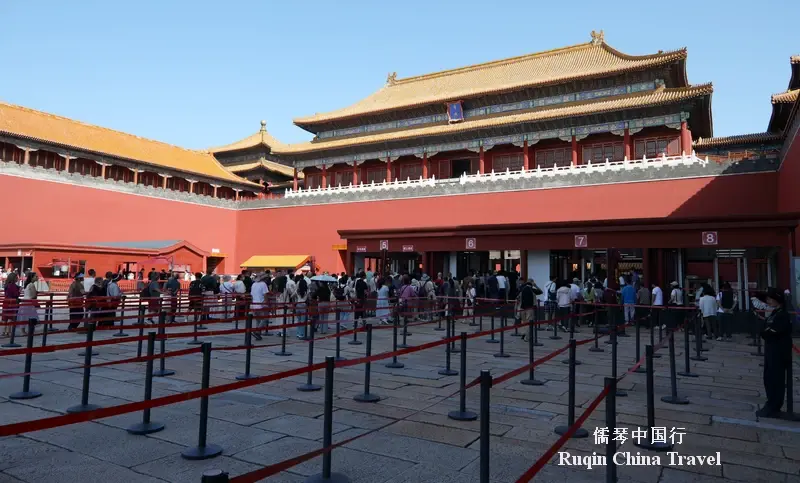
The Forbidden City also provides some context for Beijing’s imperial culinary traditions. Elaborate court cuisine existed alongside much simpler everyday foods eaten across the capital.
Afternoon – Hutongs
Later, explore the hutongs around Shichahai or the Drum Tower.
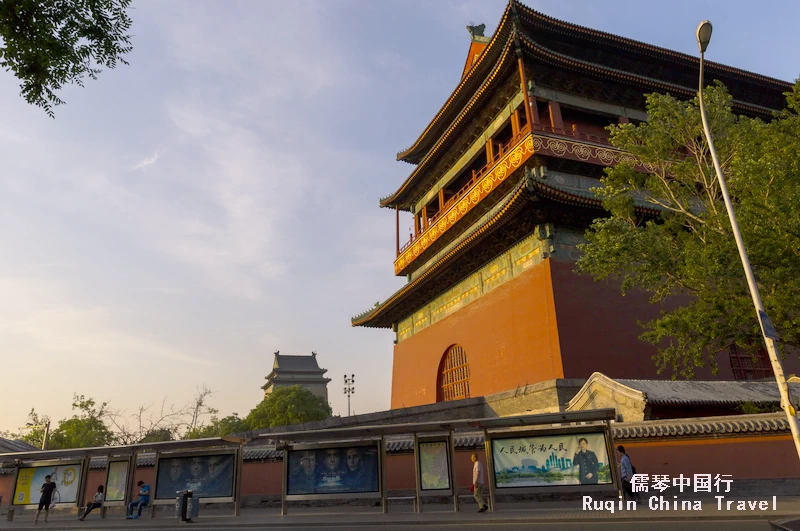
The Drum Tower in Beijing
This is where I would look for smaller neighborhood restaurants rather than polished tourist dining rooms. Beijing’s everyday food is often straightforward and filling.
What to Eat
Try zhajiangmian (炸酱面), noodles topped with fermented soybean paste, minced meat and vegetables.
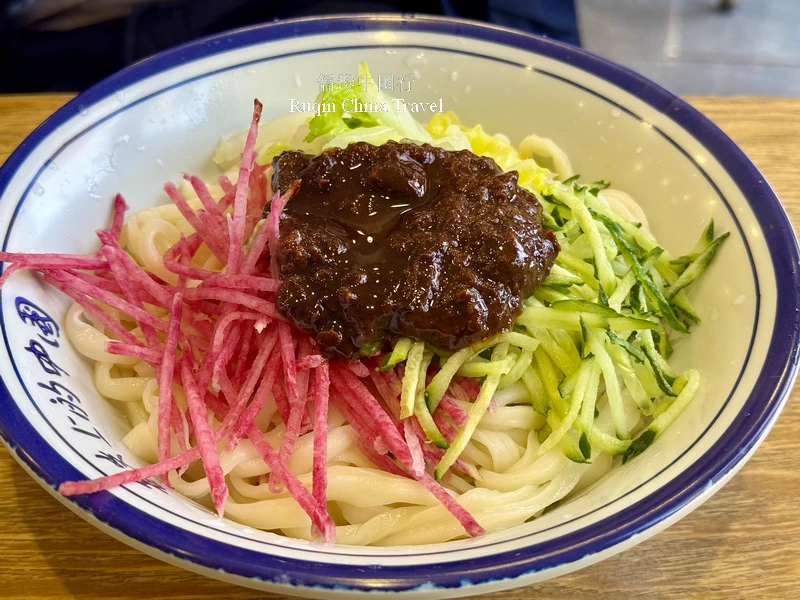
Try zhajiangmian (炸酱面)
You can also try lüdagun (驴打滚), aiwowo (艾窝窝) or other traditional Beijing snacks.
Overnight: Beijing
Day 3 – Mutianyu Great Wall & Peking Duck
Morning – Mutianyu Great Wall
Leave Beijing early for Mutianyu. Spend several hours walking the Wall before returning to the city.

Mutianyu Great Wall in Autumn
Keep lunch relatively light. Tonight brings one of the signature meals of the entire tour.
Evening – Peking Duck
Have Peking roast duck (北京烤鸭) for dinner.
A proper duck meal is more than sliced meat. Watch how the duck is carved, then wrap the crisp skin and meat inside thin pancakes with scallions, cucumber and sauce.
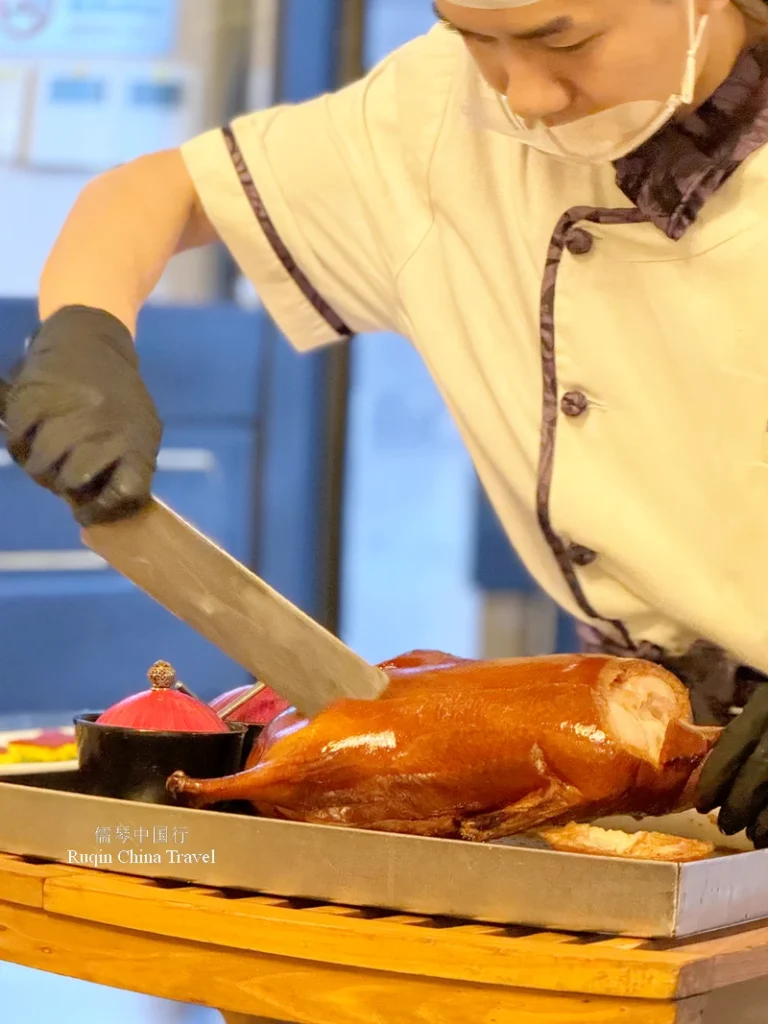
I would not add another major evening activity afterward. Take your time over dinner.
Food highlight: Peking roast duck
Overnight: Beijing
Day 4 – Beijing to Xi’an: From Rice to Wheat Country
Morning – High-Speed Train to Xi’an
Take a morning high-speed train from Beijing to Xi’an. The journey normally takes around four to five hours, depending on the service.
After checking in, take an easy walk through the old city.
Evening – First Taste of Xi’an
Xi’an immediately feels different at the table.
Here, wheat replaces rice as the dominant staple. Noodles, flatbreads, dumplings and buns appear everywhere.

Roujiamo (肉夹馍), sometimes casually described as a Chinese hamburge
Start with roujiamo (肉夹馍), sometimes casually described as a Chinese hamburger. Then try liangpi (凉皮), cool noodles dressed with vinegar, chili and other seasonings.
Try today: Roujiamo, liangpi, biangbiang noodles
Overnight: Xi’an
Day 5 – Terracotta Warriors & Shaanxi Cuisine
Morning – Terracotta Warriors
Leave early for the Terracotta Warriors. Allow around three hours for the museum before returning toward Xi’an.
Afternoon – Local Shaanxi Lunch
After the morning crowds, settle down for a proper Shaanxi meal.
Try youpo mian (油泼面) — broad noodles topped with chili and seasonings before hot oil is poured over them.
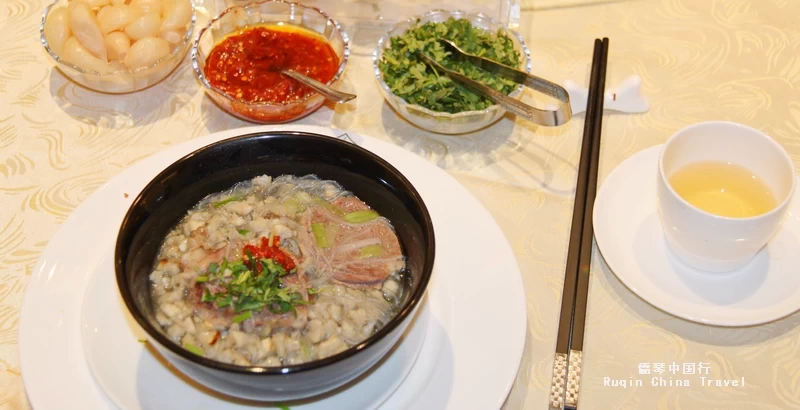
Yangrou paomo (羊肉泡馍)
Another local favorite is yangrou paomo (羊肉泡馍). Pieces of flatbread soak in a rich lamb broth, creating one of Xi’an’s most filling traditional dishes.
Evening – City Wall
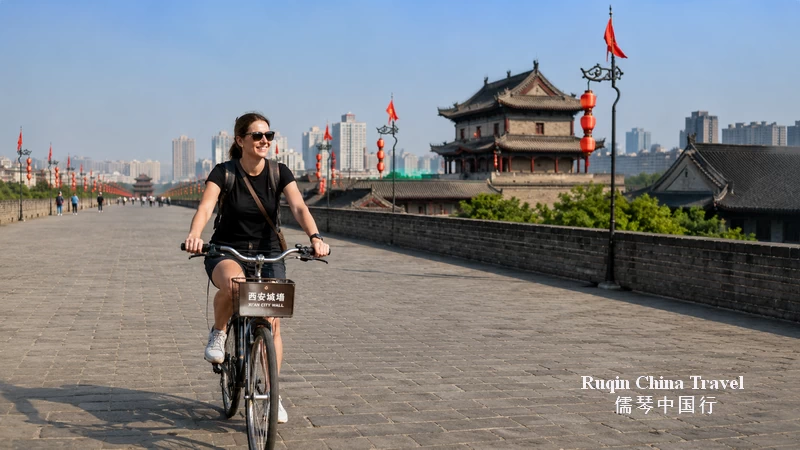
Walk the Xi’an City Wall toward sunset. After a substantial lunch, keep dinner lighter.
Overnight: Xi’an
Day 6 – Xi’an Muslim Quarter & Street Food
Today focuses less on monuments and more on food culture.
Morning – Great Mosque
Visit Xi’an’s Great Mosque and explore the surrounding lanes. This neighborhood reflects the city’s long connections with the Silk Road.
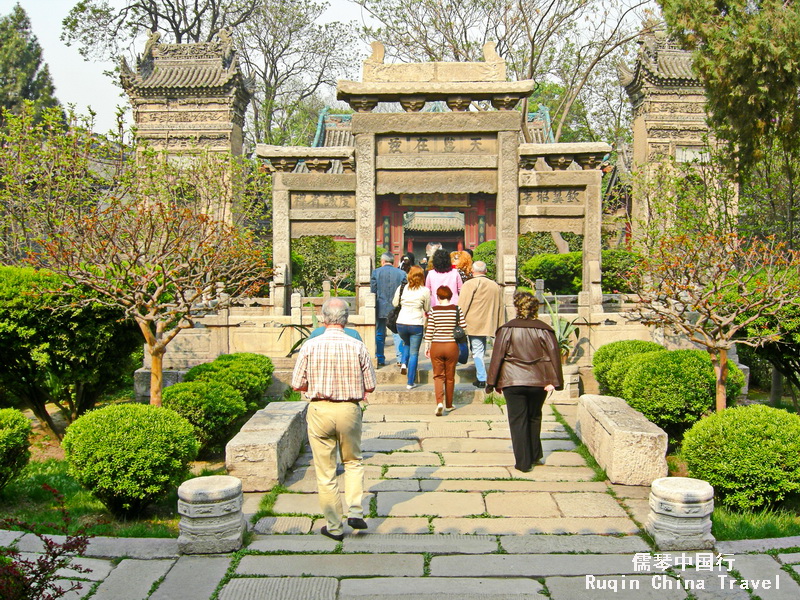
The Great Mosque in Musilin Quarter
Midday – Muslim Quarter
Rather than trying every famous snack, choose several and share them.
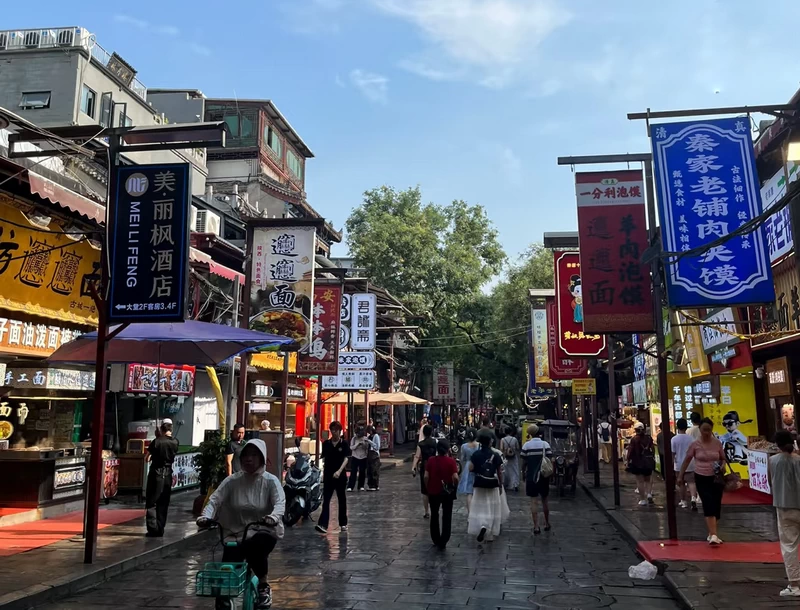
Food Strees at Muslim Quarter in Xi’an
Look for grilled lamb, persimmon cakes, sesame sweets and different forms of flatbread. However, don’t eat everything at the first stall you see. Walk around first.
Afternoon – Dumpling or Noodle Experience
Later, try a dumpling meal or join a small cooking experience if available.

Biang Biang Noodles in Xi’an
This is a useful chance to learn how northern Chinese dough differs from the rice-based staples you will encounter farther south.
Overnight: Xi’an
Day 7 – Xi’an to Chengdu
Morning – High-Speed Train
Take the high-speed train from Xi’an to Chengdu. The journey takes roughly three to four hours.
After checking in, give yourself time to adjust. Chengdu deserves a slower pace.
Evening – Your First Sichuan Dinner
Start gently with Sichuan food.
Order several dishes rather than jumping straight into the hottest options. Try mapo tofu (麻婆豆腐), kung pao chicken (宫保鸡丁) and a vegetable dish.
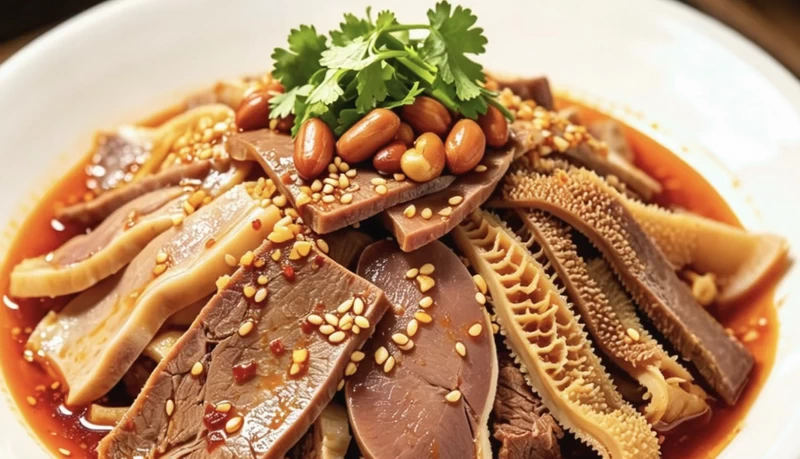
Husband and Wife Lung Slices
Try Husband and Wife Lung Slices, a famous Sichuan cold appetizer made with sliced beef and various beef offal, often including tripe, tongue, or tendon, all dressed in chili oil, garlic, sesame, and Sichuan pepper.
Pay attention to the famous mala (麻辣) sensation. Ma is the numbing effect of Sichuan peppercorn; la means chili heat.
Overnight: Chengdu
Day 8 – Pandas & Classic Sichuan Cuisine
Early Morning – Chengdu Panda Base
Go early when the pandas are usually more active.
Return toward central Chengdu before lunch.
Lunch – Sichuan Classics
Today is a good time to explore Sichuan cooking more seriously.
Besides mapo tofu, look for huiguorou (回锅肉), twice-cooked pork, and Yuxiang qiezi (鱼香茄子), eggplant prepared in a fragrant sweet-sour-spicy sauce.
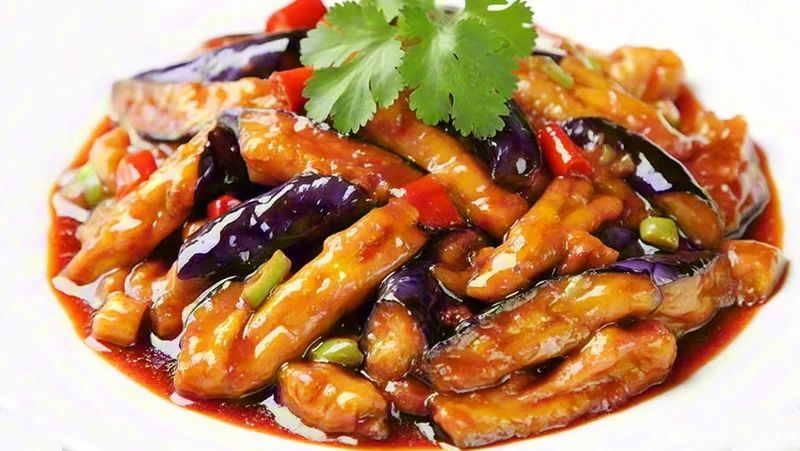
Fish-Fragrant Eggplant (Yuxiang qiezi 鱼香茄子)
Not every Sichuan dish is fiercely hot. A good Sichuan meal balances spicy, sour, sweet, salty, fragrant and numbing flavors.
Afternoon – People’s Park
Head to People’s Park and sit in a traditional teahouse.

Head to People’s Park and sit in a traditional teahouse.
Don’t rush. Tea drinking is part of Chengdu’s food culture just as much as restaurants are.
Overnight: Chengdu
Day 9 – Chengdu Market, Snacks & Cooking Experience
Today is one of the most food-focused days of the journey.
Morning – Local Market
Visit a neighborhood produce market.
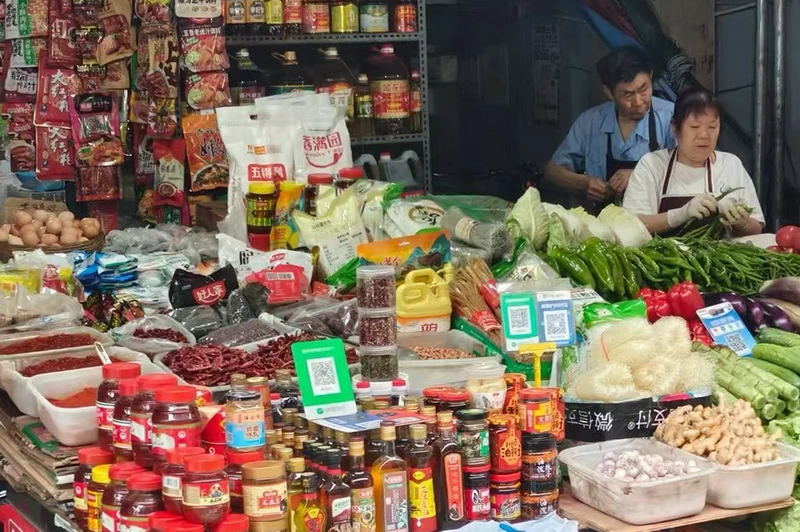
Visit a neighborhood produce market
Look at the dried chilies, Sichuan peppercorns, fermented bean paste, tofu, pickled vegetables and fresh produce. Markets help explain Sichuan cooking better than a menu does.
Midday – Chengdu Snacks
Try several small dishes instead of one large lunch.
Good choices include:
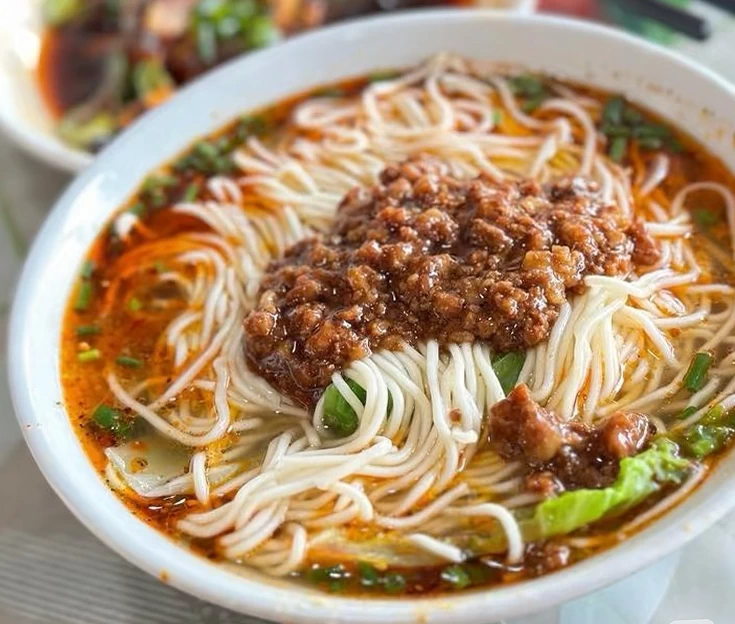
Dan dan noodles (担担面)
- Dan dan noodles (担担面)
- Zhong dumplings (钟水饺)
- Long chaoshou (龙抄手)
- Sweet-water noodles (甜水面)
Afternoon – Cooking Experience
If you enjoy cooking, this is the best city on this itinerary for a hands-on cooking class.
Learning how Sichuan peppercorn, chili oil and doubanjiang work together makes later meals much easier to understand.
Overnight: Chengdu
Day 10 – Chengdu to Chongqing & Hot Pot
Morning – High-Speed Train to Chongqing
Take the short high-speed train journey to Chongqing.
Once you arrive, you immediately notice the geography. Roads, buildings and rail lines climb above and below each other.
Later Afternoon – Hongyadong & River Views
Explore central Chongqing at a relaxed pace.
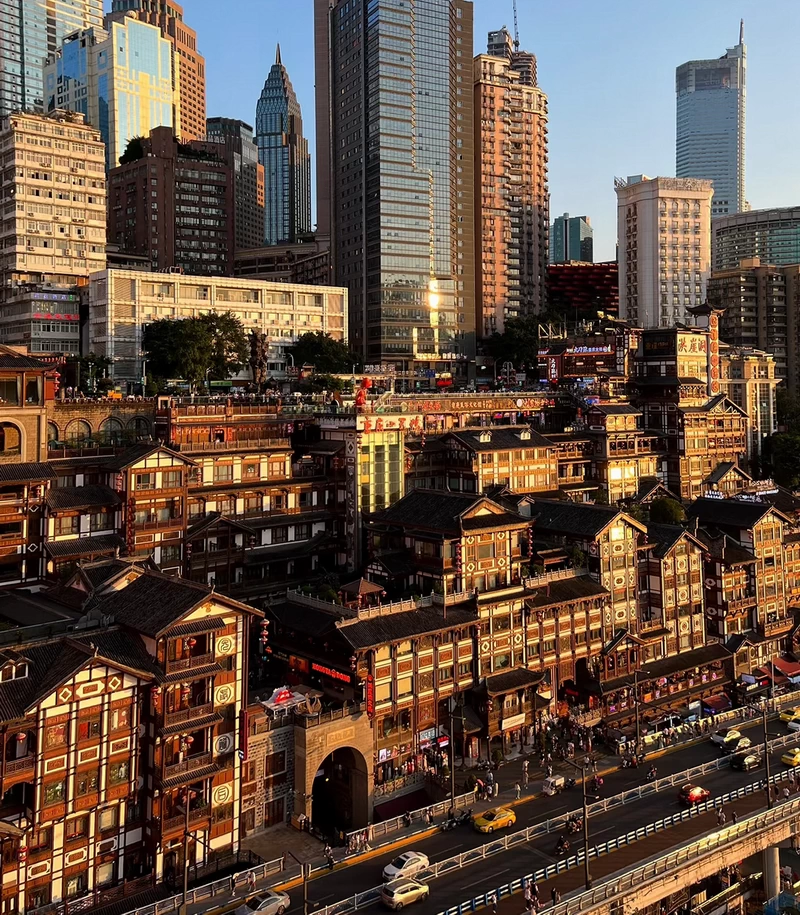
Later Afternoon – Hongyadong & River Views
Evening – Chongqing Hot Pot
Tonight is dedicated to Chongqing hot pot (重庆火锅).
The traditional broth can be intensely spicy and oily. If you are unsure about your tolerance, choose a divided pot with both spicy and mild broth.
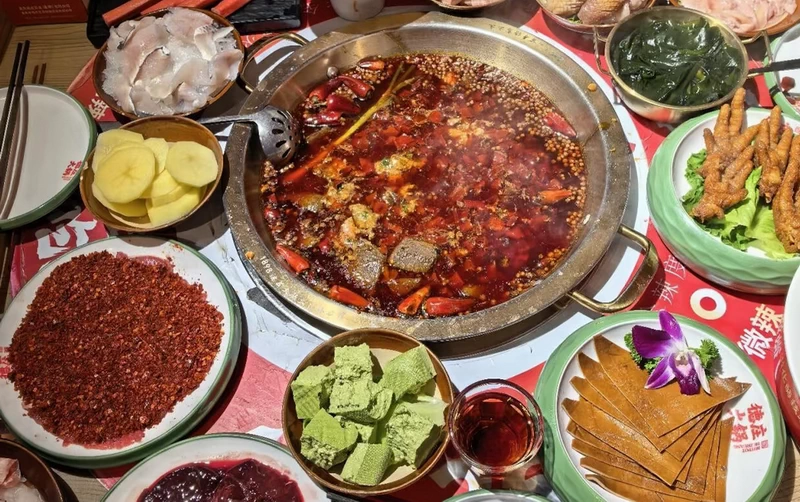
Tonight is dedicated to Chongqing hot pot (重庆火锅)
Try sliced beef, mushrooms, tofu, leafy vegetables and other ingredients gradually.
Don’t treat hot pot as a race. It is a social meal and often lasts well over an hour.
Overnight: Chongqing
Day 11 – Chongqing Noodles & Mountain City Food
Morning – Chongqing Xiaomian
Have Chongqing xiaomian (重庆小面) for breakfast.

Have Chongqing xiaomian (重庆小面) for breakfast.
These simple-looking noodles can carry an extraordinary mixture of chili, sesame, garlic, preserved vegetables and Sichuan pepper.
Daytime – Explore Chongqing
Visit places such as Liziba, the riverside districts and older hillside neighborhoods.
Walking through Chongqing also reveals how food fits into the city’s geography. Tiny restaurants appear under stairways, beside steep streets and inside residential neighborhoods.
Evening – Jianghu Cuisine
For dinner, explore jianghu cai (江湖菜), the bold, informal style associated with Chongqing.
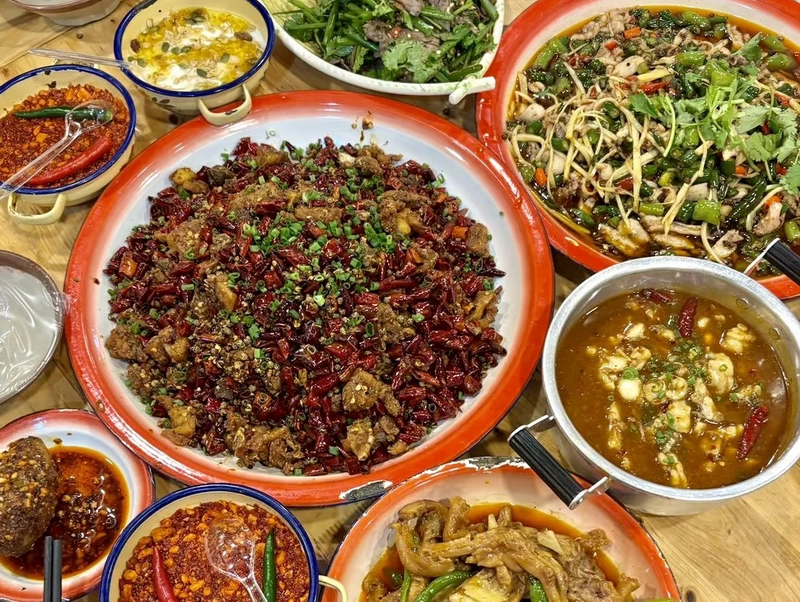
For dinner, explore jianghu cai (江湖菜)
The flavors tend to be powerful. Therefore, order a mixture of spicy and milder dishes.
Overnight: Chongqing
Day 12 – Chongqing to Guangzhou by air or high-speed train
Today is mainly a transfer day.
Depending on current schedules, take a suitable flight or high-speed train service from Chongqing to Guangzhou. For a 14-day itinerary, I would choose the option that gets you to Guangzhou without consuming the entire day.
After checking in, take an evening walk and have a light Cantonese dinner.
The change in cuisine will be immediately noticeable. After Sichuan and Chongqing, Cantonese cooking often feels cleaner and gentler.
Try tonight: Cantonese roast meats, steamed fish, seasonal vegetables
Overnight: Guangzhou
Day 13 – Guangzhou Dim Sum & Cantonese Food Culture
Morning – Yum Cha and Dim Sum
Start early with one of the great experiences of this itinerary: Cantonese morning tea, or yum cha (饮茶).
Don’t think of dim sum as a quick breakfast. Traditionally, people sit, drink tea, talk and order several small dishes.
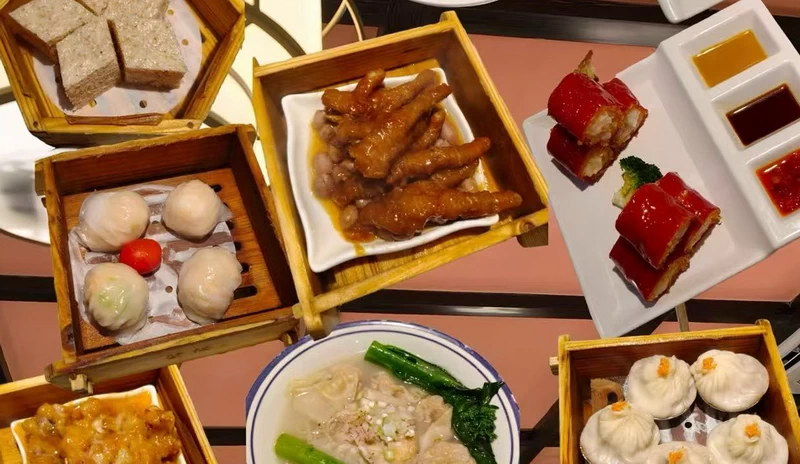
Cantonese morning tea, or yum cha (饮茶)
Try:
Har gow (虾饺) – shrimp dumplings
Siu mai (烧卖) – steamed dumplings
Char siu bao (叉烧包) – barbecue pork buns
Cheung fun (肠粉) – steamed rice noodle rolls
Egg tarts (蛋挞)
Afternoon – Old Guangzhou
Walk through older neighborhoods and local markets.
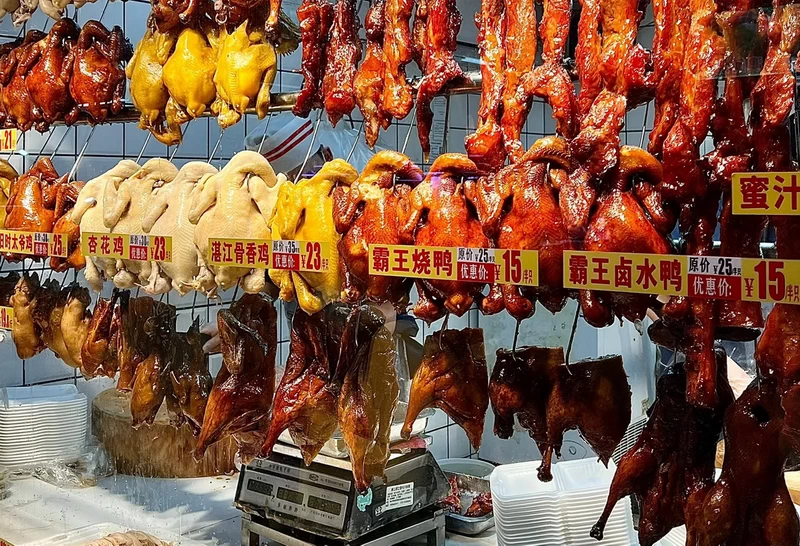
Walk through older neighborhoods and local markets.
This gives you another view of Cantonese food culture beyond dim sum. Look for dried seafood shops, roast-meat restaurants, herbal tea stores and small dessert shops.
Evening – Cantonese Dinner
Finish with a traditional Cantonese meal.
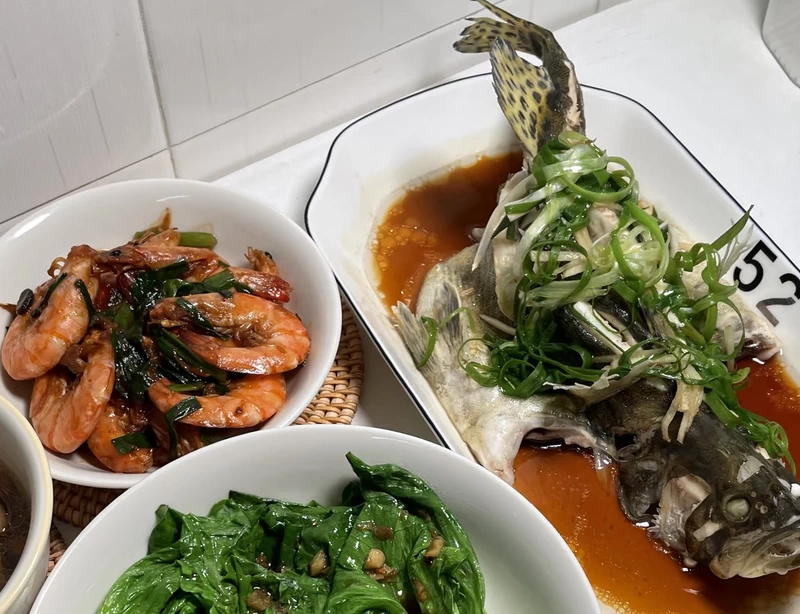
Steamed fish is a good choice for a traditional Cantonese meal
Steamed fish is a good choice because it demonstrates an important Cantonese principle: when ingredients are fresh, cooking should not overwhelm them.
Overnight: Guangzhou
Day 14 – Final Guangzhou Breakfast & Departure
Don’t waste your final breakfast on the hotel buffet unless you have an early flight.
If time allows, step outside for cheung fun, congee, wonton noodles or another local breakfast.
Then transfer to Guangzhou Baiyun International Airport or continue by high-speed train to Hong Kong. Guangzhou makes a particularly practical finishing point because southern China’s transport connections make onward travel relatively easy.
What to Eat: The Five Regional Food Experiences
One reason I like this route is that each destination introduces a clearly different food tradition.
| Destination | Food Character | Don’t Miss |
|---|---|---|
| Beijing | Northern, wheat-based, imperial influences | Peking duck, zhajiangmian, jiaozi |
| Xi’an | Shaanxi wheat foods and Silk Road influences | Roujiamo, liangpi, biangbiang noodles |
| Chengdu | Complex Sichuan flavors | Mapo tofu, dan dan noodles, Sichuan snacks |
| Chongqing | Bold, spicy and intensely aromatic | Hot pot, xiaomian, jianghu cuisine |
| Guangzhou | Fresh, delicate Cantonese cooking | Dim sum, roast meats, steamed fish |
By the time you reach Guangzhou, you will have crossed several very different culinary regions. That contrast is the real purpose of the tour.
Tickets / Transport / What to bring
Transport Strategy
I recommend using high-speed trains for:
Beijing → Xi’an
Xi’an → Chengdu
Chengdu → Chongqing
For Chongqing → Guangzhou, compare the available high-speed trains and flights for your travel date. Choose convenience rather than trying to make every journey by rail.
What to Bring
Bring comfortable walking shoes. Food exploration often involves far more walking than travelers expect, especially around markets and old neighborhoods.
I also carry tissues, wet wipes and a small bottle of hand sanitizer. A reusable water bottle is useful, although I normally drink bottled or properly boiled water while traveling.
Don’t Over-Order
This is one of my most practical tips.
Chinese restaurant portions are designed for sharing. Foreign visitors often order one dish per person and end up with far too much food.
For two people, start with two or three dishes plus rice or noodles. You can always order more.
How to Handle Spicy Food
Don’t assume that saying “a little spicy” will always produce what you consider mild.
You can say:
微辣 (wēi là) — mildly spicy
不要辣 (bú yào là) — no chili/spice
However, some dishes rely on chili for their basic character. In those cases, ordering another dish may work better than asking the kitchen to remove all the spice.
Chengdu and Chongqing are also different. Chongqing hot pot can feel considerably more aggressive than many classic Sichuan dishes.
Food Safety Tips
Choose busy restaurants with good turnover. Food that is cooked fresh and served hot is generally a sensible choice.
At street stalls, watch how ingredients are stored and cooked. I prefer stalls where locals are actively eating rather than empty stalls with food sitting out.
Meanwhile, introduce unfamiliar foods gradually. Eating extremely rich, spicy food three times a day can exhaust your stomach even when the food itself is perfectly safe.
Vegetarian Travelers
Vegetarian travel in China is possible, but communication matters.
Vegetables may contain meat stock, oyster sauce or small pieces of pork even when meat is not obvious.
One useful phrase is:
我是素食者,不吃肉。
Wǒ shì sùshí zhě, bù chī ròu.
I am vegetarian. I don’t eat meat.
Buddhist vegetarian restaurants can also be excellent options, particularly when you want a break from heavier regional dishes.
Best Time for This Culinary Tour
I particularly like April–May and September–October.
Temperatures are generally comfortable for walking, markets and sightseeing. Beijing and Xi’an can become very hot in summer, while Guangzhou remains warm and humid for much of the year.
However, this route works year-round. Food is one of the few China travel experiences that does not depend heavily on perfect weather.
Ruqin’s Trip Design Note
I designed this itinerary around one simple idea: don’t travel across China merely to eat a list of famous dishes. Food becomes much more interesting when you understand where it comes from.
That is why this journey combines meals with markets, neighborhoods, teahouses and historical sites. Beijing introduces northern food traditions; Xi’an brings wheat and Silk Road influences; Chengdu and Chongqing reveal two sides of southwestern spice; then Guangzhou changes the rhythm completely with Cantonese cooking.
I also leave room between major meals. A culinary tour should make you curious and hungry, not exhausted from eating.
Plan More of Your China Trip
You can easily combine this food journey with other parts of China. From Guangzhou, continue to Hong Kong, or connect by high-speed train or air with other major destinations.
If food is your main interest, allow some flexibility in each city. The meal you remember most may not come from a famous restaurant. Quite often, it is the bowl of noodles, neighborhood dumpling shop or morning dim sum place you discover along the way.