Written and updated by Ruqin
Last updated: March 21, 2026
I still remember standing just outside Dongzhimen Public Transport Hub (东直门交通枢纽) early in the morning, watching a steady flow of commuters, hikers, and curious travelers all moving with quiet purpose. This is not a polished tourist attraction—it’s a real, working transit hub. And that’s exactly why you’ll likely pass through here on your way to the Great Wall.
If you’re heading out to places like Jinshanling, Mutianyu, or Badaling, this is where your journey often begins. You might even see it labeled as Dongzhimen Traffic Hub on maps, which throws some people off at first. But yes—it’s the same place.
What makes Dongzhimen important isn’t how it looks, but how it works. Subways arrive below, long-distance buses depart above, and in between, you’ll find the connections that carry you out of Beijing and into the mountains. It’s one of those places where the city quietly opens up.
That said, it can feel a bit chaotic when you arrive—especially during busy hours. Signs aren’t always obvious, and the flow of people can be fast. Still, once you understand how it’s laid out, everything starts to make sense.
So before you set off for the Great Wall, take a moment to get familiar with Dongzhimen Public Transport Hub. A calm, confident start here will make the rest of your journey feel much smoother.
1.What is Dongzhimen Public Transport Hub?
When you arrive at Dongzhimen Public Transport Hub (东直门交通枢纽), it doesn’t immediately feel like a single “station.” It feels more like a layered system quietly moving thousands of people in different directions. I remember stepping out near the overpass and needing a minute to orient myself—everything is connected, but not always obvious at first glance.

The hub sits at 39 Dongzhimenwai Street (东直门外大街39号), right by the northeast corner of the Dongzhimen Overpass in Beijing’s Dongcheng District. It officially opened in August 2008, just before the Olympics, and was designed to handle large passenger flows efficiently.
Covering about 15.44 hectares, with a passenger terminal of around 78,000 square meters, the space is bigger than it first appears. It’s built across multiple levels: buses run from the ground level, while downstairs connects directly into the subway system. Once you understand this vertical layout, moving between transport options becomes much easier.
What makes the Dongzhimen Public Transport Hub especially useful is how many choices come together here—subway lines, city buses, long-distance buses, taxis, shared bikes, and walkways all intersect. It’s one of those rare places in Beijing where locals heading to work and travelers heading to the Great Wall naturally cross paths.
There’s also a deeper layer to this location. Dongzhimen (东直门), or Dongzhi Gate, dates back to the Yuan Dynasty, when it was called Chongrenmen (崇仁门). The name changed in 1368 during the Ming Dynasty. Over time, the original gate disappeared—partially opened in 1950 to ease traffic, dismantled in 1969, and eventually replaced by the overpass in 1979.
So while today’s hub feels modern and practical, you’re actually standing on a site that has been guiding movement in and out of Beijing for centuries.
2. How to Get to Dongzhimen Public Transport Hub
Finding Dongzhimen Public Transport Hub (东直门交通枢纽) is actually easier than it feels on the map—but the key detail many people miss is Exit E. I’ve seen travelers come up the wrong exit and end up circling the overpass before realizing the hub is just a few minutes away.

The hub sits right beside Dongzhimen Subway Station (东直门站), where three major lines meet: Line 2, Line 13, and the Airport Express. This makes it one of the smoothest transfer points between the airport and the city.
By subway, it’s usually the simplest choice. Line 2 loops around central Beijing, while Line 13 connects outer districts. Once you arrive, follow signs for Exit E, and you’ll be close to the hub.
Buses are also a solid option, especially if you’re coming from places not directly on the subway. Routes like Bus 103 from Beijing South Railway Station stop nearby.
If you prefer comfort, taxis or Didi work well, though traffic can slow things down.
3. Direct Shuttle Bus to Mutianyu Great Wall
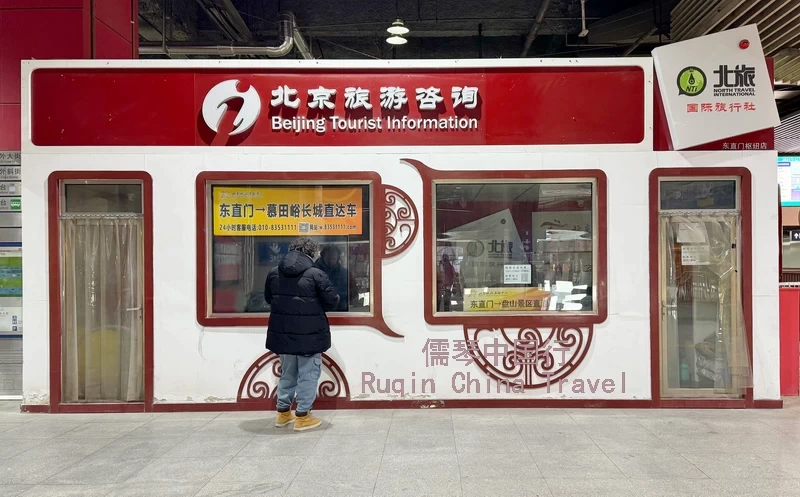
I’ve stood inside the main hall of Dongzhimen Public Transport Hub (东直门交通枢纽) early in the morning, coffee in hand, watching travelers quietly gather around the Beijing Tourist Information (北京旅游咨询) counter. It’s one of the few places in Beijing where everything feels surprisingly organized for an independent Great Wall trip—if you know where to stand. The Mutianyu Great Wall is organized by Beijing Hub of Tour Dispatch.
Meeting Point:
Head to the Beijing Tourist Information counter inside the hub’s main hall. This is your check-in point. You can reach the hub easily via Subway Line 2, Line 13, or the Airport Express—just follow signs from Exit B, E, or F of Dongzhimen Station (东直门站).
Departure Flow:
Arrive by 8:50 AM. The bus usually departs at 9:10 AM, with a short additional stop at Shaoyaoju Subway Exit E. From there, it’s about a 1.5-hour ride to Mutianyu—no transfers, which makes a big difference.
At the Wall:
You’ll arrive around 11:00 AM and have roughly five hours to explore. That’s enough time to hike, take the cable car, or just move at your own pace without rushing.
Return Options:
Buses head back between 1:00 PM and 4:00 PM. Most people don’t realize you can choose your return time—just confirm with staff before boarding. Typical drop-offs include the Bird’s Nest area and Qianmen.
Cost & Booking:
Bus fare is 80 RMB (one way). Booking: WeChat App or through its official website: Beijing Hub of Tour Dispatch in Chinese or call 010-83531111 ( 24 hours ) for ticket booking.
Why this works:
You can also buy entry tickets and cable car passes directly on the bus, saving time and avoiding extra queues.
Note: Details may change—always confirm before your trip.
4. Direct Shuttle Bus to Badaling Great Wall
Badaling is the section many travelers picture first—but getting there independently can feel more complicated than expected. I’ve found this direct shuttle from Dongzhimen Public Transport Hub (东直门交通枢纽) to be one of the simplest ways to go, especially if you want a clear, structured day without navigating transfers.
📍 Meeting Point:
Inside the main hall, look for the Beijing Tourist Information Counter (北京旅游咨询). It’s usually easy to spot once you’re inside, but give yourself a little buffer time—I recommend arriving at least 15 minutes early.
Departure & Cost:
The bus departs at 8:45 AM. Fare is 50 RMB per person (bus only; entrance tickets not included).
Booking Options:
Reserve via WeChat, the official Chinese website (Beijing Hub of Tour Dispatch) or call 010-83531111 ( 24-hour hotline)
Travel Flow:
You’ll arrive at Badaling around 10:15 AM. From there, you’re free to explore—walk the restored wall sections, take photos, or ride the cable car if you prefer an easier climb.
Between 12:00 and 4:00 PM, head back to the designated parking lot when you’re ready. Return buses run flexibly during this window.
Return Stops:
Most buses stop near the Bird’s Nest (Minzu Yuan Road), which is convenient if you want to explore Olympic Park. The final stop is Qianmen—an easy place to continue your evening with food or a walk near Tiananmen.
Good to know:
This is a shared service and requires advance booking. If fewer than 15 people sign up, the trip may be canceled the night before.
As always, confirm details close to your travel date, as schedules can shift slightly.
5. Direct Shuttle Bus to Jinshanling Great Wall
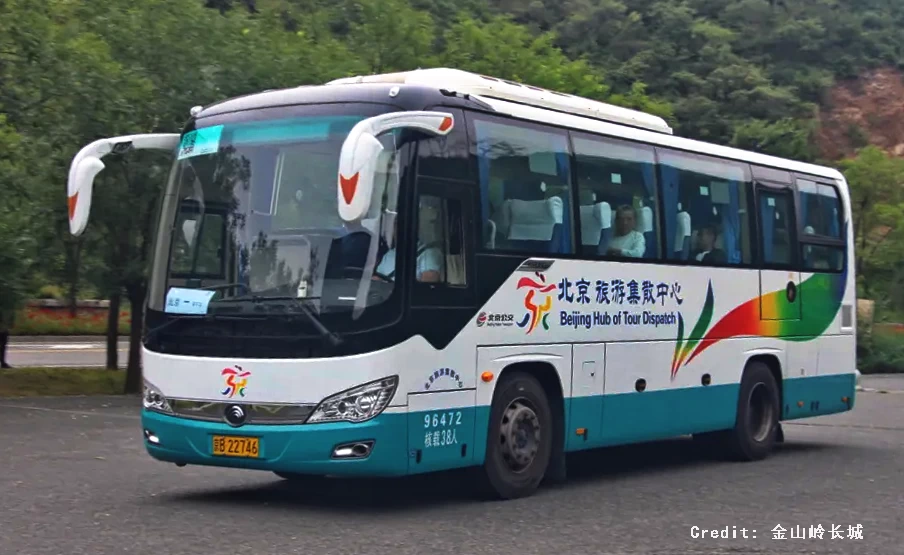
Jinshanling has a very different feeling from Badaling or Mutianyu—quieter, wilder, and honestly a bit more rewarding if you enjoy walking the Wall. But getting there on your own can be tricky. That’s why this direct shuttle from Dongzhimen Public Transport Hub (东直门交通枢纽) is such a practical option—I’ve recommended it many times for travelers who want simplicity without giving up independence.
Where to Meet:
Go to the Beijing Tourist Information Desk (北京旅游咨询) inside the hub. It’s the same meeting point as the other Great Wall shuttles. Give yourself a little time to find it and get oriented.
Departure Time:
The bus leaves at 8:00 AM sharp. I always suggest arriving 15–20 minutes early—it’s a calmer start, and you won’t feel rushed.
How to Book:
Reserve via WeChat, the official Chinese website (Beijing Hub of Tour Dispatch), or call 010-83531111 ( 24-hour hotline)
Trip Schedule:
You’ll reach Jinshanling around 10:00 AM. From there, you have roughly six hours to explore, which is ideal for this section. The hiking here is more spread out, with both restored and original stretches.
At 4:00 PM, the bus heads back to Beijing, arriving at Dongzhimen around 6:10 PM.
Tickets & Inclusions:
The 160 RMB ticket includes round-trip transport, entrance fee, and a cable car ride—very convenient if you want to save energy for walking along the Wall itself.
Important to Know:
This is a shared group service and must be booked in advance. If the group is too small, you’ll be notified the evening before.
As always, confirm details close to departure—conditions and schedules can shift.
6. 916 Express Bus + H23 & H33 Local Bus to Mutianyu Great Wall
If you’re comfortable navigating local transport, this is the route I often think of as the “real Beijing way” to reach Mutianyu. It’s not the fastest—but it’s budget-friendly and gives you a glimpse of how locals move beyond the city center.
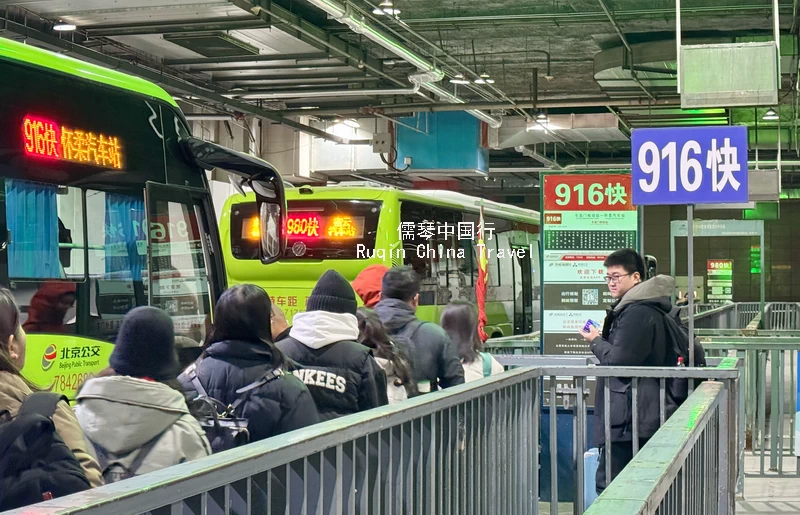
Start at Dongzhimen Traffic Hub (东直门交通枢纽) and look for the 916 Express Bus (916快). The boarding area can feel a bit busy, especially in the morning, so take a moment to check the signs carefully. Once on board, the ride out toward Huairou District is actually quite relaxing—you’ll gradually leave the dense city behind.
After about two hours, get off at North Street Station (北大街) in Huairou. The fare is around 12 RMB. From there, things slow down a bit. You’ll need to cross the street and find the stop for local buses like H23 or H33, which continue toward Mutianyu.
These local buses usually run every 30–40 minutes, so some waiting is normal. The ride takes another 40 minutes and costs about 5 RMB. You’ll get off near Mutianyu Roundabout (慕田峪环岛), followed by a short walk to the scenic area entrance.
In total, expect around three hours one way. It’s not the most seamless route, but if you’re patient, it works well—and costs very little.
7. Other Suburban Destinations:
One thing I’ve noticed at Dongzhimen Public Transport Hub (东直门交通枢纽) is how easy it is to overlook the suburban buses. Most travelers rush straight to the Great Wall shuttles, but if you pause and look up, those overhead signs pointing to routes like 916, 918, and 980 quietly open up a much wider side of Beijing.
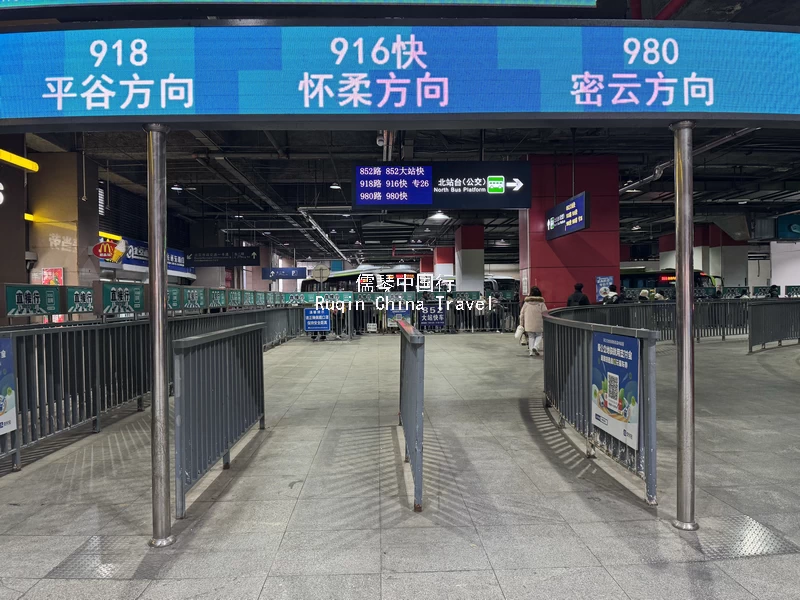
On the ground floor, follow the signs for long-distance buses. It can feel a bit chaotic at first, but once you spot your route number, everything becomes clearer.
Bus 918 is a useful line if you’re heading toward Pinggu or passing through Shunyi and Huairou. It connects Pinggu Bus Station with Dongzhimen and runs from early morning to evening (roughly 04:20 AM–07:30 PM from Pinggu, and 05:40 AM–09:00 PM from Dongzhimen). It’s a reliable, no-frills option that locals use daily.
Bus 980 goes even farther, reaching Miyun while passing through Huairou and Shunyi. It’s a longer route—about 75 km with many stops—but surprisingly straightforward once you’re on it. Buses run frequently throughout the day, starting early in the morning.
These routes aren’t designed for tourists, which is exactly why I like them. They take you beyond the typical sightseeing circuit into quieter districts, small towns, and less-visited corners of Beijing.
If you’re curious and have a bit of patience, these buses offer a very different, more local way to explore Beijing’s outskirts.
8. How to Pay for Buses in Beijing
Standing at the bus bays in Dongzhimen Public Transport Hub (东直门交通枢纽), one thing becomes clear quickly—boarding moves fast. There’s no time to figure out payment once you’re already on the bus. It’s much smoother if you’re ready before you step on.
Bus Fare Payment at Dongzhimen:
You do have a few options. Cash is accepted, but I rarely recommend relying on it. Drivers don’t give change, and fumbling with small bills while people line up behind you can feel stressful.
A better option is a Beijing Transport Card (一卡通, Yikatong). You can buy and top it up right at Dongzhimen. It works across buses and subways, and you’ll often get small fare discounts. If you’re staying in Beijing for more than a couple of days, this is the easiest routine.
Mobile Payments:
That said, most travelers now use Alipay or WeChat Pay—and honestly, this is what I use day-to-day. Once set up, you simply scan the QR code as you board. It’s quick, contactless, and widely accepted on city and suburban buses.
One small tip from experience: make sure your phone is ready before boarding—app open, brightness up. It keeps things smooth and avoids holding up the line behind you.
9. Facilities at Dongzhimen Public Transport Hub
The Dongzhimen Public Transport Hub isn’t just a place to catch a bus or subway. It’s also equipped with several facilities that make your travel experience smoother and more comfortable.
1) Tourist Information Center (By Dongzhimen Transport Hub)
If you need help navigating the hub or finding directions to your destination, head to the Tourist Information Counter located by the southern main entrance. This tourist information Counter is different from the tourist Information Centre run by Beijing Hub of Tour Dispatch.
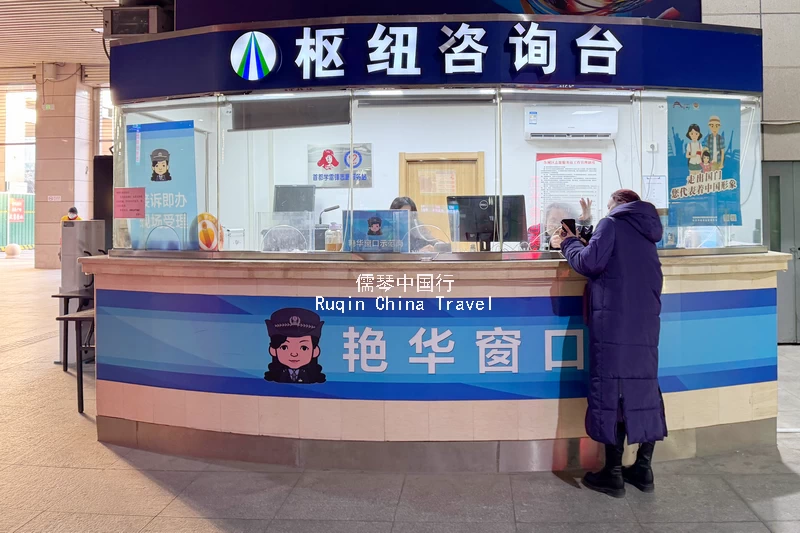
The staff here can provide you with tourist guides, maps, and other helpful information. Whether you need advice on how to find Dongzhimen Public Transport Hub or need tips on exploring Beijing’s suburbs via Dongzhimen hub, the information center has you covered.
2) Shops and Restaurants:
When you’re passing through Dongzhimen, you’ll find several shops and stores where you can buy snacks, drinks, souvenirs, and more. There is even a McDonald’s inside the station, perfect for a quick bite before your journey.
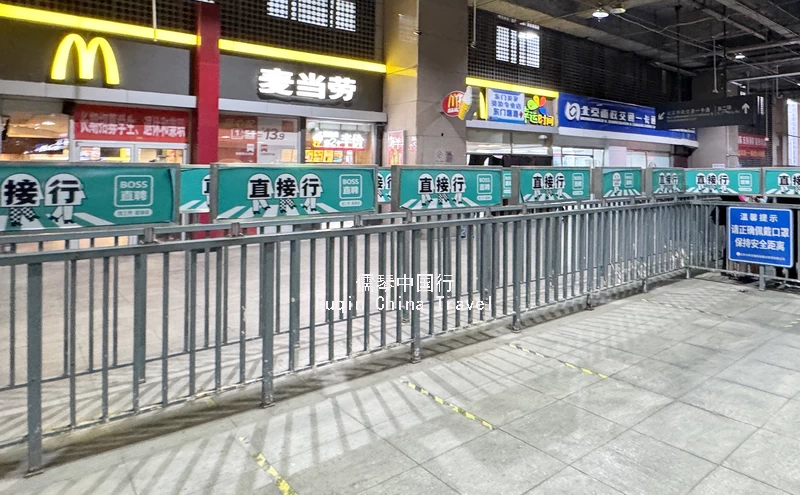
In addition to fast food, there are also other restaurants offering Chinese and international cuisine. These options provide a comfortable stop for travelers looking to refresh themselves.
3) Rest Areas and Accessibility:
Dongzhimen Transport Hub is designed with comfort in mind. There are rest areas where you can sit and relax before your bus or subway ride. For travelers with special needs, the hub offers wheelchair access and luggage storage services, ensuring everyone can easily navigate the space. Whether you’re traveling solo, with family, or with a group, these facilities make the hub more accessible.
4) Parking Facilities:
If you’re driving or being dropped off by a taxi, Dongzhimen Transport Hub offers parking facilities. These are available for short-term or long-term use, making it convenient for those who plan to leave their vehicle while they explore Beijing’s outskirts.
10. Important Tips for Using Dongzhimen Public Transport Hub
I’ve learned that Dongzhimen runs on its own rhythm—and once you understand it, everything feels much easier. Until then, a few small surprises can catch you off guard.
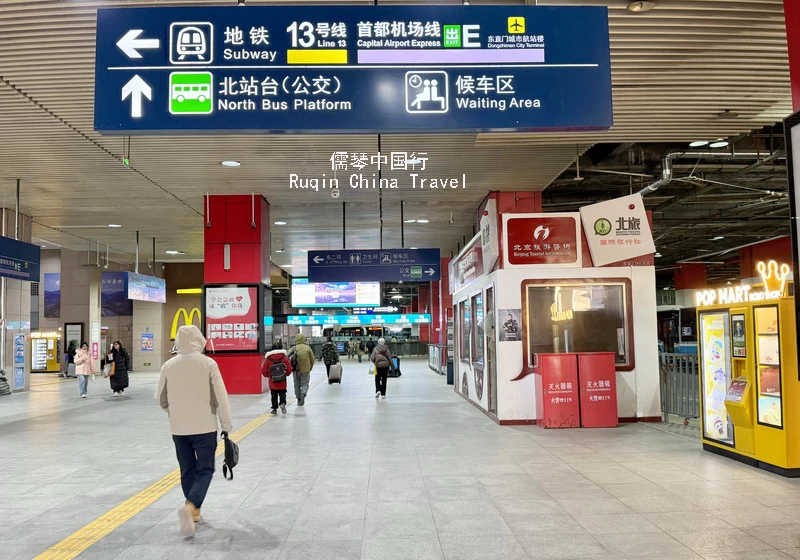
1) Transfers take longer than you expect
On paper, everything connects. In reality, you’ll walk more than you think. Moving between the subway and bus areas at Dongzhimen Public Transport Hub (东直门交通枢纽) can involve long corridors, stairs, and even stepping outside briefly. If you’re catching a timed bus, give yourself extra buffer time.
2) Lines can build quickly
I’ve seen queues form fast, especially on Friday afternoons or weekends when people head out to Huairou, Miyun, or Pinggu. It’s not unusual to wait 20–40 minutes for popular routes. Arriving earlier in the day makes a big difference.
3) Useful facilities nearby
Inside the hub, you’ll find basics like ATMs (including Beijing Bank) and a mother-and-baby room. Just across the street, malls like Ginza and Raffles City are surprisingly convenient if you need food, coffee, or a last-minute supply before heading out.
4) Stick to official transport
You may notice drivers offering rides outside—these are unlicensed “black cabs.” I always recommend avoiding them. They’re unpredictable and not worth the risk. Official buses and registered taxis might take a bit more time, but they’re far more reliable.
A little patience here goes a long way. Once you settle into the flow, Dongzhimen starts to feel manageable—even efficient.
Dongzhimen Public Transport Hub (东直门交通枢纽) isn’t glamorous—but it’s where so many Beijing journeys quietly begin. I’ve passed through here on early mornings and busy weekends, and once you understand how it works, it becomes a reliable starting point to places like Mutianyu or Jinshanling.
Give yourself a little time, stay patient, and follow the flow. With the right preparation, Dongzhimen Public Transport Hub turns from confusing to completely manageable—and that makes your Great Wall day feel much smoother from the start.
About the Author
Ruqin is the founder of Ruqintravel.com and has spent more than four decades working in China’s travel industry. Drawing on hands-on experience in cities like Beijing and Hangzhou, he personally researches and updates each guide to help international travelers navigate China with confidence.
Further Reading
How to Get to Simatai Great Wall from Beijing: Direct Bus, S5 Train & Car
How to Get to Jinshanling Great Wall from Beijing: Bus, Train & Car
How to Visit Gubeikou Great Wall from Beijing: Hikes, Map & Transport
How to Get to Mutianyu Great Wall from Beijing: Bus, Shuttle & Car
How to Get to Badaling Great Wall from Beijing: Train, Bus 877 & Shuttle
How to Visit Juyongguan Great Wall from Beijing: Bus, Tickets
Mutianyu Great Wall Wheelchair Accessible Guide: Paths & Tips