
Written and updated by Ruqin
Last updated: April 13, 2026
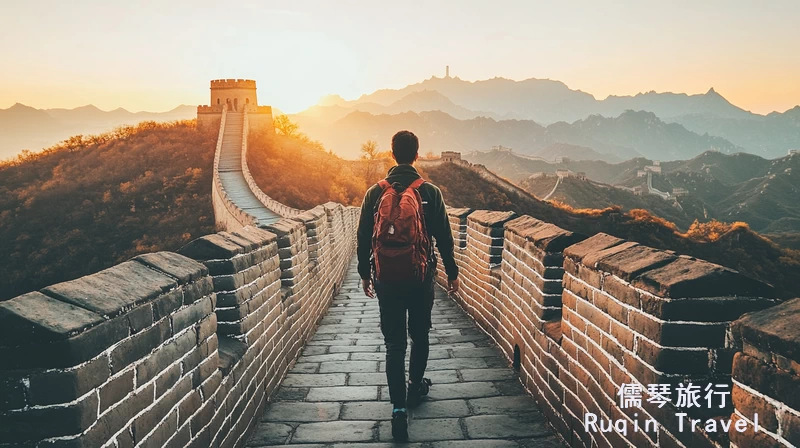
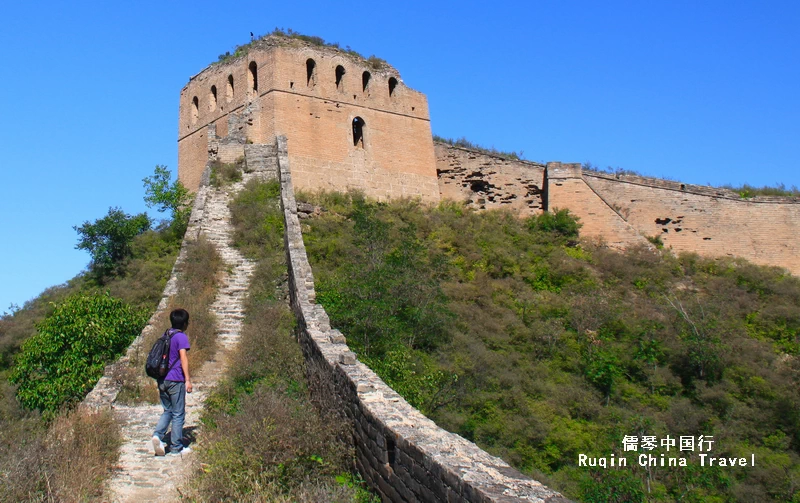
The first time I went out to Gubeikou, I remember how quickly Beijing disappeared behind me. Within a couple of hours the highways faded into mountain roads, the crowds vanished, and the Great Wall suddenly felt wild again. Broken watchtowers, quiet ridgelines, and long empty stretches of wall—it’s one of the few places near Beijing where the Wall still feels raw and untamed.
If you’re planning how to visit Gubeikou Great Wall from Beijing, you’re choosing one of the most authentic Great Wall experiences close to the city. Unlike the fully restored sections like Mutianyu or Badaling, Gubeikou remains largely unrestored. The mountains are bigger, the atmosphere quieter, and you’ll often share the Wall with only a handful of hikers.
That said, Gubeikou does require a bit more planning. Transportation isn’t as straightforward, and once you’re on the Wall, facilities are minimal. But don’t worry—I’ll walk you through it step by step. First, we’ll look at the easiest ways to reach Gubeikou from Beijing. Then I’ll show you the safest and most rewarding hiking routes. Once the logistics are clear, you can focus on the real reason you came: experiencing one of the most atmospheric stretches of the Great Wall.
1. Why Plan a Trip to Gubeikou Great Wall?
If you’re looking for a Great Wall experience rich in history and untouched beauty, Gubeikou is a must-visit.
This section of the Wall dates back to the Northern Qi Dynasty (550–577) and was later expanded during the Ming Dynasty (1368-1644). Its location once played a critical role in defending the northern gateway to Beijing.
Gubeikou Great Wall (古北口) is made up of two main sections: Panlongshan (蟠龙山) and Wohushan (卧虎山). The names say it all—Panlongshan means “Coiled Dragon Mountain,” while Wohushan translates to “Crouching Tiger Mountain.” Together, they form a dramatic landscape of winding ridges, crumbling watchtowers, and mountain views that feel far from the city crowds.
Unlike the more restored sections, Gubeikou remains raw and rugged. You’ll walk original stone paths and feel the weight of history under your feet.
If you’re craving a more authentic, uncrowded, and scenic hike, Gubeikou delivers—all just a few hours from Beijing.
Panlongshan Great Wall and Wohushan Great Wall
These two sections of the wall face each other across a valley that historically served as a vital passageway connecting Inner Mongolia and Beijing. This once-strategic corridor is now part of the rapidly developing Gubeikou Township, located in Miyun District, Beijing.
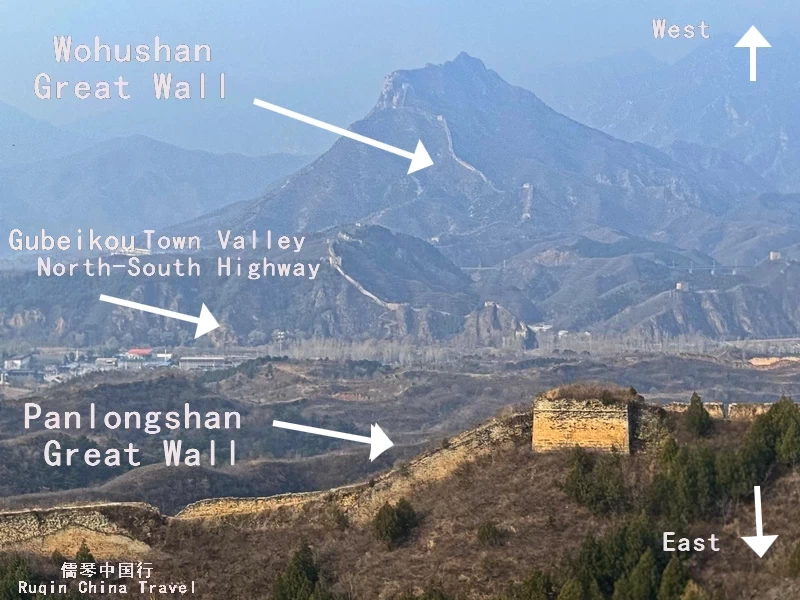
The Wohushan Great Wall ( 卧虎山长城)remains completely wild and unrestored, preserving its raw, historical authenticity. It is not officially open to the public.
In contrast, portions of the Panlongshan Great Wall (蟠龙山)have been opened to visitors under local government management. As a result, when most people refer to the “Gubeikou Great Wall,” they are typically speaking about the Panlongshan section, which is more accessible and better known.
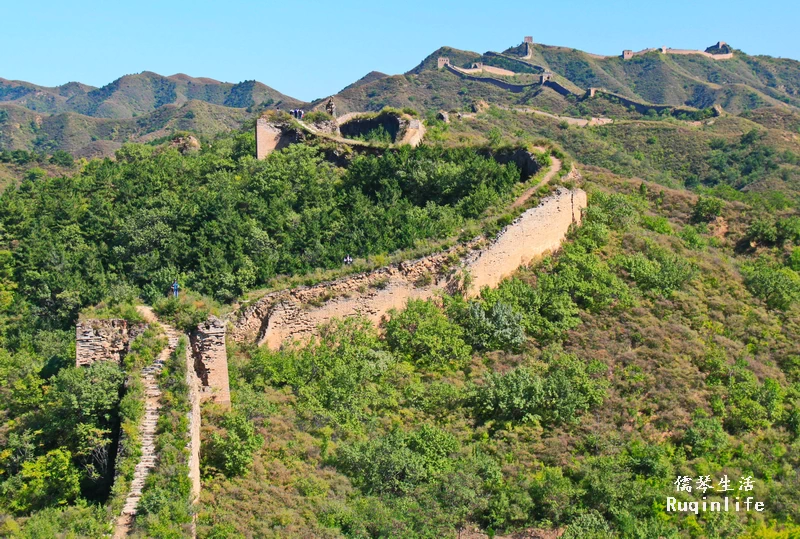
The Wohushan section of Gubeikou Great Wall ( not open to the public) is famous for its majestic beauty. It is characterized by undulating hills, dense forests, and a strategic pass,offering a more rugged and challenging hiking experience.
Conservation and Restoration Efforts: Gubeikou Great Wall ( Panlongshan ) has had minimal restoration work, allowing visitors to witness its authentic and original structure. Preservation efforts focus on maintaining the wall’s historic integrity and ecological balance.
2. Location of Gubeikou, Simatai and Jinshanling
Gubeikou Great Wall lies near two other famous sections of Jinshanling Great Wall, and Simatai Great Wall. These three sections are often hiked together for a multi-day trek that reveals stunning mountain views, historical watchtowers, and varied terrain, making it a favorite for adventurous travelers and photographers.
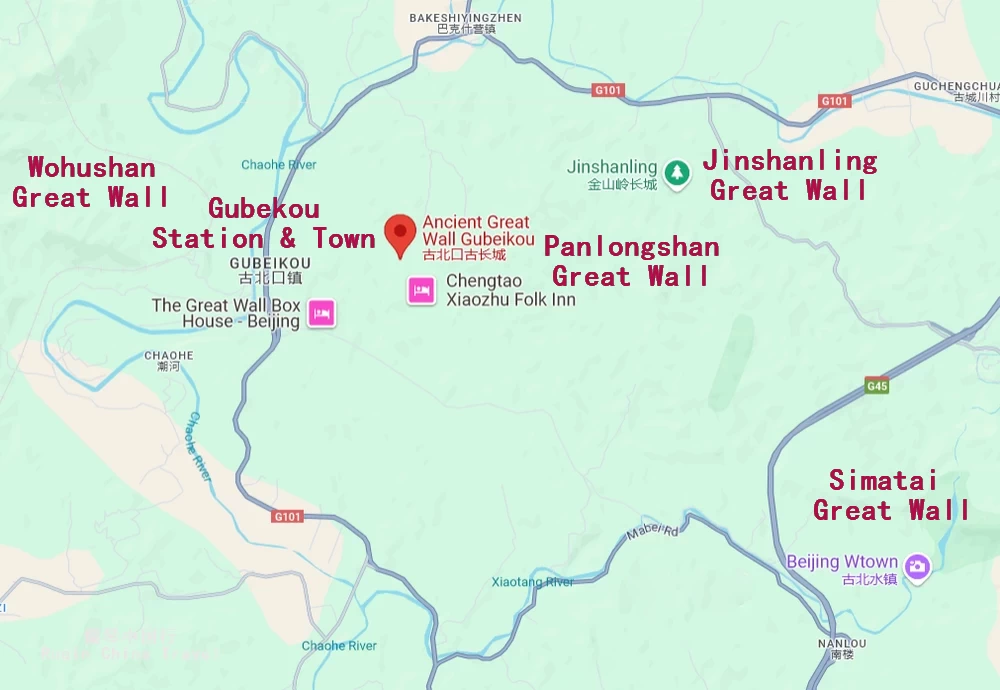
Gubeikou Railway Station – Gubeikou Great Wall ( Panlongshan) by road: 7km
Gubeikou Great Wall – Simatai Great Wall by road: 11km
Gubeikou Railway Station – Jinshanling Great Wall by road : 17 km
Gubeikou Railway Station – Simatai Great Wall by road: 15km
3. How to Get to Gubeikou Great Wall
Getting to Gubeikou Great Wall from downtown Beijing can be mainly done by three means of transportation. Here’s a guide on how to get to Gubeikou Great Wall:
1) By S5 Train (Beijing Suburban Train) + Local Private Car
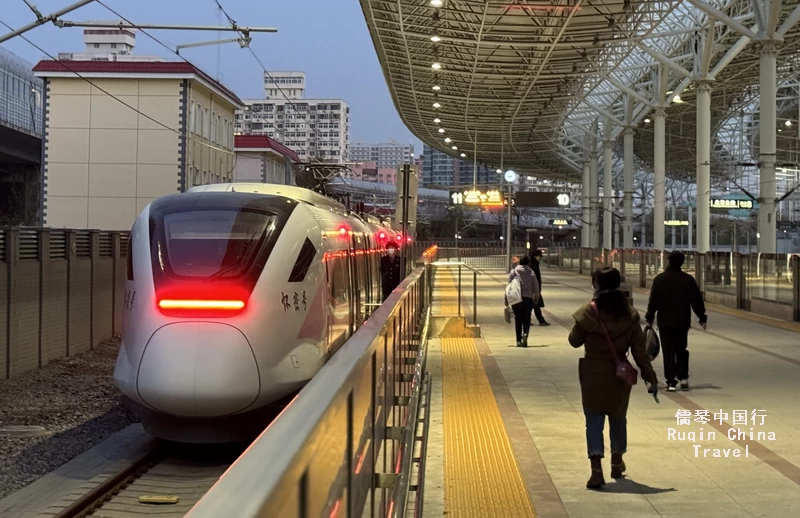
The best way is to take Beijing’s Suburban Train Line S5 early morning train. First, you can take the early morning train from Beijing North Railway Station to Gubeikou Railway Station ( Gubeikou Town ). The journey typically takes about 2.5 hours, providing a scenic and comfortable ride through the outskirts of Beijing and into the countryside.
Kind reminder: The Beijing Suburban Train operates like the subway, and its entrance is separate from the main Beijing North Railway Station. Please avoid entering Beijing North Railway Station for a security check. Instead, access the Beijing Suburban Train through the entrance located next to McDonald’s, in the underground area connected to Subway Lines 2, 4, and 13.
Trains run twice daily and do not require reservations. Simply treat it like a subway, free seating — just scan or swipe, and you’re on your way.
How to Check the Latest Train Timetable
You can easily check the most up-to-date train schedule on China Railway’s official 12306 website/app (English available).
Simply enter the following details:
- From: Beijingbei (北京北) — Beijing North Railway Station
- To: Gubeikou (古北口)
- Date: Your planned travel date
Once you search, the system will display the latest train options, departure times, and travel duration. This is the most reliable way to confirm schedules before your trip.
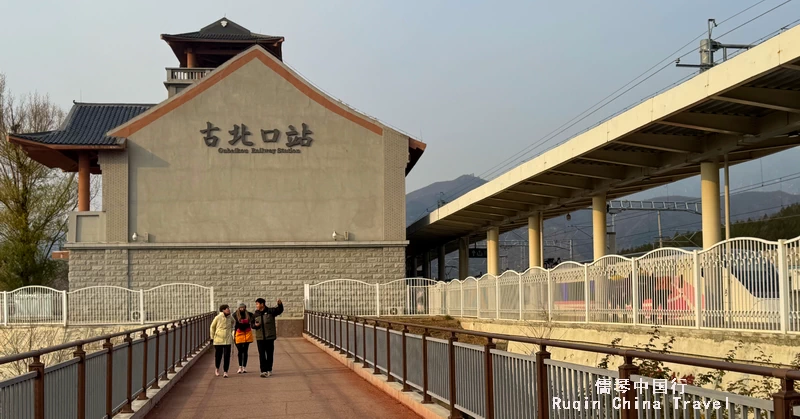
After exiting Gubeikou Railway Station, you’ll notice several private cars parked nearby. Local drivers, mostly from nearby villages, may approach you offering transfer services. At the time of writing, there are no official taxis available at the station, so arranging a ride with one of these private drivers is your best option.
You can negotiate with them for a transfer to either the Gubeikou Great Wall (approximately 7 km away) or the Jinshanling Great Wall (about 17 km away). Be sure to confirm the price and destination clearly before setting off to ensure a smooth journey.
The negotiated prices for your reference:
Gubeikou Railway Station – Gubeikou One-way transfer: RMB 40 /Per car or SUV
Gubeikou Railway Station – Jinshanling One-way Transfer: RMB 60 /Per Car or SUV.
Gubeikou Railway Station – Simatai One-way Transfer: RMB60 /Per car or SUV

Shuttle Bus to Simatai Great Wall and Gubei Water Town
If you’re planning a trip to Simatai Great Wall and Gubei Water Town, you’re in luck! Getting there is easier than you might expect.
A dedicated official shuttle bus connects directly to Simatai, making your journey smooth and convenient. This bus is especially helpful for travelers arriving by train.
Once you reach the station, head to the nearby parking lot. That’s where the shuttle bus waits for incoming passengers heading to Simatai and the water town. It’s timed to match train arrivals, so there’s no need to rush or worry.
Just hop on, relax, and enjoy the ride to one of the most scenic and peaceful sections of the Great Wall.
2) By Public Transportation + Local Private Car
First take the subway to Dongzhimen Station (Lines 2 or 13);
Then exit the station and head to Dongzhimen Transportation Hub.
From there, take bus 980 to Miyun Bus Station.
At Miyun Bus Station, transfer to Bus 37 or Bus 25 to Gubeikou Township.
Once you reach Gubeikou Township, you can hire a local taxi or arrange for a shuttle service to take you to the Gubeikou Great Wall scenic area.
3) By Private Car or Taxi
Hire a private car or take a taxi from downtown Beijing directly to Gubeikou Great Wall. This option provides the most convenience and flexibility.
The journey usually takes around 2 to 3 hours, depending on traffic conditions.
4. How to Visit Gubeikou Great Wall
There are two main ways to explore the Gubeikou Great Wall, also known as the Panlongshan section.
One follows the official hiking route, which is easier to follow and suitable for most visitors. The other takes an unofficial trail, which is steeper, wilder, and more challenging.
Let’s begin with the first:
Option 1: Hike Gubeikou via the Official Route
Arriving at the ticket office of the Gubeikou Great Wall, you pay the entrance fee of RMB 32 (half price for those over 60). From the parking lot, a short walk leads you to a fork in the road, where you choose the left path, as suggested. The 20-minute trek up the mountain is peaceful, with signs along the way marking major towers on the Wall.
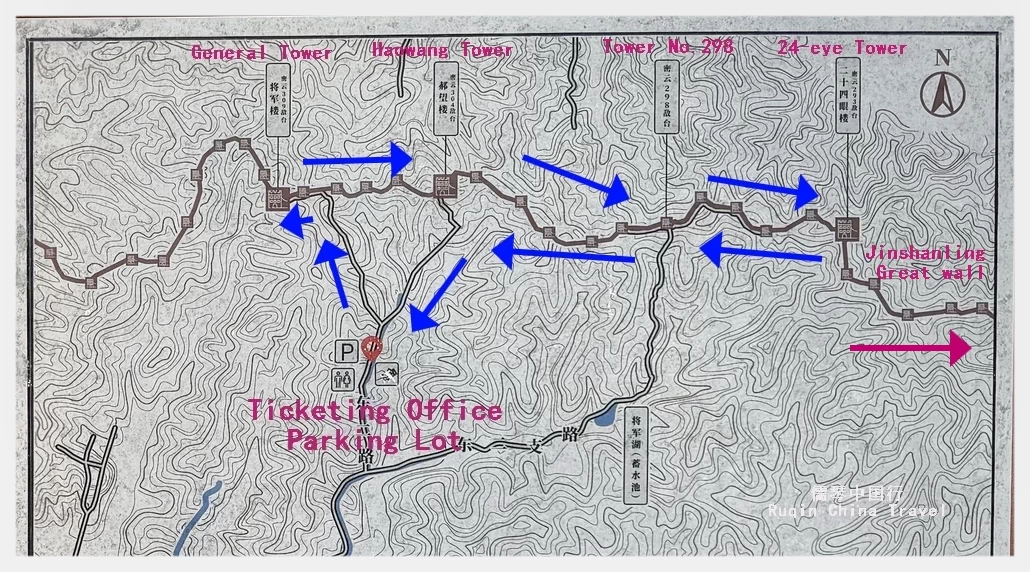
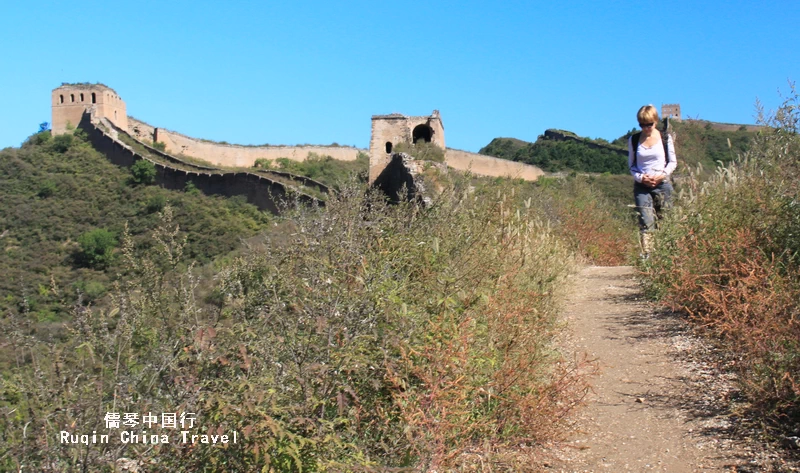
Reaching the Great Wall atop Panlongshan Mountain is like stepping into history. The rugged, brick-and-earth Wall stretches before you, a testament to its age and resilience.
You hike westward to the General Tower, where you will be rewarded with breathtaking views of Wohushan Great Wall,Gubeikou Town, and the sprawling Panlongshan Great Wall.
Turning back, you made your way to the 24-Eye Tower, the final accessible point before the military zone. This tower, with its unique 24 observation holes, is a rare architectural gem. Along the way, the Wall’s crumbling parapets and exposed dirt paths reminded me of its wild, unrestored state.
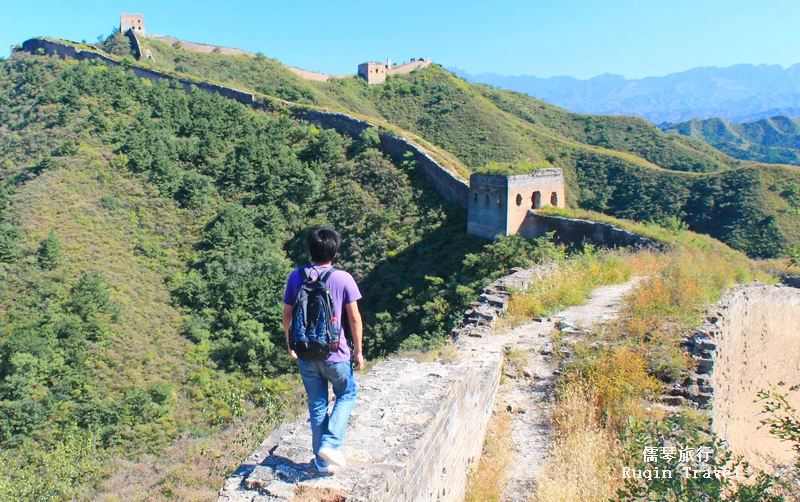
The 3 hour hike is exhilarating yet challenging, with steep climbs and uneven terrain. The strategic importance of this section, once a fiercely contested military site, resonated as you walk. Gubeikou’s rustic charm and historical significance make it a must-visit for adventurers and history enthusiasts alike.

Turning back from the 24-eye Tower, walk down the mountain path back from the Tower 298 back to the parking lot.
Option 2: Hike Gubeikou Great Wall via the Unofficial Route
Looking for a wilder, more adventurous hike? Then this unofficial trail at Gubeikou Great Wall is your perfect match.
While the official route is scenic and structured, this path leads you into the untouched, unrestored section of the Wall—where history meets nature in the rawest form.
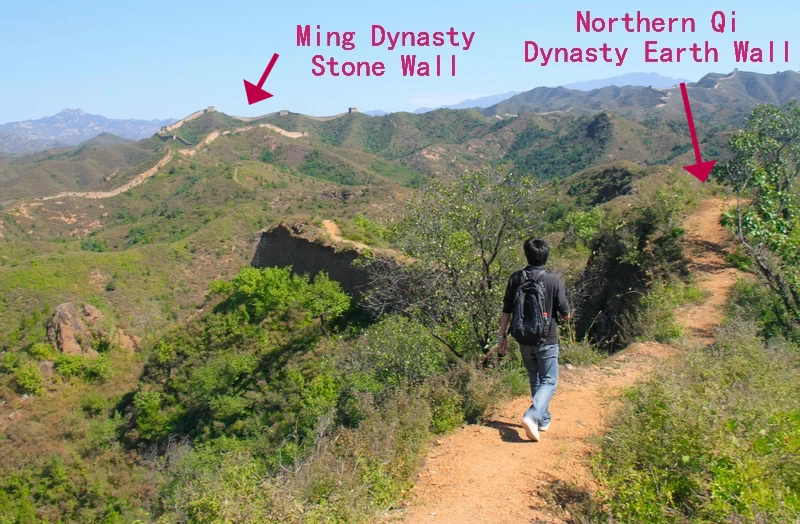
Here’s what makes it special: Gubeikou actually features two parallel walls. One is the older earthen wall built during the Northern Qi Dynasty (550–577).
The other is the more familiar stone wall from the Ming Dynasty (1368–1644). On this route, you start on the ancient earth ridge and gradually climb toward the steeper Ming-era stonework.
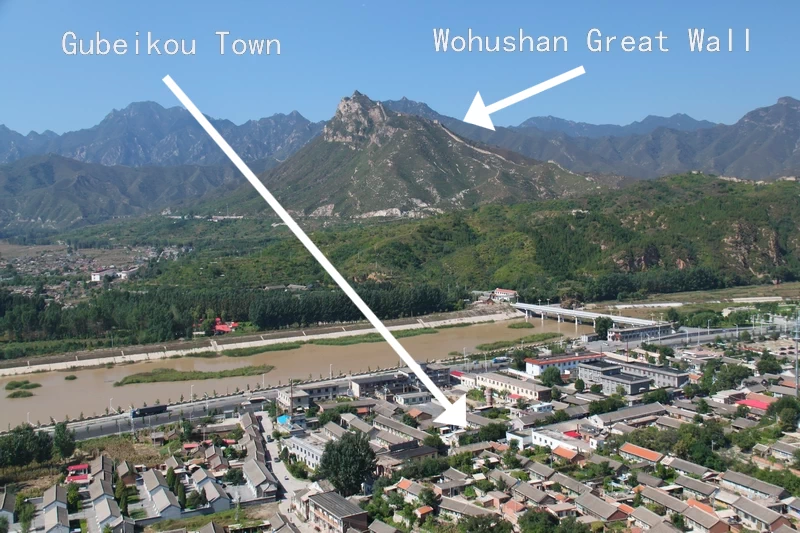
But here’s the twist—there’s no ticket booth, no sign, and no clear entrance. Local hikers have marked the way with faded arrows on walls and fences.
How to Find the Trail:
Start in Gubeikou Village, walk southeast, and look out for the Caishen Temple (财神庙). After that, watch the walls closely. You’ll see a blue or green arrow—often faded but still pointing you in the right direction.
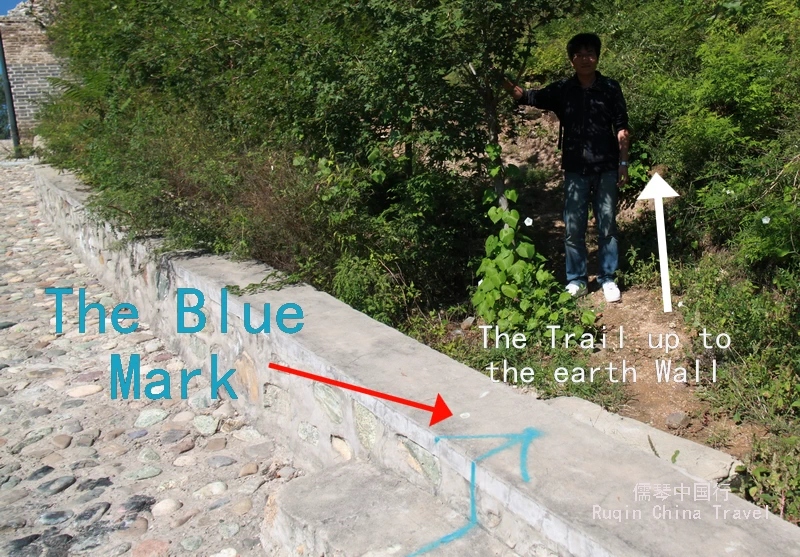
Once you’re on the trail, magic unfolds. The two ancient walls rise beside each other, telling stories of different dynasties.
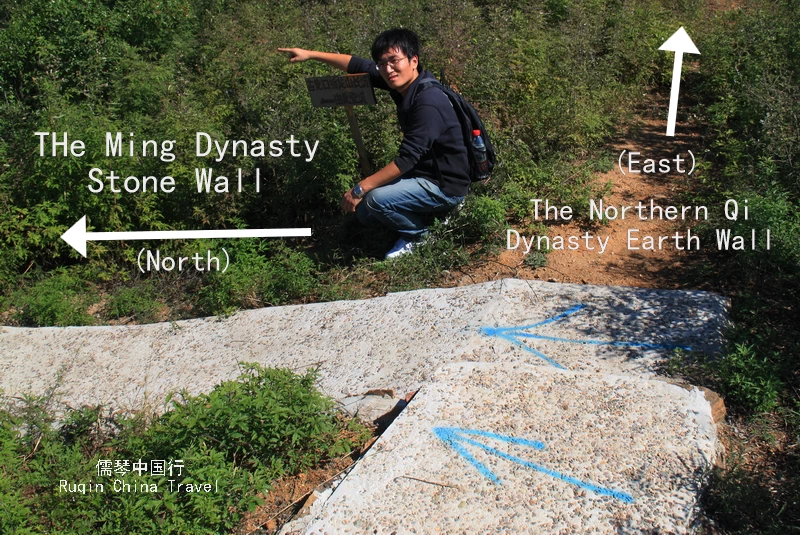
One is rugged and eroded, the other tall and angular. You’ll hike above quiet valleys and gaze out at the Wohushan Great Wall, winding like a silent guardian across distant hills.
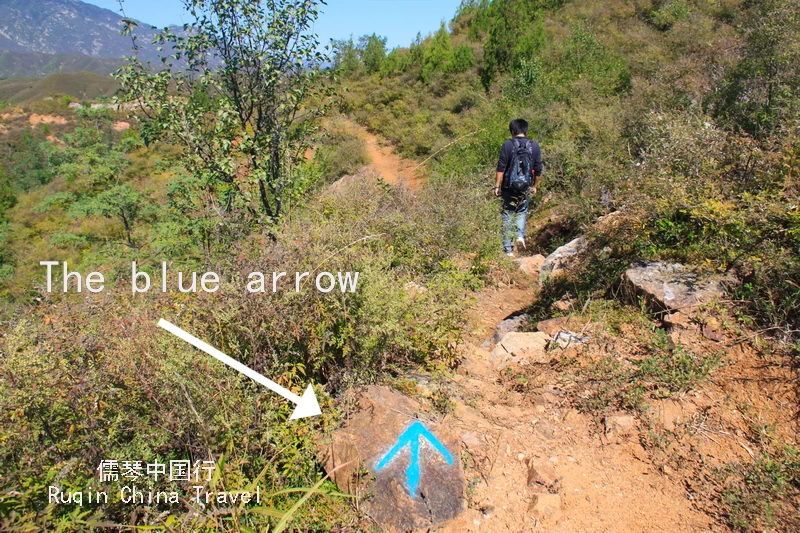
After about 30 minutes, you’ll reach the stone Ming Wall. The path becomes steeper here, with cracked bricks, loose rubble, and wild shrubs underfoot. No handrails. No stairs. Just you and the Wall.
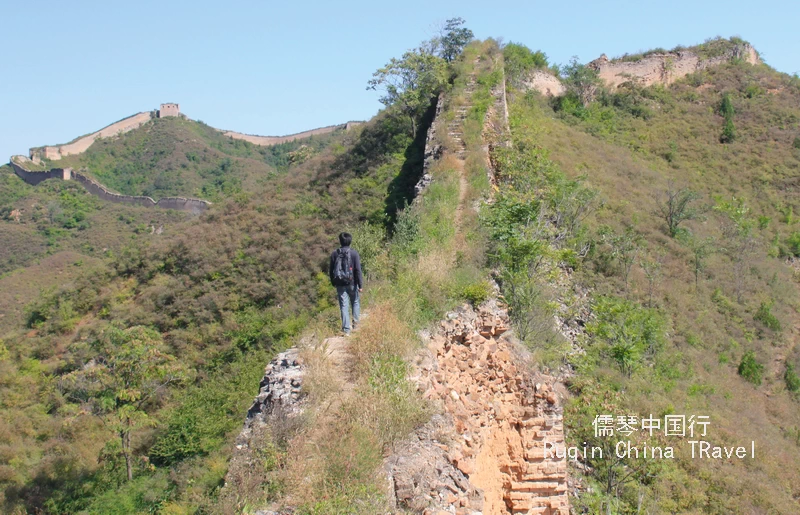
As we hike, grass pushed through ancient cracks. Trees sprouted from tower tops. Shrubs spilled across the trail like curious onlookers.

At times, you scramble up steep stone slopes, using both hands to grip loose rocks. Then you slid down dusty paths, boots crunching with each step. This section—completely unrestored—felt raw and real. No signs. No railings. Just the Great Wall, wild and unfiltered.

Eventually, you reach the General Tower. Gubeikou Town dozes in the valley. To the west, Wohushan Wall traces a jagged line into the hills. Ahead, the Panlongshan Wall stretches east like a dragon’s spine, silent and strong.

The wind sweeps past as if carrying echoes of the past. This moment—vast, breathless—makes every step worth it.

You continue toward the 24-Eye Tower, the last point before the military zone. Its 24 tiny windows once scanned for invaders. Now, they scatter soft light inside like stars across old stone. The air inside is still, sacred.

From here, the Wall is off-limits. So, you take the long way around. A hidden valley. A steep, brush-covered trail. For three hours, you climb.
It’s not easy—but if you’re up for the challenge, this route offers a raw, unforgettable encounter with history. You’ll feel like an explorer uncovering forgotten ground—because in many ways, you are.
5. Gubeikou, Jinshanling, and Simatai Great Walls
The Gubeikou, Jinshanling, and Simatai Great Walls offer distinct experiences for history buffs and adventurers alike, and they can be combined for a memorable exploration of China’s iconic heritage.
Gubeikou to Jinshanling
From the 24-Eye Tower at the end of the Gubeikou Great Wall, you can embark on another 5-km hike to Jinshanling. This strenuous full-day hike takes you through rugged terrain, ancient watchtowers, and panoramic mountain views. After completing the hike, consider staying overnight near Jinshanling for a restful experience.
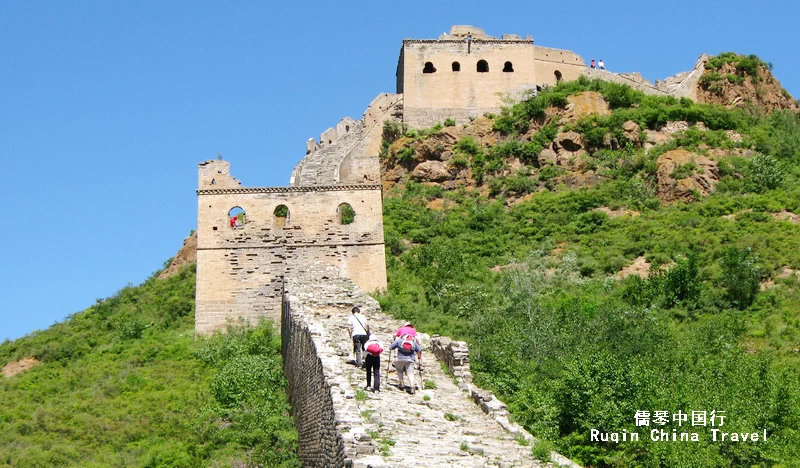
Alternatively, you can opt for a private transfer from Gubeikou to Jinshanling, then enjoy a 2-3 hour hike on Jinshanling’s partially restored Wall. Following your trek, arrange a transfer back to Gubeikou Railway Station to return to Beijing.
Gubeikou to Simatai
After exploring Gubeikou’s wild and scenic Wall, take a private transfer to Simatai Great Wall and the nearby Gubei Water Town.
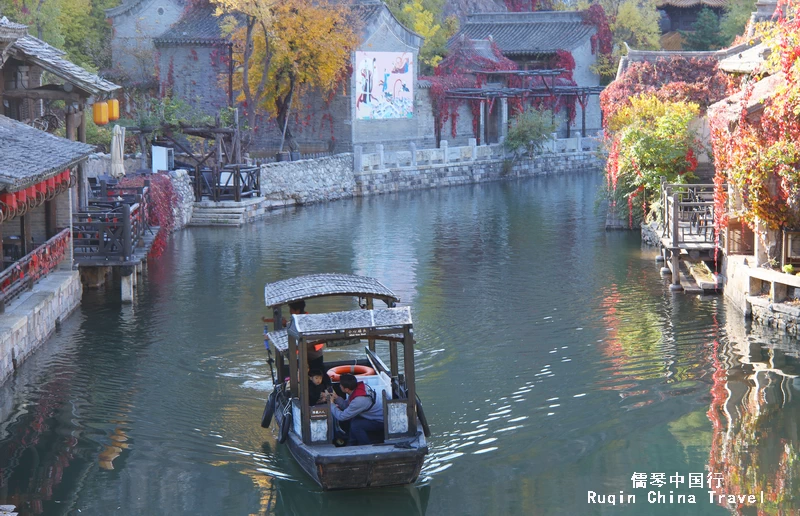
Simatai offers a stunning contrast with its steep climbs and illuminated night walks, blending historic charm with modern accessibility.
6. How to Get Back to Beijing (Return Trip)
This is the part people often underestimate. Gubeikou is peaceful, but it’s not a place you want to “figure out later.”
If you came by private car / tour
- Agree on a clear meeting point before you start hiking.
- Then message your driver 20–30 minutes before you finish.
- Meanwhile, keep a buffer for traffic once you re-enter Beijing.
If you came by train (S5) + transfer
- Check the last train time earlier in the day. Don’t wait until evening.
- Next, leave the Wall with extra time for the transfer back to the station.
- If you miss the last train, you may need a taxi or to stay overnight nearby.
If you used public transport + transfers
- Start heading back before it gets late. Transfers become stressful after dark.
- In addition, lines can form on weekends, so avoid cutting it close.
- If things feel uncertain, take a taxi to the station first, then continue to Beijing.
Ruqin tip: If you’re hiking longer than expected (it happens!), prioritize getting back to the village/station before sunset.
By the time you finish walking the ridgelines at Gubeikou, you’ll probably understand why this section stays in the memory long after the trip ends. The Wall here isn’t polished or crowded. It’s weathered, quiet, and deeply connected to the mountains around it. In many ways, this is the Great Wall that travelers imagine before they ever come to China.
If you plan the transport carefully and choose a route that matches your hiking comfort level, visiting Gubeikou from Beijing is surprisingly manageable. Once you’re up on the Wall, the logistics fade away. What stays with you are the long mountain views, the crumbling watchtowers, and the feeling of walking through real history rather than a restored monument.
About the Author
Ruqin is the founder of Ruqintravel.com and has spent more than four decades working in China’s travel industry. Drawing on hands-on experience in cities like Beijing and Hangzhou, he personally researches and updates each guide to help international travelers navigate China with confidence.
Further Reading
Gubeikou Railway Station Beijing: Maps, Tickets, Times & Tips
Dongzhimen Public Transport Hub: Your Gateway to the Great Wall
How to Hike the Great Wall from Gubeikou to Jinshanling
How to Get to Mutianyu Great Wall from Beijing: Bus, Shuttle & Private Car
How to Get to Badaling Great Wall from Beijing: Train, Bus 877 & Shuttle
How to Get to Jinshanling Great Wall from Beijing: Bus, Train & Car
How to Get to Simatai Great Wall from Beijing: Direct Bus, S5 Train & Car