
Itinerary designed by Ruqin
Last updated: August 21, 2026
Overview
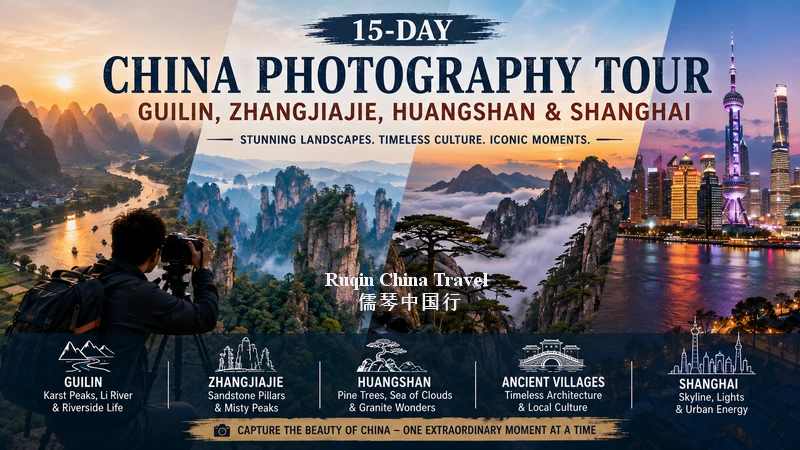
China gives photographers an extraordinary range of subjects. Misty rivers, rice terraces, sandstone peaks, old villages and futuristic skylines can all appear within one journey.
For a flagship photography itinerary, I would begin in Guilin, continue through Zhangjiajie and Huangshan, and finish in Shanghai. The route moves from soft southern landscapes toward increasingly dramatic mountains, then ends with urban photography.
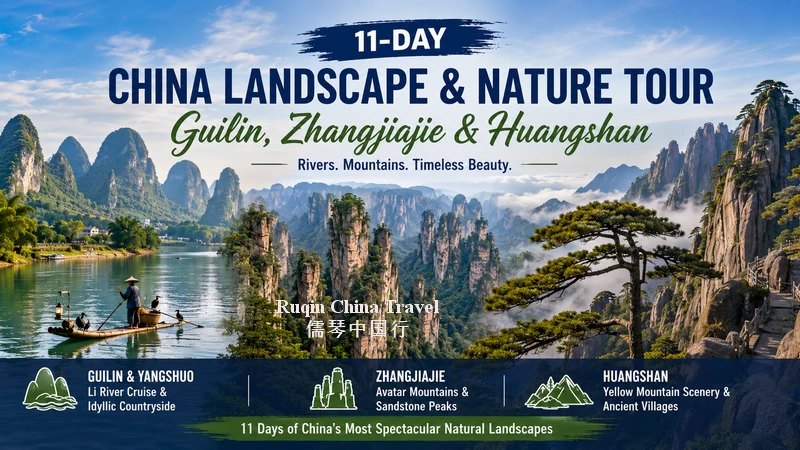
Guilin and Yangshuo offer river bends, karst peaks, reflections and rural life. Longji adds geometric rice terraces and minority villages. Zhangjiajie brings vertical sandstone landscapes, while Huangshan offers the pines, granite peaks and sea of clouds associated with classical Chinese landscape imagery.
Finally, Shanghai changes the visual language completely. After almost two weeks of mountains and villages, the Bund and Pudong give you architecture, reflections, street scenes and blue-hour cityscapes.
Who Is This Tour For?
I designed this route for photographers rather than only professional photographers.
You can travel with a DSLR, mirrorless camera or even a good smartphone. What matters more is your willingness to start early, wait for light and occasionally return to the same location twice.
The physical level is moderate. However, photographers often carry more weight and spend longer standing on mountain viewpoints than ordinary sightseers.
At-a-Glance Route
| Day | Destination | Main Photography Focus | Overnight |
|---|---|---|---|
| Day 1 | Guilin | Arrival, city lakes, blue hour | Guilin |
| Day 2 | Guilin → Xingping | Li River, Xianggong Hill, river portraits | Xingping/Yangshuo |
| Day 3 | Yangshuo | Karst countryside, Yulong River, rural life | Yangshuo |
| Day 4 | Yangshuo → Longji | Rice terraces, villages, sunset | Longji |
| Day 5 | Longji | Sunrise, terraces, local life | Longji |
| Day 6 | Longji → Guilin → Zhangjiajie | High-speed train, transfer day | Wulingyuan |
| Day 7 | Zhangjiajie | Yuanjiajie, sandstone pillars | Wulingyuan |
| Day 8 | Zhangjiajie | Tianzi Mountain, quieter viewpoints | Wulingyuan |
| Day 9 | Zhangjiajie | Tianmen Mountain, cliffs, blue hour | Zhangjiajie |
| Day 10 | Zhangjiajie → Changsha → Huangshan | Full rail transfer | Huangshan |
| Day 11 | Huangshan | Mountain ascent, pines, sunset | Huangshan Mountain |
| Day 12 | Huangshan | Sunrise, clouds, granite peaks | Huangshan Mountain |
| Day 13 | Huangshan → Hongcun | Dawn mountain shoot, ancient village | Hongcun/Huangshan |
| Day 14 | Huangshan → Shanghai | Hongcun morning, train, Shanghai night | Shanghai |
| Day 15 | Shanghai | Bund dawn, street photography, skyline | Departure |
Route: Guilin → Yangshuo → Longji → Zhangjiajie → Huangshan → Shanghai
Duration: 15 days / 14 nights
Photography level: Enthusiast to advanced
Physical level: Moderate
Main subjects: Landscape, villages, environmental portraits, architecture and cityscapes
Best seasons: April–May and September–November
Detailed 15-Day Photography Itinerary
Day 1 – Arrive in Guilin → Transfer to Xingping / Xianggong Hill Area
Arrive in Guilin, then travel directly to Xingping or a guesthouse near Xianggong Hill. Have an early dinner and prepare your camera gear.
Day 2 – Xianggong Hill Sunrise → Xingping → Li River Photography
Wake around 4:30–5:00 am, depending on season. Drive a short distance to the Xianggong Hill entrance, then climb about 15–20 minutes to the viewing platform before sunrise.
This is one of the classic elevated viewpoints over the Li River. From above, the river bends between layers of karst peaks.
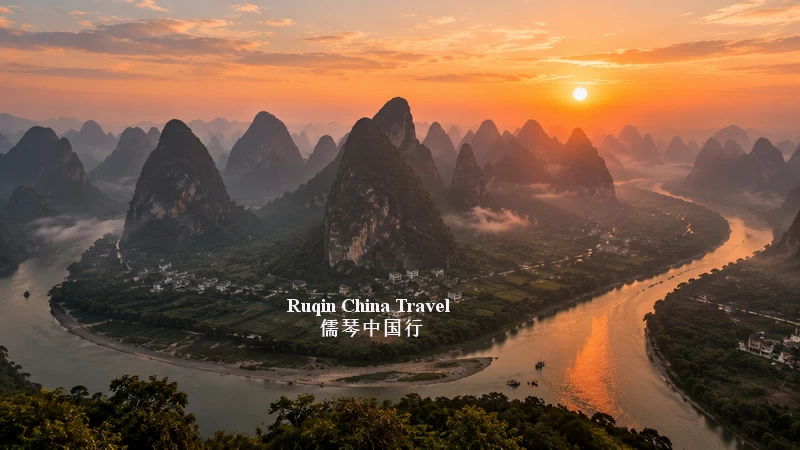
Sunrise viewed from Xinggong Hill
Sunrise conditions vary enormously.
Some mornings bring clear light. Others bring mist drifting between the hills. For photographers, both can work.
A current Guilin photography guide also highlights Xianggong Hill and the Li River area among the region’s main sunrise locations.
Morning – Breakfast & Rest
After sunrise, have breakfast.
Then take a break during the harder midday light.
This is one difference between a photography tour and a conventional sightseeing trip. I do not see much value in carrying a tripod through harsh noon light simply because the schedule has an empty hour.
Afternoon – Xingping
Explore the countryside around Xingping.
Photograph the Li River from lower viewpoints, then walk through nearby streets and villages.
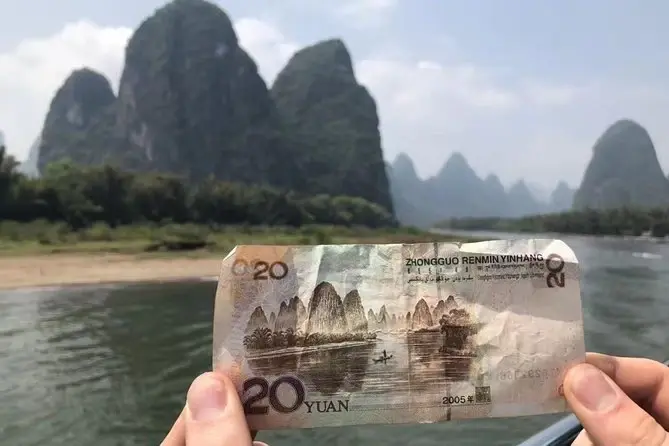
Explore the countryside around Xingping
The river provides endless foreground possibilities: boats, reflections, trees and karst mountains.
Sunset & Dusk – Li River
Return to the riverside for sunset.
Some specialist photography tours arrange portrait sessions with veteran cormorant fishermen and traditional lamps. If you choose such a session, I would describe it accurately as an arranged photographic portrait, rather than suggesting it represents everyday fishing life today. Such staged sessions remain a common element of Guilin photography itineraries.
Stay through blue hour if conditions remain good.
Overnight: Xingping or Yangshuo
After the shoot, have breakfast and continue with Xingping and Li River photography.
Day 3 – Yangshuo Countryside
Sunrise – Karst Reflections
Start beside a quieter river or countryside viewpoint.
Yangshuo works well for reflections because water, rice fields and karst hills often share the same frame.
Bring a tripod if you enjoy longer exposures.
However, do not become too attached to one planned composition. Morning mist can completely change the landscape.
Mid-Morning – Country Roads and Villages
After breakfast, explore villages and agricultural areas.
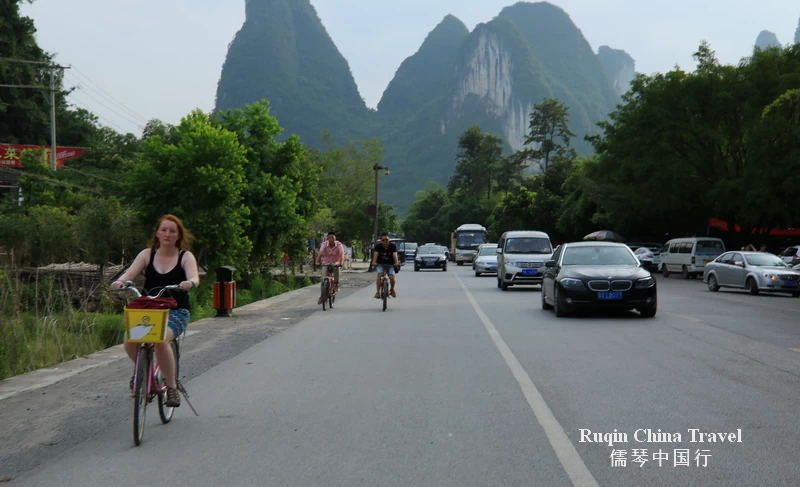
Explore villages and agricultural areas
This is a good day for environmental photography rather than only grand landscapes.
Look for farmers working in fields, old houses, bicycles, market activity and everyday rural scenes.
Always ask permission before making close portraits.
Afternoon – Rest and Scout
Use part of the afternoon to rest.
Later, scout your sunset location.
Photography trips become exhausting when every hour is filled. A midday break helps you stay focused during the best light.
Sunset – Yulong River Countryside
Finish around the Yulong River.
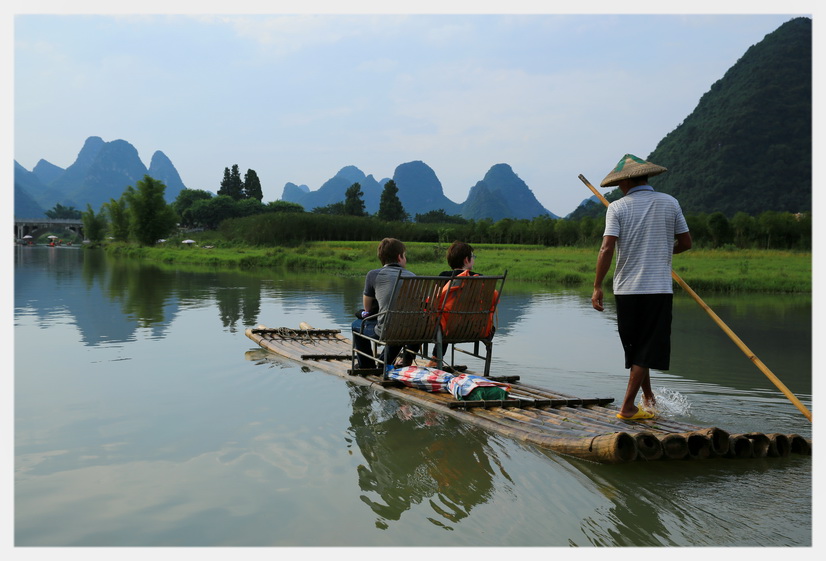
Yulong River Countryside
The softer landscape here contrasts nicely with tomorrow’s geometric rice terraces.
Overnight: Yangshuo
Day 4 – Yangshuo to Longji Rice Terraces
Morning – Transfer to Longji
Leave Yangshuo for the Longji Rice Terraces.
The terraces provide one of southern China’s strongest examples of people shaping a mountain landscape over generations.
Choose your village base carefully.
For photography, staying inside the terrace area makes much more sense than returning to Guilin that night.
Afternoon – Walk Through the Terraces
After checking into your guesthouse, explore the trails.
Do not immediately head for the most famous viewpoint.

Walk Through the Terraces
Walk first.
Look for small patterns: irrigation channels, people working, wooden houses, terraces curving around slopes and changing textures in the fields.
Sunset – Longji
Reach your chosen viewpoint well before sunset.
Tripods tend to gather near the obvious positions, so arriving early matters.
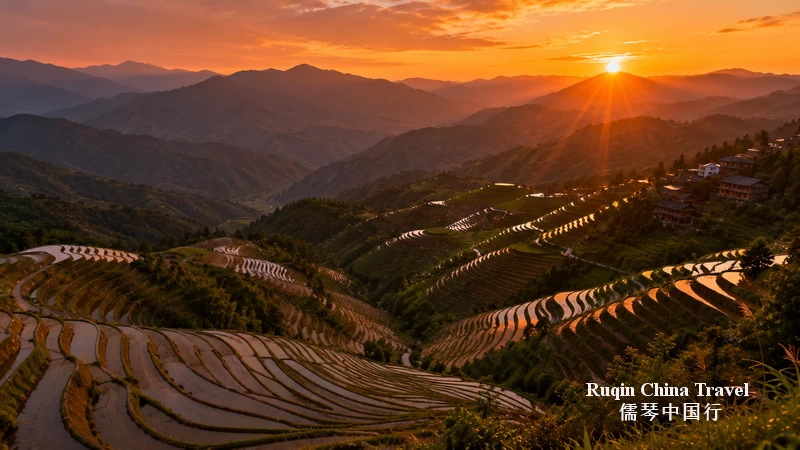
Sunset – Longji
Then stay after the sun disappears.
Sometimes the best color develops ten or fifteen minutes later.
Overnight: Longji Rice Terraces
Day 5 – Longji Sunrise & Village Photography
Before Sunrise – Terrace Viewpoint
Wake early and return to the terraces.
Longji changes dramatically by season. Spring can bring water-filled reflective paddies, summer brings green fields, and harvest periods create warmer golden tones.
Current specialist photography guidance particularly highlights Longji during the autumn harvest season.
Morning – Village Life
After breakfast, explore the village.
Use a smaller camera setup if possible. Large lenses and tripods can create distance when photographing people.
Ask before making portraits, especially indoors.
Environmental portraits often work better here than tightly framed faces. Include the wooden houses, clothing, tools or terraces around the subject.
Afternoon – Weather Buffer
I deliberately leave this afternoon flexible.
If yesterday’s sunset failed, try another viewpoint.
If the morning light was excellent, rest and review your images.
A photography itinerary needs this kind of breathing room.
Sunset – Second Terrace Shoot
Photograph from a different elevation or direction.
Do not repeat yesterday’s composition unless the weather has changed enough to justify it.
Overnight: Longji
Day 6 – Longji → Guilin → Zhangjiajie
Today is a full transportation day.
Return toward Guilin and take a direct train to Zhangjiajie West Railway Station.
Direct rail services between Guilin and Zhangjiajie take roughly seven hours, depending on the service. This connection is practical, but it is too long to combine with serious photography on the same day.
After arriving, transfer to Wulingyuan.
Stay close to the park entrance.
Clean lenses, charge batteries and prepare tomorrow’s equipment.
Overnight: Wulingyuan
Day 7 – Zhangjiajie: Yuanjiajie
Early Morning – Enter the Park
Start with the first practical park entry.
Photography in Zhangjiajie depends heavily on weather.
Clear mornings produce depth and detail. Misty mornings create separation between the sandstone pillars and can make the landscape appear almost unreal.
Zhangjiajie photography itineraries commonly prioritize Yuanjiajie and quieter upper viewpoints rather than trying to visit every attraction in one day.
Morning – Yuanjiajie
Use the Bailong Elevator or other scenic transport to reach the upper areas efficiently.
Photograph the sandstone columns around Yuanjiajie.
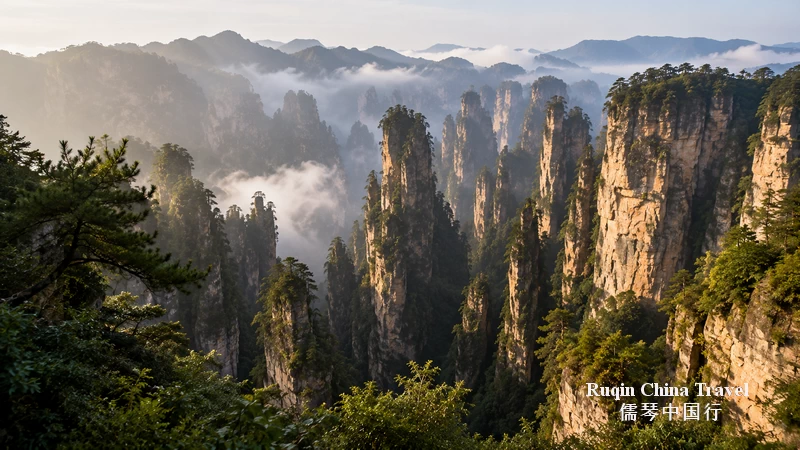
Photograph the sandstone columns around Yuanjiajie
Avoid spending every minute at the single most famous “Avatar” viewpoint.
Move farther along the paths.
Different foreground trees, cliffs and layers often produce stronger photographs than the postcard angle.
Midday – Rest
Have lunch and rest when the light becomes harsh.
Weather may change during the afternoon.
Keep watching the clouds.
Late Afternoon – Second Viewpoint
Return to another high viewpoint for evening light.
Stay flexible rather than locking yourself into one location before seeing conditions.
Overnight: Wulingyuan
Day 8 – Tianzi Mountain & Quieter Zhangjiajie
Morning – Tianzi Mountain
Spend the morning around Tianzi Mountain.
Here, the compositions differ from Yuanjiajie. You often photograph repeated layers of sandstone peaks disappearing into distance.
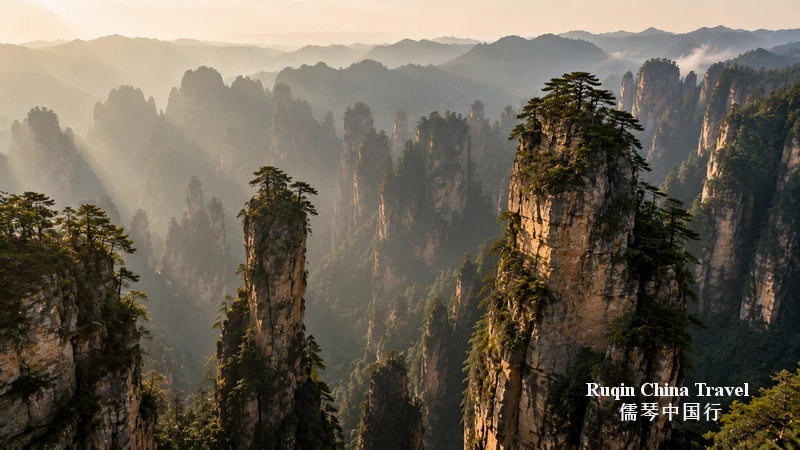
Morning – Tianzi Mountain
A longer lens can be surprisingly useful.
Instead of trying to capture everything with a wide angle, isolate individual ridges, trees or shafts of light.
Afternoon – Quieter Photography Areas
Use the afternoon for quieter areas according to current access and weather.
Specialist Zhangjiajie photo itineraries often include places such as Yangjiajie or Laowuchang because they provide less conventional viewpoints.
However, access arrangements can change.
Follow current park rules rather than an old photographer’s GPS location.
Evening – Image Review
Return early enough to rest.
Back up your photographs tonight.
After a week of shooting, do not keep all your files on one memory card.
Overnight: Wulingyuan
Day 9 – Tianmen Mountain
Morning – Tianmen Mountain
Move to downtown Zhangjiajie and take the cableway toward Tianmen Mountain.
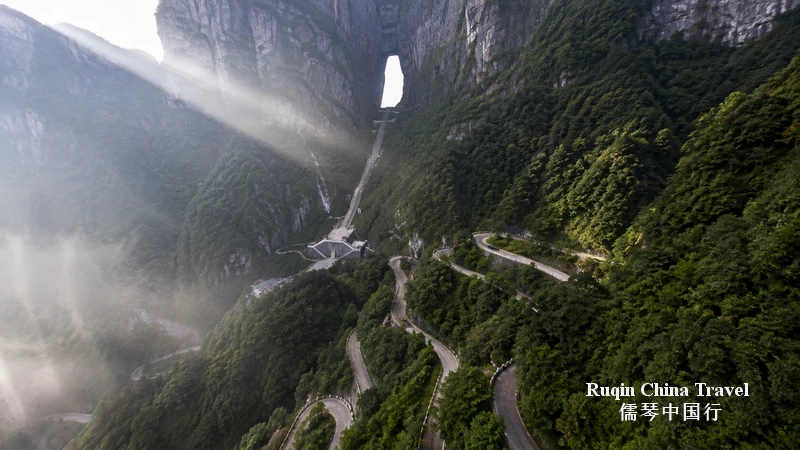
Morning – Tianmen Mountain
Today gives you different photographic subjects: cliffs, roads, Tianmen Cave, mountain temples and the city far below.
The winding Tongtian Avenue can make an interesting graphic composition from above.
Midday – Cliff Walks
Use the cliffside paths for wider landscape work.
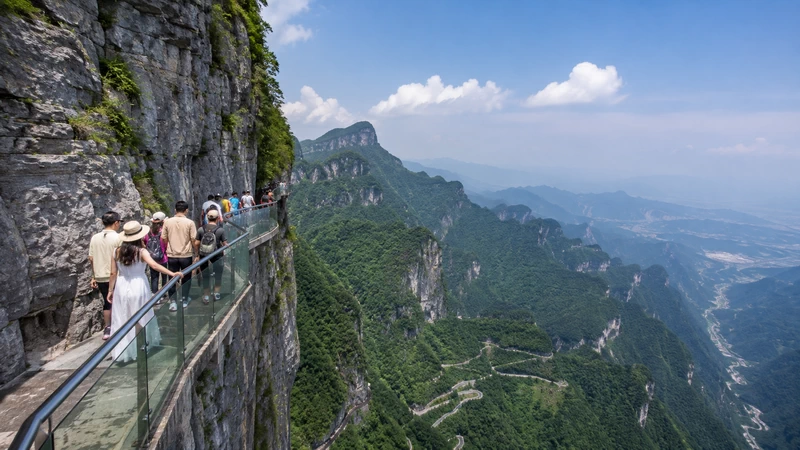
Use the cliffside paths for wider landscape work
If you carry a tripod, be considerate on narrow walkways.
Do not block other visitors.
Afternoon – Tianmen Cave
Continue toward Tianmen Cave.
Use people for scale.
Without a human figure, photographs often fail to communicate how enormous the natural arch really is.
Evening – Downtown Zhangjiajie
Stay near Zhangjiajie West Railway Station or downtown.
Pack tonight.
Tomorrow is the longest transfer day.
Overnight: Zhangjiajie
Day 10 – Zhangjiajie → Changsha → Huangshan
There is no practical direct high-speed train for this route, so I would make the connection through Changsha South Railway Station.
Take an early train from Zhangjiajie West → Changsha South, then continue from Changsha South → Huangshan North.
Treat this as a full travel day.
Do not book the two trains with an extremely tight connection.
Photographers carry more luggage than ordinary travelers. Give yourself enough time to find the onward gate without running through the station with a tripod.
After reaching Huangshan North, transfer toward Tangkou, at the foot of Huangshan.
Have dinner and sleep early.
Overnight: Tangkou
Day 11 – Huangshan: Ascend for Sunset
Morning – Enter Huangshan
Leave large luggage at your mountain-base hotel and carry only what you need for two nights.
Take the scenic bus and cable car up.
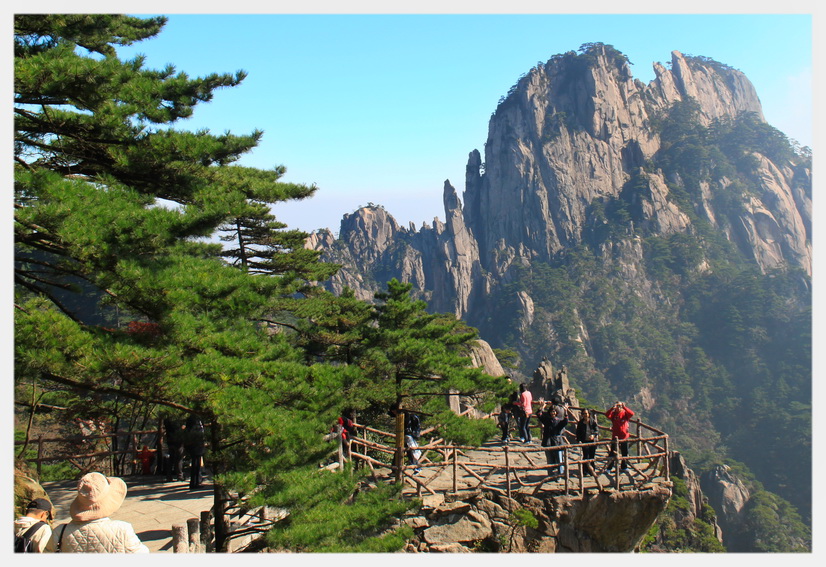
Morning – Enter Huangshan
For this photography itinerary, I strongly prefer using the cable car.
You are here to photograph Huangshan, not exhaust yourself climbing thousands of steps with heavy camera equipment.
Afternoon – Huangshan Pines & Granite Peaks
Start working the landscape after reaching the upper mountain.
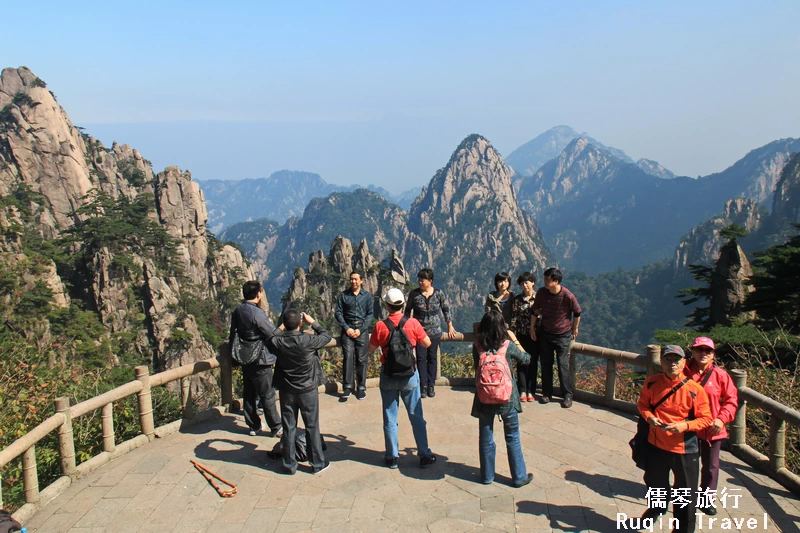
Afternoon – Huangshan Pines & Granite Peaks
Huangshan gives you a different visual language from Zhangjiajie.
Look for twisted pine trees against granite peaks, diagonal ridges, isolated trees and layers of cloud.
The mountain has long been closely associated with the visual tradition of Chinese landscape art.
Sunset
Choose a sunset viewpoint close enough to your hotel that you can return safely after the light fades.
Do not hike an extra hour in darkness just because a famous photographer once made an image there.
Safety comes first.
Overnight: Huangshan Mountain
Day 12 – Huangshan Sunrise & Sea of Clouds
Before Dawn – Sunrise
Wake early.
Bring warm clothing even outside winter. Standing still with a tripod can feel much colder than walking.
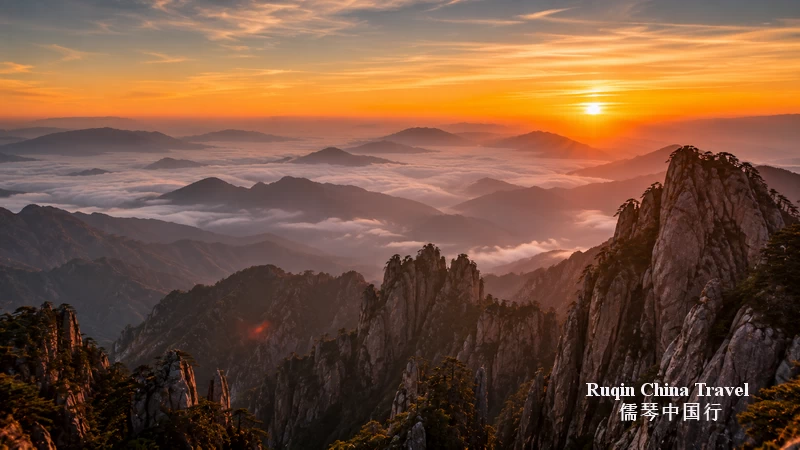
Huangshan Sunrise & Sea of Clouds
Huangshan is especially prized by photographers for its combination of granite peaks, pine trees and potential sea of clouds. Photography tours commonly schedule both sunrise and sunset because conditions can change quickly.
Morning – Mountain Photography
After sunrise, continue shooting before breakfast if the light remains good.
Later, walk toward additional viewpoints.
Use the midday period for lunch, rest and image review.
Afternoon – Weather Flexibility
Return to photography in the later afternoon.
If clouds begin moving across the peaks, stay ready.
Huangshan can produce completely different photographs within ten minutes.
Second Sunset
Use another sunset position tonight.
Two nights on the mountain substantially improve your chances of getting useful light.
That is why I would not reduce Huangshan to a one-night stop on a dedicated photography tour.
Overnight: Huangshan Mountain
Day 13 – Huangshan Sunrise, Descent & Hongcun
Early Morning – Final Mountain Shoot
Make one final sunrise attempt.
If conditions are poor, sleep a little longer.
Photography should not become punishment.
Morning – Descend
After breakfast, descend by cable car and retrieve your larger luggage.
Then continue toward Hongcun Ancient Village.
Afternoon – Hongcun
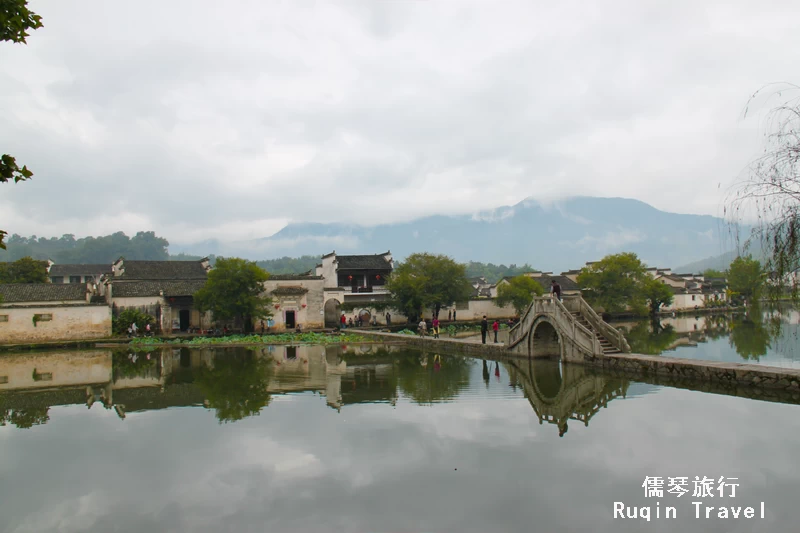
Hongcun gives you a new subject after several mountain days.
Afternoon – Hongcun
Photograph whitewashed houses, black-tiled roofs, ponds, narrow lanes and surrounding hills.
Avoid photographing only Moon Pond.
Walk into the lanes and look for doorways, reflected architecture, residents and small domestic details.
Evening – Blue Hour
Stay into the evening after many day visitors leave.
Old villages often become much easier to photograph once the main crowds disappear.
Overnight: Hongcun or Huangshan area
Day 14 – Hongcun Morning → Shanghai
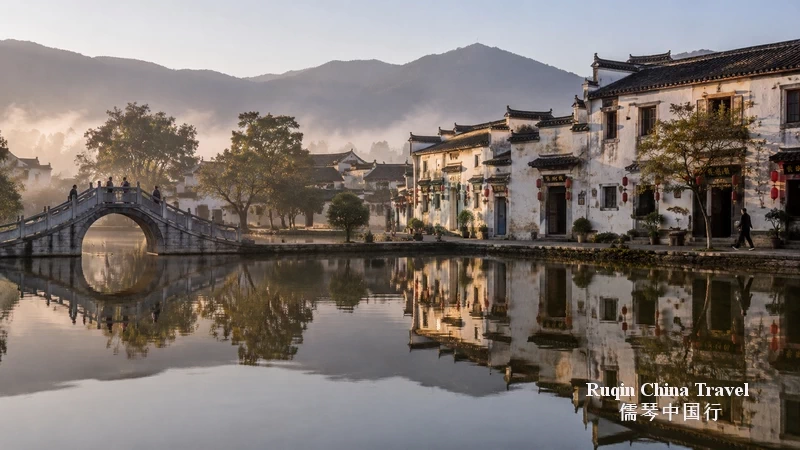
Early Morning – Hongcun Before the Crowds
Go out before breakfast.
This is the best time for village photography.
Early Morning – Hongcun Before the Crowds
Residents begin daily routines, water becomes quieter and tour groups have not yet filled the lanes.
Be respectful around private homes.
A long lens can help you photograph small scenes without intruding.
Late Morning – Depart for Huangshan North
After breakfast, leave Hongcun and travel toward Huangshan North Railway Station.
Take a high-speed train to Shanghai.
Huangshan works particularly well near the end of this itinerary because Shanghai is an easy onward gateway.
Evening – Shanghai Bund Blue Hour
After checking into your hotel, head toward the Bund if you still have energy.
Do not worry about exploring.
Set up for one simple blue-hour cityscape.
After thirteen days of rural landscapes, Shanghai’s illuminated skyline should feel visually shocking.
That contrast is exactly what I want.
Overnight: Shanghai
Day 15 – Shanghai Street & Cityscape Photography
Before Sunrise – The Bund
Start before dawn.
Photograph Pudong from the Bund as the city changes from darkness to morning light.

Photograph Pudong from the Bund as the city changes from darkness to morning light
The river provides reflections, boats and moving foreground subjects.
Use a tripod carefully and keep pedestrian paths clear.
Morning – Historic Shanghai
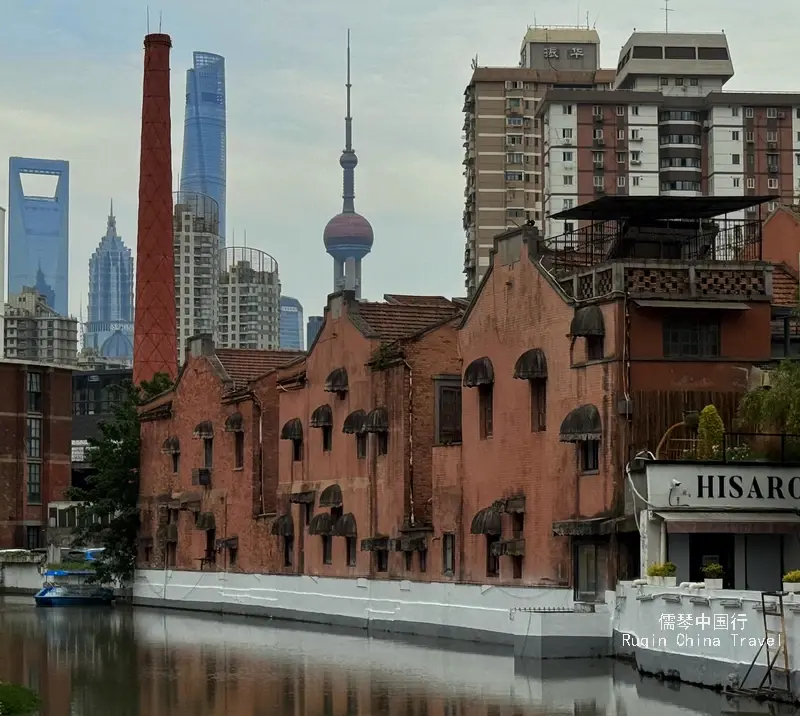
After breakfast, walk around older streets and neighborhoods.
Morning – Historic Shanghai
Look for architectural details, street life and the contrast between historic façades and modern towers.
This is a good time to switch to a lighter camera setup.
Leave the large landscape backpack at your hotel.
Afternoon – Rest
Return to your hotel during the hardest afternoon light.
Back up your photographs and prepare for the final shoot.
Sunset & Blue Hour – Pudong and the Huangpu River
For the final evening, choose either the Bund, Pudong or another elevated city viewpoint.
Stay through blue hour.

Sunset & Blue Hour – Pudong and the Huangpu River
Do not leave immediately after sunset.
Shanghai often photographs best when the sky still carries some blue but the city lights have already appeared.
Then enjoy your final dinner.
Your photography journey ends here.
Photography Rhythm: Why This Tour Is Different
A normal tour often follows:
Breakfast → attractions all day → dinner.
A photography tour works better like this:
Pre-dawn departure → sunrise → breakfast → morning photography → midday rest → location scouting → sunset → blue hour → dinner.
This rhythm is widely used in specialist China photography itineraries because the best light often comes early and late, while weather flexibility matters more than completing a sightseeing checklist.
I would not follow this schedule rigidly every day. However, it should guide the tour.
Tickets / Transport / What to Bring
Long-Distance Transport
The route is:
Guilin → Zhangjiajie: direct high-speed train, around seven hours on suitable services.
Zhangjiajie → Huangshan: high-speed train via Changsha South, requiring two separately booked rail legs.
Huangshan → Shanghai: direct high-speed rail is the most practical option.
Book the Zhangjiajie–Changsha–Huangshan connection carefully. Leave a comfortable transfer window at Changsha South.
Camera Gear
You do not need to carry every lens you own.
For most travelers, I would suggest:
- Camera body
- Wide-angle zoom
- Standard zoom
- Telephoto zoom
- Lightweight tripod
- Circular polarizer
- ND filters if you use them
- Spare batteries
- Several memory cards
- Lens cloth
- Rain cover
- Remote shutter release
- Power bank
- Portable SSD or another backup system
A telephoto lens deserves special mention.
Many photographers arrive in Zhangjiajie and Huangshan with only ultra-wide lenses. Yet compressed layers of mountains often work beautifully at longer focal lengths.
Protecting Your Equipment
Humidity can become a problem in Guilin and Zhangjiajie.
Carry lens cloths and allow equipment time to adjust when moving between air-conditioned rooms and humid outdoor conditions.
A simple waterproof camera cover is also useful.
Mountain rain can arrive quickly.
Do not assume a weather-sealed camera means you can leave it exposed indefinitely.
Luggage Strategy
Travel with one normal suitcase plus one dedicated photography backpack if possible.
On Huangshan, leave your large suitcase at the mountain base and carry only essential equipment, clothing and overnight items.
Every unnecessary kilogram becomes noticeable after hundreds of stone steps.
This is also why I recommend cable cars rather than walking up the mountain with full photography equipment.
Tripod Etiquette
Popular Chinese sunrise viewpoints can become crowded.
Arrive early, keep tripod legs compact and avoid occupying more space than you need.
Do not place a tripod in the middle of a narrow path.
Most importantly, do not assume that carrying expensive equipment gives you priority over other visitors.
Everyone came for the view.
Photographing People
Ask permission before taking close portraits.
This is especially important in villages, markets and minority communities.
A smile and a simple gesture toward your camera often works even when you share no language.
Avoid treating residents as photographic props.
If a portrait session has been specifically arranged and paid for, describe it that way. Authenticity matters.
Best Time for This China Photography Tour
For the full route, I particularly like late September through October.
Longji can show harvest colors, Zhangjiajie often has comfortable walking temperatures, and Huangshan may offer autumn foliage and atmospheric cloud conditions. Specialist China photography itineraries also commonly favor autumn for this combination.
April and May are another good choice.
Guilin and Longji become greener, while spring moisture can create atmospheric mist around the karst hills.
However, rain becomes more likely.
For photographers, that is not necessarily bad.
What If the Weather Is Bad?
Do not automatically call a cloudy day a bad photography day.
Guilin often becomes more atmospheric in mist.
Zhangjiajie’s pillars gain depth when clouds move between them.
Huangshan can become extraordinary when peaks appear and disappear through cloud.
The real problem is not clouds. It is dangerous weather.
During thunderstorms, strong winds or unsafe mountain conditions, follow local restrictions and change the plan.
Who Is This Photography Tour Best For?
This itinerary works well for enthusiastic amateurs, serious hobbyists and experienced photographers.
You should be comfortable carrying your own equipment and walking on mountain paths and stairs.
However, you do not need professional gear.
A traveler who understands light and waits patiently with a phone may produce a more memorable image than someone carrying three expensive camera bodies.
Ruqin’s Trip Design Note
For the flagship Photography Tours in China, I wanted the journey to show different ways China can look through a camera.
That is why I would not simply combine five famous mountains.
Guilin begins softly, with rivers, reflections and karst hills. Longji adds patterns shaped by people and agriculture.
Then Zhangjiajie turns the landscape vertical.
Huangshan changes it again. Granite, old pines, mist and cloud bring you closer to the visual language of traditional Chinese landscape painting.
Finally, Shanghai breaks the pattern completely.
After two weeks of mountains and villages, you finish with glass towers, river reflections, street life and blue-hour city lights.
I have also included two deliberately long transfer days. A serious photography itinerary should be honest about China’s distances.
Most importantly, I give Zhangjiajie and Huangshan more than one chance at good light.
You cannot schedule mist, sunrise or a sea of clouds.
You can only give yourself enough time to be there when they happen.
Plan More of Your China Trip
This 15-day photography route can stand alone or become part of a longer China journey. Guilin connects naturally with Guangzhou and Hong Kong at the beginning, while Shanghai provides one of China’s easiest international departure points at the end.
If you want to add a cultural photography extension, Beijing and the Great Wall work particularly well before Guilin. For a deeper landscape photography trip, Yuanyang Rice Terraces in Yunnan can also be added as a separate extension rather than squeezing another long transfer into these 15 days