
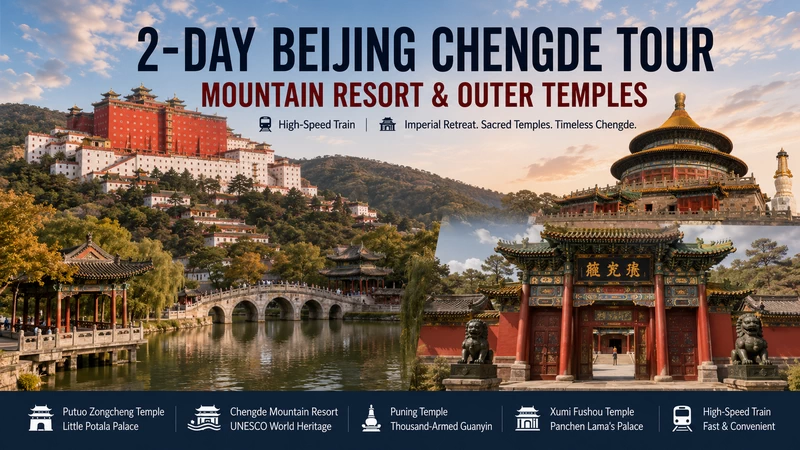

Itinerary designed by Ruqin
Last updated: August 15, 2026
2-Day Beijing to Chengde Tour Overview
Chengde is one of the easiest and most rewarding overnight side trips from Beijing. High-speed trains link Beijing with Chengde in about an hour on many services.
The city once served as the summer retreat of Qing emperors. Today, its Mountain Resort and surrounding imperial temples form one of northern China’s most impressive historical landscapes.
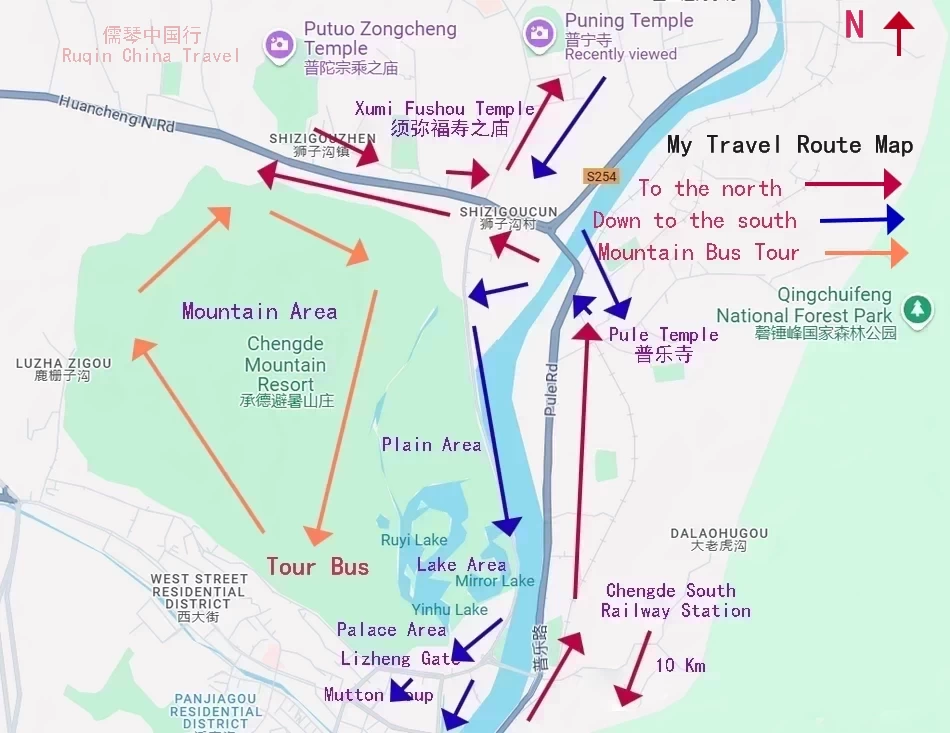
The Tourist Map of Chengde
I would divide this trip into two themes. Day 1 focuses on the Mountain Resort and the Little Potala Palace, while Day 2 explores Puning Temple and Xumi Fushou Temple before returning to Beijing.
This pace works well for first-time foreign visitors. You see the main sights without trying to visit every royal temple in Chengde.
Who Is This Side Trip For?
I recommend this itinerary for travelers interested in Qing imperial history, Tibetan Buddhist architecture, Chinese gardens, and UNESCO heritage.
It also suits travelers who want a quieter contrast with Beijing. Chengde feels smaller, greener, and more relaxed.
The journey is straightforward by high-speed train. Once you arrive, buses, taxis, and ride-hailing make the major sights relatively easy to reach.
Beijing to Chengde 2-Day Tour at a Glance
Day 1 — Beijing → Chengde → Little Potala Palace → Mountain Resort
Beijing Chaoyang → High-Speed Train → Chengde South → Putuo Zongcheng Temple → Lunch → Mountain Resort → Chengde Old Center → Overnight
Suggested departure: Around 7:00–8:00 am
Train journey: Around 1 hour on many services
Main sights: Putuo Zongcheng Temple and Mountain Resort
Overnight: Near Lizheng Gate
Day 2 — Puning Temple → Xumi Fushou Temple → Beijing
Breakfast → Puning Temple → Xumi Fushou Temple → Lunch → Free Time → Chengde South → High-Speed Train → Beijing
Main sights: Puning Temple and Xumi Fushou Temple
Suggested return: Late afternoon or early evening
Arrival in Beijing: Evening
Day 1: Beijing to Chengde & Imperial Chengde
6:30–7:00 am — Leave Your Beijing Hotel
Start early.
For most travelers, Beijing Chaoyang Railway Station is the most practical departure point for high-speed trains to Chengde South.
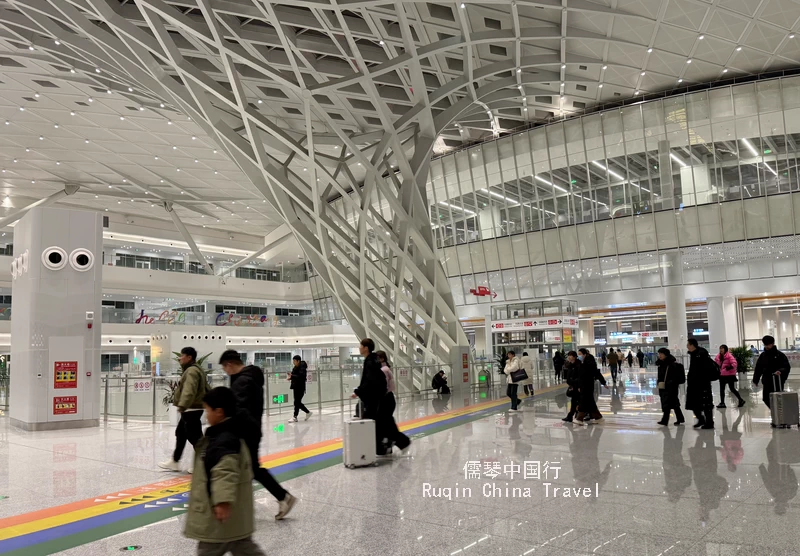
Beijing Chaoyang Railway Station
Beijing Subway Line 3 now connects directly with Beijing Chaoyang Station. This makes the station much easier to reach than it once was.
Allow enough time for the subway journey, station security, and boarding.
I recommend reaching the railway station around 45–60 minutes before departure.
Keep your passport easily accessible.
Around 7:30–8:00 am — High-Speed Train to Chengde
Take a morning high-speed train from Beijing Chaoyang Railway Station to Chengde South Railway Station (承德南站).
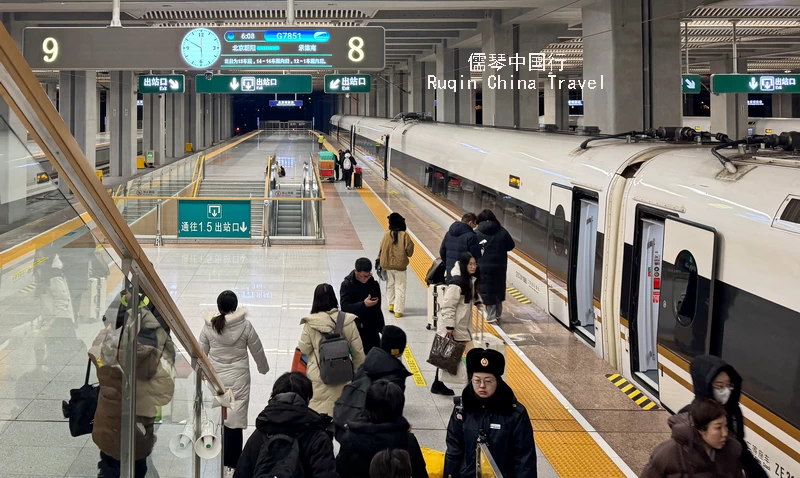
The earliest train from Beijing to Chengde departs from Chaoyang Station.
Many services cover the route in roughly one hour.
The journey changes quickly.
Beijing’s dense urban landscape gives way to open hills and northern mountain scenery. Before long, you are already approaching Chengde.
Train schedules change, so choose the morning service that best suits your dates.
For this itinerary, arriving in Chengde before 9:30 am works well.
Around 8:30–9:00 am — Arrive at Chengde South Station
Chengde South Railway Station lies about 14 kilometers from the central sightseeing area.
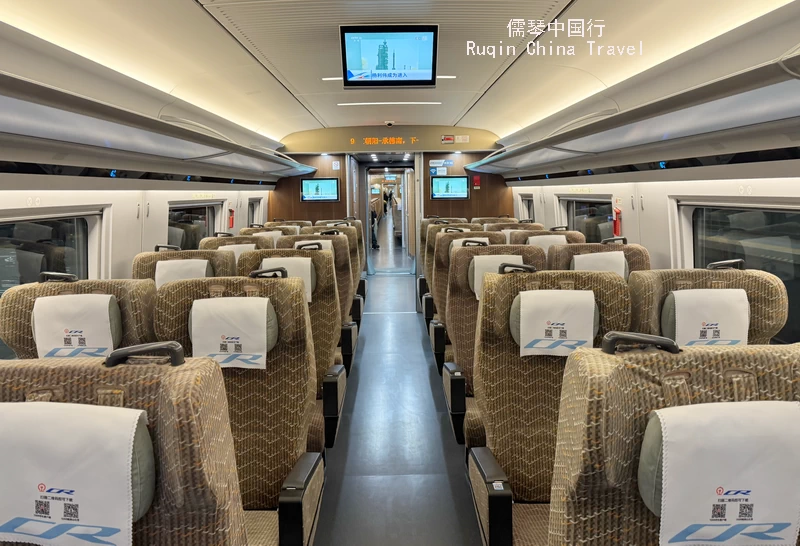
The interior of a high-speed train from Beijing to Chengde (First Class)
After leaving the station, you have several choices.
Public buses depart from the station area, including services that connect with major tourist attractions. Depending on current operations, double-decker sightseeing buses and Tourism Bus 1 may serve the Mountain Resort and Putuo Zongcheng Temple.
Taxis and ride-hailing are also easy options.
When I made this journey myself, I took the double-decker bus from the station to the Little Potala Palace. The ride gave me a useful introduction to the city before sightseeing began.
For a two-day itinerary, however, use whichever option is quickest and most convenient that morning.
9:30–11:30 am — Putuo Zongcheng Temple
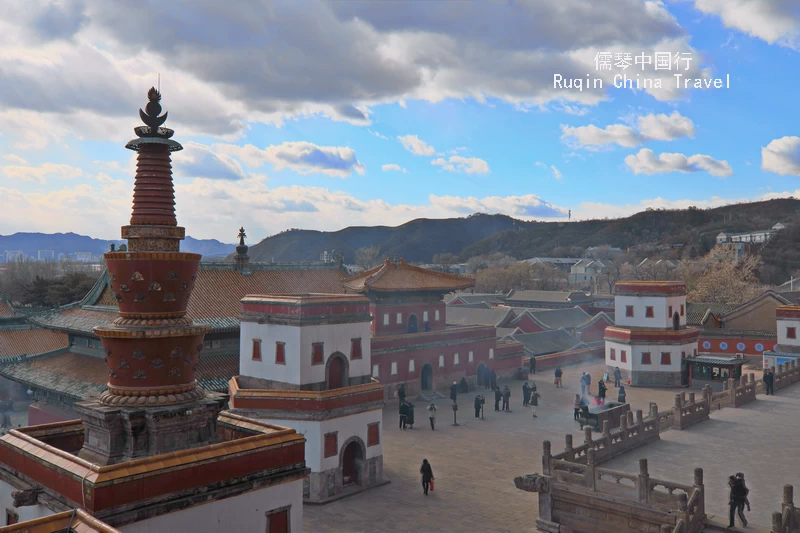
Start with Putuo Zongcheng Temple (普陀宗乘之庙), commonly called the Little Potala Palace.
The temple was built during the Qianlong reign and reflects the architectural influence of Tibet’s Potala Palace.
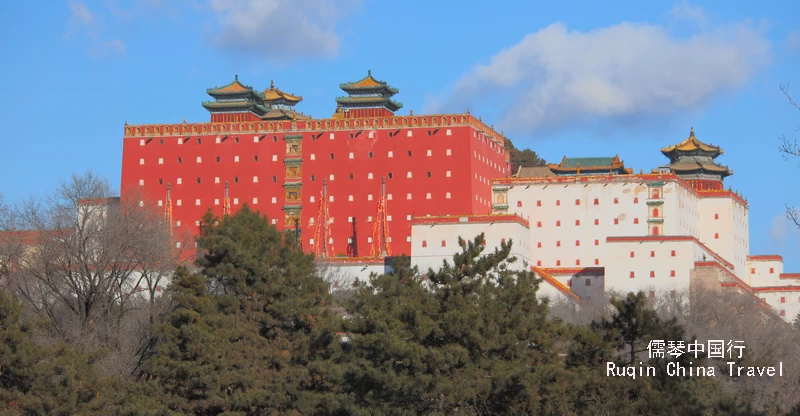
Putuo Zongcheng Temple
From the entrance, the complex rises gradually toward its massive red and white terraces.
Give yourself around two hours.
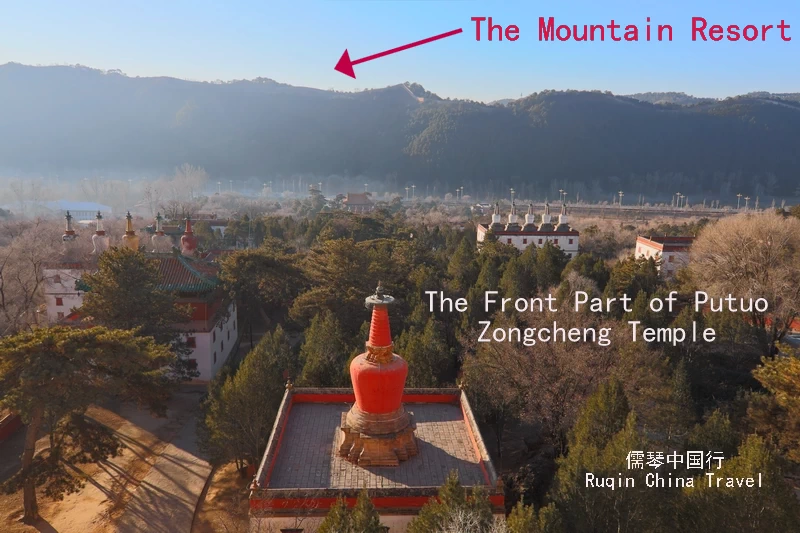
The front part ( the south ) of the Putuo Zongcheng Temple
Do not rush straight toward the upper terraces.
The experience works best when you notice how the architecture changes as you climb from the lower Han-style spaces toward the more Tibetan-influenced upper structures.
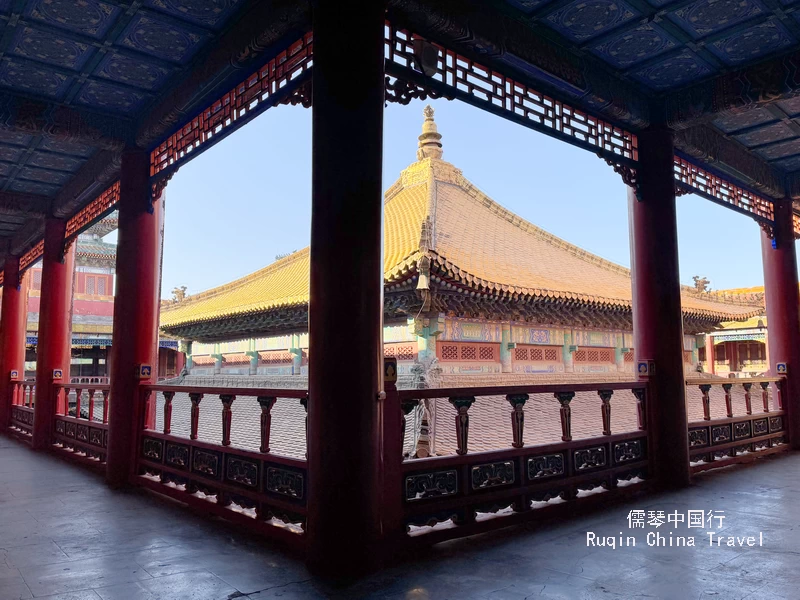
The golden-roofed of the Hall of the Buddhist Doctrine Unifying (万法归一)
One of the highlights is the great red terrace crowned by golden-roofed halls.
From higher viewpoints, you can also begin to understand the larger imperial landscape around Chengde.
11:30 am–12:30 pm — Lunch
After Putuo Zongcheng Temple, head toward central Chengde for lunch.
If you enjoy local food, Chengde-style mutton soup with shaobing makes a simple and warming meal.
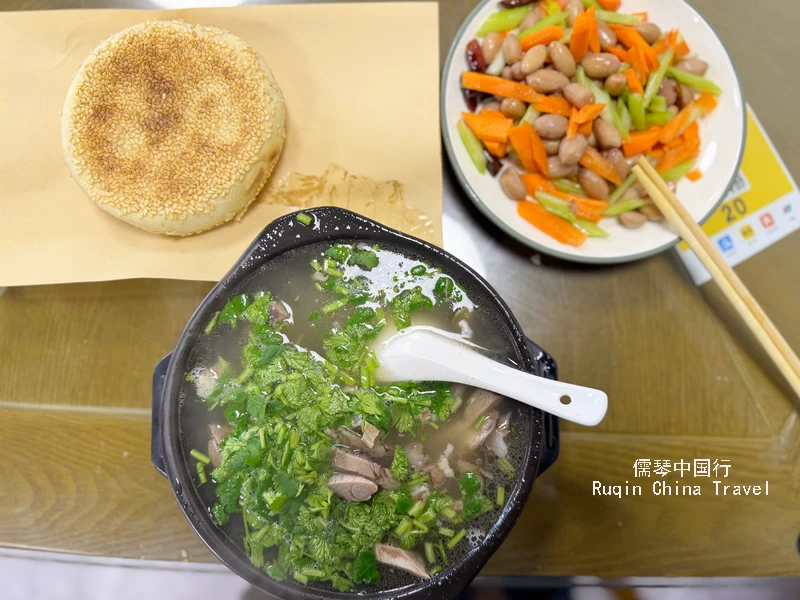
A piece of shāobǐng, a bowl of mutton soup
I tried this combination near the Mountain Resort during a winter visit. It was basic, hearty, and exactly what I needed in the cold weather.
You will find several restaurants around the streets opposite the Lizheng Gate area.
Keep lunch relaxed but not too long.
The Mountain Resort deserves most of your afternoon.
12:45–1:00 pm — Enter the Mountain Resort
Cross toward the Lizheng Gate (丽正门) of the Chengde Mountain Resort.
The Mountain Resort is enormous.
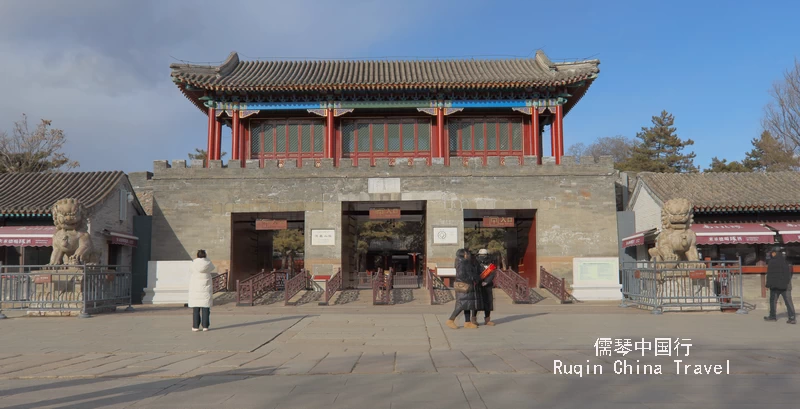
Enter the Mountain Resort
It combines palace buildings, lakes, plains, forests, and mountain terrain inside one vast imperial retreat.
Do not approach it like a normal city park.
Allow at least three to four hours for a first visit.
1:00–2:00 pm — Palace Area
Begin with the Palace Area near Lizheng Gate.
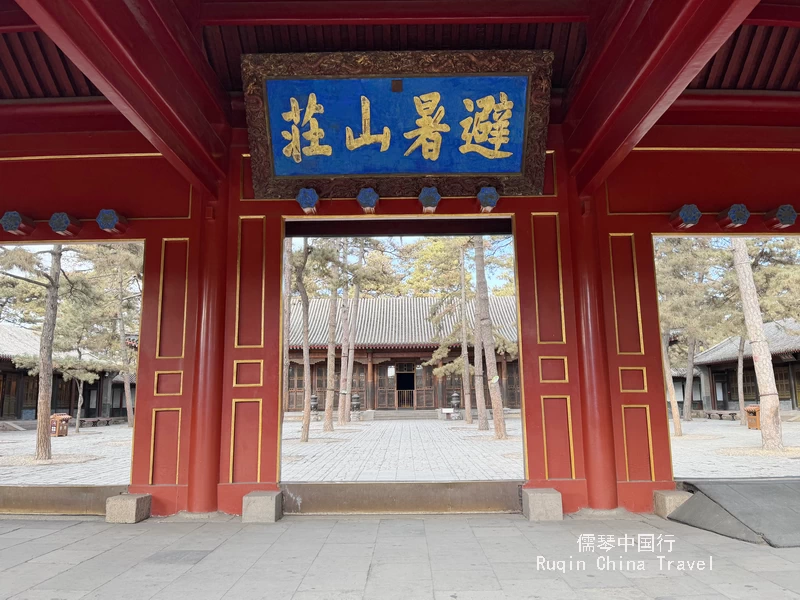
Begin with the Palace Area near Lizheng Gate
This was the formal administrative and residential core used by Qing emperors during their stays in Chengde.
The layout feels restrained compared with the Forbidden City.
That is part of its character.
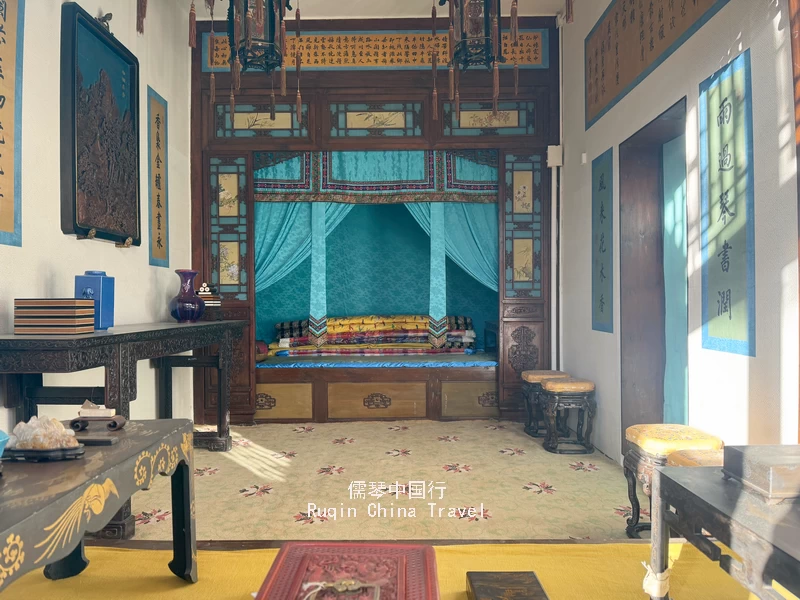
The Emperors’ Living Room
The architecture emphasizes simplicity, wood, courtyards, and a closer relationship with the surrounding landscape.
Walk through the halls slowly.
The palace area helps explain why Chengde was not simply a summer garden. It was also a working imperial center.
2:00–3:00 pm — Lake Area
Next, continue into the Lake Area.
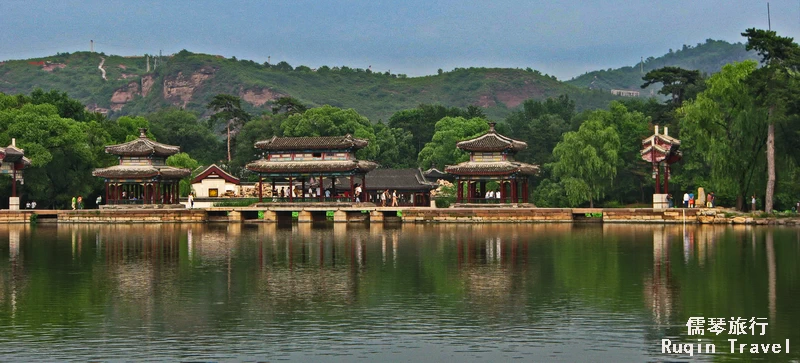
Next, continue into the Lake Area
This is one of the most attractive parts of the resort.
Bridges, islands, pavilions, willows, and water create a softer landscape than the formal palace spaces.
In warmer months, the lake area can feel lush and almost southern.
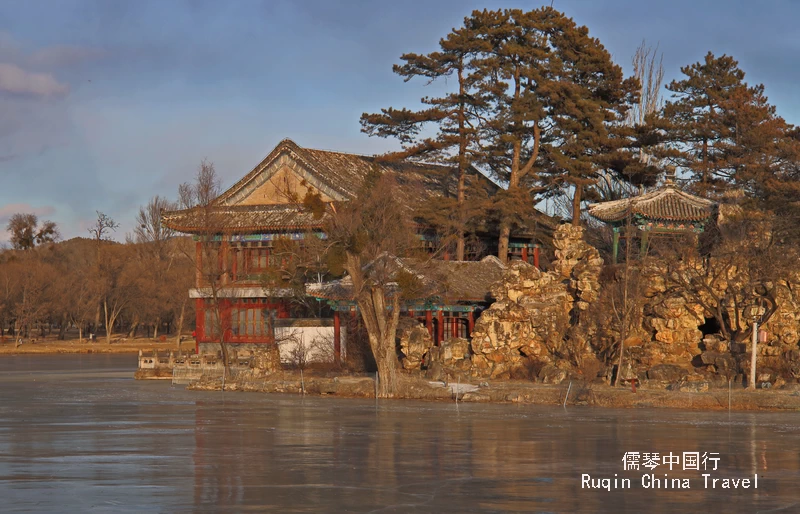
The Smoke and Rain Tower on Qinglian Island in the Mountain Resort
In winter, the frozen water and bare trees create a completely different atmosphere.
Either way, walk rather than rush.
This is one of those places where the landscape matters as much as the individual buildings.
3:00–4:30 pm — Mountain Area by Sightseeing Bus
If the mountain sightseeing bus is operating, I recommend taking it.
The Mountain Resort’s western and northern highlands cover a huge area. Walking the entire mountain route would consume too much time on a short visit.
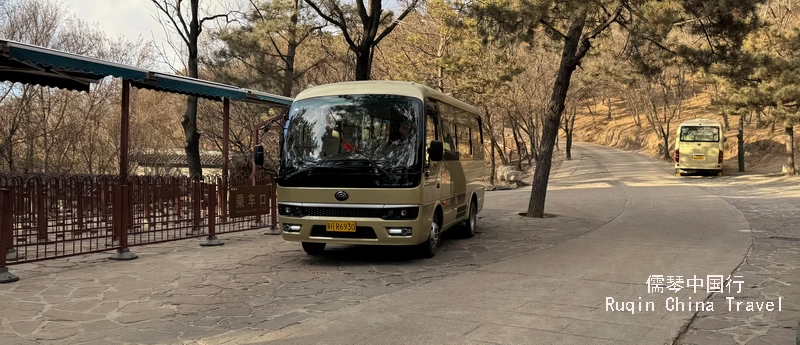
The Mountain Tour Bus
The sightseeing bus takes you to higher viewpoints.
From there, you can look across Chengde and see the imperial temples outside the resort walls.
The view toward Putuo Zongcheng Temple and Xumi Fushou Temple is particularly useful.
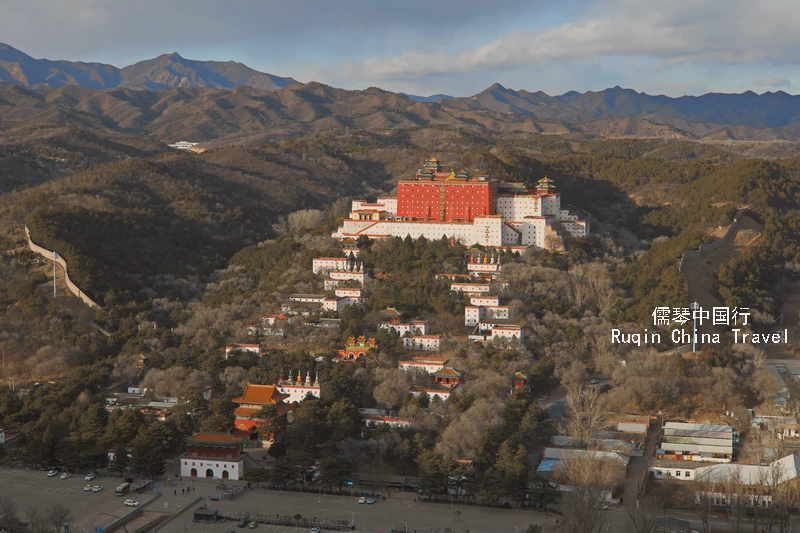
A Panoramic View of the Putuo Zongcheng Temple from the top of the Mountain Area
You visited the Little Potala Palace this morning. Now you can see how it fits into the wider imperial landscape.
This is one of my favorite perspectives in Chengde.
4:30–5:30 pm — Finish the Resort Visit
Return toward the lower resort area.
If you still have energy, walk briefly through the plain or lake sections before leaving.
However, do not force yourself to cover everything.
The Mountain Resort is far too large for that.
A good first visit should leave you with an understanding of its scale and layout, not aching legs from trying to complete every path.
5:30–6:00 pm — Check In
For a one-night stay, I recommend staying close to the Mountain Resort.
A practical choice is Chengde Mountain Villa Hotel (山庄宾馆), just across from Lizheng Gate.
Its main advantage is location.
You can walk to restaurants and the Mountain Resort area without another taxi ride.
For a short itinerary, that convenience matters.
6:30–8:00 pm — Dinner & Evening Walk
Have dinner near the Mountain Resort.
Try local northern dishes, mutton, noodles, mushrooms, or other Chengde specialties.
Then take a short evening walk around the old center.
Chengde becomes quieter after the main sightseeing hours.
Do not add another major attraction.
You have already covered a full travel day.
Day 2: Puning Temple, Xumi Fushou Temple & Return to Beijing
7:30–8:30 am — Breakfast
Have breakfast at your hotel.
Then check out or leave your overnight bag with reception.
Start sightseeing around 9:00 am.
Day 2 involves less distance than Day 1, but the temples still require plenty of walking.
9:00–11:00 am — Puning Temple
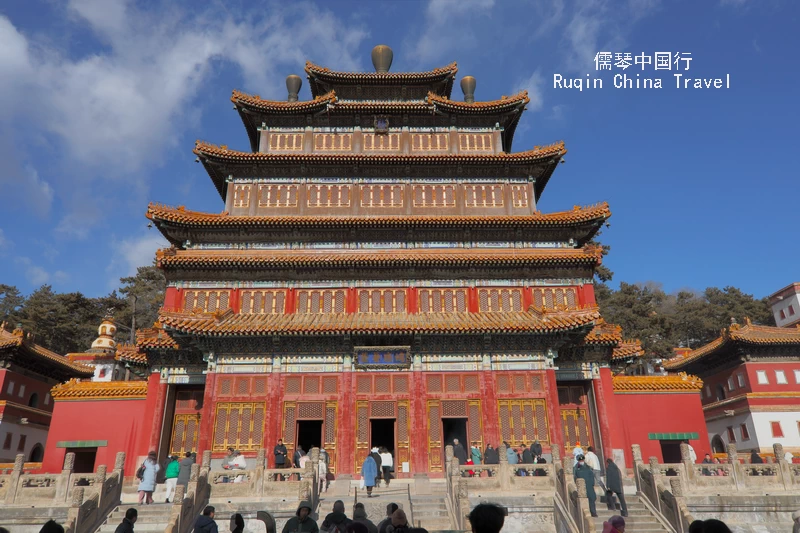
Begin at Puning Temple (普宁寺).
Among Chengde’s imperial temples, Puning remains one of the most active religious sites.
It combines Han Chinese and Tibetan architectural traditions.
he large wooden Buddhist statue of the Bodhisattva Avalokiteśvara in the main hall of the Puning Temple
The front section follows a more traditional Chinese temple layout. Meanwhile, the rear rises into a symbolic Tibetan-style mandala composition.
The Rear Part of the Tibetan architectural styles
The main highlight is the enormous wooden Avalokiteshvara, or Guanyin, housed inside the Mahayana Pavilion.
Stand back before approaching.
The scale becomes much easier to appreciate from below.
Puning also differs from the Little Potala Palace in atmosphere.
Putuo Zongcheng feels strongly imperial and ceremonial. Puning feels more devotional.
That contrast makes the two temples worth seeing on separate days.
11:00–11:30 am — Transfer to Xumi Fushou Temple
Next, travel toward Xumi Fushou Temple (须弥福寿之庙).
The temple lies close to Putuo Zongcheng Temple and can be reached easily by taxi or other local transport.
If you prefer walking and conditions are comfortable, parts of the route may also be manageable on foot.
However, after yesterday’s walking, I would not hesitate to take a short taxi.
Save your energy for the temple itself.
11:30 am–1:00 pm — Xumi Fushou Temple
Xumi Fushou Temple was built for the visit of the Sixth Panchen Lama during the Qianlong period.
Its design drew inspiration from Tashilhunpo Monastery in Tibet.
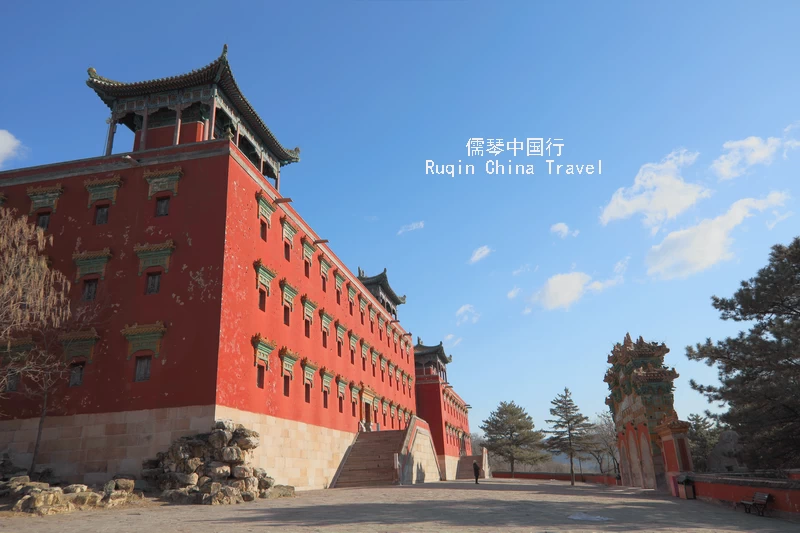
Xumi Fushou Temple (须弥福寿之庙)
Like Putuo Zongcheng Temple, it combines Han Chinese and Tibetan architectural traditions.
However, the atmosphere feels different.
The temple’s great red platform forms the visual center, while the Miaogao Zhuangyan Hall rises above with a striking golden roof.
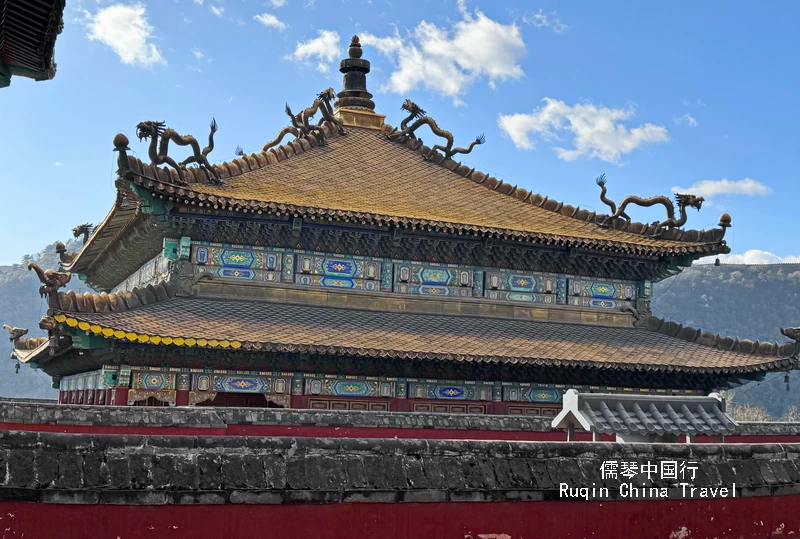
The golden-roofed Miao Gao Zhuang Yan Hall (Hall of High Solemn)
Look carefully at the roof decoration and architectural details.
This was not simply religious architecture.
It was also imperial diplomacy expressed through buildings.
That political role is one reason Chengde’s Outer Temples are so important.
1:00–2:00 pm — Lunch
Have lunch after Xumi Fushou Temple.
You can return toward the Mountain Resort area, where restaurants are easy to find.
Keep the afternoon fairly loose.
You still need to retrieve your luggage and reach Chengde South Station.
2:00–3:30 pm — Free Time or Optional Short Visit
If your return train leaves later, use this period according to your energy level.
You might take another short walk around the Mountain Resort area or explore a nearby local street.
I would not add another large temple automatically.
Chengde has several worthwhile imperial temples, including Pule Temple. However, adding too much can make the second afternoon feel rushed.
If you especially enjoy temple architecture, Pule Temple is the most logical optional addition.
Otherwise, slow down.
Have tea, walk beside the Wulie River, or simply enjoy Chengde at a gentler pace.
3:30–4:00 pm — Collect Your Luggage
Return to your hotel and collect your overnight bag.
Then arrange transport to Chengde South Railway Station.
A taxi or ride-hailing service is usually the simplest option.
Allow plenty of time.
The station lies well outside the old center.
Around 4:30–5:30 pm — Travel to Chengde South Station
The ride normally takes around 30–40 minutes, depending on traffic.
Do not leave this journey too late.
I recommend reaching the station at least 40 minutes before your train.
If you use ride-hailing, set Chengde South Railway Station (承德南站) as your destination.
Around 5:30–7:00 pm — High-Speed Train to Beijing
Take an evening high-speed train back to Beijing Chaoyang Railway Station.
Many services complete the journey in around one hour.
Once aboard, relax.
This is one of the pleasures of the Chengde side trip.
After two full days of temples, gardens, mountains, and imperial history, Beijing is suddenly only a short train ride away.
Around 7:00–8:30 pm — Arrive in Beijing
From Beijing Chaoyang Station, follow signs toward Subway Line 3.
You can then transfer to other lines for your hotel.
Keep the rest of your evening free.
Chengde is close to Beijing, but the experience feels much farther away.
Tickets, Transport & What to Bring
Beijing–Chengde High-Speed Train
High-speed rail makes Chengde particularly easy as a Beijing side trip.
Most useful trains run between Beijing Chaoyang Railway Station and Chengde South Railway Station.
Journey times are often around one hour.
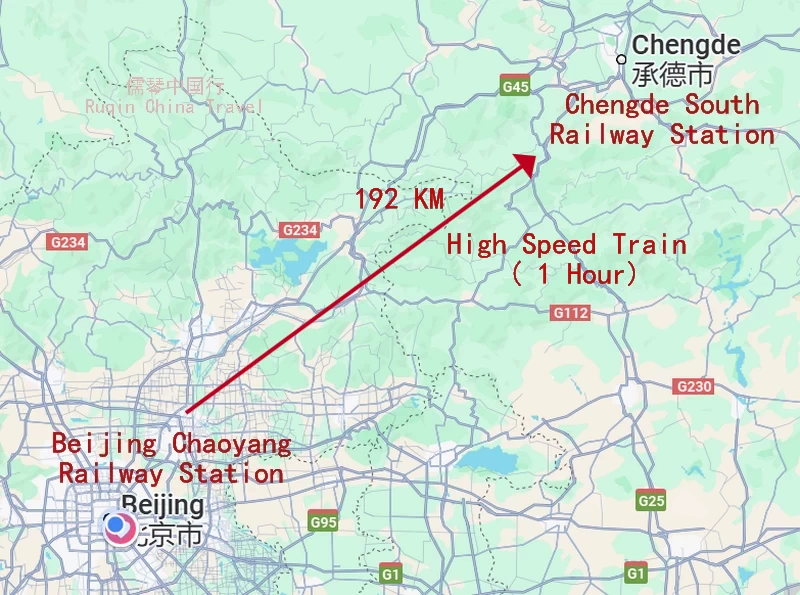
Beijing to Chengde High-Speed Train Travel Map:One Hour Train Ride
Schedules change, so treat any published train numbers or departure times only as examples.
Check the latest timetable through China Railway 12306 or another reliable booking platform before your trip.
Book early for weekends and Chinese public holidays.
Getting to Beijing Chaoyang Railway Station
Beijing Subway Line 3 provides direct access to Beijing Chaoyang Railway Station.
This has made the station considerably easier for foreign travelers.
Depending on where you stay, transfer onto Line 3 from another subway line.
Allow extra time during morning rush hour.
Getting from Chengde South Station to the City
Chengde South sits around 14 kilometers from the main tourist area.
Public buses connect the station with central Chengde and major sights.
Depending on current operations, double-decker buses and Tourism Bus 1 may serve attractions such as the Mountain Resort and Putuo Zongcheng Temple.
These buses can be useful if you want a low-cost arrival.
However, taxis and ride-hailing save time.
For a short two-day trip, I would use whichever option best fits your arrival time.
Using Buses in Chengde
Mobile payment makes local transport easier.
If your Alipay transport function supports Chengde buses, open the Travel or Transport section and generate the local public-transport QR code.
Then scan when boarding.
Check the current setup in the app because interfaces can change.
Carry some cash as backup.
Using Taxis and Ride-Hailing
Taxis are useful for moving between temples and the Mountain Resort.
Ride-hailing through apps such as DiDi or Gaode Maps can also work well.
When I visited in winter, I used Gaode to call a taxi from Pule Temple when no taxis were waiting nearby.
That flexibility is particularly useful outside peak season.
Mountain Resort Tickets
The Mountain Resort requires an entrance ticket.
The mountain sightseeing bus normally costs extra.
For a short visit, I consider the bus worthwhile because the mountain area covers most of the resort.
Ticket prices and opening hours vary by season.
Check current information shortly before visiting rather than relying on old published prices.
Putuo Zongcheng & Xumi Fushou Tickets
These two temples are often managed together for sightseeing purposes.
Ticket arrangements can vary by season.
Check whether one combined ticket currently covers both temples.
Allow around two hours for Putuo Zongcheng and 1–1½ hours for Xumi Fushou.
Puning Temple Tickets
Puning Temple has its own admission arrangements.
Entry may also include nearby Puyou Temple depending on the current ticket structure.
Check the latest opening hours before visiting.
Puning remains an active Buddhist site.
Dress respectfully and avoid disturbing worshippers.
Where to Stay in Chengde
For this two-day itinerary, I recommend staying near the Lizheng Gate of the Mountain Resort.
The location gives you easy access to restaurants, taxis, and the old city center.
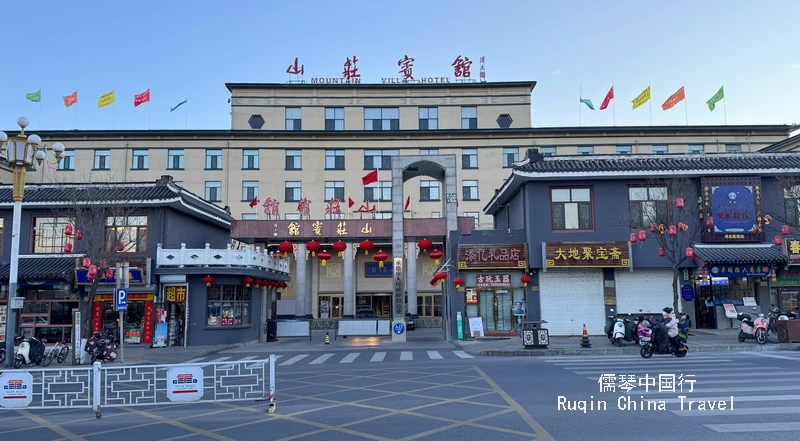
Chengde Mountain Villa Hote
Chengde Mountain Villa Hotel is a practical option because it sits directly across from the resort entrance.
You do not need luxury for one night.
Location saves more time than an elaborate hotel lobby.
What to Bring
Bring a small overnight bag, passport, comfortable walking shoes, phone, charger, and portable power bank.
The Mountain Resort covers a huge area, so good footwear matters.
In summer, carry sunscreen, sunglasses, a hat, and water.
Spring and autumn mornings can feel cool.
Winter is much colder than Beijing visitors sometimes expect.
When I visited in January, daytime temperatures were below freezing and nights were much colder.
Bring proper layers, gloves, and warm shoes if traveling in winter.
Ruqin’s Trip Design Note
Chengde can technically be visited as a day trip from Beijing.
I have done it myself.
The high-speed train makes that surprisingly easy.
However, if you have two days, I think Chengde becomes much more rewarding.
On Day 1, you see Putuo Zongcheng Temple and the Mountain Resort. One represents imperial engagement with Tibetan Buddhist culture, while the other shows how Qing emperors lived, worked, and escaped Beijing’s summer heat.
Then Day 2 brings you closer to the religious side of Chengde.
Puning Temple feels more active and devotional. Xumi Fushou Temple reveals another layer of Qing political and religious diplomacy.
The other reason I prefer two days is simple: the Mountain Resort is huge.
Trying to combine it with three or four temples in one day produces a checklist, not a journey.
Stay overnight near Lizheng Gate.
Have a local meal, walk outside the resort in the evening, and start again the next morning.
Chengde sits only about an hour from Beijing by high-speed train. Yet once you are among the hills, temples, frozen winter lakes, or summer gardens, it feels like a completely different world.
That contrast is what makes Chengde such a good Beijing side trip.
Plan More of Your Beijing & Chengde Trip
Use Ruqin China Travel’s practical guides to prepare for Beijing–Chengde high-speed trains, Chengde transport, Mountain Resort tickets, Outer Temples, mobile payments, local buses, weather, and independent travel in China.
If you have a third day, slow down rather than add another city. Visit Pule Temple, more of the Mountain Resort, local neighborhoods, or the Wulie River area at a gentler pace.
Chengde Travel Guide: Map, Walking Routes, Highlights and Tips
Beijing to Chengde High-Speed Train Day Trip: A DIY Guide
The Best Chengde Tour Itinerary – Ruqin China Travel
How to Book Chengde Attraction Tickets: All You Need to Know
Questions About Planning Your Beijing to Chengde Trip
Still have questions about this route? You’re welcome to write to me.
If you need advice on timing, transport, tickets, or adjusting the itinerary, I’m happy to offer a practical suggestion based on my experience in Beijing and Chengde.
There’s no fee for a simple question. Just use the form below and tell me about your plans.
We respect your privacy. Your details will never be shared or used for marketing.










Bob,
we are pleased to arrange your Beijing – Chengde 3-day tour as follows:
Beijing to Chengde: 2 Nights and 3 Days Itinerary:
Day 1: Beijing – Chengde by train
Morning: Take a train from Beijing to Chengde (guests book their own tickets). The guide and driver will provide a private pick-up service at the station.
Lunch (included): Enjoy a simple meal.
Afternoon: Visit the Mountain Resort (Bishu Shanzhuang). It is recommended to purchase tickets for the mountain and plain area carts to explore this grand garden more comprehensively.
Dinner (included): Suggested: Enjoy authentic Chengde cuisine at the Xianghexing Scissor Noodle Branch on Nanyingzi Street.
Accommodation: (Self-arranged by guests)
Day 2: Cultural Exploration of Chengde’s Outer Eight Temples
Morning: Visit the Putuo Zongcheng Temple and Puning Temple. These temples are known for their unique architectural styles and deep cultural significance, providing a sense of history and the power of faith.
Lunch (included): Enjoy a simple meal.
Afternoon: Visit Chengde Museum and Puning Temple to learn about the history and culture of Chengde and admire the world’s largest existing gilt wood carving of the Thousand-Armed, Thousand-Eyed Guanyin.
Dinner: Taste Chengde’s special snacks, such as lamb soup and hot pot, and experience authentic Chengde flavors.
Accommodation: (Self-arranged by guests)
Day 3: Chengde to Beijing (Afternoon Train)
Morning: Visit Anyuan Temple and Pule Temple. These temples combine Tibetan and Han architectural styles, providing a deep appreciation of Chengde’s rich historical and cultural heritage.
Lunch: Enjoy a simple local meal and experience the local customs.
Afternoon: Take the train back to Beijing (guests book their own tickets).
Note: In the evening, Chengde offers a live-action performance called “The Kangxi Ceremony of the Prosperous Dynasty.”