Written and updated by Ruqin
Last updated: May 22, 2026
After the intensity of Great Wall of China and the crowds inside the Forbidden City, I remember stepping off the train in Chengde and immediately feeling the pace soften. This Chengde Travel Guide grows from that contrast—a place where imperial history stretches out quietly between hills, rather than pressing in around you.
Here, mornings feel cooler, the air carries a faint scent of pine, and palace walls open into wide landscapes. As you walk between temples and lakes, Chengde reveals itself slowly. It’s not dramatic at first glance, but give it a few hours, and it settles into you in a way Beijing rarely does.
1. Best Time to Visit Chengde: Seasons of Serenity, Colors of the Imperial Hills
Before setting out on any trip, I always check the weather first. Chengde? It has personality—just like an old friend with four distinct moods. Each season offers a completely different vibe.

In summer, I finally understood why emperors escaped here. While Beijing baked in the heat, Chengde stayed cool and breezy. I wandered through the Mountain Resort in just a light shirt by day, then reached for a jacket at night. Everything was lush. Lotus flowers floated on still lakes. The Eight Outer Temples stood tall under crisp blue skies. It was peak beauty—and peak season. So yes, book early.
Come autumn, the crowds fade, but the colors burst into life. Ginkgo and maple leaves painted the mountains in gold and crimson. I spent hours strolling in silence, camera in hand, soaking in every hue.
Winter? Cold, yes. But when snow dusted the rooftops of the temples, it felt like I’d stepped into an ink painting. Peaceful. Still. Magical.
And spring? It’s short—but sweet. Buds bloom, trails reawaken, and the Mountain Resort slowly comes back to life.
No matter when you come, Chengde whispers a different story each season. And honestly? I’d return in every one.
2. Where to Stay in Chengde: Sleep Beneath Palace Walls or Among the Lanterns
Ready for something different? If you’ve been navigating mega-cities like Beijing or Shanghai, Chengde is going to feel like a deep breath. It’s not sprawling. It’s not chaotic. In fact, the core of this city is like a perfectly arranged imperial garden—small, serene, and soaked in history.
And the best part? Nearly everything you want to see, taste, or experience in Chengde is packed into one main district: Shuangqiao District (双桥区). Yes, you heard that right. Shuangqiao District isn’t just the center—it’s the beating heart of the city.

Centuries ago, Qing emperors knew exactly what they were doing. They built their summer palace and temples in a bowl-shaped valley, wrapped in mountains like a natural screen. A peaceful river flows through it all. Today, that same layout remains. And as you wander these streets, you might just be walking the same paths once taken by royalty.
Shuangqiao (双桥区).: The Core of the Core
This district is where your Chengde adventure truly begins. Almost every major attraction, train station, bus terminal, hotel, and restaurant is here. No need to crisscross the city. Everything—or nearly everything—is within arm’s reach.
Shuangqiao can be easily divided into two main zones. Let me walk you through both—just like I traced them on my map before the trip.
Zone 1: The Mountain Resort & Temple Belt (History + Culture Core)
This area is pure heritage. It’s Chengde’s soul. You can think of it as one giant, open-air Qing Dynasty museum—and it feels like that when you’re walking through it.
Start with the Mountain Resort (避暑山庄). This isn’t just one attraction. It’s a self-contained micro-city sprawling across the northern part of Shuangqiao. You’ll wander through palace compounds, tranquil lakes, grassy plains, and forested hills—all in one place. I spent an entire day there and barely scratched the surface.
Then come the Eight Outer Temples (外八庙)—a majestic string of Tibetan-style temples nestled in the surrounding hills. They’re positioned like stars encircling the Mountain Resort. The most iconic? The Putuo Zongcheng Temple (普陀宗乘之庙), nicknamed the “Little Potala Palace.” Its golden rooftops shimmer in the sun, catching your breath before you even step inside. Close by, you’ll find the Xumi Fushou Temple (须弥福寿之庙), also known as the Panchen Lama’s Palace. If you love culture, don’t rush through these. Let the stillness and grandeur sink in.
Zone 2: Downtown & Transportation Hub (Modern + Local Life Core)
Now shift gears—just slightly—and you’ll find yourself in the lively urban pocket centered around Huoshenmiao (火神庙) and Chengde Railway Station (承德火车站). This is the local heartbeat. Think convenience, buzzing eateries, busy shops, and the scent of street food in the air.
The Chengde Railway Station, right in the heart of Shuangqiao, is your entry point if you’re arriving by regular-speed trains. Step off the platform, and you’re basically surrounded by landmarks.
Need to head further? The Chengde East Bus Terminal will connect you to nearby counties and villages. And don’t overlook the Huoshenmiao Roundabout—it’s more than just a traffic circle. It’s a lively urban center wrapped in local flavor, with food, markets, and everything else packed into a few blocks.
The Golden Rule: Where You Stay Matters
So, where’s the best place to book your stay? For me, the answer is crystal clear: Shuangqiao District.
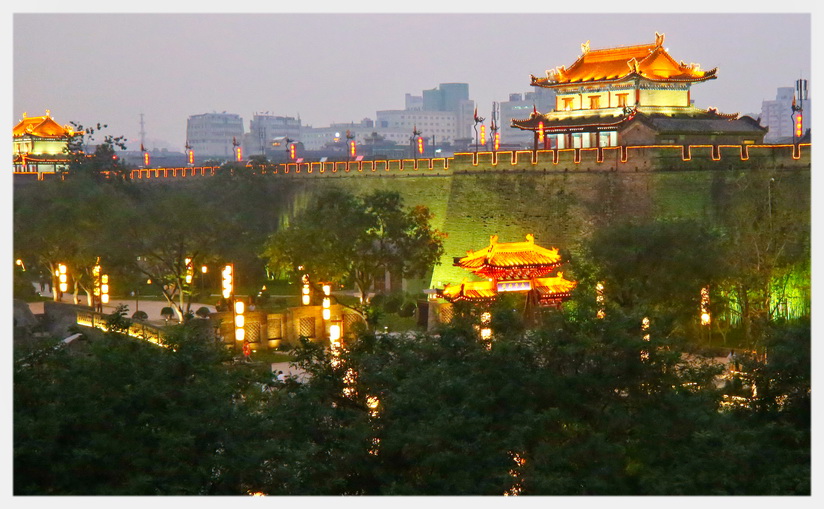
If you want mornings that start with misty palace views and evenings that end with a peaceful stroll, stay near the Mountain Resort gates—especially around Lizhengmen (丽正门) or Dehuimen (德汇门). It’s the perfect launchpad. Early access to the park, sunset vibes, and a view that changes with every hour. I loved walking back from dinner as lanterns flickered to life.
Prefer something a little more vibrant? The Railway Station / Huoshenmiao commercial area (火车站/火神庙商圈) is full of life and options. It’s where locals live and play. You’ll find everything—from hotpot joints and noodle shops to bakeries and tea stalls. Rooms here tend to be cheaper, too. And you’re well connected—buses, taxis, and rideshares will get you to every corner of the city with ease.
Now that we’ve settled the “where to stay” question, let’s move on to how to move! In the next section of this Chengde Travel Guide, I’ll show you how to get to Chengde the easiest and smartest ways.
3. How to Get to Chengde: From Beijing’s Buzz to the Mountains of Stillness
Let me start with the good news: getting to Chengde is way easier than you might think.
Whether you’re flying in or taking the train, this peaceful mountain town is surprisingly well-connected. And if you’re coming from Beijing? You’re in for a smooth ride. While there are a few ways to arrive, I’ll be honest—China’s high-speed trains absolutely win the game. Hands down.
Let me walk you through each option so you can choose what works best for you.
1) Flying to Chengde: A Scenic But Limited Route
Yes, Chengde has its own airport—Chengde Puning Airport (承德普宁机场). It’s small, quiet, and set in the hills northesst of the city, about 30 kilometers away.

When I landed there once, the first thing I noticed was the silence. No endless lines. No chaotic terminals. Just mountains in the distance and a relaxed pace.
Getting to the city is simple. First, you can take the airport shuttle bus, which adjusts to flight arrivals and drops you at major downtown stops. It’s budget-friendly and gets the job done.
Or, for speed and convenience, hop in a taxi or ride-share using apps like Didi. It takes 40 to 60 minutes, and prices are generally fixed and fair.
But here’s the catch: flight options are limited. Chengde’s airport only serves a handful of domestic routes—places like Shijiazhuang, Shanghai, or Guangzhou. Flights aren’t frequent either, which makes planning a bit tricky.
So, while it’s a unique experience, flying into Chengde isn’t the best choice for most travelers—especially if you’re already in Beijing. Factoring in the trip to the airport, wait times, and the drive into the city, it’s honestly slower than the train. And a lot less flexible.
2) My Top Pick: High-Speed Rail to Chengde South Station
If you’re reading this Chengde Travel Guide from Beijing, let me be crystal clear: take the high-speed train. It’s fast, clean, quiet, and incredibly scenic. I’ve taken this route more than once, and every time, it just feels effortless.

You’ll arrive at Chengde South Railway Station (承德南站), which—as the name suggests—is in the southern part of the city. It’s not smack in the center, but it’s close enough. From the station to major sights like the Mountain Resort or your hotel in Shuangqiao, it’s just 15–20 kilometers.
Once you arrive, you’ve got two solid options to reach the city center:
- Bus: There’s a special express route (like Double-Decker Sightseeing Buse and Bus 69) that runs from the station into town. It’s cheap and reliable. Expect a ride of about 40–50 minutes.
- Taxi or ride-share: My personal favorite. Outside the station, there’s a dedicated pick-up zone. In under 40 minutes, and for a reasonable fare, you’re at your hotel or sipping tea across from the palace walls.
Best of all? The high-speed trains—especially the Fuxing Hao models—are smooth, modern, and seriously fast. I once boarded at Beijing Chaoyang Station (北京朝阳站), and just over an hour later, I was stepping into mountain air in Chengde. No traffic. No airport chaos. Just one seamless glide through countryside and cliffs.
3) The Old-School Route: Regular Trains to Downtown Chengde
Now, if you’re feeling nostalgic or you’re traveling on a tighter budget, conventional trains are still an option.
The old Chengde Railway Staion (承德站) handle these slower lines, with the most important being simply called “Chengde Station.” And yes—you guessed it—it’s located right in the heart of Shuangqiao District, the very same place we talked about earlier.
When I took the old-school train once (a green “K-train”), it felt like a journey back in time. Windows rolled down. Locals offering sunflower seeds. The gentle rhythm of train wheels on tracks. It takes longer—around 3.5 to 5 hours from Beijing—but it’s oddly charming.
The good news? You arrive directly in the city center. No need for extra transfers. You can walk or take a short taxi ride to your hotel. The Mountain Resort is just 10–15 minutes away by cab.
My Honest Travel Advice
If you’re flying internationally and landing in Beijing first, skip the airport route to Chengde. It’s slower, less frequent, and not worth the logistical fuss.
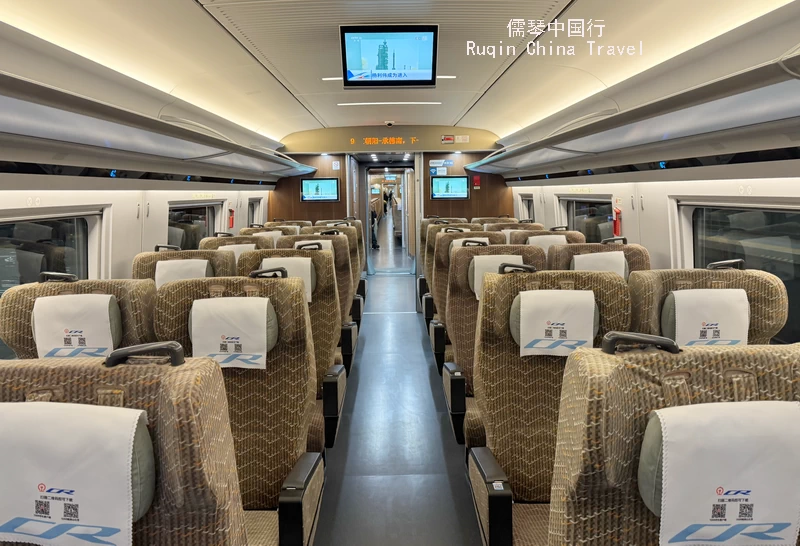
Take the high-speed train. Book a ticket from Beijing Chaoyang to Chengde South Station, then grab a taxi or hop on a bus into town. It’s the sweet spot where comfort meets efficiency, and it gives you more time to actually enjoy your trip.
Once you’ve arrived, dropped your bags, and maybe had a quick snack—your real Chengde adventure begins. And luckily, the city’s size makes it a joy to explore.
In the next part of this Chengde Travel Guide, I’ll show you exactly how to get around the city itself. Stay tuned, it only gets better from here.
4. How to Get Around Chengde: Wander Like a Local, Roam Like an Emperor
Congratulations—you’ve arrived in Chengde! Now the real fun begins. It’s time to explore the city, and I’ve got good news: getting around is incredibly easy.
This isn’t a sprawling metropolis. In fact, much of the city feels like a quiet royal garden. Most of the attractions are close together, especially within the Shuangqiao District. So, whether you’re on foot or hopping in a taxi, you’ll find it smooth sailing. Let’s break down the options I used and loved.

First, the buses. They’re super cheap and cover all the major spots—from the Mountain Resort to the temples and downtown markets. If you want to experience daily local life, this is your ride. Just have small change ready (1 or 2 yuan), or better yet, use WeChat Pay or Alipay to scan and go.
Pro tip: Apps like Baidu Maps or Amap (Gaode) show real-time bus routes and arrival times—lifesavers when planning a day of temple hopping.
Next up: taxis. They’re everywhere near train stations and hotels. Flag one down or book via Didi (China’s Uber). Fares are low—usually under 20 yuan for city rides. They’re perfect when you’re tired or running late.
Going to remote temples like the Little Potala? Ask the driver to wait, or note the company number in case return rides are scarce.
Prefer more flexibility? Use ride-hailing apps. I relied heavily on Didi. The app pinpoints your location and handles everything—no need for complicated directions or Chinese conversation. Plus, prices are upfront and payments are cashless.
Bonus: Temple Shuttle & Sightseeing Buses
Two great options for visitors:
- Temple Shuttle Buses (10–20 yuan) connect major sites like Puning Temple, Little Potala, and Wanshuyuan.
- Double-Decker Sightseeing Buse covering 24 stops like the Mountain Resort and Huoshenmiao.
In short, Chengde’s transportation is tourist-friendly, local-approved, and hassle-free.
With this Chengde Travel Guide in hand, you’ll move through the city like a local—but feel like royalty.
5. Chengde Two-Day City Walks: Through Temple Gates and Timeless Gardens
Chengde isn’t a place you rush through. It’s a city you wander, absorb, and let unfold around you—one courtyard, one temple, one mountain breeze at a time.
With this Chengde Travel Guide in hand, I planned the perfect two-day city walk that brought history to life under my feet. From royal gardens to Tibetan-style temples, and from quiet spiritual corners to one of China’s most breathtaking night shows—it was unforgettable.
Day One: A Walk Through Qing Dynasty Splendor
Stop 1: The Mountain Resort (避暑山庄)
Address: No. 20 Lizhengmen Road, Shuangqiao District, Chengde (河北省承德市双桥区丽正门路20号)
This is no ordinary garden. It’s a palace, a wilderness, and an entire world wrapped in walls. The emperors of the Qing Dynasty spent half the year here—governing, relaxing, and hunting. You’ll feel it the moment you step in.
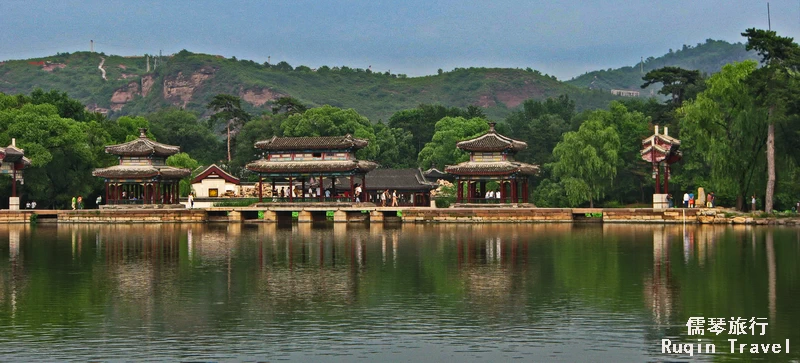
Explore four distinct zones:
- Palace Zone: Understated and elegant, where emperors worked and lived.
- Lake Zone: Small bridges and pavilions echo Jiangnan water towns.
- Plains Zone: A wide-open field inspired by Mongolian grasslands.
- Mountain Zone: Trails, gazebos, and panoramic views over Chengde.
Allow: 3–4 hours
Tickets: ¥130 (Apr–Oct), ¥90 (Nov–Mar)
Shuttle Bus for the top mountain area: ¥ 60
Getting there: Take a taxi to “Lizhengmen” or buses 1, 2, 5, 7, 8, 11, or 15 to “Bishu Shanzhuang” stop.
Stop 2: Putuo Zongcheng Temple (普陀宗乘之庙, “Little Potala Palace”)
Address: Huancheng North Road, Shuangqiao District, Chengde (河北省承德市双桥区环城北路)
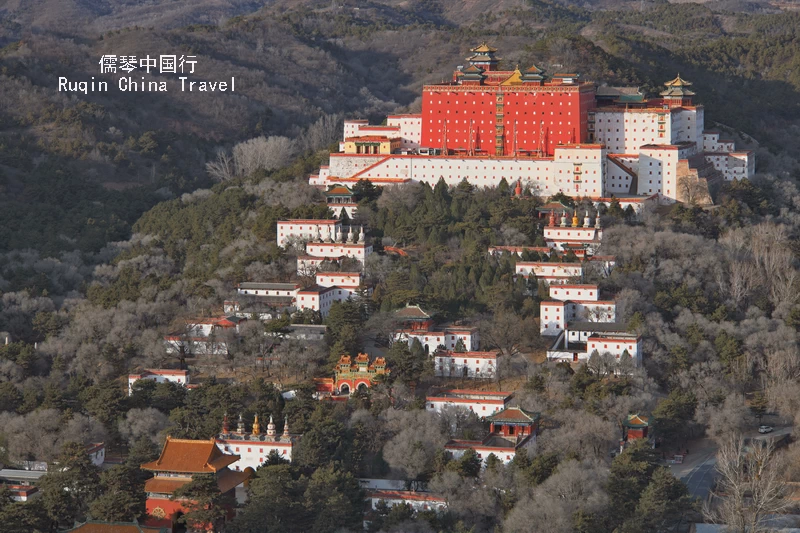
Modeled after the Potala Palace in Lhasa, this Tibetan-style temple is breathtaking. Layered in red and white, it rises with the mountain behind it, and its gold-tiled roof gleams like fire in the sun. Built for Qianlong’s 60th birthday and his mother’s 80th, it’s imperial grandeur at its peak.
Allow: 1.5 hours
Tickets: ¥80 (usually bundled with Xumi Fushou Temple)
Getting there: Take Bus 12 from the Mountain Resort or taxi (approx. 10 minutes)
Stop 3: Xumi Fushou Temple (须弥福寿之庙)
Address: Huancheng North Road, Shuangqiao District, Chengde (河北省承德市双桥区环城北路)
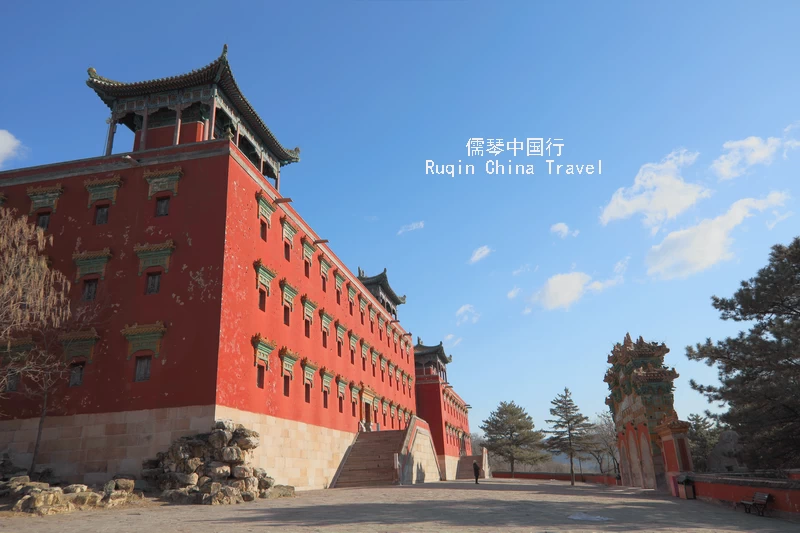
Just a short walk from the Little Potala Palace, this temple was built for the sixth Panchen Lama’s visit. It’s inspired by Tashilhunpo Monastery in Tibet. The golden dragon that coils atop the roof caught my eye instantly—it seemed alive in the afternoon sun.
Allow: 1 hour
Tickets: Included in combo ticket with Putuo Zongcheng
Getting there: Walk a few hundred meters or take Bus 12 to the next stop
Evening Tip: After a long day, I grabbed dinner at a local hotpot spot near Huoshenmiao. Perfect end to the day.
Day Two: From Living Temples to a Mountain-Sized Epic
Stop 1: Puning Temple (普宁寺, “The Big Buddha Temple”)
Address: No. 1 Puning Road, Shuangqiao District, Chengde (河北省承德市双桥区普宁路1号)
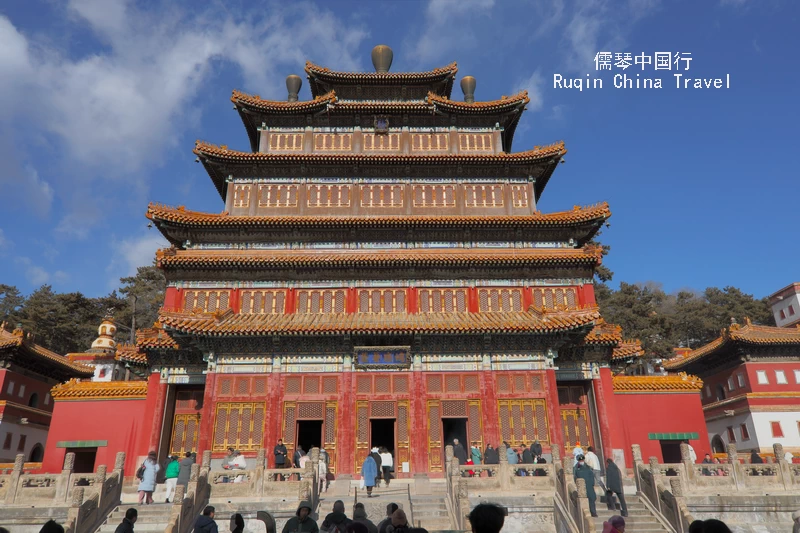
This is a temple that breathes. Monks still live here. Incense burns. Bells echo softly through the halls. In the main hall, I stood before the 22.28-meter-tall Thousand-Armed Avalokiteśvara statue—the largest gold-painted wooden Buddha in the world—and felt a hush fall over my thoughts.
Allow: 1.5–2 hours
Tickets: ¥80
Getting there: Bus 6 or 26 to “Puning Temple” stop, or taxi from city center
Stop 2: Pule Temple (普乐寺, “Round Pavilion Temple”)
Address: Lama Temple Village, Shuangqiao District, Chengde (河北省承德市双桥区喇嘛寺村)

A hidden gem. Its “Xuguang Pavilion” resembles Beijing’s Temple of Heaven, but what stunned me most was the ceiling—an intricate 3D dragon and phoenix swirling above in rich reds and golds. Quiet. Undiscovered. Intimate.
Allow: 1 hour
Tickets: ¥50
Getting there: Taxi from Puning Temple (~10 mins). Public transport possible, but slower.
Stop 3: Chengde Museum (承德博物馆)
Address: Northeast of the Puning Rd & Shiziyuan Rd Intersection, Shuangqiao District (河北省承德市双桥区普宁路与狮子园路交叉口东北约140米)

Modern, spacious, and beautifully curated. The museum ties everything together—from Qing diplomacy and religious harmony to the deeper history of Chengde. It helped me connect all the impressions and stories from the past two days.
Allow: 1.5–2 hours
Tickets: Free (book via official WeChat account)
Getting there: 5–10 minutes by taxi from Pule Temple
Final Stop: “The Kangxi Dynasty Show” at Yuanbaoshan (《康熙大典》演出)
Address: Yuanbaoshan Scenic Area, Shuangluan District, Chengde (河北省承德市双滦区元宝山风景区)

It’s not just a show—it’s an event. With real horses galloping under starlight, 1,000+ actors, and the mountain as the stage, this performance turns Emperor Kangxi’s life into a thundering epic. I watched the mountain glow, alive with history and light, and felt like I’d entered a Qing Dynasty legend.
Showtime: 8:00 PM, lasts 1.5 hours
Tickets: ¥198–¥288 (VIP sections available)
Getting there: Taxi highly recommended (~40 minutes from Shuangqiao). Avoid public transport after dark.
6. Chengde Two-Day Side Trip: Gallop the Grasslands, Touch the Clouds on the Great Wall
After two soul-stirring days in Chengde city, I wanted more. I wasn’t ready to leave. Not yet.
So I planned something bolder—a two-day road trip that would take me far beyond imperial gardens and red-roofed temples. I was chasing royal grasslands, deep forests, and a Great Wall segment so raw and magnificent it made my heart race.

This is the loop I followed—and it turned out to be one of the most unforgettable detours of my China journey.
Day 1: Ride into the Royal Grasslands
Morning: Road to Mulan Weichang (兰围场)– The Journey Begins
Distance: 250–300 km from Chengde city center
Time: 3.5–4 hours by car
I set off early, my backpack tucked in the trunk, coffee in hand. The road curled north through mountains, and slowly—almost imperceptibly—the landscape shifted. Forested slopes gave way to open hills. Hills faded into rolling grasslands, dotted with lakes and the occasional wild horse.
Mulan Weichang (兰围场)
“Mulan Weichang” isn’t just one place—it’s a historic region, a name that once belonged to the Qing Dynasty’s imperial hunting grounds. Today, its most breathtaking parts lie within Saihanba National Forest Park (塞罕坝国家森林公园) and the Yudaokou Grassland and Forest Scenic Area (御道口草原森林风景区).

But don’t picture endless flat plains. This isn’t that kind of grassland. Instead, the landscape rises and falls like brushstrokes in a living painting—vast meadows, dense pine forests, scattered lakes, and soft, rolling hills that stretch into the sky.
Come between July and September, and it’s at its absolute best. The grass is lush, wildflowers bloom in every color, and the entire scene feels like it leapt straight out of that classic Windows XP desktop—only this time, you’re in it.
There are no trains to this region. So I booked a private car with a local driver in advance—a choice I highly recommend. Public buses to Weichang County exist, but from there you’d need another ride to reach the parklands. That’s a logistical tangle you don’t want.
Early Afternoon: Saihanba National Forest Park (塞罕坝国家森林公园)
Address: Saihanba Town, Weichang County, Chengde, Hebei Province (河北省承德市围场县塞罕坝镇)
Welcome to Saihanba—a forest grown from nothing. Literally. In the 1960s, this was a desertified wasteland. Now it’s a sprawling paradise of pine forests, alpine meadows, crystal-clear lakes, and sky you can’t stop looking at.

First, I explored the Qixing Lake Wetland Park (七星湖湿地公园). Seven lakes, scattered like the Big Dipper, shimmer between wooden boardwalks and waving grasses. Reflections here are unreal—sky and lake blending into one dreamlike mirror.
Later, I wandered along Taifeng Lake (泰丰湖), the quieter sibling. I found a spot under a pine tree, unpacked some snacks, and just… breathed.
Everywhere I looked: peace.
Time: 3–4 hours
Tip: Private vehicle allowed in with entrance ticket—pause at scenic spots anytime.
Ticket: ~¥120–150 depending on zones and season
Night: Mongolian Yurts and Bonfires Under the Stars
By evening, I checked into a grassland lodge near the park. Many offer yurt-style accommodation, and yes—it’s touristy. But somehow, that didn’t take away the magic.
Inside was clean, warm, and cozy. Outside, the cold crept in fast. Even in July, I needed my down jacket once the sun dipped.
Dinner? A roaring whole roast lamb shared with strangers who quickly became friends. Then came the bonfire. Dancers in traditional Mongol dress circled the flames while we clapped and cheered under a blanket of stars so thick, it looked painted.
Tips:
- Book lodging in advance—especially in July or August.
- Ask about bonfire activities—they’re often included at larger resorts.
- Bring layers. Even summers get cold at night.
Day 2: From Dawn Grasslands to the Edge of Empire
Morning: Drive to Jinshanling Great Wall (金山岭长城)
Distance: 180–220 km from Saihanba to Jinshanling
Time: 3–3.5 hours
I woke before dawn. The grassland mist rolled low over the fields. We hit the road just after sunrise, and soon, the rolling hills gave way to jagged ridgelines. And there, threading along the spine of the mountains, was the Great Wall.
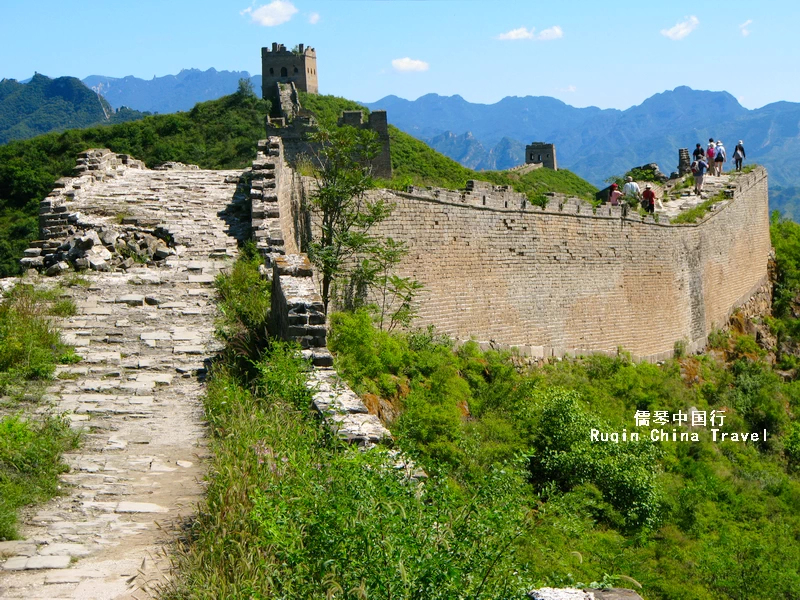
This wasn’t the neatly restored Badaling section. Jinshanling is wild. Remote. Honest. It’s known for its dense watchtowers, original Ming-era brickwork, and views that sweep for miles in every direction.
Jinshanling Great Wall (金山岭长城)
Address: Luanping County, Chengde, Hebei Province (河北省承德市滦平县金山岭长城景区)
I climbed the crumbling stone stairs slowly, stopping often to catch my breath—and take photos. The wind sang through the mountains. I barely saw another soul. Just me, the wall, and a thousand years of echoes.
Some sections were restored. Others were raw and rugged, stone cracked and grasses growing through the cracks. It felt like walking on the spine of a sleeping dragon.
Time: 2–3 hours
Ticket: ¥65–90 (seasonal)
Tip: Wear real hiking shoes. This climb is not a joke.
Best Time: Late afternoon for golden light, or early morning for clouds and mist
Afternoon: Qinchui Peak National Forest Park (磬锤峰国家森林公园)
Address: Near Shuangqiao District, Chengde (河北省承德市双桥区磬锤峰国家森林公园)
On the way back to Chengde city, my driver suggested a stop at Qinchui Peak, also called Bangchui Mountain. I’m so glad I listened.

This massive vertical rock formation rises like a hammer striking the sky. Locals call it the “symbol of Chengde.”
A short cable car ride took me to the top. From there, I looked out over the entire city—Summer Resort, temples, rooftops—spread like a map. I also rubbed the “Toad Rock” for luck, as is tradition.
Time: 1–1.5 hours
Tip: Cable car round trip saves your legs at the end of a long day
Photo spot: Observation deck with views of the Mountain Resort below
Final Travel Tips for This Countryside Loop
Transportation is everything:
This route cannot be done by public transport. Pre-book a private driver or rent a car with a Chinese license and navigation app.
Timing matters:
- July–September: Peak season for grasslands (wildflowers, green hills)
- Mid-late October: Best for autumn colors on the Great Wall
What to pack:
- Warm jacket (even in summer)
- Sunscreen and hat for grassland hikes
- Real hiking shoes for Jinshanling
- Power bank—recharging may be tough in remote areas
Physical demand:
This loop is intense. Long drives, high climbs, and big views. But if you’re up for the challenge, the rewards are off the charts.
So if you’re ready to see a wilder, grander Chengde, go beyond the palaces. Let the wind guide you across the grasslands. Let the Great Wall hold your breath.
With the right spirit—and a reliable driver—this is the trip that transforms your Chengde Travel Guide into a real-life adventure story.
7.Must-Try Dishes – Icons of Chengde Flavor
1) Pingquan Lamb Soup 平泉羊汤
The first sip stopped me in my tracks. The broth is milky white after simmering lamb bones for over eight hours. The aroma rises like steam from a mountain spring. Tender chunks of lamb and offal melt in the mouth. Locals tear apart a hot sesame flatbread, toss it into the soup, and let it soak up the flavor. The combination is pure comfort. It doesn’t just warm the body—it nourishes the soul on a northern winter morning.
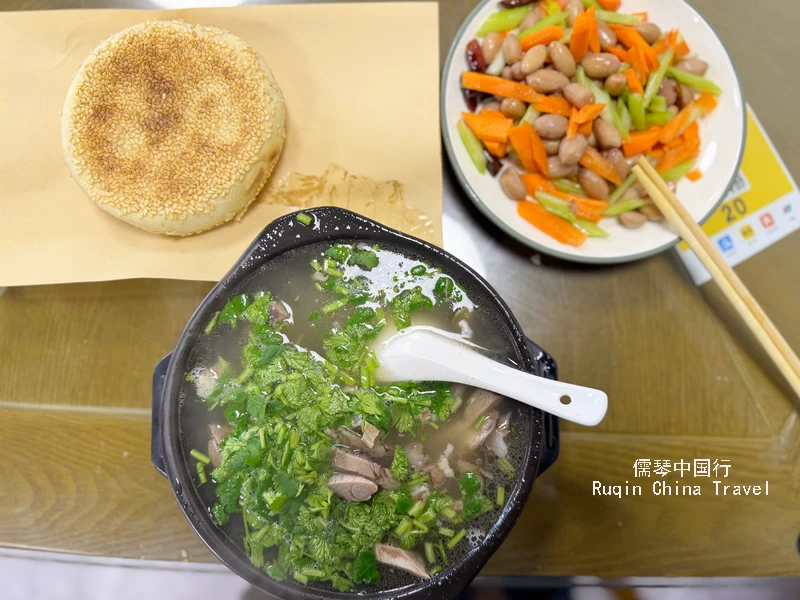
Where to try it: Lao San Lamb Soup (老三羊汤) – loved by locals, no-frills, all flavor.
2) Imperial Clay Lotus Chicken 御土荷叶鸡
This dish is a story in itself. Free-range local chicken is marinated in secret spices, wrapped in lotus leaves, then sealed in local yellow clay. When the clay shell cracks open, steam escapes like mist from a mountain lake. The chicken glows golden, so tender it falls off the bone. Each bite feels like traveling back to the days when Qing emperors hunted on the grasslands and returned for a grand feast.

Where to try it: Xin Shun He Family Banquet (新顺和家宴) – famous for authentic Chengde royal cuisine.
3) Buckwheat He’le 荞面饸饹
This noodle dish is poetry in simplicity. Dough is pressed through a traditional wooden tool called the hele bed, creating springy buckwheat noodles with a deep, earthy aroma. The noodles are topped with lamb gravy or tangy pickled vegetables. Light, chewy, rustic—it’s the everyday taste of the people of Chengde.

Where to try it: Any neighborhood noodle shop. Look for long lines of locals.
4) Manchu Eight Bowls 满族八大碗
This is not just a meal. It’s a ceremony. Eight porcelain bowls are arranged in a square—each holding a slow-steamed treasure such as braised pork, meatballs, chicken, or fish. The flavors are gentle but deep, preserving ingredients in their purest form. In the Qing Dynasty, this meal symbolized honor, abundance, and the unity of families.

Where to try it: Daqinghua Dumpling House (大清花饺子) or Xin Shun He Family Banquet.
5) Sweet Treats of Chengde
- Almond Tea & Almond Ice Cream 杏仁茶 / 杏仁冰淇淋
Chengde is famous for its sweet apricot almonds. Locals turn them into soft pudding-like almond tea, refreshing almond tofu, and silky ice cream that melts with a cool, floral fragrance. Where to try: Xing Hao Yu Jian Ni (杏好遇见你) – a beloved modern dessert shop. - Nansha Cake 南沙饼
Layers of crisp pastry filled with light sugar paste. It’s crumbly, fragrant, and perfect with tea. Locals buy it as gifts and travelers often return for more.
By the time I finished my last bowl of lamb soup, I realized something important—in Chengde, food isn’t just nourishment. It’s heritage. It’s memory. It’s a continuation of imperial and folk life that still lives on every street corner.
8.Essential Travel Tips – Your Trusted Companion for a Smooth Chengde Journey
Every great journey begins with good planning. And Chengde is no exception. To make sure your trip flows as peacefully as the mountain breeze, I’ve gathered all my most practical—and heartfelt—tips right here. Think of this section as your personal travel armor: it protects your time, your energy, and your joy. Keep it close, and your experience will be effortless.
1) Smart Planning: Book Early, Travel Wisely
High-speed train tickets disappear fast, especially in summer (June–August) and during China’s public holidays. Trust me—don’t wait. Tickets from Beijing can sell out in hours. I booked mine through the 12306 App, China’s official railway platform, one week in advance and slept easy knowing my seat was guaranteed.
Hotels also fill quickly during peak season. If you want to stay near the Mountain Resort for quiet mornings, book early. If you crave convenience and great food, choose the Huoshenmiao commercial area in Shuangqiao.
Pro Tip:
Using travel apps like Ctrip or Fliggy to prebook entrance tickets will save you from waiting in long lines outside scenic spots. Combo tickets—for example, the joint ticket for Putuo Zongcheng Temple and Xumi Fushou Temple—are often cheaper than buying separately.
Travel like a strategist:
Most tourists instinctively turn right when entering the Mountain Resort. I went left. The result? Empty pathways, soft morning light, and photos without a single stranger in them.
2) Attractions: Explore Deeply, Walk Smart
The Mountain Resort is eight times larger than the Forbidden City. Yes, eight! Don’t try to conquer it all on foot. Instead:
- Use the sightseeing shuttle to reach the mountain area quickly.
- Take the lake boat ride to glide among pavilions.
- Hop on the electric cart in the plains area to save energy.
These aren’t shortcuts—they’re part of the serene experience.
Bring a water bottle. There are free drinking water stations inside many scenic areas. It’s eco-friendly and refreshing.
3) Dress and Gear: Comfort is Power
Chengde sits in a mountain basin. The sun is bright, and UV rays are strong—even on cool days.
Pack these essentials:
- Sunscreen, hat, sunglasses
- A lightweight umbrella (for both sun and sudden rain)
- Layers! Morning and evening temperatures can drop quickly, even in July
If you’re heading to the grasslands, long pants are a must to avoid mosquitoes and sunburn.
Above all: wear good walking shoes. Your shoes will shape your mood more than you think.
4) Food and Shopping: Taste Boldly, Spend Wisely
Chengde cuisine is hearty, meaty, and full of northern character. I learned quickly that the best meals aren’t in the fancy restaurants near scenic entrances, but in the bustling local eateries where families dine together.
Eat where locals eat:
- For lamb soup, go early to Lao San Lamb Soup (老三羊汤)—that’s where you meet the real morning crowd.
- To try royal dishes like lotus leaf chicken or the Manchu Eight Bowls, visit Xin Shun He (新顺和) for authentic flavor without tourist pricing.
- For night snacks and true “fireworks of the city,” head to Erxianju Night Market (二仙居夜市) and wander with curiosity.
Shopping Tips:
Don’t rush to buy souvenirs at scenic spots—they’re often overpriced. For local almond products (a Chengde specialty), visit supermarkets in town like Fumanjia (福满家) or Kuanguang (宽广超市) for fair prices and verified quality.
Final Practical Tips from the Heart
- Carry a little cash. While mobile payment dominates, some small vendors don’t accept cards or apps.
- Be patient. Chengde is loved by many. Crowds aren’t an inconvenience—they’re part of the shared journey.
- Respect sacred places. At temples like Puning, move gently, speak softly, and never touch statues or ritual objects.
- Stay flexible. Weather in mountainous regions can shift quickly. A backup plan is not a burden—it’s a gift to your future self.
Chengde isn’t a place you rush through. With this Chengde Travel Guide, I found myself slowing down—walking longer, lingering by the lakes, and noticing details I would’ve missed elsewhere.
If you give it that same space, Chengde quietly opens up. What stays with you isn’t just what you saw, but how calm and grounded you felt moving through it.
About the Author
Ruqin is the founder of Ruqintravel.com and has spent more than four decades working in China’s travel industry. Drawing on hands-on experience in cities like Beijing and Hangzhou, he personally researches and updates each guide to help international travelers navigate China with confidence.
Further Reading
Beijing to Chengde High-Speed Train Day Trip: A DIY Guide
The Best Chengde Tour Itinerary – Ruqin China Travel
How to Book Chengde Attraction Tickets: All You Need to Know
Beijing Chengde 2-Day Tour – Ruqin China Travel