
Written and updated by Ruqin
October 30, 2026
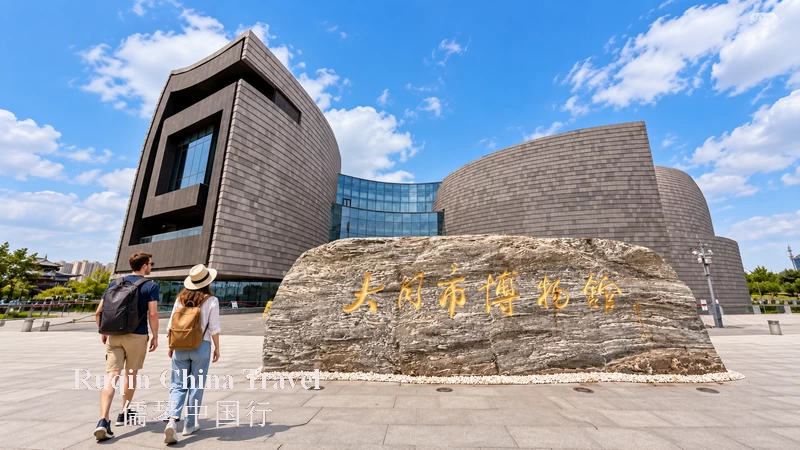
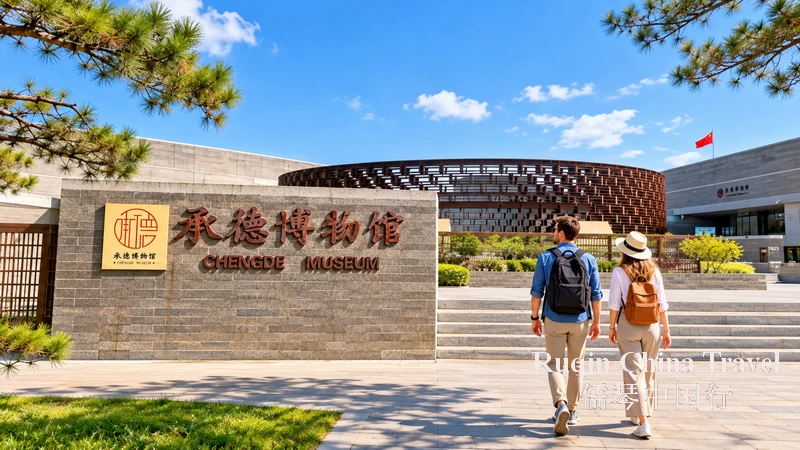
If you’re planning a trip to Chengde, I recommend visiting Chengde Museum (承德博物馆). It’s a good place to understand the city’s imperial history before exploring Chengde Mountain Resort (避暑山庄) and its surrounding temples.
How to visit Chengde Museum is quite straightforward. Admission is free. The museum is generally open Tuesday to Sunday, from 9:00 a.m. to 5:00 p.m., with last admission at 4:00 p.m.
Inside, you’ll find Qing Dynasty royal treasures, Buddhist sculptures, imperial clocks, and exhibits explaining Chengde’s close ties to the Qing emperors. Some displays also help you understand the history of the Mountain Resort and the surrounding temples.
I suggest allowing two to three hours for your visit. The museum has two main exhibition levels, including important collections on the basement level. Don’t overlook these downstairs galleries.
In this guide, I’ll show you how to reserve free tickets, explore the exhibitions floor by floor, and find the artifacts worth seeing. I’ll also explain how to get there, provide a location map, and share practical tips for fitting the museum into your Chengde itinerary.
1. Why Visit Chengde Museum?
Chengde Museum opened in November 2019 as the city’s first modern comprehensive museum. It is located near Puning Temple (普宁寺), within Chengde’s main imperial heritage area.
The museum is not simply a collection of historical objects. Its exhibitions help explain why Chengde became so important during the Qing Dynasty (1644–1912).
Chengde was more than a summer retreat for the emperors. It was also a place where the Qing court conducted political affairs, received leaders from different regions, and maintained relationships with Mongolian and Tibetan communities.
The museum’s exhibitions bring these different aspects of Chengde’s history together.
You can see objects once associated with imperial palaces and Buddhist temples. You can also learn about the daily lives of Qing emperors, the development of the Mountain Resort, and the cultural exchanges that shaped the city.
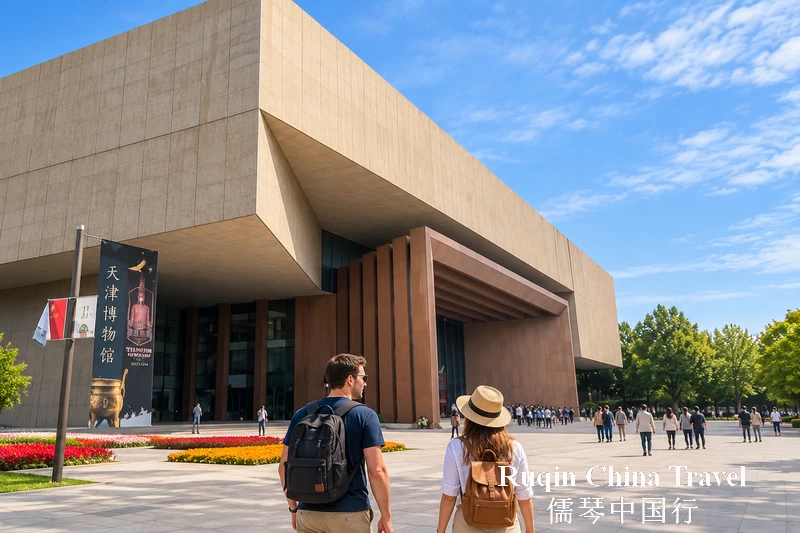
The museum’s architecture is worth noticing, too. Rather than constructing a tall landmark, its designers created a low-rise building with a large underground exhibition area, following the restrained architectural character of Chengde’s imperial landscape.
For first-time visitors, I suggest visiting the museum early in your stay. It will make the architecture and historical background of Chengde’s other attractions much easier to understand.
2. Chengde Museum Opening Hours and Free Tickets
Chengde Museum (承德博物馆) is free to visit, but all visitors must complete a real-name reservation before entering the exhibition halls.
The booking procedure is different for Chinese residents and international travelers. If you are visiting with a foreign passport, you will need to register at the museum in person.
Opening Hours and Admission
| Item | Details |
|---|---|
| Admission | Free for all visitors |
| Opening days | Tuesday–Sunday |
| Opening hours | 9:00 a.m.–5:00 p.m. |
| Last admission | 4:00 p.m. |
| Closed | Mondays, except public holidays; also closed on Chinese New Year’s Eve |
| Reservation | Required for domestic; international travelers book tickets on the spot |
| Recommended visit | 2–3 hours |
Ruqin’s Tip: Try to arrive before 3:00 p.m. This gives you enough time to enjoy the main exhibitions without rushing.
How International Travelers Can Get Free Tickets
If you are traveling with a foreign passport, there is one important detail to know.
Chengde Museum’s current WeChat reservation system only accepts mainland Chinese ID cards. Foreign passport holders cannot complete the online reservation.
However, international visitors can still enter the museum free of charge by registering in person.
Here is what I recommend:
- Bring your original passport. You will need it for identity verification.
- Go to the museum entrance. Look for the visitor service desk (服务台).
- Ask for an on-site reservation. Museum staff can help foreign visitors complete the registration.
- Present your passport. Staff will check your identification and available admission places.
- Enter the museum. Once your registration is confirmed, you can visit the exhibition halls.
Foreign permanent residence ID cards are also accepted for on-site registration.
There is no admission fee, and you do not need to buy a paper ticket.
However, on-site registration still depends on available visitor capacity. During busy periods, admission may not be possible if all places have been taken.
How Chinese Residents Can Reserve Online
Chinese residents with mainland ID cards can reserve free admission through the museum’s official WeChat account.
The procedure is straightforward:
- Open WeChat and search for 承德博物馆 (Chengde Museum).
- Follow the official account.
- Tap 参观预约 (Visit Reservation) in the bottom menu.
- Select your preferred date and available entry time.
- Enter the required identification details and submit your reservation.
One person can reserve up to three tickets.
Chinese visitors can usually verify their admission using a mainland ID card or an electronic social security card. There is no need to collect a paper ticket.
Telephone Reservations and Visitor Assistance
Chengde Museum also provides a telephone reservation service.
- Reservation telephone: +86 314 757 1777
- Telephone service hours: Tuesday–Sunday, 9:00 a.m.–4:30 p.m.
If you are an international traveler, I suggest calling before your visit, especially during summer holidays or Chinese public holidays.
Ask whether places are still available for your intended date. English-language assistance may not be available, so your hotel receptionist may be able to help.
You can also show your hotel staff this Chinese sentence:
我是一名外国游客,持外国护照。请问今天可以到承德博物馆现场预约参观吗?
I am an international visitor with a foreign passport. Can I make an on-site reservation to visit Chengde Museum today?
Can You Enter Without an Advance Reservation?
Yes, foreign passport holders can register on arrival, but registration is still required.
This is different from simply walking into the museum without any formalities.
For international travelers, the practical approach is to bring your passport, visit the entrance service desk, and ask staff to arrange your free admission.
During weekends, summer holidays, and major public holidays, I recommend calling ahead to check availability.
Ruqin’s Practical Tip: If you are staying in Chengde overnight, consider visiting the museum in the morning. You will have more flexibility if the museum is busy, and you can spend the afternoon exploring other attractions in Chengde.
3. First Floor: Chengde’s History and Imperial Gardens
Chengde Museum (承德博物馆) has two main exhibition levels: the ground floor (1F) and the basement (B1).
I recommend starting on the ground floor. Here, you can learn about Chengde’s early history and the development of the famous Mountain Resort.
Two major exhibitions are particularly worth visiting.
Chengde Through the Ages (和合承德——从远古走来)
This exhibition traces Chengde’s history from prehistoric times to the modern era.
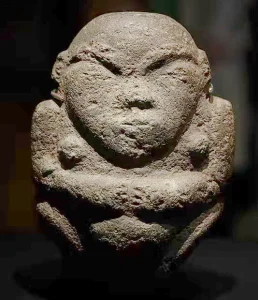
It begins with the Neolithic Hongshan Culture (红山文化), then explores the region’s connections with northern peoples, including the Shanrong, Xiongnu, Khitan, and Jurchen.
For international travelers, this exhibition provides useful background. Chengde was an important meeting place for different cultures long before the Qing emperors built their summer retreat.
Must-See Artifacts:
- Hongshan Culture Carved Stone Goddess (红山文化圆雕石刻女神像): A carved stone figure associated with the prehistoric Hongshan Culture. It offers a glimpse into early beliefs and artistic traditions.
- Jin Dynasty Bronze Distilling Vessel (金代青铜烧酒锅): An unusual historical vessel connected with traditional alcohol production during the Jin Dynasty.
- Qing Dynasty Blue-and-White Covered Meiping Vase with Peach Design (清代青花碧桃带盖梅瓶): A porcelain vase decorated with peach motifs, reflecting traditional Chinese ceramic craftsmanship.
Allow about 20–30 minutes for this exhibition.
Mountain Resort — A Classical Garden of Imperial Culture (避暑山庄——一座承载盛世传统文化的古典园林)
This is one of the most useful exhibitions if you plan to visit Chengde Mountain Resort (避暑山庄).
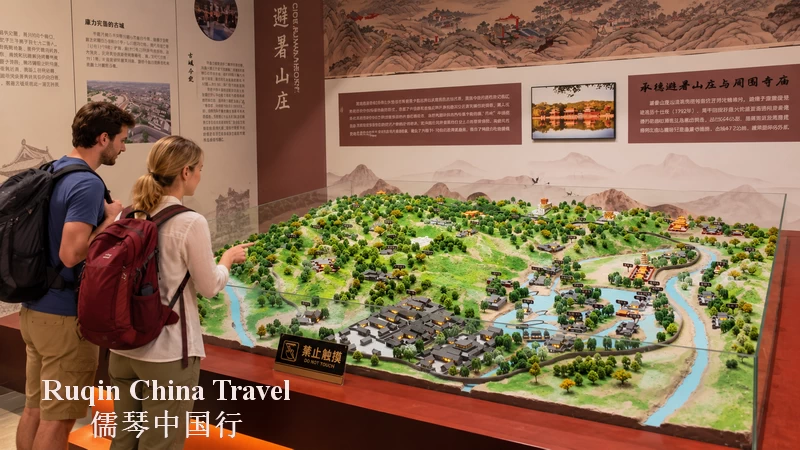
1:1000 Scale Model of Chengde Mountain Resort
It explains how the Qing emperors developed the Mountain Resort and how its architecture, gardens, and natural landscapes were carefully arranged.
The exhibition also introduces the resort’s four main landscape areas: Palace, Lake, Plains, and Mountains.
Must-See Artifacts and Displays:
- 1:1000 Scale Model of Chengde Mountain Resort (避暑山庄全景微缩沙盘): A detailed miniature model showing the resort’s overall layout. I particularly recommend studying this before visiting the actual gardens.
- Ge-Glazed Cong-Shaped Vase with Bagua Design (哥釉八卦琮式瓶): A ceramic vessel combining traditional glaze techniques with the eight-trigram design.
- Qianlong-Era Wintergreen-Glazed Brush Washer with Twin Fish and Raised Studs (清乾隆冬青釉双鱼鼓钉洗): A refined Qing court ceramic object featuring twin-fish decoration.
Spend about 20–30 minutes here, especially if this is your first visit to Chengde.
Ruqin’s Practical Tip: Look closely at the Mountain Resort scale model. It will help you understand the resort’s enormous size and why visiting every section in one day is difficult.
4. Basement Level B1: Qing Imperial Treasures and Buddhist Art
The basement level (B1) is the highlight of Chengde Museum.
It contains some of the museum’s most important Qing Dynasty artifacts, including imperial objects, Buddhist sculptures, and treasures connected with the Mountain Resort.
If you have limited time, I recommend spending more of it here.
Beyond the Great Wall — Ethnic Relations During the High Qing (望长城内外——清盛世民族团结实录)
This is one of Chengde Museum’s signature exhibitions.
It explores relations between the Qing court and different ethnic communities, particularly those connected with Mongolia and Tibet.
The exhibition features an impressive bronze representation of the Great Wall across three walls.
It also introduces the Qing emperors’ northern inspection tours, the Mulan Autumn Hunts (木兰秋狝), and important gatherings at Chengde.
The exhibition received national recognition as one of China’s outstanding museum exhibitions of 2019.
Must-See Artifacts:
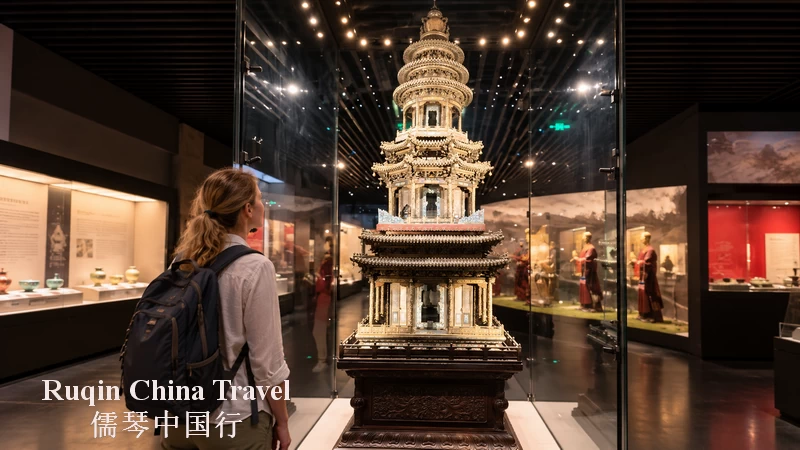
Qing Dynasty Copper Enamel Pagoda with Purple Sandalwood Base
- Qing Dynasty Copper Enamel Pagoda with Purple Sandalwood Base (清紫檀木座铜胎珐琅塔): One of the museum’s most celebrated treasures. Standing approximately 3.5 metres high and weighing about one tonne, it features elaborate craftsmanship. Its wooden structure reportedly includes more than 1,400 interlocking components assembled without nails.
- Qianlong-Era Jade Seal of the Emperor Emeritus (清乾隆青玉“太上皇帝之宝”玺): An imperial jade seal associated with the Qianlong Emperor’s status as retired emperor.
- Gilt-Bronze Statue of Tsongkhapa (铜鎏金宗喀巴像): A Buddhist sculpture depicting the influential Tibetan religious teacher Tsongkhapa.
Allow 30–40 minutes for this exhibition.
Treasures of the Qing Court — Tibetan Buddhist Art (清宫秘藏——藏传佛教文化展)
This exhibition introduces Tibetan Buddhist art collected and commissioned by the Qing imperial court.
It also helps explain the religious importance of Chengde’s Outer Temples (外八庙).
The displays include Buddhist sculptures, ceremonial objects, and finely decorated shrines.
Must-See Artifacts:
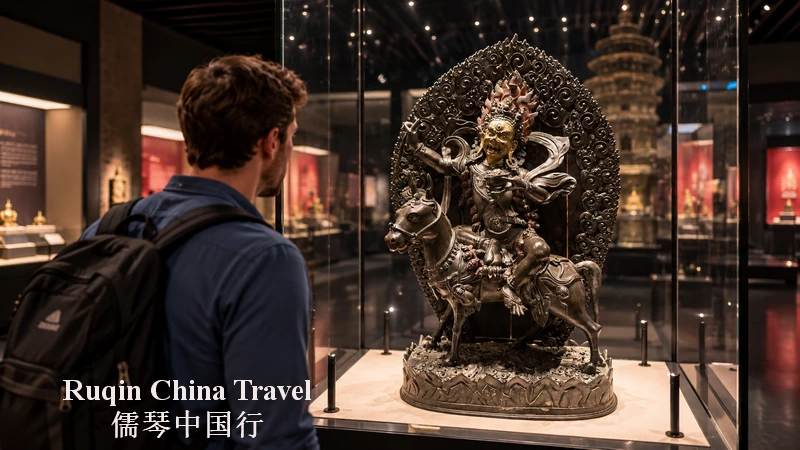
Purple-Gold Lhama Statue of Palden Lhamo (紫金琍玛吉祥天母像)
- Purple-Gold Lhama Statue of Palden Lhamo (紫金琍玛吉祥天母像): A Buddhist sculpture representing the protective deity Palden Lhamo.
- Silver-Gilt Peach-Shaped Buddhist Shrine Inlaid with Stones and Eight Auspicious Symbols (银鎏金嵌石八宝纹桃形佛龛): A finely decorated shrine featuring traditional Buddhist symbols.
- Gilt-Decorated Bronze Seated Statue of Ushnishavijaya (铜局部泥金错金尊胜佛母坐像): A Buddhist image with detailed metalwork and gold decoration.
If you plan to visit Putuo Zongcheng Temple or Puning Temple, spend some extra time here.
The exhibition provides useful background for understanding Chengde’s Tibetan Buddhist architecture and religious traditions.
Frozen in Time — Life of Qing Emperors and Empresses (凝固的时光——清代帝后生活展)
This exhibition offers a more personal look at life inside the Qing imperial court.
Rather than focusing only on politics, it explores six aspects of royal life, including clothing, food, government affairs, and leisure.
Reconstructed palace settings help visitors imagine how emperors and empresses lived.
Must-See Artifacts:
- Dark Brown Silk Dragon Robe with Woven Cloud and Dragon Patterns (酱色江绸织云龙龙袍): An example of Qing imperial clothing, decorated with traditional dragon motifs.
- Calligraphy of the Character “Longevity” by Empress Dowager Cixi (慈禧御笔“寿”字): A calligraphic work associated with Empress Dowager Cixi.
- Kingfisher Feather Hair Ornaments (点翠头面): Elaborate court accessories made using the traditional kingfisher-feather decoration technique.
- Large Doucai Porcelain Plate with Eight Auspicious Symbols (斗彩八宝大盘): A decorated porcelain plate featuring Buddhist auspicious motifs.
Allow approximately 20–30 minutes here.
I particularly recommend this gallery if you enjoy traditional Chinese clothing, decorative arts, and royal history.
Splendour of Time — Qing Court Clocks (时器华章——清代宫廷钟表展)
Introduced in 2026, this special exhibition features 33 clocks and timepieces dating from the 18th and 19th centuries.
The collection includes clocks made by Qing imperial workshops, alongside imported examples from Britain and France.
These objects show how Chinese and European craftsmanship influenced the Qing court’s decorative arts.
Must-See Artifacts:
- Qing Imperial Workshop Clocks (清代宫廷造办处御制钟表): Timepieces produced for the imperial court, combining mechanical engineering with elaborate decoration.
- 19th-Century British and French Court Clocks (19世纪英法进口宫廷御用钟表): Imported clocks that reflect the Qing court’s interest in European technology and craftsmanship.
This is a particularly enjoyable exhibition if you are interested in mechanical clocks, craftsmanship, or the history of cultural exchange.
Ruqin’s Practical Tip: If you have only two hours at Chengde Museum, start with the two main exhibitions on the ground floor. Then head to B1 and prioritize Beyond the Great Wall and Treasures of the Qing Court. These galleries provide some of the best background for visiting Chengde Mountain Resort and the Outer Temples.
Special exhibitions, including the Qing court clocks, may change. Check the museum’s current exhibition directory when you arrive.
5. My Recommended Two-Hour Museum Route
If this is your first visit, I suggest following a simple route rather than trying to examine every object.
Begin on the first floor with Chengde Through the Ages. Spend about 20 minutes understanding the city’s history.
Next, visit the Mountain Resort exhibition for another 20 minutes. This will help you recognize the architectural features you may see later at the actual resort.
Then go down to B1 and spend approximately 35 minutes in Beyond the Great Wall. Make sure you find the Purple Sandalwood-Base Copper Enamel Pagoda.
Continue to the Buddhist art gallery for about 25 minutes.
Use your remaining time for the Qing imperial life and clock exhibitions, depending on your interests.
This route takes approximately two hours, including short breaks.
If you enjoy historical artifacts and detailed exhibition labels, allow three hours instead.
6. Chengde Museum Location and How to Get There
Chengde Museum (承德博物馆) is located in Shuangqiao District (双桥区), near the junction of Puning Road (普宁路) and Shiziyuan Road (狮子园路).
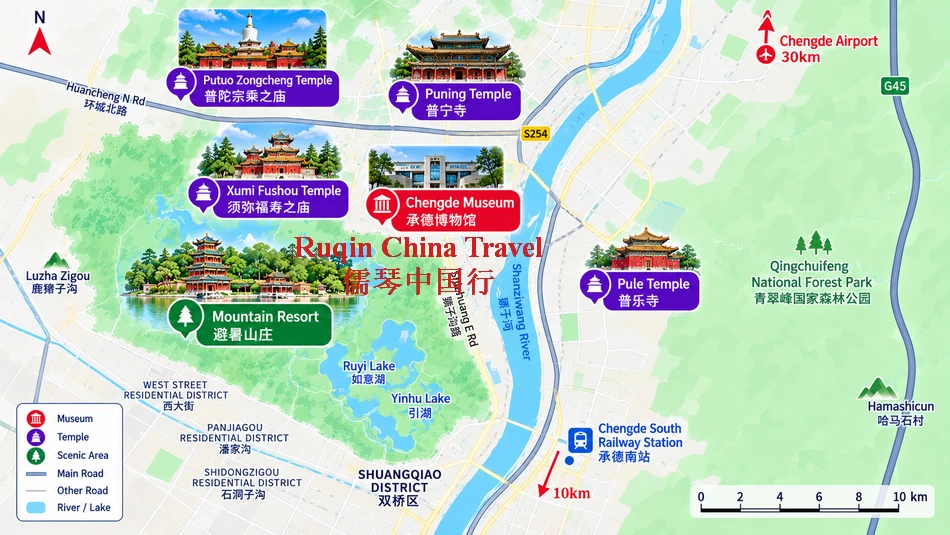
hengde Museum Location
The museum sits within Chengde’s main imperial heritage area, close to Puning Temple, Putuo Zongcheng Temple, and other famous Qing Dynasty attractions.
Chinese address for navigation:
河北省承德市双桥区普宁路与狮子园路交叉口东北侧,承德博物馆
For international travelers, I recommend using DiDi or a regular taxi. Simply enter 承德博物馆 into your navigation app.
Distances to Nearby Attractions
One advantage of Chengde Museum is its convenient location. Several major attractions are close enough to combine in a single day.
| Nearby attraction | Approximate distance and transport |
|---|---|
| Puning Temple (普宁寺) | About 500 m straight-line distance; roughly 5–10 minutes on foot from the temple exit |
| Putuo Zongcheng Temple (普陀宗乘之庙), also called the Little Potala Palace | About 1.5 km straight-line distance; around 20–30 minutes on foot or 5 minutes by taxi |
| Xumi Fushou Temple (须弥福寿之庙) | About 600 m by the reported walking route; roughly 8–10 minutes on foot |
| Chengde Mountain Resort (避暑山庄) | About 3 km straight-line distance; approximately 10 minutes by taxi from Dehui Gate (德汇门) |
These distances are approximate. Actual walking times depend on which entrance or exit you use.
Getting to Chengde Museum
By Public Bus
Take Chengde City Bus 6 and get off at the Chengde Museum (承德博物馆) stop.
From the bus stop, walk approximately 300 metres to the museum’s main entrance.
Check the latest bus route and stop location in Amap (高德地图) before traveling.
By Taxi or DiDi
This is the easiest option for most international visitors.
From the main Mountain Resort area, the journey usually takes about 10 minutes, depending on traffic.
A short taxi ride may cost around RMB 10, although the final fare depends on your pickup point and traffic conditions.
Show the driver this Chinese name:
承德博物馆
By Private Car
Chengde Museum has a large visitor parking area, with free parking reported in the latest local information.
If you are driving, confirm the current parking arrangements before arrival, especially during public holidays.
Combining Chengde Museum with Nearby Attractions
If you have a full day, you can combine the museum with two or three nearby temples.
Here is a practical route:
- Chengde Museum (承德博物馆): Start around 9:00 a.m. and spend 2 hours exploring the exhibitions.
- Puning Temple (普宁寺): Walk to the temple and see its enormous wooden Avalokitesvara statue.
- Xumi Fushou Temple (须弥福寿之庙): Continue by taxi or on foot, depending on your energy and the actual walking route.
- Putuo Zongcheng Temple (普陀宗乘之庙): Finish at the Little Potala Palace, one of Chengde’s most impressive Tibetan-style temple complexes.
Putuo Zongcheng Temple and Xumi Fushou Temple are close to each other. A free shuttle service has been reported between the two attractions, but check whether it is operating on your visiting day.
Ruqin’s Practical Tip: Although the attractions look close on a map, visiting all of them involves considerable walking, including steps and uphill sections at some temples. I recommend taking a taxi between the more distant stops, especially during hot summer weather.
If you also plan to visit Chengde Mountain Resort, allow at least half a day for it separately. The resort is enormous, and rushing through its gardens after several museum and temple visits would be tiring.
7. Practical Tips for International Visitors
Chengde Museum is relatively easy to visit, even if you don’t speak Chinese. However, knowing a few practical details before arriving can make your visit more comfortable.
Language and English Explanations
Most exhibition labels and historical explanations are in Chinese. Some objects may have foreign-language markings, but don’t expect every display to have a full English translation.
I recommend keeping a translation app ready on your phone. You can use its camera function to translate Chinese labels while exploring the galleries.
Photography Rules
You can generally take photos with your smartphone inside the exhibition halls. However, flash photography, tripods, and selfie sticks are not allowed. Professional filming may also require special permission.
Keep a safe distance from the exhibits, and avoid blocking other visitors. Some sensitive objects may have additional photography restrictions, so always follow the signs and staff instructions.
English Audio Guides and Guided Tours
The museum reportedly provides self-service audio-guide devices with Chinese and English explanations. These may be available to borrow without a rental fee, subject to a refundable deposit.
Ask at the visitor service centre (服务中心) about current availability, deposit requirements, and how to switch to English.
Guided tours may also be offered, but English-speaking guide availability should be confirmed on arrival.
Wheelchair Access and Accessibility
Chengde Museum is a modern indoor building, making it a practical option for travelers who prefer to avoid the steep paths and steps found at some of Chengde’s temples.
The museum provides accessible facilities and offers free wheelchair loans through its visitor service centre. Visitors with limited mobility may need a companion to assist them.
If you require step-free access, I suggest contacting the museum before your visit to confirm the lift arrangements and wheelchair availability.
Luggage Storage
If you’re visiting Chengde Museum before checking into your hotel or leaving the city, you may need somewhere to leave your luggage.
The storage options include:
- Small bags: Self-service lockers near the museum entrance.
- Large suitcases: Ask about luggage storage at the visitor service desk after security.
- Alternative storage: A third-party luggage-storage point has been reported about 70 metres from the museum’s west gate, with 24-hour service.
Storage availability, size limits, and charges may change. I recommend leaving large suitcases at your hotel whenever possible.
Visiting with Children
Chengde Museum can also be an interesting stop for families.
The museum has interactive digital displays that help children learn about historical objects. A digital collection display is on the north-side corridor of the first floor.
Other activities include AR artifact-restoration experiences, traditional handicraft workshops, and educational programs for families.
These activities may not operate every day. Check at the information desk to see what’s available during your visit.
Ruqin’s Tip: Before starting your visit, stop at the visitor service centre (服务中心). Ask about English audio guides, luggage storage, and any special exhibitions or family activities. A few minutes here can save you time later.
Ruqin’s Practical Tip
I recommend visiting Chengde Museum before exploring Chengde Mountain Resort (避暑山庄) and the Outer Temples (外八庙). The museum gives you useful background on Chengde’s imperial history and helps you better understand what you’ll see later.
Start with the history and garden exhibitions on the first floor. Then allow more time for the B1 galleries, especially those covering Qing Dynasty political history and Buddhist art.
Bring your original passport and allow enough time for entry procedures. Try to arrive in the morning or early afternoon rather than close to the 4:00 p.m. admission cutoff.
How to visit Chengde Museum is easy once you know the reservation process and exhibition layout. The museum cannot replace a visit to Chengde’s historic palaces and temples. Instead, it gives you the background to appreciate them more fully.
For me, Chengde Museum is a good starting point for discovering the city’s imperial past.
You May Also Like
Chengde Travel Guide: Map, Walking Routes, Highlights and Tips
Beijing to Chengde High-Speed Train Day Trip: A DIY Guide
How to Book Chengde Attraction Tickets: All You Need to Know
The Best Chengde Tour Itinerary – Ruqin China Travel
Beijing Chengde 2-Day Tour – Ruqin China Travel