
Written and updated by Ruqin
Last updated: May 22, 2026
Standing at the base of the Leshan Giant Buddha (乐山大佛), most people instinctively step back—then realize there’s nowhere far enough to take it all in. The scale shifts your sense of distance. But planning the trip from Chengdu brings a different kind of pause. Trains, stations, entrances, walking paths—none of it is difficult, but it’s not always obvious how it fits together.
So if you’re figuring out how to visit Leshan Giant Buddha from Chengdu, I’ll guide you through the parts that usually cause hesitation—so your day unfolds naturally, without second-guessing.
1. A Brief History of Leshan Giant Buddha
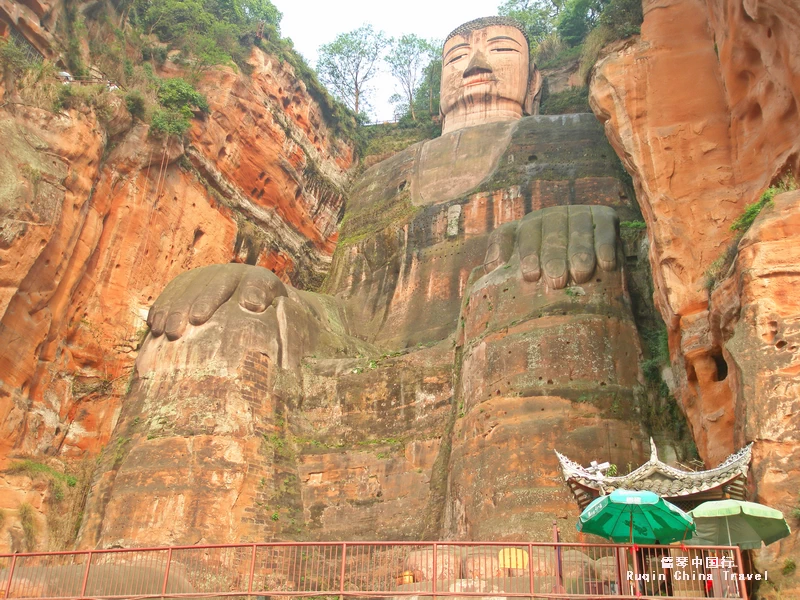
The Leshan Giant Buddha is not only the world’s largest stone Buddha, but it is also a masterpiece of ancient Chinese engineering. Carved out of a cliff face during the Tang Dynasty (618–907 AD), the statue stands at an awe-inspiring 71 meters tall.
Facing the confluence of the Minjiang, Dadu, and Qingyi rivers, it was built to calm the turbulent waters below, which posed a threat to passing boats. Over time, the Buddha became a symbol of spiritual and cultural significance in the region.
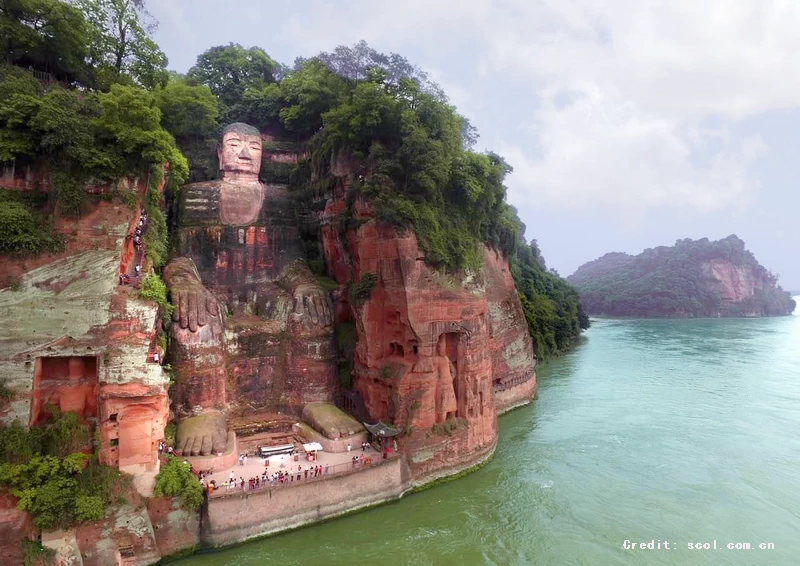
The construction of the Buddha took more than 90 years to complete. The detailed craftsmanship is still visible today, with the Buddha’s serene expression, flowing robes, and intricate hair curls.
When visiting, you’ll not only see the statue but also ancient carvings, temples, and stairways carved into the surrounding cliffs. This combination of history, religion, and engineering makes a visit to Leshan Giant Buddha an unforgettable experience.
2. How to Get to Leshan Giant Buddha from Chengdu
Planning the trip from Chengdu to Leshan is where many people hesitate—not because it’s hard, but because the choices aren’t immediately clear. At Chengdu East Station, looking at the departure board, it’s easy to wonder which train to take, or whether the bus might make more sense instead. In practice, both options get you there without trouble. The real difference is how much time you have and how simple you want the journey to feel.
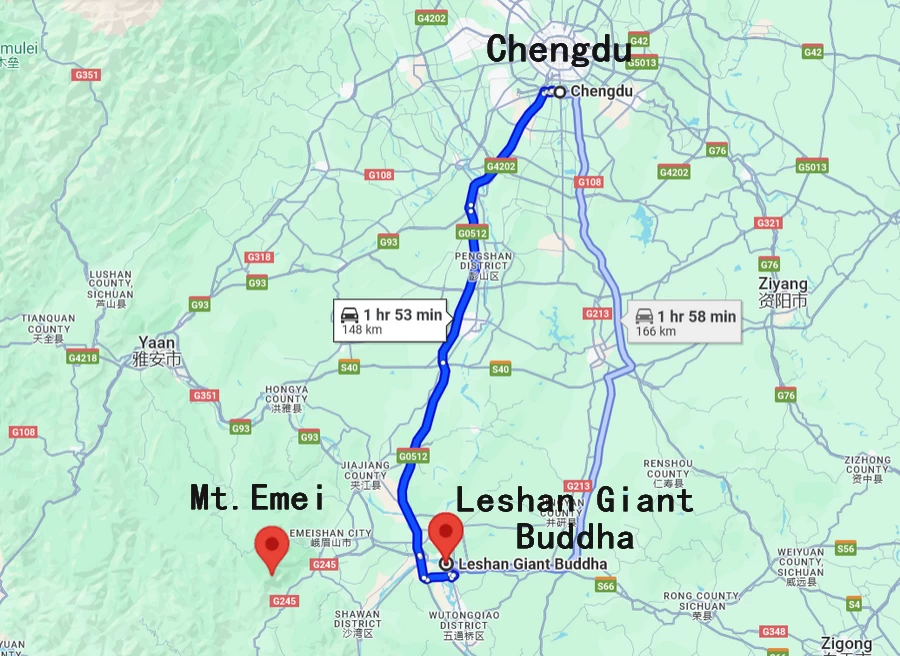
Traffic Map: Chengdu – Leshan – Mt.Emei
1) By High-Speed Train (Fastest and Easiest)
If you want a smooth, low-effort start, take the high-speed train. Trains leave frequently from Chengdu East and Chengdu South, and in about an hour, you’re already in Leshan.
What surprised me wasn’t the speed—it was how easy the last stretch was. From Leshan Railway Station, a short taxi ride (about 15–20 minutes) brings you straight to the scenic area entrance without much thinking. If you’re short on time or want predictability, this is the option that keeps everything flowing.
Booking is straightforward through the 12306 app or at the station, but during weekends or holidays, I always book a day ahead to avoid last-minute stress.
2) By Bus (Slower, but More Flexible)
Taking the bus feels different from the start. Departures from Xinnanmen or Shiyangchang stations are less structured, and the journey—around two hours—moves at a slower, more local pace.
I’ve taken this route on a less rushed trip, and what stood out wasn’t efficiency, but the gradual shift in scenery as Chengdu fades into smaller towns. Once you arrive in Leshan, you’ll still need a taxi or local bus to reach the Buddha, which adds an extra step.
So while the bus saves a bit of money, it does ask for a little more patience and awareness. If your schedule is loose, it works. If not, the train usually feels like the better trade.
3. Best Time to Visit Leshan Giant Buddha
The best time to visit Leshan Giant Buddha depends on the weather and crowd levels. For the most enjoyable experience, plan your trip during the spring (April-May) or autumn (September-October).
During these months, the weather is mild, and the scenic area is less crowded than during summer. Avoid visiting during Chinese holidays, such as Golden Week in October or Chinese New Year, as these are peak travel periods with larger crowds.

The Location Map: Giant Lesha Bhuddha and Leshan City
To further avoid crowds, plan your visit on a weekday and arrive early in the morning. The site opens at 8:00 a.m., and arriving early ensures that you can explore without heavy crowds. You’ll also have better lighting for photos during this time.
4. Walking vs. Boat Tour
To visit Leshan Giant Buddha, you have two main options for viewing the statue: walking through the scenic area or taking a boat tour. Both offer unique perspectives, and each has its advantages.
1) Walking Tour
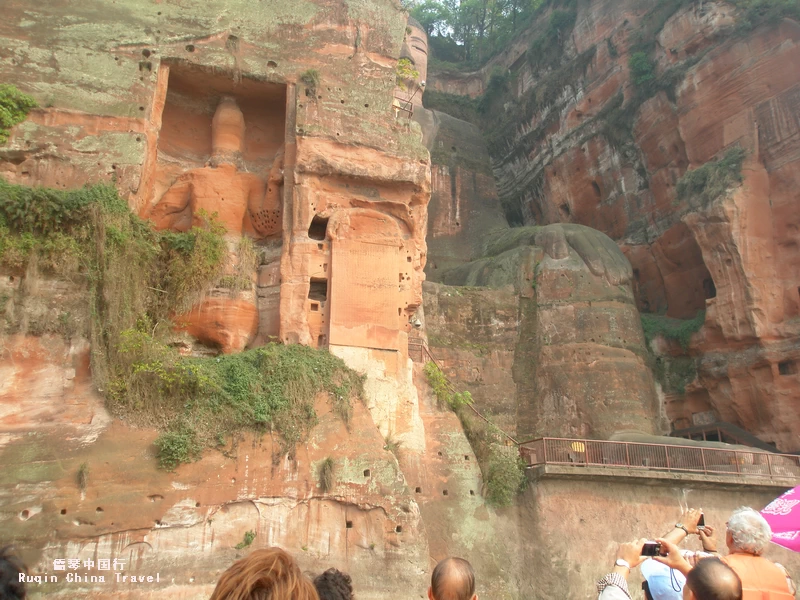
For a more immersive experience, explore the Leshan Giant Buddha scenic area on foot. The walking route allows you to get up close to the Buddha. You’ll enter the park at the top of the cliff and can walk down the Nine Bends Plank Road, a steep and narrow pathway carved into the mountainside, leading to the feet of the Buddha.
The hike offers breathtaking views, but be prepared for steep stairs and some crowds during peak times. Wear comfortable shoes and bring water, as the climb can be challenging, especially in warm weather.
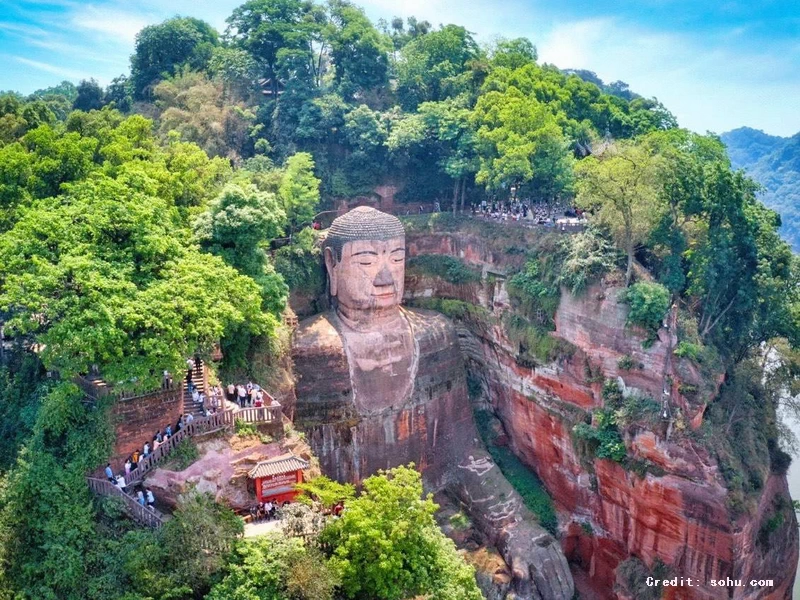
Leshan Giant Buddha Walking Tour
Along the way, you can also explore other attractions, such as Lingyun Temple, which is located near the Buddha’s head. This temple offers a peaceful atmosphere and beautiful views of the surrounding area. Another must-see spot is the Giant Sleeping Buddha, a natural formation in the mountains that resembles a reclining Buddha figure.
2) Boat Tour
If hiking isn’t your style or you prefer a panoramic view, taking a boat tour is a great alternative. The boat departs from a dock near the river and provides a fantastic full-frontal view of the Buddha from the water.

Leshan Boat Tour
You’ll get to appreciate the sheer scale of the statue without the crowds and effort of climbing. The boat tour lasts about 30 minutes, making it a quick and convenient option. However, it doesn’t allow you to see the finer details of the Buddha up close or explore the surrounding temples.
The Leshan Giant Buddha viewed from a moving boat
4. Entrance Fees and Opening Hours
Before your visit, it’s important to know the opening hours and entrance fees. The Leshan Giant Buddha scenic area is open daily from 8:00 a.m. to 5:30 p.m. during peak season (March-October) and from 8:30 a.m. to 5:00 p.m. during the off-season (November-February).
The entrance fee to the scenic area is approximately 80 RMB per person. If you decide to take the boat tour, tickets for the boat cost around 70 RMB.
Combination tickets, which include both the walking tour and the boat, may also be available, offering a convenient way to experience both perspectives.
5. Top Attractions Near Leshan Giant Buddha
Most people come for the Buddha, but once you’re inside the scenic area, the experience doesn’t really end there. I remember thinking I’d “just take a quick look around,” and then slowly realizing how much is layered into the cliffs, temples, and viewpoints around it. If you give yourself a bit of time, these nearby spots naturally fall into your route.
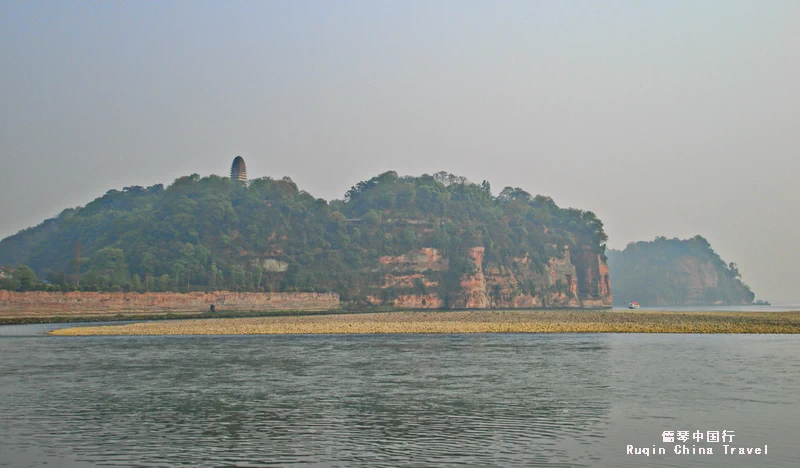
Giant Sleeping Buddha
Then there’s the Giant Sleeping Buddha—easy to miss unless you know to look from a distance.
Lingyun Temple sits just above the Buddha’s head, and you’ll likely pass through it without planning to. It’s quieter than expected, with shaded courtyards and occasional openings toward the river below. It’s a good place to pause before or after the climb.
Across the river, Wuyou Temple feels more removed. Fewer people make the effort to go, which is exactly why it stays peaceful. If you want a slower, less crowded perspective, this is where it shifts.
The Nine Bends Plank Road is the part most people remember physically. It’s steep, narrow, and slow-moving—but it’s also the only way to stand at the Buddha’s feet.
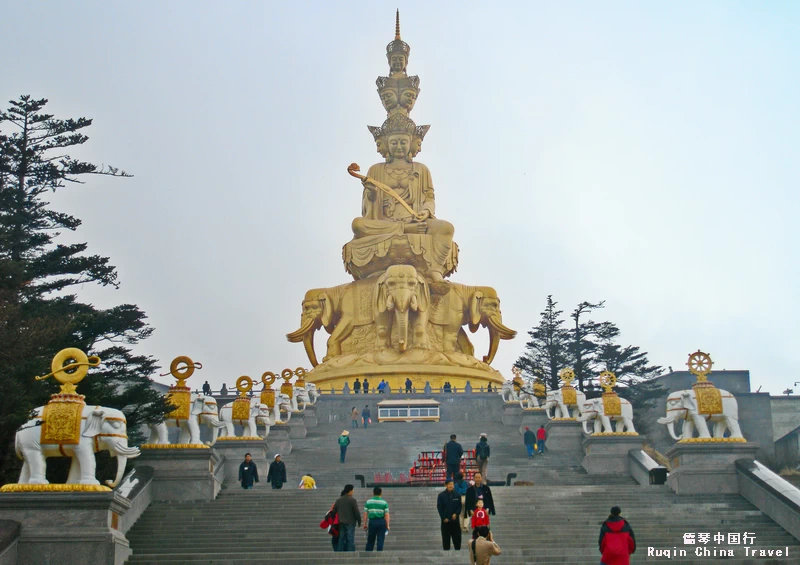
Mt.Emei Summit
If you have an extra day, Mount Emei pairs naturally with Leshan. It’s not a quick add-on, but if you go, it changes the pace of the entire trip.
6. Tips for Visiting Leshan Giant Buddha
What caught me off guard wasn’t the walking—it was how quickly small things added up. A missed turn, no water, arriving at the wrong time… none of it ruins the trip, but it can quietly wear you down. A little preparation goes a long way here.
Arrive earlier than you think you need to. The site gets crowded by late morning, especially near the plank road. Earlier hours feel noticeably calmer.
Bring your own water. Once you’re inside, options are limited and more expensive than expected. A small bottle makes a difference, especially on warmer days.
Wear proper shoes. The paths and stairs—especially along the cliff—are uneven and sometimes slippery. Comfort matters more than style here.
Expect humidity. Even on mild days, the air can feel heavy. Take breaks when you need to.
Be mindful of the setting. This isn’t just a viewpoint—it’s still an active cultural and religious site. A bit of awareness goes a long way.
7. Hotels and Dining Near Leshan Giant Buddha
Most travelers plan Leshan as a day trip—but I’ve found staying overnight changes the rhythm completely. You’re not rushing back to Chengdu, and the area feels quieter once the tour groups leave. That said, where you stay matters more than you might expect.
If your focus is the Buddha, staying near the scenic area makes for an easier start the next morning. Hotels like Leshan Baoli Holiday Hotel are practical and close by. If you prefer something with more atmosphere, Buddha Zen Hotel offers a calmer, more designed space that reflects the local setting. Staying in downtown Leshan gives you more food options, but adds a bit of travel time.
Food is where Leshan really opens up. The flavors are bold, but slightly different from Chengdu—less polished, more local. Try the sweet-skinned duck if you see it, and don’t hesitate to stop at small, busy places. Some of the best meals here aren’t planned—they’re the ones you notice while walking.
Leshan Giant Buddha FAQs
These are the questions I see come up again and again—and usually at the exact moment you’re trying to finalize your plan.
1. How far is Leshan from Chengdu? How long does it take?
It’s about 120–150 km. By high-speed train, you’re there in roughly an hour. Buses take closer to 2–3 hours, depending on traffic.
2. What’s the easiest way to get there?
Take the high-speed train, then a taxi from Leshan Station. It’s the least stressful option. Buses work too, but add extra steps.
3. How much time should I plan at the Buddha?
Around 3–4 hours is enough for most people. If you move slowly or add a boat ride, it can stretch into half a day.
4. When is it open, and how much is the ticket?
Tickets are about ¥80. Hours are roughly 7:30–18:30 in warmer months, slightly shorter in winter.
5. Boat or walking—what’s better?
They feel completely different. The boat shows the full scale. Walking brings you right up to it. If you have time, do both.
6. Should I go independently or join a tour?
If you’re comfortable navigating trains, go independently. If not, a tour removes the small uncertainties.
7. When’s the best time to visit?
Spring and autumn feel the most comfortable. Within the day, earlier or later is noticeably better than midday.
8. What should I bring?
Good shoes, water, and light sun or rain protection. The steps and humidity catch people off guard.
9. Can I store luggage or book tickets in advance?
Storage is limited. Travel light if you can. Most people buy tickets on arrival—simple and reliable.
10. What else is worth seeing nearby?
If you have time, Mount Emei pairs well with Leshan. Otherwise, stay in town a bit—Leshan’s food scene is worth slowing down for.
By the time you leave Leshan, it’s not just the size of the Buddha that stays with you—it’s how the whole place unfolds slowly, from river views to cliffside paths. Whether you see it from the water or stand at its feet, the experience feels different in person than anything you’ve seen in photos.
If you have the time, staying a bit longer—or pairing it with Mount Emei—changes the pace of the trip. But even as a day from Chengdu, it’s absolutely doable once you understand the flow.
About the Author
Ruqin is the founder of Ruqintravel.com and has spent more than four decades working in China’s travel industry. Drawing on hands-on experience in cities like Beijing and Hangzhou, he personally researches and updates each guide to help international travelers navigate China with confidence.
Further Reading
Dujiangyan Irrigation System, Chengdu: Your Complete Guide
How to Visit Mount Emei: Tickets, Transport, Routes, Hotels & Tips
Chengdu Panda Base: Tickets, Transport and Travel Guide
Chengdu Kuanzhai Alley: Your Complete Guide
How to Visit Jinli Ancient Street: Map, Food, Markets, Hotels & Tips
Chengdu People’s Park: Your Complete Guide
Jinsha Site Museum Chengdu: Tickets, Highlights, Map & Tips