Written and updated by Ruqin
Last updated: October 3, 2026
Just before sunset, Jinli Ancient Street begins to glow. Red lanterns flicker above the wooden shopfronts, the smell of grilled skewers drifts through the air, and the lane fills with the relaxed rhythm Chengdu is known for. Locals stroll slowly, snack in hand, while travelers pause for photos beneath the hanging lanterns.
Set beside the historic Wuhou Shrine, Jinli blends Three Kingdoms–style architecture with lively markets and classic Sichuan street food. In this guide, I’ll show you how to visit Jinli Ancient Street, what to see, what to eat, and a few simple tips to help you enjoy the experience without feeling overwhelmed by the crowds.
1. History of Jinli Ancient Street
Jinli Ancient Street (锦里), often simply called Jinli Street, traces its roots to the days of the Shu Kingdom during the Three Kingdoms period (220–280 AD). Historical records describe Jinli as a lively commercial lane where traders gathered to sell silk, handicrafts, and daily goods.
The name “Jinli” loosely suggests prosperity or “making a good living,” which reflects the street’s long connection to Chengdu’s merchant culture.
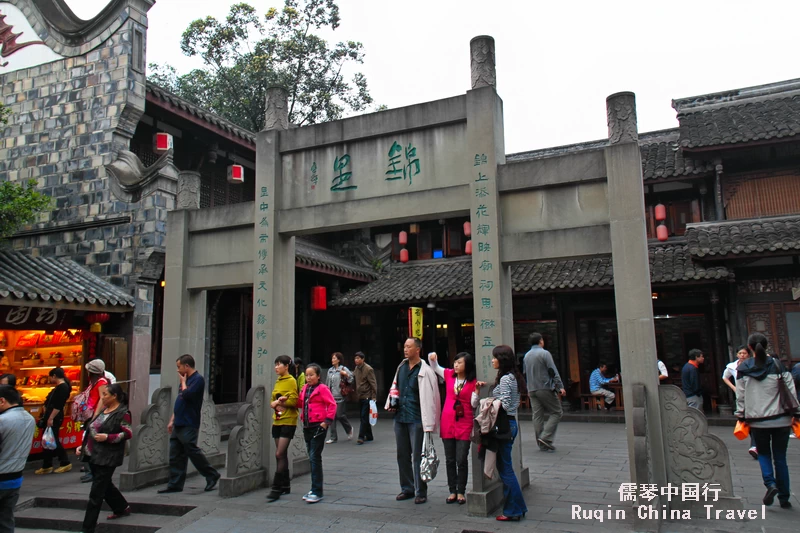
Jinli Ancient Street
Today’s Jinli Ancient Street is a carefully restored pedestrian lane beside Wuhou Shrine. The wooden buildings, red lanterns, and carved façades recreate the atmosphere of old Shu-style streets.
As you walk through Jinli Street now, you’re not just seeing architecture — you’re stepping into a space designed to echo Chengdu’s historic marketplace spirit, now filled with food stalls, tea houses, and small craft shops.
2. What to Do at Jinli Ancient Street
Jinli Ancient Street is more than just a historical landmark—it’s a vibrant cultural hub filled with things to see and do. Here are the highlights of Jinli Ancient Street that you shouldn’t miss:
1) Traditional Architecture
The first thing you’ll notice upon arriving at Jinli Street Chengdu is the beautiful architecture. The buildings, with their sloping roofs and wooden beams, evoke the elegance of ancient Chinese design.
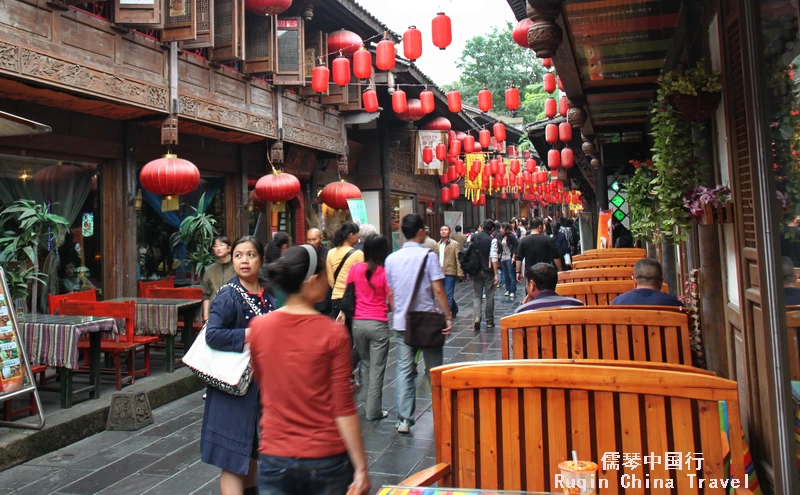
Jinli Street Chengdu
Many structures are decorated with red lanterns, adding to the festive atmosphere. Be sure to take a leisurely walk to appreciate the details, especially in the doorways and courtyards.
2) Cultural Performances
As you wander along Jinli Pedestrian Street, you’ll likely encounter traditional performances. These may include Sichuan opera, shadow puppetry, or folk music.
If you’re lucky, you might even catch a glimpse of the famous face-changing performance, a highlight of Sichuan opera. These performances are a fantastic way to immerse yourself in local culture and history.
Ancient Opera Stage
The Ancient Opera Stage is worth stopping at for more than its traditional architecture. After around 7:00 pm, you may come across free Sichuan Opera performances, including face-changing (变脸) and sometimes fire-breathing.

Free Sichuan Opera performances in Jinli Street
If a performance is taking place, stay for a while. The colorful costumes, quick movements, and traditional stage make this one of the more interesting places in Jinli for evening photography.
Fushou Alley
Fushou Alley (福寿巷) is one of Jinli’s most photogenic corners. Its long corridor of red lanterns has become a popular photo spot, especially after dark when the lanterns are illuminated.
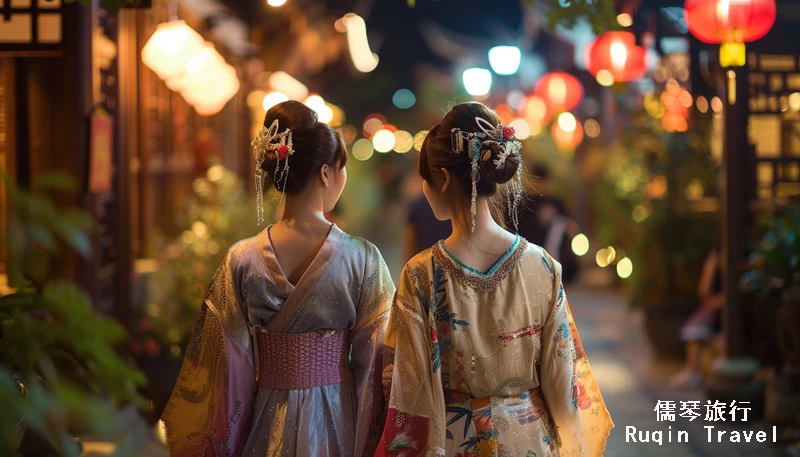
If you enjoy taking traditional-style photos, this is a good place to spend a little extra time. Hanfu or a qipao works particularly well against the red lanterns and old-style buildings.
3) Local Crafts and Souvenirs
One of the best things about visiting Jinli Ancient Street is the opportunity to purchase handcrafted souvenirs.
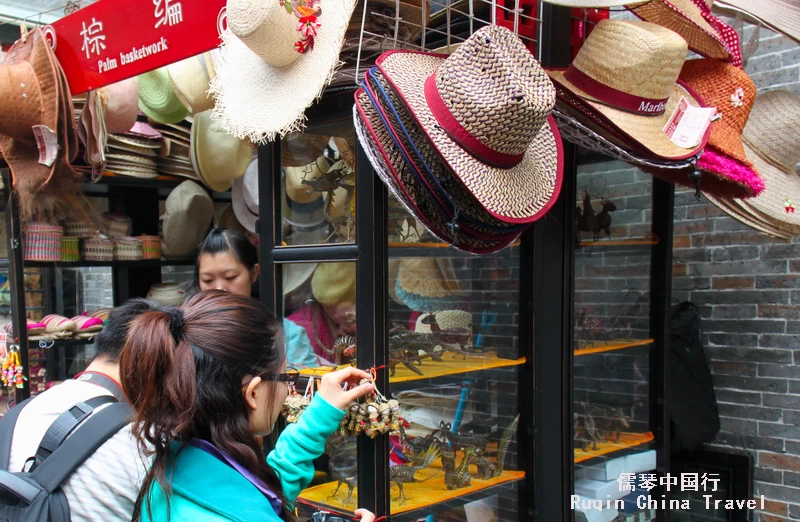
Local Crafts and Souvenirs at Jinli Street
You’ll find stalls selling everything from silk embroidery and paper cuttings to pottery and lacquerware. Many artisans work on-site, so you can see them creating these beautiful crafts firsthand.
4) Food and Snacks at Jinli Street
Chengdu is renowned for its food, and Jinli Street is no exception. The street is lined with stalls offering a variety of traditional Sichuan snacks.

The Street Food in Jinli Ancient Street
Don’t miss out on trying dumplings, spicy tofu, and the famous Chengdu hotpot. For those with a sweet tooth, candied hawthorn and sugar paintings are popular local treats. The lively food scene here is one of the top reasons visitors flock to Jinli.
2. How to Get to Jinli Street Chengdu
Jinli Ancient Street sits right beside Wuhou Shrine in central Chengdu, so reaching Jinli Street is quite straightforward. On my recent visits, I found the metro and taxi to be the easiest options, especially for first-time travelers navigating the city.

Jinli Ancient Street Map
By Metro
The metro is usually the most reliable way to get close to Jinli Ancient Street. Take Metro Line 10 to Wuhou ( Jinli Station ) and Jinli Street and Wuhou Shrine are just nearby.
Or take Metro Line 3 and 5 to Gaoshengqiao Station (高升桥站), from there, it’s about a 10–15 minute walk. The walk itself is pleasant and easy to follow — just head toward Wuhou Shrine, and you’ll soon see the entrance area leading to Jinli Street.
By Taxi
Taxis are convenient if you’re coming from another part of Chengdu or traveling with luggage. Most drivers know Jinli Street or Wuhou Shrine (武侯祠). From the city center, the ride usually takes 10–20 minutes depending on traffic. I usually show the driver “锦里古街” on my phone to make things simple.
By Bus
Several city buses stop near Wuhou Shrine, within walking distance of Jinli Ancient Street. Buses are inexpensive, but they can be slower and a bit confusing if you’re unfamiliar with Chengdu’s routes. For most visitors, the metro is the easier choice.
3. Best Time to Visit Jinli Ancient Street
Timing can really shape your experience at Jinli Ancient Street. I’ve walked through Jinli Street at different times of year, and the atmosphere changes more than you might expect.
Best Time of Year
Spring (March–May) and autumn (September–November) are the most comfortable seasons in Chengdu. The weather is mild, the humidity is lower, and strolling through Jinli Street feels much more enjoyable. Summer can be hot and humid, while winter is quieter but cooler.
Best Time of Day
For me, the best time to visit Jinli Ancient Street is after 5:30 pm. By then, many daytime tour groups are beginning to leave, and you can also avoid the strongest afternoon sun. More importantly, you can experience Jinli in both daylight and after dark.

For me, the best time to visit Jinli Ancient Street is after 5:30 pm
The lanterns usually come on around 6:30 pm. Once the rows of red lanterns are illuminated, the atmosphere changes completely. This is one of the best times for photography, especially around the traditional buildings and narrow lanes.
Allow about two hours if you mainly want to walk around, try some local snacks, browse the small shops, and take photos. You may want longer if you stop for dinner or watch an evening performance.
Jinli Ancient Street itself is free to enter and open throughout the day. However, the neighboring Wuhou Shrine (武侯祠) requires a separate ticket, currently RMB 50. Since the two are right next to each other, I recommend visiting Wuhou Shrine first in the afternoon, then walking into Jinli for the evening lights.
4. Hotels at Jinli Ancient Street
Staying near Jinli Ancient Street makes exploring this part of Chengdu much easier, especially if you plan to visit in the evening when the lanterns are lit and the food stalls are busiest. The area around Jinli Street and Wuhou Shrine has a good range of hotels, from simple guesthouses to comfortable international brands.
Budget-Friendly Stays
Around Jinli Street, you’ll find small guesthouses and budget hotels tucked into nearby side streets. These places are usually simple but clean, and the biggest advantage is location—you can walk to Jinli Ancient Street in just a few minutes. Budget rooms in this area typically range from about 120–220 RMB per night.
Mid-Range Hotels
For more comfort, several reliable mid-range hotels sit within a short taxi or metro ride of Jinli Street. Properties like Holiday Inn Express offer modern rooms, breakfast, and dependable service. This category usually runs around 300–600 RMB per night and works well for most travelers.
Luxury Hotels
If you prefer a more upscale stay, Chengdu has excellent luxury hotels in the city center. Well-known options such as Shangri-La Chengdu and The Ritz-Carlton Chengdu offer spacious rooms, great restaurants, and full hotel facilities. These are about 10–15 minutes from Jinli Ancient Street by taxi.
5. Night Market at Jinli Street
As evening settles in, Jinli Ancient Street shifts into a completely different mood. The red lanterns glow above the wooden roofs, snack stalls begin to fill with people, and the whole lane feels more festive. When I walk through Jinli Street at night, the smell of grilled skewers, spicy noodles, and sweet snacks drifts through the air almost everywhere.
Food is the real highlight here. You’ll see vendors grilling meats, pulling hand-made candies, and painting delicate sugar figures right in front of you. Small shops stay open late, selling opera masks, handicrafts, and Sichuan-style souvenirs.
It does get crowded in the evening, but that energy is part of the charm. If you want to experience the liveliest side of Jinli Ancient Street, night is when the street truly comes alive.
6. Ruqin’s Travel Notes
A few practical tips can make your visit to Jinli Ancient Street more enjoyable:
- Come in the early evening for the night atmosphere. I suggest arriving after 5:30 pm. The lanterns usually begin lighting up after 6:30 pm, when Jinli becomes especially atmospheric and photogenic.
- Combine Jinli with Wuhou Shrine. The two attractions sit next to each other, so they work naturally as one visit. Explore Wuhou Shrine in the daytime, then walk over to Jinli for dinner and the evening lights.
- Wear something that works well in photos. If photography is part of your visit, Hanfu, a qipao, or light-colored clothing can look particularly good against Jinli’s traditional architecture and red lanterns.
- Be sensible about food and shopping. Jinli is a popular tourist area, so snacks and souvenirs can be more expensive than elsewhere in Chengdu. Check the price before ordering or buying, especially at food stalls. I usually recommend trying a few things rather than buying too much at one place.
FAQs: Visiting Jinli Ancient Street, Chengdu
If you’re looking for a fun way to end your day, visiting the night market is a must. It’s a fantastic opportunity to experience Chengdu’s nightlife and enjoy the vibrant local cultureFAQs: Visiting Jinli Ancient Street, Chengdu
1. Is there an entrance fee for Jinli Ancient Street?
No. You can stroll through Jinli Street for free. Just pay for snacks, shopping, or performances.
2. How long should I spend there?
Most visitors spend around 2–3 hours on Jinli Street. That gives time to eat, shop, browse, and enjoy local performances.
3. What snacks should I try on Jinli Ancient Street?
Don’t miss dandan noodles, bingtanghulu (candied fruit skewers), stinky tofu, or local specialties like Zhang Fei beef and beef cake.
4. Are there cultural performances on Jinli Street?
Yes! You’ll find Sichuan opera face-changing, shadow puppetry, live folk music, and traditional festivals on Jinli’s wooden stage.
5. When is the best time to visit for fewer crowds or best photos?
Visit between 9–11 AM for quieter moments. For magical night scenes, come after 8 PM, when red lanterns glow and performances begin. Avoid weekends and holidays if possible.
6. Is Jinli Street family‑friendly and easy for foreign visitors?
Absolutely. JInli Street welcomes international guests with a relaxed vibe. English signage is limited, but translation apps or a guide help. Beware of crowds on peak days.
7. Where should I stay near Jinli Street?
You can stay right on Jinli Street in Qing-Dynasty–style inns for an immersive experience. Or find nearby hotels in Jinjiang District for more affordable comfort.
8. How do I get there?
Jinli is located next to the Wuhou Temple in downtown Chengdu. It’s walkable and also served by nearby metro/bus stops.
9. Is Jinli worth a photo stop?
Definitely. Cinluding its graceful archway, lantern-lit alleys, and atmospheric Huanglong Pond—especially at dusk. Many social media–worthy spots await.
10. What else can I explore nearby?
Pair Jinli with the nearby Wuhou Shrine and Kuan Zhai Alley for a fuller cultural day. Chengdu’s gastro scene and nearby panda base also make great combo trips.
Jinli Ancient Street is one of those places in Chengdu where history, food, and everyday local life come together in a single walkable lane. Each time I visit Jinli Street, I notice something new — a snack stall I hadn’t tried before, a small craft shop, or a quiet tea corner tucked behind the busy crowds.
To really enjoy the experience, I usually suggest arriving in the late afternoon and staying into the evening. This timing lets you explore the street before it becomes too crowded, and then watch Jinli slowly light up as the lanterns glow and the night market begins.
With this guide on How to Visit Jinli Ancient Street, you’ll be ready to explore one of Chengdu’s most atmospheric streets at a relaxed, enjoyable pace.
About the Author
Ruqin is the founder of Ruqintravel.com and has spent more than four decades working in China’s travel industry. Drawing on hands-on experience in cities like Beijing and Hangzhou, he personally researches and updates each guide to help international travelers navigate China with confidence.
Further Reading
Chengdu Kuanzhai Alley: Your Complete Guide
How to Visit Jinli Ancient Street: Map, Food, Markets, Hotels & Tips
Chengdu People’s Park: Your Complete Guide
Jinsha Site Museum Chengdu: Tickets, Highlights, Map & Tips
Chengdu Panda Base: Tickets, Transport and Travel Guide