
Written and updated by Ruqin
October 13, 2026
Beijing is not an easy destination for travelers with severe food allergies. Restaurant staff may be helpful, but allergy procedures, ingredient records, and protection against cross-contact are not always as formal as visitors expect.
The short answer is to prepare before arriving. Carry your prescribed emergency medicine, bring a precise allergy card in Chinese, choose staffed restaurants where the kitchen can answer questions, and keep simple backup food with you. If trace exposure could cause anaphylaxis, do not depend on a verbal promise or translation app alone.
Understand the Main Difficulty
The greatest problem is not finding food without an obvious peanut, shellfish, egg, or sesame garnish. It is identifying ingredients hidden in cooking oil, sauces, stock, marinades, seasonings, and shared kitchen equipment.
A waiter may correctly tell you that a dish contains no peanuts while overlooking peanut oil, a prepared sauce, or contact with another dish. The same wok, fryer, knife, chopping board, or serving utensil may be used for several foods.
This does not mean restaurant staff are being careless. In many small restaurants, recipes are adjusted by the cook and formal allergen procedures may not exist. The person taking your order may also be unable to guarantee what happens inside the kitchen.
For a mild intolerance, this may be manageable. For a life-threatening allergy, it requires a much more cautious approach.
Prepare Before Your Beijing Trip
Discuss the journey with your doctor or allergy specialist. Bring enough prescribed medicine for the entire trip, plus a reasonable reserve in case your journey is delayed.
Keep essential medicine in your hand luggage rather than a checked suitcase. Store it according to the manufacturer’s instructions, and carry a copy of the prescription or a doctor’s letter when appropriate.
Your preparation should include:
- Prescribed epinephrine (肾上腺素) or other emergency treatment
- A medical identification card or bracelet
- A printed Chinese allergy card
- The same card saved offline on your phone
- Original medicine packaging
- Travel insurance covering emergency medical care
- Addresses of suitable hospitals near your hotel
- Several familiar snacks for long sightseeing days
Do not assume you can quickly replace a particular foreign-brand autoinjector at a Beijing pharmacy. Bring what your doctor has prescribed rather than planning to buy it after arrival.
Make a Precise Chinese Allergy Card
A card saying only “I cannot eat nuts” is not enough. It should identify the exact allergen, explain the severity, include related ingredients, and mention cross-contact.
A useful template is:
我对 ______ 严重过敏。少量也可能引起危及生命的过敏反应。请不要在我的食物中使用这种成分,也不要使用接触过这种成分的锅、油、刀具、砧板或餐具。如果不能保证安全,请直接告诉我。
Wǒ duì ______ yánzhòng guòmǐn. Shǎoliàng yě kěnéng yǐnqǐ wēijí shēngmìng de guòmǐn fǎnyìng. Qǐng búyào zài wǒ de shíwù zhōng shǐyòng zhè zhǒng chéngfèn, yě búyào shǐyòng jiēchù guò zhè zhǒng chéngfèn de guō, yóu, dāojù, zhēnbǎn huò cānjù. Rúguǒ bùnéng bǎozhèng ānquán, qǐng zhíjiē gàosu wǒ.
“I have a severe allergy to ______. Even a small amount may cause a life-threatening reaction. Please do not use this ingredient in my food or use cookware, oil, knives, chopping boards, or utensils that have touched it. If you cannot guarantee this, please tell me directly.”
Have the final Chinese checked by a fluent speaker who understands the medical meaning. A literal machine translation can confuse an allergy with a preference or digestive discomfort.
Useful allergen names include:
| English | Chinese |
|---|---|
| Peanuts | 花生 |
| Peanut oil | 花生油 |
| Tree nuts | 坚果 |
| Sesame | 芝麻 |
| Sesame oil | 芝麻油 |
| Soy | 大豆 |
| Wheat | 小麦 |
| Gluten | 麸质 |
| Milk/dairy | 牛奶及乳制品 |
| Egg | 鸡蛋 |
| Shellfish | 甲壳类海鲜 |
| Fish | 鱼类 |
List the specific foods that affect you. “Tree nuts,” for example, can be too broad unless the card also names your individual allergens.
Choose Restaurants Carefully
A larger hotel restaurant, established chain, or professionally managed dining room is generally easier than a crowded street stall. This is not because expensive food is automatically safer. Larger operations are simply more likely to have a manager who can speak with the kitchen and check packaged ingredients.
Contact the restaurant before visiting when possible. Ask your Beijing hotel to call and explain the allergy in Chinese. A clear refusal is more useful than an uncertain promise.
At the restaurant:
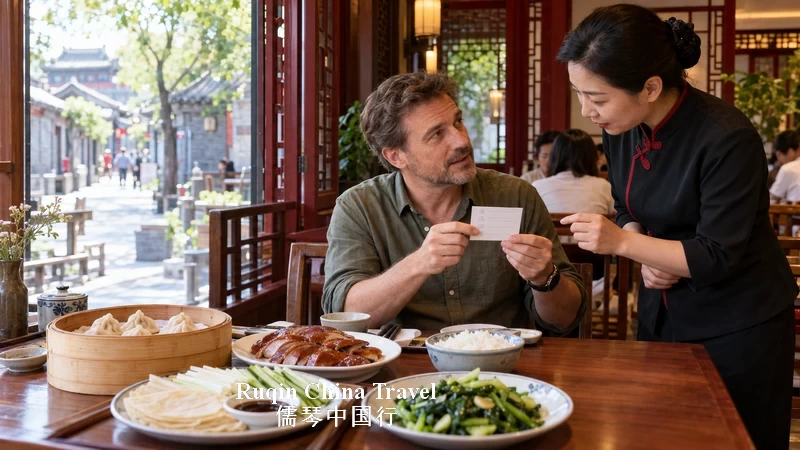
- Show the allergy card before ordering.
- Ask to speak with the manager.
- Request that the card be shown to the cook.
- Ask about oil, sauces, stock, and shared equipment.
- Confirm the dish again when it arrives.
- Leave if the answers remain vague.
Do not feel embarrassed if a restaurant says it cannot serve you safely. That is a responsible answer.
Be Careful with Buffets and Street Food
Buffets create additional risks because guests share serving utensils and move food between dishes. Labels may identify the main dish without listing every sauce or garnish.
Street stalls and compact breakfast shops often have one cooking surface, one fryer, and limited space for separating ingredients. They can be enjoyable for many travelers, but they are difficult choices when trace exposure is dangerous.
Food delivery also removes the face-to-face conversation with the restaurant. A note entered into an app may not reach the person preparing the order.
Beijing Foods That Need Extra Questions
Ingredients differ between restaurants, so no Beijing dish should be declared universally safe or unsafe. However, several common foods deserve careful checking.
Peking Duck
The duck itself is only part of the meal. Ask about the sauce, pancakes, marinades, side dishes, and preparation area. Wheat is normally present in the pancakes, while sauces may include soy or other ingredients not obvious from the English menu.
Dumplings, Baozi and Noodles
The filling may contain sesame oil, soy sauce, egg, shellfish, or mixed meat ingredients. Wheat is normally present in wrappers and most ordinary noodles.
Boiling does not prevent cross-contact. Different dumplings may be cooked together or handled on the same preparation surface.
Hotpot
Hotpot lets you see the raw ingredients, but that does not make it automatically allergy-safe. The soup base, dipping sauce, meatballs, tofu products, and prepared pastes can contain several allergens.
Shared sauce counters and communal pots create further risk. A private pot is preferable, but the kitchen still needs to check the broth and prepared ingredients.
Breakfast Foods
Jianbing commonly contains wheat, egg, sauces, and a crisp fried filling. Doufunao contains soy and may arrive with a seasoned sauce or small toppings. Baozi fillings are not always visible.
A simple bowl of plain rice congee may appear safer, but check side dishes and confirm that nothing has been added.
Shopping for Packaged Food
Large supermarkets give you more time to inspect packaging than a busy restaurant does. However, most ingredient and allergen information will be in Chinese.
Useful label terms include:
- 配料表 — ingredient list
- 过敏原信息 — allergen information
- 可能含有 — may contain
- 生产日期 — production date
- 保质期 — shelf life
Translation tools can help you understand a label, but do not treat an automated translation as a safety guarantee. Formulas can also differ from products carrying the same brand name in another country.
For a severe allergy, choose simple products with short, clear ingredient lists. Avoid unpackaged bakery goods, mixed snack bins, and foods whose labels you cannot interpret confidently.
Plan Food Around Your Sightseeing Day
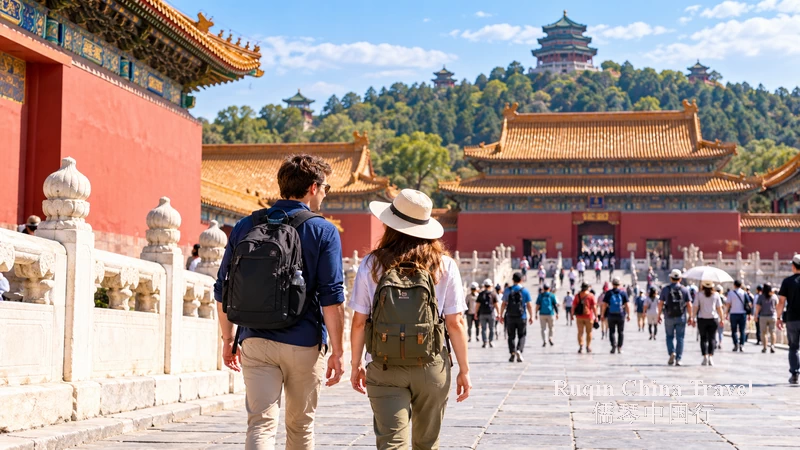
Beijing attractions can involve long walks, security checks, timed entry, and limited opportunities to leave and return. Do not enter the Forbidden City or begin a Great Wall trip expecting to solve a complicated food problem later.
Eat a verified breakfast before departure. Carry safe snacks, water, medicine, and the Chinese name of your allergy.
For a day at Mutianyu or Badaling, bring more backup food than you would for Wangfujing. Returning quickly to your hotel or preferred restaurant is harder from the Great Wall.
Do not place emergency medicine inside a stored suitcase. Keep it on your person, together with your passport and phone.
If an Allergic Reaction Occurs
Follow the emergency plan given by your doctor. If you have been prescribed epinephrine, use it according to your medical instructions rather than waiting to see whether a serious reaction becomes worse.
Call 120 for an ambulance in Beijing. Ask a hotel employee, restaurant manager, guide, or Chinese-speaking bystander to help communicate your exact location if necessary.
Useful emergency text:
我可能发生了严重过敏反应。请立即拨打120叫救护车。
Wǒ kěnéng fāshēng le yánzhòng guòmǐn fǎnyìng. Qǐng lìjí bōdǎ yāo-èr-líng jiào jiùhùchē.
“I may be having a severe allergic reaction. Please call 120 for an ambulance immediately.”
Do not travel across Beijing to a preferred international clinic if your condition is rapidly worsening. Emergency care comes first.
Peking Union Medical College Hospital’s International Medical Services at its Dongdan campus provides 24-hour emergency care.
Hotline: 69156699, press 2 for English; official website: Visiting Process for International Patients.
Beijing United Family Hospital also operates a 24-hour emergency department. Save current contact details and a hospital name in Chinese before your trip, but use 120 during a medical emergency.
Hotline: 59277120; official website: Beijing United Family Hospital and Clinics.
Ruqin’s Practical Advice
Traveling in Beijing with a food allergy is possible, but the plan should reflect the severity of the condition. A mild intolerance and an anaphylactic allergy do not require the same precautions.
For a severe allergy, I would choose accommodation near reliable food and medical care, speak with restaurants before arriving, carry a professionally checked Chinese allergy card, and keep backup meals for difficult days. I would also avoid street stalls, buffets, and any kitchen that cannot give a clear answer about oils and cross-contact.
Beijing offers a great deal of food, but you do not need to sample everything. A simple meal that you understand is better than taking a serious risk for the sake of being adventurous.
Further Reading
Buying Medicine in Beijing: Pharmacy Guide for Travelers
Best Street Food in Beijing: What to Eat and Where to Find It
Early Breakfast in Beijing: A Practical Sightseeing Guide
What to Eat in Beijing: Peking Duck, Jiaozi, Hotpot & Street Food
Peking Duck for Solo Travelers in Beijing
Top 10 Vegetarian Restaurants in Beijing
How to Order Food with QR Code Menus in China