
Written and updated by Ruqin
Last updated: May 22, 2026
The first time I figured out how to use the Xi’an subway, I was standing near the Bell Tower watching buses crawl through traffic and taxis fill up fast. Then I noticed the simple red Metro sign pointing underground. Ten minutes later, I was gliding across the city in a cool, quiet train. That was the moment I realized the subway is often the easiest way to get around Xi’an.
In this quick guide, I’ll walk you through how to take the Xi’an metro step by step—from buying tickets to reading the metro map and making transfers with confidence.
Whether you’re heading to the Terracotta Warriors, the Muslim Quarter, or the Ancient City Wall, the metro gets you there quickly and affordably.
1. Why Use the Xi’an Subway?

The first thing I noticed after a day of walking around Xi’an’s city center was how unpredictable traffic can be. Buses move slowly and taxis often get stuck near popular sights like the Bell Tower. That’s when the Xi’an subway starts to make real sense.
The metro is fast, reliable, and surprisingly easy to use—even for first-time visitors. Most rides cost only a few yuan, so it’s one of the cheapest ways to move across the city.
Stations are modern and clearly organized. Signs and announcements appear in both Chinese and English, which makes navigating far less stressful.
Even better, several major attractions sit right along metro lines, including the City Wall and the Big Wild Goose Pagoda. And in Xi’an’s hot summers, the air-conditioned stations and trains are a welcome break from the heat.
2. Understanding the Xi’an Metro Map

When figuring out how to use the Xi’an Subway, your first step is understanding the metro map. It may look busy at first glance, but it’s actually very user-friendly—even for non-Chinese speakers.
The Xi’an Metro currently has 9 lines, with more under construction. These lines connect most of the city’s major attractions, including historical landmarks, shopping areas, and scenic spots.
Each line is color-coded, making it easy to follow your route. Station names are clearly marked in both Chinese and English, and trains announce each stop in both languages. So even if it’s your first subway ride in China, you’ll be just fine.
Here are a few must-know stations for travelers:
- Beidajie (Lines 1 & 2) – Transfer station for the Bell Tower and Drum Tower
- Dayanta (Line 3) – Closest stop to the Big Wild Goose Pagoda
- Xiaozhai (Line 2) – Popular for shopping and food streets
- Huaqingchi (Line 9) – Nearest to the Terracotta Warriors
Take a few minutes to review the map before each ride. Once you understand the layout, how to use the Xi’an metro becomes quick and easy—just tap, ride, and explore.
3. How to Buy Xi’an Subway Tickets

Purchasing tickets is one of the first things you’ll need to know about how to use the Xi’an subway. Luckily, the process is straightforward and tourist-friendly. There are two primary ways to buy tickets:
- Ticket Machines: Available at every subway station, these machines offer an easy way to purchase tickets. You can switch the language to English, making it simple for foreign tourists. You just need to select your destination, and the machine will calculate the fare. After payment (either in cash or via mobile payment apps like WeChat or Alipay), the machine will dispense your ticket.
- Ticket Counters: If you’re more comfortable interacting with staff, you can also buy tickets at the counter. Simply tell the attendant your destination, and they will issue the appropriate ticket.
For tourists planning to use the subway multiple times, consider purchasing a Xi’an metro pass (Metro Card).
4. Xi’an Metro Tourist Passes: 1-Day and 3-Day Options
If you’re exploring multiple sights, tourist metro passes are a great way to save time and money. Although there’s no 2-day pass, Xi’an offers two solid options:

1) Day Pass (24-Hour Ticket)
- Price: 15 RMB
- Valid for 24 hours from your first metro entry
- Unlimited rides on all lines, including Line 9 to Lintong
- Where to buy: Any metro service desk
- Perfect for: Travelers planning a packed sightseeing day

2) 3-Day Pass (72-Hour Ticket)
- Price: 40 RMB
- Valid for 72 hours from your first entry
- Also offers unlimited metro rides during the valid period
- Where to buy: Metro service desks, especially near tourist hubs
- Ideal for: Visitors staying 2–3 days with multiple stops planned
3) How to Buy and Use
- Buy directly at any metro service center with cash or mobile payment
- Hotspots like Bell Tower, Big Wild Goose Pagoda, and North Railway Station usually have stock
- One card per person (no sharing)
- Not refundable—but it makes a great keepsake!
4) Example Itineraries
1-Day Pass: Bell Tower → City Wall → Shaanxi History Museum → Big Wild Goose Pagoda → Great Tang All Day Mall
3-Day Pass: Terracotta Warriors → Huaqing Palace → Downtown favorites like Muslim Quarter and Daming Palace
These passes make riding the Xi’an Metro simple—and your sightseeing smoother.
5. Xi’an Subway Ticket Prices
One of the best things about learning how to use the Xi’an Subway is how affordable it is.
Fares are based on distance traveled—the farther you go, the more you pay. But don’t worry, it’s still budget-friendly for most visitors.
Here’s a quick fare breakdown:
- 2 RMB for 1–6 stations
- 3 RMB for 7–10 stations
- 4 RMB for 11–14 stations
- 5 RMB for 15–19 stations
- 6 RMB for 20–25 stations
- 7 RMB for 26+ stations
That’s roughly $0.30 to $1.10 USD per ride.
Even with a full day of sightseeing, most tourists spend just a few dollars on transport.
You can buy tickets at machines or counters in every station. Machines support both Chinese and English, so the process is smooth even if it’s your first time.
For added convenience and discounts, consider getting a metro card or a tourist pass.
No matter how long you stay, using the Xi’an Metro is a smart, low-cost way to explore this fascinating city.
6. Navigating the Xi’an Metro for the First Time

Now that you have your ticket, it’s time to enter the subway system. Use the ticket at the entry gates by either scanning the QR code (for mobile tickets) or inserting your paper ticket. Once you’re inside, head toward the platform by following the signs, which are clearly marked in both Chinese and English.
Here are a few tips for riding the Xi’an subway:
- Pay attention to the signs: There are clear signs throughout the station, indicating which line to take and where to transfer.
- Mind the rush hours: The Xi’an metro can get crowded during peak hours (7:30 AM – 9:00 AM and 5:30 PM – 7:00 PM). If possible, avoid these times to enjoy a more comfortable ride.
- Stand on the right: When using escalators, it’s customary to stand on the right side to allow others to pass on the left.
- Keep your belongings close: The subway is generally safe, but like any public transport system, it’s best to keep an eye on your belongings.
Additionally, the trains are modern, air-conditioned, and clean. You’ll find digital displays showing upcoming stations, and audio announcements are made in both Chinese and English.
7. Best Subway Lines for Tourists

When learning how to use the Xi’an Metro, knowing which lines to focus on can make all the difference.
While the city has 9 lines, only a few are essential for sightseeing. These key routes connect you to Xi’an’s most famous attractions with ease.
Line 2 – Your Main Sightseeing Route
This line runs north to south through the heart of the city.
- Stops include the Bell Tower, Drum Tower, and Xiaozhai (for the Shaanxi History Museum).
- Great for travelers staying in central Xi’an.
Line 1 – For Shopping & Local Life
- Takes you to Daming Palace and several popular local markets.
- Good for foodies and casual explorers.
Line 3 – For Iconic Landmarks
- Brings you to Dayanta Station, the stop for the Big Wild Goose Pagoda and nearby gardens.
Line 4 – Parks & Culture
- Best for a relaxed day at Hancheng Lake or Xingqing Palace Park.
Line 9 – For the Terracotta Warriors
- Use this line to reach Huaqingchi Station (Huaqing Hot Spring), then take a short transfer to the Terracotta Army.
With these lines in mind, navigating the Xi’an subway becomes simple and stress-free—just tap, ride, and discover.
8. Xi’an Subway Operating Hours and Train Frequency
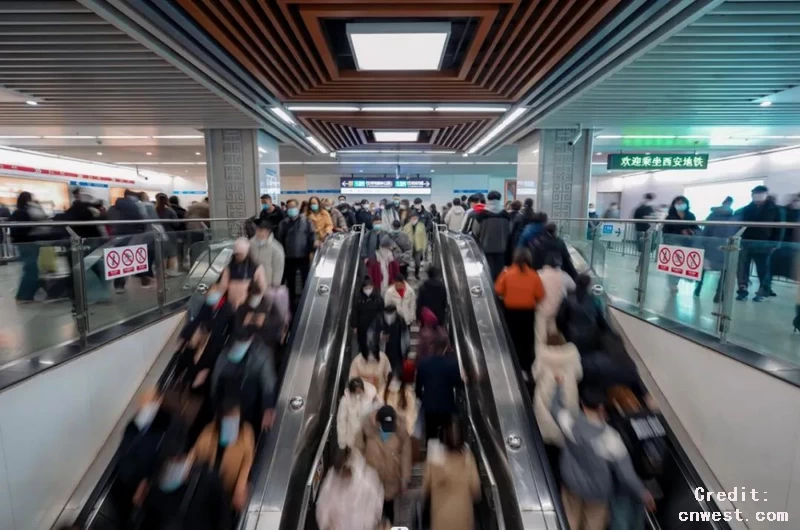
Knowing when the Xi’an subway runs can help you avoid last-minute stress—especially after a long day of sightseeing.
Most metro lines operate from around 6:00 AM to 11:00 PM. Exact start and end times can vary slightly by line and station, so it’s smart to double-check if you’re traveling early or late.
Trains usually arrive every 5 to 10 minutes, depending on the time of day. During rush hours, service is even more frequent.
If you’re heading back to your hotel after dinner or a night stroll near the Bell Tower, try to enter the station before 10:30 PM to avoid missing the last train.
To make your trip smoother, download an offline metro map before you arrive. Or use a trusted app like Metro China Subway or Baidu Maps with English settings.
These tools help you check routes, transfers, and travel times—even without Wi-Fi.
With just a little planning, using the Xi’an Metro for the first time becomes easy, even late at night.
FAQs: How to Use the Xi’an Subway
1. What Xi’an metro ticket options are best for tourists?
You can buy single‑journey tickets (2–7 RMB by distance), or unlimited 24‑hour (15 RMB) and 72‑hour (40 RMB) tourist passes.
2. Where can I buy tickets or passes?
Purchase at any metro station’s ticket machines or service desk. English interfaces and mobile payment options (WeChat, Alipay) make it easy.
3. Can I pay with mobile apps like Alipay or WeChat?
Yes! Many travelers avoid queues using the Xi’an Metro app or Alipay’s Transport section to buy and scan QR codes for entry/exit.
4. Does the metro have English signs and announcements?
Absolutely. All station names and signage appear in English and Chinese, and stops are announced in both languages.
5. What are metro operating hours and frequency?
Most lines run from about 6:00 AM to 11:00 PM. Trains arrive every 5–10 minutes—less wait time than many global systems.
6. Are lines crowded during rush hour?
Yes. Rush hours (around 7:30–9:00 AM and 5:30–7:00 PM) can get busy. For a comfortable ride, try to avoid these times.
7. Is it safe? Any pickpocket tips?
Xi’an is generally safe. Still, take precautions during busy times and keep valuables secure—walking streets are more crowded than stations.
9. Can I use the same ticket or card for multiple days?
Yes, tourist passes offer unlimited rides within their valid period. Single-journey tickets work per trip. One card per person only—no sharing.
10. How do I handle metro etiquette as a foreigner?
Stand on the right on escalators, queue for boarding, and avoid eating/drinking in trains. Stations may include security checks at entry gates.
Once you understand how to use the Xi’an subway, getting around the city becomes surprisingly easy. I still remember finishing a long walk along the Ancient City Wall, then hopping on the metro and reaching my hotel across town in minutes—cool, quiet, and stress-free.
That’s really the beauty of Xi’an’s subway system. Trains are frequent, tickets are inexpensive, and many stations sit close to the city’s most famous sights.
So if you’re planning your days in Xi’an—from the Bell Tower to the Terracotta Warriors—don’t hesitate to use the metro. After a ride or two, it quickly becomes the simplest way to explore the city.
About the Author
Ruqin is the founder of Ruqintravel.com and has spent more than four decades working in China’s travel industry. Drawing on hands-on experience in cities like Beijing and Hangzhou, he personally researches and updates each guide to help international travelers navigate China with confidence.
Further Reading
Where to Stay in Xi’an: Areas, Hotels, Maps and Attractions
What to Buy in Xi’an: Best Gifts from Xi’an
How to Visit the Terracotta Warriors: Tickets, Map, Highlights & Tips
Bell & Drum Towers, Xi’an: What to See, Tickets & Travel Tips
How to Visit Shaanxi History Museum – A Complete Guide
How to Visit Huaqing Pool in Xi’an: Map, Tickets, Show and Tips
How to Visit Big Wild Goose Pagoda in Xi’an: A Complete Guide
How to Visit Xi’an City Wall: Map, Tickets, South Gate & Travel Tips
How to Visit Muslim Quarter Xi’an: Map, Top Foods and Travel Tips
How to Visit Great Mosque of Xi’an: Map, Hours, Tour & Travel Tips