
Words by Ruqin · September 22, 2026
Beijing sightseeing often begins early. You may need to reach Tian’anmen Square before sunrise, leave for the Great Wall before the morning traffic, or arrive at the Forbidden City ahead of your timed entry.
The problem is that your hotel breakfast may begin too late. Many cafés and shopping-mall restaurants also remain closed when you need them.
The practical answer is to plan breakfast the evening before. Choose a local breakfast shop near your hotel, carry something simple, or eat after completing the earliest part of your visit. Do not assume that the famous restaurant beside an attraction will be open at 6:00 a.m.
What Time Does Breakfast Begin in Beijing?
Small neighborhood breakfast shops often start serving earlier than cafés and full-service restaurants. Around residential streets, you may see steam rising from baozi baskets while the rest of the city is still waking up.
Opening times vary by branch and season, but a local breakfast counter may be operating from around 6:00 or 6:30 a.m. Hotel dining rooms commonly open later, while restaurants in malls may not begin service until mid-morning.
The most reliable early options are usually:
- Baozi and steamed-bun shops
- Jianbing stalls
- Congee and noodle shops
- Qingfeng Baozi and similar local chains
- Ziguangyuan branches serving breakfast
- Huguosi snack shops
- Convenience stores
- Bakeries near railway stations and busy residential areas
A listing in a map app is helpful, but it is not a guarantee. Small shops sometimes change their hours without updating the English listing.
Learn the Main Beijing Breakfast Foods
A local breakfast does not need to become a complicated food tour. Choose one warm item, one drink, and enough food to carry you through the morning.
Baozi: The Simplest Choice
Baozi (包子) are steamed buns with meat or vegetable fillings. They are easy to order, inexpensive, and practical when you need to eat quickly.
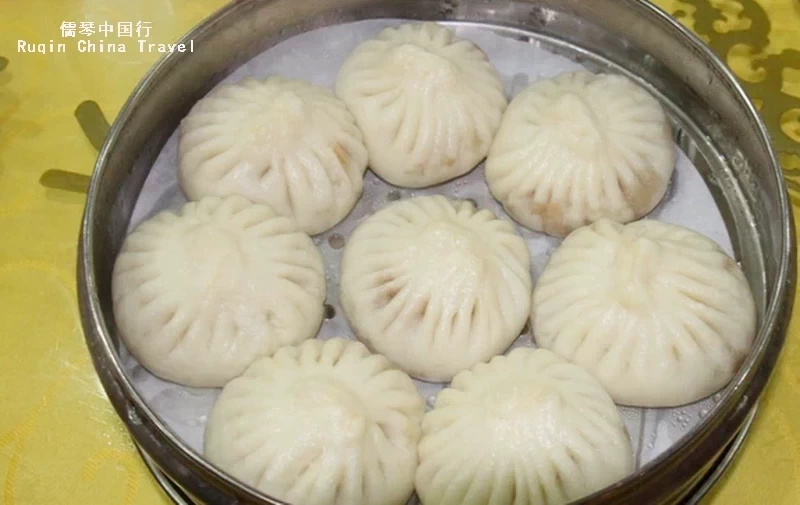
Baozi (包子) are steamed buns with meat or vegetable fillings
Ask what is inside before ordering. Common fillings include pork, beef, vegetables, and egg with chives. Vegetarian-looking buns may contain animal fat or small amounts of meat.
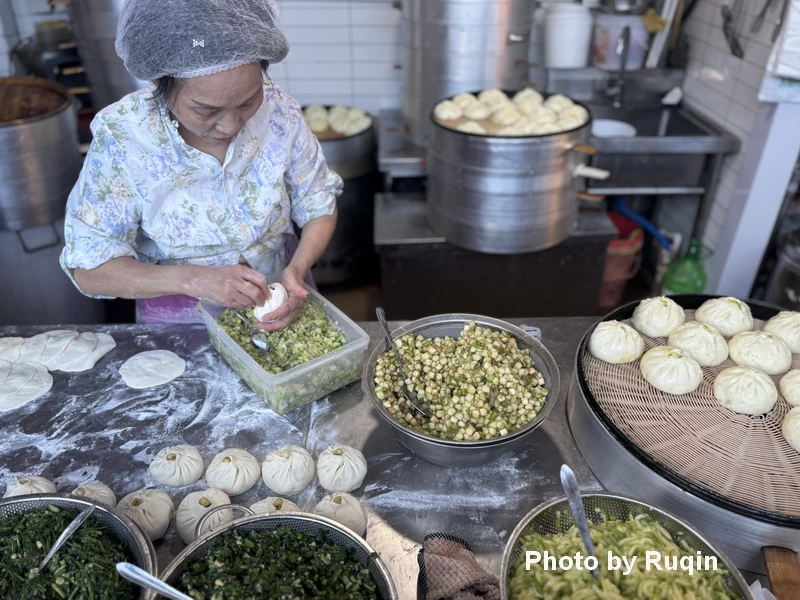
A woman is preparing steamed buns within fillings ( baozi)
You can ask:
这是什么馅儿的?
Zhè shì shénme xiànr de?
“What filling is this?”
Baozi are normally sold individually or in small portions. Order two first. You can always add another rather than buying more than you need.
Jianbing: Good When You Have Ten Minutes
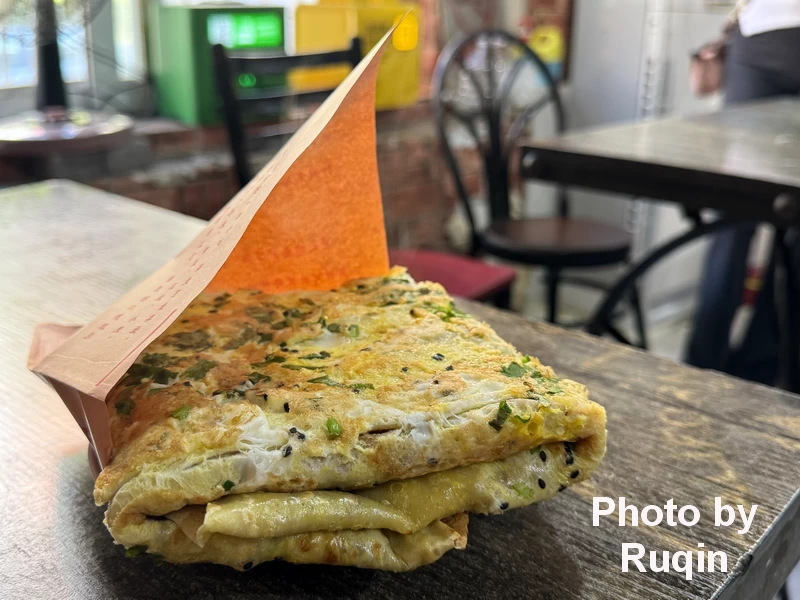
Jianbing (煎饼) is a freshly made savory crepe containing egg, sauce, herbs, and a crisp fried layer. The vendor folds it into a packet that is easy to carry.
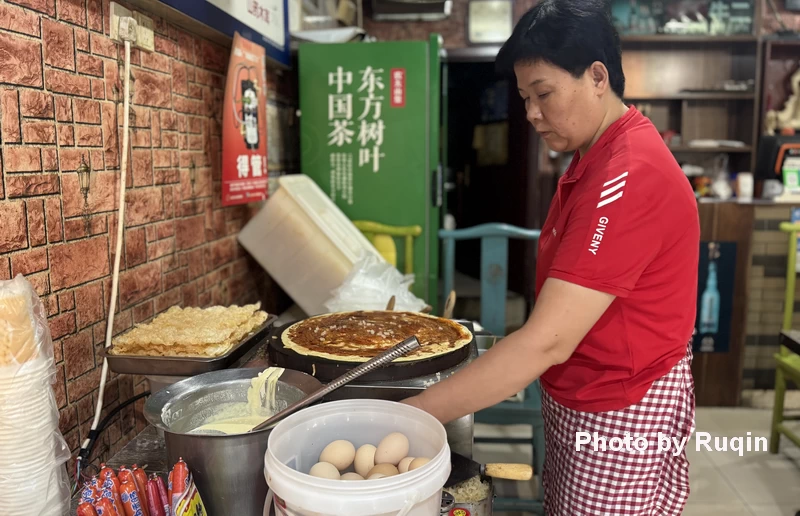
A woman preparing jianbing, a traditional Chinese breakfast pancake.
It is filling, but it is not always quick during the morning rush. Each one is cooked separately, and a popular stall may have several delivery drivers and commuters waiting ahead of you.
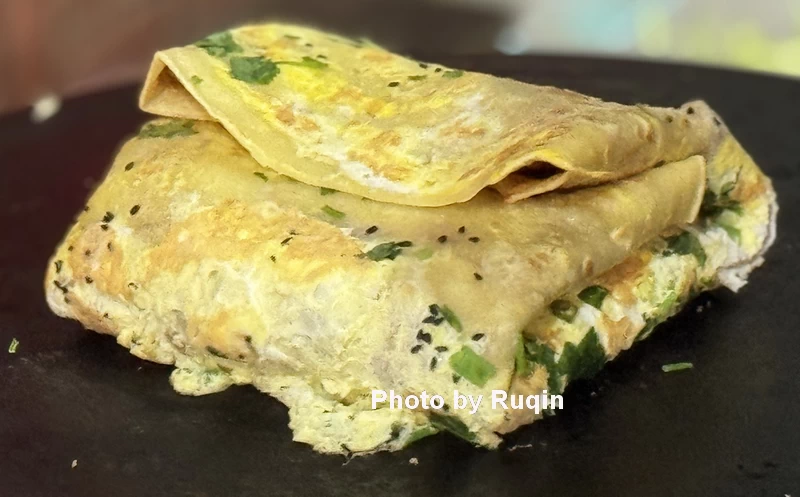
A freshly prepared jianbing.
Jianbing sauce can be salty or slightly spicy. To request no chili, say:
不要辣。
Bú yào là.
“No chili, please.”
Eat it soon after receiving it. The crisp layer becomes soft if the jianbing sits in a bag for too long.
Doujiang and Youtiao
Doujiang (豆浆) is soy milk, usually served hot or warm. Confirm whether it is sweetened if that matters to you.
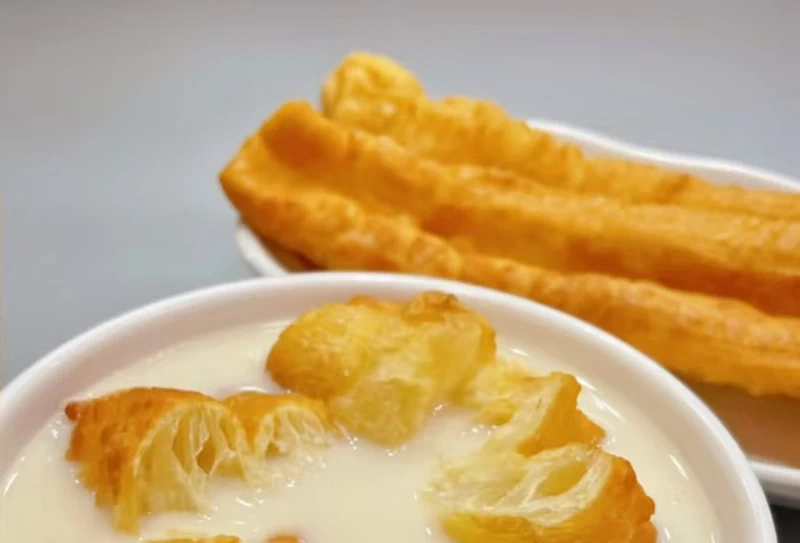
Doujiang and Youtiao
Youtiao (油条) are long strips of fried dough. They are commonly eaten with soy milk, congee, or tofu pudding.
This combination is convenient but quite oily. Before a long bus ride to Mutianyu, a smaller portion may be more comfortable than a heavy fried breakfast.
Congee and Savory Tofu Pudding
Rice congee is a gentle option for travelers who do not want fried food early in the morning. It may be served with pickled vegetables, egg, or small side dishes.
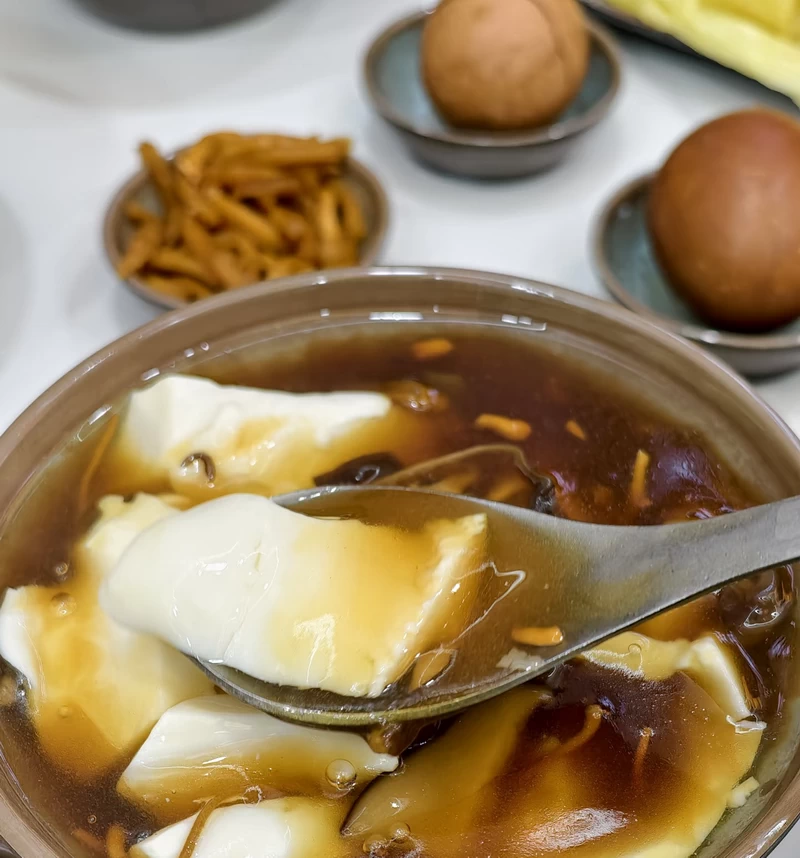
Savory Tofu Pudding (Beijing-style doufunao 豆腐脑)
Beijing-style doufunao (豆腐脑) is soft tofu in a savory sauce. It can contain seasonings, mushrooms, minced ingredients, or other additions that may not be obvious from its appearance.
Travelers with allergies or strict dietary requirements should not rely on appearance alone. Show a translated allergy card and ask about the sauce as well as the main ingredient.
Traditional Beijing Snacks
Traditional snack restaurants may serve items such as millet porridge, sesame cakes, meat pies, fermented mung-bean drinks, fried dough rings, and various halal pastries.
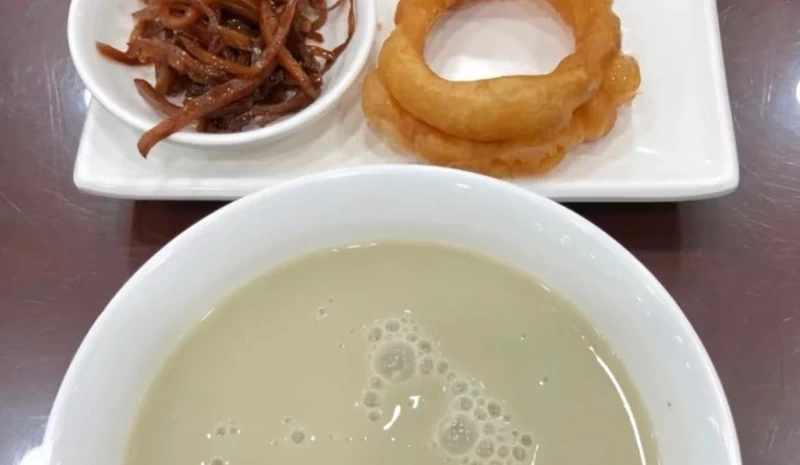
Douzhi’er (豆汁儿) & deep-fried dough twists (焦圈)
You do not need to order the most unusual item simply because it is traditional. Douzhi’er (豆汁儿), a fermented mung-bean drink, has a strong sour aroma and is not to every visitor’s taste.
Order a small serving if you are curious. A busy sightseeing morning is not the best time to buy a table full of unfamiliar food.
Breakfast Before the Tian’anmen Flag-Raising Ceremony
The flag-raising time changes daily according to sunrise. On some dates, the ceremony takes place well before normal hotel breakfast hours.
Eat a light snack before leaving your hotel or carry a packaged breakfast. You will still need to travel to the square, pass security, and wait outside. Do not bring an elaborate takeaway meal into a dense crowd.
After the ceremony, walk south toward Qianmen and Dashilan, where you can enjoy a proper breakfast. The central pedestrian street is only one part of the area. Smaller streets around Qianmen offer simpler local choices, although opening hours vary.
I personally recommend Dashilan (Dashilar) Street for breakfast after the flag-raising ceremony. It is also a good place for an early-morning walk before the crowds arrive.
Allow for crowd movement after the ceremony. Thousands of people may leave the square at roughly the same time, creating pressure around crossings, security exits, and the approaches to Qianmen.
Breakfast Before the Forbidden City
The Forbidden City does not require a dawn arrival, but timed admission, Tian’anmen-area security, and walking from the subway can make the morning feel rushed.
Eat before entering the controlled area. A quick breakfast near your hotel is generally easier than searching for food after reaching Tian’anmen.
Do not plan a large restaurant breakfast immediately before your entry time. Service may take longer than expected, while the journey to the correct entrance includes more walking and security than the map suggests.
Carry water and a small packaged snack if current visitor rules permit it. Avoid bringing a heavy bag merely to hold food. You will carry everything through a very large palace complex.
I recommend asking your hotel to prepare a packed breakfast box. If that service is unavailable, bring a few simple snacks or visit a nearby morning food stall for a local Beijing breakfast.

Chinese soup beef noodle at Palace Museum Restaurant
During your visit, you will also find several places to eat inside the Forbidden City. For locations and practical advice, see my guide: Eating Places in the Forbidden City: Map, Restaurants, Food & Tips.
Breakfast Before a Great Wall Trip
A Great Wall day often begins between 6:00 and 7:30 a.m., depending on the section and transport. Private drivers and direct tourist buses may expect passengers to be ready before hotel breakfast begins.
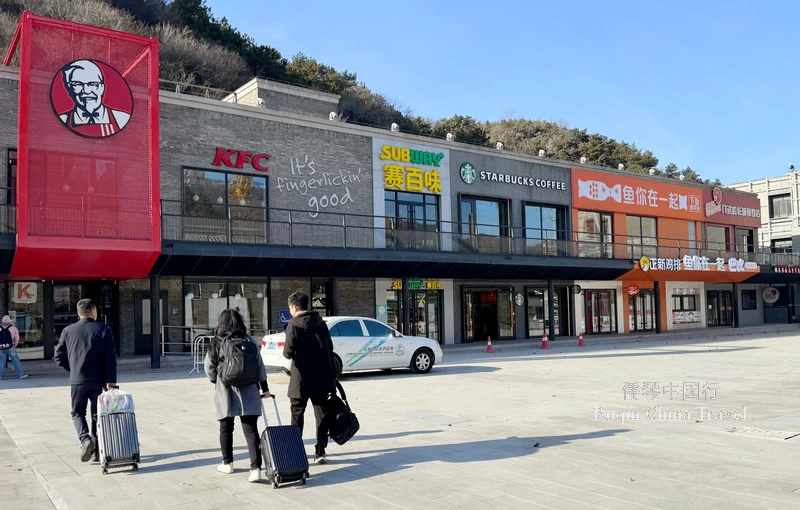
Food outlets close to the main entrance to the east and west gates of Badaling Fortress
Ask your hotel the previous evening whether it can prepare a breakfast box. Large hotels often have a clear procedure, but smaller properties may require advance notice.
A practical Great Wall breakfast includes:
- A bun or sandwich
- A banana or another easy fruit
- A boiled egg
- Yogurt, if you can keep it cool
- Water
- A small packaged snack for later
Avoid carrying an oversized meal. At Mutianyu or Badaling, you still need to pass ticket checks, ride a shuttle or cable car, and manage steps.
Use the toilet before leaving Beijing and again at the visitor center. Too much coffee or soy milk before a long drive may be inconvenient.
I recommend asking your hotel to prepare a breakfast box. If this service is unavailable, pack a few light snacks the night before or buy a simple breakfast from a stall near your hotel. Once you arrive at Badaling or Mutianyu, you will find plenty of food options.
Where to Find an Early Breakfast
Near Your Hotel
A neighborhood shop is often more useful than a famous restaurant. Search the surrounding streets on the evening before your outing.
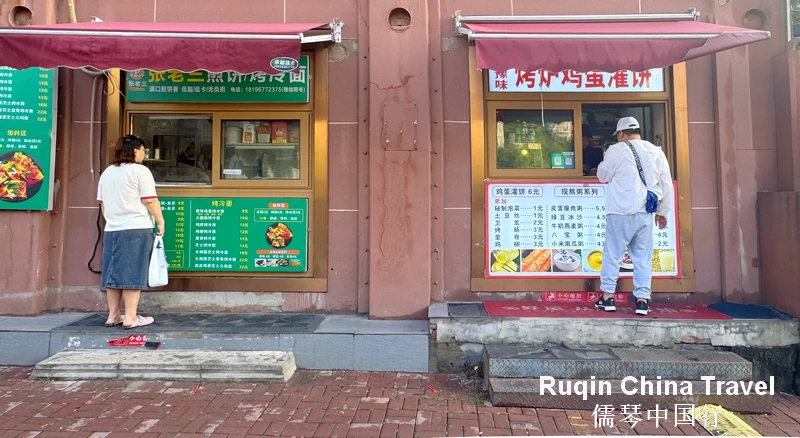
Two simple breakfast shops in my community
Look for these Chinese terms in a map app:
- 早餐 — breakfast
- 包子 — steamed buns
- 煎饼 — jianbing
- 粥 — congee
- 小吃 — snacks or simple local dishes
- 清真 — halal
Visit the location in daylight if you are uncertain about the route. Beijing blocks are large, and a shop shown as “nearby” may be on the far side of a major road or inside a residential compound.
Qianmen and Dashilan
Qianmen is useful after the flag ceremony and before a southern Beijing walking route. It combines local snack shops, established restaurants, bakeries, and modern chains.
My Recommended Breakfast Stop near Qianmen
I personally recommend the Qianmen flagship branch of Yinsan Douzhi (尹三豆汁). It sits at No. 1 Dashilan Commercial Street, only about 20 metres west of the Dashilan archway on Qianmen Street. The location makes it an easy breakfast stop while exploring Qianmen.
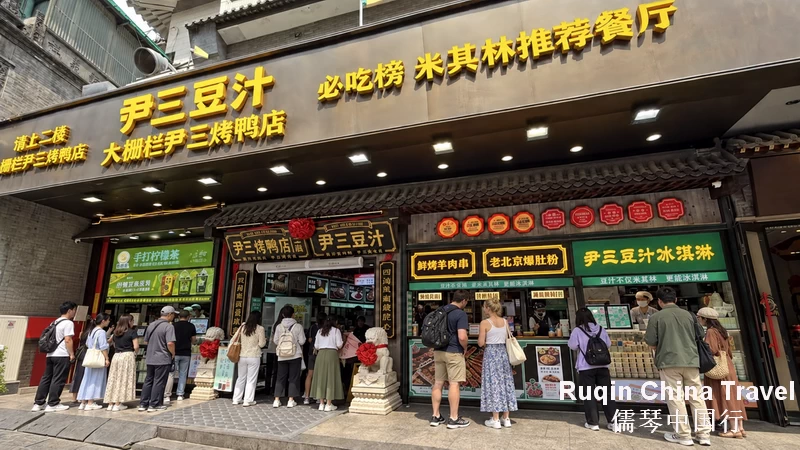
Qianmen flagship branch of Yinsan Douzhi (尹三豆汁)
The branch keeps long hours, generally opening at around 5:30 a.m. and closing at about 10:00 p.m. Still, check its current hours before visiting, especially during public holidays.
Breakfast and Snack Choices
- The classic douzhi combination: Douzhi is traditionally served with crispy fried dough rings called jiaoquan and thin strips of pickled vegetables. The crisp, salty accompaniments balance the drink’s distinctive sour flavour.
- Traditional Beijing breakfast foods: Other choices include miancha millet porridge, sesame-paste and salt-and-pepper shaobing, sweet tanghuoshao, fried glutinous-rice cakes, and savory tofu pudding.
- Popular local snacks: The menu also includes mending roubing meat pies, chaogan stew, lüdagun glutinous-rice rolls, pea-flour cake, and braised meatballs.
- Modern specialties: This Qianmen branch also serves milk-skin yogurt and ice cream flavored with douzhi and pea-flour cake. These are good choices if you want to try a modern variation on traditional Beijing flavors.
However, do not assume that a “food street” stays open all night. Some restaurants mainly serve lunch and dinner. Fortunately, many places in the Qianmen area offer a good range of breakfast choices, so finding something to eat in the morning should not be difficult. For more information, see my guide: Qianmen Street Beijing: Map, Food, Shopping & Local Tips.
Huguosi and Ping’anli
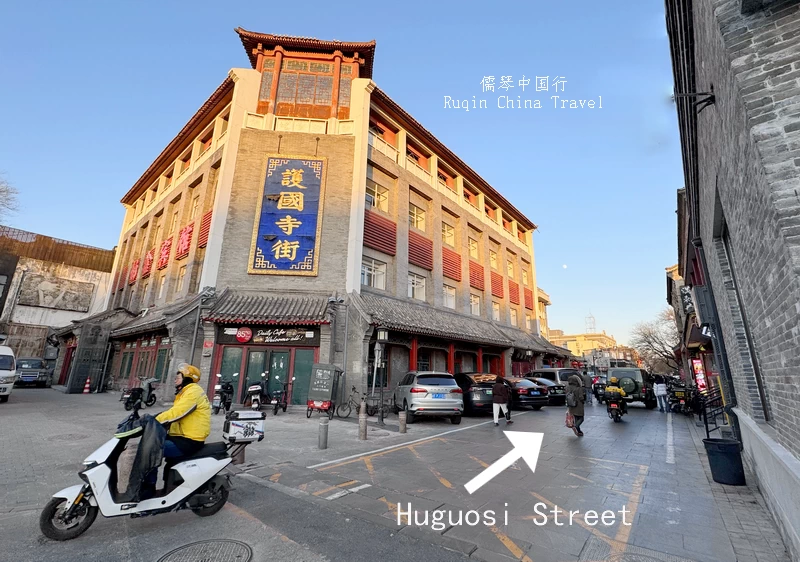
The Huguosi area is a better choice when you want a traditional Beijing snack breakfast without beginning at Tian’anmen.
It is not close enough to add casually before a tightly timed Forbidden City entry. Use it when your morning plan includes Beihai, Shichahai, Xicheng, or a more relaxed hutong walk.
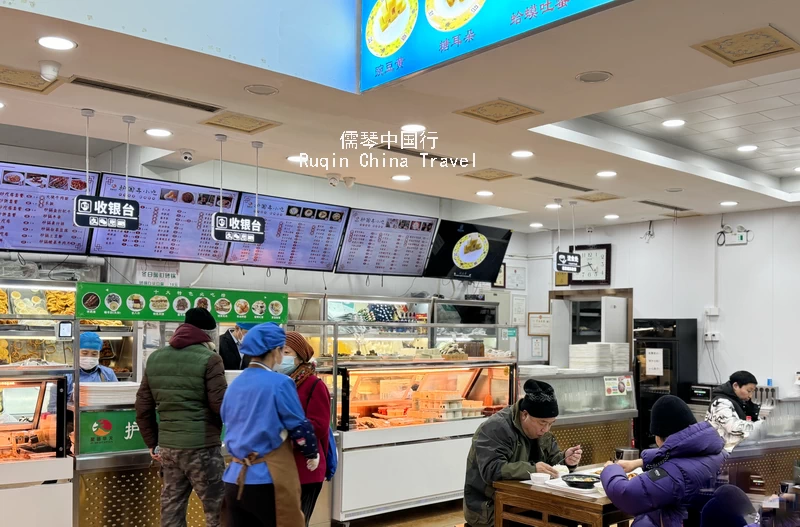
Inside the Huguosi Snack Flagship Restaurant
I recommend Huguosi Street as a place to experience traditional Beijing food rather than simply as a convenient breakfast stop. If your schedule allows, come here to sample local snacks and classic Beijing breakfast dishes. If you are staying nearby, it is also an excellent choice for breakfast. For more information, see my guide: Huguosi Snack Street (Huguosi Street, Beijing): Map & Tips.
Huguosi Snack Flagship Restaurant Address: No. 93 Huguosi Street (Opposite People’s Theater).
Tel: 010-83281700
Business Hours: 6:30-21:00
Railway Stations
Beijing’s main railway stations contain convenience stores, cafés, and food counters, but access can involve security and long walking distances.
If you have an early train, buy breakfast near your hotel or after entering the station with enough time to spare. Do not delay boarding because you are searching a large terminal for one particular restaurant.
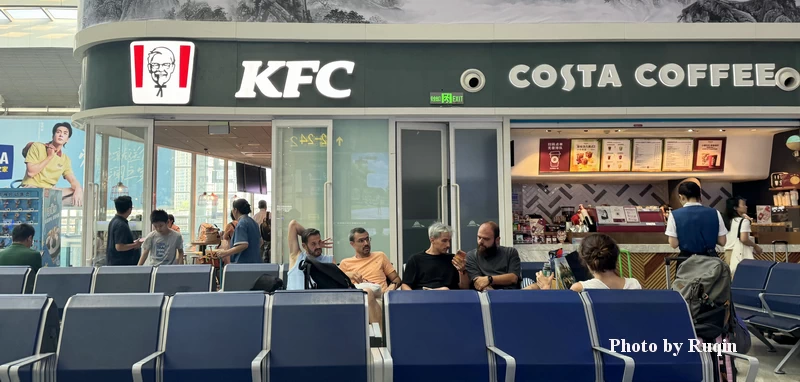
Drink and food outlets in the waiting area at Beijing South Railway Station
I recommend having breakfast inside the railway station after passing security. Food stalls, chain restaurants, and larger dining outlets in the waiting area usually open early, offering both Chinese and Western-style choices. For more information about eating at railway stations or onboard trains, see my guide: Can I Bring Food onto a Chinese High-Speed Train?.
How to Order Without Speaking Chinese
Small breakfast shops may not have an English menu. Fortunately, the food is often visible.
Point to the item and say:
我要这个。
Wǒ yào zhège.
“I would like this.”
To ask for two:
要两个。
Yào liǎng ge.
“I would like two.”
To eat there:
在这儿吃。
Zài zhèr chī.
“I’ll eat here.”
For takeaway:
带走。
Dài zǒu.
“Takeaway.”
Prepare Alipay, WeChat Pay, a supported payment card, or small cash before ordering. Do not stand at a crowded counter trying to complete payment setup for the first time.
Vegetarian, Halal, and Allergy Considerations
Beijing offers many vegetable dishes, halal restaurants, and simple grain-based breakfasts. Still, a food’s appearance does not confirm its ingredients.
Vegetable buns may contain lard. Congee side dishes can include meat. Sauces and stocks may contain ingredients not shown on the menu photograph.
For halal food, look for 清真 on the sign. Niujie is Beijing’s best-known Muslim food area, while Ziguangyuan (紫光园) and other halal restaurants have branches elsewhere in the city.
Travelers with serious allergies should carry a clearly written Chinese allergy card. Include the ingredient, the severity of the reaction, and a warning about sauces, oils, and cross-contamination.
I personally recommend Ziguangyuan, a well-known halal restaurant chain, for breakfast if you are lucky enough to be staying near one of its branches.
Keep the Morning Simple
The most common mistake is turning breakfast into another scheduled attraction.
A relaxed breakfast crawl can be enjoyable on a free morning. It does not work well before a timed Forbidden City ticket, a departing train, or a fixed tour-bus pickup.
Prepare the night before:
- Confirm your departure time.
- Check whether the hotel breakfast begins early enough.
- Save one nearby breakfast shop in your map app.
- Buy a backup snack and water.
- Screenshot the shop name and address in Chinese.
- Leave extra time if you must pass Tian’anmen security.
- Keep the order small and easy to carry.
Ruqin’s Practical Advice
Before an early Beijing sightseeing day, convenience matters more than finding the city’s “best” breakfast. A hot baozi, soy milk, and ten calm minutes near your hotel are better than crossing the city for a famous shop.
After the Tian’anmen flag ceremony, Qianmen is a natural place for breakfast. Before the Great Wall, ask for a hotel breakfast box or use a neighborhood shop. Before the Forbidden City, eat first and protect your timed entry.
Save the traditional breakfast exploration for a morning without a strict deadline. You will enjoy the food more when you are not watching the clock.
More Beijing Travel Guides
Best Street Food in Beijing: What to Eat and Where to Find It
Qianmen Street Beijing: Map, Food, Shopping & Local Tips
Your First Day in Beijing: A Low-Stress Arrival-Day Plan
How to Visit Tiananmen Square: Maps, Tickets & Security
Where to Stay in Beijing: Maps, Best Areas, Hotels & Travel Tips