

Written and updated by Ruqin
Last updated: June 7, 2026
The first time I walked along Qianmen Street Beijing, I was struck by the contrast. Just a few steps south of Tiananmen Square, the wide boulevard suddenly feels older and more nostalgic. Restored shopfronts line the street, traditional signs hang above the doors, and the smell of roasting duck and sweet pastries drifts through the air.
Yes, it’s lively and a bit touristy — but that’s also part of the atmosphere. Many of Beijing’s century-old brands still have shops here, and wandering the street gives you a glimpse of what the old commercial heart of the city once looked like.
If this is your first time visiting Beijing, Qianmen Street is an easy place to explore. And if you’ve passed through before, it’s worth returning with a clearer plan. In this guide, I’ll show you what to see, what to eat, what to buy, and a few local tips to help you enjoy Qianmen Street at a relaxed pace.
At a Glance (Ruqin’s Quick Pick)
- Best time: 6–9pm for lights + snacks
- How long: 1.5–3 hours (add more if you include Dashilan)
- Easiest transport: Subway to Qianmen Station (Line 2/8) or Zhushikou (Line 7)
- Don’t miss: Zhengyangmen tower views + Xianyukou snack street + one time-honored shop
- Good combo: Tiananmen Square → Qianmen Street → Dashilan (easy walk)
1. Qianmen Street Overview
When you first step onto Qianmen Street Beijing, the street feels unusually wide compared with many older Beijing lanes. It stretches about 845 meters from north to south, just south of Tiananmen Square, and the restored buildings on both sides immediately give the area a nostalgic atmosphere.
As you walk along the boulevard, you’ll notice the architectural style inspired by the late Qing Dynasty — grey brick facades, traditional red pillars, wooden shop signs, and curved rooflines. The buildings have been carefully rebuilt to reflect how this famous commercial street once looked more than a century ago.
Historically, Qianmen Street was one of Beijing’s busiest shopping streets during the Ming and Qing dynasties. Its location near the Forbidden City meant that merchants, officials, and travelers all passed through this area. Over time, many well-known “time-honored” Beijing brands opened shops here, turning the street into a lively center of trade and food culture.
Today, the street blends history with modern life. Alongside traditional stores, you’ll find cafés, restaurants, and contemporary shops. As you stroll along, it’s easy to move between old tea houses, Beijing snack shops, and modern boutiques — all within the same few blocks.
What makes Qianmen Street Beijing enjoyable is simply wandering without rushing. The street itself isn’t long, but there’s always something interesting to notice, whether it’s a historic storefront, a familiar Beijing brand, or the smell of freshly baked pastries drifting from a nearby shop.
2. How to Get to Qianmen Street
Reaching Qianmen Street (前门大街 Qian Men Da Jie) is straightforward, thanks to Beijing’s efficient public transport system.

By Subway
The most convenient way is via Subway Line 2, alighting at Qianmen Station (前门站). You can reach Qianmen Street by exiting from Exit C of Qianmen Subway Station. The station has a total of seven exits, and Exit C leads near to Qianmen Street and you’ll find yourself just a short walk away.
The operating hours of Qianmen Subway Station are from 5:16 AM to 11:28 PM daily. Visitors can plan their trips accordingly based on these timings.
Alternatively, Subway Line 7 serves the area, with Zhushikou Station 珠市口 (Exit A) in the southern end being another option.
Lastly take Subway Line 8 to Qianmen Station, exit from the southwest exit, and walk about 500 meters to reach your Qianmen Street.
By Bus
For those preferring buses, routes 22, 82, 137, 599, 67, 332, or Sightseeing Line 2 are viable choices, all stopping at Qianmen Bus Station. The ease of access makes Qianmen Street an ideal destination for travelers keen on exploring the heart of Beijing.
By Taxi or Ride-Share
Taxis and ride-share services like Didi can drop you off directly at the street. Simply provide the driver with the address Qianmen Street (前门大街), and they will know where to go.
On Foot
If you’re already exploring Tiananmen Square or the Forbidden City, Qianmen Street is just a 10-minute walk south. It’s a convenient addition to your itinerary.
3. Best Times to Visit Qianmen Street
1) The Best Times to Visit Qianmen Street
The best times to visit Qianmen Street are during spring (April to June) and autumn (September to November). These months offer pleasant weather, making it ideal for a leisurely stroll along the street. During the day, you can explore the shops, enjoy local delicacies, and admire the historical architecture in comfortable temperatures.
2) A Visit to Qianmen Street in the Evening
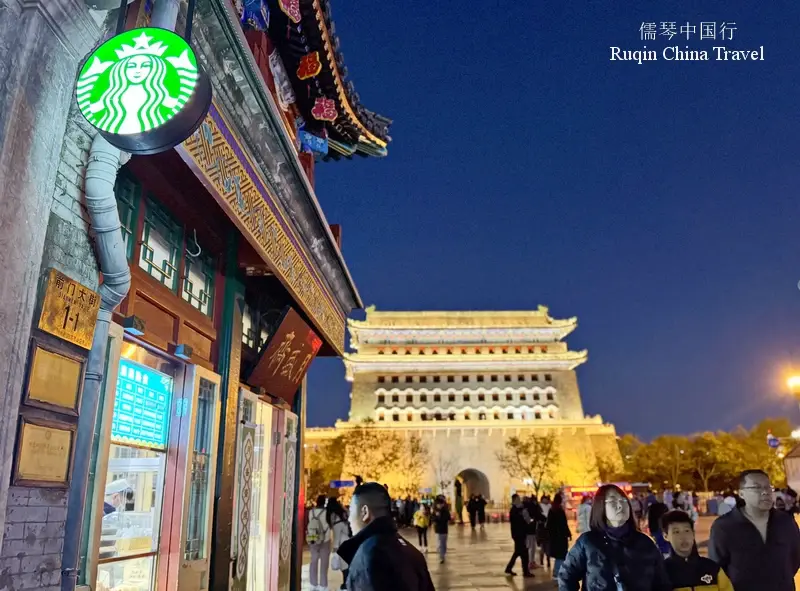
A visit to Qianmen Street in the evening is a magical experience. As the city lights up, the street transforms with vibrant neon signs and illuminated buildings, creating a captivating ambiance.
The night markets and eateries come alive, offering a lively atmosphere perfect for exploring and dining under the stars.
3) A Peaceful Morning Stroll on Qianmen Street
Wake up early and start the day with something special—watching the flag-raising ceremony at Tiananmen Square. The atmosphere is solemn yet inspiring, a must-see experience in Beijing.

Afterward, take a leisurely stroll down Qianmen Street. At this hour, it feels completely different from the bustling scene of last night. The crowds are gone, and the street is calm and peaceful. You can truly take in the beauty of its historic architecture and charming details.
Feeling hungry? Stop by a local restaurant for a classic Beijing-style breakfast. Savor a warm bowl of soy milk, crispy youtiao (fried dough sticks), or a piping hot jianbing (savory pancake). It’s the perfect way to fuel up for the day ahead.
With breakfast done, head to the north end of Qianmen Street and hop on a Beijing Tourist Bus to either Badaling or Mutianyu Great Wall. An exciting adventure awaits! What a perfect start to the day.
4) Different Seasons Bring Unique Charms to Qianmen Street
Different seasons bring unique charms to Qianmen Street. Spring blossoms and autumn foliage add natural beauty, while winter, though colder, offers a festive spirit with holiday decorations. Summer evenings are bustling with activity, making any season a great time to visit this historic street.
4. Stroll along the 845-meter long Street

Qianmen Street, stretching 845 meters from the majestic Zhengyangmen Tower to its southern entrance, offers a rich tapestry of Beijing’s cultural and historical heritage. As you walk down this pedestrian street, you will encounter a blend of traditional Chinese architecture and modern establishments.
The street is thoughtfully reconstructed to mirror its appearance in the 1920s and 1930s, creating an immersive historical experience that transports you back in time.
One of the street’s unique features is the harmonious coexistence of old and new. You will find Starbucks and other modern cafes nestled near traditional paifang gateways and ancient shops.
This fascinating blend makes Qianmen Street a perfect place to explore Beijing’s past while enjoying contemporary conveniences. The street’s design and layout have been carefully preserved, maintaining its historical charm.

Qianmen Street is home to over 80 historic shops offering a wide array of products, from traditional Chinese medicine and silk to tea and souvenirs.
Notable heritage courtyards and hutongs enrich the cultural experience, providing insights into Beijing’s history and traditions. Visitors can enjoy browsing through these shops, each with its own story and unique offerings.
The street is not just about shopping; it is also a vibrant hub of food and entertainment. Numerous eateries serve delicious local delicacies, from the famous Quanjude roast duck to traditional Beijing snacks. Street performances and cultural events often take place, adding to the lively atmosphere. Every step on Qianmen Street is a step through centuries of stories and traditions, making it a must-visit destination in Beijing.
5. Explore the Time-Honored Shops and Eateries Qianmen Street

Qianmen Street, rejuvenated before the 2008 Beijing Olympics, embodies Beijing’s cultural essence. The street is lined with time-honored Chinese brands, each with a rich history and unique offerings.
You can find traditional Chinese medicine at Changchuntang, a 200-year-old drugstore that merges Eastern and Western practices.
Food enthusiasts will be delighted by the culinary treasures along Qianmen Street. Quanjude, famous for its roast duck, offers a taste of Beijing’s iconic dish.
Duyichu, with a legacy of over 250 years, serves traditional Beijing cuisine, providing an authentic culinary experience that reflects the city’s rich food culture.

Dong Lai Shun Mutton Hot Pot is a legendary dining spot on Qianmen Street, renowned for its authentic Beijing-style hot pot. Established in 1903, this historic restaurant specializes in tender mutton, thinly sliced and cooked in a traditional copper pot with glowing charcoal.
The signature sesame sauce dip and fresh ingredients make it a must-try experience for food lovers. With its elegant decor and rich culinary heritage, Dong Lai Shun offers visitors a delicious taste of Beijing’s food culture right in the heart of Qianmen Street.
The blend of historic shops and modern eateries creates a dynamic atmosphere. Global retail giants sit alongside local favorites, offering a diverse shopping and dining experience.
Visitors can explore everything from traditional tea houses to trendy boutiques, making Qianmen Street a vibrant destination for both shopping and culinary delights.
6. Explore Dashilan: A Historic and Cultural Gem of Beijing
Dashilan Street (大栅栏), a historic commercial hub in Beijing, is just a short walk from the north entrance of Qianmen Street, branching off to the west. The total length from the east entrance to the west entrance is 275 meters.

Dashilan Street, established in the 18th year of the Ming Yongle era (1420), evolved into a bustling commercial hub during the late Qing Dynasty.
Today, it stands as a gathering place for historical landmarks and some of China’s most iconic brands. The area is home to renowned establishments such as Guangdelou, Sanqingyuan (now part of the De Yun Society for traditional Chinese comedy), Zhengxingde, Tongrentang, Daguanlou, Ruifuxiang, and Liubiju.
Notably, Tianleyuan Theater, with its nearly 200-year history, has hosted performances by Beijing opera legends known as the “Four Great Dan Performers.”
Dashilan is a must-visit destination, offering a rich tapestry of Beijing’s history and culture. Here’s a detailed guide:
Top Attractions in Dashilan
- Dashilan First Street Museum: Explore the charm of traditional Beijing courtyards (siheyuan).
- De Yun Society: Sanqingyuan is a favorite spot for fans of Chinese stand-up comedy, especially Zhang Yunlei enthusiasts.
- Peking Opera Experience Hall: Dive into the world of Peking Opera with immersive activities.
- Daguanlou Cinema: The birthplace of Chinese cinema, blending history with modern entertainment.

Food Recommendations
- Wuyutai Tea Shop: Try their signature jasmine tea, ice cream, and tea-infused cookies.
- Imperial Crispy Beef Pastry: A delicious treat at only 12 RMB per piece.
- Fengnian Sausages: Crispy and flavorful, best enjoyed with garlic sauce.
- Sanyuan Meiyuan: Light and delightful desserts.
- Tianxingju: Famous for its traditional Beijing-style fried liver.
- Fangzhuanchang Zhajiangmian: Nicknamed “Beijing’s Michelin,” it’s a must-try for noodle lovers.
- Donglaishun: A hotpot paradise for mutton lovers.
- Sijiminfu or Bianyifang: Authentic Beijing roast duck at its finest.
- Tianfuhao: Known for its signature braised pork knuckle, a delicacy once served in the Qing imperial court.
Dashilan is an unmissable destination for history buffs, foodies, and culture seekers alike.
7. Explore Beijing Xianyukou Food Street
Beijing Xianyukou Food Street (鲜鱼口老字号美食街) is located at No. 40 Qianmen Street, conveniently just to the east of Dashilan Street. This bustling food street is open year-round. To fully experience its lively atmosphere and crowds, it’s recommended to arrive early and leave late.
Food Recommendations
Xianyukou Snack Street is a haven for authentic Beijing cuisine. Here are some must-try delicacies:

- Tianxingju: Known for its fried liver and fried sausages. The fried liver is packed with tender intestines, and the sausages are crispy on the outside and tender on the inside, best enjoyed with garlic sauce.
- Beiping Ice Factory: Offers traditional Beijing summer treats such as popsicles, yogurt, and various sodas at affordable prices.
- Bao Du Feng: Specializes in 13 cuts of tripe, including tripe tips and tripe cores, providing great value for money.
- Menkuang Hutong: A century-old shop famous for authentic stewed meat dishes at reasonable prices.
- Imperial Dairy: Features royal-style desserts and dairy snacks, especially their milk custard and double-skin milk.
- Jingfang Snacks: Famous for tangyuan (glutinous rice balls) and douzhi (fermented mung bean drink) at wallet-friendly prices.
- Xincheng Zhajiangmian: Serves traditional Beijing noodles with soybean paste and grilled meat skewers.
8. Riding the Qianmen Street Tram: A Short and Sweet Journey Through Beijing’s History
If you’re exploring central Beijing and want a charming, laid-back way to see one of the city’s most iconic streets, the Qianmen Street Tram is a must-try experience!

Operating Hours:
The tram runs daily from 9:00 AM to 9:00 PM, so whether you’re an early bird or catching the city lights in the evening, there’s plenty of time to hop on.
Ticket Price:
A single ride costs 50 RMB, and kids under 1.3 meters tall ride for free — just keep in mind they’ll need to sit on a parent’s lap.
The Ride Itself:
The tram travels along Qianmen Street, covering about 800 meters in total. It’s a short ride — around 10 minutes — but it’s packed with nostalgic charm, retro aesthetics, and a great view of this pedestrian-friendly, historically rich avenue.
Whether you’re resting your feet after a long walk or simply want to enjoy the old-timey clanging of the bell and classic architecture on both sides, this tram offers a fun and photogenic pause in your Beijing adventure.
9. Nearby Attractions and City Walk
Qianmen Street is surrounded by some of Beijing’s most iconic landmarks and hidden gems. Just a short walk away is Tiananmen Square, a symbol of China’s history and culture. Nearby, you’ll find the majestic Forbidden City, where you can explore the imperial palace and its treasures.
Another nearby attraction is the Temple of Heaven, a historic site where emperors once prayed for good harvests. Each of these locations offers a unique glimpse into China’s rich heritage, making them must-visit destinations when exploring Qianmen Street.
If you have some extra time, don’t miss the hidden gem of Yangmeizhu Xiejie Street (498 meters long), just 100 meters west from Dashilan Street. This quiet, charming hutong (alley) offers visitors a rare glimpse into old Beijing. Unlike the busy commercial districts, Yangmeizhu Xiejie provides a peaceful retreat, rich in history, culture, and authentic local life.
If you walk further to the west from Yangmeizhu Street, you will enter Liulichang Culture Street, a historic and vibrant cultural hub in Beijing, offers a unique and immersive experience for those interested in Chinese calligraphy, antiques, and traditional art.
If you Walk from Xianyukou Street ( Qianmen ) to the east, you will soon reach Sanlihe Park, a peaceful oasis that offers a much-needed break from the fast-paced city life. Then go on to visit the nearby Caochang Hutongs, a hidden gem, offering a glimpse of authentic old Beijing life.
These well-preserved alleys are located near Qianmen and remain largely untouched by commercialization, making them an ideal destination for those seeking to experience Beijing’s true charm.
Practical Advice
- Language Barrier: While English is commonly used in major tourist spots, having a translation app or a phrasebook can be handy in smaller shops.
- Cash vs. Cards: While international credit cards are accepted in many stores, carrying some cash is advisable for smaller purchases, especially in the hutongs.
- Public Restrooms: They are available but vary in cleanliness. Carrying your own tissues and hand sanitizer is recommended.
- Footwear: Comfortable walking shoes are a must, as you’ll likely be on your feet for several hours exploring the area.
Safety Tips:
- Pickpocketing: Like any popular tourist spot, be mindful of your belongings. Keeping your valuables in a secure bag and being cautious in crowded areas is advisable.
- Pedestrian Safety: While on the street, stay aware of the sightseeing trams and other pedestrians
FAQs ( Beijing Qianmen Street)
Is Qianmen Street worth visiting?
Yes—especially if you want old-Beijing vibes without a full hutong tour. Go for snacks, heritage shops, and the evening lights.
How much time do I need for Qianmen Street?
Plan 1.5–3 hours for Qianmen alone. Add another 1–2 hours if you include Dashilan or Xianyukou.
What’s the best time to visit Qianmen Street?
Early evening is my favorite. You get cooler air, lit-up buildings, and the food streets feel alive.
How do I get to Qianmen Street by subway?
Most people use Qianmen Station (Line 2/8) or Zhushikou (Line 7). Then it’s a short walk.
Is Qianmen Street close to Tiananmen Square?
Very close. It’s an easy walk south from Tiananmen, so they pair nicely in one day.
What food should I try near Qianmen?
Start with classic Beijing snacks on Xianyukou, then sit down for one “proper meal” (roast duck or hotpot).
Is Qianmen Street touristy?
Yes, it’s popular. But it’s still fun if you go with a plan: pick 2–3 shops, 2–3 snacks, and wander the side streets.
Can I ride the Qianmen tram—and is it worth it?
It’s short and a bit pricey for the distance, but it’s cute and photogenic. I like it as a “feet break.”
Is Qianmen Street good for kids or older travelers?
Yes. It’s flat and walkable. Go earlier in the day if you want fewer crowds.
What’s a nice next stop after Qianmen?
Dashilan for old brands and theater vibes, or a quiet hutong stroll like Yangmeizhu Xiejie for a calmer finish
When you visit Qianmen Street Beijing, the best approach is simply to slow down and enjoy the atmosphere. Wander into a few old shops, try a local snack that catches your eye, and take a moment to notice the details of the historic storefronts around you.
The street itself isn’t very long, but it’s full of small discoveries — a century-old brand, the smell of freshly baked pastries, or a lively little alley just off the main road.
Whether it’s your first time in Beijing or you’ve visited the city before, Qianmen Street is one of those places that’s easy to return to. Each walk along the street tends to reveal something new, and it’s a pleasant way to experience a bit of old Beijing right in the heart of the modern city.
About the Author
Ruqin is the founder of Ruqintravel.com and has spent more than four decades working in China’s travel industry. Drawing on hands-on experience in cities like Beijing and Hangzhou, he personally researches and updates each guide to help international travelers navigate China with confidence.
Further Reading
Beijing Qianmen Tourist Bus Information: Routes and Travel Tips
Dashilan Street: Map, Food, Shopping & Hotels
Tiananmen Square Flag-Raising Ceremony: Visitor Guide
Xianyukou Street, Beijing: What to Eat, Shop & See Before You Go
Yangmeizhu Xiejie Street – A Hidden Gem in Beijing
Liulichang Culture Street Beijing – Your Complete Guide
Sanlihe Park Beijing: A Tranquil Escape in the Heart of the City
Caochang Hutongs in Beijing: Maps, Routes, Top Sights & Tips
Beijing Fun (Beijingfang) Guide: Top Things to Do, Map & Tips









What time does it open and closes? Cos was planning to check this one out on my 15hrs layover
Hi Tish,
Qianmen Street is open 24 hours a day, basically not closed. But the best time to visit Qianmen Street in a day is from 9:00 am to 9Pm. Have a nice layover in Beijing!