Written and updated by Ruqin
Last updated: June 7, 2026
Welcome to Jiefangbei, the beating heart of Chongqing.
Whenever friends ask me where they should begin their first visit to Chongqing, my answer is almost always the same: start at Jiefangbei. More than just a landmark, it’s the city’s living room—a place where history, shopping, food, and nightlife all collide in one fascinating district.
By day, you’ll find office workers rushing between skyscrapers, visitors taking photos around the famous monument, and locals lining up for bowls of spicy noodles. By night, the entire area transforms into a sea of neon lights, giant LED screens, and bustling pedestrian streets that never seem to sleep.
Whether you’re hunting for luxury brands, searching for authentic Chongqing street food, or simply trying to understand the energy of this mountain city, Jiefangbei is the perfect place to start.
And here’s one of my favorite things about staying in this area: Hongya Cave is only about a 10-minute walk away. It’s easy to combine both attractions in a single evening.
Let’s explore Chongqing’s most famous downtown district together.
1. Best Time to Visit Jiefangbei
One thing I love about Jiefangbei is that it feels different in every season. That said, some times of year are definitely more comfortable than others.
Best Seasons: Spring and Autumn
The most pleasant months to visit are March to May and September to November, when temperatures are generally mild and comfortable. These seasons are perfect for wandering the pedestrian streets, browsing shops, and enjoying outdoor dining without battling extreme weather.
Spring (March–May)
Spring brings fresh air, blooming flowers throughout the city, and excellent lighting for photography. The soft sunlight works particularly well around the monument and surrounding streets.
Autumn (September–November)
Autumn is my personal favorite season in Chongqing. The skies are often clearer, visibility is better, and the city lights look especially beautiful after sunset. If photography is high on your priority list, this is one of the best times to visit.
Summer (June–August)
Let’s be honest—Chongqing’s summer heat is no joke.
Daytime temperatures can be intense, making long walks uncomfortable. However, summer evenings tell a completely different story. Shopping malls offer welcome air conditioning, outdoor dining areas become lively, and the illuminated skyline creates a fantastic atmosphere after dark.
If you’re visiting during summer, plan your Jiefangbei exploration for the evening rather than the afternoon.
Winter (December–February)
Winter in Chongqing is typically cold and damp rather than snowy. The upside is that there are fewer tourists, and the area takes on a festive atmosphere during the Chinese New Year period when seasonal decorations and lights appear throughout the district.
Best Time of Day to Visit
Jiefangbei is one of those rare attractions that’s worth visiting both during the day and at night.
Morning (9:00 AM – 11:00 AM)
Morning is ideal if you want cleaner photos and fewer crowds. It’s also the best time to take a closer look at the monument itself and appreciate its historical significance without being surrounded by shoppers.
Evening (After 7:30 PM)
This is when Jiefangbei truly comes alive.
The skyscrapers light up, giant LED screens illuminate the streets, and the atmosphere becomes electric. What fascinates me most is the contrast between the historic monument standing proudly in the center and the modern city rising around it. It perfectly captures the spirit of contemporary Chongqing.
Helpful Tip
One of the best things about Jiefangbei is that the public square is open 24 hours a day and completely free to visit. Whether you arrive early in the morning or late at night, you can always stop by and take a photo with one of Chongqing’s most iconic landmarks.
2. What Makes Jiefangbei Special? It’s More Than Just a Monument
Many first-time visitors think Jiefangbei is simply a monument in the middle of a shopping district. After spending time here, you’ll quickly realize it’s much more than that.
The People’s Liberation Monument
At the center of the square stands the 27.5-meter-tall People’s Liberation Monument, one of Chongqing’s most important historical landmarks. Its story reflects modern Chinese history itself.

The People’s Liberation Monument (Jiefangbei)
The site first became home to a wartime monument in 1940 during the War of Resistance against Japan. After the war ended in 1945, it was rebuilt as the Victory Monument. In 1950, it received its current name—the People’s Liberation Monument.
Today, skyscrapers surround the monument from every direction. Yet despite all the modern development, the monument remains Chongqing’s symbolic center. Locals often say, “The street exists because of the monument.”
Chongqing’s Premier Shopping District
Jiefangbei is also the city’s main commercial hub. Luxury brands, department stores, trendy shopping malls, local snack streets, and historic businesses all share the same few blocks.
Even if you’re not a shopper, it’s worth wandering through the area simply to experience the energy of downtown Chongqing.
Hidden Corners Nearby
One thing I always tell travelers is not to stay only on the main pedestrian street.
A short walk away, you’ll find quiet places that reveal a different side of the city. Sip traditional covered-bowl tea in People’s Park, visit the ancient Luohan Temple tucked beneath modern skyscrapers, or explore the former Southern Bureau Memorial Site to learn about Chongqing’s wartime history.
That’s what makes Jiefangbei fascinating—history, modern life, and local culture all exist side by side.
3. How to Get to Jiefangbei
One of the reasons I often recommend staying near Jiefangbei is how easy it is to reach. As the center of downtown Chongqing, it’s well connected by metro, bus, and taxi.
By Metro (My Recommended Option)
The Chongqing Metro is by far the easiest way to get here.
- Xiaoshizi Station (Lines 1 & 6): About a 5–10 minute walk to Jiefangbei. You’ll also pass the historic Luohan Temple along the way.
- Linjiangmen Station (Line 2): Another convenient option. Line 2 is Chongqing’s famous monorail line, with some great urban views during the ride.
- Jiaochangkou Station (Lines 1 & 2): Perfect if you want to enter Jiefangbei through the lively Bayi Food Street area.
I suggest setting up the Chongqing transit QR code in Alipay before your trip. It makes riding the metro surprisingly easy, even for foreign visitors.
By Taxi or Ride-Hailing App
Simply enter “Jiefangbei Pedestrian Street” as your destination. During evenings and weekends, traffic can be heavy, so it’s often faster to get dropped off nearby and walk the final few minutes.
From the Airport
From Chongqing Jiangbei International Airport, the metro is usually the most efficient option. The journey takes about 50 minutes with one transfer, bringing you directly into the heart of downtown.
Once you arrive, you’ll find that most of central Chongqing’s major attractions—including Hongya Cave—are within walking distance.
4. What to Eat in Jiefangbei: The Culinary Heart of Chongqing
If there’s one place in Chongqing where I never worry about finding good food, it’s Jiefangbei. Some of my favorite meals here have come from tiny noodle shops and hidden alley restaurants rather than fancy dining rooms.
Start your day with a bowl of wanza noodles. I often recommend the local shops around Minsheng Road, where soft stewed peas and savory minced pork are piled over springy noodles. It’s the kind of breakfast that powers Chongqing locals through the morning.

Start your day with a bowl of wanza noodles
For a quick snack, head to Bayi Food Street, home to the famous Chongqing suanlafen (hot and sour glass noodles). The combination of tangy broth, chewy noodles, and spicy chili oil is addictive.
If you want something more local, wander into the side streets off Minzu Road. You’ll find traditional restaurants serving braised beef, tofu dishes, and home-style Chongqing cooking. These places are often filled with office workers rather than tourists—a good sign in my book.
And of course, no visit is complete without Chongqing hotpot. If you’re new to the city’s legendary spice levels, order a yuan-yang pot with both spicy and mild broth.
For dessert, cool down with bingfen (ice jelly) or a purple-rice yogurt drink. After a fiery hotpot meal, you’ll understand why locals love them.
5. Jiefangbei at Night: Experiencing Chongqing’s City That Never Sleeps
If Hongya Cave is Chongqing’s fairy-tale nightscape, Jiefangbei is its urban heartbeat after dark.
My favorite time to arrive is just before sunset. As the sky turns deep blue and the city lights begin to glow, the district takes on a distinctly futuristic feel.
For photos, head to the terrace above Metropolitan Plaza for a clean view of the monument surrounded by skyscrapers. The bright red exterior of the Guotai Arts Center is another excellent backdrop for portraits. If you want a bird’s-eye view, the WFC Observation Deck offers sweeping views of the Yangtze River, Jialing River, and the endless skyline of Chongqing.

The bright red exterior of the Guotai Arts Center
One of my favorite tricks is visiting after rain. The wet pavement reflects neon signs and LED screens, creating the cyberpunk atmosphere that Chongqing is famous for.
Beyond photography, there is plenty to do. Shopping malls stay busy into the evening, the Guotai Arts Center often hosts performances, and nearby bars range from quiet lounges to live music venues.
Of course, many locals end the night the Chongqing way—with late-night food. Bayi Food Street stays lively well into the evening, and it’s not unusual to see people still queuing for hotpot close to midnight.
For the best experience, plan your evening between 7:30 pm and 11:00 pm, and bring a light jacket if you’re heading toward the riverside in cooler months.
6. How to Combine Jiefangbei and Hongya Cave in One Trip
If you’re short on time in Chongqing, this is the route I recommend most often. The best part? Jiefangbei and Hongya Cave are only about a 10-minute walk apart, making them easy to combine into one unforgettable afternoon and evening.
My Favorite Half-Day Route
Start at Jiefangbei around 4:00 pm. Spend some time exploring the pedestrian streets, photographing the People’s Liberation Monument, and admiring the striking red architecture of the Guotai Arts Center. If you’re interested in city views, head up to the WFC Observation Deck.
Around 5:30 pm, grab an early dinner at Bayi Food Street. A bowl of Chongqing noodles or hot-and-sour glass noodles is the perfect fuel for the evening ahead.
Next, walk down Minzu Road toward the river. On the way, you’ll pass Luohan Temple, one of the city’s most interesting contrasts between ancient architecture and modern skyscrapers.
Arrive at Hongya Cave before sunset and enter from the upper levels. As darkness falls, the entire complex gradually lights up. Wander downward through the different floors and enjoy the famous night views.
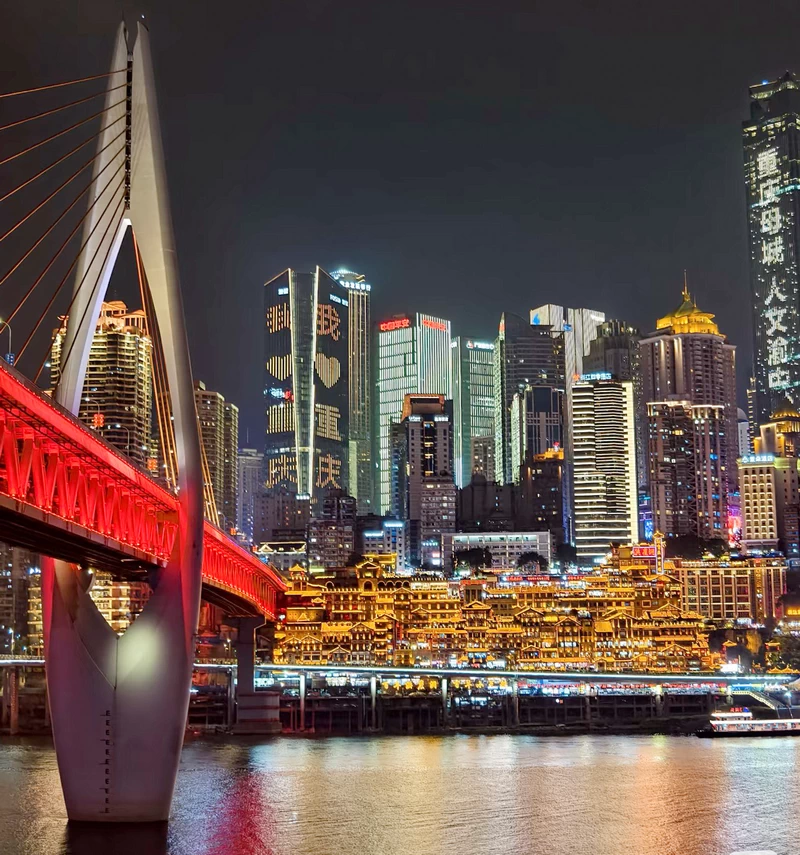
Qiansimen Bridge and Hongya Cave
Finally, walk onto Qiansimen Bridge for the classic panoramic view of Hongya Cave glowing above the river.
A Simple Rule
Visit Jiefangbei in the afternoon, when it’s easier to explore and take photos. Then stroll to Hongya Cave for sunset and the evening lights. The timing feels natural, and you’ll experience two of Chongqing’s most iconic landmarks at their best.
7. Practical Tips for Visiting Jiefangbei
After helping many travelers plan their Chongqing trips, I’ve found that a few simple tips can make a big difference.
Where to Stay
If it’s your first time in Chongqing, stay near Jiefangbei. You’ll be within walking distance of Hongya Cave, Bayi Food Street, metro stations, and many of the city’s top attractions. For better value, look around Linjiangmen or Xiaoshizi, which are still conveniently located.
Common Tourist Traps to Avoid
Ignore anyone offering a paid “fast-track entrance” to Hongya Cave. There is no official VIP line.
Likewise, politely decline invitations to “free tea ceremonies,” “special exhibitions,” or other unsolicited experiences from people approaching you on the street.
Before ordering hotpot, confirm the price of the broth base, especially if you’re choosing a yuan-yang pot.
What to Bring
Comfortable walking shoes are essential. Chongqing’s hills, stairs, and long walking distances can easily add up to 10,000 steps or more in a day.
I also recommend carrying a small umbrella and a light jacket, especially near the river.
Helpful Local Advice
Most businesses accept Alipay and WeChat Pay, but carrying a little cash is still useful.
When asking locals for help, try calling them “Laoshi” (teacher)—it’s a polite form of address. And if someone gives you directions, replying with “Yao de!” (“Okay!”) will usually earn a smile.
One last thing: in Chongqing, “mild spicy” is often not very mild. Start with a yuan-yang hotpot if you’re unsure.
Jiefangbei is much more than a monument. It’s where Chongqing’s history, food, shopping, and modern city life come together. From this crossroads, you can wander into the glowing world of Hongya Cave, explore hidden temples, or slow down with a cup of traditional tea in a local teahouse.
If you’re wondering how to visit Jiefangbei in Chongqing, my advice is simple: come with comfortable shoes, an appetite, and a little curiosity. Spend an afternoon here, stay after dark, and you’ll discover why Jiefangbei remains the true heart and soul of Chongqing. Yao de!
About the Author
Ruqin is the founder of Ruqintravel.com and has spent more than four decades working in China’s travel industry. Drawing on hands-on experience in cities like Beijing and Hangzhou, he personally researches and updates each guide to help international travelers navigate China with confidence.
Further Reading
Getting Around Chongqing: Metro, Taxis and Walking in a Vertical City
Chongqing Travel Guide: Map, Top Attractions, City Walks and Tips
How to Visit Hongya Cave in Chongqing: Night Views & Food Guide
The Best Chongqing Tour Itinerary
How to Book Chongqing Attraction Tickets: All You Need to Know