Written by Ruqin
August 09, 2026
From One-Child Families to Fewer Births: Reading China Through Travel
When you travel through China today, you may notice something interesting.
In Shanghai’s busy subway stations, Chengdu’s tea houses, or Beijing’s parks, you often see many elderly people and young adults. However, you may notice fewer children than you expected in a country known for having the world’s largest population for many decades.
A foreign visitor once asked me:
“China has more than one billion people. Why does it feel like there are fewer children now?”
It is a very good question.
To understand China’s Population Change today, you need to look beyond famous landmarks and ancient history. You also need to observe ordinary streets, families, and everyday conversations.
China is experiencing one of the biggest demographic changes in its modern history.
The country that once encouraged smaller families is now encouraging people to have more children.
However, changing a policy is easier than changing people’s choices.
A Dramatic Turn: From One Child to More Children
If you know a little about modern China, you may have heard about the one-child policy.
From the late 1970s until 2015, China implemented strict family planning policies. In many urban areas, most families were allowed to have only one child.
At that time, “one child per family” became one of the most recognizable features of Chinese society.
Many foreigners who visited China in the 1980s and 1990s remember seeing slogans about family planning on streets and buildings.
The policy successfully slowed population growth. However, it also created a new social structure.
Millions of Chinese families became “only-child families.”
A generation grew up without brothers or sisters.
Then, the situation began to change.
In 2016, China introduced the two-child policy. In 2021, the country allowed families to have three children.
The direction changed completely.
The message changed from “have fewer children” to “encourage more births.”
However, people’s attitudes did not change overnight.
By 2025, China’s birth population had fallen to around 7.9 million. The number was much lower than the peak years after the two-child policy was introduced.
Meanwhile, the country’s total population began to decline.
For many foreign travelers, these numbers may seem surprising.
But you can actually feel this change while walking through Chinese cities.
You see fewer children in playgrounds. You see more elderly people in parks. You see young couples making different choices about marriage and family.
The statistics are becoming part of daily life.
Why Are Young Chinese People Delaying Marriage?
During my travels in China, I often talk with young people.
Their opinions are very different from those of their parents’ generation.
A few years ago, while visiting Xi’an, I met a young woman working for an internet company.
She was 27 years old and had a stable income.
When I asked whether she planned to get married soon, she smiled and said:
“Marriage is not only about two people. It also means a house, a wedding, family expectations, and future children.”
She was not against marriage.
She simply wanted to think carefully.
Many young Chinese people share similar feelings.
First, the number of people at marriage age has decreased.
The younger generations are smaller than previous generations. Naturally, fewer people enter the marriage market.
Second, attitudes toward marriage have changed.
For older generations, marriage was often considered a necessary step in life.
A husband and wife built a family together and supported each other through difficulties.
Today, many young people see marriage differently.
They want emotional connection, personal happiness, and equality.
If marriage brings too much pressure but little happiness, some people choose to wait.
Women especially have experienced major changes.
With higher education levels and greater economic independence, many women no longer depend on marriage for financial security.
However, they also consider the challenges of marriage, childbirth, career development, and childcare.
Finally, economic pressure plays an important role.
Housing prices, wedding expenses, and daily living costs have made marriage more expensive.
For many young people, starting a family requires a major financial commitment.
A popular saying online reflects this feeling:
“How can I raise a child when I am still trying to manage my own life?”
This does not mean young Chinese people dislike children.
Many love children.
The question is whether they feel ready for the responsibility.
Section 3: Why Do Many Married Couples Still Choose Not to Have Children?
Marriage does not always lead to children anymore.
This is another major change in Chinese society. In the past, having children was considered a natural next step after marriage. Today, more young couples are thinking carefully before making that decision.
The reasons are practical.
The first concern is the cost of raising a child.
Many young couples calculate the expenses before becoming parents. They think about pregnancy, medical care, childcare, education, housing, and future opportunities.
For many families, the biggest expense is not the birth itself. It is the long journey afterward.
A child may need years of education, from kindergarten to university. In large cities such as Beijing, Shanghai, and Shenzhen, parents often worry about housing, school districts, and extracurricular classes.
I once talked with a friend in Beijing. He and his wife both graduated from good universities and had stable jobs. They had been married for several years but still had no children.
He told me:
“We are not against having children. We just want to understand whether we can give a child the life we hope for.”
This is a common thought among many young Chinese couples.
They are not simply avoiding responsibility.
They are trying to be responsible.
Meanwhile, time has become another important factor.
Modern Chinese work culture can be demanding. Many young professionals spend long hours at work, especially in major cities.
For some couples, the question is not only “Can we afford a child?”
It is also:
“Do we have enough time to raise one?”
Women often face additional pressure.
Having a child may affect career development, promotion opportunities, and personal plans. Although society is changing, many women still feel that childcare responsibilities are not equally shared.
Therefore, some couples decide to delay having children.
Others decide not to have children at all.
Their choice reflects a broader global trend: younger generations in many countries are redefining what a successful life means.
Section 4: Government Responses: Can Policies Change People’s Choices?
As birth rates decline, China has introduced a series of policies to encourage families to have more children.
The change is significant.
A country that once focused on limiting population growth is now trying to create a more family-friendly environment.
In recent years, many cities have introduced different forms of support.
Some offer childcare subsidies. Others provide housing support, longer maternity leave, or assistance with education costs.
The central government has also introduced nationwide childcare support programs.
However, changing birth decisions is not simple.
Many experts believe that financial support alone cannot solve the problem.
For example, a small annual subsidy may help a family, but it cannot completely remove concerns about long-term costs.
Young people are not only thinking about money.
They are also thinking about lifestyle.
Many Chinese people born after the 1990s and 2000s grew up in a period of rapid economic development. They have different expectations from previous generations.
They value personal growth, freedom, travel, career opportunities, and quality of life.
For their parents’ generation, having children was often seen as a family responsibility.
For many young people today, having children is a personal decision that requires careful consideration.
This is perhaps the biggest social change.
The question has changed from:
“Should everyone have children?”
to:
“Is having children the right choice for my life?”
Section 5: How Can Foreign Travelers Notice This Change in China?
As a traveler, you do not need to read population reports to understand this transformation.
You can see it in everyday places.
In Chinese Parks
Twenty or thirty years ago, many Chinese parks were filled with children running around and grandparents watching them.
Today, when you visit parks in Beijing, Shanghai, or other cities, you may notice something different.
You see older people exercising, dancing, practicing tai chi, or chatting with friends.
You see young couples walking dogs.
You see fewer children compared with the past.
The atmosphere tells a story.
On the Subway
China’s subway systems are famous for their crowds.
During rush hours, you will see millions of young workers traveling between home and office.
Many are looking at their phones, listening to music, or resting after a long workday.
Their conversations often focus on careers, housing, travel plans, and personal goals.
The pressure of modern city life has become part of their daily experience.
In Shopping Malls
Chinese shopping malls have also changed.
Children’s playgrounds still exist, but you may notice more spaces designed for young adults.
Pet cafés, coffee shops, lifestyle stores, and entertainment spaces have become increasingly popular.
For some young people, pets have become an important source of companionship.
They provide emotional comfort without the long-term responsibilities of raising children.
In Restaurants
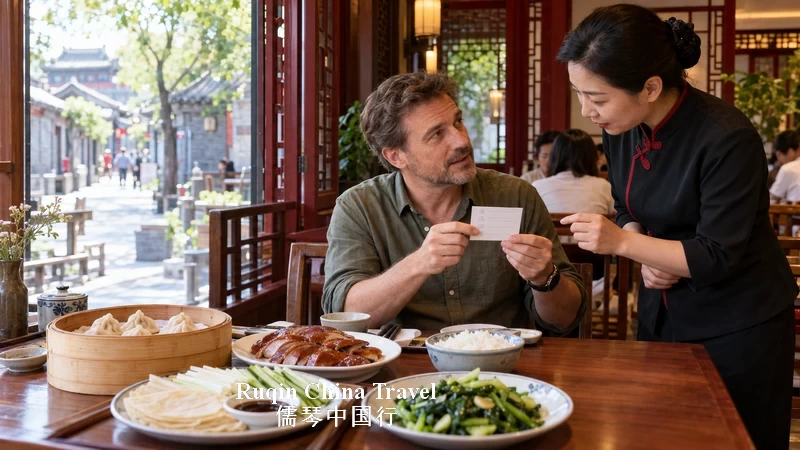
Visit a restaurant on a weekend evening.
You may see many young couples enjoying dinner together.
Some have children.
However, many simply enjoy time as a couple.
Their lifestyle choices are different from previous generations.
In Public Messages
Even public messages reflect this social change.
In the past, many family planning slogans emphasized having fewer children.
Today, messages often encourage families to have children and create a more supportive environment for parents.
The change in language reflects a much larger change in society.
Section 6: A Changing China Through the Eyes of a Traveler
For foreign visitors, China is often introduced through its ancient civilization.
You come to see the Great Wall, the Forbidden City, ancient temples, and traditional villages.
However, modern China is also a country experiencing rapid social change.
The demographic transformation is part of this story.
When you walk through a Chinese city, you are not only seeing buildings and streets.
You are seeing generations living together.
You may see elderly residents who experienced the one-child era.
You may see middle-aged parents who invested everything in their only child.
You may see young adults who are searching for a different balance between work and life.
Every generation carries a different memory of China.
That is what makes today’s China fascinating.
A country can change its policies quickly.
However, social attitudes change more slowly.
The young people you meet in China today are not simply following old traditions. They are creating their own understanding of family, success, and happiness.
Final Thoughts: Understanding China Beyond the Numbers
When you travel through China, you may notice many small scenes.
An elderly couple walking together in a park.
A young woman drinking coffee alone in a busy city.
A couple enjoying dinner without children.
A family carefully planning their future.
These moments are not just ordinary scenes.
They are part of a much larger story.
China is moving from a society focused on population growth control to a society facing population decline.
It is a historic transition.
However, behind every number are real people making real choices.
Young Chinese people are not simply choosing fewer children.
They are thinking about what kind of life they want.
They want happiness.
They want stability.
They want personal freedom.
These wishes are not unique to China. They are shared by young people around the world.
So, when you travel in China, try to look beyond the famous landmarks.
Look at the streets.
Look at the families.
Look at the people around you.
You will discover another side of China — a country balancing tradition and modern life, responsibility and personal choice, the past and the future.
That is the China’s Population Change you can only understand by walking through it.
Ruqin is the founder of Ruqintravel.com and has spent more than four decades working in China’s travel industry. Drawing on hands-on experience in cities like Beijing and Hangzhou, he personally researches and updates each guide to help international travelers navigate China with confidence.
Further Reading
The Influence of Social Media in China: Platforms like WeChat, Weibo, and Douyin (TikTok)
China’s One-Child Policy and Its Impact | A Glimpse of Modern Chinese Society
Confucius Philosophy – A Foreigner’s Guide to Confucianism
How to Understand Mencius: A Foreigner’s Guide to His Philosophy
Feng Shui – A Foreigner’s Guide – Ruqin China Travel