Written by Ruqin
August 06, 2026
Why Mencius Matters When You Travel in China
When I travel with foreign visitors in China, some questions stay with me longer than others. At the Confucius Temple in Qufu, visitors sometimes ask, “Who came after Confucius?” Elsewhere, perhaps in an old town or a quiet temple courtyard, someone may suddenly mention another name: Mencius.
The Latinized name sounds familiar to many Western readers. However, the man behind it often feels distant. Who was Mencius, why do Chinese people call him the “Second Sage,” and what can a thinker from over 2,300 years ago tell us about China today?
For travelers, I think Mencius is worth knowing for one simple reason. His ideas help explain how Chinese people have long thought about education, morality, government, family, and personal character.
You do not need to study philosophy before coming to China. Start with a few stories, then look around while you travel. Very often, his ideas become easier to understand once you see them in real life.
Who Was Mencius?
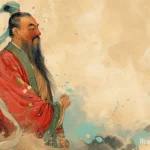
Mencius, or 孟子 (Mengzi), was born around 372 BC and died around 289 BC. He lived during China’s Warring States period, a time of warfare, political rivalry, and social instability.
Powerful states fought each other, while ordinary people often suffered. Mencius came from the state of Zou, near today’s Zoucheng in Shandong Province, and inherited the Confucian tradition several generations after Confucius.
Later, Chinese scholars gave him the title 亚圣 (Yasheng), usually translated as “Second Sage.” Confucius came first, while Mencius became the great defender and developer of Confucian thought.
However, the two men had different personalities. Confucius often appears calm and measured, while Mencius sounds stronger, sharper, and more direct. He traveled through several states, including Qi and Liang, trying to persuade rulers to reduce warfare and govern with humanity.
The results were limited. Many rulers thought his ideas were too idealistic for the politics of the time, but Mencius kept speaking. He was not simply a teacher in a classroom; he was willing to stand before powerful rulers and argue for ordinary people.
Human Nature Is Good: The Idea at the Heart of Mencius
If you want one idea to remember, start with Mencius’s belief that human nature is fundamentally good. He did not mean that every person is automatically kind or morally perfect. Instead, he believed that every person is born with the beginnings of moral feeling.
He called these beginnings the Four Sprouts (四端). They are 恻隐之心, compassion when we see suffering; 羞恶之心, shame when we do something wrong; 辞让之心, the willingness to yield and show respect; and 是非之心, the ability to recognize right and wrong.
Mencius compared these qualities to young shoots growing from the ground. The seeds are already there, but they need care. Family, education, social surroundings, and personal choices can all help them grow.
This is one reason his philosophy connects so naturally with Chinese ideas about education. People are not simply told to become good. They are encouraged to develop something that Mencius believed was already inside them.
The Child at the Well: The Easiest Way to Understand Mencius
One of Mencius’s best-known examples makes this idea easier to understand. Imagine that you suddenly see a small child about to fall into a well. Before you calculate anything, you feel alarm and want to help.
You do not first ask whether someone will reward you, nor do you think about whether people will praise you. The feeling comes immediately. For Mencius, that instinctive concern shows that compassion already exists inside human beings.
When I explain this story to foreign friends, I usually do not add much more. Almost everyone understands that reaction, and you do not need a long philosophical discussion to recognize it. That may be one reason the story has survived for more than two thousand years.
The People Matter More Than the Ruler
Mencius’s second major idea often surprises foreign visitors. He famously argued that the people come first, the state comes next, and the ruler comes last. For a thinker living in an age of kings, this was a bold position.
Mencius believed that political power carried responsibility. A ruler should make sure people could farm, eat, raise families, and live without unbearable taxes or violence. He called this 仁政 (renzheng), usually translated as “humane government” or “benevolent government.”
The idea sounds political, but travelers can also understand it through daily life. When you visit an old town, look at irrigation systems, granaries, markets, schools, and other places that supported ordinary communities.
These places remind us that traditional Chinese government was not only about palaces and officials. It was also about whether ordinary people could make a living and support their families. That was the level where Mencius wanted rulers to look.
Righteousness and Profit: Some Things Have a Price, Others Do Not
Another important part of Mencius’s philosophy concerns 义 (righteousness) and 利 (profit or benefit). When Mencius met King Hui of Liang, the king immediately asked what benefit he had brought after traveling such a long distance.
Mencius answered directly: “Why must Your Majesty speak of profit? What matters is benevolence and righteousness.” He was setting the direction of the conversation before it had even begun.
This does not mean Mencius ignored practical life. He understood money, power, politics, and survival very well. However, he believed that profit should never become the only standard for making decisions.
Some lines should not be crossed, and some things should not be sold. This idea still feels familiar in China today. You may hear people say 做人要有底线, meaning that a person should have moral limits.
The Man Behind the Ideas
Mencius becomes more interesting once you notice his personality. He traveled from state to state, argued with rulers, and often told powerful people things they did not want to hear. That same energy runs through the 《孟子》 (Mencius).
His language feels lively because he often uses stories, comparisons, and everyday situations. Many expressions that Chinese people still use today come from his arguments and stories.
五十步笑百步, or “fifty steps laughing at one hundred steps,” describes someone criticizing another person while ignoring a similar fault in himself. 揠苗助长, “pulling seedlings to help them grow,” warns against forcing progress too quickly.
Another expression, 缘木求鱼, literally means “climbing a tree to look for fish.” It describes using the wrong method to reach a goal. Once you know these stories, you may be surprised how often their ideas still appear in modern Chinese conversation.
For foreign travelers, this is an easy way to meet Mencius. You may hear an ordinary Chinese expression and suddenly discover that the story behind it is more than two thousand years old.
The Story of Mencius’s Mother
If you want to understand Mencius through stories, start with his mother. Chinese children still learn 孟母三迁, usually translated as “Mencius’s Mother Moves Three Times.”
According to tradition, young Mencius first lived near a cemetery and began copying funeral rituals. His mother decided the surroundings were unsuitable, so she moved the family near a marketplace.
There, the boy began imitating traders, bargaining, and shouting like shopkeepers. His mother moved again, and this time they settled near a school. Mencius began copying students and learning proper behavior, so his mother decided they had finally found the right place.
The story carries a simple message: surroundings shape people. When foreign visitors ask me why Chinese families care so much about schools, teachers, and study environments, this story is a good place to begin.
Whether every detail is literal history matters less than the value the story expresses. Education is not only what happens inside a classroom. It also comes from where you live, who surrounds you, and what you see every day.
A King, an Ox, and the Beginning of Compassion
Another story shows Mencius’s skill as a debater. King Xuan of Qi once saw an ox being led away for a ritual sacrifice. The animal was trembling, and the king felt pity, so he ordered that it should be spared.
A sheep would be used instead. Some people thought the king simply wanted to save money, but Mencius saw something different. He told the king that his reaction showed genuine compassion.
Then Mencius carefully expanded the argument. If the king could extend that same feeling toward ordinary people, he could become a humane ruler. A small moment of pity became the starting point for a much larger lesson about government.
This is classic Mencius. He does not begin with a long lecture or attack the king directly. Instead, he starts with something the listener has already felt and then leads him toward a larger question.
That is one reason the 《孟子》 (Mencius) can still feel surprisingly lively today. The ideas often begin with recognizable people, emotions, and situations.
Where to Follow Mencius in China
For travelers, Shandong Province is the best place to connect Mencius with the land he knew. Qufu is famous as the hometown of Confucius, while nearby Zoucheng is closely associated with Mencius.
If you are already traveling in Shandong, it is worth adding Zoucheng to your route. There you can visit historical sites associated with Mencius and his family, while the surrounding landscape gives his story a stronger sense of place.
These visits also remind you that Confucian thought did not develop in an abstract world. It grew in towns, schools, family compounds, ritual spaces, farming communities, and the political courts of ancient China.
Meanwhile, Qufu provides useful background because Mencius belongs to the larger Confucian tradition. The Confucius Temple, Confucius Family Mansion, and Confucius Cemetery help you understand the tradition that Mencius later inherited and developed.
If time allows, I suggest seeing Qufu and Zoucheng together. Qufu helps you understand the source, while Zoucheng shows how the tradition continued into the next great chapter.
What to Look for During Your Trip
You do not need to visit only famous philosophical sites to understand Mencius. His ideas become easier to recognize when you pay attention to everyday China.
First, notice schools and education. Look at old academies, temple schools, and families traveling with children. The respect for education that you see in China today has very deep cultural roots.
Next, listen to how people talk about character. Ideas such as 仁 (benevolence), 义 (righteousness), 礼 (proper conduct), and 孝 (filial respect) still appear in schools, family conversations, public signs, and cultural displays.
Then, notice how villages and neighborhoods organize shared life. An ancestral hall, an old academy, a village square, or a community courtyard can tell you something about social relationships and responsibility.
Finally, listen for old idioms in modern conversation. Chinese people use classical expressions more often than many visitors expect. Once you know a few Mencian stories, these phrases become small windows into the past.
A Practical Way to Read Mencius Before or During Your Trip
Foreign readers sometimes worry that Chinese philosophy will feel difficult. My advice is to keep the beginning simple and avoid trying to master the whole philosophical system at once.
Start with the child-at-the-well passage. Then read the story about the ox and Mencius’s meeting with King Hui of Liang. These short episodes introduce his main ideas without requiring much background knowledge.
After reading them, ask yourself one question: what was Mencius trying to protect? Usually, the answer returns to the same things — compassion, human dignity, moral courage, and responsibility.
Once you see that pattern, the philosophy becomes easier to follow. Then, when you visit a Confucian temple or old academy in China, the inscriptions and stories around you begin to carry more meaning.
Why Mencius Still Feels Close to Modern China
More than two thousand years have passed since Mencius traveled from state to state. The kings he argued with are gone, and many of the ancient capitals have disappeared. However, his questions remain familiar.
Are people naturally capable of goodness? What should leaders owe the people they govern? When should principle come before profit, and how much does environment shape a child?
When I travel around China, I sometimes think of Mencius in very ordinary places. I may see grandparents patiently helping a child study, neighbors discussing a shared problem, or someone stopping to help a stranger without thinking twice.
Of course, those people are not necessarily thinking about Mencius. That is not really the point. His importance lies in how his language and ideas helped shape values that became deeply rooted in Chinese culture.
Travel With Mencius in Mind
Mencius was not simply a statue in a temple. He was a man who walked through a difficult age, spoke directly to rulers, and argued strongly for what he believed.
He believed goodness begins inside ordinary people. He believed rulers should care about the lives of the people below them, and he believed profit should never erase principle.
So, when you travel in China, do not look only at temples, mountains, and old walls. Watch how families teach children, and notice how people speak about fairness, duty, education, and character.
If your journey takes you through Shandong, visit Qufu and Zoucheng and read a few Mencian stories before you go. Then the old philosophy becomes much less distant.
Mencius is no longer only a thinker from 2,300 years ago. His ideas become part of the China you are already seeing around you.
Ruqin is the founder of Ruqintravel.com and has spent more than four decades working in China’s travel industry. Drawing on hands-on experience in cities like Beijing and Hangzhou, he personally researches and updates each guide to help international travelers navigate China with confidence.
Further Reading
Confucius Philosophy – A Foreigner’s Guide to Confucianism
Feng Shui – A Foreigner’s Guide – Ruqin China Travel
Chinese Zodiac Signs: Understanding the Meaning Behind the 12 Animals
Traditional Chinese Festivals: Understanding China Through Its Celebrations
Traditional Chinese Clothing: Understanding the Beauty Behind the Fabrics
Chinese Red Envelope Tradition: A Cultural Guide for Foreigners