

Written and updated by Ruqin
Last updated: March 5, 2026
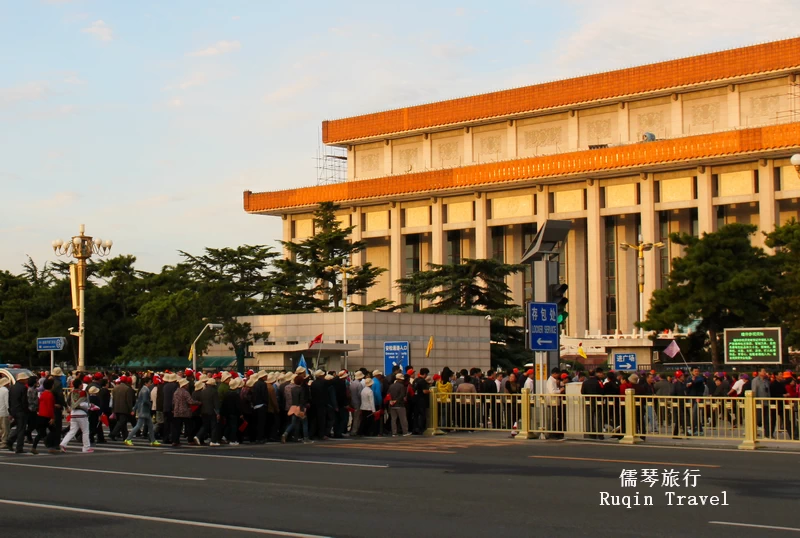
The first thing many travelers don’t realize about visiting the Chairman Mao Memorial Hall is that it’s no longer something you can simply walk into from Tiananmen Square. Over the years, the visiting process has become more structured, with real-name reservations, morning-only opening hours, and airport-style security checks before entry.
That’s why the most important part of the visit actually happens before you leave your hotel — making sure you understand the reservation process and the basic rules for entering the hall.
In this guide, I’ll walk you through the simplest ways to book a visit to the Chairman Mao Memorial Hall, including options for travelers who don’t have a Chinese phone number. I’ll also explain what to expect when you arrive at Tiananmen Square — from security procedures and bag storage to the best time to arrive.
Once you understand these few details in advance, the visit itself becomes much more straightforward and far less stressful.
Chairman Mao Memorial Hall (Ruqin’s Quick Pick)
- Tickets: Free, but reservation is usually required
- Opening hours: Typically Tue–Sun, morning only (often 8:00–12:00). Closed on Mondays.
- Security: Expect checks around Tiananmen Square. Arrive early.
- What you can bring inside: Passport + phone (silent). That’s basically it.
- Not allowed inside: Bags, cameras, food, drinks (yes, even water). Use the deposit room first.
- Best time to go: Weekday mornings, as early as you can manage.
- Most common issue for foreigners: No China phone number. See the fix below.
- ⭐ Important (if you have NO reservation yet): If you plan to try the International Visitors Desk on the day, book Tiananmen Square entry first. Otherwise you may not be allowed into the square area to reach the memorial hall.
Quick note: Entry rules and time slots can change. I always confirm the latest notice before I go
1. Chairman Mao Memorial Hall Overview
When I first stepped into Chairman Mao Memorial Hall in Beijing, the atmosphere struck me. Silence filled the hall. Every visitor seemed deep in thought. Since its opening in 1977, this mausoleum has stood as one of the city’s most symbolic places.

Inside, the experience unfolds in two parts. First, on the ground floor, I joined the line that slowly moved past Mao’s crystal coffin. The moment was brief but powerful. Next, I climbed upstairs to see exhibits that traced his life and legacy.
The flow was orderly, almost ritual-like. However, it never felt rushed. In addition, staff guided visitors with gentle reminders to keep quiet and respectful. I found myself reflecting on history more than I expected.
Meanwhile, I realized preparation was essential. Rules are strict, and knowing them in advance makes the visit smoother. That’s why I wrote this guide. If you wonder how to visit Chairman Mao Memorial Hall in Beijing, I’ll share booking advice, visitor tips, and what I learned firsthand—so your experience can be meaningful, not stressful.
2. Do You Need a Separate Tiananmen Square Reservation?
Here’s a small detail that saves a lot of confusion. If you already have a valid reservation for Chairman Mao Memorial Hall, you usually don’t need to make a separate Tiananmen Square entry reservation. At the square entrance, you can show your memorial hall booking record to enter the square area.
That said, this visit isn’t “quick.” You’ll go through security to enter Tiananmen Square first, and then Chairman Mao Memorial Hall has its own separate security check and queue. So even with a reservation, expect lines and allow extra time—especially on weekends or busy travel seasons.
Ruqin tip: I treat this like an “early-morning mission.” Go early, travel light, and keep your booking record ready on your phone. Rules can change, so it’s always worth double-checking the latest notice before you go.
If you don’t have a confirmed Mao Memorial Hall reservation and you’re planning to try the International Visitors Desk on the day, I’d strongly consider booking a Tiananmen Square entry reservation first. Otherwise, you may not be allowed into the square area at all, which means you can’t reach the memorial hall entrance.
If you do have a valid reservation for the memorial hall (or another attraction inside the Tiananmen area), you can usually enter the square by showing that booking record, without reserving the square separately. However, rules can tighten during busy periods, so it’s always smart to double-check the latest notice before you go.
2. How to Book Chairman Mao Memorial Hall Entry Tickets
When I planned my visit, the first question was simple: how to book Chairman Mao Memorial Hall entry tickets? The process looked confusing at first. However, with the right steps, it became manageable.
However, because the number of tickets released each morning from Tuesday to Sunday is limited, it’s still not easy to get entry to Chairman Mao Memorial Hall.
First, locals often use WeChat. The official service account and mini program let you book 1–6 days in advance. I noticed, though, you need a local phone number. In addition, the system asks for real-name details before confirming the reservation.
Meanwhile, as foreign visitors, people have another option. Next, I discovered the International Visitors Desk. It sits at the southeast corner of the hall. If you are lucky, you arrive with your passport between 8:00 AM and noon, and staff may help you secure a same-day ticket.
In addition, many hotels and travel agencies—like the Beijing Tourist Distribution Center—offer booking help. This saved friends of mine time and stress.
Finally, remember the hall is open Tuesday to Sunday, 8:00 AM to 12:00 noon. Entry is always free, though hours may shift on special dates. Before going, I always check for schedule updates, especially on national holidays.
3. Don’t Have a Chinese Phone Number? Here’s What to Do
Don’t worry—this is the most common snag, and you’re not the only one who hits it. If the official booking system asks for a China phone number (or won’t accept your details), you still have options.
First, try the International Visitors Desk at the memorial hall. Bring your passport and go early. Staff can sometimes help with same-day entry, depending on availability.
Next, ask your hotel concierge to help you reserve. This is often the easiest solution if you’re staying in a hotel with a front desk.
Finally, if you want the least hassle, use a reputable booking service (or a small group tour) that handles the reservation for you.
My small advice: don’t leave this until the night before. Beijing mornings move fast, and reservations can fill up.
4. How to Get to Chairman Mao Memorial Hall
I still remember my first trip to Tiananmen Square. Finding how to get to Chairman Mao Memorial Hall was simpler than I expected.
First, I took the subway. Line 1 brought me to Tiananmen East Station, Exit C. From there, it was only a short walk across the square. Next time, I tried Line 2 and exited at Qianmen Station, Exit A. Walking north toward the hall gave me a different perspective of the square.
In addition, buses also stop close by. Routes heading to Qianmen, Tiananmen East, and Tiananmen West will all get you there. Meanwhile, if you choose a taxi, be ready to walk the final stretch. Cars cannot enter the square directly.
However, that short walk makes the moment feel even more special. Each step brings you closer to one of Beijing’s most symbolic places.
5. Deposit Room for Bag Storage
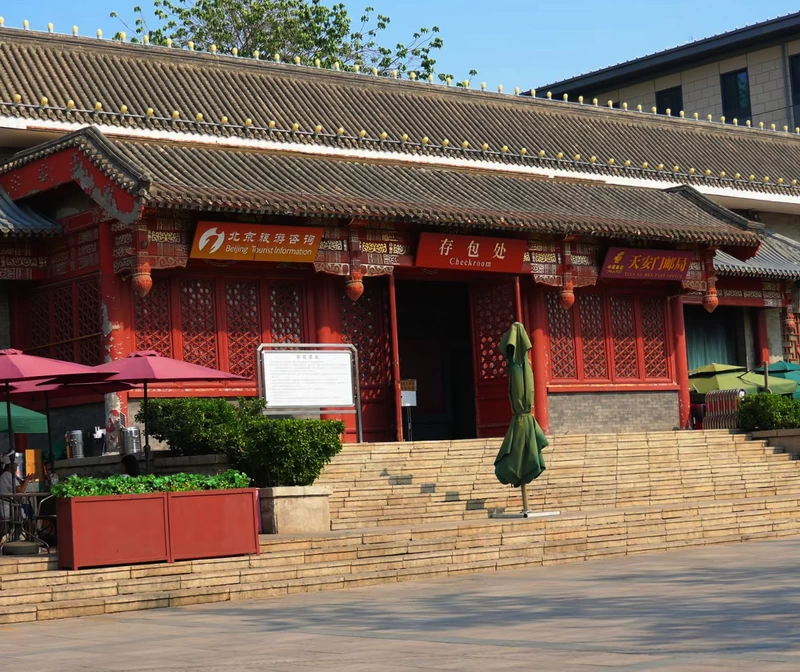
On my first visit, I didn’t realize how strict the rules were. Large bags, cameras, and even water bottles are not allowed. Only a passport and a silent phone can enter. So learning how to deposit your bags before visiting Chairman Mao Memorial Hall was essential.
First, I exited the metro at Tiananmen East Station, Exit C. Next, I walked to the deposit room on the east side of Tiananmen Square. The process was simple—hand over your bag, collect a ticket, and head back out.
Meanwhile, the square itself has several security checks. After leaving my bag, I passed through inspection and enter the square before joining the line. Finally, once I finished inside the memorial, I returned to the deposit room to collect my things.
In addition, lockers are free and safe. Planning this step in advance makes the whole experience much smoother. Expect multiple security checks around Tiananmen Square.
6. How to Visit Chairman Mao Memorial Hall
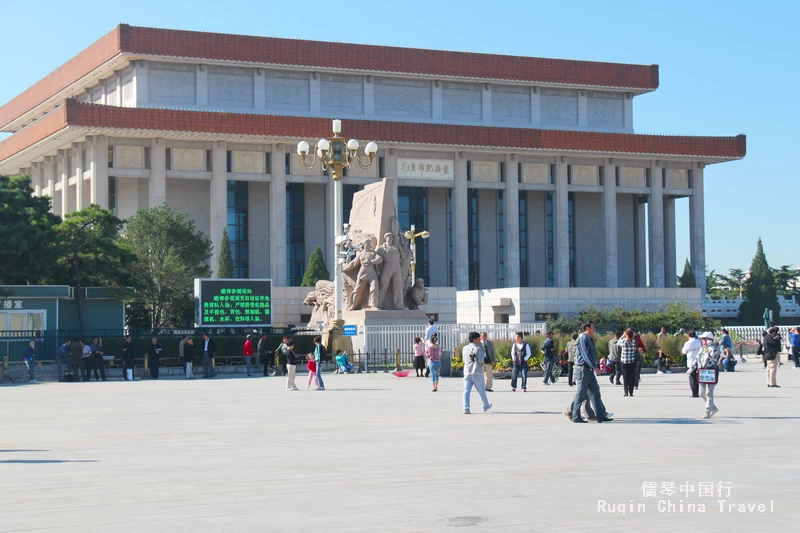
I still remember the first time I stood before Chairman Mao Memorial Hall. The cube-shaped building, built in 1976, felt imposing yet solemn. White marble steles on the north and south sides glowed in the sun. Each bore six golden characters, declaring “Chairman Mao Memorial Hall.” in Chinese.
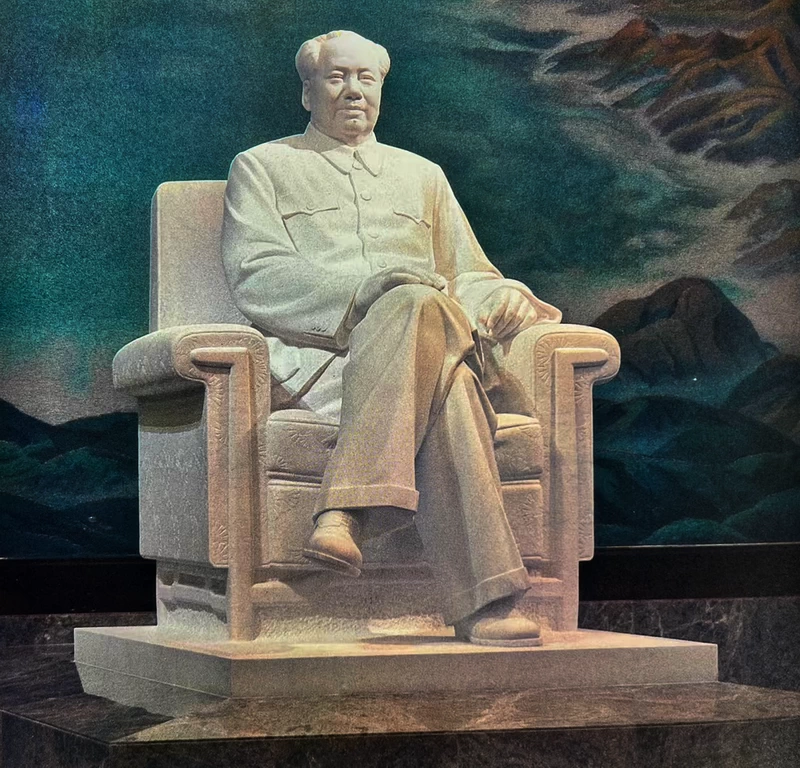
First, I entered through the northern doors. The Northern Hall welcomed me with a marble statue of Mao seated calmly. His expression seemed both kind and lifelike. Behind him, the vast embroidery “The Land of the Motherland” stretched across the wall, showing mountains, rivers, and sky.
Next came the Hall of Mourning. Here, Mao Zedong rested in a glass chamber, dressed in his gray suit. A red Communist Party flag covered him. Soldiers stood silently, guarding the space.
Visitors divided into two lines. We walked past in quiet respect, then exited through the Southern Grand Hall. Souvenirs waited there, but I lingered on the solemn moment instead.
Meanwhile, the second floor revealed another layer of history. Six memorial rooms honored Mao and five other leaders: Zhou Enlai, Liu Shaoqi, Zhu De, Deng Xiaoping, and Chen Yun. In addition, each room held marble statues, documents, photos, and personal items. Together, they painted a vivid story of China’s revolutionary journey.
The visit felt brief but unforgettable. Knowing how to visit Chairman Mao Memorial Hall helped me appreciate both the atmosphere and the history within.
7. Chairman Mao Memorial Hall Visitor Tips
On my first visit, I quickly learned that timing matters. Although the hall closes at noon, I arrived early. That gave me enough time for bag storage and the long security checks.
Next, I noticed the crowds. Weekends and holidays filled the square. However, weekdays felt calmer, with shorter lines and more space to breathe.
In addition, clothing matters here. This is a place of reverence. I wore modest attire, and others did the same. Meanwhile, the open square meant cold winds in winter and hot sun in summer, so dressing for the weather was essential.
I also discovered that reservations are non-negotiable. Without one, the line leads nowhere. Seniors and children, however, had a dedicated lane that moved faster.
Finally, inside the hall, silence ruled. Phones stayed off. Hats came off. Photography was forbidden. These Chairman Mao Memorial Hall visitor tips may seem strict, but they made the experience deeply respectful.
8. Chairman Mao Memorial Hall Nearby City Walks
After leaving the hall, I didn’t rush home. Instead, I explored on foot. The area around Tiananmen Square felt like a living museum. These Chairman Mao Memorial Hall nearby city walks made my day unforgettable.
First, I walked north. In minutes, I stood before the Forbidden City. Golden roofs shone under the sun, and the Meridian Gate looked majestic. Booking ahead was essential, but the reward was priceless.
Next, I crossed to the east side of the square. The National Museum of China welcomed me with treasures ranging from ancient bronzes to modern art. I showed my passport and entered for free. However, the museum was vast, so I set aside at least an hour.
Meanwhile, on the west side, the Great Hall of the People stood proud. I couldn’t always go inside, but the Soviet-style façade and changing guards were worth seeing.
Later, I headed south to Qianmen Street. Restored Qing-era buildings framed lively shops and food stalls. I sampled candied hawthorn and soy milk from century-old stores.
In addition, a short walk west led me to Zhongshan Park. Locals flew kites, children played, and I found quiet shade among ancient trees.
Finally, I ended at the National Centre for the Performing Arts, the “Giant Egg.” Its dome reflected beautifully in the water at sunset.
Each stop added a new layer of Beijing’s story. Walking from one landmark to another turned my visit into a full day of history, culture, and discovery.
FAQs (Chairman Mao Memorial Hall)
1) Do I need a ticket for Chairman Mao Memorial Hall?
Entry is usually free, but you typically need a reservation. Think of it as “free ticket, timed entry.”
2) Can foreigners visit Chairman Mao Memorial Hall?
Yes. Foreign visitors can enter, but the booking process can be the tricky part.
3) What are the opening hours?
It’s usually open in the morning only and often closed on Mondays. I always double-check hours the day before.
4) What should I bring with me?
Bring your passport and a phone (kept silent). Travel light. You’ll thank yourself at security.
5) What items are not allowed inside?
They don’t allow bags, cameras, food, or drinks. Even water often has to go into the deposit room.
6) Where do I store my bag?
Use the deposit room near the square before you line up. Do this first, not after you’ve already queued.
7) How early should I arrive?
Earlier is better. If you arrive right at opening, you’ll usually beat the longest lines and heat.
8) How long does the visit take?
The inside portion is fairly quick, often under an hour. However, security and lines can add time.
9) Is there a dress code?
Dress neatly and respectfully. I avoid tank tops and loud beachwear here. It’s a solemn place.
10) What’s the easiest plan for first-timers?
Book ahead if you can. If you can’t, go early and use the International Visitors Desk as your backup plan.
A visit to the Chairman Mao Memorial Hall is usually quiet and brief, but it remains one of the most distinctive experiences in Tiananmen Square. The atmosphere is respectful, the process is orderly, and once you know the entry rules and reservation steps, the visit itself is quite straightforward.
My main advice is simple: arrange your reservation in advance, arrive early, and travel light so you can pass through security smoothly. These small preparations make a big difference on the day of your visit.
If you’re planning to include the Chairman Mao Memorial Hall in your Beijing itinerary, I hope this guide helps you feel prepared before you go. With the logistics taken care of, you can simply focus on experiencing this important historical site in the heart of the city.
About the Author
Ruqin is the founder of Ruqintravel.com and has spent more than four decades working in China’s travel industry. Drawing on hands-on experience in cities like Beijing and Hangzhou, he personally researches and updates each guide to help international travelers navigate China with confidence.
Further Reading
How to Visit Tiananmen Square: A Complete Travel Guide
How to Visit the National Museum of China: Tickets & Tours Guide
Qianmen Street Beijing: Map, Food, Shopping & Hotels
National Centre for the Performing Arts (NCPA) Travel Guide























Hello,
I attempted to book a visit to the Mao Zedong Memorial Hall through the official platform, but it requires a Chinese ID and a local phone number. Unfortunately, I don’t have either.
Could you kindly assist me in securing a reservation for June 29 or July 1? I’m a senior traveler from Brazil.
Thanks in advance for your support!
Best regards,
William
—————————-
Hi William,
Thank you for your message—it’s great to hear that you’ll be visiting China soon!
I understand the difficulty you’ve encountered. The reservation system for the Mao Zedong Memorial Hall does ask for a Chinese ID and phone number, which can be an obstacle for overseas visitors. Fortunately, there are other ways you can still access the memorial.
Foreign guests are allowed to register in person. You just need to bring your passport and visit the International Visitors’ Reception Desk located at the southeast corner of the hall. This can be done on the day of your visit between 8:00 AM and 12:00 PM.
Alternatively, some licensed travel agencies or even your hotel’s front desk may be able to assist you in arranging the visit ahead of time. Agencies like the Beijing Tourist Distribution Center are familiar with this process.
Please remember to carry your original passport when you go, and note that bags, cameras, and other items aren’t permitted inside. You can store them for free at the deposit area on the east side of the building.
As of the latest information:
June 29 still has good availability in the morning.
July 1 is a public holiday (China’s Party Founding Day), and it’s usually quite busy. If your schedule allows, June 29 would be the easier day to visit.
If you’d like more assistance, feel free to contact the Beijing tourism hotline at +86 10 12301, where English-speaking support is available.
Wishing you a pleasant visit and a wonderful time in Beijing!
Best wishes,
Ruqin Travel Team
Hi William,
Did you succeed to perform the visit ?
I am in the same situation as you (no Chinese mobile) and would like to know how to proceed ?
Thanks !