
Written and updated by Ruqin
Last updated: October 10, 2026
Three days in Beijing give you enough time to see some of the city’s most famous attractions, including the Forbidden City, Mutianyu Great Wall, Summer Palace, and Temple of Heaven.
However, Beijing is a large city. Trying to visit too many places without considering their locations can leave you spending more time in traffic than sightseeing.
The key is to arrange your itinerary by area and allow enough time for security checks, walking, and transport.
I recommend dividing your three days into three different experiences:
- Day 1: Tiananmen Square, Forbidden City, Jingshan Park, and optional Shichahai.
- Day 2: Mutianyu Great Wall and Summer Palace.
- Day 3: Temple of Heaven, Qianmen Street, Dashilan, and Wangfujing.
Day 2 is the busiest. Day 3 is deliberately lighter, giving you time to enjoy Beijing without rushing.
1. Beijing 3-Day Sightseeing Map: How to Use It
Beijing 3-Day Sightseeing Map
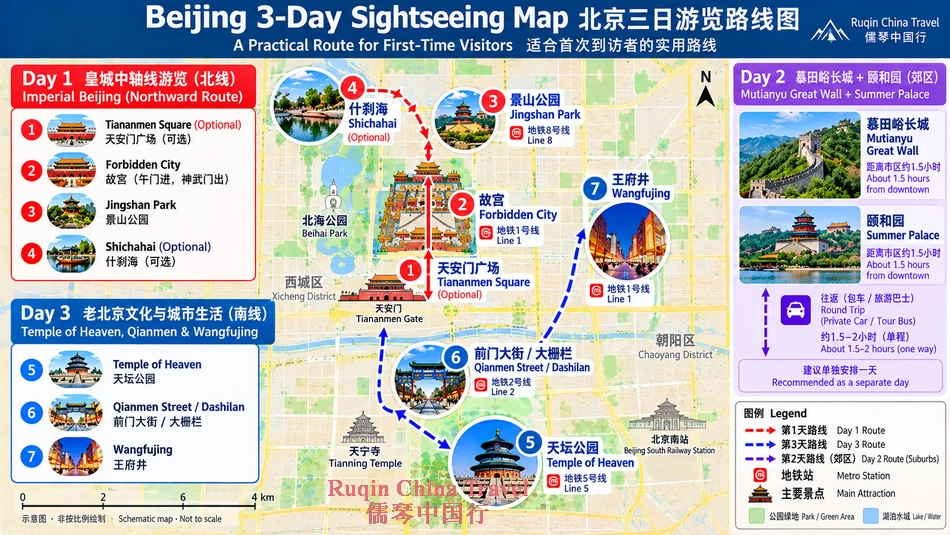
The map focuses on central Beijing, showing the attractions for Days 1 and 3.
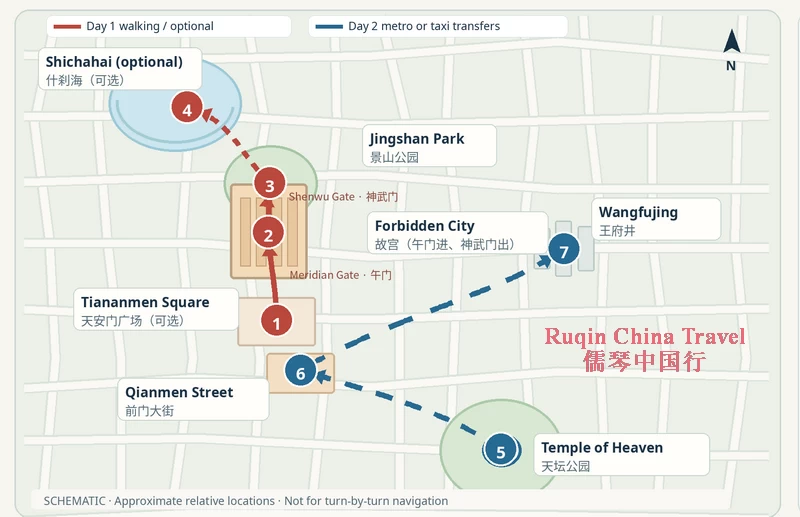
Day 1 follows Beijing’s historic north-south axis. You begin near Tiananmen Square, walk through the Forbidden City, and finish at Jingshan Park.
Day 3 covers southern and eastern central Beijing, combining imperial architecture with traditional streets and modern shopping.
Day 2 appears separately because Mutianyu Great Wall is well outside central Beijing, while the Summer Palace lies in the city’s northwest.
These two attractions require road transport rather than a continuous city walking route.
Use the map to understand the general locations. For actual navigation, check the entrances and transport routes in Amap (Gaode Maps) or another current mapping app.
2. Day 1: Tiananmen Square, Forbidden City and Jingshan Park
Your first day introduces you to the historical centre of Beijing.
The main route is straightforward:
Tiananmen Square → Forbidden City → Jingshan Park → Shichahai (optional)
I recommend keeping most of the day for the Forbidden City and Jingshan Park.
Morning: Tiananmen Square
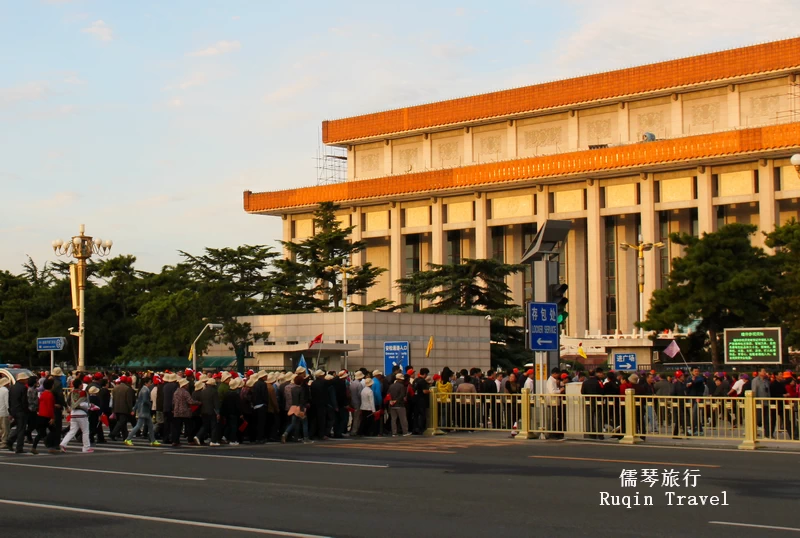
Tiananmen Square (天安门广场) is one of Beijing’s best-known landmarks.
If you have arranged access to the square, you can visit before continuing toward the Forbidden City.
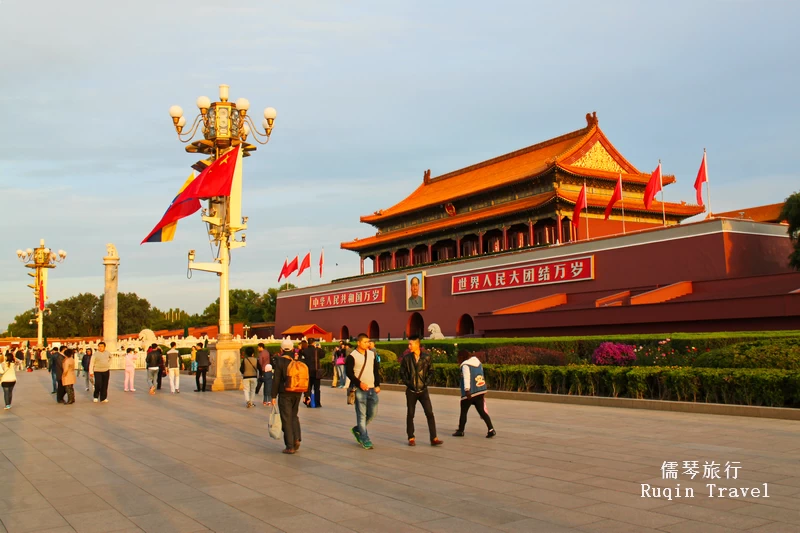
Allow approximately 30–60 minutes, depending on security checks and how much you want to see.
If you are mainly interested in the Forbidden City, you can skip the square and go directly toward the palace’s southern entrance.
Remember that Tiananmen Square and the Forbidden City have separate visitor arrangements. Do not assume that a Forbidden City ticket automatically includes access to the square.
Late Morning: Explore the Forbidden City
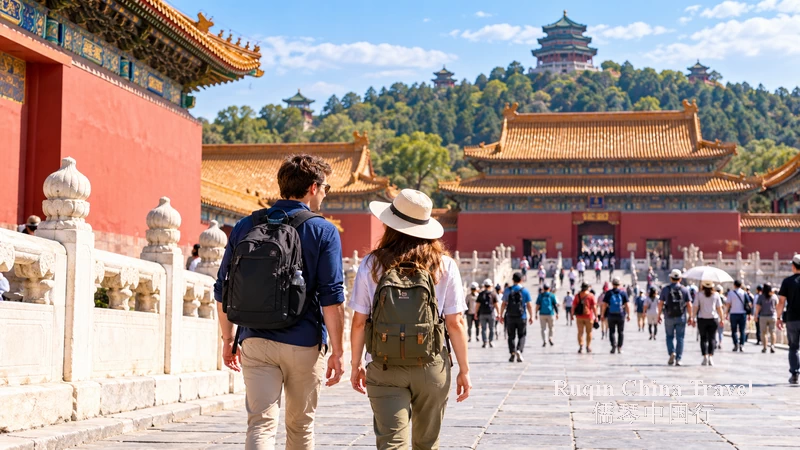
The Forbidden City (故宫), officially known as the Palace Museum, is the highlight of Day 1.
It served as the imperial palace during the Ming and Qing dynasties.

Allow at least three to four hours for a first visit.
The most important detail is the entrance and exit arrangement.
Enter through Meridian Gate (午门) on the south side. Exit through Shenwu Gate (神武门) on the north side.
You cannot enter the Forbidden City through Shenwu Gate or Donghuamen Gate.
Inside, follow the main central route through the ceremonial halls before exploring additional courtyards if time permits.
For a first visit, I recommend concentrating on the major halls and selected residential courtyards rather than trying to see every exhibition.
Book your admission in advance through the official Palace Museum reservation system. Tickets are normally released seven days before the visit at 8:00 PM Beijing time.
The museum is normally closed on Mondays, except when special holiday arrangements apply.
Afternoon: Jingshan Park
After leaving Shenwu Gate, cross the road to Jingshan Park (景山公园).
This is one of the easiest and most rewarding sightseeing combinations in Beijing.
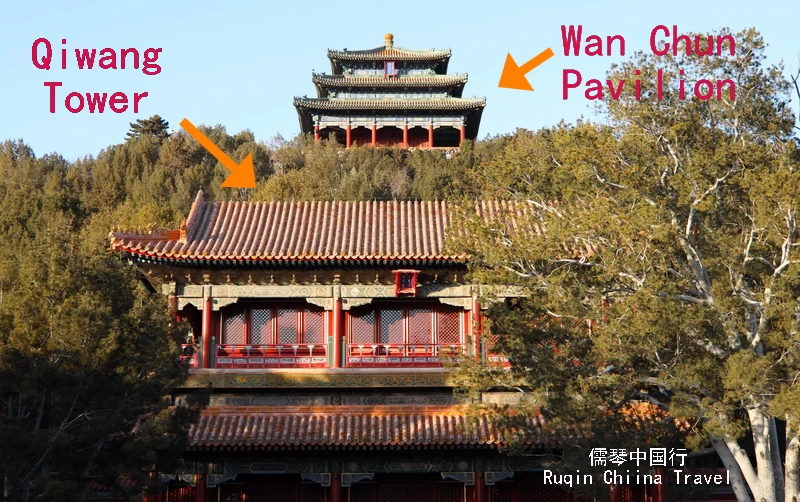
Walk uphill to Wanchun Pavilion (万春亭), the central pavilion at the top of the hill.
From here, you can look south over the rooftops of the Forbidden City. On a clear day, the view is excellent for photography.
Allow approximately 45–90 minutes for the park, including the uphill walk.
The climb involves steps and a noticeable slope. Take your time if you are traveling with older relatives.
Optional Evening: Shichahai
If you still have energy, continue northwest toward Shichahai (什刹海).
This lakeside district is known for its hutongs, traditional courtyards, restaurants, and evening atmosphere.
Walk around Qianhai Lake, take photographs, or enjoy dinner nearby.
However, after several hours inside the Forbidden City, many travelers will already have walked a considerable distance.
I would treat Shichahai as optional rather than essential.
3. Day 2: Mutianyu Great Wall and Summer Palace
Day 2 combines two of Beijing’s most impressive attractions.
Mutianyu Great Wall (慕田峪长城) → Summer Palace (颐和园)
This is an ambitious but possible day if you arrange transport carefully and start early.
I strongly recommend a private car or a prearranged transfer for this combination.
Public transport is less convenient because Mutianyu and the Summer Palace are not connected by a simple direct bus or subway route.
Early Morning: Travel to Mutianyu Great Wall
Leave your hotel around 7:00 AM, or earlier during busy periods.
Mutianyu is approximately 70 kilometres northeast of central Beijing. Driving generally takes around 1.5–2 hours, depending on your starting point and traffic.
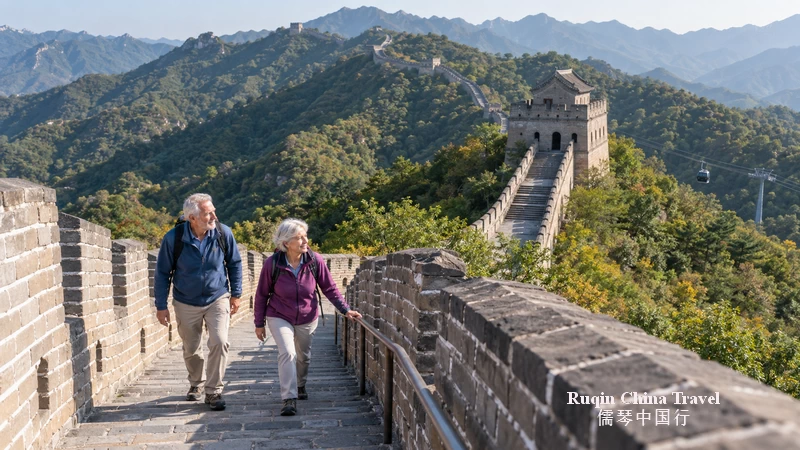
Try to arrive before the main tour groups.
Mutianyu is known for its restored watchtowers, mountain scenery, and convenient cableway options.
For most first-time visitors, I recommend the enclosed cable car rather than walking all the way uphill.
The cable car takes you to the area near Watchtower 14.
From the upper station, there are still steps before reaching the Wall itself.
Once on the Wall, you can walk toward Watchtower 15 and return by the same route.
If you are fit and want a longer walk, continue farther along the restored section.
Allow approximately three hours for the Great Wall visit, including the internal shuttle, cable car, walking, and photographs.
During busy holidays, you may need considerably more time.
Midday: Lunch and Transfer to the Summer Palace
After visiting Mutianyu, have a simple lunch before leaving.
Your next destination is the Summer Palace (颐和园), northwest of central Beijing.
The drive from Mutianyu to the Summer Palace may take approximately 1.5–2.5 hours, depending on traffic and the route.
This is why I recommend booking a car for the full day rather than arranging two separate transfers.
Tell your driver in advance that you want to visit both places.
Also confirm whether parking, tolls, and waiting time are included in the price.
Late Afternoon: Visit the Summer Palace
The Summer Palace is one of Beijing’s most beautiful imperial gardens.
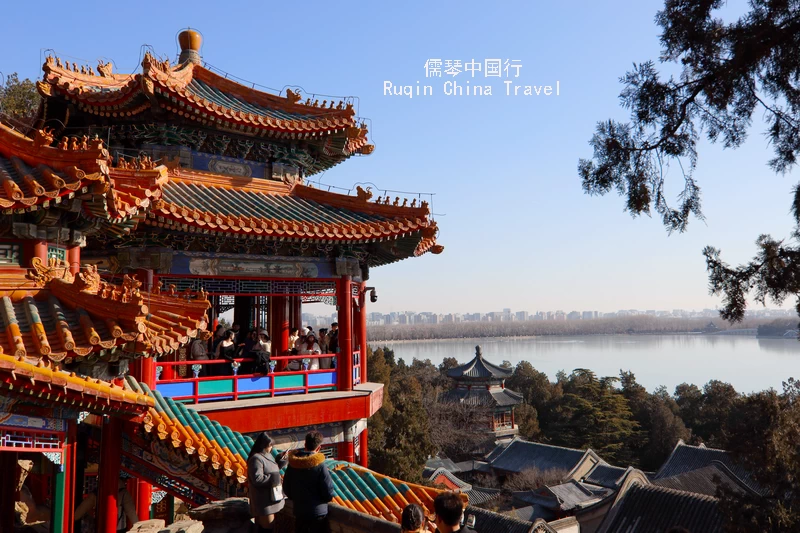
It is famous for Kunming Lake (昆明湖), Longevity Hill (万寿山), the Long Corridor (长廊), and traditional pavilions.
However, the grounds are extensive. A complete visit can easily take half a day or longer.
After visiting Mutianyu, you will probably have only two or three hours available.
I recommend choosing a shorter route rather than trying to cover the entire park.
One practical option is to enter from the East Palace Gate (东宫门), visit the main eastern garden area, walk part of the Long Corridor, and enjoy views of Kunming Lake.
You can then leave through a convenient gate and return to your hotel.
If you arrive late, check the seasonal opening hours and last admission times. Some interior attractions close earlier than the main park.
Is Day 2 Too Busy?
For some travelers, yes.
Mutianyu and the Summer Palace are both major attractions. Combining them requires an early start, good transport arrangements, and a willingness to shorten the Summer Palace visit.
If you are traveling with older relatives, young children, or anyone who prefers a relaxed pace, I would choose Mutianyu as the main attraction and consider the Summer Palace optional.
You can also visit the Summer Palace on a separate day if your schedule allows.
4. Day 3: Temple of Heaven, Qianmen and Wangfujing
After the busy second day, I recommend a more relaxed final day.
The route is:
Temple of Heaven → Qianmen Street and Dashilan → Wangfujing
These attractions offer three different sides of Beijing: imperial history, traditional street life, and modern shopping.
Morning: Temple of Heaven
Start at the Temple of Heaven (天坛公园).
Take Subway Line 5 to Tiantandongmen Station (天坛东门站), then use the East Gate.

The Temple of Heaven was where Ming and Qing emperors performed ceremonies to pray for good harvests.
Its most famous building is the Hall of Prayer for Good Harvests (祈年殿).
Other highlights include the Echo Wall (回音壁) and Circular Mound Altar (圜丘).
Allow approximately two to three hours.
If you arrive in the morning, you may also see local residents exercising, practicing tai chi, singing, or enjoying the park.
Remember that the main historic compounds normally close on Mondays, although the surrounding park remains open.
Lunchtime: Qianmen Street and Dashilan
After leaving the Temple of Heaven, travel to Qianmen Street (前门大街).
You can take a taxi or DiDi, or use the subway with a transfer.
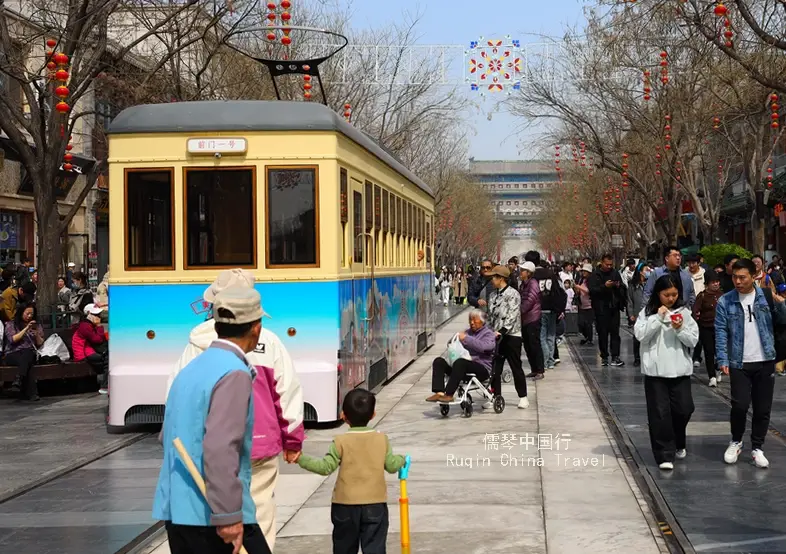
Qianmen Street
Qianmen is a traditional commercial area south of Tiananmen Square.
The main pedestrian street has restored historic-style buildings, shops, and restaurants.
Nearby Dashilan (大栅栏) is particularly interesting for its narrower lanes, traditional businesses, and old Beijing atmosphere.
I recommend spending approximately two hours here, including lunch.
You might try Beijing noodles, dumplings, traditional pastries, or Peking duck if you have enough time.
You can also explore some of the smaller lanes rather than staying only on the main shopping street.
Afternoon or Evening: Wangfujing
Finish your three-day itinerary at Wangfujing (王府井).
Wangfujing is one of Beijing’s best-known shopping districts, with modern malls, department stores, restaurants, and traditional shops.
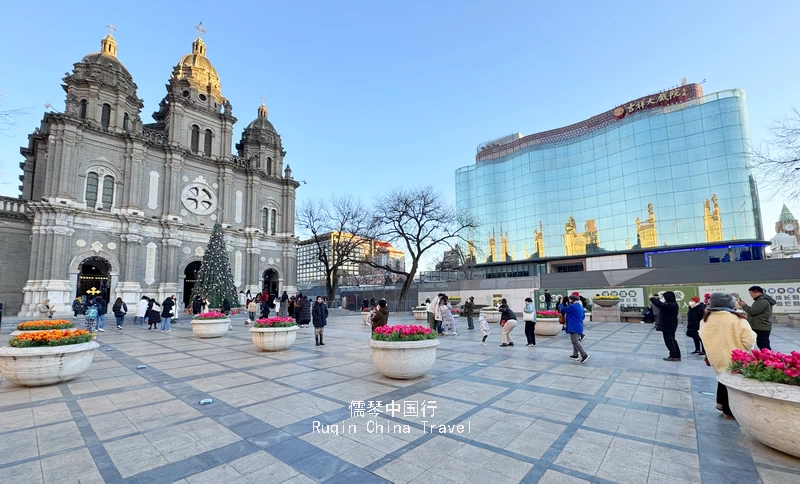
Wangfujing Pedestrian Street
From Qianmen, use the subway or a taxi to reach the area.
Allow approximately one to two hours, or longer if you enjoy shopping.
You can visit the historic Beijing Department Store, explore nearby shopping centres, or simply walk along the pedestrian street.
Wangfujing is also a convenient place for your final dinner in Beijing.
Unlike the previous two days, there is no need to follow a strict timetable.
Enjoy the afternoon at your own pace.
5. How to Get Around During Your Three Days
For Day 1, walking is the main way to explore the Forbidden City and Jingshan Park.
You may use the subway or a taxi to reach the starting point, but much of the actual sightseeing takes place on foot.
For Day 2, a private car is the most convenient option if you intend to combine Mutianyu and the Summer Palace.
For Day 3, the subway and DiDi work well.
Beijing’s metro is generally inexpensive and reliable. However, stations can involve long corridors, stairs, and considerable walking.
If you have heavy luggage or limited mobility, a taxi may be more comfortable for some journeys.
Always check the Chinese name of your destination before leaving your hotel.
6. How Much Walking Should You Expect?
This three-day itinerary involves a fair amount of walking.
Day 1 is particularly demanding because the Forbidden City is large and the route continues uphill at Jingshan Park.
Day 2 includes walking on the Great Wall, where steps can be steep and uneven.
Day 3 is more flexible. You can shorten your walks at the Temple of Heaven, Qianmen, or Wangfujing.
Wear comfortable shoes with good grip, carry drinking water, and allow time for breaks.
For senior travelers, I recommend using the Mutianyu enclosed cable car and avoiding the longer, steeper sections of the Wall.
You can also skip Shichahai on Day 1 and shorten the Summer Palace visit on Day 2.
7. Tickets and Reservations: What to Book First
Before finalizing your three-day plan, arrange the attractions that require advance booking.
The Forbidden City should be your first priority because its daily admission capacity is limited.
Check the current access requirements for Tiananmen Square separately.
For Mutianyu, book the appropriate admission and transport options, including the cable car if you plan to use it.
The Summer Palace and Temple of Heaven offer different admission options for their main parks and additional historic attractions.
Make sure you understand what your ticket includes.
I also recommend checking the weather before choosing your Great Wall day.
A clear day will usually provide better views of the surrounding mountains.
8. Ruqin’s Practical Tips
Keep Day 1 focused on the imperial centre. The Forbidden City and Jingshan Park are the essential combination. Shichahai is optional.
Start early on Day 2. Visiting Mutianyu and the Summer Palace on the same day is possible, but only with careful timing.
Use a private car for Day 2 if your budget allows. It will save time and make the journey more manageable.
Make Day 3 your relaxed day. The Temple of Heaven, Qianmen, and Wangfujing offer plenty to see without a demanding schedule.
Check Monday closures. The Forbidden City is normally closed on Mondays, and the main historic compounds at the Temple of Heaven also have Monday restrictions.
Leave room for unexpected delays. Security checks, traffic, weather, and queues can affect your plans.
Final Notes from Ruqin
Three days are enough to experience several different sides of Beijing.
On Day 1, explore the city’s imperial heart, from Tiananmen Square and the Forbidden City to Jingshan Park.
On Day 2, travel beyond the city centre to Mutianyu Great Wall, then visit the Summer Palace if time and energy allow.
On Day 3, slow down and enjoy the Temple of Heaven, Qianmen, Dashilan, and Wangfujing.
This itinerary is not designed to cover every famous attraction in Beijing.
Instead, it offers a practical balance between major landmarks, travel time, and sightseeing comfort.
Use the Beijing 3-Day Sightseeing Map to understand the general routes, book your important tickets in advance, and adjust each day to your own pace.
Further Reading
How Much Walking to Expect in Beijing: A Practical Guide
How to Visit Tiananmen Square: Maps, Tickets & Security Checks
How to Visit Forbidden City: Maps, Tickets, Walking Routes & Tips
Tiananmen Square & Forbidden City Access Map: Entrances & Routes
How to Visit Jingshan Park: Tickets, Maps, Trails & Travel Tips
Beijing Shichahai Travel Guide: Hutongs, Lakes, Food & Tips
How to Visit Tiananmen Square: Maps, Tickets & Security Checks
How to Visit Summer Palace: Tickets, Maps, Routes, Eating & Tips
How to Visit Temple of Heaven: Maps, Tickets, Routes & Tips
Qianmen Street Beijing: Map, Food, Shopping & Local Tips
Wangfujing Street: Maps, Shopping, Eating, Hotels & Tips.