
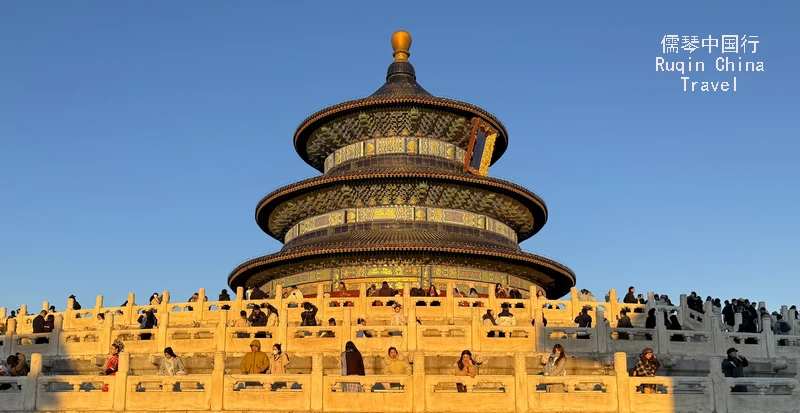

Written and updated by Ruqin
Last updated: May 22, 2026
Planning a trip to Beijing? How to Visit Temple of Heaven is a question I hear from many first-time travelers the moment they start mapping out their Beijing itinerary.
The first time I walked through its red gates, the contrast surprised me. Just outside was Beijing’s busy traffic; inside, retirees were practicing tai chi under cypress trees while locals sang softly in small circles. The Temple of Heaven isn’t only a historic site—it’s a living park woven into daily Beijing life.
In this guide, I’ll walk you through tickets, entry gates, walking routes, and practical tips so you can explore the Temple of Heaven calmly and confidently, just like a local morning stroll through one of Beijing’s most beautiful spaces.
1. The Temple of Heaven Overview
The Temple of Heaven, or Tiantan, was first built in 1420 during the reign of Yongle Emperor—the same ruler who commissioned the nearby Forbidden City. For centuries, emperors of the Ming and Qing dynasties came here to perform solemn rituals, praying to heaven for good harvests and prosperity for the empire.
When you walk through the complex today, the symbolism quietly reveals itself. The famous Hall of Prayer for Good Harvests stands on a circular terrace, representing heaven, while the square foundations below reflect the ancient Chinese idea of earth.
This harmony between circle and square echoes a traditional belief: balance between heaven and earth sustains life. Once you notice these details, the entire park begins to feel like a carefully designed conversation with the sky.
2. Best Time to Visit the Temple of Heaven
1) The Best Seasons
If you’re wondering how to visit Temple of Heaven at the most comfortable time, the seasons really make a difference. From my own visits, spring (April to June) and autumn (September to October) are the easiest months to enjoy the park.
The weather is mild, the skies are often clear, and the long pathways lined with ancient cypress trees feel especially beautiful. In spring, the gardens wake up with fresh greenery, while autumn brings soft golden light and crisp air.
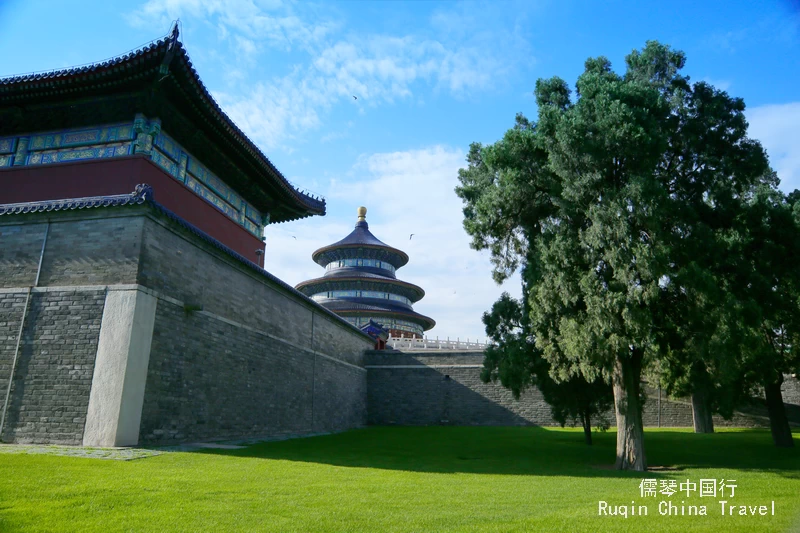
The Temple of Heaven in Spring
Winter is quieter and surprisingly peaceful. I’ve walked through the park on cold mornings when only a few locals were out exercising.
It can be quite chilly, though, so if you visit in winter, come prepared with warm layers. The calm atmosphere can make the experience feel even more special.

The Hall of Prayer for Good Harvests in snow
2) Best Time of the Day
Early Morning
If you want to experience the Temple of Heaven the way locals do, come early. I often arrive just after the gates open, when the park feels calm and unhurried.
Retirees gather under the tall cypress trees to practice tai chi, groups sing traditional songs, and some people even bring small instruments.
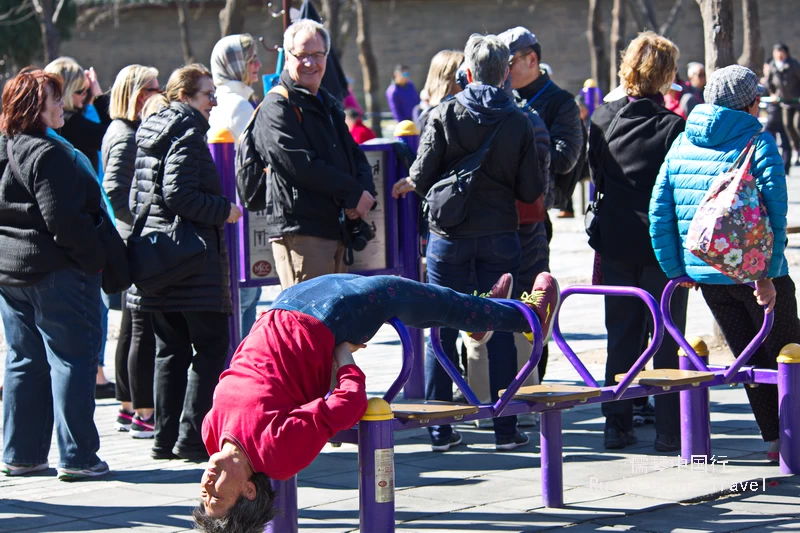
Morning exercises in the Temple of Heaven Park
It’s one of those quiet moments where you see everyday Beijing life unfolding naturally around a historic monument. The main halls are also much easier to explore before the tour groups arrive.
Late Afternoon & Dusk
Late afternoon is another beautiful time to visit. The softer light makes the deep blues and gold details of the Hall of Prayer for Good Harvests stand out beautifully. As the sun lowers, the entire complex takes on a warm glow, especially around the Imperial Vault of Heaven and the Circular Mound Altar. Photographers love this time of day.
Evening Views
At night, the halls are closed, but the illuminated buildings are still impressive from the surrounding grounds. On weekends and public holidays, the lighting highlights the layered roofs and intricate details of the temple structures, giving the entire complex a peaceful, almost ceremonial atmosphere. Even from a distance, it’s a memorable sight.
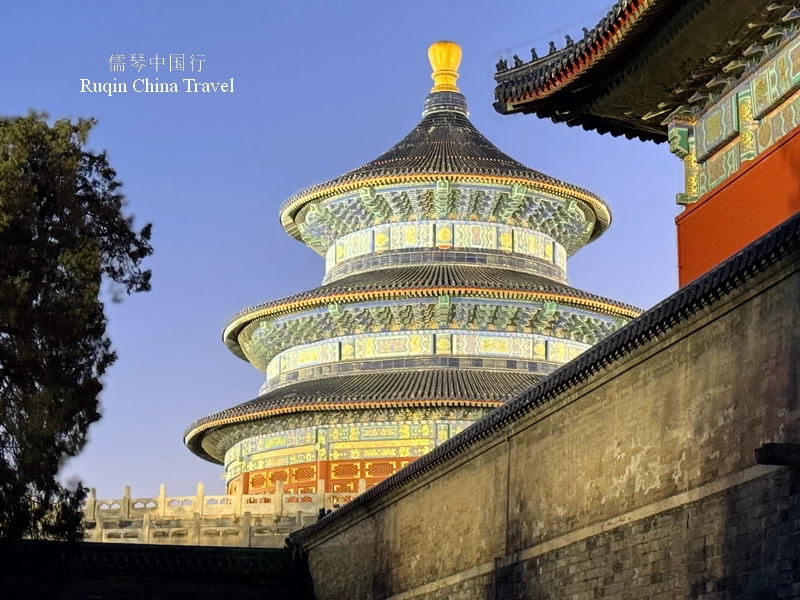
The Night View of The Hall of Prayer for Good Harvests (Friday and Saturday)
While the Hall itself is closed to visitors after dark, you can still admire its stunning beauty, bathed in the glow of the lights from the surrounding areas.
3. How to Get to the Temple of Heaven
Getting to the Temple of Heaven is quite straightforward once you know which gate you’re aiming for. The park is large, and choosing the right entrance can save you a fair bit of walking.
Subway (Most Convenient)
In most cases, the subway is the easiest option. Take Line 5 and get off at Temple of Heaven East Gate Station (天坛东门站). Exit A brings you almost directly to the East Gate, which is the entrance many visitors use.
Alternatively, you can take Subway Line 8 to Tianqiao Station (天桥站). From Exit C, it’s about a 5-minute walk (around 350 meters) to the West Gate of the park.
Bus
Several city buses stop near the park. Common stops include Tiantan East Gate, Tiantan South Gate, and Yongdingmen. Bus lines such as 36, 120, 122, 800, 803, and 958 pass nearby. If you’re already comfortable using Beijing’s bus system, this can be a convenient option.
Taxi or Ride-Hailing
Taxis and ride-hailing services like DiDi are widely used in Beijing. Simply show the driver “天坛 (Tiantan)” and they’ll take you to one of the main entrances.
Bike-Sharing
If you’re staying nearby, bike-sharing is a pleasant way to reach the park. Beijing’s shared bikes are everywhere, and riding through the surrounding hutong streets can be surprisingly enjoyable on a clear day.
Private Car
Driving is possible, and there are parking areas around the park. That said, traffic in central Beijing can be heavy, so most visitors find the subway much simpler.
4. Entrance Fees and Ticketing
Purchase tickets at the box office. Be prepared to show identification, such as a passport. Entrance fees for the main temple park and the Hall of Prayer for Good Harvest are separate. It’s best to bring cash when buying tickets.
Park Admission Fee
15 yuan from April to November and 10 yuan from December to March.
Note: with this ticket, you can enter the park, watch the locals do morning exercises, and see the historic buildings outside the temple ( the Hall of Prayer for Good Harvest, the Zenith and Circular Mound Altar).
Temple Admission Fee (the Hall of Prayer for Good Harvest, the Zenith and Circular Mound Altar):
20 yuan
Through-ticket :34 yuan (April to November), 28 yuan (December to March).
Note: with the pass, you can enter the park and visit the three paid historical sites in the temple – the Hall of Prayer for Good Harvest, the Zenith and Circular Mound Altar.
Student Ticket: 50% discount
Senior Citizens (60 and above): Free
Children under 12: free
Note:
1) For first-time visitors, we highly recommend purchasing the through-ticket to save time and avoid the need for a second round of ticketing.
2)During peak tourist season, we recommend booking your tickets in advance via apps like WeChat or Alipay to save time.
Address: No. 1, Tiantan Dongli, Dongcheng District, Beijing
Phone: 010-67028866
5. Tour Guide Service at Temple of Heaven
You don’t necessarily need a guide to enjoy the Temple of Heaven, but having some explanation can really help you understand what you’re seeing. The symbolism and rituals here are fascinating once someone points them out.
Electronic Audio Guides
If you prefer exploring at your own pace, audio guides are available at the main park entrances. They’re easy to rent and cover the major sites such as the Hall of Prayer for Good Harvests and the Circular Mound Altar.
- Hours: roughly 8:15 AM – 6:00 PM
- Languages: Mandarin, English, French, Spanish, Japanese, Korean, German, and several others
- Fee: about 30 RMB (Chinese) or 40 RMB (other languages)
Live Tour Guides
If you prefer a guided experience, licensed guides are usually available near the South Gate between 8:00 AM and 3:00 PM. Most tours are offered in Chinese or English and are typically charged by the hour (around 300–450 RMB depending on group size).
In practice, many travelers find the audio guide perfectly sufficient. However, if you’re especially interested in imperial rituals and architectural symbolism, a live guide can add helpful context.
6. Temple of Heaven Opening Hours
The Temple of Heaven Park is usually open from early morning until late afternoon. However, the opening hours may vary depending on the season and any specific events or closures. It’s best to check the official website or contact the temple in advance to confirm the opening hours for your visit.
High season : ( April 01- October 31)
Off season : ( November 01 to March 31 )
The Park Opening Hours
High season opening hours: 6:00-21:00
Off season opening hours: 6:30-21:00
Park is closed at 22:00
Opening Hours for the Historical Buildings inside the temple
(mainly the Imperial Vault of Heaven, the Circular Mound Altar, the Imperial Vault of Heaven)
High season opening time: 8:00-17:30 (Last Entry at 17:00)
Off season opening time: 8:00-17:00 (Last entry at 16:30)
For first-time visitors, we highly recommend purchasing the through-ticket to save time and avoid the need for a second round of ticketing.
Important Notice
On Mondays, the park itself remains open, but the main buildings ( like Hall of Prayer for Good Harvests) are usually closed for maintenance. However, there are exceptions—if the Monday falls on a public holiday, or during the summer period (July 15 to August 31), the main attractions will remain open as usual.
7. Temple of Heaven Best Walking Route
The Temple of Heaven Park has four main entrances, and the best one to use is the East Gate. This entrance leads you straight into the heart of the park, and from here, a picturesque walking route will guide you through its main attractions.
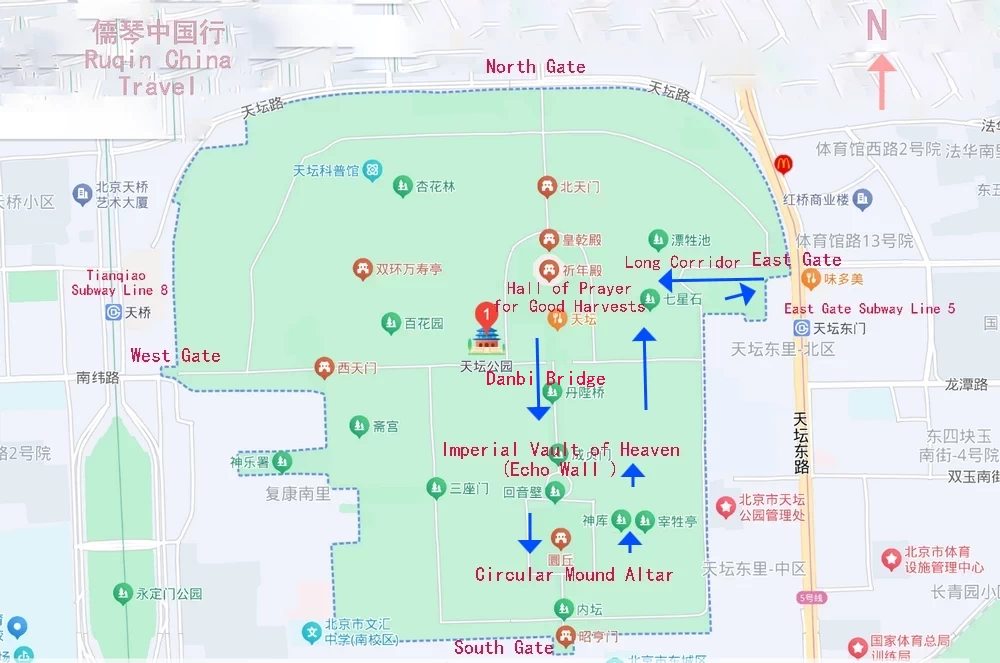
The Walking Route Map of the Temple of Heaven Park ( (Baidu Maps source)
Upon entering, you’ll pass through the expansive Long Corridor, a scenic walkway that winds through the park.
1) Stroll through the Long Corridor
This beautifully crafted walkway stretches 350 meters, curving gently through the park. At 5 meters wide, it offers ample space for a leisurely walk. Its intricate decorations are not only visually stunning but also a testament to the artistry of ancient Chinese architecture.
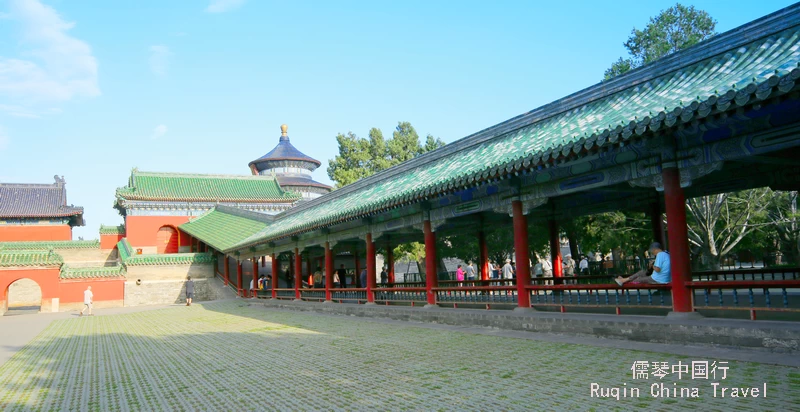
Stroll through the Long Corridor
Walking through the Long Corridor feels like stepping into another era. The vibrant colors and delicate patterns on the ceiling are breathtaking. But it’s not just the architecture that captivates visitors; it’s the atmosphere.
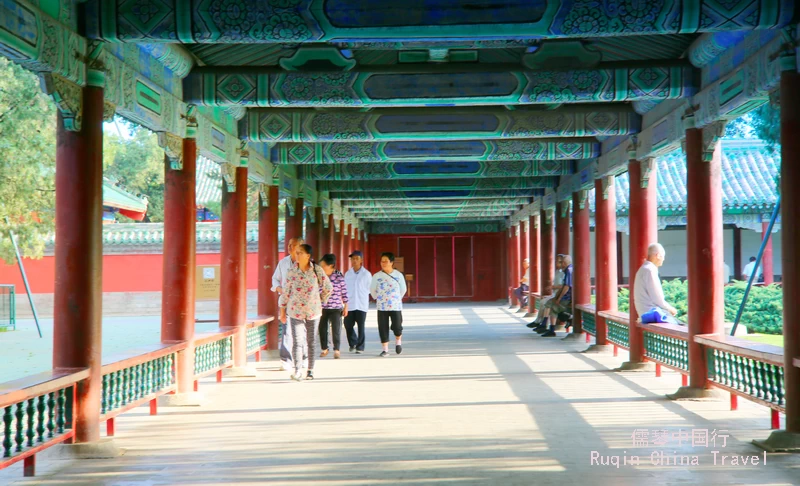
The vibrant colors and delicate patterns on the ceiling
If you arrive early in the morning, you’ll witness locals practicing traditional activities like tai chi, flying kites, playing Chinese chess and cards, or even dancing.
The sense of community here is palpable, and you might feel inspired to join in, or simply take a moment to appreciate the harmony of it all.
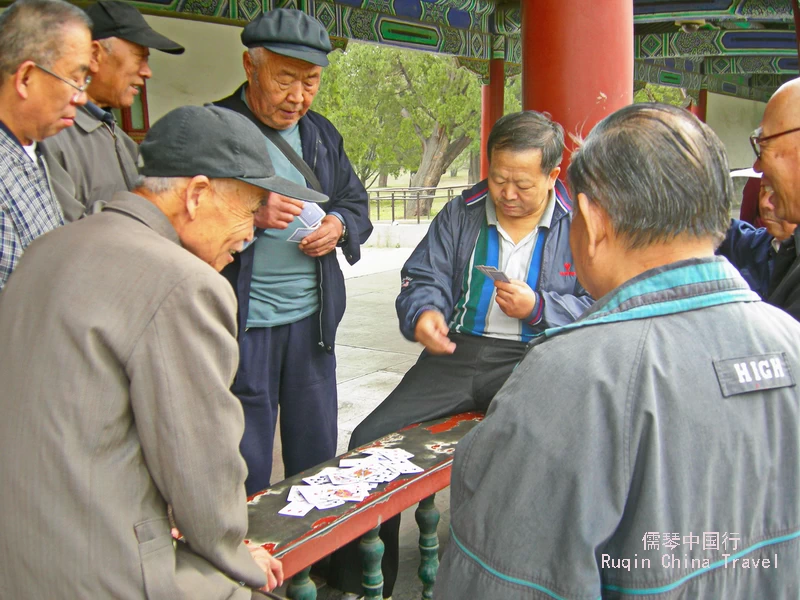
Seniors playing Chinese cards in the Long Corridor
2) Marvel at the Hall of Prayer for Good Harvests
Continuing on your walk, the next stop is the Hall of Prayer for Good Harvests, the most iconic structure of the Temple of Heaven. This magnificent building is known for its unique, circular design and lack of nails in its construction.
Built in 1420, the hall symbolizes the harmony between heaven and earth, which was central to the emperor’s role as the intermediary between the two realms.
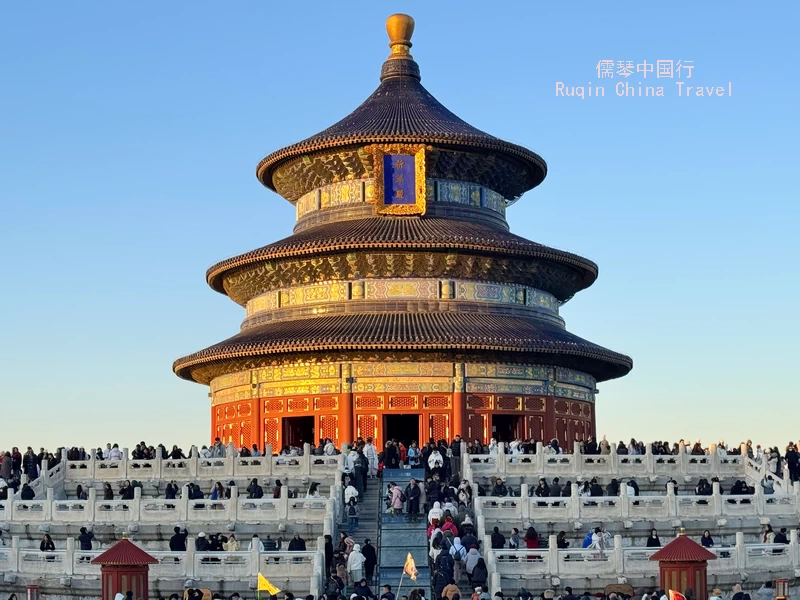
Hall of Prayer for Good Harvests bathed in the sunset glow
The hall’s grandeur and exquisite details make it a perfect spot for photos. Its blue-tiled roof, surrounded by red pillars and adorned with golden decorations, gleams under the sunlight. Take a moment to admire the structure, and let its symbolism sink in.
3) Walk through the Danbi Bridge
Then walk from the Hall of Prayer for Good Harvests towards the Echo Wall and Imperial Vault of Heaven along the Danbi Bridge. This walkway bridge forms the central axis of the Temple of Heaven, linking the Circular Mound Altar with the Hall of Prayer for Good Harvests.
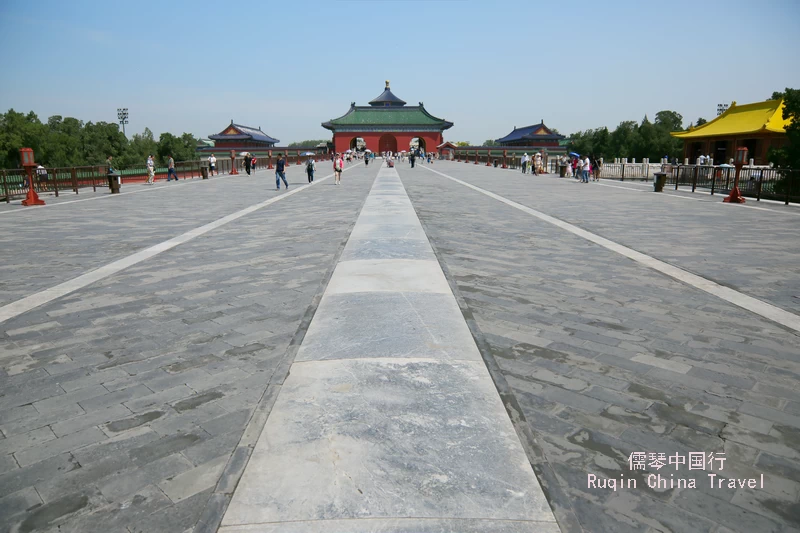
Danbi Bridge, the central axis of the Temple of Heaven
The Danbi Bridge is 360 meters long and connects the Circular Mound Altar with the Altar of Prayer for Grain. It is a grand avenue that rises 4 meters above the ground.
In the middle of the bridge, there are east-west arched passages, which is why it’s called a “bridge.” It is the oldest “overpass” in Beijing.
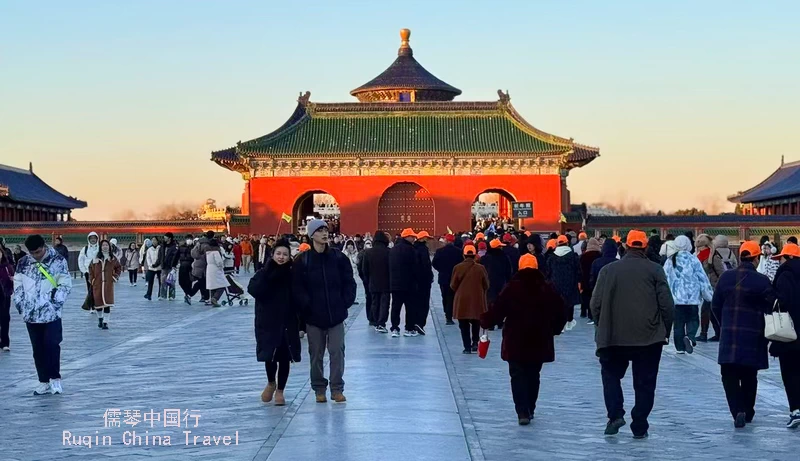
Walk on the 360m long Danbi Bridge
The bridge is 30 meters wide. The central stone path, known as the “Sacred Path,” was reserved for the exclusive use of the Emperor. The brick-paved road on the east side, called the “Imperial Road,” was for the Emperor’s use as well.
The nobles and ministers who accompanied the Emperor could only walk on the “Royal Road” to the west. The division of these paths reflected a strict hierarchy.
The bridge slopes down from north to south. Walking northward, each step feels like you’re climbing higher, almost as if you are ascending to the heavens.
4) Discover the Echo Wall and Imperial Vault of Heaven
From the Hall of Prayer for Good Harvests, walk along the Danbi Bridge to continue your journey to the Imperial Vault of Heaven. This smaller, but equally impressive, building was used during imperial ceremonies.
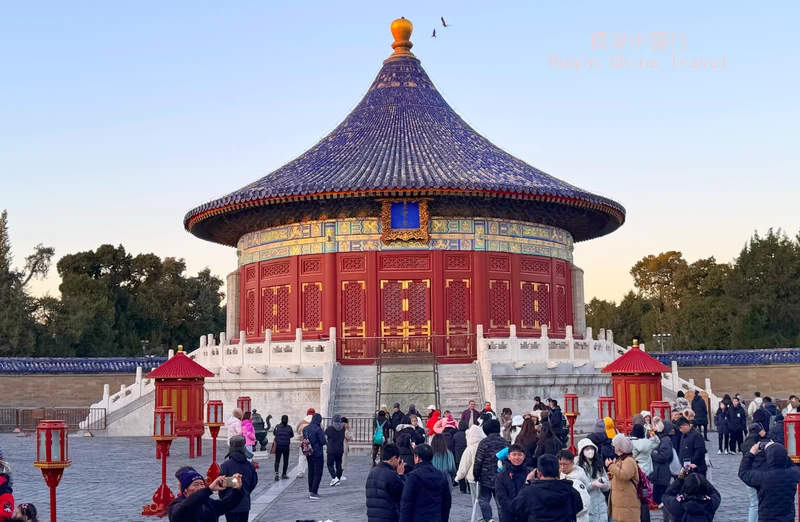
The Echo Wall and Imperial Vault of Heaven
It is surrounded by a circular wall, known as the Echo Wall. Here, something magical happens: if you stand at one end of the wall and whisper, your voice will travel clearly to the other end. The acoustics are extraordinary, making it a fun and memorable spot to visit, especially with family or friends.
5) Visit the Circular Mound Altar
Next, make your way to the Circular Mound Altar, a sacred site where emperors once made sacrifices to the heavens. This raised marble platform is designed to amplify sound.
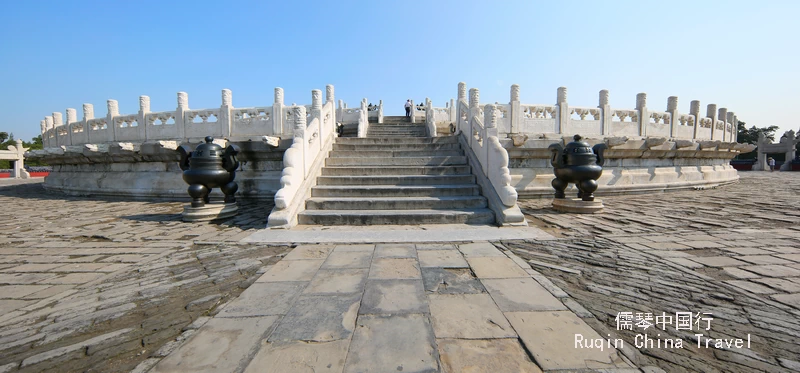
The Circular Mound Altar
Stand in the very center, and you’ll notice that even the faintest whisper can be heard with startling clarity.
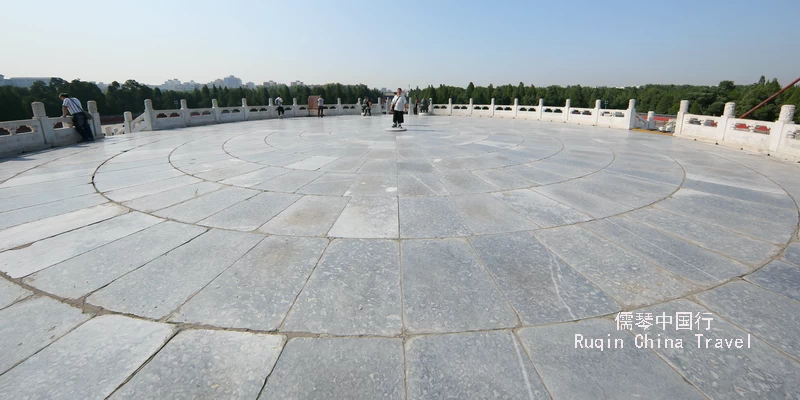
Stand in the very center of The Circular Mound Altar
This was once used for the emperor’s ceremonial rituals, and now it’s an impressive spot for visitors to experience the power of acoustics in ancient Chinese architecture.
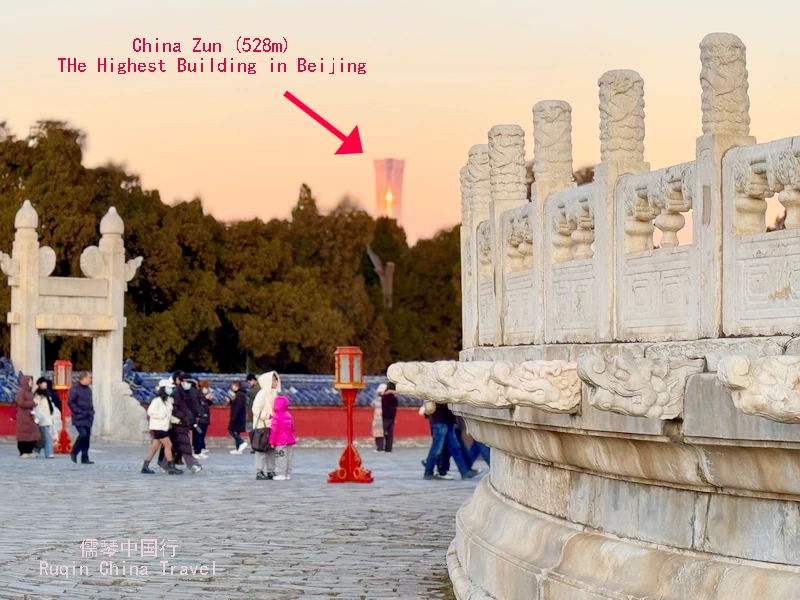
The Circular Mound Altar and China Zun
6) Relax in the Park’s Tranquil Gardens
After visiting the Circular Mound Altar, take a leisurely stroll back toward the East Gate. As you walk, enjoy the serenity of the park’s gardens. The lush greenery and quiet paths provide the perfect backdrop for reflection.
Along the way, don’t miss the park’s ancient trees. The Temple of Heaven Park is home to a rich variety of tree species, including cypress, juniper, ginkgo, and pine. Many of these trees are over 600 years old, having witnessed the changing of dynasties and the passage of time.
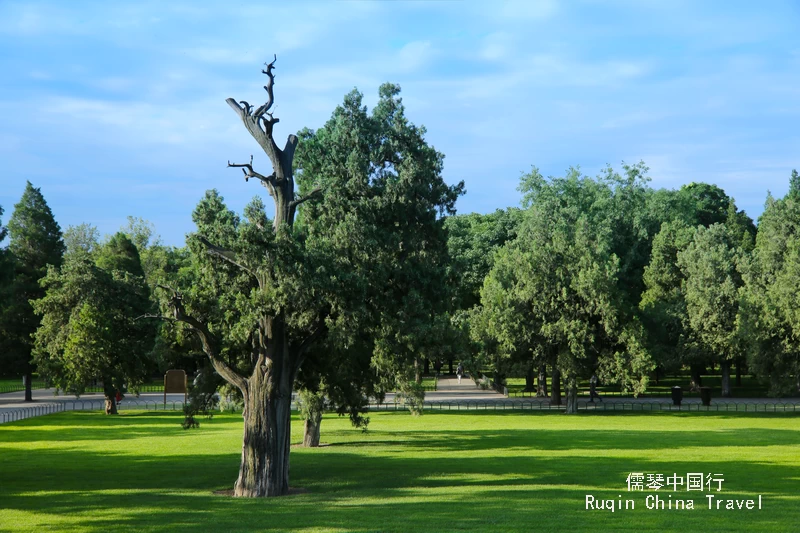
Along the way, don’t miss the park’s ancient trees
In total, there are 3,562 ancient trees within the park, with 1,147 classified as first-grade and 2,415 as second-grade. These trees are scattered around the main landmarks, including the Hall of Prayer for Good Harvests and the Echo Wall. They’ve silently stood guard for centuries, adding a sense of timelessness to the experience.
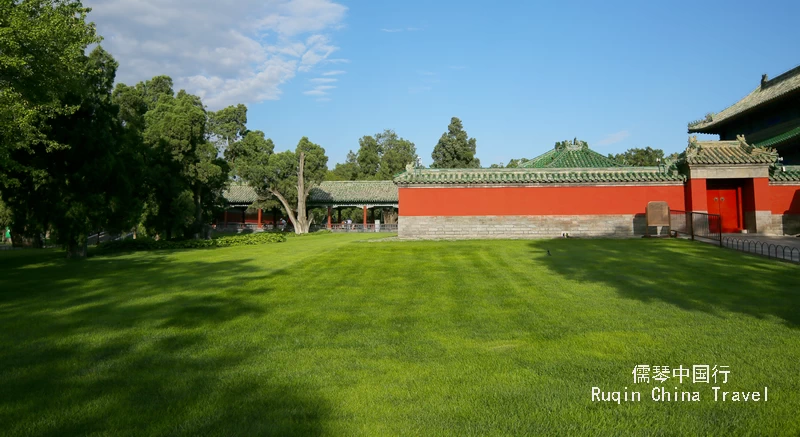
The lush greenery of the Temple of Heaven Park
As Dr. Henry Kissinger once remarked during his visit, while the United States might be able to replicate the Temple of Heaven, it could never recreate these ancient trees. Their presence is a living testament to the enduring history of this sacred space.
Practical Information
The entire walking route can take around 2 to 3 hours, depending on how long you linger at each stop. It’s a relatively flat, easy walk that is suitable for visitors of all ages.
Take your time to absorb the beauty of the gardens, marvel at the architecture, and enjoy the cultural atmosphere.
7) Complete Your Visit at the East Gate
Finish your tour back at the East Gate, where your walk began. This route will have taken you on a journey through time, from the architectural marvels of ancient China to the vibrant activities of the local people.
Throughout your walk, take your time—there’s no need to rush. Whether you’re admiring the structures, joining the locals in their morning routines, or simply soaking in the tranquility of the park, the Temple of Heaven is best experienced at a leisurely pace.
9. Nearby Attractions and City Walk
After immersing yourself in the grandeur of the Temple of Heaven, why not continue exploring the city with a leisurely walk? Exit from the North Gate of the Temple of Heaven and head towards the nearby Caochang Hutongs (草厂).
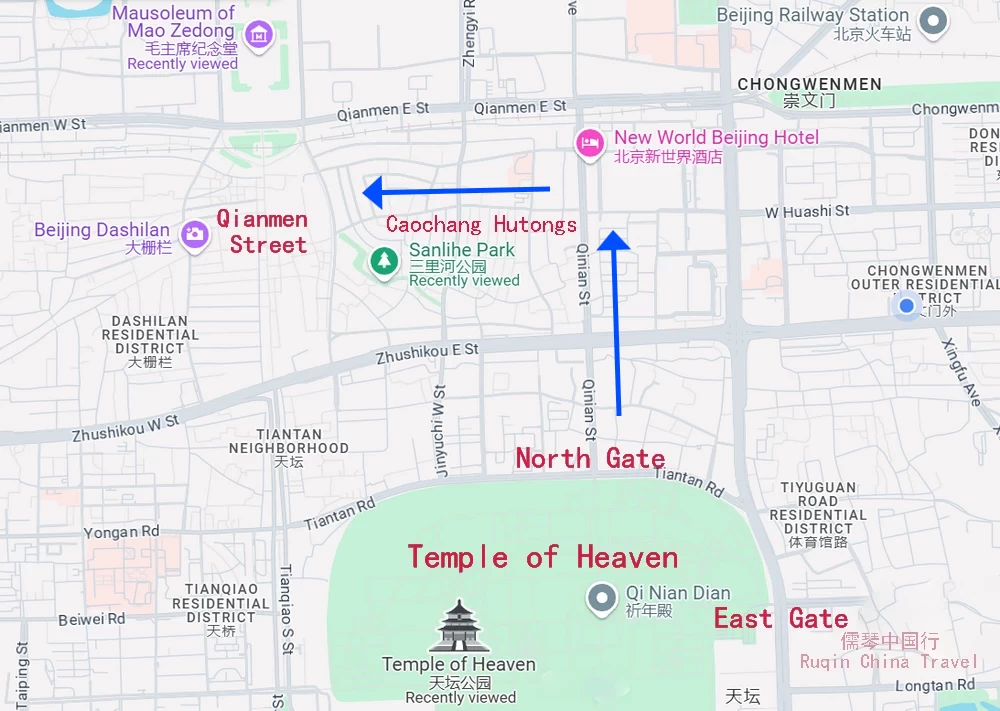
Temple of Heaven Nearby Attractions and City Walk (Google Maps source)
Caochang Hutongs
The Caochang Hutongs are a hidden gem, offering a rare glimpse into traditional Beijing life. Located near Qianmen, these narrow alleys have largely escaped the grip of commercialization, making them the perfect spot for those looking to experience the authentic charm of old Beijing.
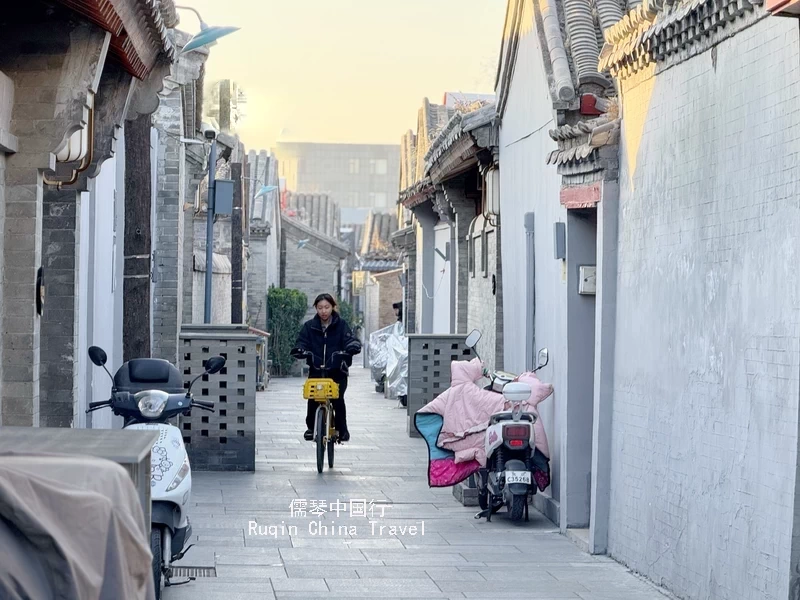
Caochang Hutongs
Wander through the maze of well-preserved lanes, where time seems to slow down. You’ll encounter ancient courtyard homes, small local shops, and Beijing’s unique blend of history and culture at every turn.
Sanlihe Park
From here, take a short stroll to Sanlihe Park (三里河公园), a peaceful oasis that offers a welcome break from the bustling city. Unlike the more famous and crowded parks, Sanlihe Park is a serene escape.
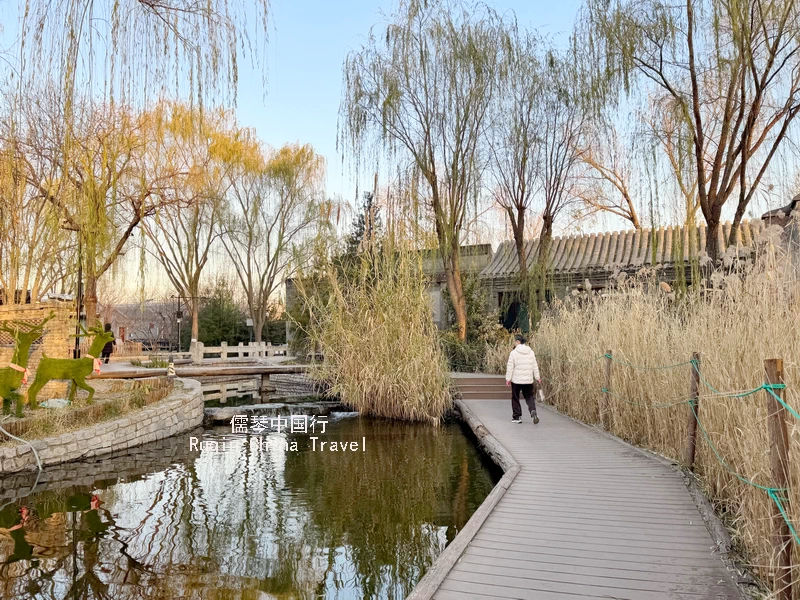
Sanlihe Park
The park exudes the tranquil charm of Jiangnan water towns, with its meandering rivers, quiet pavilions, and lush greenery. It’s the perfect place to relax, unwind, and enjoy a slower pace of life, far from the usual tourist crowds.
Qianmen Street
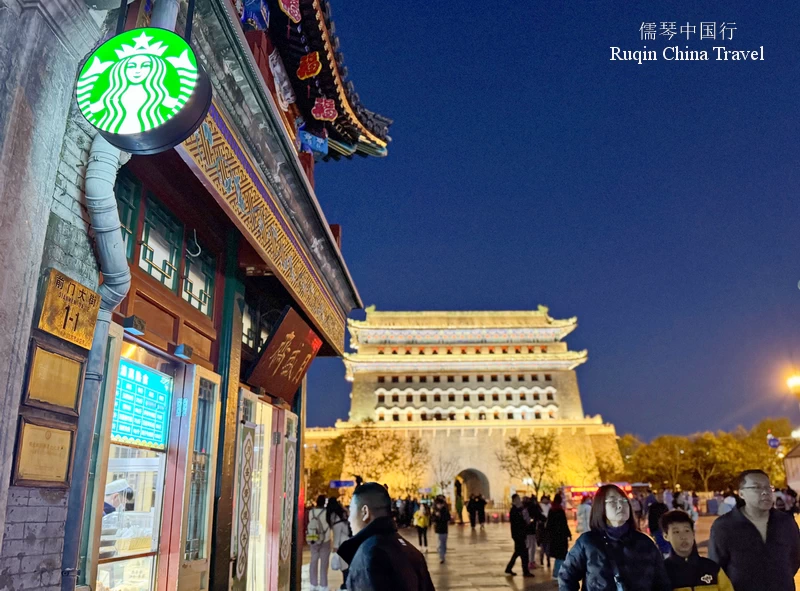
Next, make your way to the nearby Qianmen Street, a lively blend of old and new. As you walk down the street, you’ll see modern cafes and retail shops nestled alongside ancient teahouses, traditional Chinese medicine stores, and street vendors selling local snacks.
Qianmen Street
This fusion of contemporary and historic creates a vibrant atmosphere, capturing the essence of Beijing’s rich cultural heritage. It’s a great place to shop, snack, or simply soak in the unique ambiance of the city.
This city walk will take you through Beijing’s past and present, offering a deeper connection to the city’s heart and soul.
Now you know how to visit the Temple of Heaven, and hopefully the whole experience will feel much easier to navigate when you arrive.
For me, the Temple of Heaven is more than just another historic landmark in Beijing. Yes, the architecture is magnificent. Yes, the imperial history is fascinating. But what stays with me most are the everyday moments in the park—locals practicing tai chi, groups singing under the trees, and quiet paths that make you forget you’re in one of China’s busiest cities.
Take your time here. Walk slowly between the halls, pause in the gardens, and watch how Beijing residents use this space. When you do, the Temple of Heaven stops feeling like a monument—and starts feeling like a living part of the city.
About the Author
Ruqin is the founder of Ruqintravel.com and has spent more than four decades working in China’s travel industry. Drawing on hands-on experience in cities like Beijing and Hangzhou, he personally researches and updates each guide to help international travelers navigate China with confidence.
Further Reading
Temple of Heaven Morning Walk to Longtan Lake Morning Market — Beijing Photo Walk by Ruqin
Temple of Heaven Spring Blossoms: Map, Best Photo Spots & Tips
Temple of Heaven Autumn Photography: Best Fall Colors Spots
Temple of Heaven in a Wheelchair: Accessible Paths & Toilets
Caochang Hutongs in Beijing: Maps, Routes, Top Sights & Tips
Sanlihe Park Beijing: Map, Highlights and Travel Tips
Qianmen Street Beijing: Map, Food, Shopping & Local Tips










Hi , we are from Germany and we were told that we can use Beijing pass to buy the entrace tickets at the counter . We are travelling to Beijing in July peak season. Or do you advise to book in advance ? Or to buy there when we are visiting this temple.
Kindly advise . Thanks
Dear Hoon,
Thank you for reaching out to Ruqin China Travel!
Yes, you can use the Beijing Pass to purchase entrance tickets at the ticketing offices for various attractions including the Temple of Heaven.
For the Temple of Heaven, you can purchase tickets on-site without the need for reservations. The park is quite large, and there are no visitor limits, so you should have no trouble gaining entry. However, making reservations will save you time by avoiding long lines for ticket purchases during peak seasons.
However, for the Forbidden City, advance ticket reservations are required, as they do not offer on-site ticketing. For detailed information on how to reserve tickets in Beijing, I recommend reading my article: How to Reserve Tickets in Beijing.
I hope you have a wonderful time exploring Beijing! Should you have any further questions or need assistance, please don’t hesitate to reach out – we’re here to help!
Best regards,
Ruqin China Travel
Hi sorry, just checking is it possible to visit in the morning, and come back again in the evening with the same ticket or do I have to book separately?
Hi Alexis,
Thanks for reaching out! I just wanted to confirm that, unfortunately, you would need to purchase a new ticket for re-entry. The ticket is typically valid for one entry only, so it cannot be used for a second visit later in the day.
If you’re planning to go back in the evening, I’d recommend buying a separate ticket for the second visit. Let me know if you need help with the booking or if you have any other questions!
Hope this helps, and feel free to reach out if you need anything else!
Best regards,
Ruqin China TRavel
Hi Ruqin! Can we still get a good view of Hall of Prayer for Good Harvests on Mondays or early mornings? Or will it be too far away? Thank you!
Dear Lily,
Thank you for your message!
For your first question about visiting on Mondays: the Temple of Heaven is divided into the park area and the main historical sites, such as the Hall of Prayer for Good Harvests. On Mondays, the park itself remains open, but the main buildings are usually closed for maintenance. However, there are exceptions—if the Monday falls on a public holiday, or during the summer period (July 15 to August 31), the main attractions will remain open as usual.
Even when the main sites are closed, you can still enter the park and view the Hall from outside the surrounding wall. If you enter from the East Gate or North Gate, the distance is not far, and you can still enjoy a clear view of most of the Hall.
As for early mornings, during the peak season (April 1 to October 31), the park opens around 6:00 am, with last entry at 9:00 pm and closing at 10:00 pm. The main attractions inside the park usually open around 8:00 am. So if you arrive early, you won’t be able to go inside the Hall, but you can still see it from outside and enjoy the peaceful morning atmosphere.
Hope this helps, and wishing you a wonderful visit to the Temple of Heaven!
Warm regards,
Ruqin
Ruqintravel.com