Written and updated by Ruqin
Last updated: March 12, 2026
Beijing Sanlihe Park (三里河公园) sits quietly in Dongcheng District, not far from the busy areas around Qianmen and Tiananmen Square. I often recommend this small park to travelers who want a short break from Beijing’s crowded landmarks. Compared with the city’s large imperial parks, Sanlihe Park is modest in size, but it offers a surprisingly peaceful atmosphere right in the center of the city.
The park follows a narrow river that flows through restored hutongs, with small bridges, pavilions, and traditional courtyard houses along the banks. When I walk here in the morning, I usually see local residents strolling beside the water. Beijing Sanlihe Park feels calm and local, offering a quiet glimpse of everyday life in old Beijing.
Historical Background of Sanlihe Park
Sanlihe Park takes its name from the Sanlihe River, a small waterway with a history going back to the Ming Dynasty. When Beijing was expanded during the reign of the Yongle Emperor in the early 15th century, engineers also needed better ways to manage rainwater and the city’s moat system.
During the Zhengtong period (1436–1449), a drainage channel was created southeast of the city to guide excess water away from the old city walls. Because the river ran roughly three li (Chinese miles) from Zhengyang Gate, it gradually became known as Sanlihe, meaning “Three-Li River” (Three Miles River).
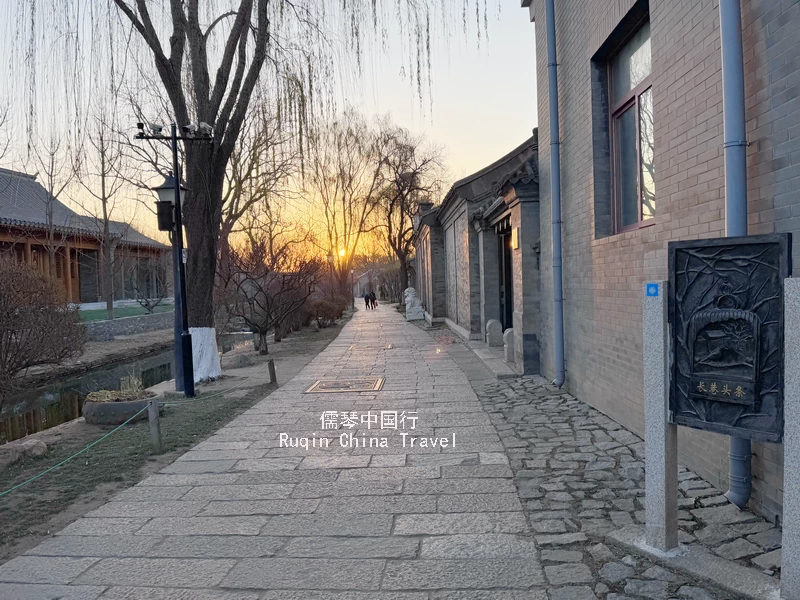
Over the centuries, people settled along the riverbanks. Hutongs, courtyard houses, guild halls, and small theaters appeared in the neighborhood, creating a lively community. Historical records describe the area as having a gentle water-town atmosphere, somewhat reminiscent of the canal towns in southern China.
In recent years, the Dongcheng District government restored the river and surrounding hutongs, turning the area into today’s Sanlihe Park. When you walk here now, you can still sense the connection between Beijing’s old waterways, traditional neighborhoods, and the quiet rhythm of local life.
The Tranquil Atmosphere of Sanlihe Park
Sanlihe Park is a quiet haven compared to Beijing’s larger, tourist-driven parks. The park’s layout features winding pathways, a tranquil river, and picturesque hutongs, all of which create a peaceful atmosphere ideal for leisurely walks or relaxing afternoons. The park is filled with lush trees, blooming flowers, and the sounds of birds, all contributing to its serene ambiance.
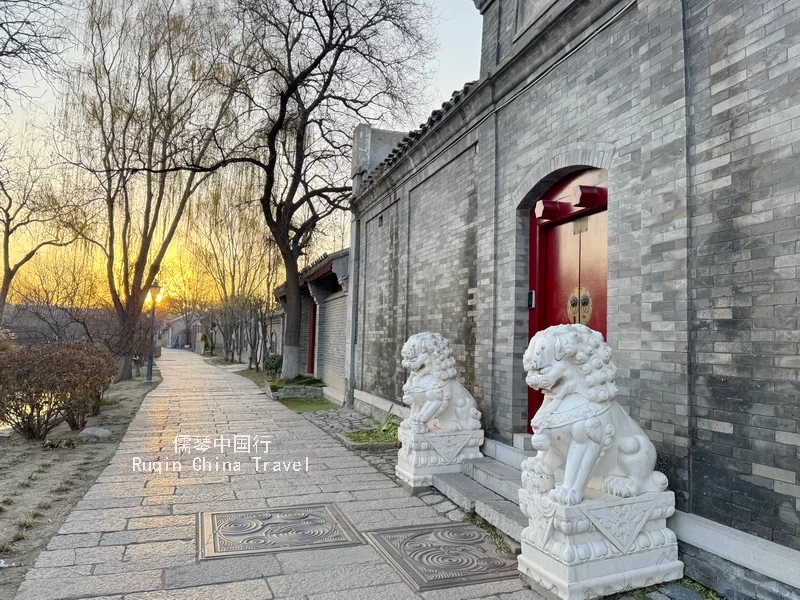
One of the most striking features of the park is the Sanlihe River. It flows through the park, creating a peaceful waterway. With clear waters and surrounding greenery, the river transports visitors to a slower, quieter time.
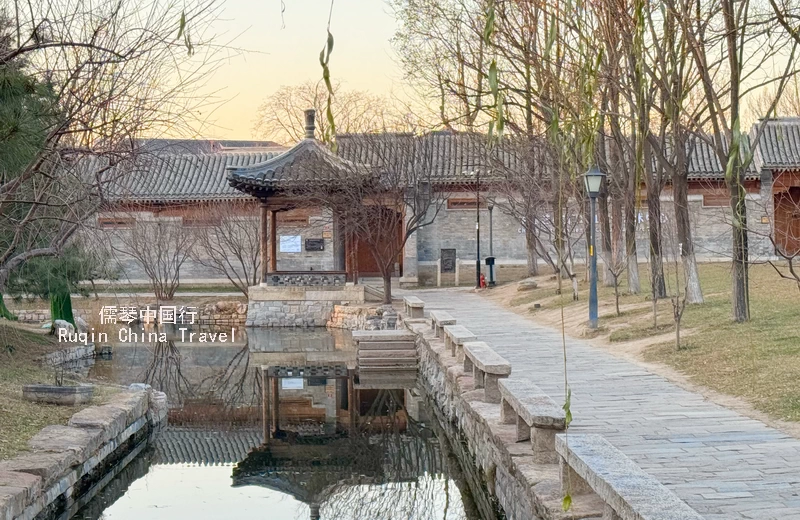
The park’s design reflects the traditional Jiangnan water streets. The flowing water, shady trees, and beautiful buildings give the area a southern China feel. It’s a perfect spot for those who want to experience the charm of ancient water towns like Suzhou, without leaving Beijing.
How to Get to Sanlihe Park
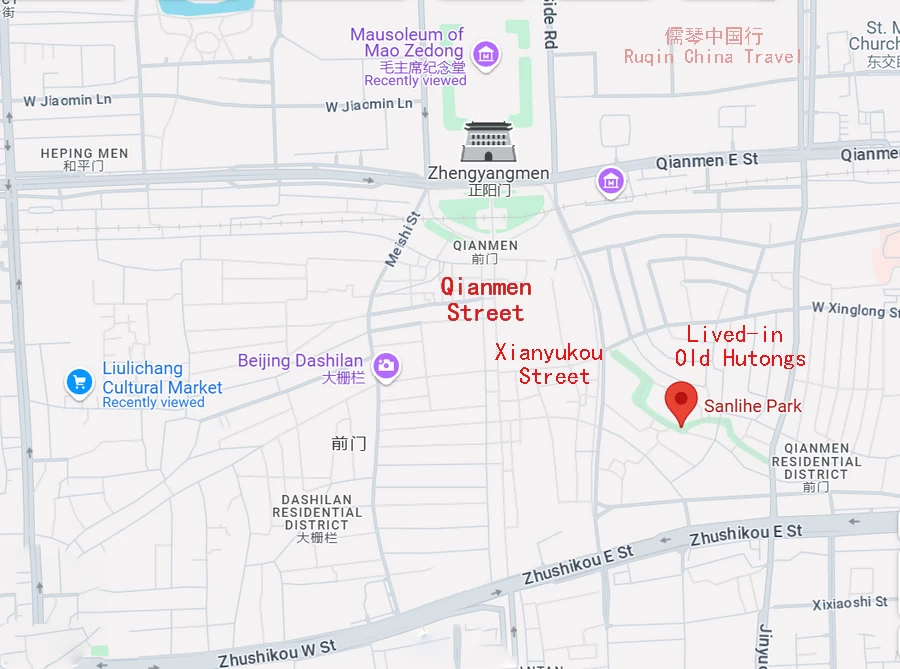
Beijing Sanlihe Park is located in Dongcheng District, not far from Qianmen Street and several historic hutong neighborhoods. Because of its central location, it’s quite easy to reach by public transport, taxi, or even on foot if you are already exploring the Qianmen area.
By Subway
The easiest way for most travelers is to take Subway Line 8 to Qianmen Station. From the G Southeast Exit, it’s about a 15–20 minute walk (around 1.1 km) to Sanlihe Park. The walk itself is pleasant, passing through old streets and small hutongs near Zhengyi Road. If you are already visiting Qianmen Street or Xianyukou Street for food, you can simply continue walking south to reach the park.
By Bus
Several Beijing bus routes stop within walking distance of the park:
- Bus 137 – Get off at Dongcheng Sanlihe Station, only about 240 meters from the park entrance.
- Bus 60 – Get off at Taijichang Lukou West, then walk about 1 km.
- Bus 9 – Stop at Zhengyi Road Station, about 980 meters away.
- Bus 8 – Stop at Qianmen Station, roughly 930 meters from the park.
By Taxi or Bicycle
If you are coming from central Beijing attractions such as Tiananmen Square or the Temple of Heaven, taking a taxi or riding a shared bicycle is also convenient. The distances are short, and cycling through the hutong lanes around Sanlihe Park can be an enjoyable part of the visit.
What to See and Do at Sanlihe Park
Sanlihe Park offers a perfect blend of natural beauty, cultural history, and relaxation. Here’s what you can explore at this tranquil park:
1. Natural Beauty & Ecology
Sanlihe Park captures the essence of Jiangnan water towns through its natural surroundings. The park features lush greenery, tranquil waterways, and scenic views. The Sanlihe River’s clear waters create a peaceful setting, while the surrounding trees provide ample shade, offering visitors a sense of calm.
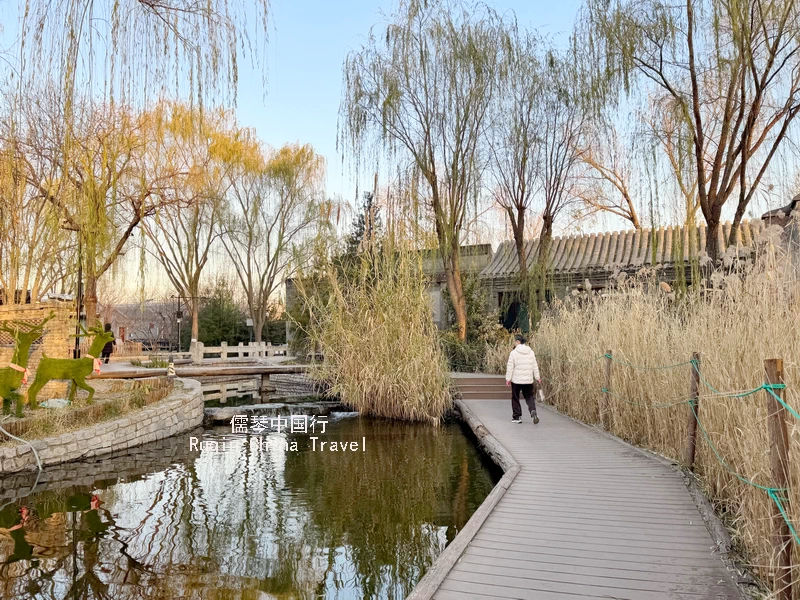
You can enjoy walking along the quiet hutongs that wind through the park, getting close-up views of the river and nature. It’s a lovely place to simply slow down and enjoy the peaceful environment.
2. Historical Significance
In addition to its natural beauty, Sanlihe Park holds historical significance. Bronze reliefs throughout the park showcase the river’s historical role in Beijing’s development. These reliefs offer visitors a deeper understanding of the area’s cultural heritage.
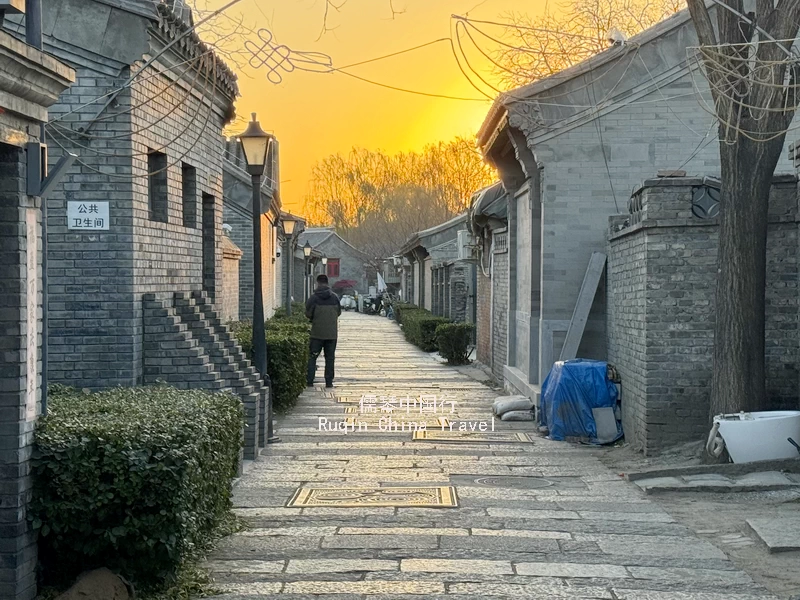
The park is also home to ancient siheyuan courtyard houses, a key element of Beijing’s old city architecture. These buildings have been preserved as part of the park’s commitment to maintaining the local cultural history.
3. Leisure Activities
Sanlihe Park is a great place to relax. It’s free to enter, and there are plenty of opportunities to enjoy a quiet afternoon. Visitors can sit in one of the many pavilions and enjoy the peaceful surroundings. For those looking for something more active, there are fitness trails that allow you to explore the park while staying active.
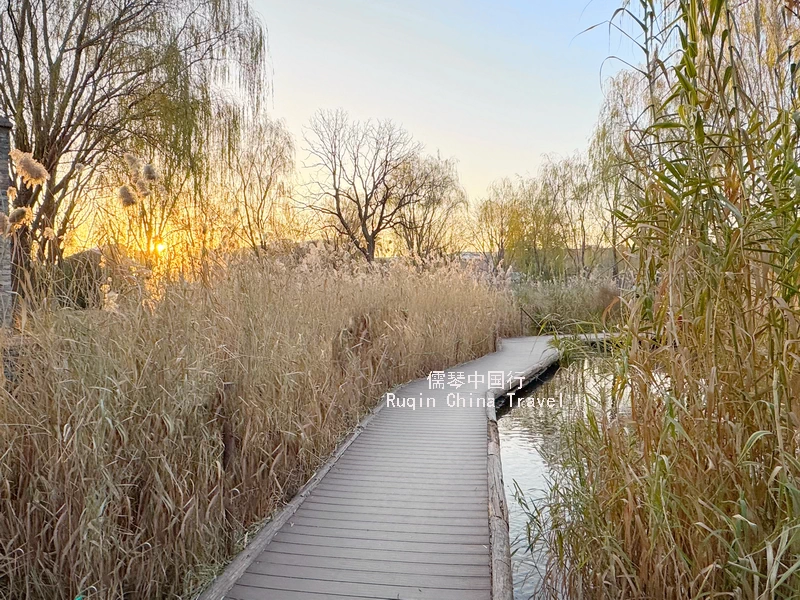
Along the trails, you may spot black swans swimming in the park’s ponds or see farmers working in the park’s farming areas. The park also has a few small cafés, such as the Spring Breeze Café, where you can enjoy a cup of tea or coffee while relaxing in a cozy setting.
Exploring the Surrounding Area
One of the things I like most about visiting Sanlihe Park is that the surrounding neighborhood still feels very local. Just outside the park, several small hutongs stretch quietly through the area, including Changxiangtou Alley and Changxianger Alley. These lanes are narrow and calm, with bicycles parked along the walls and neighbors chatting near their doorways.
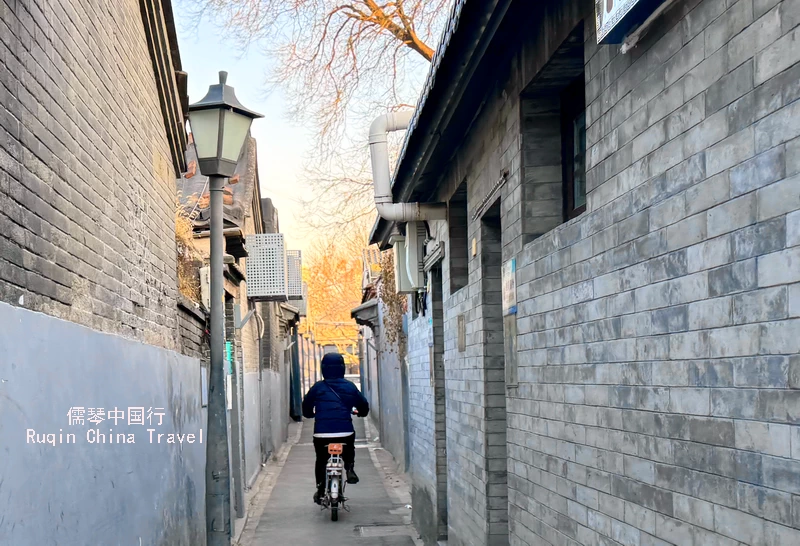
Compared with well-known hutong areas such as Nanluoguxiang or Yandai Xiejie, the streets around Sanlihe Park receive far fewer visitors. That makes walking here feel more natural and unhurried. Many of the traditional siheyuan courtyard houses are still lived in by local families, so you can see a small piece of everyday life in old Beijing.
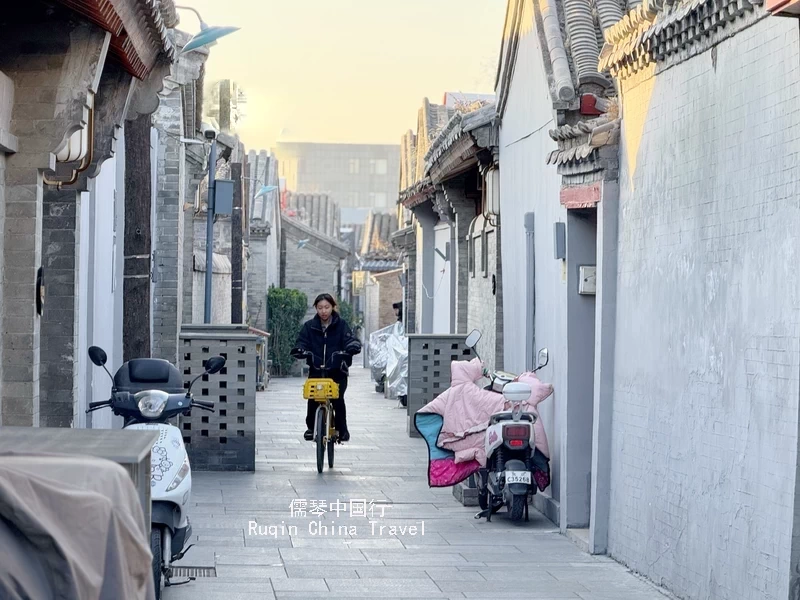
If you continue walking a little farther, you’ll reach several historic streets worth exploring. Xianyukou Street is known for traditional Beijing snacks, while Qianmen Street and Dashilan Street offer a mix of old shops and restored architecture.
You can also wander through Yangmeizhu Xiejie and Liulichang Culture Street, both known for art, antiques, and calligraphy shops. The Temple of Heaven is also within easy reach, making this whole area pleasant to explore on foot.
Sanlihe Park may not appear on many Beijing travel lists, but I often think it deserves a quiet place on a visitor’s itinerary. The small river, stone bridges, and nearby hutongs create a calm atmosphere that feels very different from Beijing’s busy landmarks.
When you visit Beijing Sanlihe Park, take time to wander slowly. Walk along the riverside paths, explore the nearby alleys, and observe the rhythm of local life around you. It’s a simple place, but sometimes these quieter corners of the city leave the most lasting memories of Beijing.
About the Author
Ruqin is the founder of Ruqintravel.com and has spent more than four decades working in China’s travel industry. Drawing on hands-on experience in cities like Beijing and Hangzhou, he personally researches and updates each guide to help international travelers navigate China with confidence.
Further Reading
Caochang Hutongs in Beijing: Maps, Routes, Top Sights & Tips
Qianmen Street Beijing: Map, Food, Shopping & Hotels
Dashilan Street: Map, Food, Shopping & Hotels
Xianyukou Street, Beijing: What to Eat, Shop & See Before You Go
Yangmeizhu Xiejie Street – A Hidden Gem in Beijing
Liulichang Culture Street Beijing – Your Complete Guide
Beijing Fun (Beijingfang) Guide: Top Things to Do, Map & Tips