
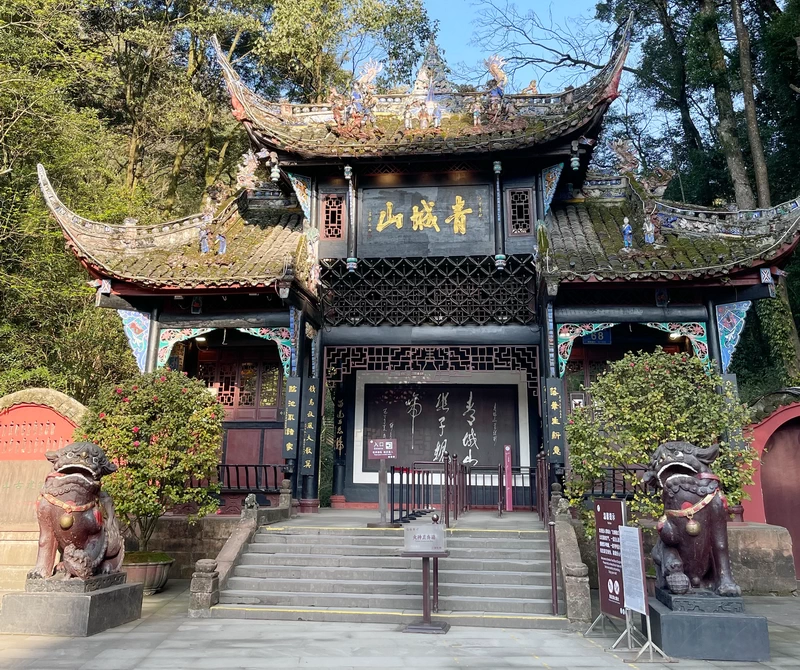

Written and updated by Ruqin
Last updated: May 22, 2026
I still remember the moment the Chengdu skyline faded behind the train window and the mountains slowly took over the horizon. That’s usually when travelers start asking the practical question: how to visit Mount Qingcheng ( Qingchengshan) without missing the quiet beauty that makes it special. This guide walks you through the transport, routes, and small decisions that make the day smooth.
Just an hour outside Chengdu, Mount Qingcheng (青城山) feels like stepping into another rhythm of China — misty forests, Taoist temples tucked into the hills, and stone paths that invite you to slow down. It’s one of the birthplaces of Taoism, but what stays with most travelers is the calm atmosphere and the feeling of walking through living history.
1. Why Visit Mount Qingcheng?
The first thing I noticed when I stepped onto the stone path at Mount Qingcheng (Qingchengshan) was the quiet. Chengdu can be lively and energetic, but here the air felt cooler, the forest deeper, and the pace instantly slower. This mountain, often called Qingcheng Shan, is one of the most important birthplaces of Taoism, and that spiritual history still lingers in the temples hidden among the trees.
As you walk higher, the scenery gradually unfolds — bamboo groves, moss-covered stairways, and pavilions overlooking layers of green hills. In 2000, UNESCO recognized Mount Qingcheng together with the Dujiangyan Irrigation System as a World Heritage Site, honoring both its cultural heritage and natural beauty.
What makes Mount Qingcheng special, though, isn’t only the history. It’s the feeling of wandering through quiet forest trails, discovering small Taoist temples along the way, and occasionally hearing nothing but wind moving through the trees. Whether you love history, hiking, or simply need a calm break from the city, Mount Qingcheng offers a rare kind of peaceful escape.
2. How to Get to Mount Qingcheng from Chengdu
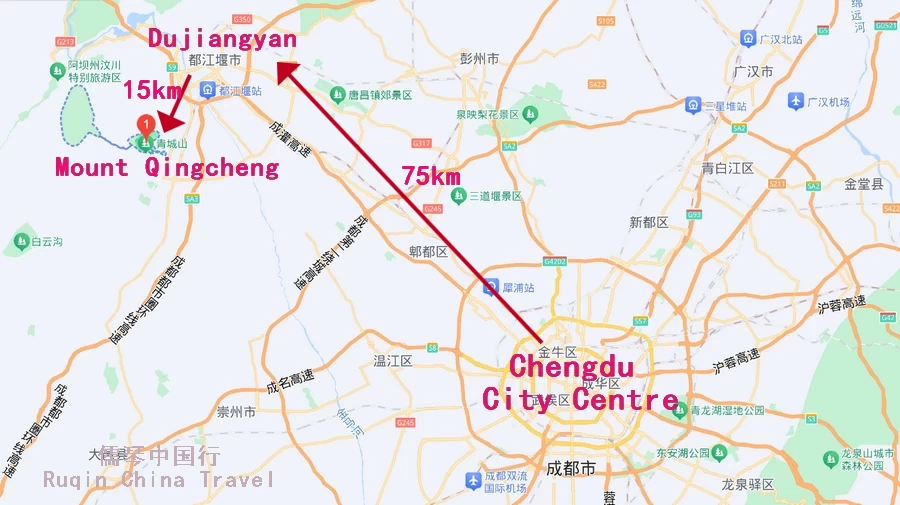
The first time I planned a trip to Mount Qingcheng from Chengdu, the biggest question wasn’t whether to go — it was simply how to get there smoothly. The good news is that it’s surprisingly easy. The mountain sits about 70 km northwest of Chengdu, and with modern transport, you can be at the trailhead in well under two hours.
By Train (My Usual Choice)
Most travelers find the high-speed train the easiest option. I usually take the suburban train from Chengdu Xipu Railway Station, which connects directly with Chengdu Metro Line 2 — very convenient if you’re staying in the city.
Trains run frequently to Qingchengshan Railway Station, and the ride takes about 30–40 minutes. Once you arrive, the mountain is close. You can take a short taxi ride or hop on a local bus to the Front Mountain (Qingcheng Shan Scenic Area) entrance, which takes about 10–15 minutes.
If you’re staying near Chengdu East Railway Station, you may also find trains departing from there, though Xipu is typically the most convenient departure point for visitors.
By Bus
Buses are another option, though fewer travelers use them today because the train is faster. You can take a direct coach from Xinnanmen Bus Station in Chengdu.
The ride usually takes 1.5–2 hours, depending on traffic. It’s slower, but some travelers prefer it because the route is straightforward and requires no transfers.
By Taxi or Private Car
If you’re traveling with family or want a flexible schedule, hiring a taxi or private car can be comfortable. The drive from Chengdu to Mount Qingcheng (Qingchengshan) takes about 1.5 hours, depending on traffic leaving the city.
This option also works well if you plan to visit Dujiangyan Irrigation System and Mount Qingcheng on the same day, which many travelers like to combine.
From experience, though, if you want the simplest and most predictable journey, the high-speed train from Xipu Station is usually the easiest way to reach Mount Qingcheng.
3. Best Time to Visit Mount Qingcheng
One thing I’ve learned from visiting Mount Qingcheng more than once is that the mountain changes its mood with the seasons. Some mornings the trails are wrapped in soft mist, while other days the forest glows bright green under clear skies. Timing your visit can make the experience even better.
Spring (March to May) and autumn (September to November) are usually the most comfortable seasons. The temperatures are mild, the air feels fresh, and the mountain paths are ideal for walking. In spring the forests look vibrant and alive, while autumn often brings crisp air and beautifully clear views over the hills.
Summer (June to August) can be warm in Chengdu, but Mount Qingcheng sits higher in the hills, so it often feels noticeably cooler. Just keep in mind that sudden rain showers are common, so carrying a light rain jacket is wise.
Winter (December to February) is quieter and more peaceful. The mountain sees fewer visitors, and the temples feel especially tranquil. It can be chilly, though, particularly near the summit, so warm layers are helpful if you plan to hike higher.
4. Entrance Fees and Opening Hours
One small detail that often surprises first-time visitors is that Mount Qingcheng is divided into two scenic areas — the Front Mountain and the Back Mountain. I usually explain it this way: the Front Mountain is where the famous Taoist temples are, while the Back Mountain feels more like a quiet forest hiking retreat.
Front Mountain (Qingcheng Shan Scenic Area)
This is the main historic area most visitors see first. The stone paths lead past several Taoist temples, pavilions, and viewpoints. The entrance ticket is typically around 90 RMB.
Back Mountain (Hou Qingcheng)
Back Mountain is less about temples and more about nature. The trails wind through streams, bamboo groves, and small mountain villages. It’s quieter and feels more adventurous. The entrance ticket is about 20 RMB.
Opening Hours
The scenic area generally opens from around 8:00 AM to 6:00 PM daily. From experience, arriving early makes a big difference. The mountain is at its most peaceful in the morning, before tour groups arrive, and the cool air makes the climb much more enjoyable.
5. Things to Do at Mount Qingcheng
When you arrive at Mount Qingcheng, it helps to know that the scenic area is divided into Front Mountain (前山) and Back Mountain (后山). I usually explain it to travelers this way: Front Mountain is for Taoist temples and classic sightseeing, while Back Mountain is for nature and hiking. Most first-time visitors start with the Front Mountain.
Front Mountain (前山): Temples, Culture, and Classic Views
The Front Mountain is the historic heart of Mount Qingcheng, covering about 15 square kilometers. This is where you’ll find the famous Taoist temples connected by stone paths through the forest.
Key places to see include:
- Jianfu Palace (建福宫) – A peaceful temple near the entrance and a gentle introduction to the mountain.
- Natural Painting (天然图画) – A scenic viewpoint where the surrounding peaks resemble a traditional Chinese landscape painting.
- Tianshi Cave (天师洞) – One of the most important Taoist sites on the mountain.
- Chaoyang Cave (朝阳洞) – A quiet cave temple along the mountain path.
- Zushi Hall (祖师殿) – Dedicated to Taoist masters.
- Shangqing Palace (上清宫) – Located higher up with beautiful mountain views.
You’ll also pass Yuecheng Lake (月城湖) near the entrance, where visitors often take a short boat ride before continuing up the mountain. A cable car from Yuecheng Lake can help shorten the climb if you prefer to save some energy.
Back Mountain (后山): Forest Trails and Natural Scenery
The Back Mountain is much larger — nearly 100 square kilometers — and feels quieter and more natural. Instead of temples, the focus here is on forest trails, streams, and mountain scenery.
Some well-known scenic spots include:
- Jinbi Tiancang (金壁天仓)
- Mist Pond (三潭雾泉)
- Baiyun Caves (白云群洞)
- Tianqiao Bridge (天桥奇景)
Many hikers enjoy the Back Mountain because the trails feel more relaxed and less crowded. In summer the forest air is cool and refreshing, while in winter the mountain can feel quite cold but very peaceful.
6. Mount Qingcheng vs. Mount Emei
Travelers often ask me whether they should visit Mount Qingcheng or Mount Emei when they’re in Chengdu. I’ve visited both, and honestly, they offer very different experiences.
Mount Qingcheng feels quieter and more intimate. The forest paths wind past Taoist temples, and you can comfortably explore much of the Front Mountain in a single day. It’s ideal if you want a peaceful escape from the city without committing to a long or physically demanding hike.
Mount Emei, by contrast, is much bigger and more dramatic. It’s famous for its Buddhist monasteries and its high summit views. Many travelers spend one or two days there, sometimes staying overnight on the mountain to watch the sunrise.
If your schedule is tight, Mount Qingcheng makes an easy and rewarding day trip from Chengdu. But if you have extra time and want a grander mountain adventure, Mount Emei offers a deeper, multi-day experience. Many travelers who stay longer in Sichuan end up visiting both — and they complement each other beautifully.
7. Where to Stay Near Mount Qingcheng
For those who want to spend more time at Mount Qingcheng, staying overnight near the mountain is an excellent option. There are several accommodation choices, ranging from budget guesthouses to luxury resorts.
Qingcheng Mountain Resort: This is a comfortable option located close to the entrance of the mountain, offering convenient access and modern amenities.
Six Senses Qing Cheng Mountain: A luxurious resort offering beautiful views and a relaxing environment. Perfect for travelers who want a more comfortable stay after a day of exploring.
For a more budget-friendly option, there are also plenty of local guesthouses around the area.
8. Top Attractions on Mount Qingcheng
While there are many beautiful spots on Mount Qingcheng, here are a few must-visit locations:
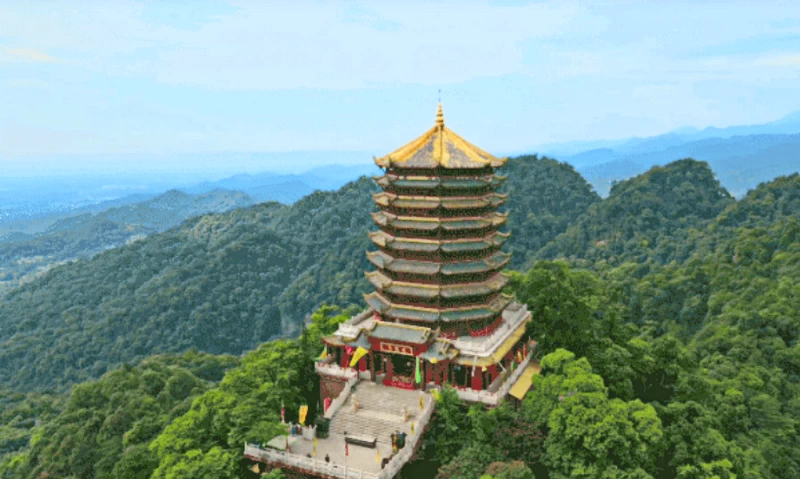
Laojun Pavilion (老君阁): Situated at the top of the Front Mountain, this pavilion offers panoramic views of the entire area. It’s a great spot for photography.
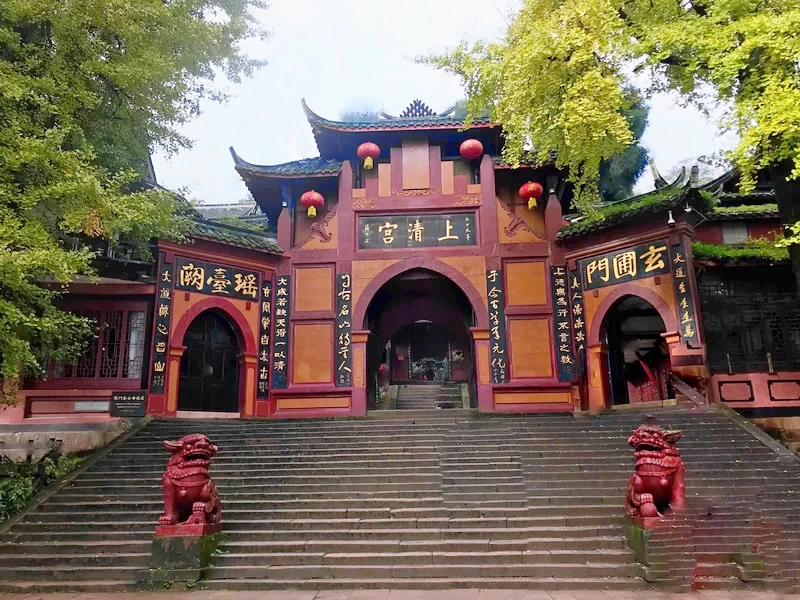
Shangqing Palace (上清宫): One of the oldest and most important Taoist temples on the mountain. The temple is surrounded by lush greenery, creating a serene atmosphere.
Yuecheng Lake (月城湖): As mentioned earlier, this picturesque lake is a perfect spot to relax and enjoy the scenery before or after your hike.
9. Mount Qingcheng for Beginners
If you’re a first-time visitor or not an experienced hiker, don’t worry! Mount Qingcheng is accessible for beginners. The Front Mountain has well-maintained paths, and the cable car makes reaching the higher sections easy. You can take your time, explore the temples, and enjoy the scenic views at your own pace.
Additionally, there are plenty of rest areas along the way, so you can relax and take in the beauty of the surroundings. For those with more energy, the Back Mountain offers more challenging trails and a more immersive natural experience.
10. Day Trip from Chengdu
Many travelers visit Mount Qingcheng as a day trip from Chengdu, and it’s one of the easiest mountain escapes from the city. I often recommend pairing it with the Dujiangyan Irrigation System (都江堰), since the two sites are only about 15 km apart and are historically connected as a UNESCO World Heritage pair.
Travel between them is very easy. A short high-speed train ride between Dujiangyan and Qingchengshan stations takes only about 8 minutes, making it simple to visit both in the same day.
If you plan a day trip, try to leave Chengdu early in the morning. Spend the morning exploring the Taoist temples on the Front Mountain, enjoy the forest trails and viewpoints, and return to Chengdu in the evening.
That said, if you prefer a slower pace, staying overnight near Mount Qingcheng can be a lovely option. The mountain becomes especially peaceful in the early morning and evening, after most day-trip visitors have left.
13.Useful Travel Tips for Visiting Mount Qingcheng
After visiting Mount Qingcheng a few times, I’ve noticed that a few small preparations can make the day much more comfortable. The mountain is beautiful, but it does involve plenty of walking.
Wear comfortable walking shoes
Most of the trails are stone steps, and some sections can feel quite steep. Good walking shoes make a big difference, especially if you plan to hike up to Shangqing Palace(上清宫).
Bring water and a few snacks
There are small shops and tea houses along the paths, but they can be spaced out. I usually carry a bottle of water and a light snack, especially in warmer months.
Be ready for changing weather
The mountain climate can shift quickly. Even on sunny days, light mist or rain can appear. A light rain jacket or small umbrella is very useful.
Start earlier if possible
The trails are at their most peaceful in the morning. Arriving earlier not only avoids larger tour groups but also lets you enjoy the cool mountain air during the climb.
With a little preparation, visiting Mount Qingcheng becomes a relaxed and memorable day — a quiet contrast to the busy streets of Chengdu.
Mount Qingcheng FAQs for Foreign Travelers from Chengdu
Here are a few practical questions I often hear from travelers planning their first visit to Mount Qingcheng from Chengdu.
How do I travel from Chengdu to Mount Qingcheng?
The easiest way is the intercity train from Chengdu Xipu Station to Qingchengshan Railway Station, which takes about 30 minutes. From the station, it’s a short taxi ride (10–15 minutes) or a local bus to the Front Mountain scenic entrance.
You can also take a coach from Xinnanmen Bus Station, but the train is usually faster and simpler.
How much are the tickets and when does the mountain open?
- Front Mountain ticket: about ¥80–90 RMB
- Back Mountain ticket: about ¥20 RMB
Opening hours are generally around 8:00 AM to 5:30–6:00 PM, with slightly shorter hours in winter.
How long should I plan for a visit?
- Front Mountain: about 3–4 hours for the main temples and viewpoints.
- Back Mountain: 5–6 hours or more if you want to enjoy the forest trails and scenic valleys.
Most day-trippers from Chengdu visit Front Mountain only.
Should I hike or take the cable car?
You can do either — or combine both. Many travelers take the cable car partway up and walk the rest.
The trails involve many stone steps, so using the cable car can save time and energy if your schedule is tight.
What’s the best time to visit?
Spring and autumn usually offer the most comfortable weather.
Summer is also popular because the forest keeps the mountain cooler than Chengdu.
Whenever you go, arriving early in the morning makes the experience much more peaceful.
Is Mount Qingcheng suitable for seniors or kids?
The mountain paths involve lots of steps, so strollers and wheelchairs aren’t practical. Families with small children often use baby carriers, and some seniors choose to take the cable car to reduce climbing.
What should I bring?
A few simple things make the visit easier:
- Comfortable non-slip walking shoes
- Water and light snacks
- A rain jacket or small umbrella
The forest can be humid, and sudden rain showers are quite common.
Can I store luggage near the station?
Yes. Qingchengshan Railway Station has small luggage lockers and nearby shops that offer bag storage for a small fee, which is helpful if you’re visiting on the way to another destination.
Should I visit Front Mountain or Back Mountain?
For most travelers coming from Chengdu, Front Mountain is the best choice. It has the famous Taoist temples and classic scenery.
Back Mountain is quieter and more natural, ideal if you enjoy longer hikes.
If your schedule allows, many visitors combine Mount Qingcheng with the nearby Dujiangyan Irrigation System in one day.
By now, you should have a clear idea of how to visit Mount Qingcheng and what to expect once you arrive. From quiet Taoist temples and misty forest paths to scenic viewpoints above the hills, the mountain offers a calm and refreshing contrast to the energy of Chengdu.
If your time in Sichuan allows, I truly recommend setting aside a day for Mount Qingcheng (青城山). Walk slowly, pause at the temples, and enjoy the forest air. It’s one of those places where the experience is not just about reaching the top, but about the peaceful journey along the way.
About the Author
Ruqin is the founder of Ruqintravel.com and has spent more than four decades working in China’s travel industry. Drawing on hands-on experience in cities like Beijing and Hangzhou, he personally researches and updates each guide to help international travelers navigate China with confidence.
Further Reading
Dujiangyan Irrigation System, Chengdu: Your Complete Guide
How to Visit Mount Emei: Tickets, Transport, Routes, Hotels & Tips
How to Visit Leshan Giant Buddha from Chengdu









Hi,
My name is Bob. I’m emailing because I would like to set up a tour to both Mount Qingcheng and the Dujiangyan Irrigation System. I would like to visit both of those places during the week of July 21, 2025. Do you have any availability then? I look forward to hearing back from someone soon.
Thank You,
Bob Ross
——————————–
Hi Bob,
Thank you for reaching out!
While Ruqin China Travel is not a travel agency, we’ve curated a selection of excellent tour recommendations in partnership with trusted platforms like Viator. You’ll find a variety of guided tours including Mount Qingcheng and the Dujiangyan Irrigation System, which is available during the week of July 21, 2025.
Please visit this link to explore and book your preferred option:
👉 Chengdu Tours recommended by Ruqin China Travel (https://www.viator.com/partner-shop/ruqin-china-travel-tours/Chengdu-Tours-recommended-by-R?medium=link&medium_version=shop)
We hope you have a wonderful time exploring these fascinating UNESCO World Heritage sites! If you have any questions or need more travel tips, feel free to get in touch.
Best regards,
Daniel
Ruqin China Travel
http://www.ruqintravel.com