Written and updated by Ruqin
Last updated: September 29, 2026
The first time I wandered into Beijing Fun (BeijingFang or Beijing Fang 北京坊), I had just stepped off the busy Qianmen Street—and the shift caught me off guard. The crowds softened, the alleys opened up, and suddenly I was walking through a space that felt both old and unexpectedly refined. That contrast stayed with me.
In this Beijing Fang Travel Guide, I’ll walk you through what makes Beijing Fun (Beijingfang) special—not just what to see, but how it feels to be there. It’s where hutong
1. Beijing Fun Overview
Tucked in the heart of the Dashilan Historic District, Beijingfang (北京坊) is where Beijing’s soul comes alive.
Once the bustling hub of old Beijing commerce, this open-air cultural district now tells a new story. Streets lined with 1920s-style architecture lead you through a maze of alleys and plazas. First, you’ll notice the elegant blend of tradition and trend. Then, as you wander deeper, art galleries, cafes, and boutique shops begin to reveal themselves.
Today, Beijing Fun (or Beijing Fang 北京坊) is more than a place—it’s an experience. Locals call it “Beijing’s cultural living room.” And it fits. It connects the city’s past, present, and future in one walkable space.
At its heart, Beijingfang was designed to offer a “Chinese lifestyle experience.” And it delivers. Whether you’re here for culture, design, or food, this district invites you to slow down, explore, and feel Beijing—one step at a time.
2. How to Get to Beijing Fun
Finding Beijing Fun is easy—and the journey is part of the experience.
This vibrant district sits right in the Dashilan Historic Area, between Qianmen Xiheyan Street to the north and Langfang Toutiao to the south. On the east lies Zhubaoshi Street; to the west, Meishi Street. A perfect crossroads of old Beijing charm.

Location Map of Beijing Fang ( Beijing Fun or Beijingfang)
First, take Subway Line 2 or Line 8 to Qianmen Station, Exit C. From there, walk just 3 minutes. Or, hop off Line 7 at Zhushikou Station, Exit A. You’ll reach Beijingfang in about 10 minutes on foot.
Next, explore the area. Just 2 minutes away is Qianmen Street, a century-old shopping road. A short bike ride brings you to the Forbidden City, only 1.5 kilometers north. Meanwhile, the artistic Yangmeizhu Xiejie hutong is just a 5-minute walk.
For magical views, come at dusk. The lights glow. The buildings shine. The whole district comes alive。
3. Beijing Fang Architecture: A Time-Traveling Blend of East and West
Beijing Fun isn’t just a place—it’s a journey through time, told through architecture. Nestled within the vibrant cultural quarter of Beijing Fang (北京坊), Quanyechang (劝业场) is a captivating blend of old-world elegance and artistic innovation.
Originally established in 1905, the building we see today was reconstructed in 1923 under the vision of architect Shen Liyuan. He reimagined the classic Baroque style with a fresh twist, drawing inspiration from the then-trending Art Nouveau movement.

The historic Quanyechang (劝业场)
As you stroll through the area, don’t miss the building’s standout features: graceful Ionic columns reminiscent of ancient Greece, vase-shaped balcony railings, and arched pediments that crown the façade with poetic symmetry.
These carefully crafted elements give the building a unique personality — one that continues to charm visitors and passersby nearly a century later.

The vase-shaped balcony railings
Around it, Beijingfang unfolds Ming and Qing elegance, and early 20th-century charm. First, you’ll notice the layout: one main street, three plazas, and a web of hutongs. It’s organized, yet full of surprises.
Just beside the historic Quanyechang in Beijing Fun (北京坊), there’s a quietly charming building that often escapes the crowds — the former Bao Heng Xiang Gold Shop, a little gem from the Republican era. Its gray brick façade and two-story brick-and-wood design are beautifully preserved, offering a glimpse into a time when East met West in the most unexpected ways.

Bao Heng Xiang Gold Shop
The building features a three-bay storefront, with its European Baroque framework softened by delicate Chinese-style brick carvings — a truly elegant fusion of cultures that tells a story beyond words.
It’s one of those places that invites you to slow down, notice the details, and imagine the hustle and bustle of the gold shop that once thrived here.

Gray brick walls, glass facades and steel walkways at Beijing Fang
As you wander, old meets new. Gray brick walls and tiled roofs echo the Republic-era past. Meanwhile, glass facades and steel walkways speak of the future. Traditional courtyards sit beside European-style archways.
In addition, the revival of “Deng Jie” (Lantern Street 灯街) brings old Beijing’s night markets back to life. Delicate flower-brick façades and glowing lanterns light your path.
Every step here tells a story—of contrast, harmony, and a city always evolving.
4.Culture and Events at Beijing Fun | Beijingfang Highlights
Beijing Fun isn’t just a place to walk—it’s a place to feel, see, and create.
First, step into the cozy glow of PageOne Bookstore. It’s open 24 hours, so come anytime. Browse art books by day, sip coffee at midnight. Next, explore traditional intangible heritage workshops. Watch masters cut delicate paper designs or craft puppets for shadow plays—right before your eyes.
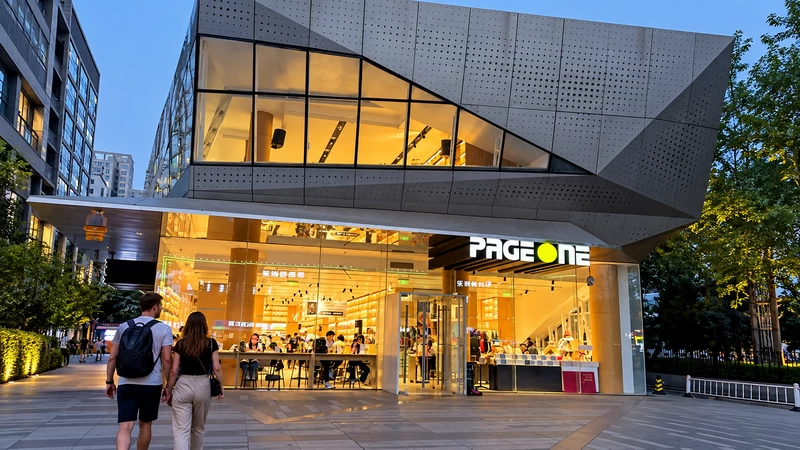
PageOne Bookstore
Meanwhile, art lovers can visit the Beijingfang Cultural Center, which hosts free exhibitions of contemporary Chinese art. The vibe? Fresh, bold, and full of local voices.

The Theatre of Dream at Beijingfang
Then, dive into a dream at the Van Gogh Star Art Museum. Here, brushstrokes swirl across walls and floors. Lights move. Paintings breathe. It’s Van Gogh—like you’ve never seen him before.

Beijing Van Gogh Star Art Museum at Beijing Fang
In addition, the seasons bring festivals to life. Think Spring Festival temple fairs, glowing lanterns during Mid-Autumn, and open-air concerts in summer.
At Beijingfang, culture never sleeps. It celebrates all year round.
5. Eating & Staying at Beijing Fang
Food and rest go hand in hand at Beijing Fun. Here, every corner tempts you with flavor.
First, slip into hidden alleys for traditional Beijing bites. Try Baodu Feng (爆肚冯) for tender tripe, or sink your teeth into the crisp Mending meat pie (门钉肉饼). These old brands carry the city’s taste of memory.
Next, switch moods. Grab a latte at Metal Hands, a beloved local café. Or settle upstairs at Starbucks Reserve, where vintage architecture meets rooftop views of Qianmen.
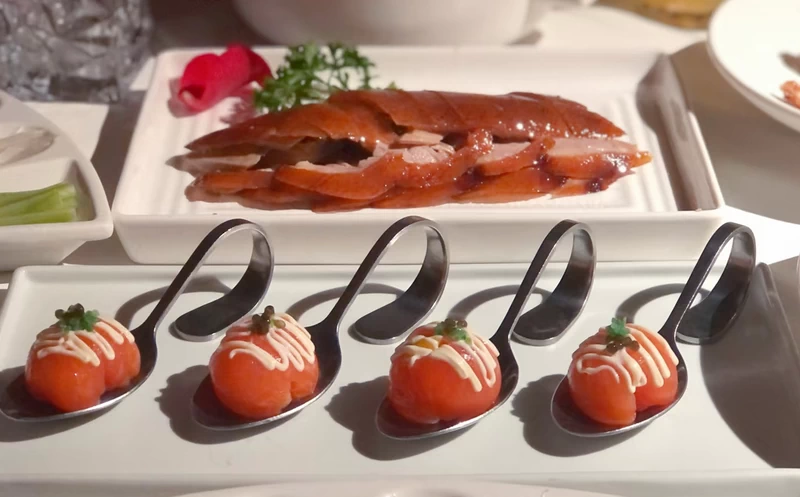
Dine at Ms. Na
As evening falls, the vibe changes. Dine at Ms. Na, where imperial recipes meet playful twists. Then, wander to Alley Diagon, a craft beer bar glowing with energy. The night feels endless here.

MUJI HOTEL BEIJING
Meanwhile, if you plan to stay at Beijingfang, check into the world’s first MUJI HOTEL BEIJING. Minimalist rooms overlook Qianmen Gate. Downstairs, a MUJI shop and café await; upstairs, a Japanese set meal completes your day.
Beijingfang tastes best when you linger.
6. Beijing Fang’s Hanging Tassel Canopy
One of the most eye-catching additions to Beijing Fun (Beijingfang) is the colorful hanging tassel canopy above Langfang Toutiao Pedestrian Street, close to Qianmen. The installation was refreshed in the summer of 2026 and has quickly become a popular place for photos.
Thousands of colorful tassels hang above the narrow pedestrian street, forming soft, cloud-like patterns in pastel shades. Large three-dimensional flowers, inspired by magnolias, peonies, and other blossoms, appear among them. Instead of a flower garden at your feet, the whole garden seems to float overhead.

Beijing Fang’s Hanging Tassel Canopy 北京坊流苏天幕
What I like most is that the canopy does not feel static. When a breeze passes through the street, the tassels and flowers move gently together. Sunlight filters through them during the day, creating changing patches of light and shadow on the buildings and pavement below. It is especially good for short videos because you can capture the movement of the entire canopy.
The installation is outdoors, free to visit, and requires no reservation. You can simply walk through it while exploring Beijing Fun and the Qianmen area.
For photography, I would consider two different times. Late afternoon, around 4:00–6:00 p.m., gives you softer natural light and makes it easier to see the colors and details of the tassels. Light-colored clothing or simple Chinese-inspired clothing can also work well against the pastel background.
The atmosphere changes after dark. From around 7:00–9:30 p.m., when the lights are on, the pedestrian lane takes on a very different character. Blue, pink, and purple lighting shines through the hanging decorations, turning the street into something like an illuminated floral tunnel.
If your schedule allows, I would arrive before sunset. You can see the canopy in daylight, explore Beijing Fun, stop for coffee or browse PageOne Bookstore, and then return after dark to see the lights. That gives you two quite different views without making a separate trip.
7. Best Time to Visit & Travel Tips for Beijing Fun
Timing matters when you visit Beijing Fun. Each season tells a different story.
First, spring brings soft breezes and blooming flowers. Streets feel alive but not too crowded. Next comes summer. Even though the heat lingers, music festivals and night markets light up the plazas. Autumn, however, is perfect. The air turns crisp, the sky shines blue, and evening walks feel magical. Finally, winter wraps Beijing Fang in twinkling lights. Hot snacks in hand, you’ll feel the festive warmth.

Beijing Fun ( or Beijing Fang )
In addition, aim for late afternoon. Stay through sunset. Lanterns glow, and buildings sparkle against the night sky. It’s the best time for photos.
Practical tips? Wear comfy shoes—alleys invite wandering. Bring cashless payment apps like Alipay or WeChat Pay. And don’t rush. Sit in a café, watch people pass, and let the atmosphere sink in.
At Beijing Fun, the secret is simple: come ready to slow down, and the district rewards you.
By the time I left Beijing Fun (Beijingfang 北京坊), I realized I hadn’t rushed once. I had drifted—through quiet lanes, into small shops, pausing for coffee without checking the time. It doesn’t demand your attention; it gently holds it.
What stays with me about Beijing Fun isn’t just the photos—it’s the feeling. Old Beijing is still there, just softer, layered with something new. So don’t plan too tightly here. Walk slowly, look closer, and let Beijingfang unfold at its own pace.
About the Author
Ruqin is the founder of Ruqintravel.com and has spent more than four decades working in China’s travel industry. Drawing on hands-on experience in cities like Beijing and Hangzhou, he personally researches and updates each guide to help international travelers navigate China with confidence.
Further Reading
Qianmen Street Beijing: Map, Food, Shopping & Hotels
Dashilan Street: Map, Food, Shopping & Hotels
Beijing Van Gogh Star Art Museum: A Visitor’s Guide
Xianyukou Street, Beijing: What to Eat, Shop & See Before You Go
Yangmeizhu Xiejie Street – A Hidden Gem in Beijing
Liulichang Culture Street Beijing – Your Complete Guide
How to Visit Tiananmen Square: A Complete Travel Guide
Caochang Hutongs in Beijing: Maps, Routes, Top Sights & Tips