
Written by Ruqin
August 11, 2026
Three Fingers on the Wrist: Discovering TCM While Traveling in China
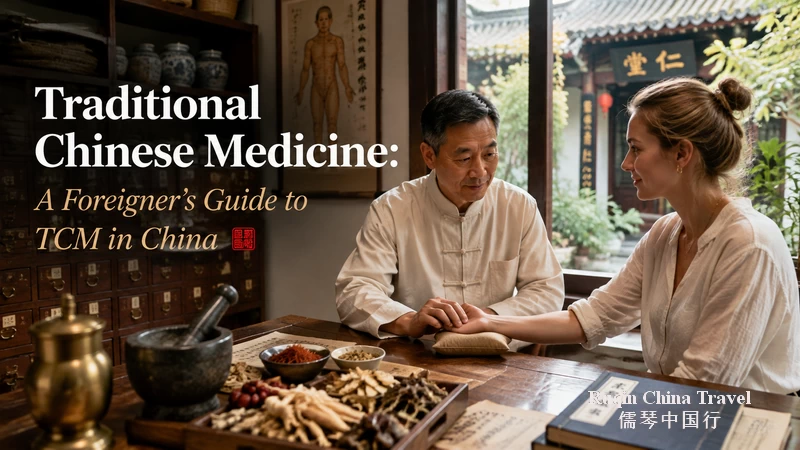
If you travel around China, sooner or later you may see an interesting scene. A traditional Chinese medicine doctor places three fingers gently on someone’s wrist, stays quiet, and feels the pulse. This is not fortune-telling. It is pulse diagnosis (把脉), one of the traditional practices of Chinese medicine.
You do not need to become an expert in Traditional Chinese Medicine, usually called TCM. Nor do you need to memorize acupuncture points or understand complicated theories. However, learning a little about TCM can open another window onto Chinese culture and everyday life.
For a foreign traveler, that is where I think TCM becomes especially interesting. You can encounter it in pharmacies, hospitals, parks, museums, and even ordinary conversations. Once you recognize it, you begin seeing it everywhere.
1. What Exactly Is Traditional Chinese Medicine?
Traditional Chinese Medicine developed over many centuries in China. Rather than focusing on a single historical moment, it grew through generations of observation, medical practice, written texts, and changing ideas about the human body. Today, TCM remains part of China’s healthcare system alongside modern medicine.
When I explain TCM to foreign friends, I usually avoid going too deeply into theory. Traditional Chinese medicine often looks at patterns across the whole person rather than focusing only on one symptom. A practitioner may ask about your sleep, appetite, digestion, energy, temperature, and daily habits before suggesting what to do next.
Three ideas appear again and again: yin and yang (阴阳), qi and blood (气血), and meridians (经络). These belong to the traditional theoretical framework of Chinese medicine. They should not be confused with the anatomical and physiological concepts used in modern biomedicine.
You do not need to understand every term to appreciate TCM as part of Chinese culture. What matters for a traveler is the broader idea behind it: health, daily habits, food, rest, seasons, and the body are often considered together.
2. What Can TCM Add to Your China Trip?
Long journeys can be tiring. After a long flight, several days of walking, unfamiliar food, and disrupted sleep, even an enjoyable holiday can leave you feeling worn out. This is one reason some travelers become curious about Chinese massage, acupuncture, or other traditional practices.
Tui na (推拿) is one of the easiest experiences for a visitor to understand. A practitioner uses pressing, rubbing, kneading, and other manual techniques on different areas of the body. After several days of sightseeing, some travelers simply enjoy it as a way to relax tired muscles.
Acupuncture (针灸) is probably the best-known TCM practice outside China. Very fine needles are inserted at selected points by trained practitioners. Some people seek acupuncture for pain and other conditions, although evidence varies depending on the condition and it should not replace appropriate medical care.
Then there is moxibustion (艾灸), which uses heat from burning processed mugwort near selected areas of the body. You may also encounter cupping (拔罐), herbal preparations, medicinal teas, and traditional exercises. For a first-time visitor, seeing these practices in their Chinese setting can be as interesting culturally as experiencing them personally.
However, I would keep one distinction clear. If you are seriously ill, injured, or have worrying symptoms during your trip, seek proper medical assessment rather than treating TCM as a sightseeing activity. China has modern hospitals as well as TCM hospitals, and the two systems often work alongside each other.
3. Where Will You Encounter TCM While Traveling?
You may meet Chinese health traditions before you ever enter a clinic. Go to almost any large Chinese park early in the morning, and you will see people practicing tai chi (太极拳) or Baduanjin (八段锦). The movements are slow and controlled, and the atmosphere is usually relaxed.
If you are curious, stand nearby and watch for a while. In many parks, local people are quite happy when foreign visitors quietly follow their movements. You do not need special clothes or previous experience to appreciate the rhythm of the practice.
Traditional pharmacies offer a completely different experience. Walk into an old Chinese medicine shop, and you may smell herbs before you see them. Drawers behind the counter hold roots, bark, seeds, flowers, and other materials that have appeared in Chinese materia medica for generations.
Museums are another good choice, especially if you want the culture without receiving treatment. A good TCM museum can show you old medical books, acupuncture models, traditional instruments, medicinal plants, and historical pharmacies. For many foreign travelers, this is the easiest way to understand how medicine fits into China’s wider history.
4. Good Places to Explore TCM in China
Hangzhou: Traditional Pharmacies and Herbal Culture
Hangzhou is one of my favorite cities for introducing visitors to traditional Chinese medicine. On Hefang Street, Hu Qing Yu Tang (胡庆余堂) dates from the Qing dynasty and remains one of China’s best-known traditional medicine names. The historic setting alone makes it worth visiting.
You can look at traditional pharmacy counters, learn about medicinal ingredients, and sometimes join cultural activities such as making herbal sachets. Nearby, Hangzhou’s old streets also help put the experience into context. Medicine, food, commerce, and daily life have long existed side by side here.
Another famous Hangzhou name is Fang Hui Chun Tang (方回春堂). Depending on current programs, visitors may encounter traditional consultations or cultural demonstrations there. However, check ahead if you want a specific experience rather than simply visiting.
Beijing: TCM in a Modern Capital
Beijing offers a different perspective. Here, traditional Chinese medicine operates inside a huge modern healthcare system, while universities, museums, pharmacies, and hospitals continue older traditions. That contrast itself is worth observing.
Institutions such as Guang’anmen Hospital (广安门医院) are major centers for Chinese medicine. Some institutions also organize public education or cultural programs involving medicinal herbs, health practices, and TCM traditions. Before visiting, check whether the activity is designed for tourists and whether English support is available.
You can also visit an old pharmacy simply to look around. Even without buying anything, rows of wooden drawers and the smell of dried herbs offer a small glimpse into another side of Beijing life.
Shanghai: Traditional Medicine in an International City
Shanghai can be convenient for foreign visitors because international services are more common. You will find TCM hospitals, clinics, pharmacies, and cultural programs across the city. Some facilities can provide English-language assistance, although you should confirm this before making an appointment.
For a lighter experience, look for public programs involving tai chi, Baduanjin, herbal culture, or traditional wellness practices. Shanghai often presents old traditions in a very modern setting. That makes the city a useful place to see how TCM continues to adapt.
Sanya: TCM and Wellness Travel
Sanya has developed a noticeable wellness tourism scene, helped by its warm climate and resort environment. Some visitors combine a beach holiday with massage, tai chi, acupuncture, or other wellness services. International visitors, particularly from colder countries, have also shown interest in longer wellness stays.
Still, choose medical treatments carefully. A hotel spa offering a “TCM experience” is not necessarily the same as a licensed medical institution. If acupuncture, herbal medicine, or treatment of a health condition is involved, I would choose a recognized hospital or properly licensed clinic.
Sichuan: Medicinal Plants and TCM Museums
Sichuan offers another way into the subject. The province has a long tradition of medicinal plants and Chinese medicine, so museums and educational bases can be especially interesting. Here, you can explore TCM without turning your visit into a medical appointment.
For me, this approach works particularly well for culturally curious travelers. Look at the herbs, smell them, read their names, and learn how people historically understood them. You leave with a better sense of the culture without needing to decide whether you personally accept every traditional theory.
5. Try TCM as a Cultural Experience
If you are curious about Chinese medicine but do not want treatment, there are plenty of alternatives.
Start with a morning in a park. Watch tai chi or Baduanjin, then try a few simple movements if a local group welcomes you. Afterward, visit an old pharmacy or TCM museum and compare what you see with the health traditions of your own country.
Making a traditional herbal sachet (中药香囊) can also be fun. These small cloth bags may contain aromatic plants and herbs. Historically, people carried them for fragrance and for various traditional health or seasonal purposes.
You might also try a Chinese herbal tea sold as an everyday beverage. However, remember that “natural” does not automatically mean harmless. If a drink or herbal product is marketed for treating a condition, especially if you take medication or have allergies, ask a qualified professional before using it.
This is the way I prefer to introduce TCM to foreign friends. Begin with curiosity rather than trying to decide immediately whether everything “works.” First understand what Chinese people have been doing, how they describe it, and why these traditions remain visible today.
6. Practical Tips Before Trying TCM
First, choose a reputable provider. For acupuncture or treatment of an actual medical problem, I recommend a recognized hospital or licensed clinic rather than an informal tourist shop. Ask whether the practitioner is qualified and whether English-language service is available.
Next, ask about the price before treatment begins. Costs vary greatly by city, institution, practitioner, and service, so I would not rely on a single nationwide price range. Make sure you understand what is included before agreeing to treatment.
Also tell the practitioner about relevant medicines, allergies, pregnancy, bleeding problems, or other important medical information. If you dislike needles, simply say so. You can still explore TCM through museums, pharmacies, tai chi, cultural workshops, or other non-invasive experiences.
Finally, keep your expectations sensible. You do not need a dramatic before-and-after story for the experience to be worthwhile. Sometimes, learning how a Chinese doctor takes a pulse or how an old pharmacy stores herbs is already enough.
7. What TCM Can Teach You About China
Once you understand a little TCM, you begin hearing its language everywhere.
A Chinese friend may say a food causes shanghuo (上火), often loosely translated as “internal heat.” Someone else may talk about shiqi (湿气), or “dampness,” while another person chooses certain foods because the season has changed.
These expressions belong to a traditional way of thinking about the body and everyday health. You do not have to accept them as biomedical diagnoses to understand their cultural importance. They influence food choices, family advice, seasonal habits, and ordinary conversations.
That is why I think TCM deserves a place in a cultural journey through China. It tells you something about how generations of Chinese people have thought about the body, nature, food, seasons, balance, and daily life.
Final Thoughts: Three Fingers and a Different View of China
Traditional Chinese medicine does not have to become a major part of your itinerary. Perhaps you simply watch tai chi in a Beijing park, smell medicinal herbs in an old Hangzhou pharmacy, or visit a museum in Sichuan. Even a small encounter can add another layer to your journey.
If you do visit a traditional doctor, you may experience that familiar scene: three fingers resting quietly on your wrist while the practitioner feels your pulse. You do not need to treat that moment as mysterious, and you certainly do not need to understand every theory behind it.
Instead, see it in its cultural setting. You are encountering a medical tradition that has developed, changed, and remained part of Chinese life across many centuries. For a traveler trying to understand China beyond its famous sights, that alone makes it worth discovering.
Ruqin is the founder of Ruqintravel.com and has spent more than four decades working in China’s travel industry. Drawing on hands-on experience in cities like Beijing and Hangzhou, he personally researches and updates each guide to help international travelers navigate China with confidence.
Further Reading
Secrets of Chinese Herbal Medicine – A Foreigner’s Guide
Confucius Philosophy – A Foreigner’s Guide to Confucianism
How to Understand Mencius: A Foreigner’s Guide to His Philosophy
Feng Shui – A Foreigner’s Guide – Ruqin China Travel
Chinese Zodiac Signs: Understanding the Meaning Behind the 12 Animals
Traditional Chinese Festivals: Understanding China Through Its Celebrations