Written by Ruqin
Published June 9, 2026 · Last updated June 11, 2026
Quick Walk Overview
Start: Southeast Corner Watchtower of Beijing Ming City Wall Relics Park
End: Laomo Square (Labor Model Square), western end of the park near Chongwenmen
Distance: Approx. 1.5 km
Walking Time: 1–1.5 hours with photo stops (approx.)
Best Time: Early morning (7:00–9:00 am) or late afternoon
Surface: Flat paved paths and wooden boardwalks
Crowd Level: Very quiet in the early morning
On the morning of June 8, 2026, I came here shortly after sunrise. The weather could not have been better for an urban walk. The temperature ranged from about 15°C to 25°C, with soft sunshine filtering through light clouds on the east low skyline. The old city wall, the green park belt below it, and the slowly waking city all seemed to move at a gentler pace.
This is one of my favorite short walks in central Beijing. It combines history, local life, photography opportunities, and surprisingly peaceful green space right beside one of the busiest parts of the city.
Why I Walked This Route
I wasn’t here only for the Ming Dynasty wall.
One of the main reasons for my Beijing Ming City Wall Relics Park Morning Walk was to watch the sunrise over Beijing’s eastern skyline, especially China Zun (CITIC Tower), the tallest building in the city. There are not many places in central Beijing where you can photograph a 600-year-old city wall and the modern skyline in the same frame.
I also enjoy this route because it offers something rare in Beijing: a chance to walk through living history while observing ordinary local life unfolding around it.
Step-by-Step Walking Route
Step 1: Start on the Bridge Below the Southeast Corner Watchtower
Walking Time: 10–15 minutes
Sunrise in Beijing was at 4:46 am that morning.
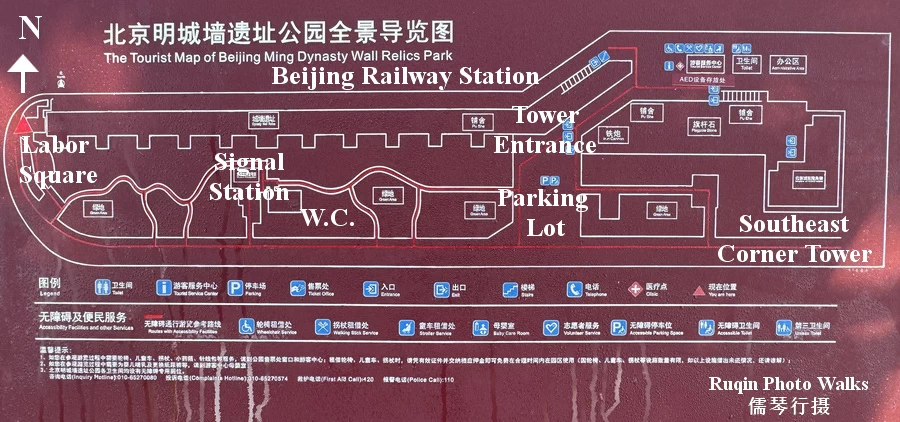
The Tourist Map of Beijing Ming Dynasty Wall Relics Park
I set out before sunrise and rode a shared bike through the quiet streets of central Beijing. At that hour, the city was just beginning to wake up. My destination was the area beneath the bridge next to the Southeast Corner Tower, the eastern starting point of the Beijing Ming City Wall Relics Park. The Southeast Corner Watchtower dates to 1436 and remains the largest surviving corner tower of its type in China.
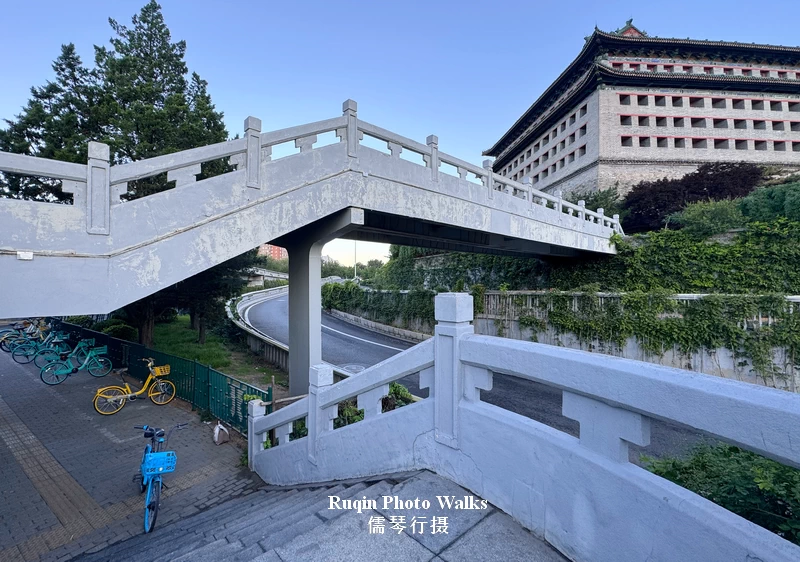
I parked the bike beneath the bridge next to the Southeast Corner Tower
As I parked the bike and looked up, the massive brick tower stood against the brightening sky, while the long stretch of the Ming Dynasty wall extended westward into the city.
Standing on the unnamed bridge near the Southeast Corner Tower, a thin layer of clouds partially covered the rising sun. Normally photographers hope for a clear sunrise, but on this occasion the clouds actually helped. The softer light reduced harsh backlighting and allowed the skyline to appear much clearer.
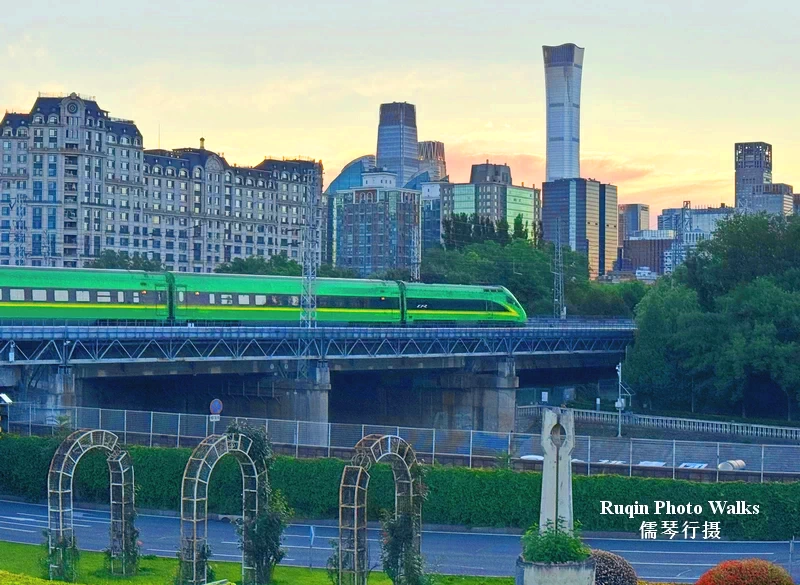
The prominent China Zun Tower and the sleek green Fuxing high-speed train
Looking east, China Zun stood prominently above the surrounding skyscrapers.
Below me, a sleek green Fuxing high-speed train slowly departed Beijing Railway Station.
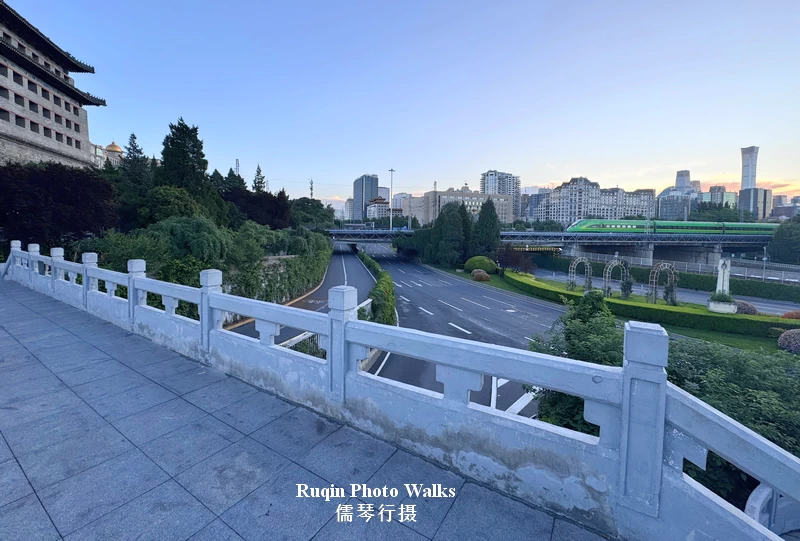
The ancient tower, the sleek train and the prominent China Zun
Watching the train glide through the early morning city created one of those uniquely Beijing moments. Ancient walls on one side. China’s newest high-speed rail technology on the other.
Traffic on the East Second Ring Road below was still light. A few hours later, this stretch would be packed with commuters.
Step 2: Walk Toward the Southeast Corner Tower Entrance
Distance: Approx. 300 meters
Leaving the bridge, I headed toward the west along the park from the eastern tip of the Southeast Corner Tower.
Along the way, I noticed something that many visitors would probably overlook: a neighborhood grid-management information board (网格牌公示) mounted on a fence.
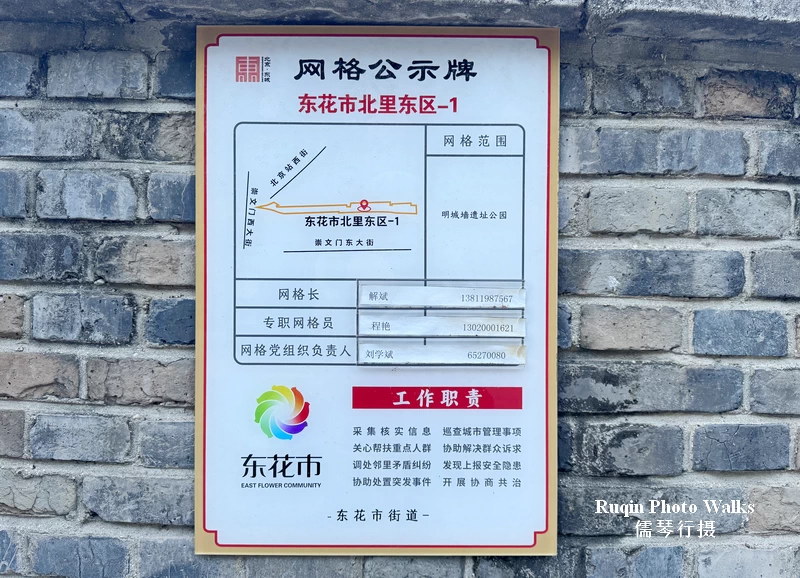
A neighborhood grid-management information board (网格牌公示) by East Flower Community
It listed the local community management team responsible for this area, including contact information for neighborhood coordinators and grid workers. Their responsibilities range from urban maintenance and public safety inspections to helping residents solve daily issues.
Small details like this remind me that Beijing is not just a historical city. It is also a living city constantly managed and maintained behind the scenes.
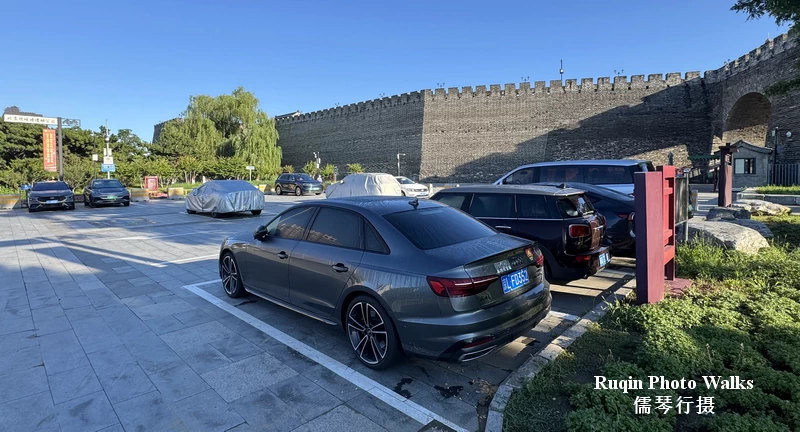
The park’s main parking lot is located near the entrance to the Southeast Corner Tower
The park’s main parking lot is located near the entrance to the Southeast Corner Tower, making this the most convenient place to begin the walk if you arrive by car.
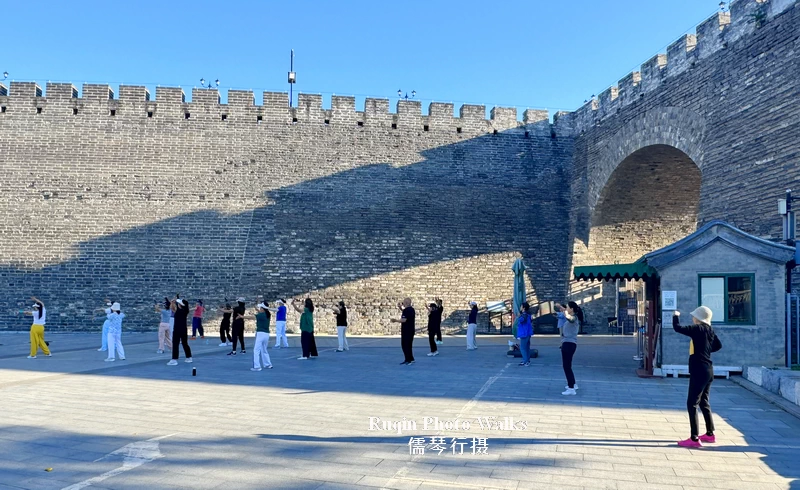
A small dance group following an instructor at the entrance to the Southeast Corner Tower
Visitors can also climb the Southeast Corner Tower itself. Admission is typically 10 RMB, and the tower opens at 8: 00 am in the morning.
I’ve visited the tower several times before, so on this walk I decided to continue directly along the wall.
Step 3: Walking with the Morning Exercisers
Distance: Approx. 500 meters
The narrow green corridor beside the wall gradually came to life. A few local residents were out walking their dogs along the path that parallels the Ming Dynasty City Wall.
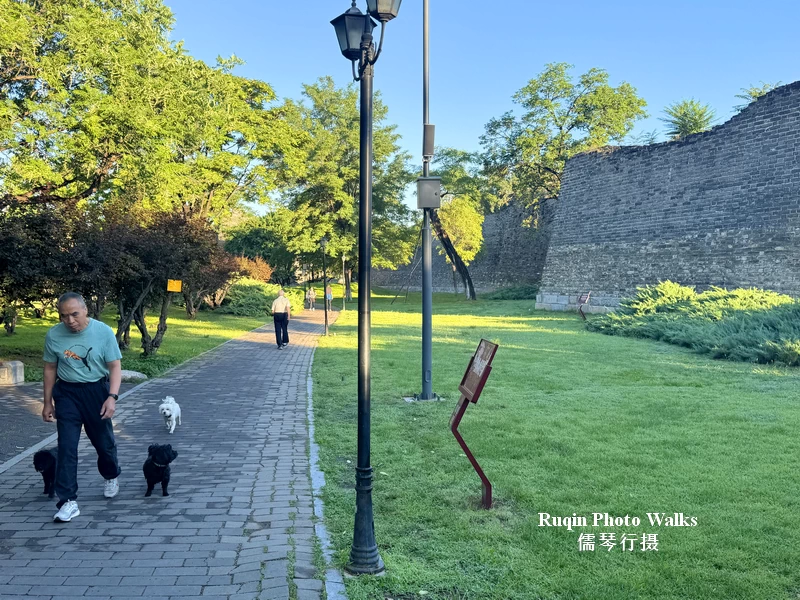
Morning dog walkers along the path beside the Ming Dynasty City Wall
Although it was still early, local residents were already out exercising.
Some were jogging.
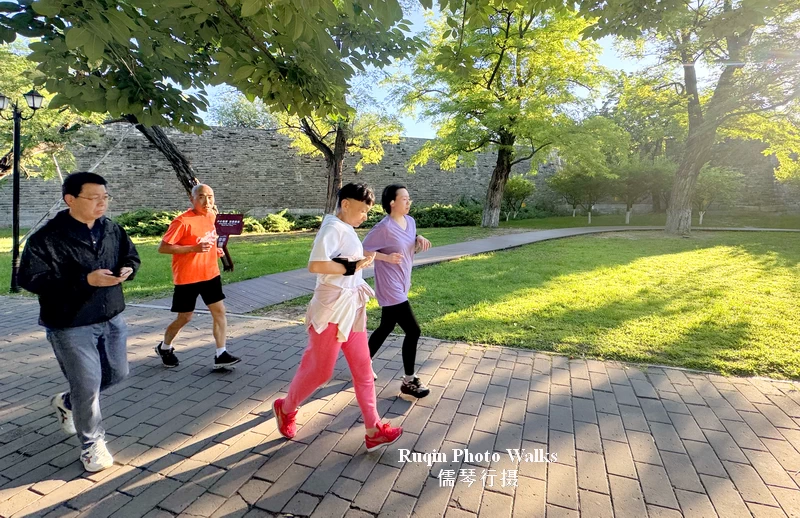
Some people are jogging along the path beside the Wall in Ming Dynasty Wall Relics Park.
Some walked briskly in pairs.
Others practiced stretching exercises beneath the trees.
One of my favorite sights was a small dance group following an instructor while music played softly from a portable speaker. Nothing elaborate. Just ordinary people starting their day with movement and music.
This is one reason I prefer visiting early.
The wall itself is impressive, but the people using the park give it life.
Step 4: Trees, Boardwalks, and Early Summer Greenery
Distance: Approx. 400 meters
Many visitors know the park for its famous plum blossoms.
Every year from late February to early March, thousands of plum trees bloom along the wall, creating one of Beijing’s most beautiful spring displays.
By June, the blossoms were long gone.
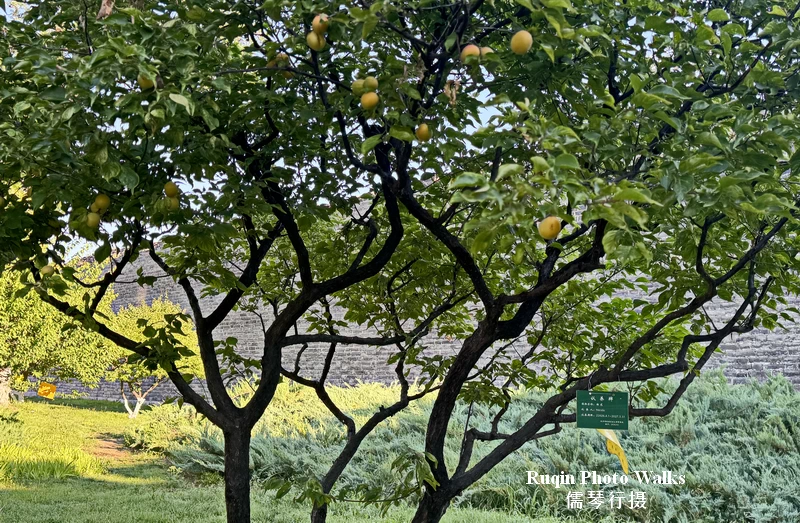
The plum trees were heavy with fruit.
Instead, the plum trees were heavy with fruit.
I also noticed several women picking apricots from nearby trees. The park contains a surprising variety of mature trees, including white magnolias, purple magnolias, apricots, and old shade trees that provide welcome relief during summer.
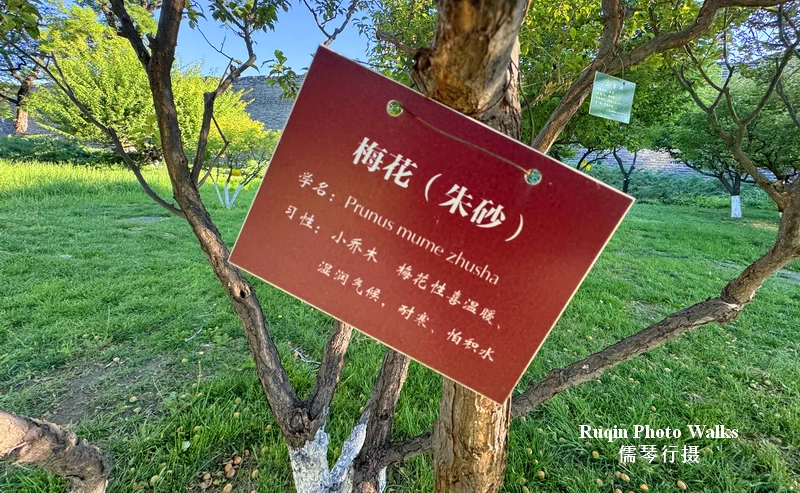
Many trees have identification tags
Many trees have identification tags, and some even carry adoption plaques showing that local residents or organizations help support their care.
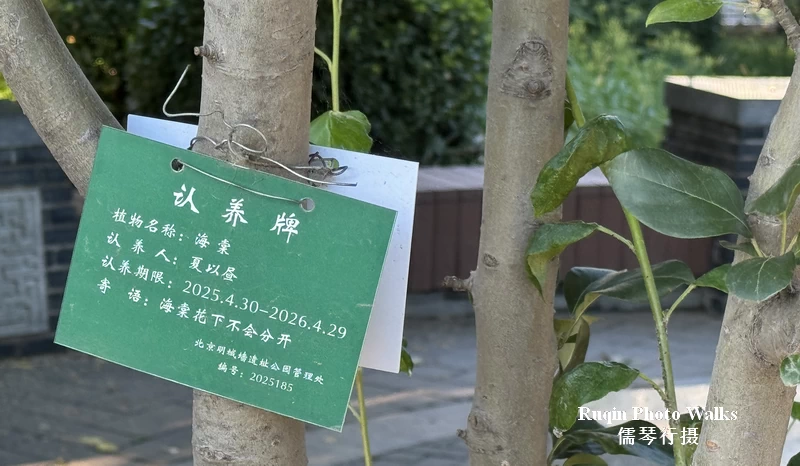
A adoption plaque for a Crabapple tree
One feature I always appreciate is the wooden boardwalk system winding through the small wooded sections of the park.
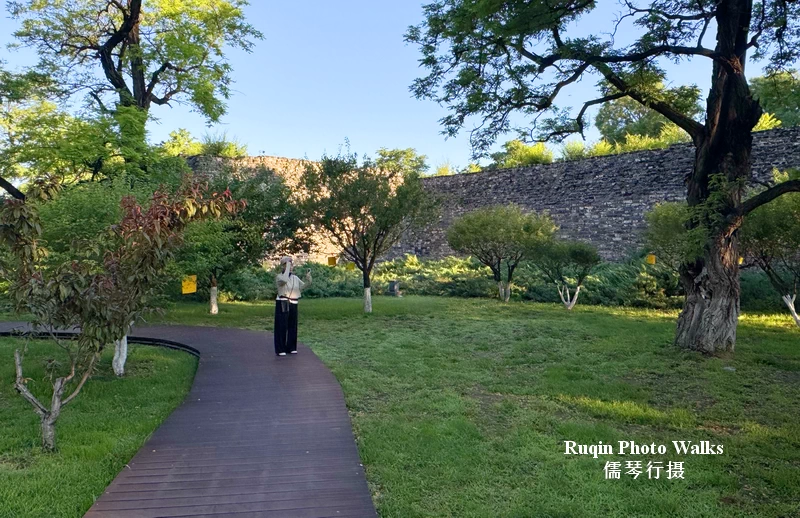
The wooden boardwalk system winding through the small wooded sections of the park
Whenever I want a break from the main path, I step onto these quieter trails. Birdsong becomes more noticeable, and for a few moments it feels surprisingly far removed from the surrounding city.
Step 5: Walking Beside Beijing’s Last Remaining Ming City Wall
Distance: Approx. 300 meters
This section of wall is only about 1.5 kilometers long, but it carries an enormous amount of Beijing’s history.
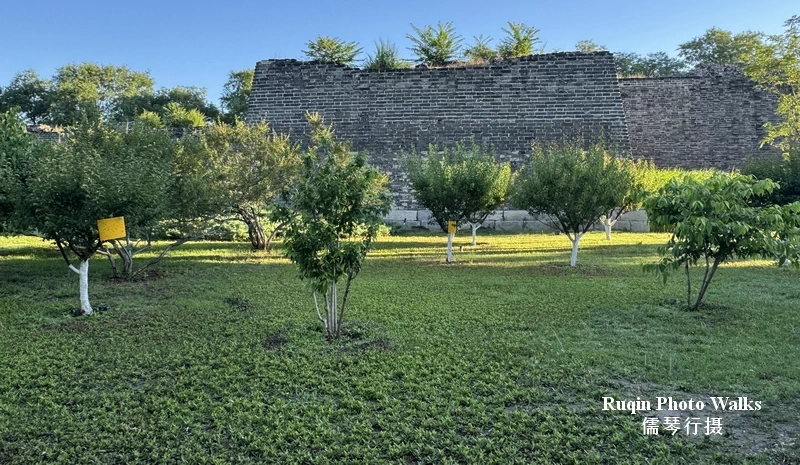
This section of wall is only about 1.5 kilometers long
The wall was originally part of Beijing’s Inner City fortifications, first constructed during the Ming Dynasty in the early 15th century. The complete city wall system once stretched roughly 40 kilometers around the capital.
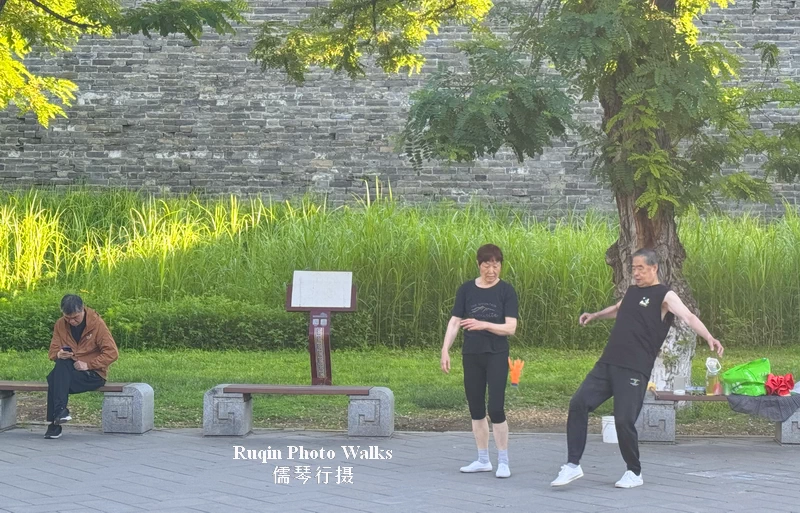
A couple are playing jianzi (Chinese shuttlecock) by the wall as part of their morning exercise routine.
Most of it disappeared during the urban redevelopment projects of the 1950s and 1960s. Today, this surviving section between Chongwenmen and the Southeast Corner Tower remains the longest and best-preserved stretch of the original Inner City Wall.
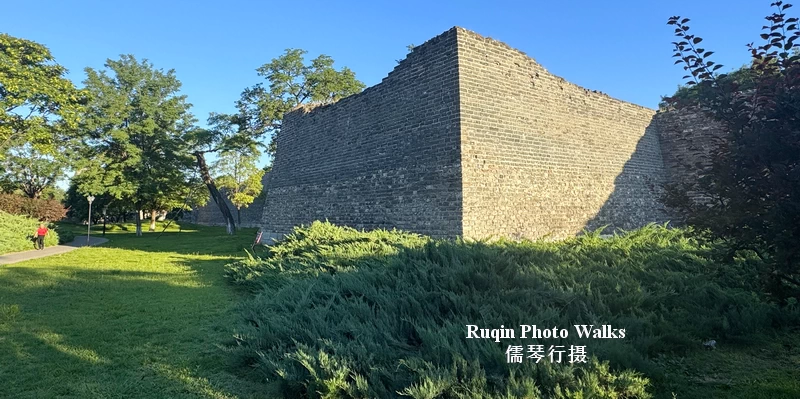
One of the 12 Dun Tai ( buttresses) along the City Wall
The park itself covers approximately 15.5 hectares and was developed to preserve this important historical relic while creating public green space for local residents.
Along the city wall from the Corner Tower to Chongwenmen, there are 12 Duntai (buttresses), known in Chinese as mamian. These projecting sections are an important part of the Ming Dynasty city wall’s defense system. They enabled soldiers to attack enemies who had reached the base of the wall and entered the wall’s blind spots.
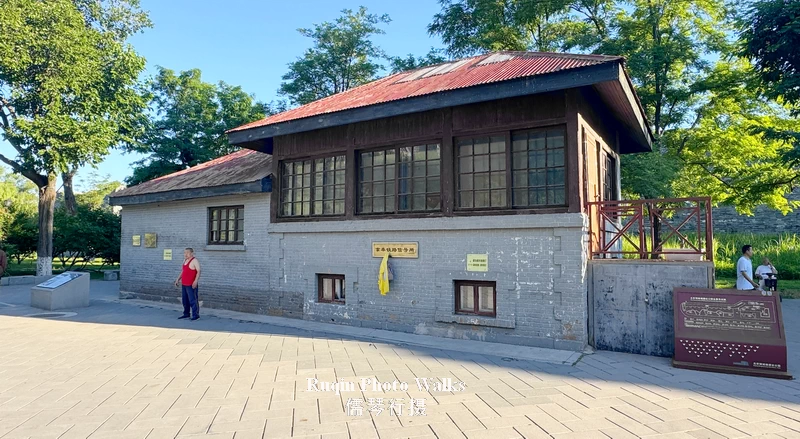
The former Peking Mukden Railway Signal Station
Hidden among the trees near the city wall is the former Peking Mukden Railway Signal Station (Jingfeng Railway Signal Station), a small but fascinating reminder of Beijing’s railway heritage. The building creates an interesting contrast with the much older Ming Dynasty wall nearby.
As I walked westward, Beijing Railway Station remained on the north side of the wall.
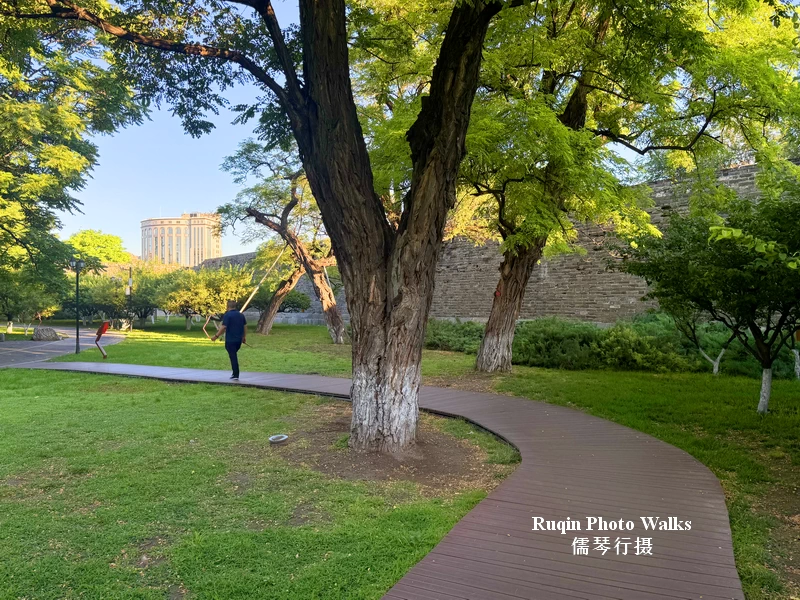
Walking towards the western end of the park – Labor Square at Chongwenmen
It is fascinating how close everything is.
Ancient bricks.
Railway tracks.
Modern office towers.
Busy ring roads.
Centuries of history compressed into a single walk.
Continue another 2.5 kilometers west from here and you will arrive at Tiananmen Square.
Step 6: Finish at Labor Model Square (劳模广场)
Add photo(s).
At the western end of the park, I reached Labor Model Square.
Several large stone monuments stand here engraved with the names of Beijing’s model workers from different decades since the founding of the People’s Republic.
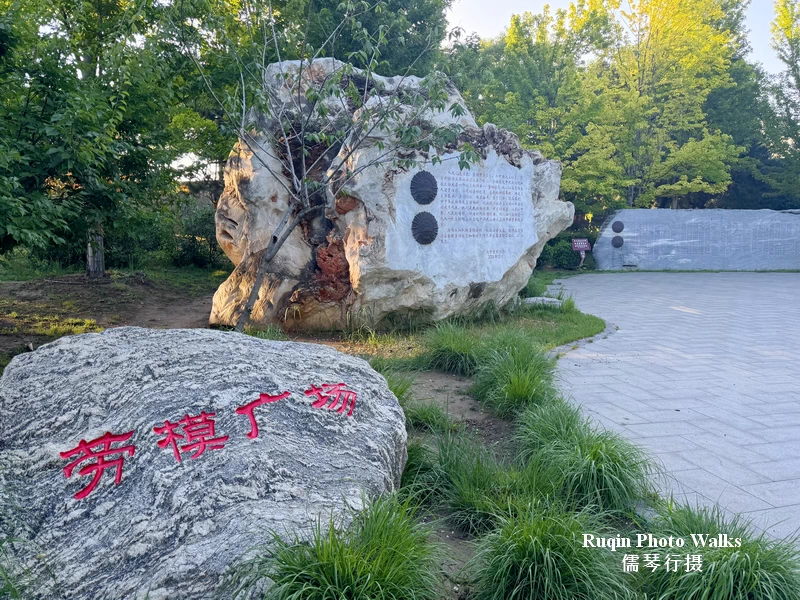
Labor Model Square
Many visitors walk past quickly.
I usually stop for a moment.
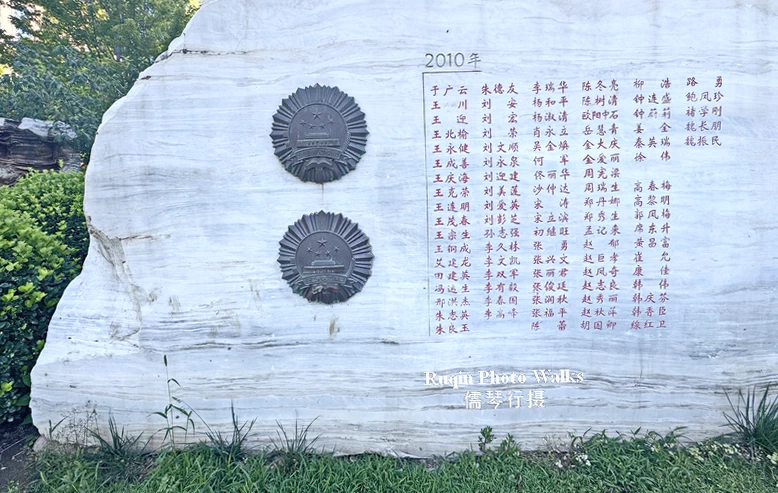
A large stone slab engraved with the names of the 2010 Model Workers.
The city wall commemorates emperors, soldiers, and dynasties.
These monuments commemorate ordinary people who helped build the modern city.
Together they tell a broader story of Beijing.
What the Area Feels Like Right Now
On this June morning, the park felt calm, green, and remarkably unhurried.
Birdsong was more noticeable than traffic.
The scent of trees and fresh grass occasionally drifted across the path.
Most visitors were local residents rather than tourists.
Despite being surrounded by major roads, railway lines, and high-rise buildings, the park still manages to create a sense of separation from the city’s usual intensity.
That contrast is what keeps bringing me back.
Practical Tips
- Arrive before 8:00 am for the quietest atmosphere.
- Early morning provides the best photography light along the eastern section.
- The bridge near the Southeast Corner Tower offers excellent views toward China Zun and Beijing Railway Station.
- Spring (March) is best for plum blossoms.
- Summer mornings offer lush greenery and comfortable temperatures.
- Bring a telephoto lens if you enjoy photographing trains.
- The park itself is free to enter.
- The Southeast Corner Tower requires a separate ticket.
Who This Walk Is Best For
This walk is ideal for:
- Urban photographers
- History enthusiasts
- Morning walkers
- Visitors seeking a quiet Beijing experience
- Train photography enthusiasts
- Travelers who enjoy combining local life with historical sites
Seasonal Notes
Spring (Late February–March)
The famous plum blossom season transforms the entire park and attracts photographers from across Beijing.
Summer (June–August)
Dense greenery provides shade, and the early morning hours remain comfortable for walking.
Autumn (September–November)
Pleasant temperatures and clear skies make this one of the best seasons for photography.
Winter (December–February)
The bare trees reveal more of the wall’s structure and historical character.
The Beijing Ming City Wall Relics Park is one of those places that reminds me why I enjoy walking in Beijing so much.
It is not only about history. It is also about observing how a modern city quietly lives alongside its past. On a calm morning, this short stretch of wall offers one of the most rewarding urban walks in the capital.
Last Walked On: June 8, 2026
About the Author
Ruqin is the founder of Ruqintravel.com and has spent more than four decades working in China’s travel industry. Drawing on hands-on experience in cities like Beijing and Hangzhou, he personally researches and updates each guide to help international travelers navigate China with confidence.
Further Reading
Beijing City Walks: Routes, Maps & Essential Travel Tips
Beijing Hutong Walks: Routes, Maps & Local Tips
Beijing Ming Dynasty Wall Relics Park: Map, Attractions and Tips
Early March Morning Around Shichahai — Beijing Photo Walk by Ruqin