
Written and updated by Ruqin
Last updated: June 11, 2026
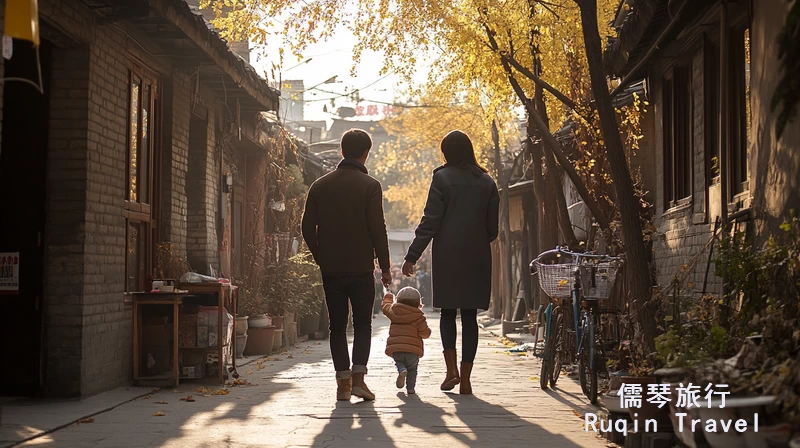
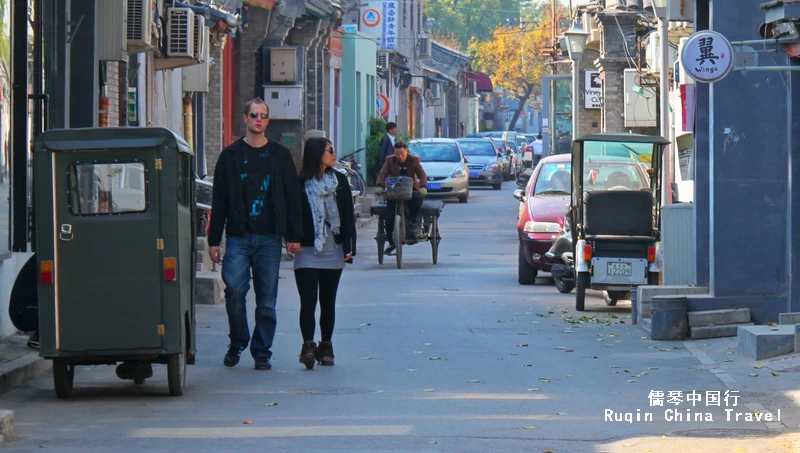
The first time I wandered into a Beijing hutong, I wasn’t following a map—I was just trying to escape the traffic. Within minutes, the noise softened into bicycle bells and quiet courtyards. That’s when I realized a Beijing hutong walk isn’t just another route—it’s where the city finally slows down and lets you in.
Among all Beijing city walks, this is the one that stays with you. You don’t need a guide or a fixed plan. Just walk, pause, and notice the details—the doorways, the tea shops, the everyday rhythm you won’t find anywhere else.
1. What Are Beijing Hutongs?
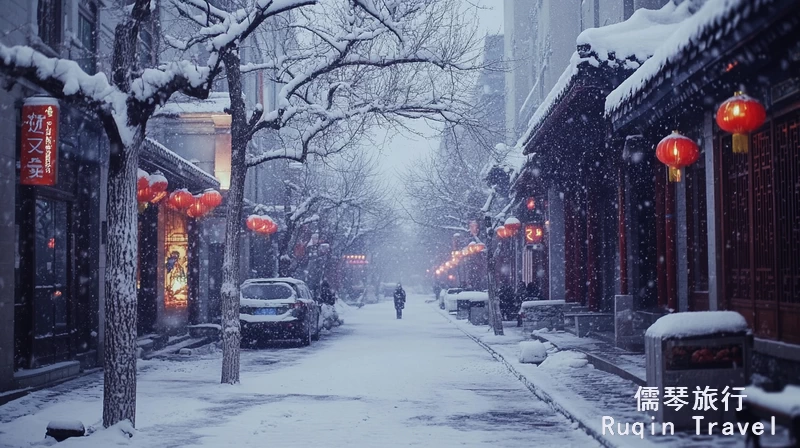
It usually starts with a small turn off a busy road—suddenly the traffic fades, and you’re walking past grey brick walls, wooden doors, and the quiet rhythm of daily life. Hutongs are these narrow alleyways formed by rows of traditional courtyard homes, many dating back to the Yuan Dynasty((1271–1368). While Beijing keeps growing upward and outward, these lanes have stayed grounded in the past.
When people ask me about the best Beijing city walks, I always guide them here first. Not for landmarks, but for atmosphere. You’re not ticking off sights—you’re observing how people actually live.
That’s the beauty of Beijing Hutong walks. They’re unpolished, a little unpredictable, and far more personal than anything you’ll find on a typical itinerary.
2. Why Choose Beijing Hutong Walks?
You’ll notice it quickly—once you step into the hutongs, the pace changes. No tour buses, no loud crowds, just the soft rhythm of daily life. That’s why I always recommend Beijing Hutong walking tours. You can slow down, pause when something catches your eye, and follow your curiosity instead of a fixed schedule.
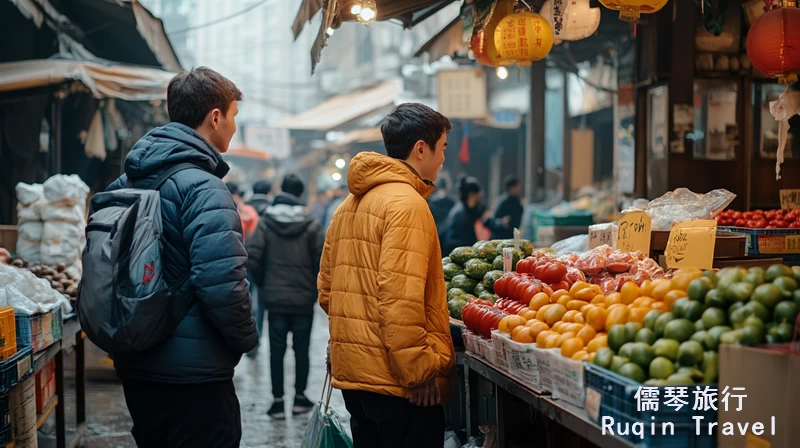
What makes these walks special isn’t just what you see, but how you experience it. You might pass a small family-run shop, smell food drifting from a courtyard kitchen, or stumble upon a quiet temple tucked between homes—moments most tours simply pass by.
And then there’s the freedom. Beijing Hutong walking tours let you shape your own route. Whether you’re drawn to street food, old architecture, or just wandering without a plan, the experience becomes entirely your ow
3. Beijing Hutong Walks: Routes and Maps
Hutong walks rarely go in straight lines—and that’s part of the charm. But after a few turns, it’s surprisingly easy to lose your sense of direction. I’ve had moments where every alley looked the same, and I wasn’t quite sure how I got there. That’s when having a simple map on your phone really helps.
For Beijing Hutong walking tours, I usually suggest starting with a loose route rather than a strict plan. Pick a few key hutongs, connect them, and leave space to wander in between.
Some paths are more atmospheric, others more lively—but each one gives you a different slice of hutong life. Here are a few routes worth considering:
1) Caochang Hutongs: A Quiet Escape Into Old Beijing
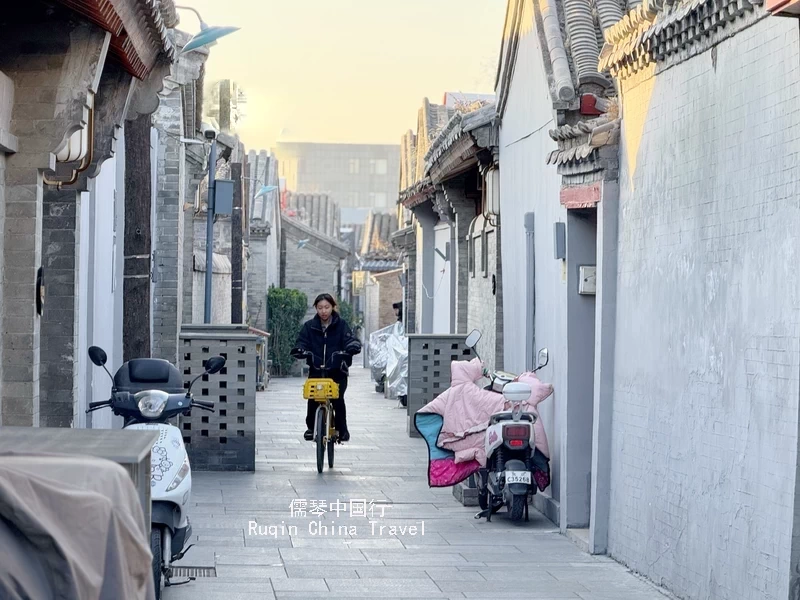
Tucked away near the vibrant Qianmen district, the Caochang Hutongs offer a serene and authentic glimpse into Beijing’s past, far from the crowds of modern-day attractions. These winding alleys are not just historical relics; they are still very much alive, home to local residents who continue to live out the daily rhythms of traditional Beijing life.
Walking through these lanes is like stepping back in time, where the hustle of contemporary Beijing fades and the charm of old-world China takes over.
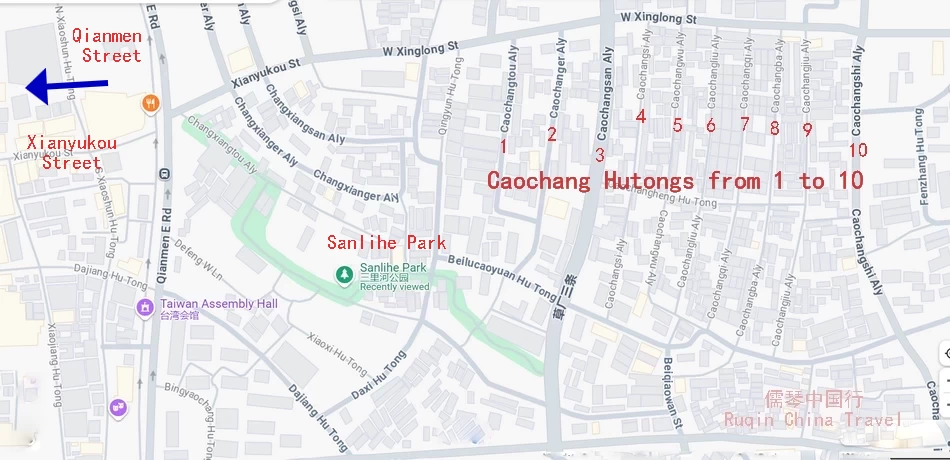
The Caochang Hutongs are a rare sight in Beijing, laid out neatly from west to east with a total of ten alleys. They are the only north-south aligned hutongs in the city, adding to their unique character.
This area is one of the most well-preserved hutong districts in Beijing, making it an ideal place for those who want to experience an untouched corner of Beijing’s history. Here, the narrow alleys and traditional courtyard houses remain almost unchanged, offering an intimate view of life as it once was.
Getting to the Caochang Hutongs is both easy and convenient, whether you’re taking public transport or strolling through the area on foot.
- By Subway: Take Line 2 or Line 5, and get off at Chongwenmen Station. From either the B1 or B2 exit, it’s only a short walk to the hutongs.
- By Bus: Several bus routes pass close by, including Routes 58, 101, 103, 109, 111, 128, Sightseeing Line 1, and Night Bus 13, making it simple to access from various parts of the city.
Once you arrive, you can explore the hutongs in a leisurely order, starting from First Hutong, then moving through the Second, Third, and so on, each one offering a unique slice of local life.
Alternatively, if you’re coming from Qianmen Station (via Line 8, G Southeast Exit), you can take a 1.1 km walk to Sanlihe Park. From here, begin your journey by visiting Caochang Hutong, and then follow the path further towards the First Hutong of Caochang, continuing through to the Tenth Hutong.
2) Walk from Liulichang to Qianmen Street: A Journey Through Old Beijing
Begin your walk at Liulichang Culture Street, a historic hub for Chinese art and antiques. For centuries, scholars, artists, and collectors came here in search of rare books, paintings, and calligraphy supplies.
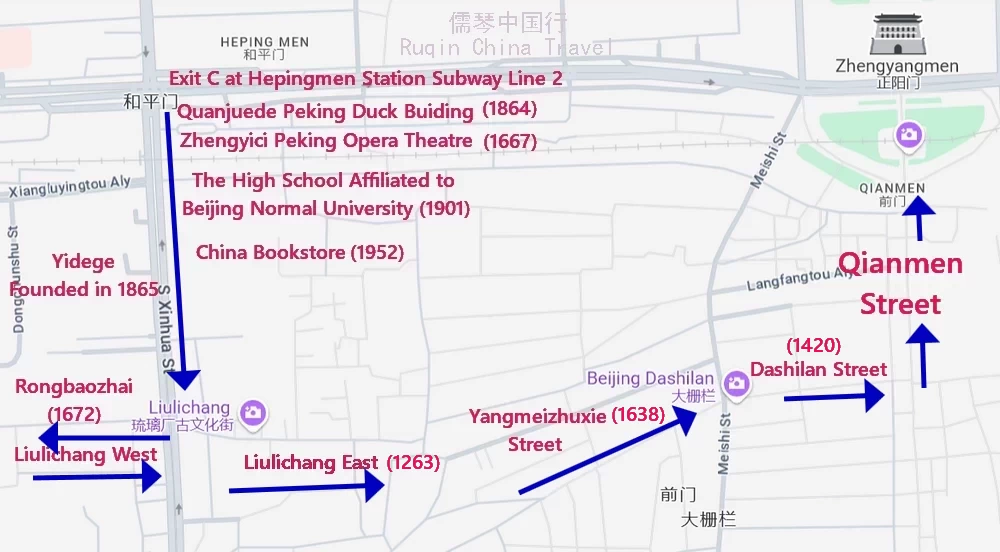
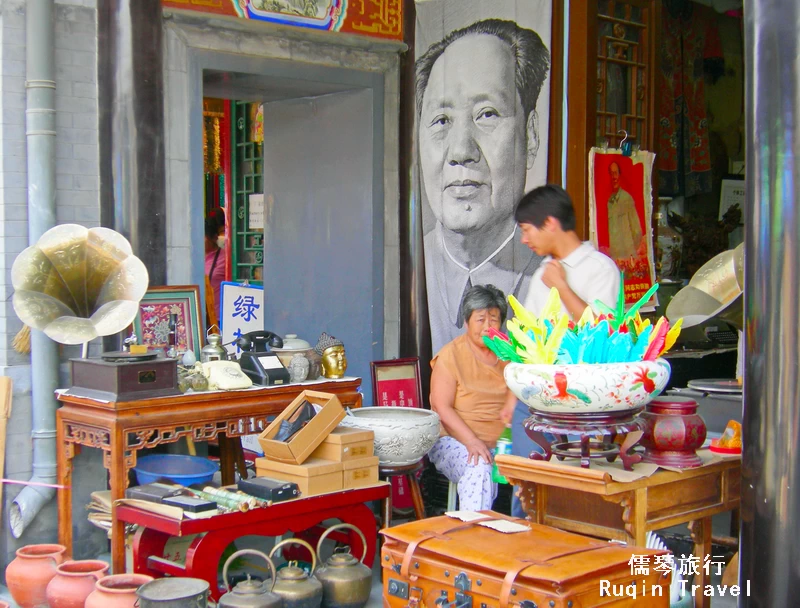
Even today, the street retains its old-world charm. Traditional shops line the road, offering everything from ink brushes to antique furniture. Take your time exploring.
Admire the delicate craftsmanship of handmade scrolls, or browse through shelves filled with ancient texts. The atmosphere here is steeped in history, making it a perfect place to start your journey.
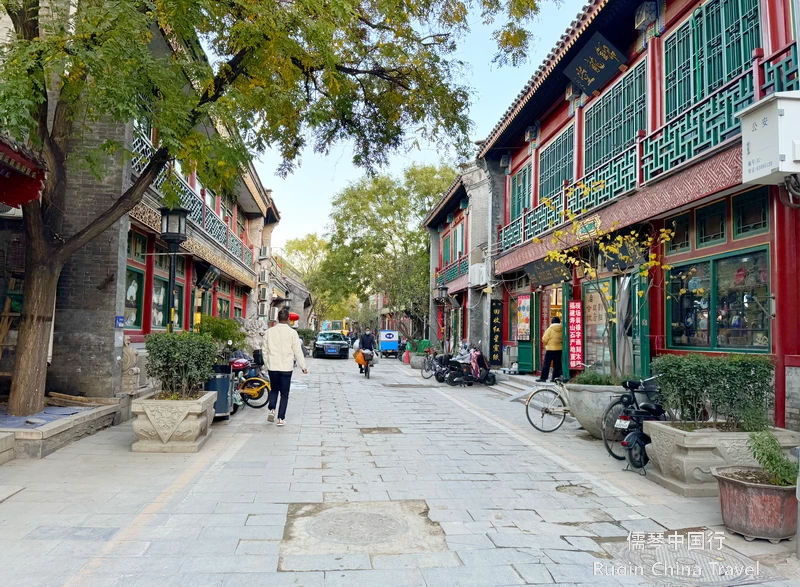
Next, head east to Yangmeizhu Xiejie Street, a quiet and picturesque hutong. This charming alleyway moves at a slower pace, offering a peaceful escape from the city’s busier streets. As you wander through, you’ll notice a blend of old and new.
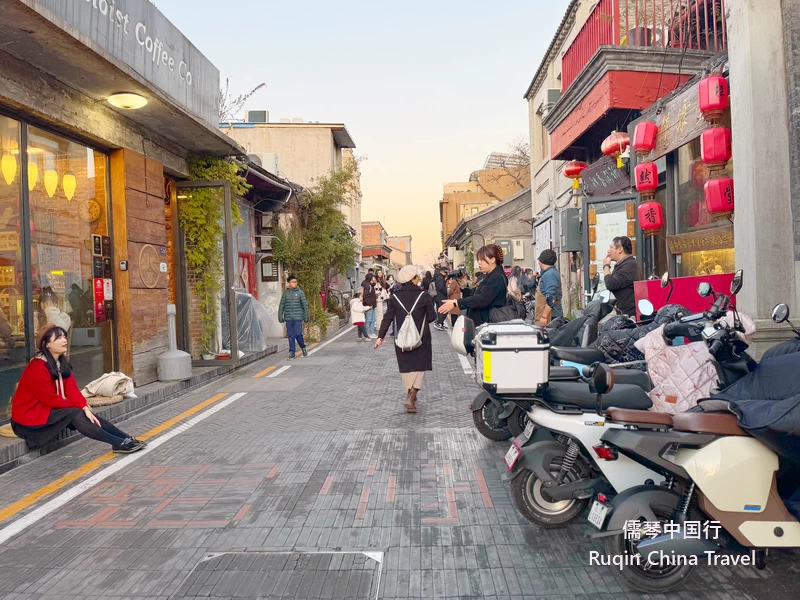
Traditional courtyard homes sit alongside modern art galleries and independent boutiques. Stop by a cozy café for a cup of tea or coffee, and soak in the neighborhood’s artistic vibe. Unlike Beijing’s more famous hutongs, Yangmeizhu Xiejie feels intimate and undiscovered, making it a delightful detour.
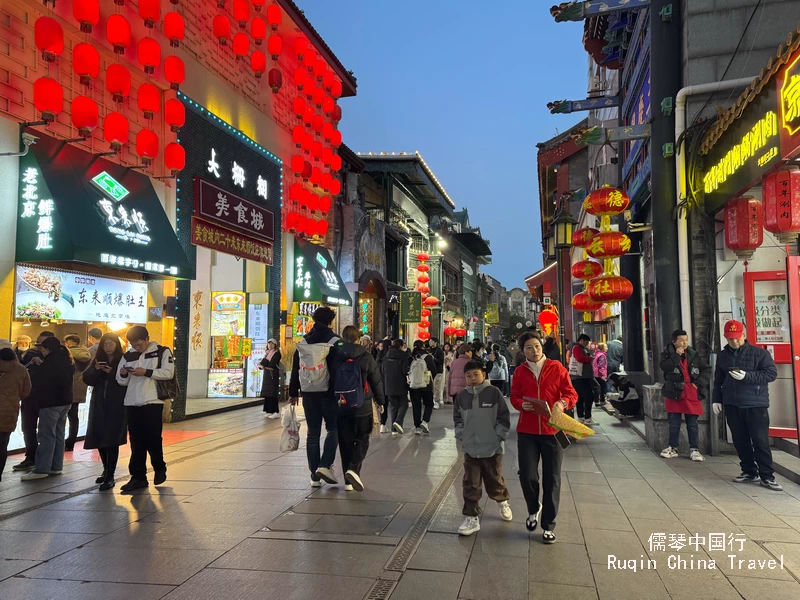
Continue your walk to Dashilan Street, one of Beijing’s oldest commercial districts. With over 500 years of history, this lively area has transformed from a quiet neighborhood into a bustling cultural and shopping hub. Historic storefronts showcase traditional crafts, silk shops, and time-honored snack stalls.
The energy here is infectious. As you explore, you’ll pass by theaters, herbal medicine stores, and tea houses that have stood for generations. This is a must-visit stop on any Beijing Hutong walking tour, offering a rich blend of history and modern city life.
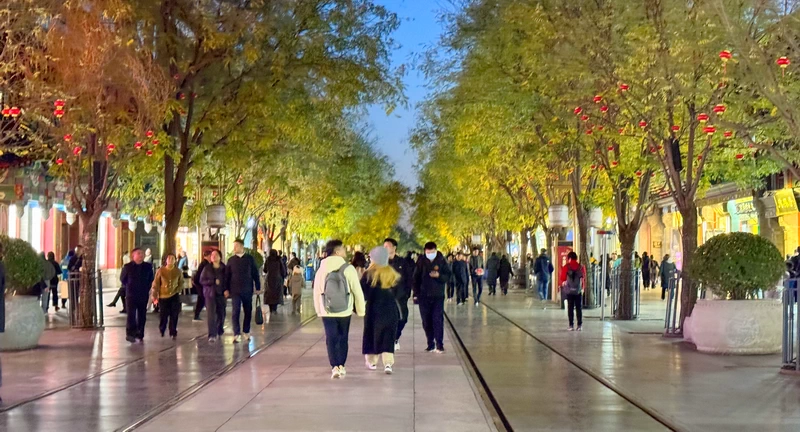
Finally, arrive at Qianmen Street, a landmark of Beijing’s commercial heritage. Stretching 840 meters, this famous street is a stunning showcase of late Qing Dynasty architecture. Grey brick buildings, red wooden pillars, and intricate rooftops create a timeless scene. Walking along Qianmen feels like stepping back in time.
The street buzzes with life—traditional snack vendors, boutique shops, and historic brands all tell the story of old Beijing. As you stroll past these sights, take in the rich blend of past and present that makes this area so unique.
3) Walk from Yandai Xiejie to Nanluoguxiang Hutong: A Journey Through Time
Begin your walk at Yandai Xiejie Street, a historic street that has transformed over the centuries. Once a bustling commercial center, it has evolved into a vibrant cultural and tourist destination.
Here, well-preserved hutongs, traditional architecture stand as a testament to old Beijing, surviving the tides of modernization.
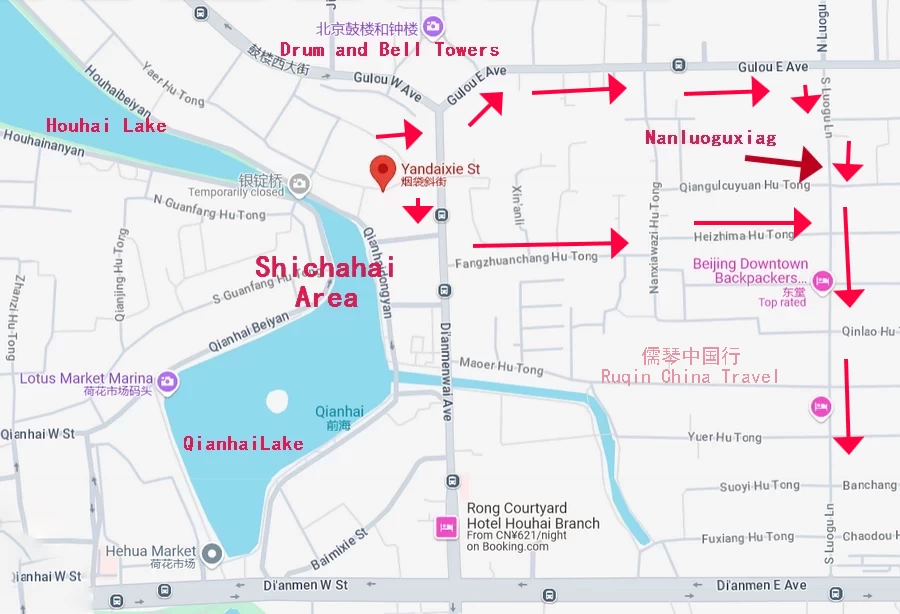
Today, Yandai Xiejie attracts visitors eager to explore its ancient streets, delve into the city’s commercial past, and witness the harmonious blend of history and modernity. As you stroll, the lively atmosphere and rich heritage are impossible to miss.
From Yandai Xiejie, make your way to Nanluoguxiang Hutong, just a short walk away. This charming lane stretches from the bustling Gulou East Avenue in the north to Ping’an Avenue in the south.
At only 787 meters long and 8 meters wide, Nanluoguxiang may seem small, but it holds an immense cultural significance. Walking down this hutong feels like stepping through a time portal. The narrow alley is a living museum of Beijing’s history, where centuries-old architecture and local culture meet in every corner.
4) Walk from Huguosi Street to Shichahai: A Culinary and Cultural Journey
Start your walk at Huguosi Snack Street, a vibrant hub for food lovers. This lively alley is packed with small snack shops and local eateries offering a taste of traditional Beijing. As you stroll, the aroma of freshly prepared dishes fills the air.
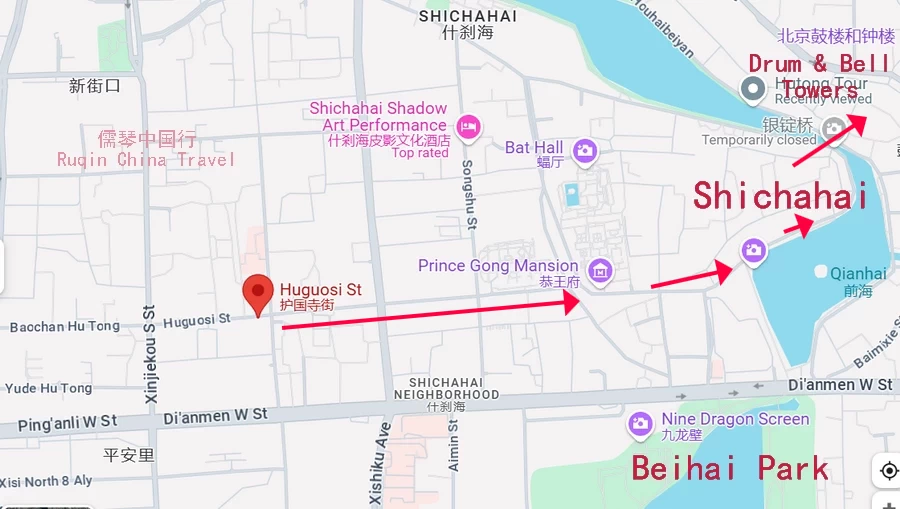
There are some of the city’s classic treats, like douzhi’er (fermented mung bean drink), which is a beloved local beverage, or indulge in jiaoqian (crispy fried pastries). These flavors are a true reflection of the everyday life in Beijing. T
he energy of the street, with its bustling vendors and crowds, immerses you in the heart of local culture. Take your time and savor each bite as you explore this food lover’s paradise.
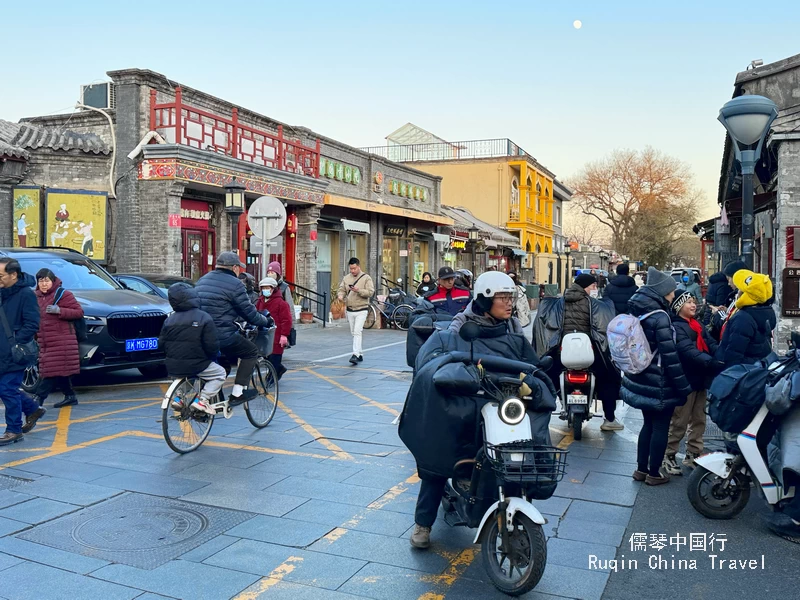
Afterward, head towards Shichahai, a peaceful area just a short walk away. Shichahai is known for its tranquil lakes and historic courtyard homes, offering a beautiful contrast to the busy streets you’ve just left behind.
Take a leisurely stroll along the lakeside pathways, where the calm water reflects the traditional architecture of the surrounding buildings. The serene atmosphere is perfect for unwinding and appreciating the natural beauty of Beijing.
For a different experience, you can rent a bike and explore the nearby hutongs. These narrow alleys wind through the area, revealing hidden courtyards, quaint shops, and local life that’s often missed by tourists. As you cycle through, you’ll feel like you’ve stepped back in time, with the lanes offering a glimpse into Beijing’s rich history.
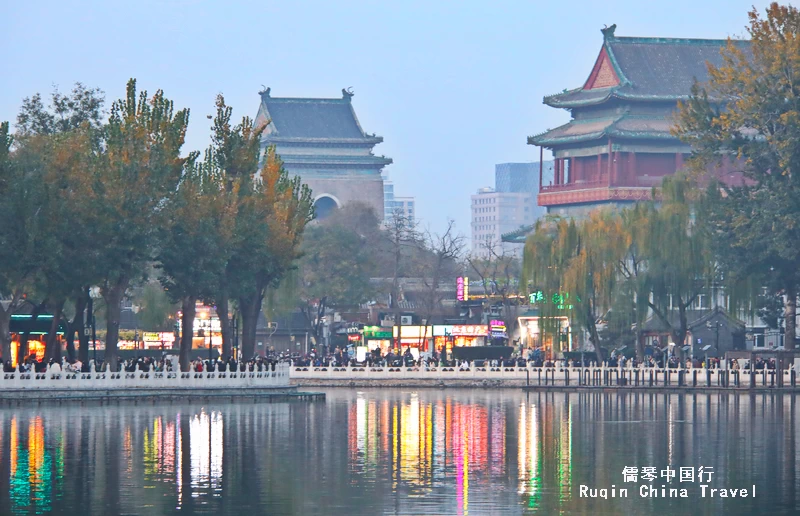
Shichahai offers the perfect blend of nature and tradition. Whether you’re walking along the lakeside or cycling through the maze-like hutongs, this scenic spot provides a relaxing way to end your day.
It’s a chance to enjoy both the peaceful beauty of the lakes and the charming old-world feel of the surrounding streets. This journey offers a mix of culinary delights and cultural discovery, leaving you with lasting memories of Beijing’s unique charm.
By the end of your walk, it’s not the landmarks you remember—it’s the feeling. A quiet corner, a passing smile, the sound of life unfolding behind grey walls. That’s what makes the Best Beijing Hutong Walking Tour so different. It stays with you in small, unexpected ways.
So take your time here. Walk without rushing, follow what draws your attention, and let the hutongs reveal themselves slowly. That’s when Beijing feels most real.
About the Author
Ruqin is the founder of Ruqintravel.com and has spent more than four decades working in China’s travel industry. Drawing on hands-on experience in cities like Beijing and Hangzhou, he personally researches and updates each guide to help international travelers navigate China with confidence.
Further Reading
Beijing City Walks: Routes, Maps & Essential Travel Tips
Qianmen Street Beijing: Map, Food, Shopping & Local Tips
Caochang Hutongs in Beijing: Maps, Routes, Top Sights & Tips
Sanlihe Park Beijing: Map, Highlights and Travel Tips
Liulichang Culture Street Beijing: Maps, Walking Routes and Tips
Yangmeizhu Xiejie Street Beijing: Map, Walking Route & Travel Tips
Beijing Dashilan Street: Map, Food, Shopping, Hotels & Travel Tips
Yandai Xiejie Street (Yandaixie): Map, Shops, Food, Sights & Tips
Nanluoguxiang: Maps, Shopping, Bars, Cafes, Food, Hutong & Tips
Huguosi Street, Beijing (Huguosi Snack Street): Map & Travel Tips