Words and Photos by Ruqin
Walked on September 4, 2026
Updated September 22, 2026
Quick Walk Overview
Start: Yongdingmen Gate (永定门)
End: Zhengyangmen Gate (正阳门)
| Walk details | |
|---|---|
| Distance | Approx. 3 km |
| Walking Time | Approx. 1 hour without stops |
| Recommended Time | 2–3 hours with photo stops |
| Best Time | Late afternoon into early evening |
| Surface | Mainly paved stone paths and pedestrian streets |
| Crowd Level | Generally moderate, busier around Qianmen |
| Walk Direction | South → North |
| Difficulty | Easy, with one pedestrian overpass |
| Subway Access | Yongdingmen Wai, Lines 8 and 14; allow for an additional walk to the gate |
This walk follows the southern section of Beijing’s Central Axis, from Yongdingmen Gate to Zhengyangmen Gate, just south of Tiananmen Square.
Along these approximately three kilometres, I pass through four different parts of southern Beijing: the green space of Yongdingmen Park, the traditional entertainment district of Tianqiao, the hutong neighbourhoods around Zhushikou, and the busy commercial street of Qianmen.
The route is almost entirely straight, but the atmosphere changes considerably along the way. I recommend allowing two to three hours, especially if you enjoy photography and want to explore a few side streets.
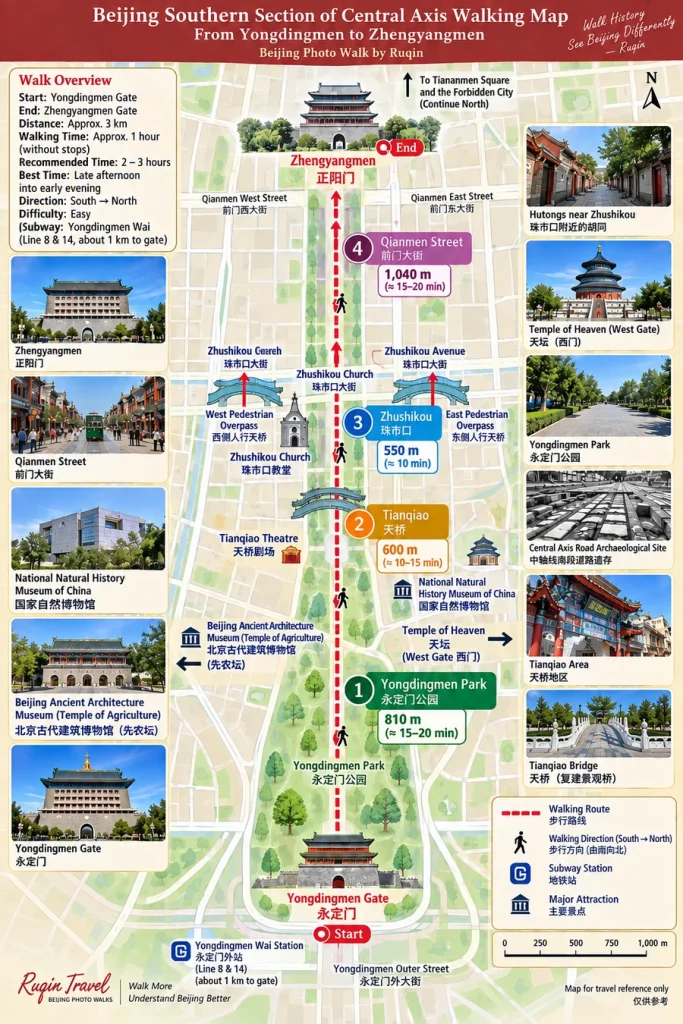
Beijing southern Central Axis Walking Route Map from Yongdingmen to Zhengyangmen
Why I Walked This Route
I have walked from Yongdingmen to Zhengyangmen many times over the years, even before Yongdingmen Gate was reconstructed.
Back then, much of this southern section was occupied by ordinary roads, streets, and older residential neighbourhoods. It was not the continuous, pedestrian-friendly route we can experience today.
Over the years, Beijing has carried out extensive restoration and conservation work along the Central Axis. These changes have also involved local communities, whose lives and neighbourhoods have been affected by the projects.
In July 2024, the Beijing Central Axis was inscribed on the UNESCO World Heritage List, recognising its importance in the history of Chinese capital planning and urban development.
When I walk here now, I often think about the emperors who once travelled south from the imperial city to perform ceremonies at the Temple of Heaven and the Temple of Agriculture.
But I am equally interested in what the route tells us about Beijing today.
On my September 4 walk, I noticed that the southern Central Axis could be divided naturally into four sections, each with a different character.
My four-part walking route
- Yongdingmen Gate → Tianqiao Approx. 810 m · Green parkland and archaeological remains
- Tianqiao → Zhushikou Approx. 600 m · Traditional entertainment and commercial culture
- Zhushikou → Zhushikou Church Approx. 550 m · Hutongs and traditional courtyard houses
- Zhushikou Church → Zhengyangmen Gate Approx. 1,040 m · Qianmen Street and historic shopping culture
The distances are approximate and include the pedestrian crossing detour near Zhushikou.
This is why I enjoy walking the southern Central Axis. It is not simply a historic route connecting two city gates. It also gives me a chance to experience several different sides of old Beijing within a relatively short distance.
Step-by-Step Walking Route
Step 1: Yongdingmen Gate → Tianqiao
Distance: Approx. 810 metres
Walking Time: Approx. 15–20 minutes without stops; allow around 30–45 minutes for photography and short visits.
1. Start at Yongdingmen Gate
I arrived at Yongdingmen Gate by taxi at around 4:00 pm.
The nearest convenient subway option is Yongdingmen Wai Station, served by Lines 8 and 14. However, the walk from the station to the gate is relatively long, roughly one kilometre or more depending on the exit and route.
Since I wanted to begin directly at the southern end of the Central Axis, I decided to take a taxi.
When I arrived, I was a little disappointed to find Yongdingmen Gate Tower covered for restoration work.
I had seen the tower on previous visits, so I could still picture its appearance. For someone visiting Beijing for the first time, however, the scaffolding and coverings would make the experience quite different.
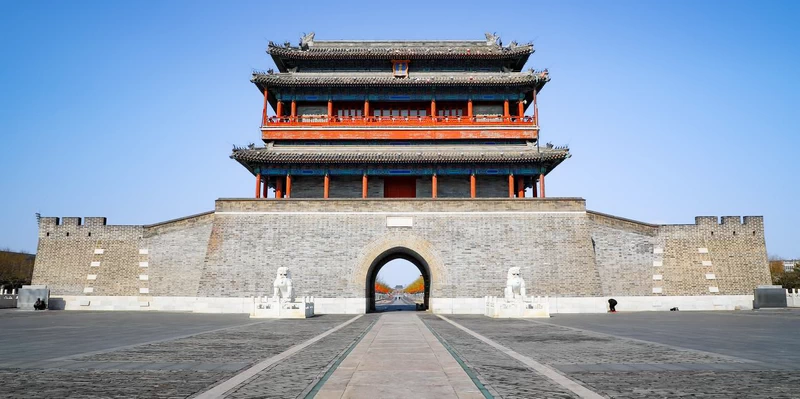
The south exterior of Yongdongmen Gate Tower
Yongdingmen was originally built in 1553 during the Ming Dynasty. It served as the southern entrance to Beijing’s outer city and marked the southern end of the Central Axis.
The original gate tower was demolished in 1957. In 2004, it was reconstructed on its original site using historical photographs, architectural drawings, and other documentation.
The reconstructed tower follows the traditional Chinese city-gate style, with a substantial brick platform supporting a timber structure, red architectural details, and a sweeping tiled roof.
Although it is a reconstruction, the gate remains an important landmark for understanding the historical layout of Beijing.
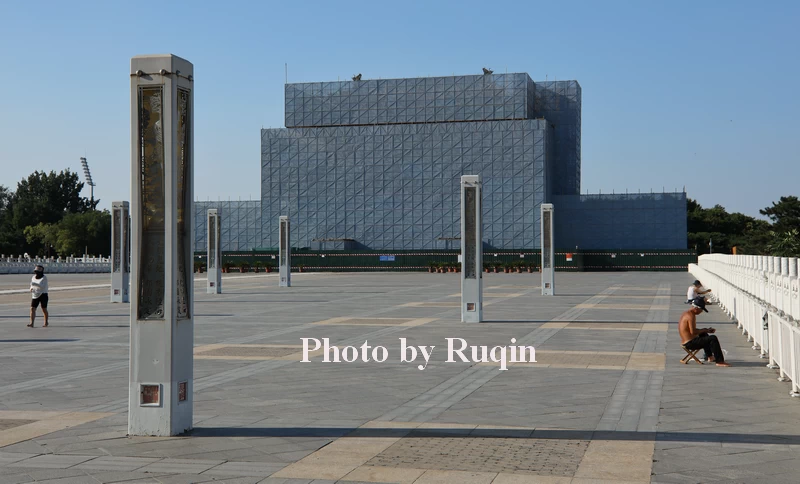
The tower was covered for renovation during my visit on September 4, 2026
Restoration note: The tower was covered for renovation during my visit on September 4, 2026. Beijing’s 2026 government work report confirms renovation work, but I have not verified a definitive reopening date. It is said that it will be open in April, 2027. Check its status before visiting.
Latest information about the renovation: As of September 20, 2026, all the protective netting that had covered the gate tower for six months has been removed. Its complete exterior is now visible again. However, construction barriers remain around the site, so visitors can photograph the full tower only from outside the fenced area.
2. Walk to the northern side of Yongdingmen Gate
From the southern side of the gate, I walked around to its northern side.
Here, the Central Axis continues straight ahead through Yongdingmen Park.
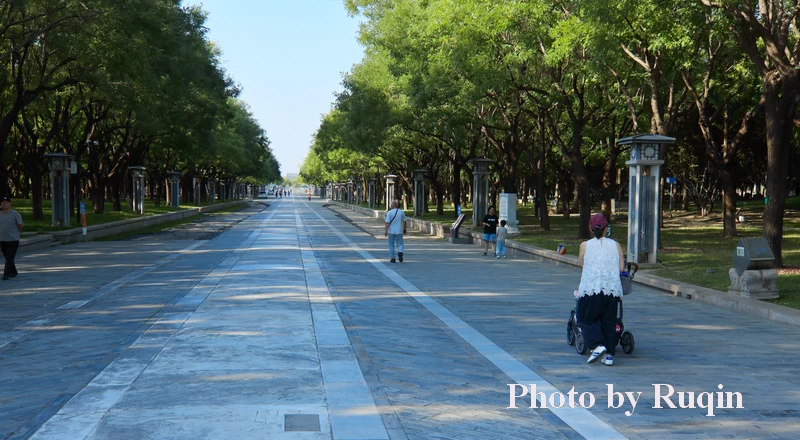
The Central Axis continues straight ahead through Yongdingmen Park
The broad stone-paved path makes the direction easy to follow. I simply kept walking north.
The central ceremonial road once formed part of the route used by emperors travelling to important state rituals.
Today, the historic alignment has been incorporated into a public park, with landscaped green areas on both sides.
3. Buy water near the park entrance
Soon after entering the park, I noticed a self-service drinks vending cabinet.
It was a hot afternoon, so I stopped to buy a bottle of mineral water.
I scanned the code using WeChat, took a bottle from the cabinet, and closed the door. The payment was deducted automatically.
It was a small but useful convenience. On a warm day, I prefer not to carry several heavy bottles of water if I can buy drinks along the way.
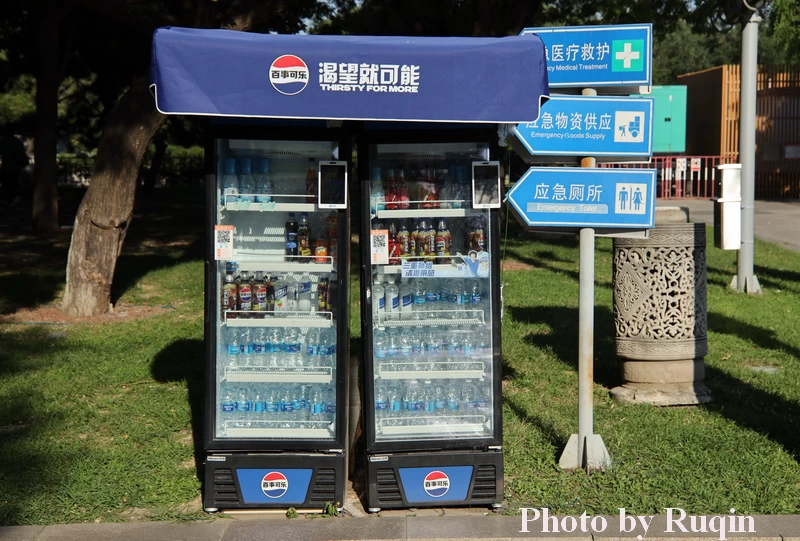
The self-service drinks cabinet in Yongdingmen Park.
4. Look for the original Central Axis road remains
After walking a short distance north, I noticed a stone marker on the right-hand side of the path.
It identifies the Southern Section Road Archaeological Site of the Beijing Central Axis.
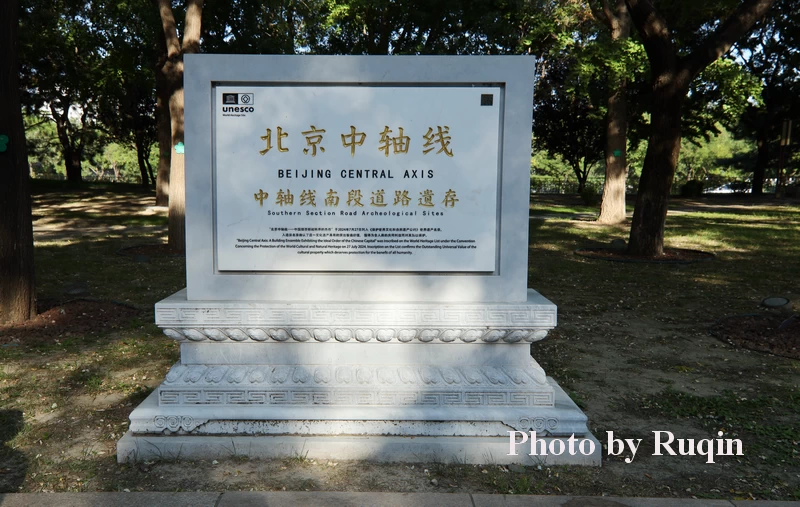
The Southern Section Road Archaeological Site of the Beijing Central Axis
This is an important stop.
Although much of the stone path we walk on today has been restored or newly laid, archaeological investigations have uncovered sections of the original road.
The stone road remains north of Yongdingmen include Qing-dynasty paving, providing physical evidence of the historical Central Axis.
I stopped here for a closer look.
Walking along a restored historical route is one experience. Seeing actual stone remains from the earlier road gives the walk a much more direct connection with the past.
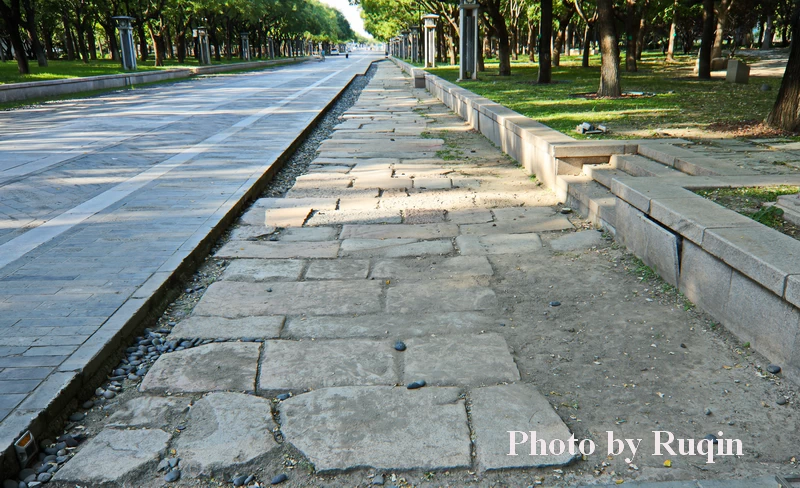
The archaeological marker and the excavated original stone road
Photo placement: Add my photograph of the archaeological marker and the excavated original stone road.
5. Continue through Yongdingmen Park
I continued north along the broad central path.
This section feels more like a neighbourhood park than a formal historical attraction. It is a wheelchair-friendly a park.
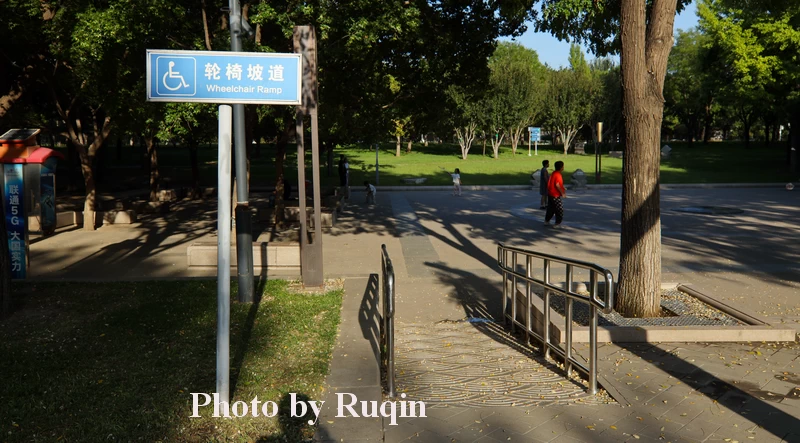
This section feels more like a neighbourhood park than a formal historical attraction
Trees provide shade along both sides of the walkway. There are benches, open spaces, and areas where local residents can exercise or relax.
During my walk, I saw elderly residents sitting beneath the trees and children enjoying the park.
I liked this part of the route because it was not dominated by tourists.
The Central Axis is a World Heritage Site, but here it is also part of everyday Beijing life.
6. Find the public restroom on the left
After walking a little over 100 metres into the park, I noticed a public restroom among the trees on my left.
I went inside and found it clean and well maintained.
This is a useful place to stop before continuing north, especially if you plan to spend time exploring Tianqiao or Qianmen later.
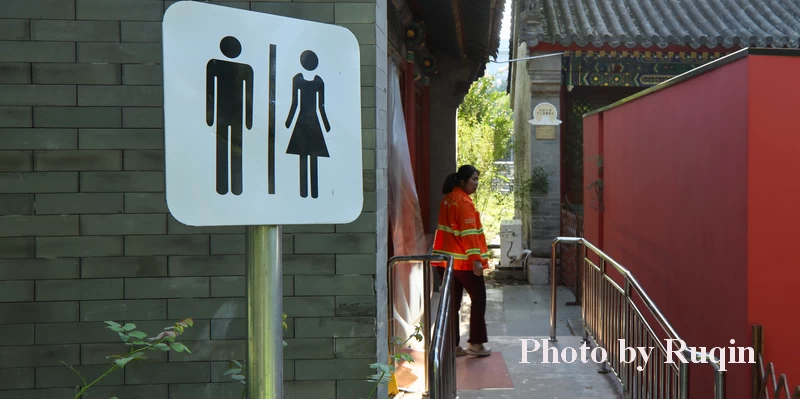
The restroom exterior in Yongdingmen Park
7. Take a look at Yongdingmen Teahouse
Near the restroom, I noticed Yongdingmen Teahouse.
I stepped inside to have a look.
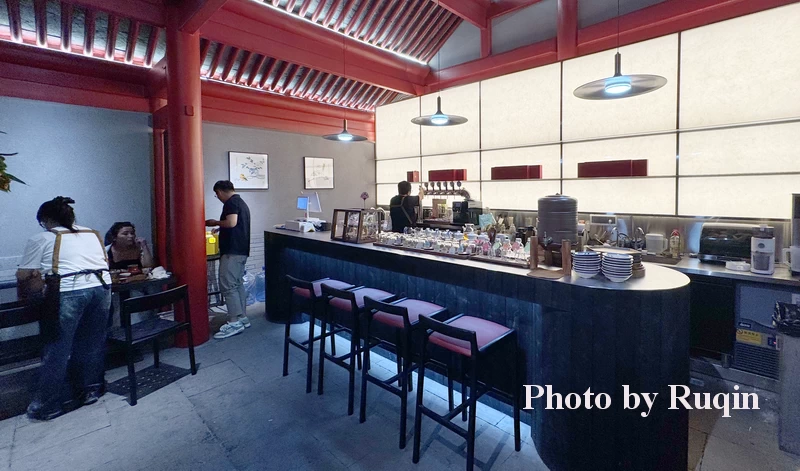
The interior of Yongdingmen Teahouse
The interior was elegant and carefully arranged, with a quieter, more refined atmosphere than the public park outside.
It felt like a place where visitors could sit down and enjoy tea without rushing.
I did not stop for a full tea session, but I thought it could be a pleasant break for someone with more time.
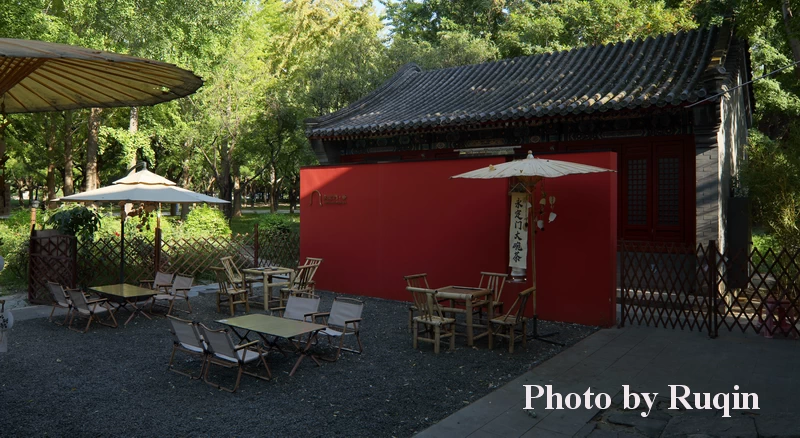
The courtard in front of Yongdingmen Teahouse
8. Look at the historical photographs displayed among the trees
Outside the teahouse, I noticed large historical photographs hanging among the trees.
They showed scenes of old Beijing, including city walls and traditional buildings.
Many of the images dated from the late Qing Dynasty and Republican period, when foreign photographers recorded parts of the city that have since changed or disappeared.
I spent a little time looking at them.
The photographs made it easier to imagine how different this part of Beijing once looked.
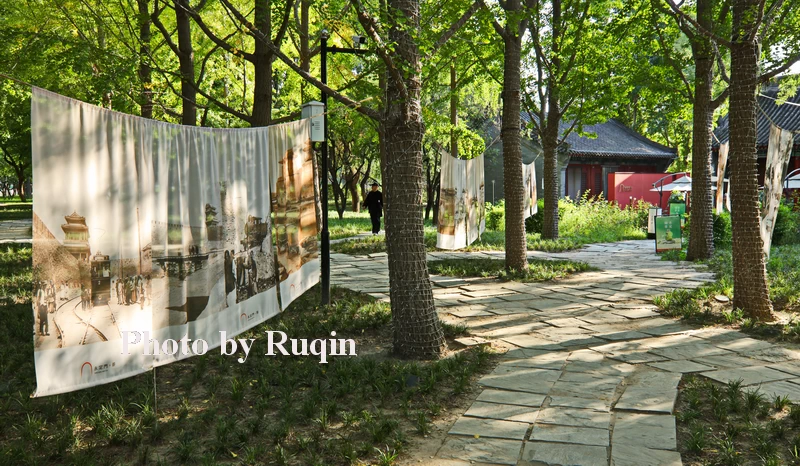
The large historical images hanging among the trees in front of the Teahouse
9. Continue north and watch everyday park life
I returned to the central path and continued walking north.
On one side, several people were playing badminton on a green open area. Nearby, a person in a wheelchair was watching.
It was a quiet, ordinary scene, but I enjoyed seeing it.
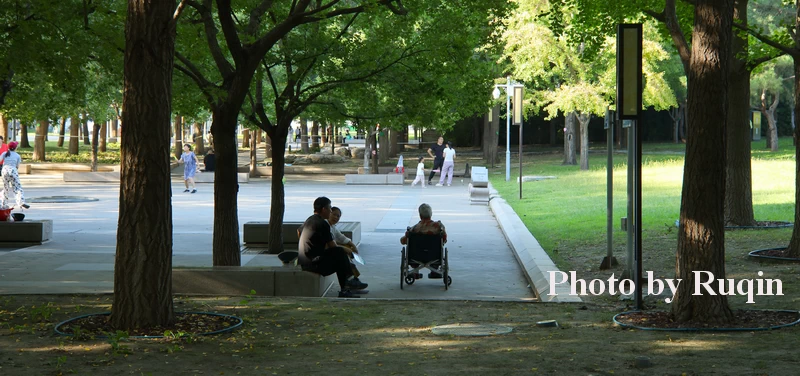
People playing badminton in Yongdingmen Park.
A little farther along, I came across several groups of young people dancing and recording short videos on the broad Central Axis path.
They were concentrating on their movements while friends filmed them.
I found the contrast interesting.
This was once an important imperial ceremonial route. Today, young people use the same space for dancing, photography, and social media.
The historical setting has remained, but its everyday use has changed.
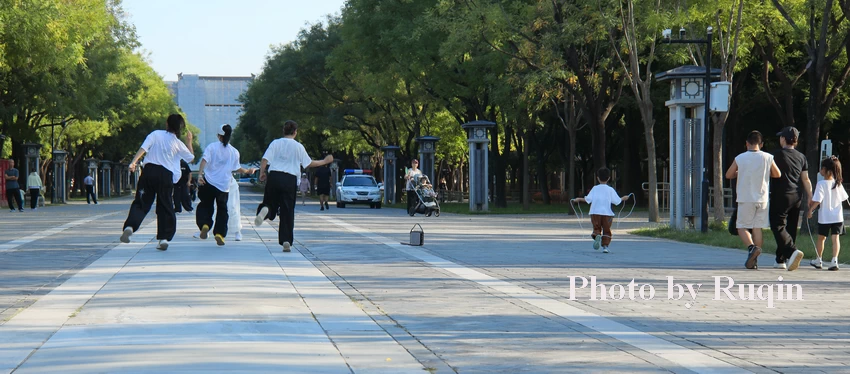
The young women dancing and recording videos along the Central Axis.
10. Pass the Beijing Ancient Architecture Museum
As I continued north, I approached the area near the Beijing Ancient Architecture Museum.
The museum is located at Xiannongtan, the Temple of Agriculture, to the west of the Central Axis.
It is worth considering as a separate visit if you are interested in traditional Chinese architecture.
The museum occupies part of a former imperial ceremonial complex and displays architectural models, historical materials, and objects related to traditional Chinese building techniques.
I would not recommend adding a full museum visit to this walk unless you have several extra hours.
Instead, I suggest noting its location and returning another day if the subject interests you.
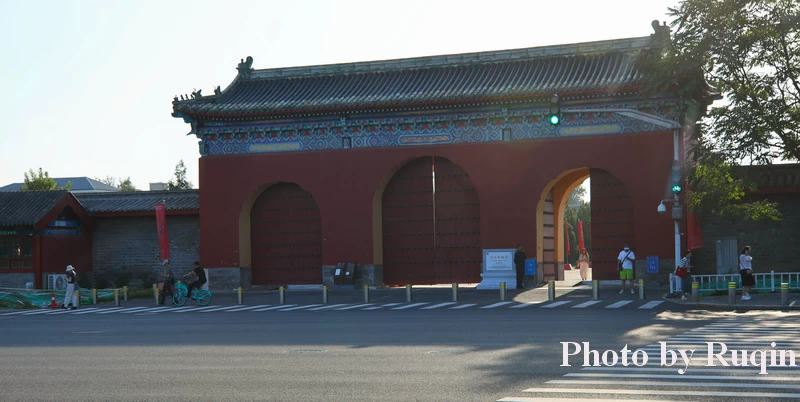
The East Entrance to Xiannongtan, the Temple of Agriculture, to the west of the Central Axis.
11. Walk through the northern part of Yongdingmen Park
I continued north into the second part of the park.
The surroundings were similar to the southern section: a broad central path, green spaces, and trees along both sides.
I kept following the straight north–south alignment.
At the northern end of the park, the landscape began to change.
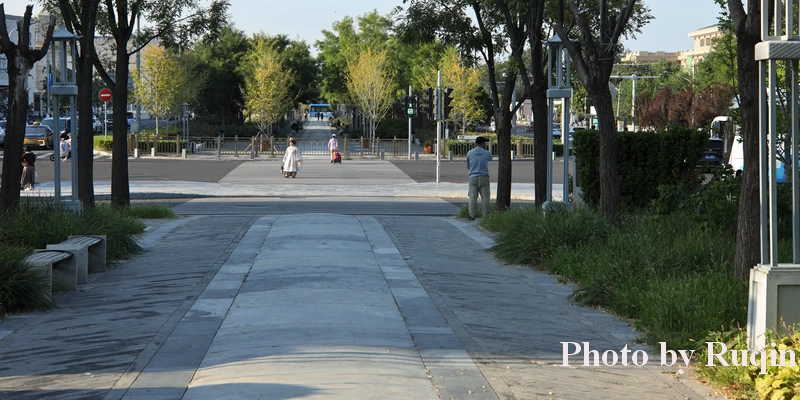
The northern end of the park, the landscape began to change
The green space gave way to a narrower pedestrian route, with busier roads and commercial buildings nearby.
I had reached Tianqiao, the second part of my walk.
Step 2: Tianqiao → Zhushikou
Distance: Approx. 600 metres
Walking Time: Approx. 10–15 minutes without stops; allow around 30 minutes for photographs.
1. Leave Yongdingmen Park and enter Tianqiao
At the northern end of Yongdingmen Park, I continued straight into the Tianqiao area.
The difference was immediately noticeable.
The central pedestrian path became narrower, with traffic running along the roads on both sides.
Unlike the open park behind me, this section feels more closely connected to the surrounding city.
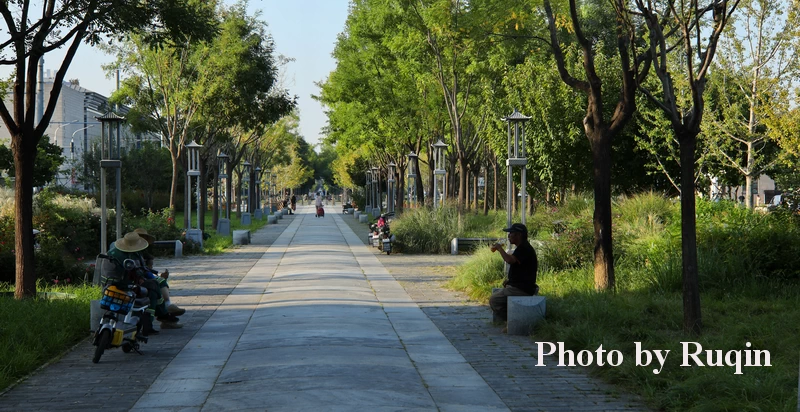
The narrower Central Axis walkway through Tianqiao.
2. Look toward the Temple of Heaven on the right
As I entered the Tianqiao area, I could see the direction of the Temple of Heaven to the east.
The Temple of Heaven’s West Gate is accessible from this area, making it possible to combine the two places in a longer itinerary.
However, the Temple of Heaven deserves several hours of its own.
If you are following my photo walk, I suggest continuing north and visiting the temple separately unless you have planned a full day.
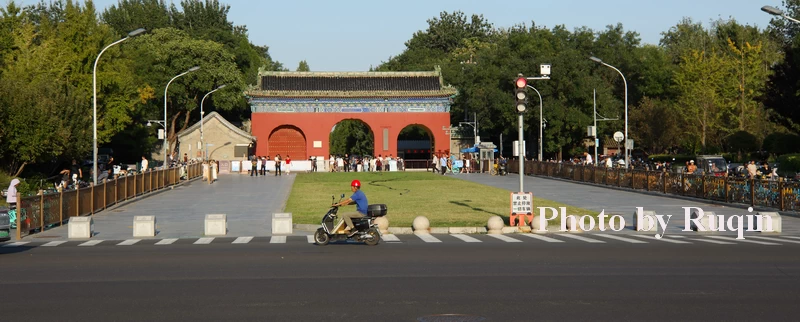
The Temple of Heaven’s West Gate.
3. Continue along the central pedestrian path
I continued north along the narrow Central Axis walkway.
The traffic on both sides made this section feel busier than Yongdingmen Park.
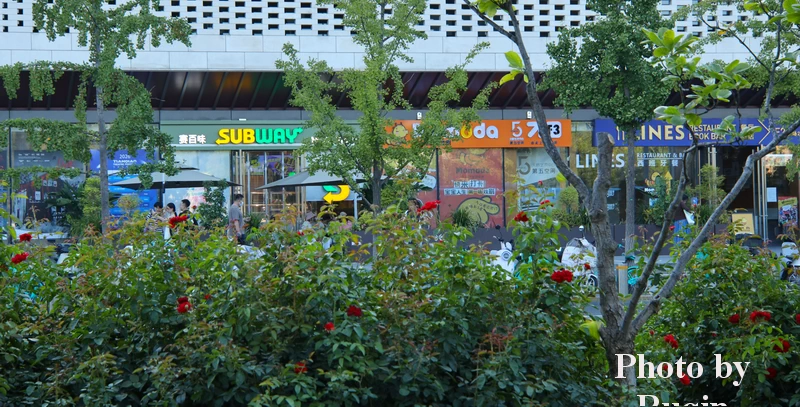
The traffic on both sides made this section feel busier than Yongdingmen Park
Historically, Tianqiao was associated with the route used by emperors travelling south for ceremonies at the Temple of Heaven and the Temple of Agriculture.
The name Tianqiao literally means “Heavenly Bridge.”
It refers to a bridge that once crossed a watercourse along the imperial ceremonial route.
The original bridge has long disappeared, but its name remains closely associated with this part of southern Beijing.
4. Look at the surrounding Tianqiao neighbourhood
As I walked, I paid attention to the buildings and streets on both sides.
Tianqiao has a long association with Beijing’s popular entertainment culture.
In the past, this district was known for street performers, storytellers, acrobats, traditional opera, and small businesses serving ordinary residents.
It was a place where people gathered not only to shop but also to watch performances and enjoy themselves.
Today, the area contains theatres, restaurants, shops, and cultural institutions.
The entertainment tradition has changed in form, but it remains an important part of Tianqiao’s identity.
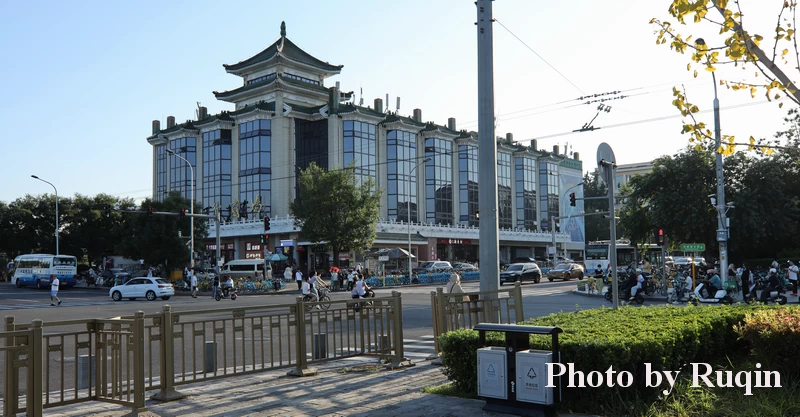
The commercial buildings along the Tianqiao section.
5. Notice the theatres along the route
Tianqiao is still associated with performing arts.
As I continued north, I noticed the surrounding theatre buildings and commercial facilities.
For me, this is one of the interesting aspects of the southern Central Axis.
The imperial ceremonial route passes directly through a neighbourhood traditionally associated with ordinary people’s entertainment.
These two parts of Beijing’s history developed side by side.
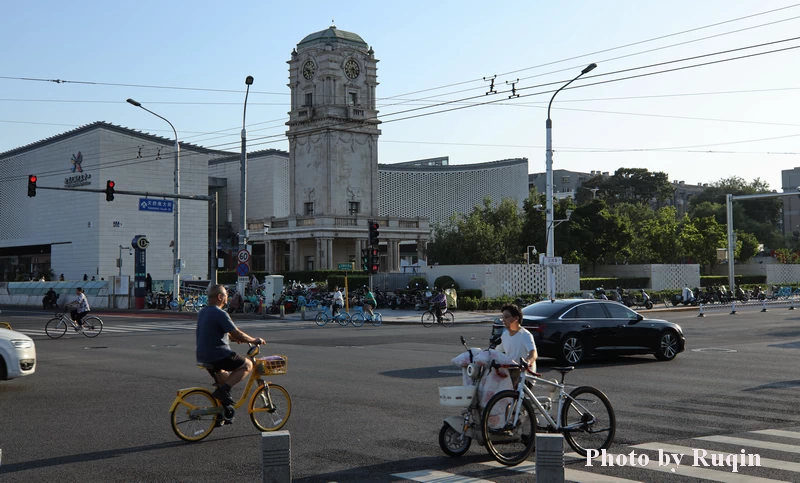
The Beijing Tianqiao Arts Centre at the Tianqiao area.
6. Stop at the reconstructed Tianqiao Bridge
Near the northern end of this section, I reached the reconstructed Tianqiao Bridge.
The present bridge is a landscape feature rather than a functioning bridge over a river.
It was reconstructed in 2013 to recall the historical bridge associated with this area.
I walked around it and took a few photographs.
It is worth remembering that the bridge we see today is a modern representation, not the original imperial-era structure.
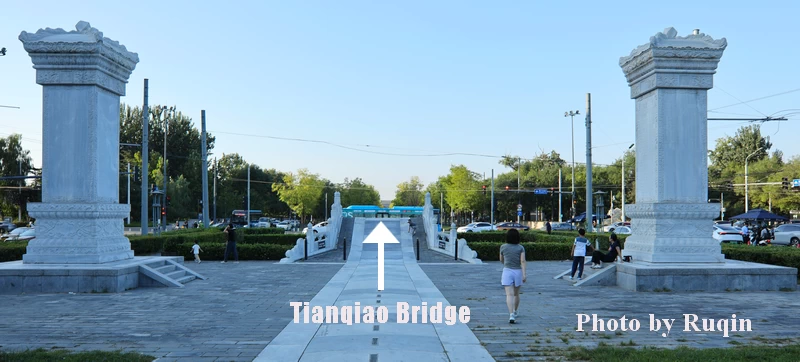
The reconstructed Tianqiao Bridge.
7. Look toward the National Natural History Museum of China
On the eastern side of the Tianqiao area is the National Natural History Museum of China.
It is located at 126 Tianqiao South Street.
I noted its location as another possible place to visit on a separate day.
If you plan to enter, check the museum’s current reservation arrangements and opening hours in advance.
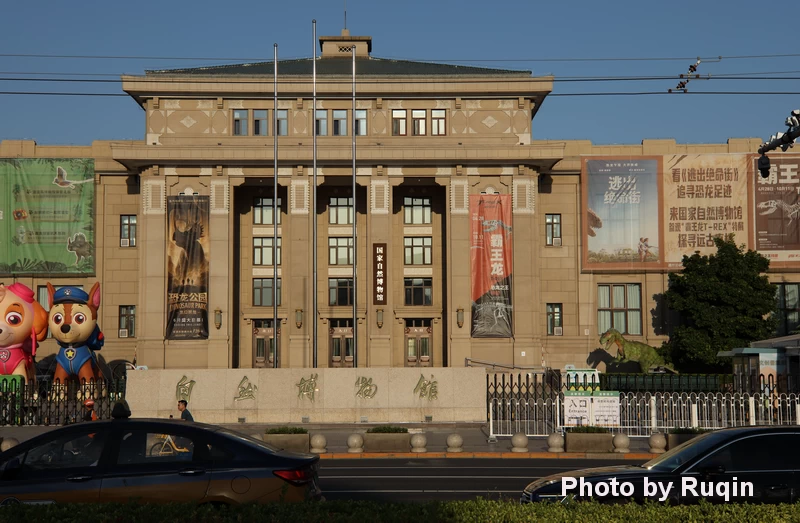
The National Natural History Museum of China.
From here, I continued north toward Zhushikou.
The walkway gradually became wider, and the surrounding streets began to show more of the traditional residential character of southern Beijing.
Step 3: Zhushikou → Zhushikou Church
Distance: Approx. 550 metres
Walking Time: Approx. 10 minutes without stops; allow around 30 minutes if exploring nearby hutongs.
1. Continue north from Tianqiao Bridge
After looking around the reconstructed Tianqiao Bridge, I returned to the central pedestrian path.
I continued walking straight north.
This part of the route felt more open and spacious than the Tianqiao section.
The stone-paved path was wider and well maintained, making it comfortable to walk and photograph the long perspective of the Central Axis.
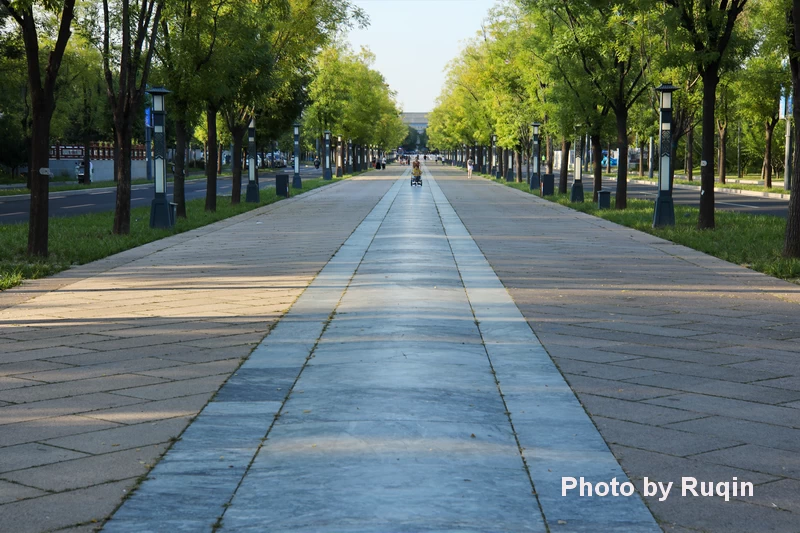
The broad Central Axis path approaching Zhushikou.
2. Look at the traditional courtyard neighbourhoods
As I walked north, I noticed traditional courtyard houses and hutong streets on both sides of the Central Axis.
This is an important part of the historical landscape.
The Central Axis is not only about major monuments and ceremonial buildings. Its surrounding neighbourhoods also help us understand how Beijing developed over the centuries.
The traditional hutong pattern and courtyard houses are part of the character of southern Beijing.
I slowed down here because I wanted to see how the restored central walkway connected with the older residential streets.
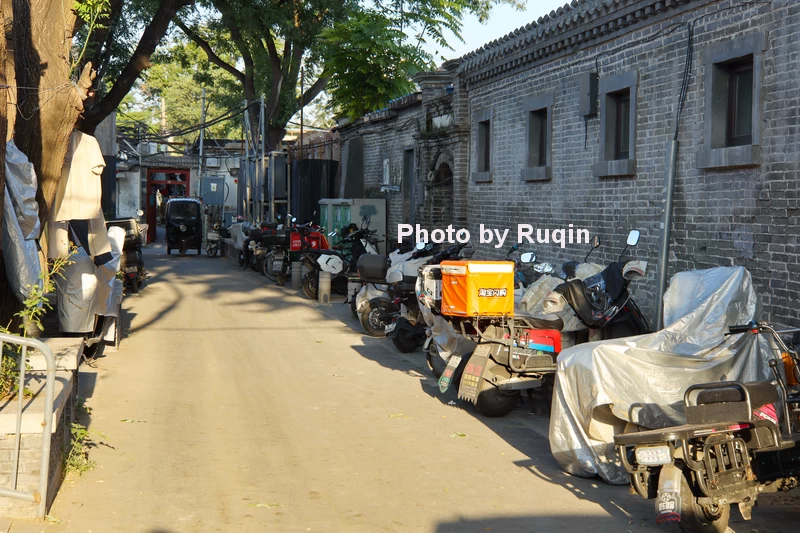
A hutong entrance and traditional courtyard houses on the east side of the Zhushikou Central Axis.
3. Take a short detour into a nearby hutong
I left the main Central Axis path briefly and walked into one of the nearby hutongs.
The atmosphere changed almost immediately.
The broad ceremonial walkway gave way to smaller streets and traditional courtyard entrances.
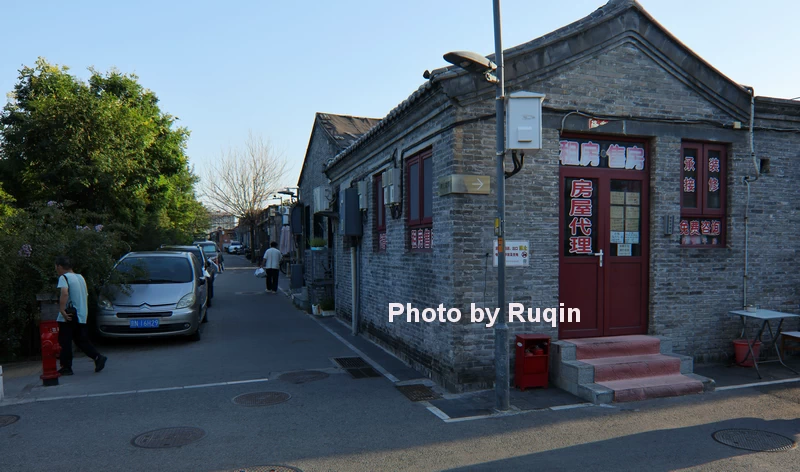
See the familiar grey-brick walls and the scale of the older residential neighbourhood on the right side of the Central Axis.
Much of the traditional appearance has been preserved or restored.
I enjoyed this short detour because it helped me understand the relationship between the formal Central Axis and the ordinary streets around it.
If you decide to explore the hutongs, remember that these are residential neighbourhoods.
I recommend keeping your voice down, avoiding photographs through private doorways, and respecting the daily lives of local residents.
After looking around, I returned to the Central Axis and continued north.
4. Arrive at Zhushikou Church
At the northern end of this section, I reached Zhushikou Church.
The grey church building stands close to the Central Axis.
Compared with the broad road and surrounding urban activity, the church has a relatively restrained appearance.
Its small cross is visible above the building, but it does not dominate the surrounding streets.
I stopped here for a few photographs.
The church is another reminder that Beijing’s southern neighbourhoods contain different layers of history and culture.
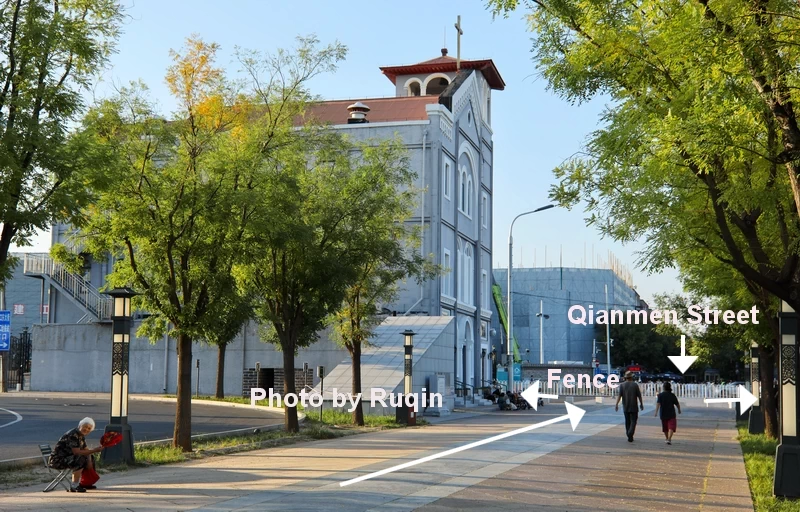
Zhushikou Church, the northern end of the third part of the Southern Central Axis.
5. Prepare to cross Zhushikou Avenue
Just north of Zhushikou Church is Zhushikou Avenue.
This wide east–west road separates the southern Central Axis pedestrian path from Qianmen Street.
Although Qianmen Street lies directly ahead, I could not simply continue straight across the road.
I needed to use the pedestrian overpass.
I followed the pedestrian route toward the overpass, crossed Zhushikou Avenue, and returned to the northern side of the Central Axis.
This is the one part of the walk where you need to pay particular attention to the pedestrian directions.
Once across, the entrance to Qianmen Street is easy to recognise.
Step 4: Zhushikou Church → Zhengyangmen Gate via Qianmen Street
Distance: Approx. 1,040 metres, including the pedestrian overpass detour.
Walking Time: Approx. 15–20 minutes without stops; allow around one hour for photographs and browsing.
1. Cross Zhushikou Avenue using the pedestrian overpass
From Zhushikou Church, I followed the pedestrian route to the overpass.
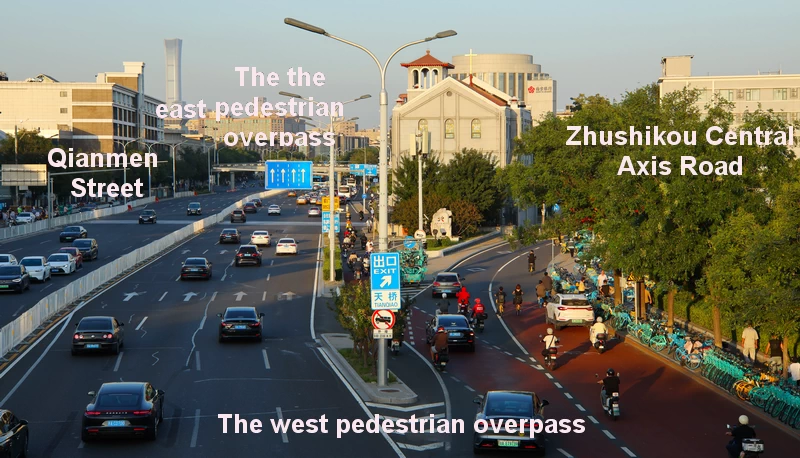
I needed to use the west pedestrian overpass to walk from Zhushikou Church to Qianmen Street
After crossing the avenue, I walked toward the southern entrance of Qianmen Street.
This short detour is necessary because the wide road interrupts the otherwise continuous north–south walking route.
Once I reached Qianmen Street, I was back on the Central Axis.
2. Enter Qianmen Street
Qianmen Street is approximately 800–850 metres long, running north toward Zhengyangmen Gate.
I have walked this street more times than I can remember.
Whenever I come here, I see visitors from different parts of China and from overseas.
On busy days, the crowds can be substantial.
Compared with the relatively peaceful atmosphere of Yongdingmen Park, Qianmen feels much more commercial and tourist-oriented.
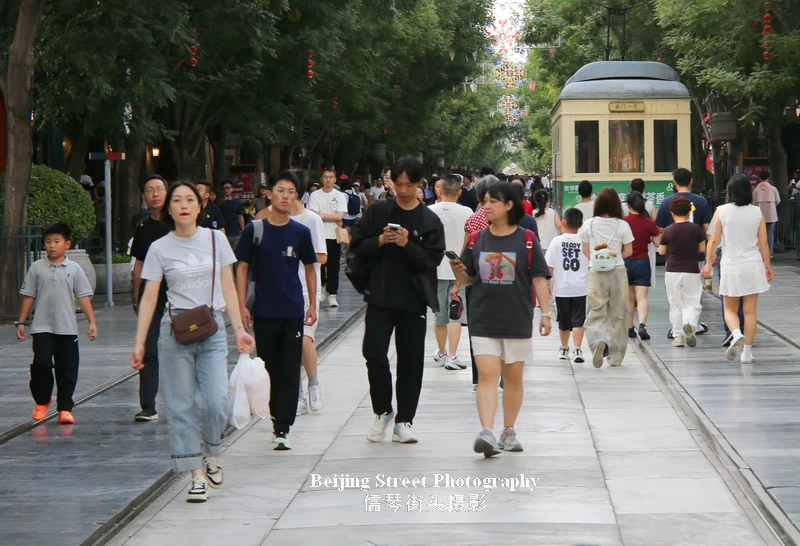
The southern entrance to Qianmen Street.
3. Walk north along the main pedestrian street
I continued north along the broad pedestrian street.
The architectural style immediately gives Qianmen a different appearance from the previous sections of the walk.
Buildings on both sides feature grey-brick facades, red pillars, traditional shop signs, and rooflines inspired by late Qing-dynasty architecture.
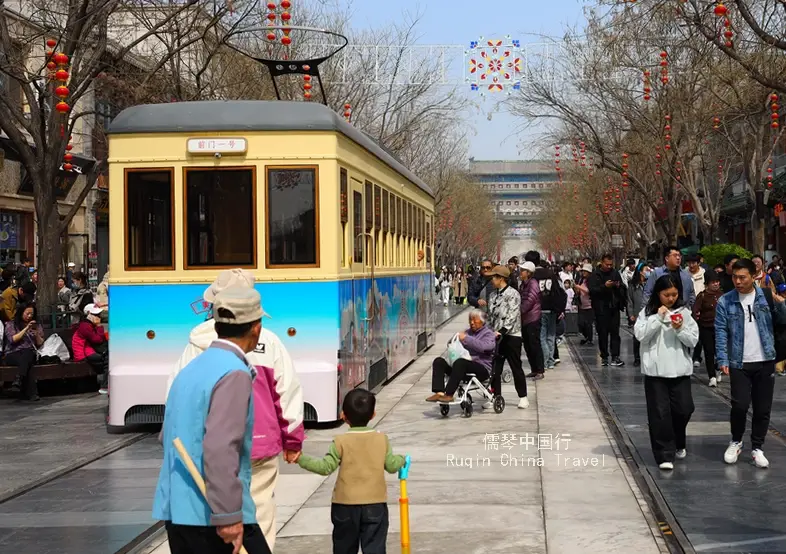
Walk north along the main pedestrian street
Much of the streetscape has been restored or reconstructed to reflect the area’s historical commercial appearance.
I find it useful to remember that Qianmen is not an entirely untouched old street.
It is a historic commercial district that has undergone extensive redevelopment and restoration.
Its present appearance combines older businesses, reconstructed architecture, and modern retail activity.
Photo placement: Add my photograph showing the traditional-style shopfronts along Qianmen Street.
4. Look at the traditional Beijing shops
Qianmen has been an important commercial street since the Ming and Qing dynasties.
Its position near the imperial city made it a convenient place for merchants, travellers, and residents.
Over time, many established Beijing businesses opened shops in the area.
Today, I can still see traditional brands alongside modern cafés, restaurants, and retail stores.
As I walked, I noticed old-style shop signs, tea shops, Beijing snack stores, and people queuing outside popular businesses.
The atmosphere is quite different from the first three sections of the Central Axis.
Here, shopping and tourism are the main activities.
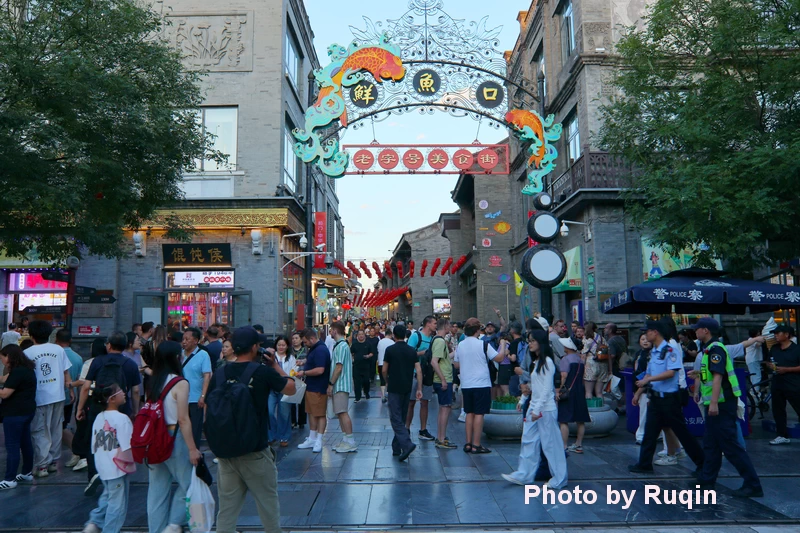
The Xianyukou Food Street at Qianmen Street
Photo placement: Add my photograph of traditional Beijing shops and their signboards.
5. Take your time with photographs
Although Qianmen Street is not particularly long, I usually spend more time here than the distance would suggest.
There are plenty of details to photograph.
I like looking at the traditional-style shopfronts, wooden signs, roof decorations, and the movement of people along the street.
If you want photographs with fewer people, an early morning visit may be more suitable.
For this particular walk, however, I chose late afternoon because I wanted to experience the changing atmosphere from Yongdingmen Park to Qianmen.
By the time I reached this final section, the street was already lively.
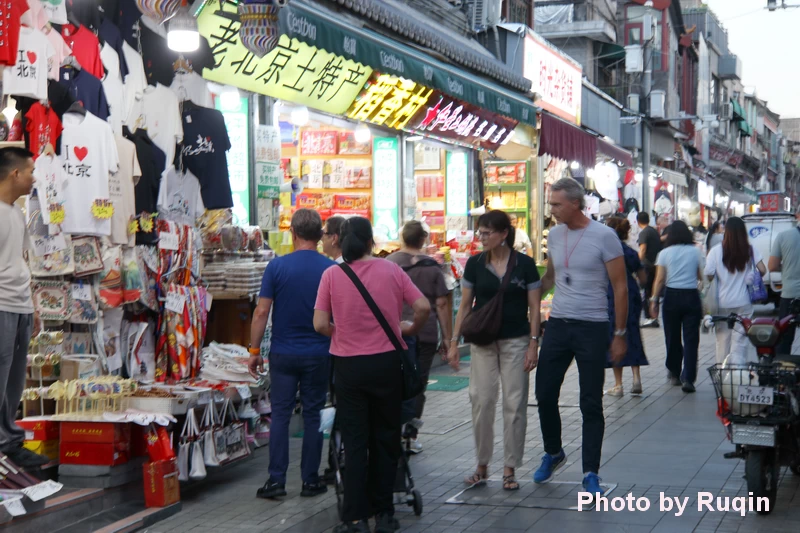
The photo taken on the side lane – Zhubao Street west of Qianmen pedestrian street
6. Finish the walk at Zhengyangmen Gate
I finished my walk at the northern end of Qianmen Street, looking toward Zhengyangmen.
From Yongdingmen to Zhengyangmen, I had followed approximately three kilometres of the southern Central Axis.
The route had taken me through a public park, an old entertainment district, traditional residential neighbourhoods, and one of Beijing’s busiest shopping streets.
Standing here, I could look back along the direction I had walked.
The Central Axis continues north beyond Zhengyangmen toward Tiananmen Square, the Forbidden City, Jingshan Park, and eventually the Drum and Bell Towers.
But for this afternoon, I was happy to finish here.
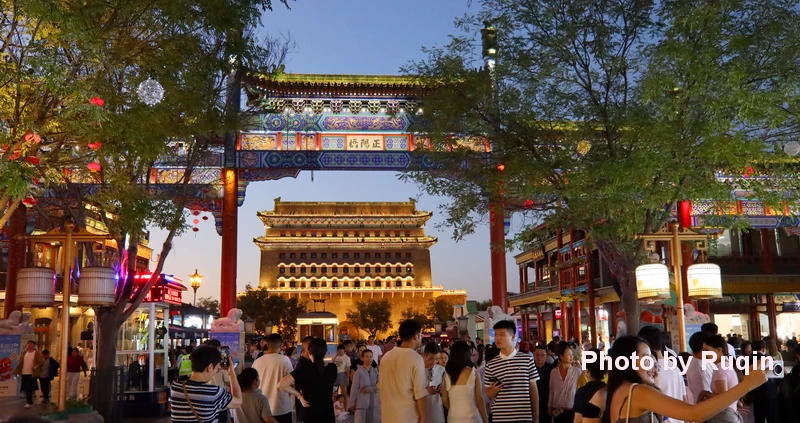
Zhengyangmen Gate, marking the end of the Southern Section of the Central Axis walk.
What the Area Feels Like Right Now
During my walk on September 4, 2026, I noticed how much the atmosphere changed as I moved north.
At Yongdingmen, the gate tower was covered for restoration, but the surrounding park remained a pleasant place to walk.
The broad stone path, green spaces, benches, and everyday activities made this section feel relaxed.
I saw elderly residents resting, children playing, people enjoying badminton, and young visitors recording dance videos.
Tianqiao felt busier because of the traffic and commercial buildings on both sides of the central walkway.
Around Zhushikou, the traditional hutongs and courtyard houses gave the walk a more residential character.
Qianmen was the busiest part of the route, with large numbers of visitors, shops, restaurants, and people taking photographs.
What stayed with me most was the contrast between these four sections.
The southern Central Axis has been restored as a continuous historical route, but it is still part of a living city.
Practical Tips
- Start around 4:00 pm in warm weather. This was my choice in early September. The afternoon light becomes softer as you walk north, although you should adjust your start time according to sunset and the season.
- Allow two to three hours. The route is only about three kilometres, but photography, short breaks, and hutong exploration take time.
- Consider taking a taxi to Yongdingmen Gate. Yongdingmen Wai Station is served by Subway Lines 8 and 14, but the gate is still a considerable walk from the station.
- Bring water in hot weather. I found a self-service drinks cabinet near the southern end of Yongdingmen Park, but availability may vary.
- Use the restroom in Yongdingmen Park. I found a clean public restroom on the left side of the central path, near the teahouse.
- Wear comfortable walking shoes. Most of the route is paved, but stone surfaces and the pedestrian overpass require some care.
- Be careful at Zhushikou Avenue. Follow the designated pedestrian crossing route. Do not attempt to cross the busy road directly.
- Respect residential privacy. If you explore the hutongs, avoid entering private courtyards or photographing residents without permission.
- Check restoration and visitor information. Yongdingmen Gate was under renovation during my visit. Museum opening hours, reservations, and access arrangements should also be checked separately.
- Keep the main walk separate from museum visits. The Beijing Ancient Architecture Museum, Temple of Heaven, and National Natural History Museum are all possible extensions, but each deserves additional time.
Who This Walk Is Best For
I recommend this walk to visitors who want to understand Beijing beyond its major tourist attractions.
It is particularly suitable for people interested in the city’s history, traditional architecture, urban planning, and everyday neighbourhood life.
Photographers will find a good variety of subjects, from the broad Central Axis perspective and archaeological remains to hutong streets, traditional shopfronts, and lively street scenes.
The route is also suitable for independent travellers who prefer walking at their own pace.
However, the pedestrian overpass at Zhushikou may be inconvenient for visitors with limited mobility. If step-free access is essential, check the current crossing arrangements before setting out.
If you have already visited the Forbidden City and Tiananmen Square, this southern section offers another perspective on how Beijing’s historical layout connects with the surrounding city.
Seasonal Notes
Spring: Generally a comfortable season for this walk. The trees in Yongdingmen Park begin to provide more greenery, and the weather is often suitable for longer outdoor walks.
Summer: I recommend late afternoon rather than midday. The broad stone paths can feel hot in direct sunlight, although Yongdingmen Park offers some shade.
Autumn: One of the more comfortable seasons for walking in Beijing. Cooler temperatures make it easier to spend time exploring the hutongs and Qianmen Street.
Winter: The route remains possible, but the open sections can be cold and windy. I would start earlier in the afternoon to make better use of daylight.
Notes from Ruqin
I have walked this route many times, but I still find something different to notice, whether it is a newly restored section of the road or a small scene of everyday life in the park. For me, walking from Yongdingmen to Zhengyangmen is a practical way to understand how Beijing’s imperial history, traditional neighbourhoods, and modern city life remain connected.
More Beijing Travel Guides
Zhushikou Church on Beijing’s Central Axis | Beijing Street Photography by Ruqin
Qianmen Street Beijing: Map, Food, Shopping & Local Tips
Where Is the Toilet on Qianmen Street? A Beijing Field Report
Where to Have Coffee or a Drink on Beijing’s Qianmen Street
Where to Stay on Qianmen Street in Beijing