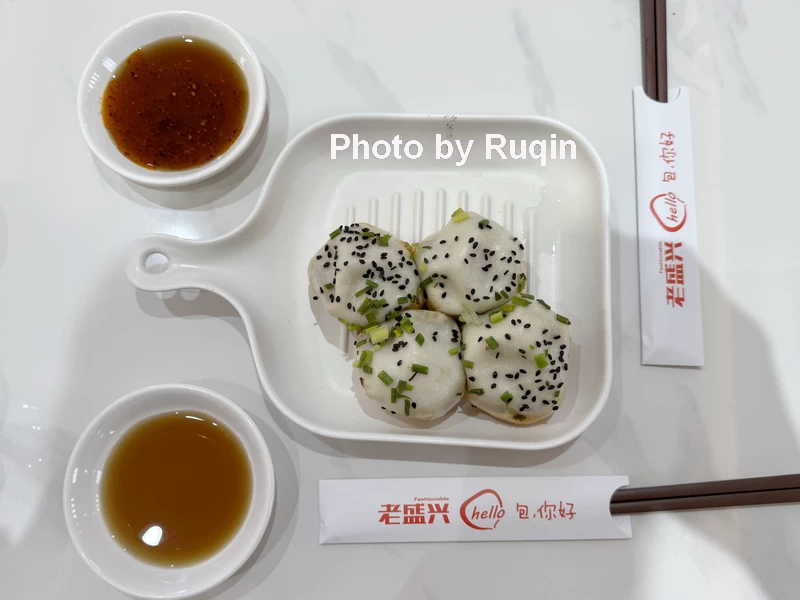

A Lao Sheng Xing (老盛兴) recently opened in my neighbourhood near Guangqumen. It is a Shanghai restaurant chain known for soup dumplings, shengjian buns, noodles and simple everyday meals.
For a southerner living in Beijing, seeing a familiar Shanghai-style restaurant nearby is a welcome thing. It also brings something different to the local breakfast scene.
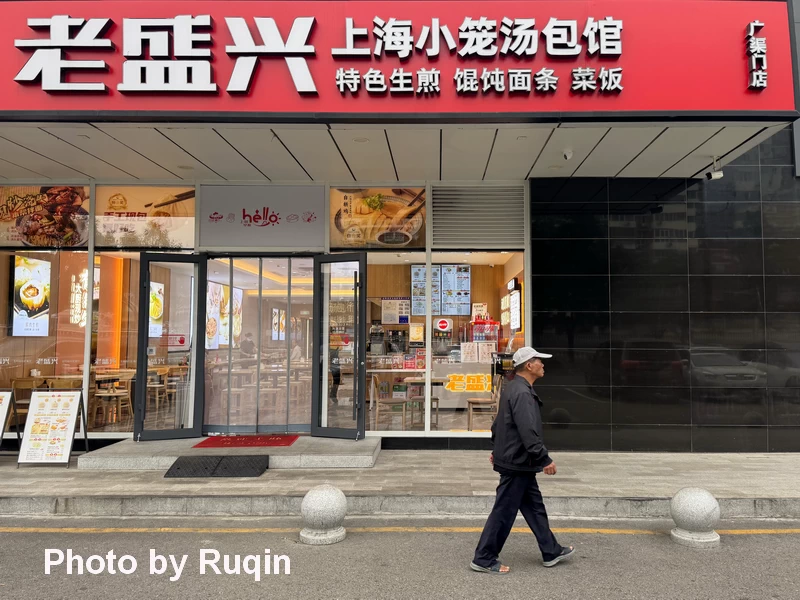
The exterior of Lao Sheng Xing Soup Dumpling Restaurant (Guangqumen)
This morning, after having a blood test at the hospital, I was hungry because I had skipped breakfast. I went straight to Lao Sheng Xing at Guangqumen.
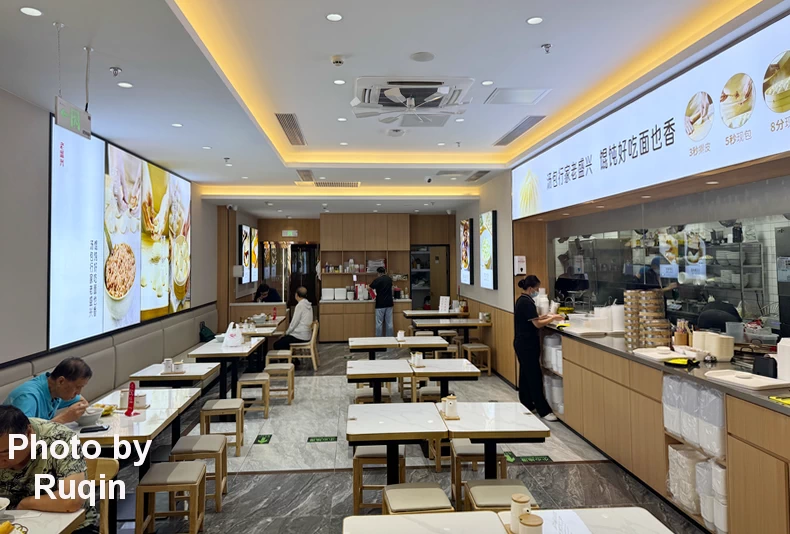
There were only a few people inside when I arrived.
It was already around 9:30. The breakfast rush had passed and there were only a few people inside. I sat at Table 18. A small QR code was fixed to the tabletop. I scanned it with my iPhone, opened the menu and ordered breakfast.
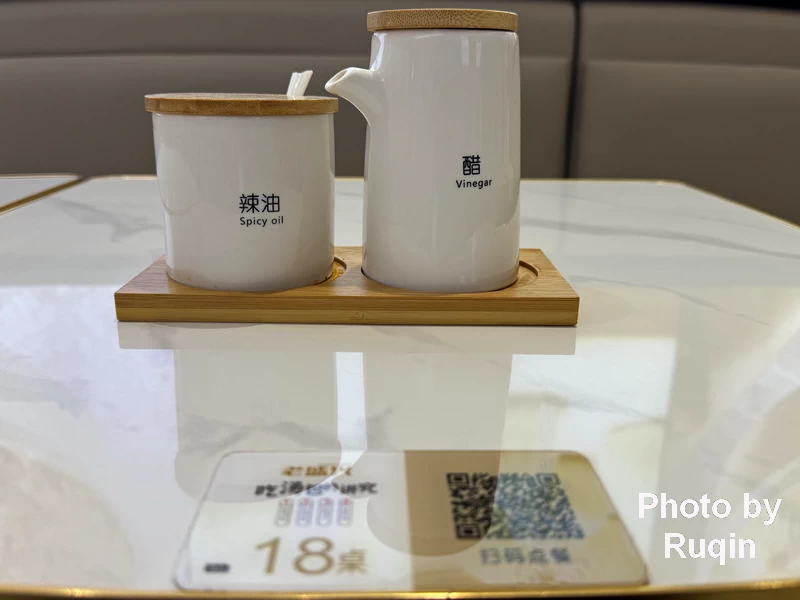
I sat at Table 18. A small QR code was fixed to the tabletop.
On my previous visits I had tried the soup dumplings and shengjian buns (pan-fried buns). This time I ordered a basket of four pure crab soup dumplings, a bowl of duck-blood vermicelli soup, and two fried eggs. The total was RMB 55.
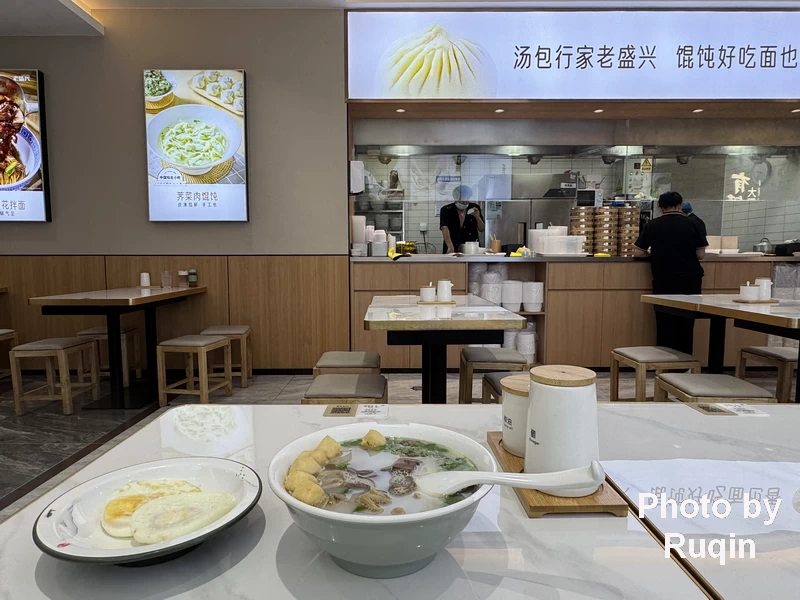
A bowl of duck-blood vermicelli soup, and two fried eggs
After I paid on my phone, the order went directly to the kitchen. Before long, everything arrived hot and steaming.
There were two bottles of condiments on the table: chilli oil and vinegar. Vinegar is especially common with dumplings and buns in northern China.
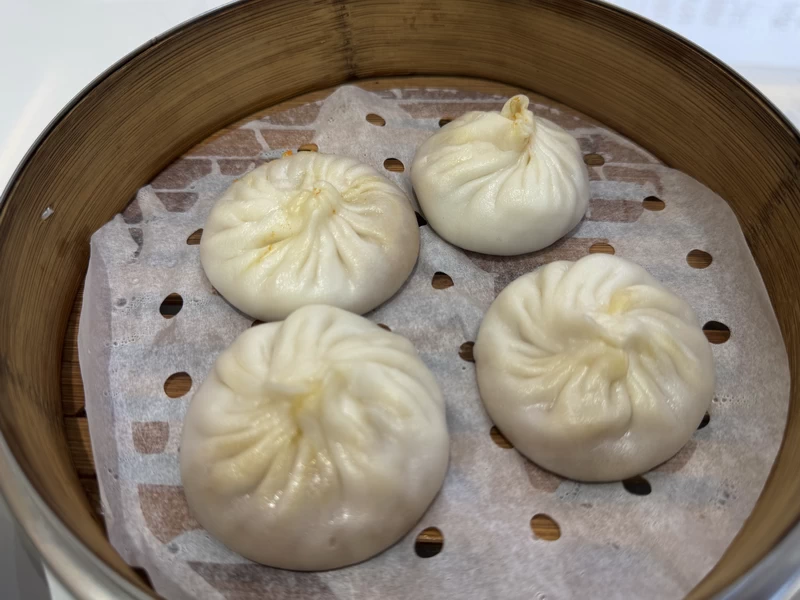
Four pure crab soup dumplings
The crab soup dumplings needed a little patience. They were very hot, with plenty of rich broth inside the thin skin. It is best to eat one carefully in a single bite; otherwise, the soup easily runs out.
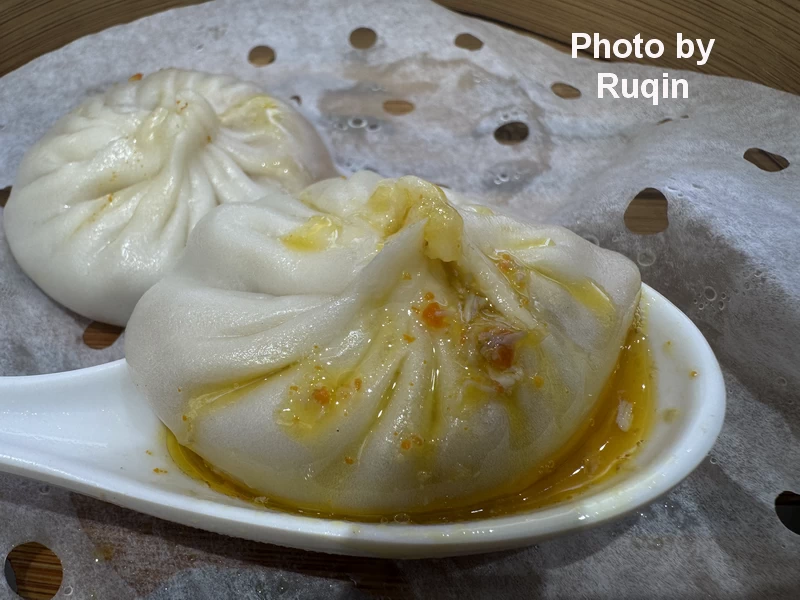
Inside I could see both crab roe and pieces of crab meat
Inside I could see both crab roe and pieces of crab meat. The smell immediately reminded me of autumn in Jiangnan.
Back home, autumn meant hairy crabs. I would go to the market or order Yangcheng Lake crabs online, usually two at a time—one male and one female. Eating crab takes patience, and two were always enough for me. Part of the pleasure was simply waiting for crab season to arrive.
The duck-blood vermicelli soup was much lighter. In the clear broth were duck blood, duck intestine, vermicelli and fried tofu. Some foreign visitors may not be used to eating offal, but these ingredients are part of everyday food culture in many parts of China.
The fried tofu brought back another small memory. When I was a child, my grandmother used to make large fried tofu pockets stuffed with meat. In those days we rarely ate in restaurants. Most meals were made at home.
After finishing breakfast, I ordered another bowl of Fuzhou fish-ball soup to take away—four stuffed fish balls in broth, RMB 16.6 including the takeaway container.
I’ve also included a few photos from earlier visits: the shengjian buns, the counter where you can order in person, and the open kitchen.
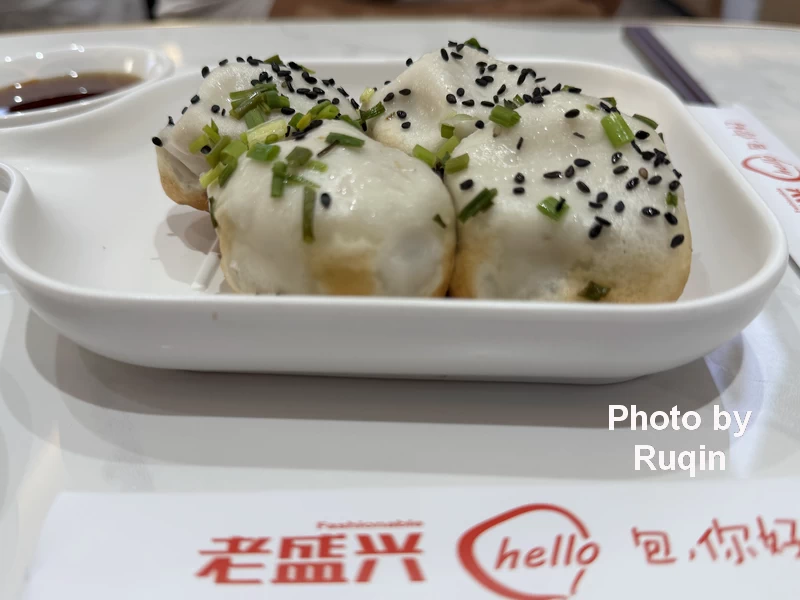
Shengjian Bao (Pan-fried buns)
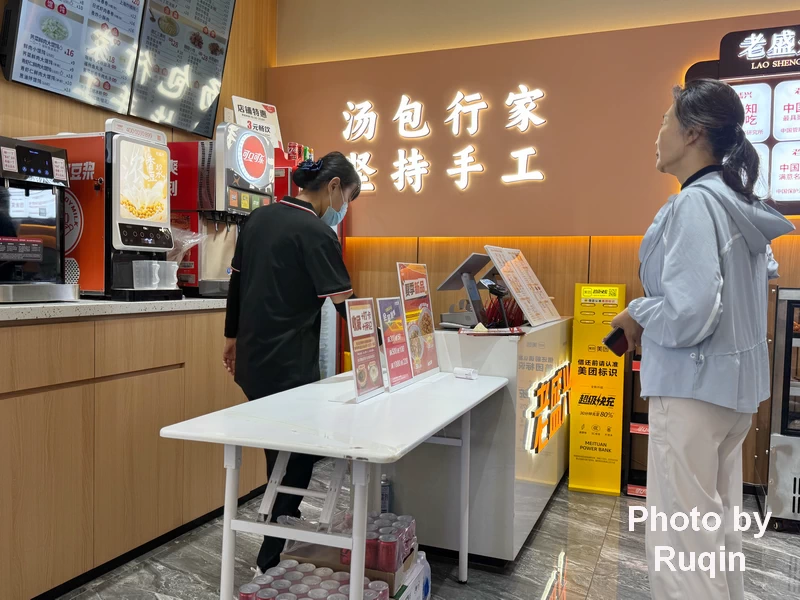
The counter where you can order in person
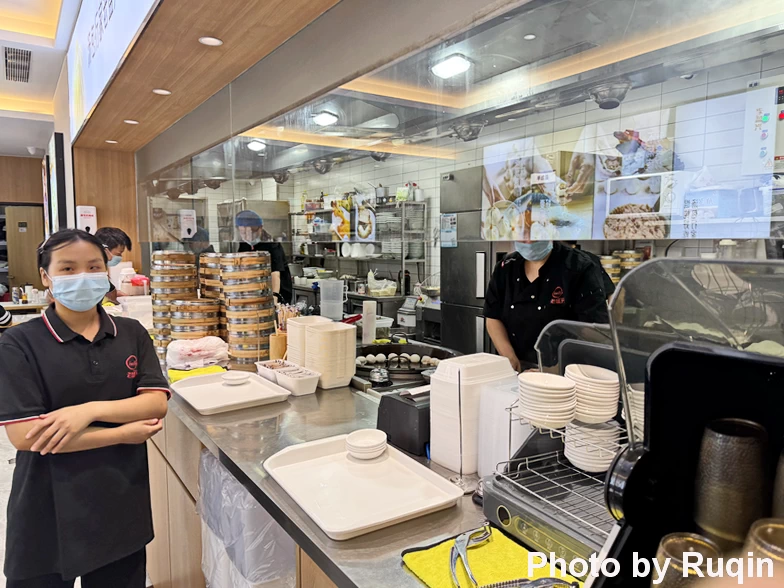
The open kitchen
Nothing fancy. Just hot food, a quiet table after the morning rush, and a few familiar southern flavours in Beijing.
Lao Sheng Xing Soup Dumpling Restaurant (Guangqumen)
Ground Floor, Linghang International Center
No. 2 Guangqumen Inner Street, Dongcheng District, Beijing
Southwest of Guangqumen Bridge
Business Hours: 07:00–22:00
老盛兴汤包馆 (广渠门店)
北京市东城区广渠门内大街2号领行国际中心底商
Southwest of Guangqumen Bridge
Business hours: 07:00–22:00
You Might Also Like
Slingshots by the Moat: An Afternoon with Beijing Locals
Beijing Second Ring Road Moat Greenway Walk — From Guangqumen Bridge to Zuo’anmen Bridge
Beijing Ming City Wall Relics Park Morning Walk — From the Southeast Corner Tower to Chongwenmen
Fishing at Sunrise Along Beijing’s Old City Moat