
Words by Ruqin · September 16, 2026
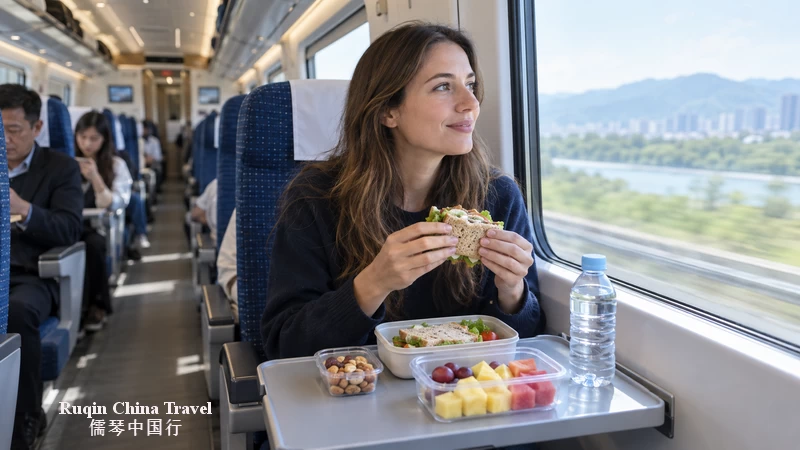
Yes. You can bring ordinary food, snacks, fruit, and non-alcoholic drinks onto a Chinese high-speed train. However, avoid self-heating meals, foods with strong smells, and anything that may leak or disturb other passengers.
You can also buy food at the station, from a trolley aboard some trains, or through China Railway’s 12306 meal-ordering service where available.
What Food Can You Bring?
Normal travel food is generally acceptable. Suitable choices include:
- Sandwiches
- Bread and pastries
- Biscuits and crackers
- Chocolate and energy bars
- Nuts and dried fruit
- Washed fresh fruit
- Rice rolls or simple packed meals
- Food bought inside the railway station
- Bottled water and ordinary soft drinks
Pack food in sealed containers or zip bags. High-speed trains are smooth, but a poorly closed soup container can still leak inside your luggage.
Keep anything you plan to eat in a small bag near your seat. Avoid opening a large suitcase during the journey, especially if it is stored at the end of the carriage.
Avoid Strong-Smelling Food
A high-speed-train carriage is an enclosed, air-conditioned space. A smell that seems harmless to you may remain in the carriage for a long time.
China Railway specifically asks passengers not to eat strongly scented foods such as durian and instant noodles during the journey. Other foods worth avoiding include:
- Fermented or heavily pickled food
- Strong-smelling seafood
- Spicy hotpot dishes
- Food containing large amounts of garlic
- Meals that create smoke or heavy vapour
This is mainly about consideration for other passengers. Choose food that is simple, tidy, and easy to eat quietly.
Can You Bring Self-Heating Meals?
You should not use self-heating hotpot, self-heating rice, or similar products aboard the train.
These meals contain a heating pack that reacts with water. The process can create considerable heat and steam, presenting a risk of burns in a crowded carriage.
China Railway’s official dining guidance asks passengers not to consume self-heating meals during their journey.
Even if railway security allows a particular unopened product through the station, that does not mean you should activate it aboard the train. Leave self-heating food at home and choose an ordinary packed meal instead.
Can You Bring Drinks?
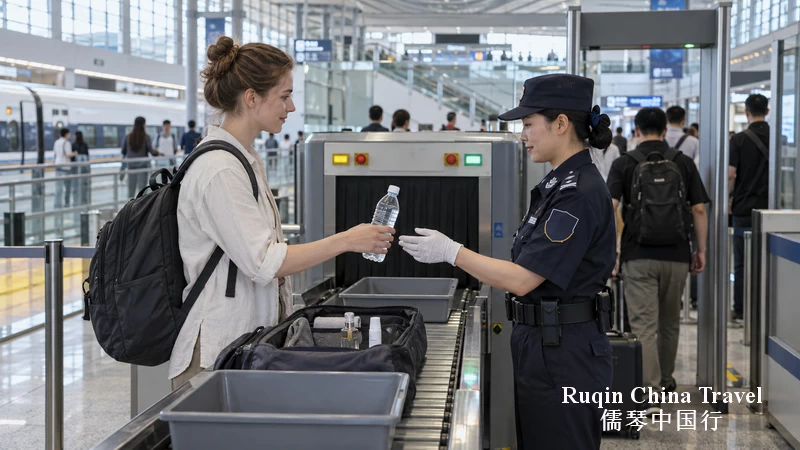
Ordinary bottled water, tea, juice, milk, coffee, and soft drinks are generally allowed. Chinese railway stations do not apply the airport-style 100-millilitre limit to normal drinking water.
However, all bags and drinks must pass through security. Staff may ask you to open an unmarked or already opened container. At some stations, passengers may be asked to take a sip.
Alcohol, aerosols, and flammable liquids have separate restrictions. If you plan to carry alcohol, perfume, sprays, or liquid toiletries, check the railway’s current restricted-items rules before traveling.
Should You Bring Cutlery?
Disposable chopsticks and ordinary plastic cutlery are the easiest choices.
Do not pack a kitchen knife, fruit knife, scissors, or another sharp tool merely to prepare food on the train. Railway security rules restrict knives and other potentially dangerous objects.
If you bring fruit, wash and cut it before leaving your hotel. Pack it in a closed container and include a few tissues or wet wipes.
Can You Buy Food at the Station?
Most large Chinese railway stations have convenience shops, bakeries, fast-food restaurants, and stalls selling boxed meals. Prices inside the station may be higher than at an ordinary supermarket.
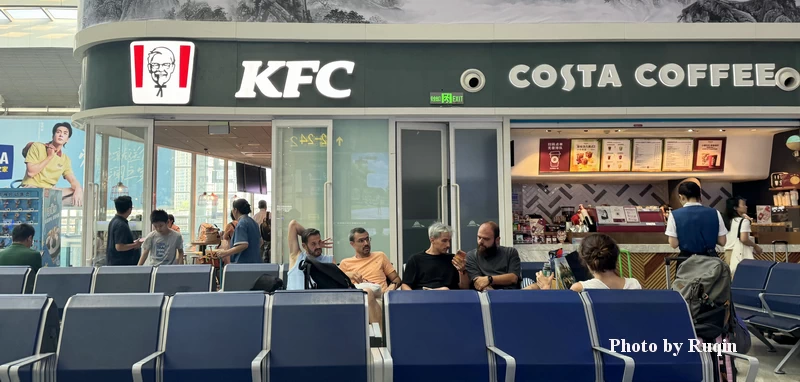
KFC and Costa Coffee at Beijing South Railway Station
Buying food after security has one advantage: you do not have to carry it across the city before your journey.
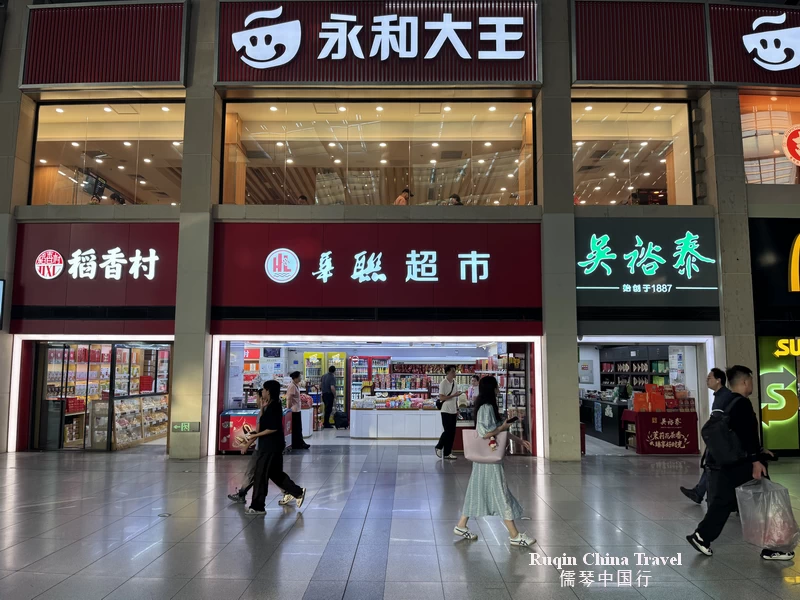
Beijing South Railway Stations has convenience shops, bakeries, fast-food restaurants and super markets.
However, smaller stations may offer fewer choices. Shops can also be busy before popular departures. If you have dietary restrictions, prepare suitable food before reaching the station.
Is Food Available aboard the Train?
Food service depends on the train and route.
High-speed trains may offer:
- Boxed meals
- Snacks
- Bottled drinks
- A food trolley passing through the carriage
- A dining or service counter
- Meals ordered through 12306
China Railway says its EMU trains offer several meal choices, including some halal meals. Availability still varies, so ask the train staff rather than assuming a particular dish will be sold.
Prices and selection may also differ by departure time. A late-evening train may have fewer meals remaining.
How Does 12306 Meal Ordering Work?
The official Railway 12306 system includes a Dining and Specialities service, shown in Chinese as:
餐饮·特产 — Cānyǐn · tèchǎn
On eligible journeys, passengers can order food from participating station restaurants or railway suppliers. The order is linked to the travel date, train number, carriage, and seat.
Food may then be delivered when the train reaches a participating station. The service is not offered on every train or at every station.
Check the 12306 app after booking your ticket. If the dining option does not show suitable choices, bring your own meal or buy something before boarding.
My own experience: On my high-speed train journey from Beijing to Hangzhou, I ordered lunch by scanning the QR code on the seat armrest. The menu offered meals prepared aboard the train, as well as food delivered from restaurants at Nanjing Railway Station during the journey.
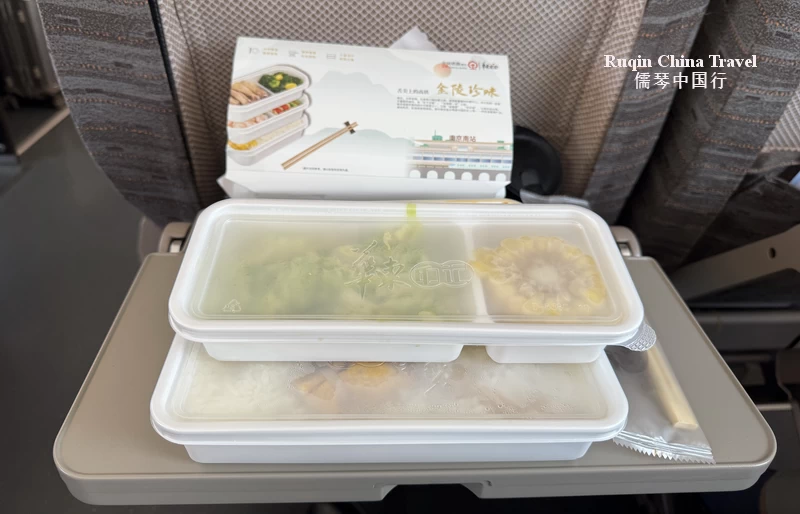
I chose a rice dish delivered at Nanjing Station during my train ride from Beijing to Hangzhou
I chose a rice dish delivered at Nanjing Station. It tasted better than the standard meals prepared on the train. This service made it easy to enjoy a fresher meal without leaving my seat.
Eating at Your Seat
Passengers normally eat at their seats. Fold down the small tray table carefully and keep hot drinks away from the edge.
After eating:
- Close containers before discarding them
- Put rubbish in the carriage bin or give it to cleaning staff
- Wipe any spill promptly
- Do not leave food packaging in the seat pocket
- Keep the aisle clear
Train staff regularly collect rubbish, but passengers should still leave their seating area tidy.
What If You Have Dietary Restrictions?
Bring your own food if you have serious allergies, follow a strict vegetarian or vegan diet, require gluten-free food, or need a medically controlled meal.
Do not rely entirely on a food label translated by an app. Ingredients such as meat stock, animal fat, peanuts, sesame, soy, or wheat may not be obvious.
Keep medicines and emergency allergy treatment with you rather than inside luggage stored away from your seat.
Common Mistakes to Avoid
The food itself is rarely the main problem. Packaging, smell, and preparation cause more difficulty.
Avoid:
- Activating a self-heating meal
- Bringing durian or another strongly scented food
- Carrying soup in a weak container
- Packing a knife to cut fruit
- Assuming every train has a dining car
- Depending on onboard food when you have a strict diet
- Leaving rubbish on the tray table
- Packing all your food inside a suitcase stored away from you
Ruqin’s Practical Tip
For a long journey, bring one simple packed meal, a small snack, and a bottle of water. Choose food that does not leak, smell strongly, or require heating.
More China Travel Questions and Practical Guides
Can I Take Liquids Through Security at a Chinese Railway Station?
How to Travel by Train in China
How Early Should I Arrive at a Chinese Railway Station?
Can I Take a Large Suitcase on a Chinese High-Speed Train?
Beijing to Xi’an High-Speed Train: Tickets, Tips & What to Expect
14-Day China High-Speed Rail Tour: Beijing to Hong Kong