
Words by Ruqin · September 14, 2026
Typhoons worry many travelers planning a summer or early autumn visit to Shanghai. Weather apps may show rain for several consecutive days, while news reports can make the situation appear more alarming than it is.
Most rainy forecasts do not mean that sightseeing will stop. However, a typhoon warning is different from an ordinary wet day. Strong winds, flooding and official closures can affect flights, trains, ferries, outdoor attractions and riverfront areas.
The practical approach is simple. Do not cancel a Shanghai trip months in advance because of typhoon season. Instead, keep one or two days flexible, follow official warnings and know which parts of your itinerary can move indoors.
When Is Shanghai’s Typhoon Season?
Shanghai can feel the effects of tropical cyclones during summer and early autumn. The risk normally becomes more relevant from July through September, although storms do not follow a fixed calendar.
A typhoon does not need to make a direct landfall in Shanghai to affect the city. A storm moving through Zhejiang, Jiangsu or the East China Sea may still bring heavy rain, strong winds and transport disruption.
At the same time, a storm shown near Shanghai on a regional weather map may eventually change direction. Some bring little more than wind and intermittent rain. Others cause serious disruption.
Therefore, forecasts several days ahead help with planning, but they should not be treated as final operating information.
Understand the Difference Between Rain and a Typhoon Warning
Shanghai often has short, heavy downpours in warm weather. A forecast showing rain throughout the day may mean scattered showers rather than continuous rainfall.
Under normal rainy conditions, the metro, museums, shopping centers and most attractions continue operating. You may only need to change the order of your day.
An official typhoon or rainstorm warning deserves more attention. China uses four warning colors:
| Warning color | General meaning | Practical response |
|---|---|---|
| Blue | Lowest warning level | Watch conditions and review outdoor plans |
| Yellow | Conditions becoming more serious | Check transport and attraction notices |
| Orange | Severe weather likely or occurring | Avoid exposed areas and expect closures |
| Red | Highest warning level | Stay in a secure place and follow official instructions |
The color alone does not tell you whether your flight, train or attraction has been cancelled. Operators issue their own service announcements as conditions develop.
Always check the specific airline, railway, metro line or attraction you plan to use.
What Usually Changes During Severe Weather?
A serious typhoon can affect different parts of a Shanghai trip at the same time. The most vulnerable plans are usually those involving air travel, boats, exposed waterfronts and distant outdoor attractions.
Flights
Pudong International Airport and Hongqiao International Airport may delay or cancel flights when wind and visibility become unsafe.
Do not rely only on the departure board at your home airport. Check your airline’s app or website before leaving for the airport. A flight may remain listed while its departure time changes repeatedly.
If you have an international flight, keep essential medicine, chargers and one change of clothes in your hand luggage. Also avoid booking a separate domestic flight or high-speed train too close to your arrival time during unsettled weather.
High-Speed Trains
High-speed trains often remain more dependable than flights during ordinary rain. However, strong winds, flooding or problems elsewhere along the route can still cause delays or cancellations.
Check the official Railway 12306 service before going to the station. Remember that a train from Shanghai to Hangzhou, Suzhou or another city can be affected by weather outside Shanghai.
If you planned a day trip, do not travel simply because the outbound train is still running. Confirm that the return journey remains practical.
Metro and Road Transport
Much of Shanghai’s metro network operates underground, which makes it useful on a normal rainy day. Even so, exposed sections may face restrictions during severe weather.
Taxis and app-based cars may also become difficult to find. Road flooding and traffic congestion can make a short journey much longer than expected.
During heavy rain, allow extra time inside large stations. Wet floors, crowded entrances and passengers carrying umbrellas can slow movement considerably.
Ferries and Huangpu River Cruises
Passenger ferries and sightseeing cruises are particularly sensitive to wind and river conditions. Services may stop even when nearby metro lines continue running.
Do not build an inflexible evening around a Huangpu River cruise during unsettled weather. Check with the official ticket office or cruise operator on the day.
The same caution applies to Shanghai’s inexpensive cross-river ferries. They are useful transport, but they are not guaranteed to operate during strong winds.
Outdoor Attractions
Shanghai Disneyland, Zhujiajiao Water Town, riverfront parks and other outdoor places may close fully or suspend selected activities.
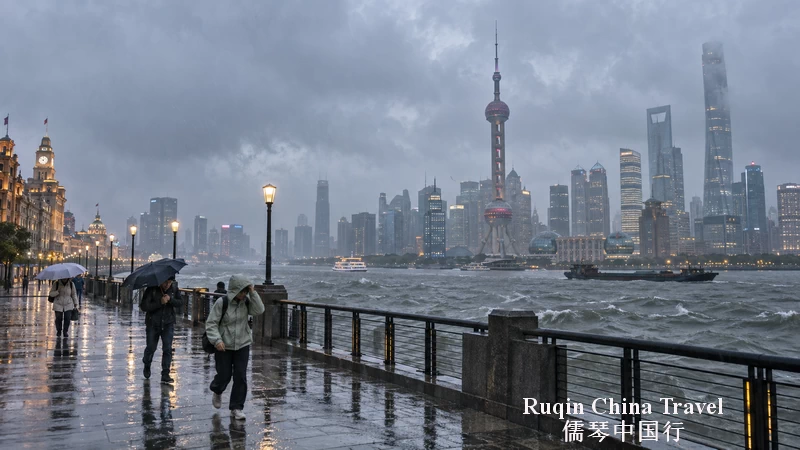
The Bund can also become uncomfortable or unsafe in strong wind. It is an exposed waterfront, and an umbrella offers little protection when gusts become powerful.
If an attraction announces a closure, do not assume that conditions near your hotel will be the same. Shanghai covers a large area, and weather can vary across the city.
Plans to Move Away from a Typhoon Day
The best way to protect your itinerary is to identify the most weather-dependent days before the trip.
Keep these plans flexible:
- Shanghai Disneyland
- Zhujiajiao or another water-town excursion
- A long Former French Concession walking route
- The Bund and North Bund waterfronts
- West Bund riverside walks
- Huangpu River cruises and passenger ferries
- Observation decks chosen mainly for distant views
Move these activities to the clearest day available. You do not need to decide their exact order several weeks before arrival.
Museum reservations make this slightly complicated. If you secure a difficult reservation, keep it unless the weather becomes severe. However, do not sacrifice the only clear day of your visit to an indoor attraction if another suitable museum slot is available.
A Wet-Weather Shanghai Day
For ordinary rain without a serious warning, central Shanghai still offers several practical options.
Morning: Shanghai Museum
The Shanghai Museum at People’s Square works well as the main indoor visit. Entry and exhibition arrangements can change, so check the current reservation requirements before going.
Allow at least two hours. A museum visit should not become a brief shelter between outdoor stops.
Lunch and an Indoor Break
After the museum, eat around People’s Square, East Nanjing Road or West Nanjing Road. Large shopping centers provide restaurants, toilets and a dry place to reorganize your plans.
This is also a sensible time to check the afternoon radar and attraction notices. A shower may pass, allowing you to walk later.
Afternoon: Choose One Compact Area
If the rain becomes light, explore a small area rather than attempting a long cross-city route. East Nanjing Road, People’s Square and the Shanghai History Museum can work together with limited outdoor travel.
Alternatively, visit a shopping and dining area such as Xintiandi. Keep in mind that Xintiandi is not completely indoors. You will still walk between buildings.
Evening: An Indoor Performance
An acrobatic performance can rescue an evening when a river cruise is impractical. Buy from a reliable ticket source and confirm that the performance is proceeding.
If an orange or red warning is active, however, do not treat an indoor attraction as an automatic substitute. Stay at your hotel unless authorities and the venue confirm that travel is safe.
What to Pack for Shanghai’s Typhoon Season
A large umbrella is not always the best answer. It becomes difficult to control in strong wind and can be awkward on a crowded metro train.
Pack the following instead:
- A light waterproof jacket
- Quick-drying clothes
- Shoes with good grip
- A waterproof pouch for your passport
- A small towel
- A power bank that meets current Chinese transport rules
- Essential medicine for at least one extra day
- A folding umbrella for ordinary showers
- A plastic or waterproof cover for your day bag
Shanghai remains warm and humid through much of the season. Heavy waterproof clothing can become uncomfortable, so choose a light outer layer rather than a thick raincoat.
Keep your original passport dry. You may need it for hotels, railway travel and attractions using real-name admission.
How to Follow Reliable Information
Weather apps are useful for general planning, but service decisions should come from the organization responsible.
Before leaving your hotel, check:
- Shanghai’s official weather and emergency announcements
- Your airline for flight changes
- Railway 12306 for train status
- Shanghai Metro for service notices
- The attraction’s official website, app or WeChat account
- Your hotel reception for nearby road conditions
Ask the hotel to write down any Chinese announcement you do not understand. A screenshot can also help staff explain whether a notice concerns all visitors or only a particular district.
Do not base a major decision on a single social-media post. Conditions can differ greatly between central Shanghai, Pudong, coastal districts and neighboring cities.
Should You Change Hotels or Leave Shanghai Early?
Usually, no.
Moving across the city during worsening weather may create more difficulty than staying in a well-located hotel. If you already have safe accommodation, remain there and wait for confirmed information.
Leaving early may make sense when an airline offers a practical change and a major storm is expected to affect your departure. However, changing to a train or another airport does not always solve the problem. The same weather system may affect the entire Yangtze River Delta.
Make decisions based on confirmed cancellations and official warnings, not anxiety created by a long-range forecast.
Ruqin’s Practical Advice
Do not avoid Shanghai simply because your trip falls in typhoon season. Most visitors will experience heat, humidity or showers rather than a major emergency.
Still, keep one flexible day and place outdoor excursions on the clearest dates. During ordinary rain, shorten your walking route and use museums or indoor performances. During an orange or red warning, put safety before sightseeing and follow official instructions.
Shanghai will still be there after the weather clears. Missing one cruise or one evening on the Bund is better than forcing a plan when transport and public spaces are closing.
More Shanghai Travel Guides
- Best Time to Visit Shanghai – Weather, Festivals & Advice
- One Week in Shanghai: A Relaxed 7-Day Itinerary with Day Trips
- Shanghai Museum Guide: Tickets, Hours, Highlights & Travel Tips
- Shanghai Acrobatic Show: Tickets, Map and A Visitor’s Guide
- Pudong or Hongqiao: Which Shanghai Airport Is Better?