
Words by Ruqin · September 16, 2026
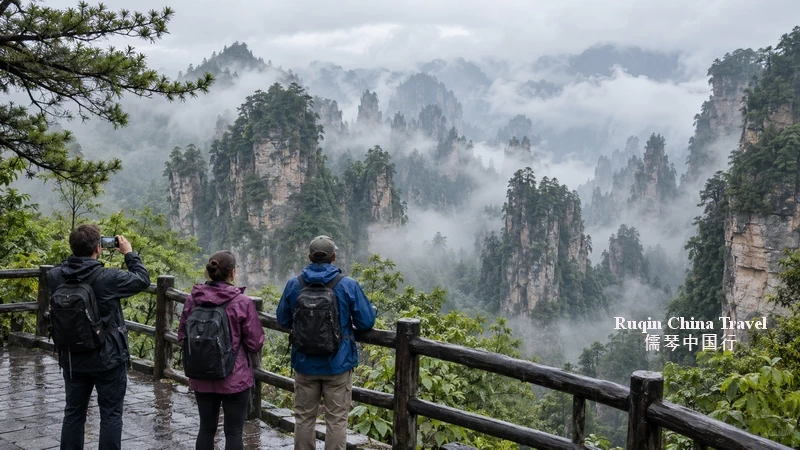
Rain and fog are part of traveling in Zhangjiajie. They can hide the sandstone peaks, but they can also create the drifting clouds that make the landscape so distinctive.
Do not cancel your trip simply because a weather app shows rain or clouds several days ahead. Mountain conditions can change within hours, and a rainy-day symbol does not tell you whether visibility will remain poor all day.
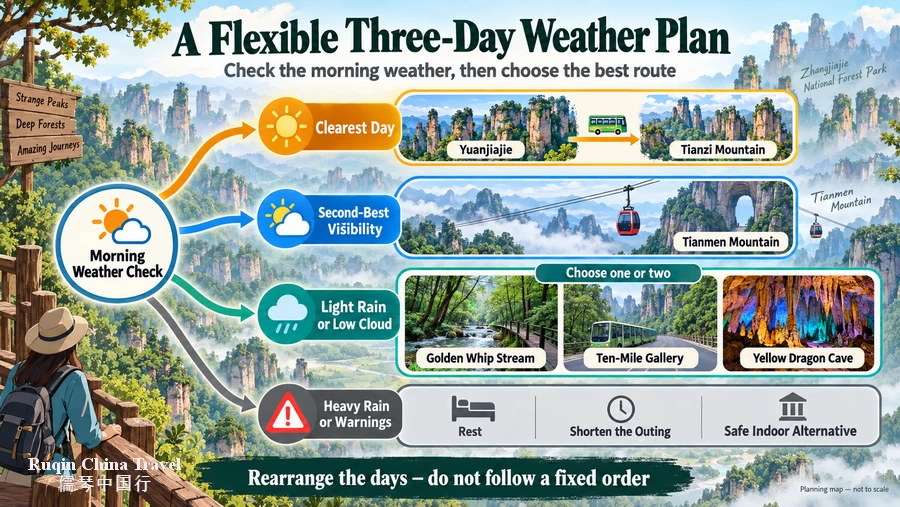
A flexible three-day Zhangjiajie itinerary based on weather and visibility.
Instead, keep your schedule flexible. Use clearer periods for Yuanjiajie, Tianzi Mountain and Tianmen Mountain. Save lower valleys, caves and shorter walks for times when the upper peaks disappear into fog.
Why Zhangjiajie Weather Is Difficult to Predict
Zhangjiajie lies in a humid, mountainous part of northwestern Hunan. The city, valleys and high scenic areas sit at different elevations.
A forecast for Zhangjiajie city may not describe conditions on Tianzi Mountain or Tianmen Mountain. It can be cloudy in town, raining in one valley and briefly clear on an upper ridge.
Weather apps also simplify a full day into one symbol. A rain icon may mean a short afternoon shower rather than continuous rain. Likewise, “cloudy” does not always mean the viewpoints will remain inside thick fog.
Forecasts become more useful within 24–48 hours. Even then, check hourly conditions and official weather warnings rather than relying only on a ten-day forecast.
Is Zhangjiajie Worth Visiting in the Rain?
Yes, light rain does not automatically spoil a Zhangjiajie visit.
After rain, clouds often move between the sandstone pillars. Peaks may appear and disappear within minutes. This can be more interesting than a flat grey sky, particularly for photography.
However, there is an important difference between moving mist and persistent fog.
| Conditions | Likely experience | Recommended response |
|---|---|---|
| Light rain with broken cloud | Peaks may appear between clouds | Continue, but allow time to wait |
| Low mist in the valleys | Atmospheric views may develop | Try higher viewpoints |
| Thick fog on the upper ridges | Major views may disappear | Switch to a lower route if possible |
| Steady heavy rain | Slippery paths and reduced visibility | Shorten the day and avoid exposed areas |
| Thunderstorms or official warnings | Possible transport interruptions or closures | Follow staff instructions and change plans |
Fog is not always a reason to leave immediately. It may lift after the temperature changes or the wind moves the cloud layer.
Still, waiting for hours has no guarantee. Give a viewpoint a reasonable amount of time, then continue or move to a lower area.
Which Attractions Depend Most on Clear Views?
Some Zhangjiajie attractions rely heavily on long-distance visibility. Others remain worthwhile in light rain.
Yuanjiajie
Yuanjiajie is known for its sandstone pillars, including the formation promoted as the Avatar Hallelujah Mountain. Thick fog can hide these formations completely.
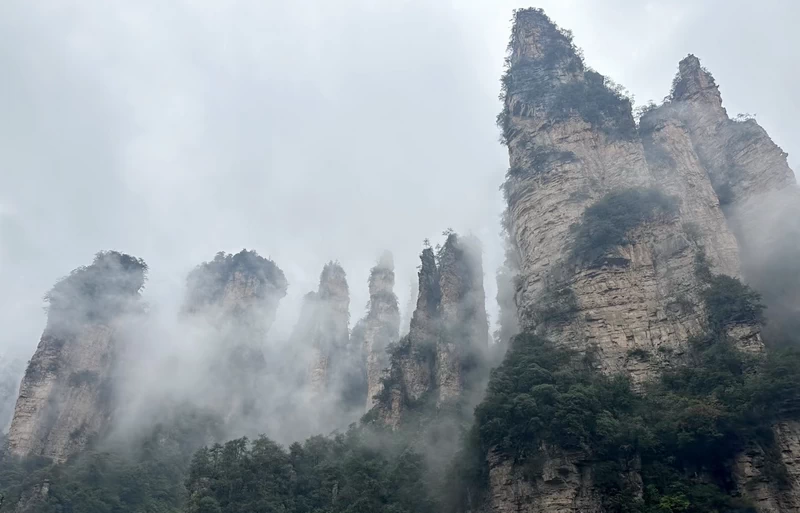
Yuanjiajie in a rainy day
If Yuanjiajie is your priority, visit during the clearest forecast period. An early start may help with crowds, but early morning can also bring low cloud. Therefore, check live conditions rather than assuming sunrise always offers the best visibility.
The Bailong Elevator still operates as transport when conditions permit. However, its short glass-sided outdoor section offers little scenery when the cliff is covered by cloud.
Tianzi Mountain
Tianzi Mountain has wide views across groups of sandstone peaks. It can look impressive when clouds move below the viewpoints.
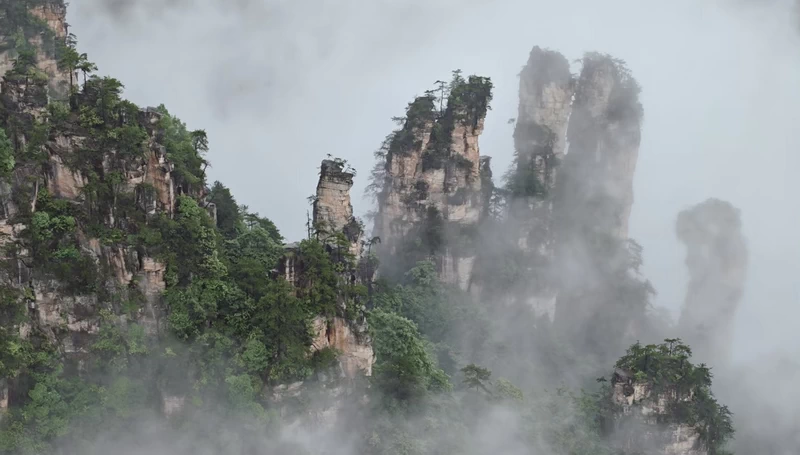
Tianzi Mountain in a rainy and foggy day
Persistent fog is different. If you cannot see beyond the nearest trees, the main reason for visiting has temporarily disappeared.
Ask staff at the shuttle stop or cableway station about current visibility. Conditions on the upper mountain may differ from those at the East Gate.
Tianmen Mountain
Tianmen Mountain also depends on visibility. Fog can hide the mountain road, surrounding valleys and even parts of Tianmen Cave.
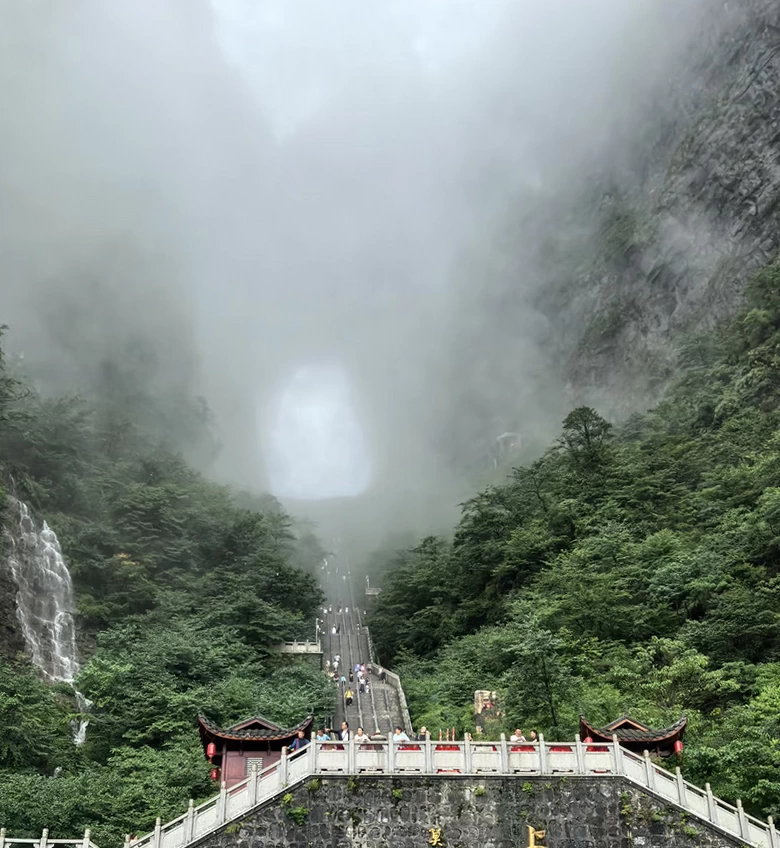
Tianmen Mountain in a foggy day
The cliffside walkways remain physically open only when operating conditions allow, but there may be little to see through dense cloud. Glass walkways also become wet and more uncomfortable for cautious visitors.
Tianmen Mountain uses timed tickets and route arrangements, so changing the day may not be simple. If several days are available, avoid reserving it on your least flexible day.
Golden Whip Stream
Golden Whip Stream is a better choice in light rain or low cloud. The path follows the valley beneath forest and cliffs, so it does not depend entirely on distant views.
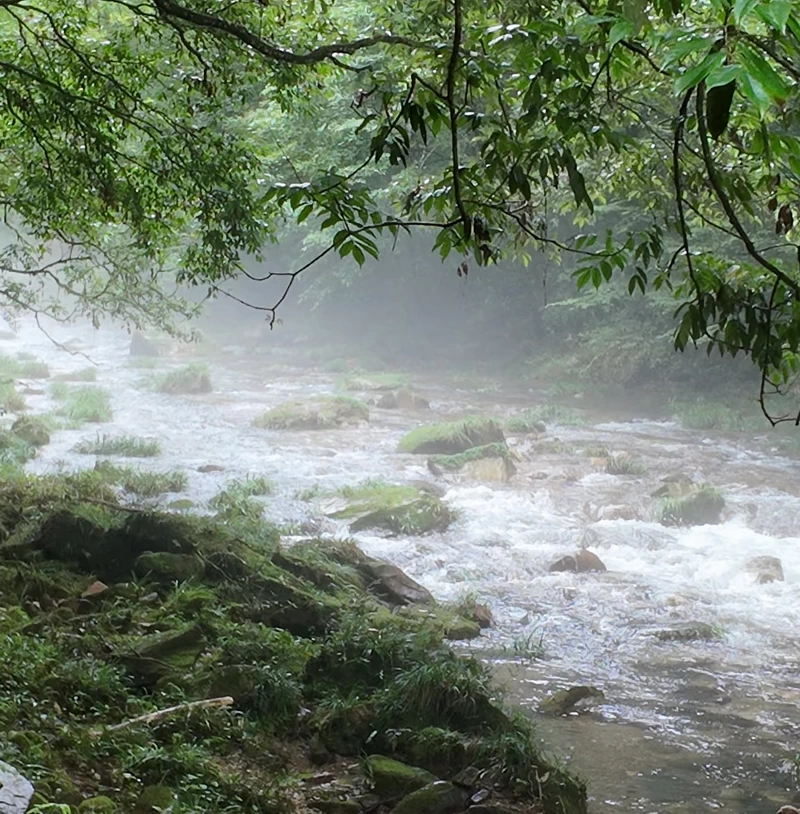
Golden Whip Stream in a rainy day
The complete trail is long. You can walk part of it and return the same way if the rain increases or the group becomes tired.
Do not use the stream route during dangerous rainfall or when staff close sections. Water levels can rise, and wet stone paths become slippery.
Ten-Mile Gallery
Ten-Mile Gallery also sits lower than the main mountaintop viewpoints. Light rain and cloud may soften the view without removing it completely.
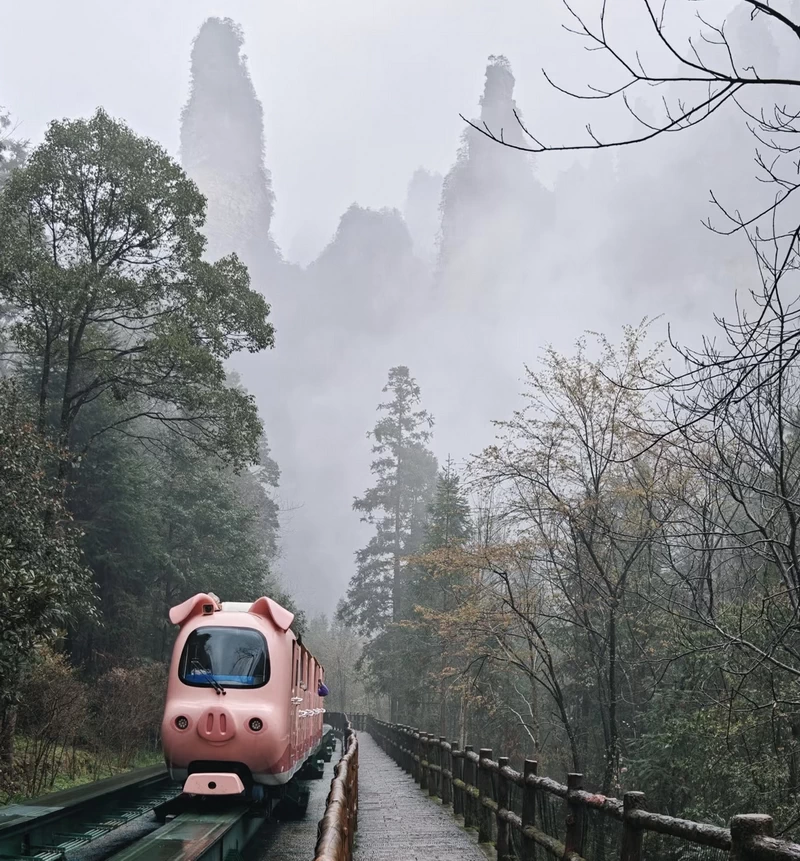
Ten-Mile Gallery on a drizzly day
The sightseeing tram reduces walking. Nevertheless, the experience still takes place outdoors, and exposed seats or boarding areas may feel uncomfortable during heavy rain.
Yellow Dragon Cave
Yellow Dragon Cave can serve as a useful wet-weather alternative because much of the visit takes place underground.
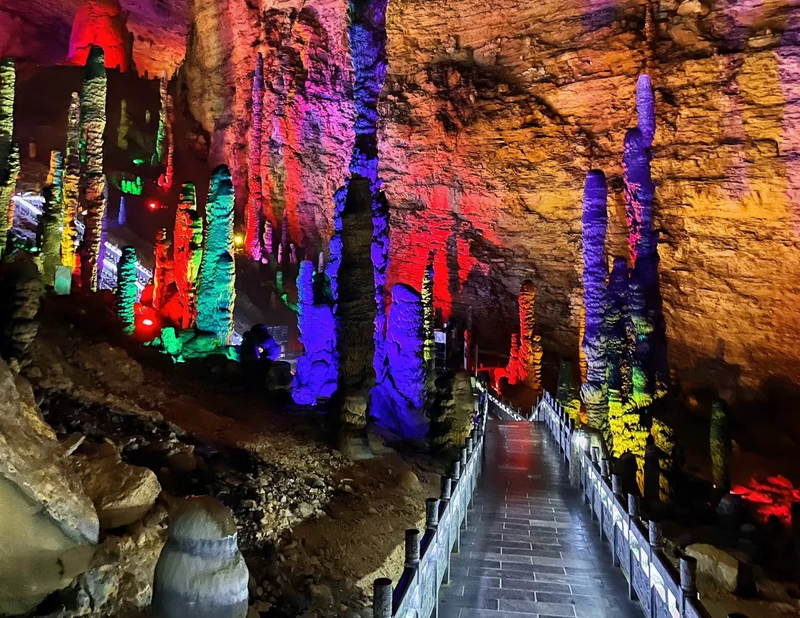
Yellow Dragon Cave
It is not a completely effortless backup. Floors and steps may be damp, and the route can involve considerable walking. It should not be treated as fully accessible.
A Flexible Three-Day Weather Plan
The best defence against poor visibility is an extra day. A tightly fixed itinerary gives the weather control over your trip.
A three-day stay allows you to rearrange the main attractions:
| Weather window | Best use of the day |
|---|---|
| Clearest day | Yuanjiajie and Tianzi Mountain |
| Second-best visibility | Tianmen Mountain |
| Light rain or low cloud | Golden Whip Stream, Ten-Mile Gallery or Yellow Dragon Cave |
| Heavy rain or warnings | Rest, shorten the outing or use a safe indoor alternative |
This does not mean waiting in your hotel for perfect sunshine. Perfect conditions may never arrive.
Instead, identify the best available weather window. Use it for the attraction that depends most on distant views.
What to Do When the Forecast Changes Overnight
Check the forecast again before breakfast. Use the official China Meteorological Administration or National Meteorological Center forecast as your main reference.
Then ask your hotel whether it can check current conditions near the park. Hotels in Wulingyuan often receive recent information from drivers, guides or guests returning from the scenic area.
You can also check recent local photos and live-camera information if available. However, confirm the time and location. A clear photo from Zhangjiajie city does not prove that Yuanjiajie is clear.
Before entering, ask park staff three simple questions:
- Is Yuanjiajie clear now?
- Is Tianzi Mountain inside the clouds?
- Are any buses, cableways or walking routes closed?
If language is difficult, show the Chinese place names on your phone:
- Yuanjiajie: 袁家界
- Tianzi Mountain: 天子山
- Bailong Elevator: 百龙天梯
- Golden Whip Stream: 金鞭溪
- East Gate: 东门 or 吴家峪门票站
Should You Reverse Your Route?
Sometimes.
A common park route uses the Bailong Elevator to reach Yuanjiajie, continues by bus to Tianzi Mountain, then descends by cableway. This works well when the upper viewpoints are clear.
If Tianzi Mountain is clearer in the morning, you may reverse the direction. Take the Tianzi Mountain Cableway up, visit the nearby viewpoints, then continue by shuttle bus toward Yuanjiajie.
Do not reverse the route based on weather alone. Crowd levels, ticket arrangements, temporary closures and transport queues also matter.
The best direction is the one that combines current visibility with manageable queues. Ask locally on the morning of your visit.
What to Wear in Rainy Zhangjiajie
Bring a light waterproof jacket with a hood. It works better than an umbrella on crowded paths and in gusty mountain conditions.
Wear shoes with good grip. Smooth paving, stone steps and metal surfaces become slippery when wet. Waterproof shoes help, but traction matters more than appearance.
A practical rainy-day bag should include:
- A lightweight waterproof jacket
- A dry layer for the upper mountain
- Shoes with slip-resistant soles
- A small towel or tissues
- A waterproof phone pouch
- A cover for your daypack
- Water and simple snacks
- A portable charger
- Your original passport
Avoid heavy cotton clothing. Once wet, it dries slowly and can feel cold on the cableway or upper ridges.
Photography in Mist and Rain
Mist reduces contrast, so distant peaks may look pale. Use a foreground tree, railing or nearby pillar to give the photograph depth.
Keep a soft cloth ready for the lens. Small water droplets can ruin several photographs before you notice them.
Do not lean beyond barriers for a clearer angle. Wet viewing platforms are not the place to step backwards while watching a phone screen.
A clear blue sky is not the only successful outcome. Zhangjiajie often looks most characteristic when several peaks remain visible and clouds move through the spaces between them.
When You Should Change or Abandon the Plan
Light rain is usually a planning problem. Severe weather is a safety problem.
Change the plan if the official forecast includes heavy-rain, thunderstorm, strong-wind or geological-hazard warnings. Scenic transport may slow, pause or close, and walking routes may be restricted.
Follow park announcements even if another weather app looks more optimistic. Local staff can see conditions that a regional forecast cannot describe.
Also turn back if paths become difficult for your group. A route that feels manageable when dry may become tiring when everyone must watch each step.
Ruqin’s Practical Advice
Do not judge Zhangjiajie from a forecast icon five or ten days before arrival. Check again within 48 hours, then use hourly conditions and official warnings to arrange each day.
Allow three days if the mountain scenery is a major reason for your journey. Put Yuanjiajie, Tianzi Mountain and Tianmen Mountain into the clearest available periods.
Light rain can add atmosphere. Persistent fog may remove the view, while heavy rain can create real safety concerns. Stay flexible, wait when conditions appear to be changing, and know when it is wiser to choose a lower route or return to your hotel.
More Zhangjiajie Travel Guides
Where to Stay in Zhangjiajie: City or Wulingyuan?
Zhangjiajie Luggage Storage: A Practical Travel Guide
Zhangjiajie for Senior Travelers: An Easier Two-Day Park Route
How to Visit Zhangjiajie National Forest Park: Map, Tickets & Tips
How to Book Zhangjiajie Attraction Tickets: All You Need to Know
How to See a Doctor in Zhangjiajie: A Foreigner’s Guide