

Written and updated by Ruqin
Last updated: June 7, 2026
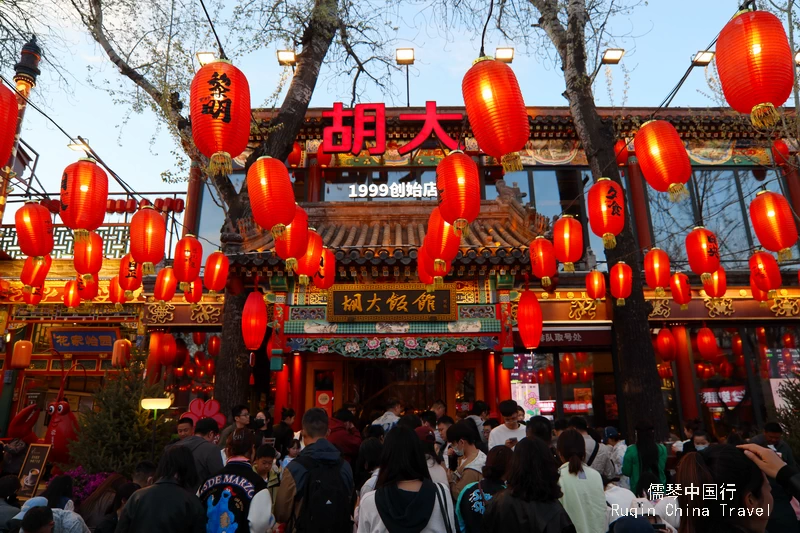
The first time I walked along Guijie Street in Beijing, it was already late evening, yet the street was just getting started. Red lanterns stretched down the entire road, restaurant doors were wide open, and the smell of grilled seafood and spicy hotpot drifted through the air. Locals were gathering for late dinners, and the energy felt completely different from the quiet hutongs nearby.
Many travelers know this place as Ghost Street, a nickname that comes from the way the street stays lively long after midnight. But locals usually call it Gui Jie, and for Beijingers it’s one of the best places in the city for late-night food.
Today Guijie Street is famous for its endless line of restaurants serving everything from spicy crayfish and Sichuan hotpot to classic Beijing dishes. Come hungry — this is a street built for long dinners and shared plates.
1. The Origin of Its Street Name
Guijie Street, commonly called Ghost Street, has an intriguing history. Originally, the street was called “Ghost Street” in Chinese. The name combined 鬼 (guǐ, meaning “ghost”) and 街 (jiē, meaning “street”).
In the 1980s, the Commerce Commission renamed it 簋街 (guǐ jiē) to promote its food culture. 簋 (guǐ) is a homonym of 鬼, but represents an ancient bronze food container. This change symbolized the area’s culinary significance. Now it is a “Food Vessel street“. A huge Chinese character “簋” in colorful strokes hanging on the wall at the west end of Guijie Street (Aka Dongzhimen Inner Street) marks this change.
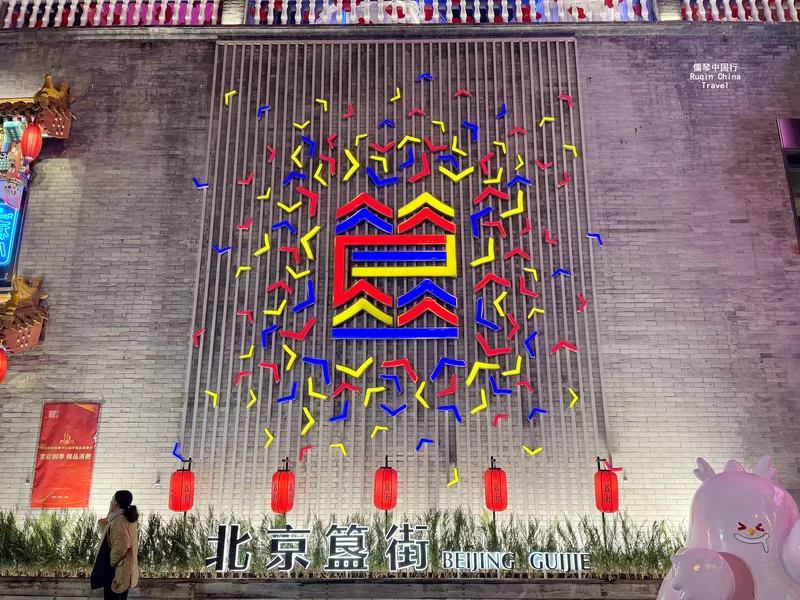
A huge Chinese character “簋” in colourful strokes
The original name’s roots are found in two Qing Dynasty stories. The first describes vendors selling wares under dim oil lamps and red lanterns, creating a ghostly ambience. The second links to the street’s past with coffin shops due to its proximity to the Dongzhimen gate, used for transporting corpses.
2. How to Get to Guijie Street
Guijie Street runs along Dongzhimen Inner Street in eastern Beijing, stretching for about 1.4 kilometers between two major subway stops. Because it sits right between these stations, reaching Ghost Street by public transport is very easy.

Location Map: Guijie Street with its nearby attractions (Google Maps Source)
The most convenient stop is Beixinqiao Station. After exiting from Exit A or Exit D, walk east for a few minutes and you’ll begin to see the famous red lanterns that mark the start of Gui Jie. This side of the street is usually where many of the well-known restaurants are located.
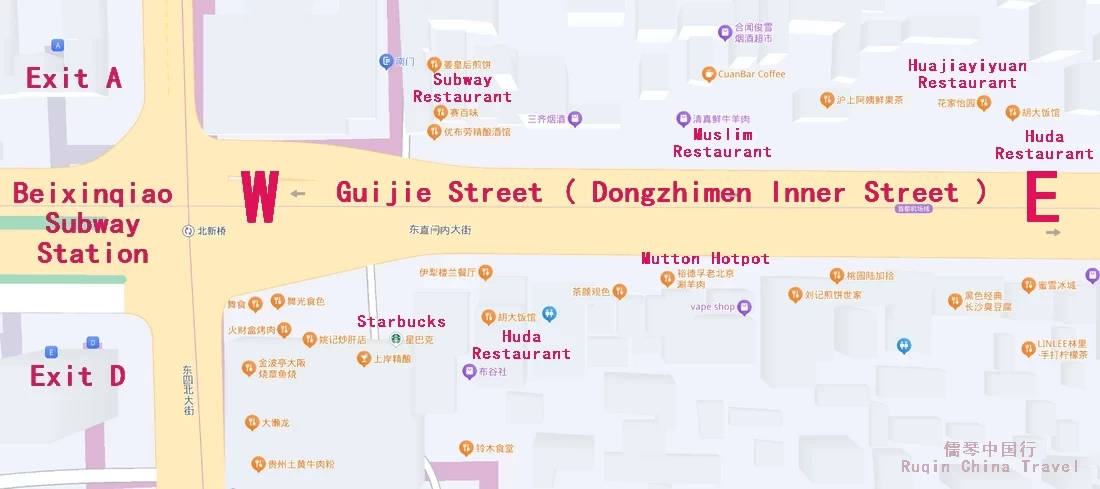
The Sketch Map of Guijie Street
Another good option is Dongzhimen Station. From here, it’s about a 10–15 minute walk west along Dongzhimen Inner Street until you reach the main dining stretch. Dongzhimen is also a major transport hub in Beijing, so many travelers find it a convenient starting point.
In the evening, I often recommend arriving before dinner time and simply walking the length of Guijie Street first. Seeing the rows of lanterns and busy restaurants helps you decide where to stop for your meal.
3. Must-Try Restaurants on Guijie Street
Whenever I bring friends to Guijie Street, the hardest decision isn’t whether to eat — it’s where to start. This lively stretch of Ghost Street is packed with restaurants, each with bright lanterns, busy doorways, and menus full of bold northern and Sichuan flavors. Walking down Gui Jie in the evening, you’ll see long lines forming outside a few particularly famous spots.
Two names you’ll hear again and again are Huda Restaurant (胡大饭馆) and Hua’s Restaurant (花家怡园簋街店). Both have become local institutions on the street. In fact, there are four different branches of Huda along Guijie Street alone — a good sign of just how popular it is with Beijingers who come here for late-night seafood and spicy dishes.
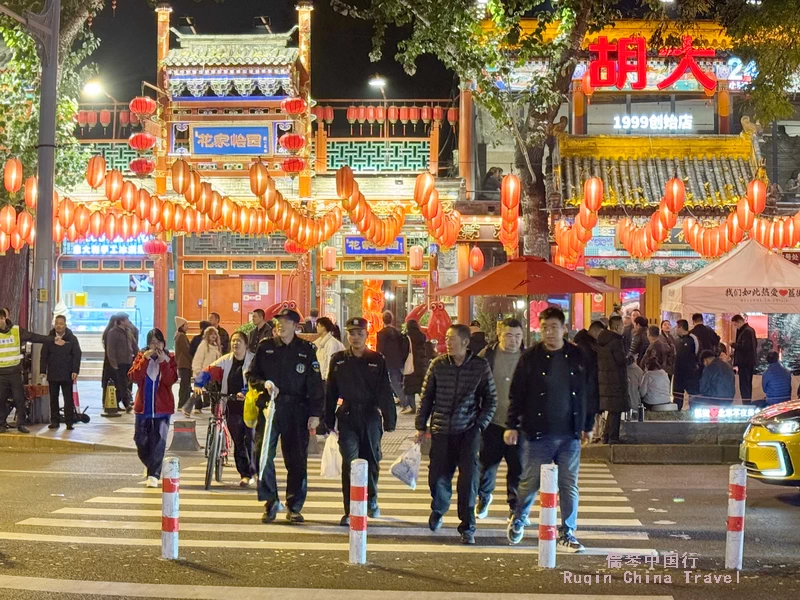
Huda Restaurant (Right) and Hua’s Restaurant (Left) next to each other
1) Huda Restaurant (胡大饭馆)
If you walk along Guijie Street in the evening, one restaurant name you’ll hear again and again is Huda. I still remember the first time I passed by — the line of people waiting outside stretched halfway down the sidewalk. That’s usually the case here. Huda Restaurant (胡大饭馆) has become one of the most famous dining spots on Ghost Street, especially for its spicy seafood dishes.
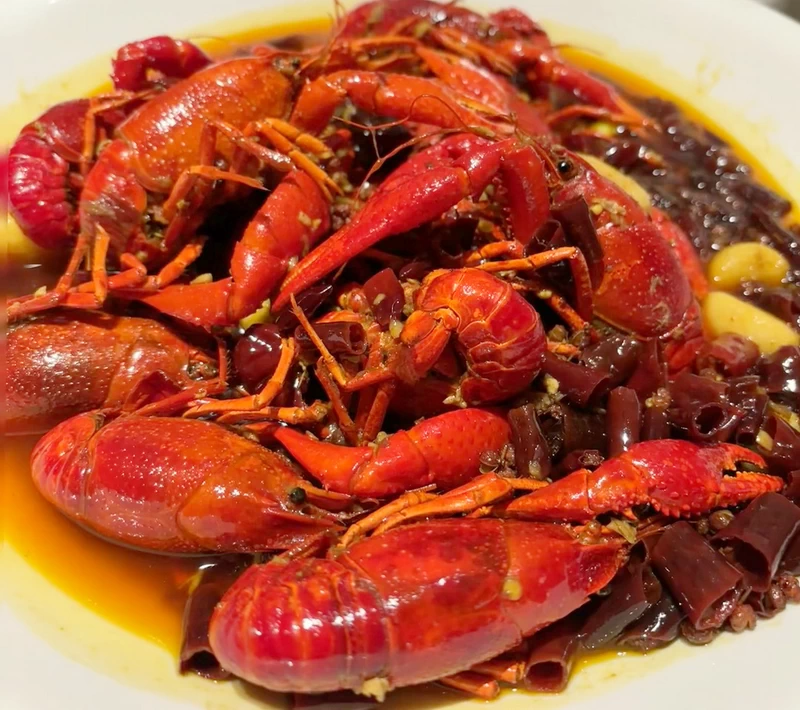
Spicy Crayfish (麻辣小龙虾)
The star of the menu is the famous spicy crayfish (麻辣小龙虾). The crayfish are cooked in a rich, aromatic broth full of chili, garlic, and Sichuan peppercorns. It’s messy, spicy, and incredibly satisfying — exactly the kind of dish that brings groups of friends together around the table.
Beyond crayfish, the menu includes many classic Sichuan-style dishes such as spicy boiled fish and cold beef slices with chili sauce. Like many places on Gui Jie, the restaurant stays busy well into the night, and late dinners here are part of the street’s food culture.
A small tip from experience: expect to wait during peak hours. The good news is that there are several Huda branches along Guijie Street, so if one queue looks too long, you can often find another nearby.
2) Hua’s Restaurant – Guijie Branch (花家怡园簋街)
While Huda is loud and lively, Hua’s Restaurant – Guijie Branch offers a slightly calmer place to sit down and enjoy a proper meal on Guijie Street. I often suggest it to travelers who want to experience the food scene of Ghost Street without standing in long queues or squeezing into a crowded dining room.
The atmosphere here feels more refined. The restaurant blends traditional Beijing courtyard elements with modern touches — wooden screens, calligraphy, and warm lighting that make the space feel comfortable for a longer meal.
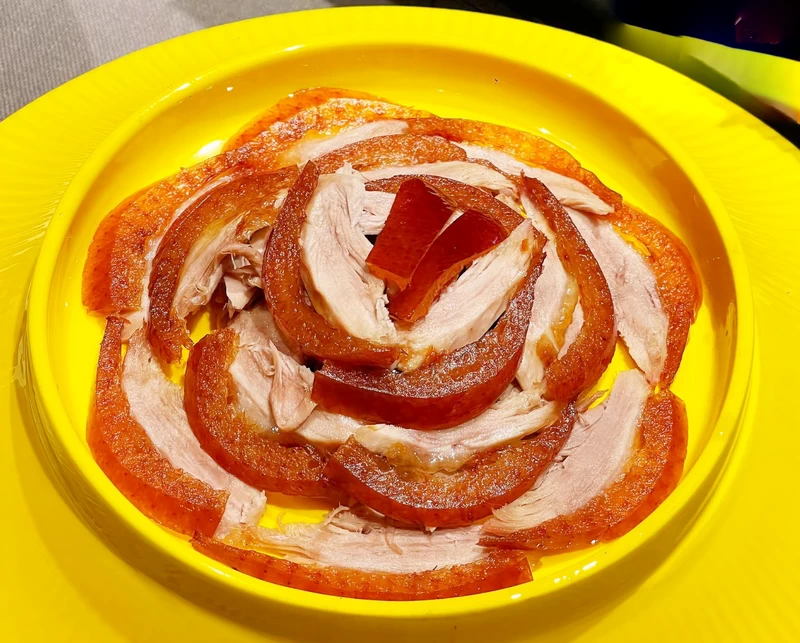
Sliced Peking Roast Duck
The menu is also broader than many places along Gui Jie. You’ll find well-known Beijing dishes such as Peking roast duck, alongside classic favorites like Kung Pao chicken (宫保鸡丁) and Beijing-style braised beef (酱牛肉). The restaurant is popular for group dinners and family gatherings because the dining space is larger and more relaxed.
If you plan to visit during peak dinner hours, making a reservation can still be helpful. And if you have room at the end of the meal, try the light dessert almond tofu (杏仁豆腐) — a refreshing finish after richer dishes.
Which one should you choose?
If you want the full late-night energy of Guijie Street, go for Huda and its famous spicy crayfish. If you prefer a quieter table with a wider range of dishes, Hua’s Restaurant is a very comfortable choice.
3) Huakai Vegetarian (Guijie Street, Beijing) 花开素食
Most people come to Guijie Street expecting spicy crayfish, hotpot, and late-night barbecue. So the first time I stepped into Huakai Vegetarian (花开素食), the contrast surprised me.
Just outside, Ghost Street was buzzing with noise and bright lanterns. Inside, everything felt calm — soft lighting, simple décor, and a peaceful, almost Zen-like atmosphere.
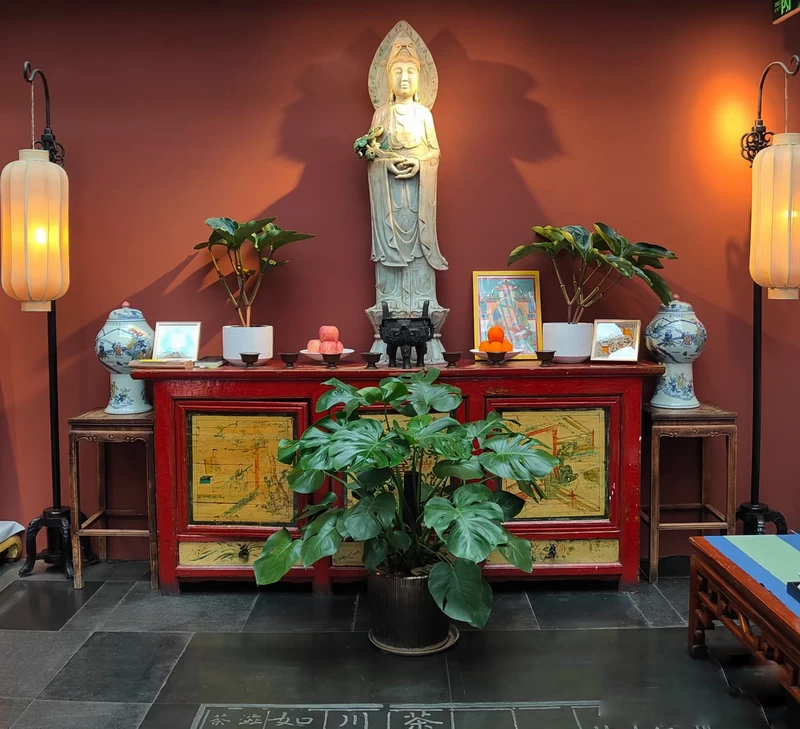
Huakai Vegetarian (Guijie Street, Beijing)
This restaurant offers something quite different from the usual flavors of Gui Jie. The menu focuses entirely on plant-based dishes, prepared with fresh vegetables, mushrooms, tofu, and herbs. The cooking style is light and thoughtful, combining traditional Chinese vegetarian cuisine with a few creative modern touches.
Some popular dishes include avocado salad rolls, a light vegetable and mushroom soup, and a comforting tomato and mushroom hotpot that works well for sharing. Prices are also reasonable for the area, with most diners spending around ¥100–120 per person depending on how many dishes they order.
If you’ve spent a few days enjoying Beijing’s rich and often spicy food, Huakai can feel like a refreshing pause. In the middle of the busy restaurants of Guijie Street, it’s a surprisingly peaceful place to recharge with something lighter and healthier.
Address: No. 144 Dongzhimen Inner Street (aka Guijie Street), Dongcheng District, Beijing
On the east side of Guijie Street, near Dongzhimen South Alley.
4) Jufuyuan Halal Hotpot & BBQ (Guijie Branch) 聚福源清真涮肉-烧烤
While many restaurants on Guijie Street focus on spicy Sichuan dishes, Jufuyuan Halal Hotpot & BBQ offers a more traditional Beijing-style hotpot experience.
The first time I ate here, what stood out immediately was the copper hotpot placed over glowing charcoal — a classic style that many locals still prefer. In the middle of the busy restaurants along Ghost Street, this place feels very rooted in old Beijing dining traditions.
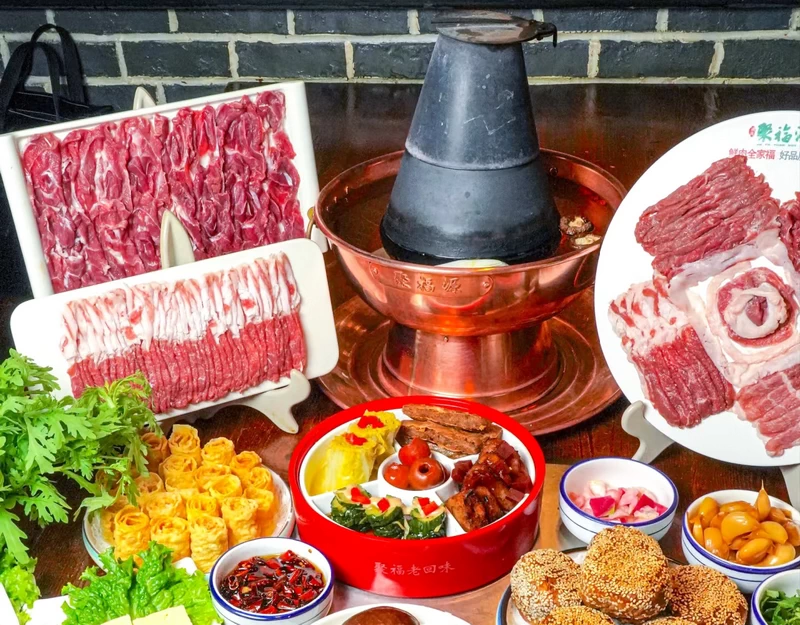
Jufuyuan Halal Hotpot
If you’re not used to rich hotpot broths, you can simply order a clear broth (清汤). It’s very light and lets the flavor of the lamb stand out. Don’t forget the sesame dipping sauce, which is a classic Beijing pairing with lamb hotpot.
Alongside the hotpot, you’ll find small dishes like wood ear mushrooms with mustard dressing, crispy sesame pancakes filled with sweet paste, and a pleasantly tangy hot and sour soup. For travelers looking to try authentic halal hotpot on Guijie Street, this is a solid and very local choice.
Address: No. 288, Dongzhimennei Street, near Beixinqiao Metro Station (Exit D), southeast corner of the intersection.
5) Guijie Zai Zai Crayfish (簋街仔仔小龙虾店)
When you walk along Guijie Street at night, you’ll quickly notice that crayfish is the unofficial star of the street. One place locals often mention is Guijie Zai Zai Crayfish, a lively restaurant known for its bold flavors and late-night energy right in the middle of Ghost Street.
The menu focuses on crowd-pleasing dishes like spicy crayfish, grilled fish, and spicy frog legs—all classic favorites for groups sharing food over drinks. The crayfish here are cooked in rich, aromatic sauces packed with chili, garlic, and Sichuan peppercorn, the kind of dish that keeps people lingering at the table long after dinner.
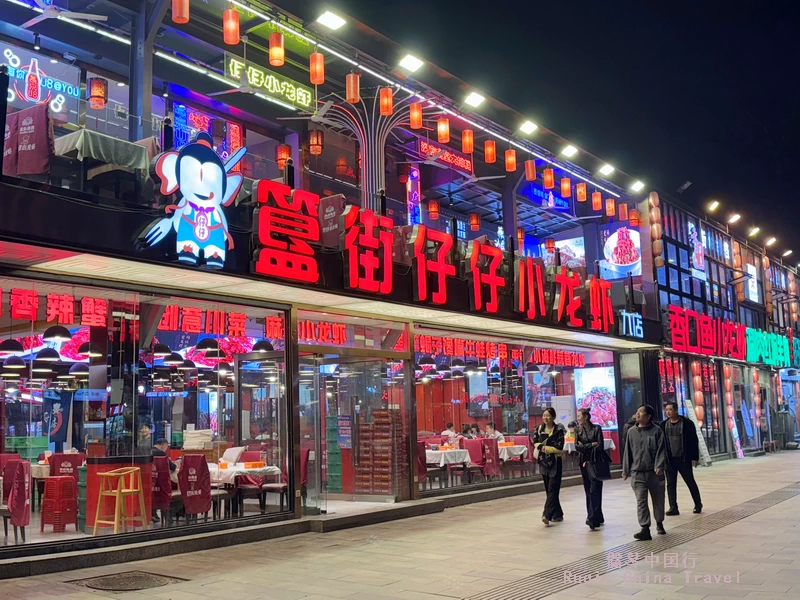
Guijie Zai Zai (簋街仔仔)
Like many restaurants on Gui Jie, the hours are very late. The restaurant typically opens around late morning and stays busy well into the early hours of the morning, making it a popular stop for late dinners and after-midnight meals.
If you’re exploring Guijie Street for the full night food experience, Zai Zai Crayfish is one of those places where you can sit down with friends, roll up your sleeves, and enjoy the messy, flavorful fun that this street is famous for.
Address: No. 181-1-3, Dongzhimen Nei Street, Dongcheng District, Beijing. 北京市东城区东直门内大街181-1-3号
6) Beiping Three Brothers Hotpot (北平三兄弟涮肉)
Among the many seafood and spicy restaurants on Guijie Street, Beiping Three Brothers Hotpot offers something a little more traditional. This restaurant focuses on old Beijing–style lamb hotpot, served the classic way in a copper pot heated with charcoal. It’s the kind of meal many locals grew up eating in winter, and the atmosphere here reflects that older Beijing dining style.
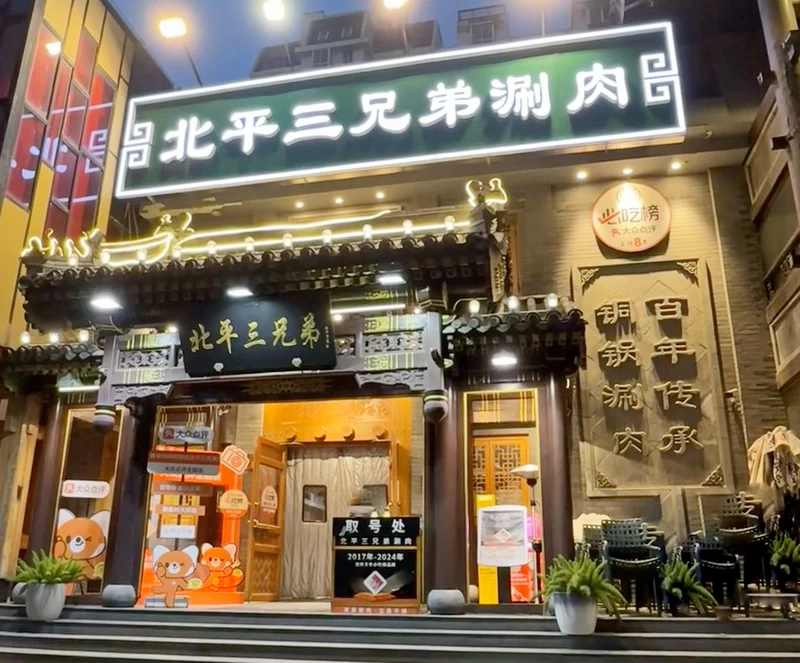
Beiping Three Brothers Hotpot
The interior has a nostalgic feel, with simple décor inspired by traditional Beijing restaurants. The first floor is usually for walk-in diners, while the second floor has private rooms that work well for small gatherings. Even on busy evenings along Ghost Street, the dining room here often feels a bit more relaxed than some of the louder seafood spots.
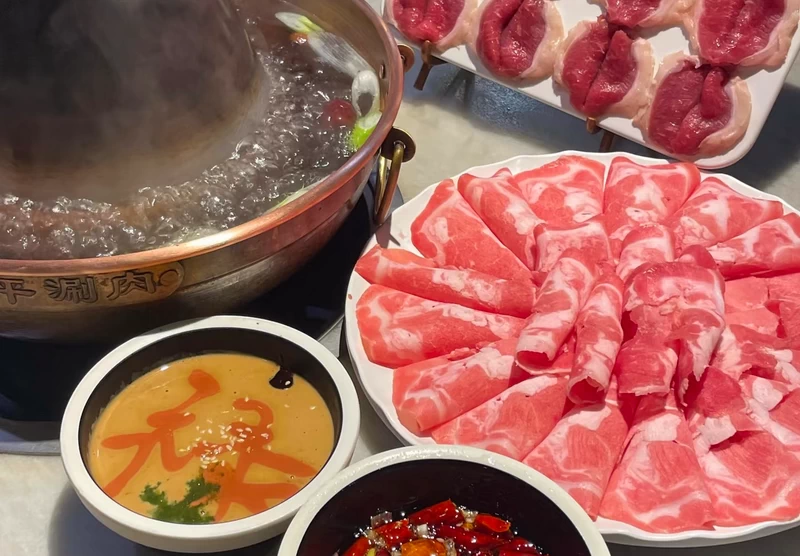
Beef and Lamb Combo
The highlight, of course, is the thinly sliced lamb, which cooks quickly in the hot broth and stays tender and flavorful. Many diners also order the beef and lamb combination platter for variety. A classic sesame dipping sauce accompanies the meat, along with small side dishes like cucumber, peanuts, and radish for a refreshing contrast.
To finish the meal, a glass of homemade sour plum soup is a nice touch — slightly sweet, slightly tart, and perfect after a rich hotpot dinner on Gui Jie.
Address: No. 5-6, Dongzhimen Nei Street, Dongcheng District, Beijing, China.
北京市东城区东直门内大街5-6号
Tel: (010)84064086
7) Yude Fu Traditional Lamb Hot Pot (裕德孚老北京涮羊肉)
If you want to try one of Beijing’s most classic winter dishes, Yude Fu Traditional Lamb Hot Pot is a wonderful place to do it on Guijie Street. This restaurant focuses on old Beijing–style lamb hotpot, where the quality of the meat and the traditional cooking method really matter.
Here, the lamb is hand-sliced fresh, with different cuts such as tenderloin and sirloin carefully prepared so they cook quickly in the pot and stay tender. Like many traditional hotpot restaurants in Beijing, the meal is served in a copper pot heated with charcoal, which keeps the broth at a steady simmer throughout the meal.
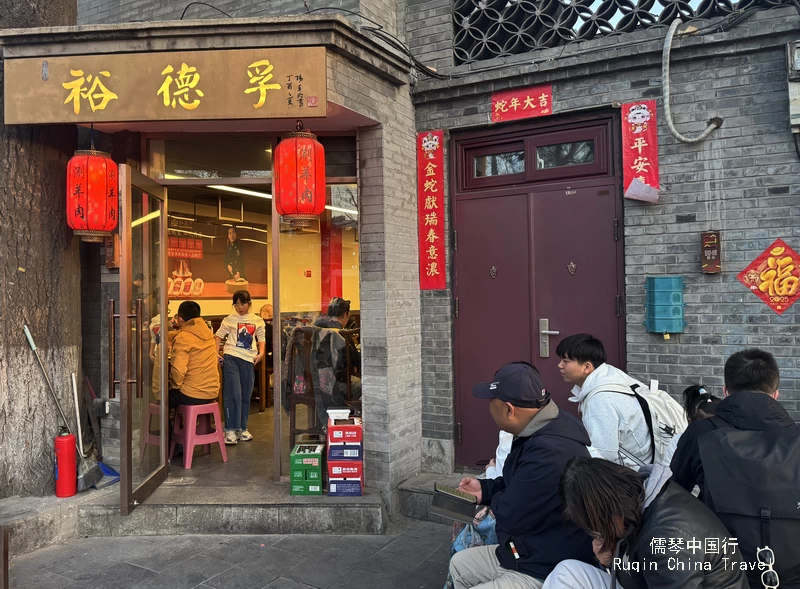
Yude Fu Traditional Lamb Hot Pot
The dipping sauce is the familiar Beijing sesame sauce, rich and nutty, and it pairs perfectly with the thin slices of lamb. Add a few vegetables or tofu into the pot, and the meal becomes simple, hearty, and very satisfying.
The restaurant itself is fairly modest — a bit small and softly lit — but that’s part of its charm. People come here for the food rather than the décor. On a busy night along Ghost Street, you’ll hear lively conversations around the tables as diners enjoy one of Beijing’s most traditional hotpot experiences on Gui Jie.
Address: No. 264, Dongzhimen Nei Street, Beijing 北京东直门内大街264号
8) Peng Ji Iron Pot Fat Intestines (彭记铁锅肥肠)
Among the many seafood and hotpot spots on Guijie Street, Peng Ji Iron Pot Fat Intestines offers something a little different — a rich, hearty dish that many locals love. The first thing you’ll notice when the dish arrives is the large iron pot placed in the center of the table, bubbling gently with sauce and spices.
The restaurant’s signature dish is, of course, the iron pot fat intestines. The intestines are carefully cleaned and slowly cooked with green peppers, garlic, and spices, creating a deep, savory flavor that pairs well with rice or pancakes. If you enjoy bold northern Chinese dishes, this is a memorable one to try on Ghost Street.
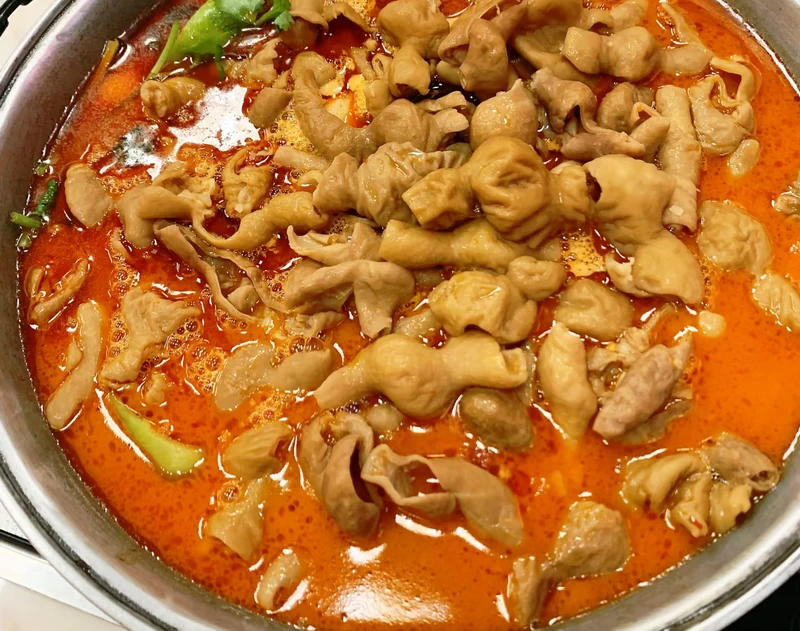
Peng Ji Iron Pot Fat Intestines
You can also choose the level of spiciness, which is helpful if you prefer something milder. Many people order the set meal, which usually includes the iron pot dish along with pancakes, tofu, wood ear mushrooms, and lettuce — enough for two or three people to share comfortably.
The restaurant itself is a cozy two-story space with a relaxed, local feel. Like many popular places on Gui Jie, it can get busy in the evenings, especially on weekends, so arriving a little earlier can help you avoid the longest lines.
Address: No. 224, Dongzhimen Nei Street, Beijing. 北京东直门内大街224
4. The Culinary Highlights of Ghost Street
One thing that makes Guijie Street special is that the food scene rarely sleeps. Most restaurants stay open late into the night, and many run almost around the clock. During the evening, Ghost Street really comes alive—rows of red lanterns glowing above busy tables while the smell of seafood, chili, and garlic fills the air.
The most famous dish here is spicy crayfish. Bowls of bright red crayfish arrive covered in chili, garlic, and aromatic spices. It’s messy, flavorful, and meant for sharing with friends.
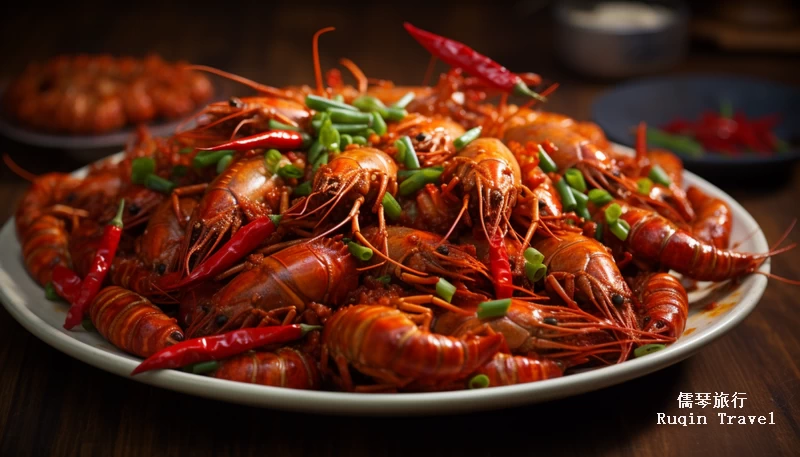
hot and spicy crayfish
You’ll also find excellent Peking roast duck, especially at Hua’s Restaurant, where the duck is served with thin pancakes, scallions, and sweet sauce.
Other popular choices include garlic grilled oysters and seafood, often eaten with cold beer, and the fiery Sichuan-style boiled fish, where tender fish fillets soak up a rich chili-oil broth.
Together, these dishes capture the bold, social spirit of Gui Jie dining.
5. Dining Budget at Guijie Street
Eating on Guijie Street doesn’t have to be expensive, which is one reason the area is so popular with locals. Most meals here are shared, so groups often order several dishes to place in the center of the table. The experience is lively and social—much more about enjoying food together than sitting down for a formal dinner.
In general, the cost is quite reasonable for central Beijing. Most people spend somewhere between 50 and 200 RMB per person, depending on the restaurant and how many dishes you order. Simple barbecue or noodle spots fall on the lower end, while seafood or hotpot restaurants tend to be a bit higher.
Like anywhere in a busy food district, prices can vary, and a few places may feel slightly overpriced. Still, the majority of restaurants along Ghost Street offer good value, especially if you come with friends and share a few of the street’s signature dishes on Gui Jie.
6. Guijie Street Nearby Attractions
One thing I like about Guijie Street is how close it is to some of Beijing’s most interesting historic neighborhoods. It’s easy to combine dinner on Ghost Street with a short walk or taxi ride to a few nearby cultural spots.
A great place to start is Yonghe Temple, also known as the Lama Temple, about 1.5 km away. It’s one of the most beautiful Tibetan Buddhist temples in Beijing, filled with incense, prayer halls, and intricate carvings.
Just nearby is Wudaoying Hutong, a relaxed lane with cafés, small boutiques, and traditional courtyards. It’s a pleasant place to wander before heading to Gui Jie for dinner.
If you’re interested in Chinese history and philosophy, visit Temple of Confucius, Beijing and the nearby Guozijian Museum.
A little farther west, you’ll find the historic Drum Tower of Beijing and Bell Tower of Beijing, along with the scenic lakes of Shichahai and lively hutongs like Nanluoguxiang. These places pair nicely with an evening meal on Guijie Street
Guijie Street, or Gui Jie, is more than just a food destination; it’s a vibrant slice of Beijing’s rich cultural tapestry. This legendary street, with its intriguing history and bustling contemporary scene, offers a unique blend of traditional and modern flavors that cater to every palate.
Whether you’re seeking a taste of authentic local cuisine or a spicy Sichuan adventure, Gui Jie promises an unforgettable dining experience. With this guide, you can easily plan your Beijing itinerary and include a night out in Gui Jie – it’s an experience that epitomizes the heart and soul of this magnificent city.
Frequently Asked Questions — Guijie Street (Ghost Street), Beijing
1. Where is Guijie Street and how do I get there?
Guijie Street runs along Dongzhimen Inner Street for about 1.4–1.5 km. The easiest subway stop is Beixinqiao Station (Exit A or D). You can also walk about 10–15 minutes from Dongzhimen Station.
2. Are restaurants open late on Ghost Street?
Yes. Most restaurants open from late morning or afternoon and stay busy until around 3–5 AM, which is why the street is famous for late-night dining.
3. How much does a meal usually cost?
Most meals range between 50 and 200 RMB per person, depending on the restaurant and how many dishes you share.
4. What food is Guijie known for?
Popular dishes include spicy crayfish, hotpot, grilled seafood, and Peking roast duck. Well-known restaurants include Huda, Hua’s Restaurant, and several lamb hotpot spots.
5. Is Guijie Street busy every night?
Pretty much. After sunset the street becomes lively, with long lines forming outside popular restaurants.
6. Are menus foreign-visitor friendly?
Many restaurants have photo menus or some English, but a translation app can still be helpful.
7. Is it safe at night?
Yes. Ghost Street is bright, busy, and generally very safe for evening dining.
8. Best time to visit?
Around 7 PM to midnight, when the lanterns are glowing and the street is most lively.
9. Any quick tips for first-time visitors?
Use the subway or taxi (parking is difficult), come with friends to share dishes, and don’t be afraid to try something spicy.
About the Author
Ruqin is the founder of Ruqintravel.com and has spent more than four decades working in China’s travel industry. Drawing on hands-on experience in cities like Beijing and Hangzhou, he personally researches and updates each guide to help international travelers navigate China with confidence.
Further Reading
What to Eat in Beijing: A Visitor’s Guide
Best Street Food in Beijing: What to Eat and Where to Find It
Dashilan Street: Map, Food, Shopping & Hotels
Huguosi Street, Beijing (Huguosi Snack Street): A Visitor’s Guide
Yandai Xiejie Street (Yandaixie): Shops, Food, Sights and Tips
Nanluoguxiang: Maps, Shopping, Bars, Cafes, Food, Hutong & Tips
Xianyukou Street, Beijing: What to Eat, Shop & See Before You Go
Qianmen Street Beijing: Map, Food, Shopping & Hotels
Shichahai Travel Guide: Hutongs, Bars, Food & Things to Do
Wudaoying Hutong: Shops, Cafes, Food and Travel Tips








Dear Ruqin, I am Angie. Have been reading your blog to prepare myself for my trip to Beijing. We do not eat beef. Just wondering the hotpot in Beijing (mostly halal, I see), the broth is boiled with beef or mushroom soup etc? We want to try but we worry abt the ingredient in the soup. Thanks!
Dear Angie,
Thank you for reaching out and for reading my blog! I’m so glad to hear you’re preparing for your trip to Beijing. I completely understand your concerns about the hotpot ingredients, and I’m happy to help clarify.
In Beijing, hotpot restaurants offer a variety of broth options. If you prefer a simpler broth without any mushrooms, you can simply ask for a clear broth (清汤), which is essentially just water and doesn’t include any extra ingredients. This way, you’ll be safe from any unwanted flavors.
Regarding the meats, most hotpot menus clearly list the options, so if you don’t eat beef, you can easily opt for lamb (羊肉), which is a very popular choice. Most hotpot places will have these options available, and you can specify what you want.
Not all hotpot restaurants are halal, but halal restaurants tend to be cleaner and offer a more controlled ingredient list, which might give you extra peace of mind.
If you’re planning to visit Guijie Street (簋街), I have a great recommendation for you! It’s a well-known area for food, and you’ll find a halal hotpot restaurant that I think you’ll enjoy:
聚福源清真涮肉-烧烤 (Guijie Branch)
Address: No. 288, Dongzhimennei Street, near Beixinqiao Metro Station (Exit D), southeast corner of the intersection. 北京市东直门内大街288号,北新桥地铁D口斜对面,也就是十字路口的东南角。
The restaurant has a spacious, beautiful interior with an old Beijing feel. You’ll find both a first and second floor with windows that offer a nice view.
They use a copper pot with charcoal for cooking, and the lamb is tender and delicious. One thing I highly recommend is their sesame sauce for dipping the lamb—it’s absolutely amazing! They also offer a variety of side dishes like mustard wood ear mushrooms, which are both crunchy and refreshing.
Another dish to try is their sesame pancake – it’s crispy on the outside and filled with sweet sesame paste. The sour and spicy soup there is also quite tasty!
The service is also very good, and it’s a great spot to enjoy authentic halal hotpot.
I hope this helps! Let me know if you have any more questions. I’m sure you’ll have a fantastic time in Beijing!
Best regards,
Ruqin