


Written and updated by Ruqin
Last updated: May 22, 2026
Tucked away in the misty green mountains of Gansu, the Maijishan Grottoes rise like a vision from another world. Towering cliffs, ancient Buddhist carvings, and walkways that cling to the rock face—it’s no wonder this site is ranked among China’s four great grottoes.
But if you’re wondering how to get to Maijishan Grottoes from Xi’an, you’ll quickly learn it’s not just a matter of catching a city bus.
That’s why I created this guide—for travelers like you who want the adventure without the guesswork. I’ll take you step by step, from train routes and ticket hacks to the best places to sleep, eat, and explore. I’ll even share a few tricks I picked up along the way.
If you’re ready to trade tourist crowds for cliffside wonders, let’s start planning your journey to one of China’s most breathtaking hidden gems.
1. How to Get to Maijishan Grottoes from Xi’an
Getting to Maijishan Grottoes from Xi’an is surprisingly easy—if you know the right route. I tried a few ways, but nothing beats the high-speed train.
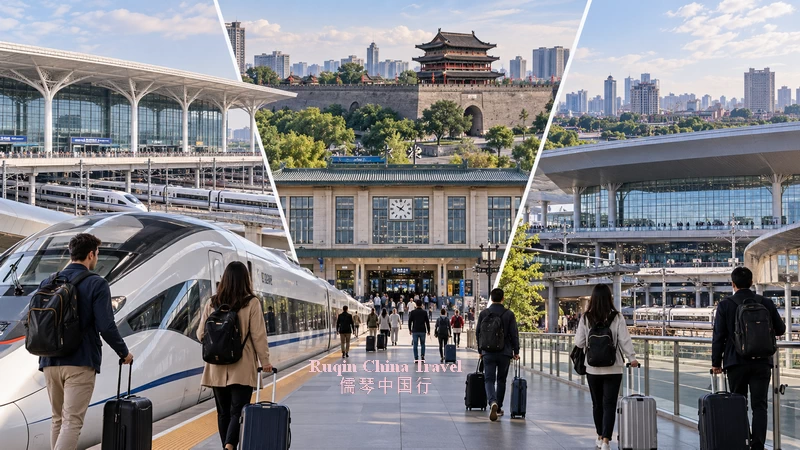
From Xi’an North Station, I boarded a sleek bullet train heading west. Ninety minutes later, I stepped off in Tianshuinan Railway Station (Tianshui South Railway Station), the gateway to Gansu’s green hills. Tickets start around ¥100, and there are several trains daily. Book ahead on Trip.com or 12306—it’s worth it.

From the station, you’ve got options. I grabbed a Didi (China’s Uber), and the 40-minute ride cost about ¥90. Or, if you’re feeling more local, hop on Bus 60. Both will take you to Maijishan’s main entrances, though it takes about 1.5 hours.
If you’re traveling on a shoestring and don’t mind a slower pace, the regular train from Xi’an to Tianshui works too. It takes 4–5 hours, but only costs about ¥50.
As for buses? Honestly, skip them unless you’re desperate. They’re not as comfy and traffic can be a pain.
Driving yourself is doable, especially with friends. Just be ready for a 4–5 hour journey through the loopy roads of the Lianhuo Expressway.
Whichever way you go, the journey is part of the adventure.
2. Maijishan Grottoes Tickets & Opening Hours
Maijishan might feel like a remote wonderland, but buying tickets doesn’t have to be a mystery.
When I arrived, I quickly learned the grottoes run on seasonal pricing. In spring and summer, a full ticket costs ¥80. Come winter, it drops to ¥50—(Nov.01 – March 31 ) but some walkways might be icy and closed. I went in late April, so I got the full experience, but layers were still a good idea.
Once you get your ticket, you’ll face your first decision: walk 20 minutes uphill or pay ¥15 for the shuttle. I took the bus—it saved energy for the cliffside stairs.
Now here’s where it gets exciting: special caves. These are hidden gems within the site—Cave 133 with its sea of Buddhas was my favorite. But entry isn’t included in the main ticket. You’ll need to pay extra (¥100–¥300), reserve a slot, and leave your camera behind.

Visiting early pays off. At 8:30, I had the place nearly to myself. The morning sun lit the sculptures perfectly. By afternoon, big tour groups started rolling in.
Buy your tickets online if you can—skip the queue and head straight in with a scan. But if you’re going in winter or like to decide on the fly, the on-site option works fine. Just bring your passport and some patience.
Whatever your style—quick peek or deep dive—plan ahead, pack smart, and savor the climb. These caves are more than stone—they’re windows into centuries of quiet devotion.
3. Maijishan Grottoes Hiking Route – Caves, Cliffs & Cliffside Views
Maijishan isn’t your average tourist site—it’s a sacred mountain carved with over a thousand years of devotion. The grottoes cling to a sheer cliff face, split between East and West, and connected by dramatic hanging walkways.
To get the most from your visit, it’s important to plan your route. Here’s how I explored it—step by step.
Step 1: Getting to the Base
Once you pass the scenic entrance, you have two options:

- Walk 20–30 minutes under shaded trees (a lovely intro if you’re a nature lover)
- Take the shuttle bus (¥15 round-trip) in 10 minutes—perfect if you want to save your legs for the cliff stairs

Step 2: Choose Your Visiting Route – Red Route 1 or Green Route 2
Before you begin your cliffside adventure, you’ll need to choose between two official touring paths: Red Route 1 or Green Route 2. The difference isn’t just the color—it’s in the altitude, cave highlights, and what kind of traveler you are.
Each ticket grants access to only one route, and once you enter, there’s no turning back—literally. The trails are single-direction for safety and preservation.

🔴 Red Route 1 – The Sky-High Challenge
This is the route for thrill-seekers and strong legs. It climbs steeply to Maijishan’s highest walkways—at one point, 84 meters (275 feet) above ground. Narrow cliff paths and dizzying views await.
But the reward? Some of the mountain’s grandest and oldest grottoes.

Highlights:
- Cave 3 – Thousand-Buddha Corridor: A massive relic from the Northern Dynasties, lined with rows of ancient figures.
- Cave 4 – Flower-Scattering Pavilion: Famous for its graceful flying apsaras painted across the cave walls.
- Cave 98 – West Cliff Buddha: A towering figure etched into the cliffside—an unforgettable sight.

Expect steep steps and exposed paths, but also the best aerial views of the valley. If heights don’t faze you, this route is your epic climb.
Time: 1.5–2 hours
Best for: Active travelers, photography lovers, history buffs.
Green Route 2 – The Scenic & Family-Friendly Path
Prefer a gentler pace and a bit less adrenaline? The Green Route is smoother and safer, perfect for those traveling with children, seniors, or anyone with a fear of heights.
But don’t think you’re missing out—this route includes some of the site’s most cherished and well-preserved statues.

Highlights:
- Cave 13 – Eastern Cliff Buddha: A serene 15-meter Buddha that watches over the valley.
- Cave 44 – “Eastern Venus”: Also known as the “Oriental Beauty,” this soft-faced statue is among China’s finest.
- Cave 78 – Early Northern Wei Sculpture: With distinct Central Asian influences and no extra ticket required.

It’s also the better route if you want a closer look at protected caves like Cave 58 (Water-Moon Guanyin) and enjoy a calm, cultural walk rather than a mountain workout.
Time: 1.5–2 hours
Best for: Families, seniors, height-sensitive travelers, art lovers.
Pro Tip:
You don’t need to purchase separate tickets for each route at the Maijishan Grottoes. The standard 80 RMB admission ticket is a combo pass that covers both Route 1 and Route 2, including access to most of the grottoes along the mountain.
However, please note that a few special caves (like Cave 44 and Cave 133) do require an additional ticket, which can be purchased at the Visitor Interpretation Center on-site. These are optional and recommended only if you have extra time and interest in the more detailed art history.
4. Where to Stay Near Maijishan Grottoes
After a day of cliffside stair climbing and marveling at thousand-year-old Buddha carvings, you’ll want a comfortable place to unwind. So where’s the best place to stay?
You have two options: stay close to the grottoes for early-morning access, or head to Tianshui city for more comfort and food choices.
Stay Near the Grottoes: Sleep by the Mountains
Want to beat the crowds at sunrise? Then sleep nearby.
I stayed at Maijishan Hot Spring Resort Hotel, just a 10-minute drive from the grottoes. Rooms are spacious, some with balconies facing the green cliffs. But the best part? The hot springs. After hiking the steep walkways, soaking in warm natural water was pure bliss. Rates run ¥400–800 a night, and they even offer shuttle service to the grottoes—just book ahead.
For a more rustic experience, try a farm guesthouse in a nearby village like Maiji Town. These cost only ¥100–200, include home-cooked meals, and offer starry skies at night. But don’t expect luxury—some bathrooms are shared, and amenities are basic.
Backpackers? Maijishan International Youth Hostel is your go-to. Dorm beds are ¥50–100, and the place has a chill vibe with a shared kitchen, book lounge, and even hiking gear rental.
Stay in Tianshui City: More Comfort, More Choice
Prefer city convenience? Tianshui, especially Qinzhou District, has you covered.
The Hyatt Regency Tianshui is top-tier. It’s centrally located, with modern rooms, a great buffet featuring local specialties like jiangshui noodles, and all the amenities you’d expect—gym, pool, the works. Rooms go for ¥600–1000.
Looking for elegance without the Hyatt price? Tianshui Sunshine Hotel (¥400–600) features peaceful garden designs and even offers shuttle buses to Maijishan.
Budget travelers can stay at Tianshui Hotel, a clean, well-located state-owned spot (¥300–500), or at chain hotels like Hanting or Home Inn near Tianshui Railway Station (¥200–300), perfect if you’re catching an early train.
Local Tips for Booking
- Peak season (April–October): Book early—hotels near the grottoes sell out fast.
- City stays: Check if your hotel provides transportation to Maijishan.
- Farm stays: Bring some cash; many only accept RMB and don’t take cards.
Final Take:
- Most Convenient: Maijishan Hot Spring Resort Hotel
- Best Value: Tianshui Hotel
- Backpacker Favorite: International Youth Hostel
Pick based on your travel style. If you plan to explore other nearby gems like Fuxi Temple or Xianrenya, staying in the city may make more sense. Either way, you’ll sleep well knowing an incredible cultural site awaits you in the morning.
5. What to Eat at Maijishan
Exploring ancient grottoes stirs up more than curiosity—it stirs your appetite. Luckily, Maijishan sits in Tianshui, a city where northwestern boldness meets southern Gansu charm on every plate.
Here’s your full guide to eating like a local—without upsetting your stomach.
Must-Try Local Dishes
1. Tianshui Guagua (Cold Buckwheat Jelly) 天水呱呱(荞麦凉粉)
This is the king of local breakfasts. It’s soft, bouncy jelly made from buckwheat starch, dressed in chili oil, garlic, and vinegar.
- Try it plain for a gentle intro—mildly sour, very refreshing.
- Go spicy like the locals do—it’s fragrant, not overpowering.
Best spots: Maiji Town morning stalls, or the old favorite “Changji Guagua” in downtown Tianshui.
2. Jiangshui Noodles (Sour Soup Noodles) 浆水面(酸汤面)
A cool bowl of fermented wild veggie broth and thin noodles—perfect for summer.
Locals swear it “lowers internal heat.” Add tiger-skin green chilies if you dare.
Heads up: the fermented tang resembles Korean kimchi—some love it, some don’t.
3. Tianshui-style Beef Noodles 清真牛肉面(甘肃版拉面)
Not your usual Lanzhou ramen!
- Broth: lighter, clearer
- Chili oil: flavorful, not fiery
Pro tip: Order tendon slices (¥10) and a tea egg (¥2) on the side.
4. Hand-Grabbed Lamb 手抓羊肉
Tender cuts boiled with just salt and served with garlic or chili dip.
No gamey taste—just pure, mountain-raised flavor.
Try it at a local farmhouse or at “Ma Laoliu Halal Restaurant” in town.
Other Local Bites:
- Guokui 锅盔: A thick, crispy flatbread—great with spicy lamb filling.
- Sweet Paizi 甜醅子: Fermented oat dessert, like a mellow rice wine pudding.
Food Safety & Eating Tips for Foreign Visitors
- Avoid raw veggies (e.g., wild salad greens) unless you’re sure the water is clean. Stick to hot dishes.
- Drink only bottled water. Don’t ask for ice—water may not be filtered.
- Bring snacks. Energy bars and nuts are handy, especially since food at the grottoes is pricey.
- Use a thermos. Free hot water is available in the scenic area.
By the time I left Maiji Mountain Grottoes, with wind in my hair and the scent of pine still clinging to my clothes, I felt like I’d traveled not just through a mountain—but through centuries of devotion carved into stone.
Getting here from Xi’an wasn’t complicated, but it did require some planning. Now that you know exactly how to get to Maijishan Grottoes from Xi’an, where to stay, what to eat, and which cave holds the smile of a thousand Buddhas, you’re more than ready to experience one of China’s most awe-inspiring hidden gems.
So pack your hiking shoes, your sense of wonder, and maybe a thermos of tea. Because once you step onto those sky-high walkways, Maijishan will leave a mark—not just in your memory, but in your heart.
About the Author
Ruqin is the founder of Ruqintravel.com and has spent more than four decades working in China’s travel industry. Drawing on hands-on experience in cities like Beijing and Hangzhou, he personally researches and updates each guide to help international travelers navigate China with confidence.
Further Reading
Lanzhou Travel Guide: Map, Highlights and Travel Tips
Xiahe Travel Guide: Map, Scenic Routes, Highlights and Travel Tips







since the entry ticket is only for one route, if I want to do both routes, I have to re-enter with a new entry ticket, right?
Hi Lynette,
Great question — thanks for reaching out!
You don’t need to purchase separate tickets for each route at the Maijishan Grottoes. The standard 80 RMB admission ticket covers both Route 1 and Route 2, including access to most of the grottoes along the mountain.
However, please note that a few special caves (like Cave 44 and Cave 133) do require an additional ticket, which can be purchased at the Visitor Interpretation Center on-site. These are optional and recommended only if you have extra time and interest in the more detailed art history.
Enjoy your trip!
– Ruqin China Travel