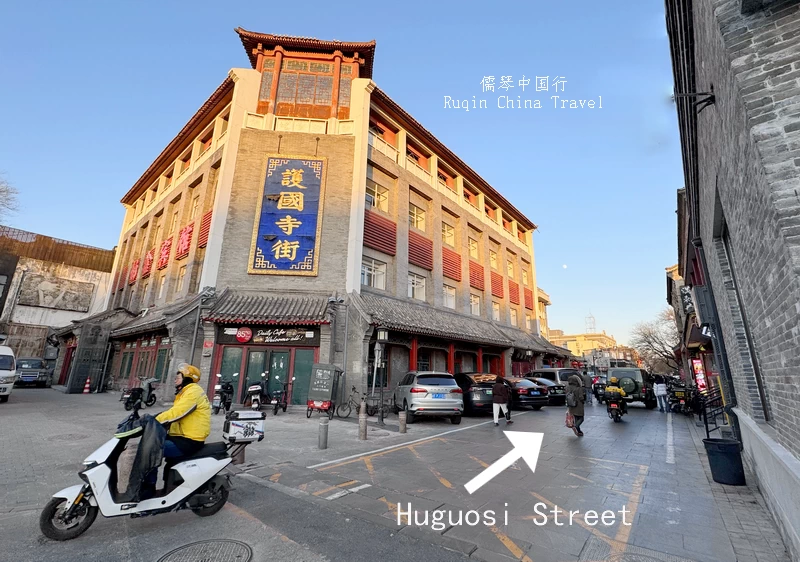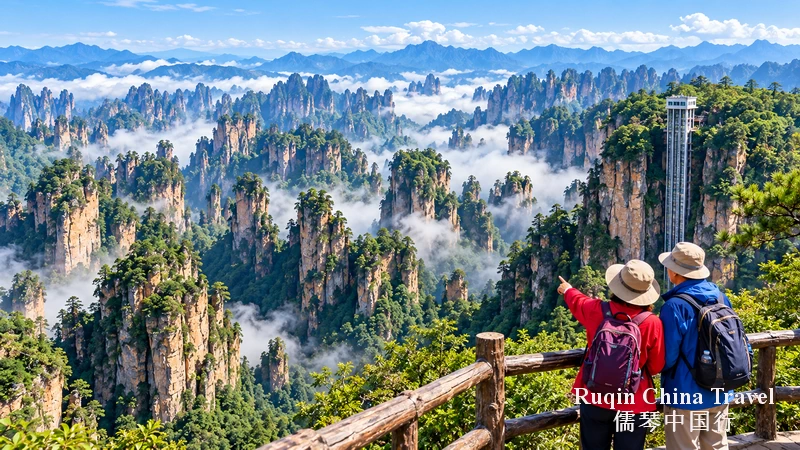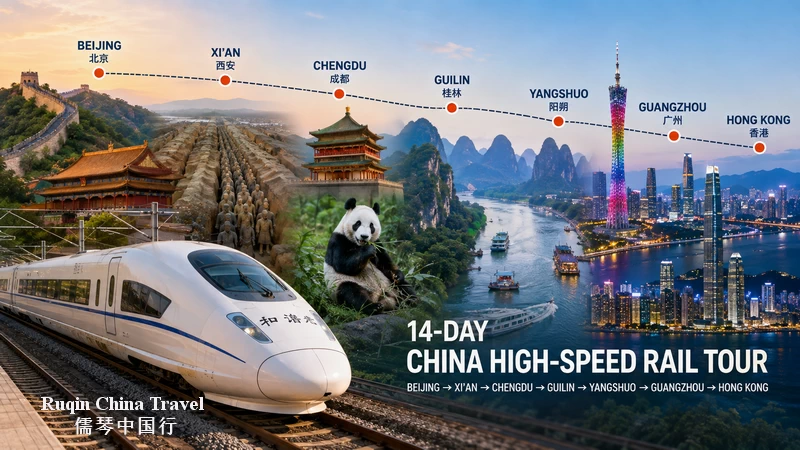

Itinerary designed by Ruqin
Last updated: August 22, 2026
Overview
China’s high-speed rail network makes long-distance travel much easier than many first-time visitors expect. Major cities connect through modern stations, frequent trains and comfortable carriages.
For this flagship rail itinerary, I would travel from Beijing south to Hong Kong. Along the way, you experience imperial Beijing, ancient Xi’an, Sichuan culture in Chengdu, Guilin’s karst scenery and the southern energy of Guangzhou.
The route also gives the tour a strong geographical flow. You begin in northern China, cross the central plains and Sichuan Basin, then continue through Guangxi toward the Pearl River Delta.
Most importantly, there are no domestic flights.
The trains are not simply transportation between attractions. They become part of the journey.
Route
Beijing → Xi’an → Chengdu → Guilin → Yangshuo → Guangzhou → Hong Kong
Duration: 14 days / 13 nights
Best for: First-time visitors, independent travelers and train enthusiasts
Travel style: High-speed rail + major cities + culture + landscapes
Pace: Moderate
Main transport: High-speed trains throughout
Current first-time China itineraries often rely heavily on the Beijing–Xi’an–Shanghai corridor. However, longer routes increasingly use the rail network to connect central and southern China as well.
At-a-Glance Route
| Day | Route | Main Experience | Overnight |
|---|---|---|---|
| Day 1 | Beijing | Arrival & easy neighborhood walk | Beijing |
| Day 2 | Beijing | Tiananmen, Forbidden City & Jingshan | Beijing |
| Day 3 | Beijing | Mutianyu Great Wall | Beijing |
| Day 4 | Beijing → Xi’an | High-speed train + City Wall | Xi’an |
| Day 5 | Xi’an | Terracotta Warriors & Old City | Xi’an |
| Day 6 | Xi’an → Chengdu | High-speed train + Chengdu evening | Chengdu |
| Day 7 | Chengdu | Pandas, People’s Park & Sichuan food | Chengdu |
| Day 8 | Chengdu → Guilin | Long high-speed rail journey | Guilin |
| Day 9 | Guilin → Yangshuo | Li River Cruise | Yangshuo |
| Day 10 | Yangshuo | Yulong River & countryside | Yangshuo |
| Day 11 | Yangshuo/Guilin → Guangzhou | High-speed train | Guangzhou |
| Day 12 | Guangzhou | Old Guangzhou & Pearl River | Guangzhou |
| Day 13 | Guangzhou → Hong Kong | High-speed train + Victoria Harbour | Hong Kong |
| Day 14 | Hong Kong | Free time & departure | — |
Detailed 14-Day Itinerary
Day 1 – Arrive in Beijing
Arrival and Hotel Check-in
Arrive in Beijing and transfer to your hotel.
For this itinerary, stay somewhere with convenient metro access. Dongcheng, Wangfujing or another central neighborhood works well.
Do not schedule major sightseeing today.
International flights, immigration and airport transfers can easily take several hours. Instead, walk around your neighborhood and have an early dinner.
Overnight: Beijing
Day 2 – Imperial Beijing
Morning – Tiananmen Square
Start early at Tiananmen Square.

Carry your passport and allow time for security procedures. Reservation requirements can change, so check before visiting.
Continue north toward the Forbidden City.
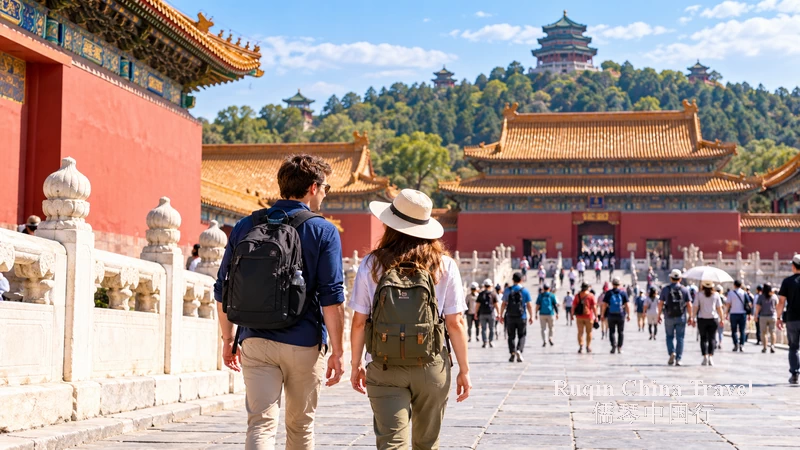
Late Morning to Afternoon – Forbidden City
Allow around three hours inside the Forbidden City.

Follow the main central axis, but occasionally step into quieter side courtyards.
Do not try to visit every hall.
The scale, courtyards and rooflines tell the story better than an exhausting checklist.
Late Afternoon – Jingshan Park
Exit through the north gate and cross toward Jingshan Park.
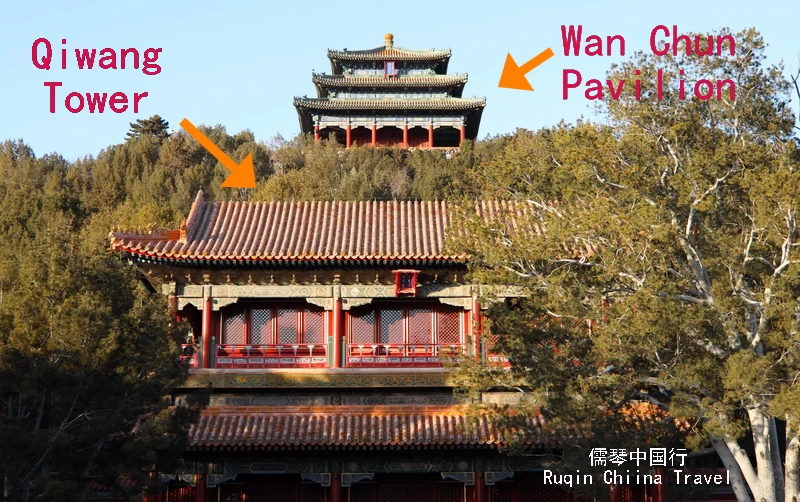
Climb to the central pavilion.
From here, the Forbidden City spreads below you in one of Beijing’s best panoramic views.
Overnight: Beijing
Day 3 – Mutianyu Great Wall
Morning – Leave Beijing
Set aside a full day for Mutianyu Great Wall.
Leave early and allow around 1½–2 hours for the road journey.
Take the cable car or chairlift if you want to conserve energy.
Midday – Walk the Great Wall
Spend several hours walking between watchtowers.
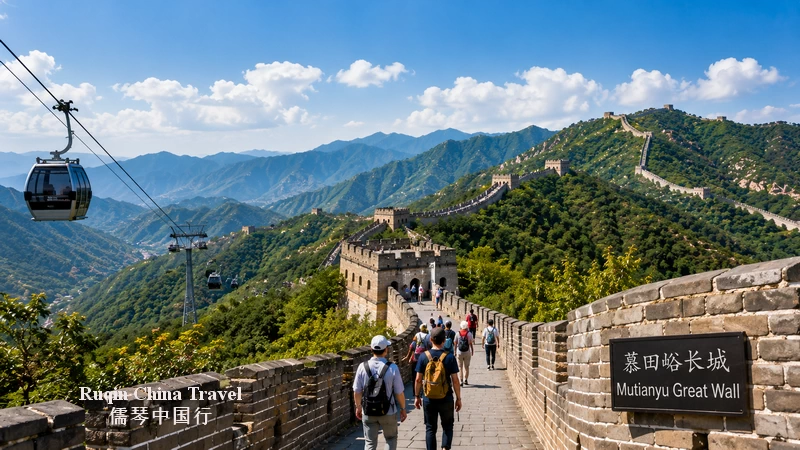
Mutianyu works especially well for first-time visitors because the scenery is impressive and visitor facilities are good.
Stop often.
The Great Wall is not something you need to “finish.”
Afternoon – Return to Beijing
Have lunch near Mutianyu and return to Beijing.
Keep the evening free.
Tomorrow your high-speed rail journey begins.
Overnight: Beijing
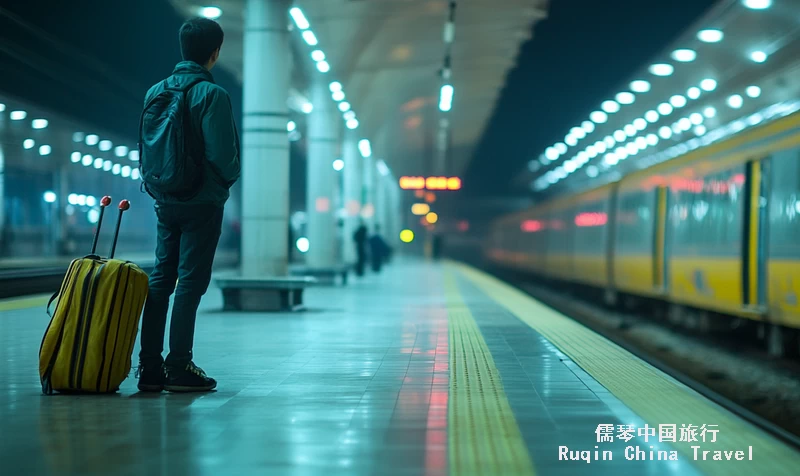
Day 4 – Beijing to Xi’an by High-Speed Train
Morning – Beijing West Railway Station
After breakfast, check out and travel to Beijing West Railway Station.
Arrive around 45–60 minutes before departure.
Keep your passport accessible.
High-Speed Train: Beijing → Xi’an
Take a G-series high-speed train to Xi’an North Railway Station.
The fastest trains currently cover the roughly 1,200-kilometer route in about 4 hours 10 minutes, with many daily departures.
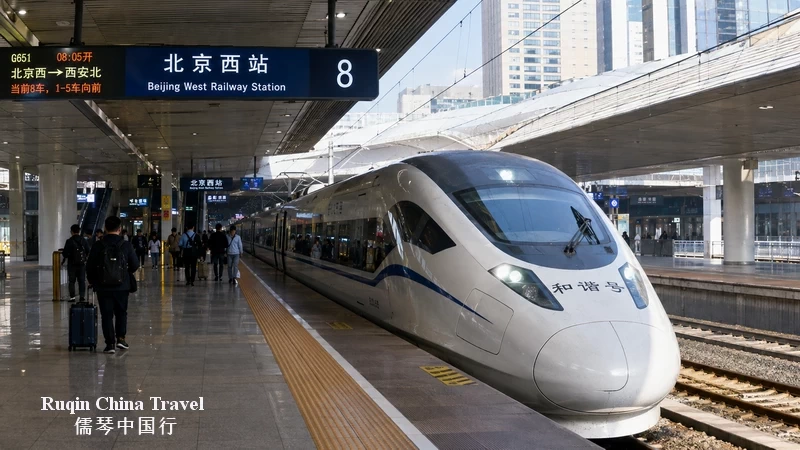
High-Speed Train: Beijing → Xi’an
This is exactly the kind of journey that shows why high-speed rail works so well in China.
You leave Beijing after breakfast and reach Xi’an comfortably in the afternoon without airport check-in or baggage collection.
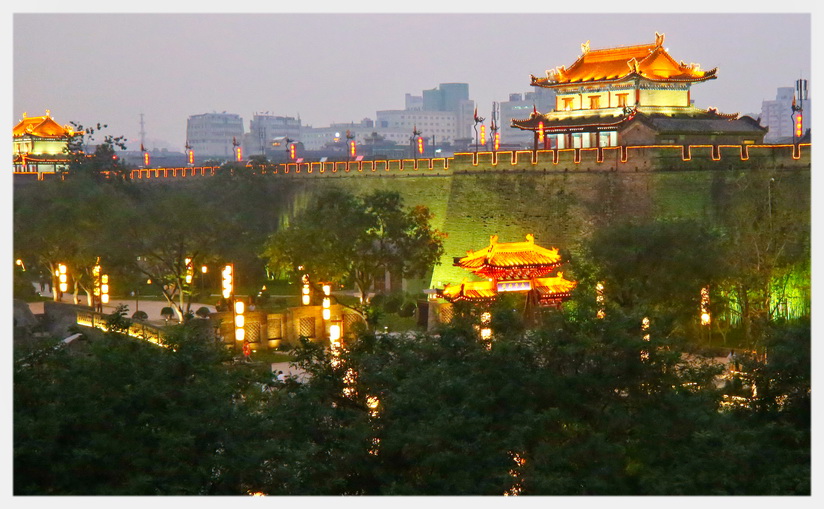
Late Afternoon – Xi’an City Wall
After checking into your hotel, head toward Xi’an Ancient City Wall.
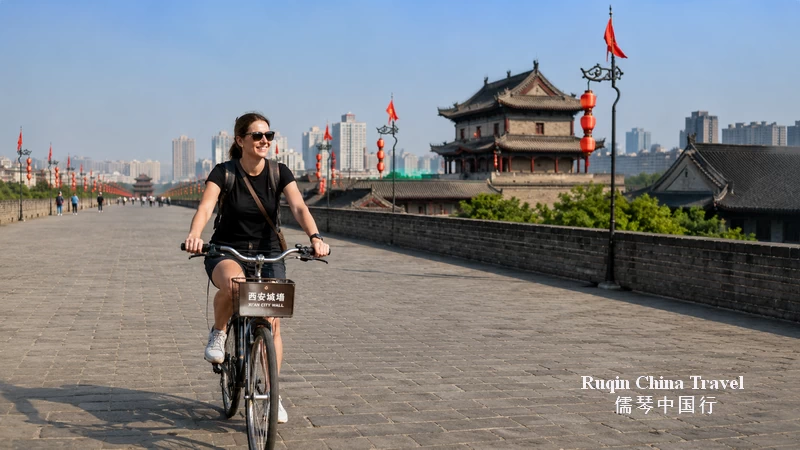
Biking on th ancient city wall in Xi’an
Walk a section or rent a bicycle if current rules allow.
Late afternoon light works particularly well.
Evening – Xi’an Food
Try roujiamo, liangpi or biangbiang noodles.
Keep the evening relaxed.
Overnight: Xi’an
Day 5 – Terracotta Warriors & Old Xi’an
Morning – Terracotta Warriors
Leave early for the Terracotta Warriors.

Allow around three hours at the museum.
Pit No. 1 creates the strongest first impression. However, take time with the smaller pits as well.
Afternoon – Return to Xi’an
After lunch, return to central Xi’an.
Rest before exploring the old city.
Evening – Muslim Quarter
Walk through the Muslim Quarter and surrounding lanes.

Try local snacks, but do not stop only on the busiest tourist street.
The quieter lanes often feel more interesting.
Overnight: Xi’an
Day 6 – Xi’an to Chengdu by High-Speed Train
Morning – Big Wild Goose Pagoda
Spend the morning around the Big Wild Goose Pagoda.

Its connection with Xuanzang and Buddhist travel adds another layer to Xi’an’s Silk Road history.
Then collect your luggage and head for Xi’an North.
Afternoon – High-Speed Train to Chengdu
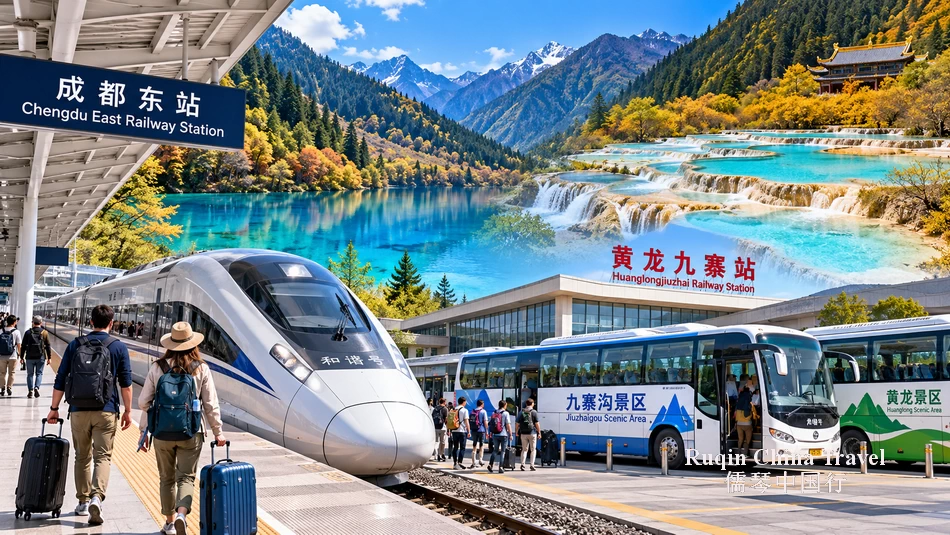
Take a direct train from Xi’an North to Chengdu East.
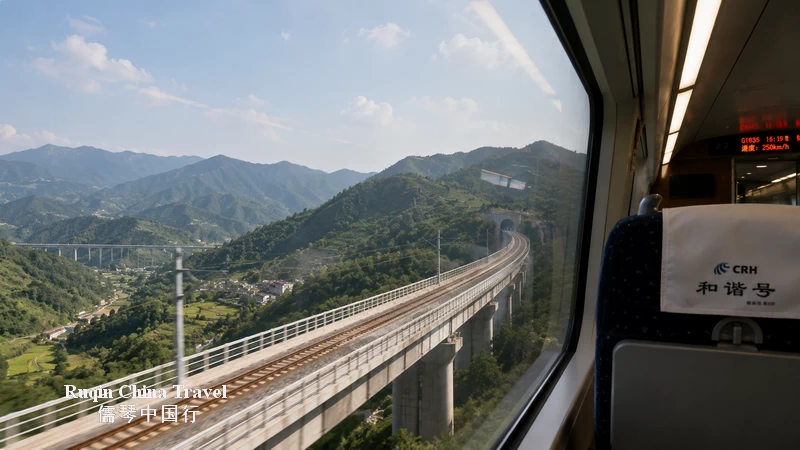
Afternoon – High-Speed Train to Chengdu
Current direct services generally take about four hours, with several departures through the day.
This journey is particularly interesting because the railway crosses mountainous terrain between Shaanxi and Sichuan.
You arrive directly at Chengdu East, connected with the city’s metro network.
Evening – First Sichuan Dinner
Check into your hotel.
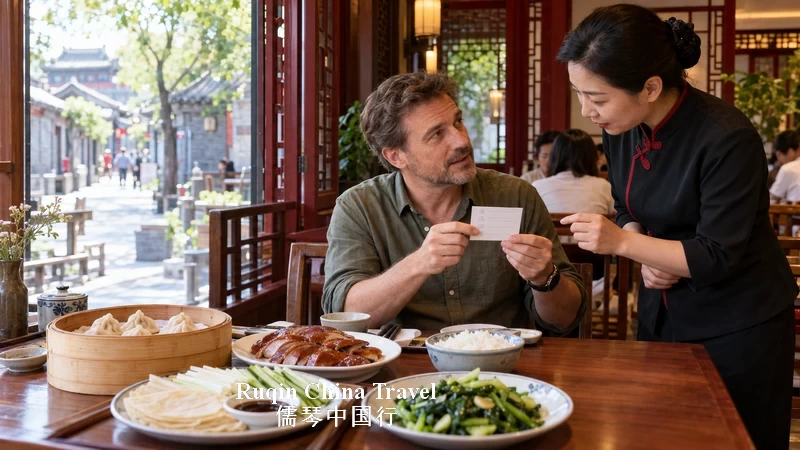
Then try a relaxed Sichuan dinner.
Start with dishes such as mapo tofu, kung pao chicken and seasonal vegetables before testing your chili tolerance.
Overnight: Chengdu
Day 7 – Pandas & Chengdu Life
Early Morning – Chengdu Panda Base
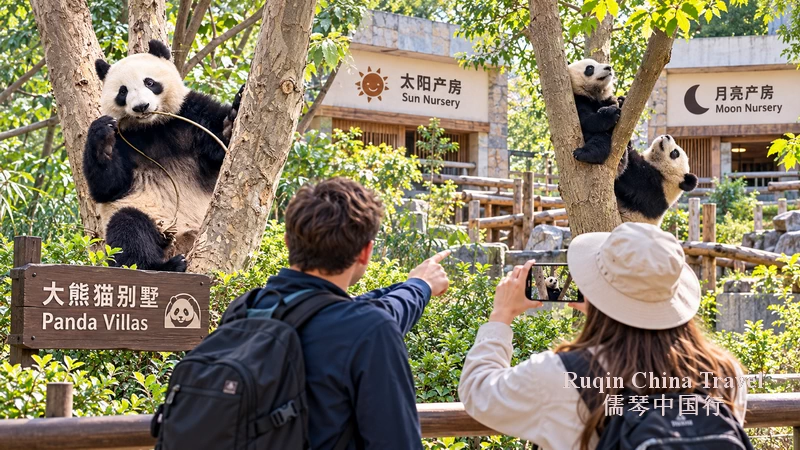
Visit the Chengdu Research Base of Giant Panda Breeding early.
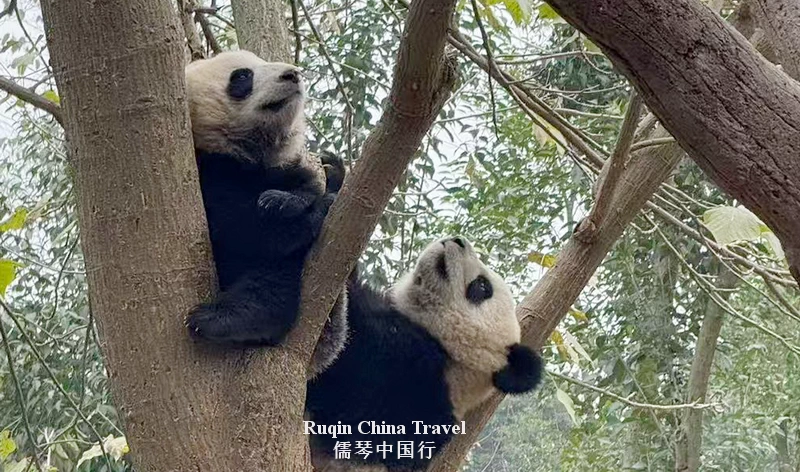
Pandas tend to be more active during the cooler morning hours.
Allow several hours because the grounds are extensive.
Afternoon – People’s Park
Return to central Chengdu and visit People’s Park.
Sit in a traditional teahouse.

Sit in a traditional teahouse in People’s Park in Chengdu
This slower afternoon is intentional.
One advantage of this itinerary is that train travel does not require every transfer day to begin or end at an airport outside the city.
Evening – Chengdu Food
Try dan dan noodles, Zhong dumplings or another Sichuan meal.
Overnight: Chengdu
Day 8 – Chengdu to Guilin: The Long Rail Day
This is the longest railway journey of the tour.
I would make it a real train day rather than pretending it is also a sightseeing day.
Morning – Chengdu East Railway Station
Have breakfast and travel to Chengdu East Railway Station.
Buy some snacks and water before boarding.
High-Speed Train: Chengdu → Guilin
Take a direct train toward Guilin West or another Guilin station shown on your ticket.
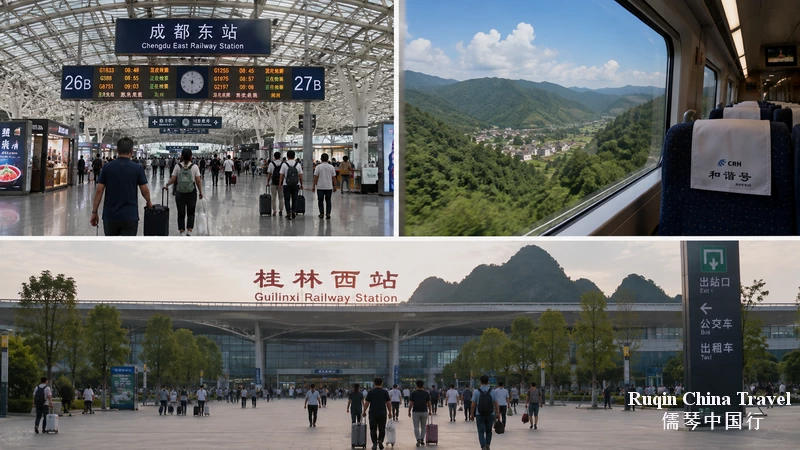
High-Speed Train: Chengdu → Guilin
Current direct services generally take around 6–7 hours, with the fastest journeys close to six hours.
This is a good day to simply watch China pass outside.
Urban Sichuan gradually gives way to hills, valleys and the greener landscapes of southern China.
Late Afternoon – Guilin
Arrive in Guilin and transfer to your hotel.
Take a walk around the lakes if you still have energy.
Otherwise, eat nearby and rest.
Overnight: Guilin
Day 9 – Guilin to Yangshuo by Li River
Today you briefly leave the railway behind.
Morning – Li River Cruise
Transfer to the cruise pier and board a Li River cruise toward Yangshuo.
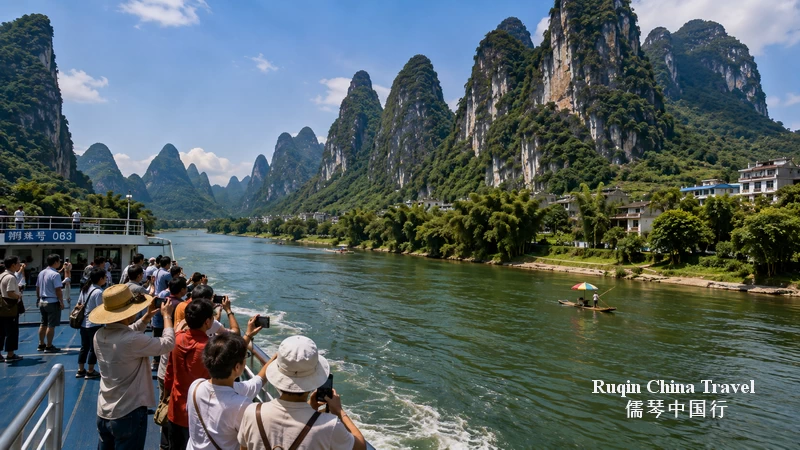
Morning – Li River Cruise
Karst peaks, villages and bamboo-lined banks appear throughout the journey.
This slower boat journey provides a useful contrast after yesterday’s six-hour high-speed rail run.
Afternoon – Yangshuo
Arrive in Yangshuo and check into your hotel.
Later, take an easy walk around town or the riverside.
Evening – West Street
Have dinner and walk through West Street.
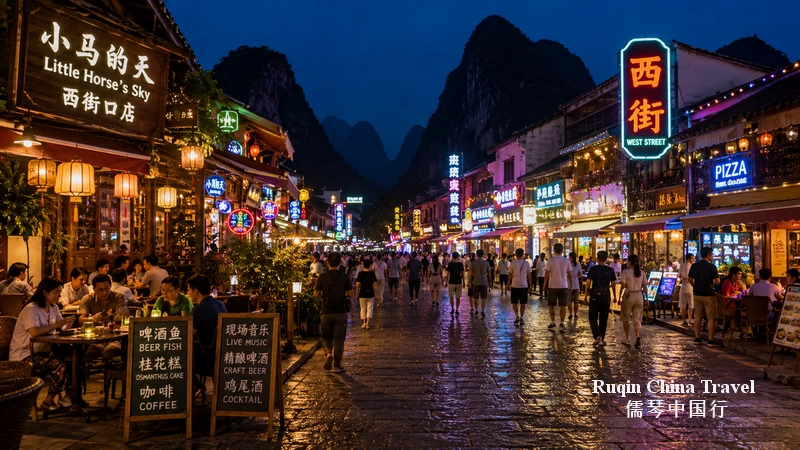
Evening – West Street
The central area becomes lively at night with restaurants, cafés and small shops.
Overnight: Yangshuo
Day 10 – Yangshuo Countryside
Morning – Yulong River
Spend the morning around the Yulong River. Bamboo rafting at Yulong River.
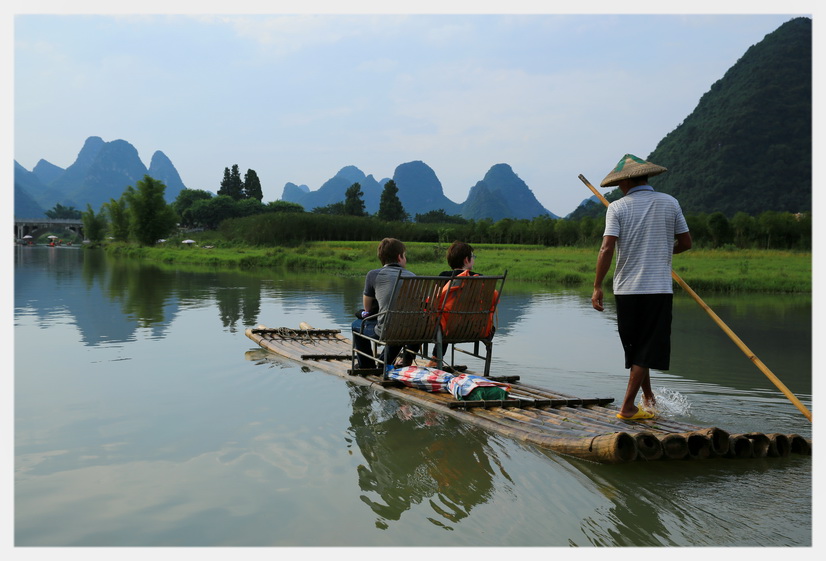
Bamboo rafting at Yulong River
Walk, cycle or take an e-bike through the surrounding countryside.
Rice fields, villages and karst mountains give the day a completely different pace from Beijing or Chengdu.
Afternoon – Free Time
Leave part of the afternoon open.
The point of Yangshuo is not to fill every hour.
Sit beside the river, explore a village or simply slow down.
Overnight: Yangshuo
Day 11 – Yangshuo/Guilin to Guangzhou
Morning – Transfer to the Railway
Depending on the train you choose, depart from Yangshuo Railway Station, Guilin West or Guilin North.
Check the station carefully before travel.
Do not assume all Guangzhou-bound trains leave from the same place.
High-Speed Train to Guangzhou
Direct high-speed services between Guilin and Guangzhou South generally take around 2–3 hours, with the fastest current journeys just over two hours.
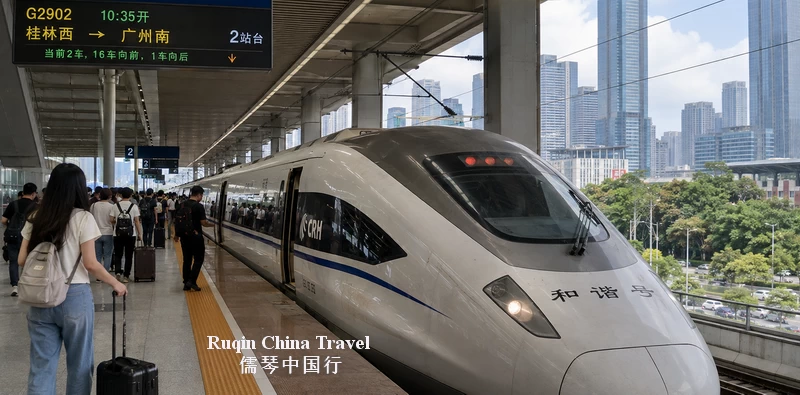
High-Speed Train to Guangzhou
This is another excellent rail leg.
You leave Guangxi’s karst landscape and arrive in one of southern China’s largest metropolitan areas before lunch or mid-afternoon.
Afternoon – Shamian Island
After checking in, explore Shamian Island.
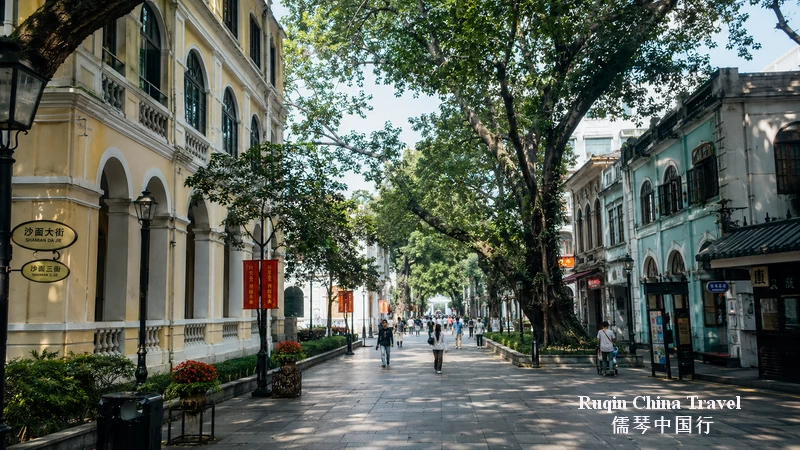
Afternoon – Shamian Island
Its tree-lined streets and historic buildings provide an easy first afternoon in Guangzhou.
Overnight: Guangzhou
Day 12 – Old & Modern Guangzhou
Morning – Old Guangzhou
Explore the older neighborhoods around Liwan.
Look for arcaded streets, local restaurants, herbal shops and traditional neighborhoods.
Then stop for dim sum or Cantonese morning tea.
Afternoon – Zhujiang New Town
Travel toward Zhujiang New Town.
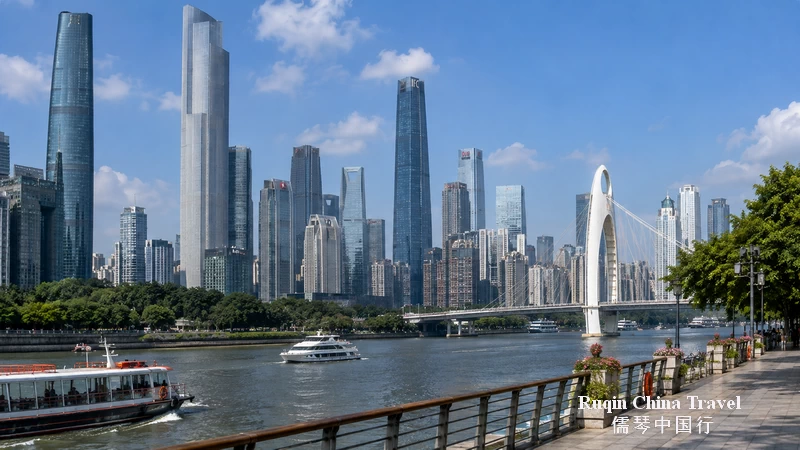
Afternoon – Zhujiang New Town
The contrast is immediate.
Modern towers rise beside the Pearl River, showing just how quickly the visual character of China has changed during your rail journey.
Evening – Pearl River
Take a walk or optional Pearl River night cruise.
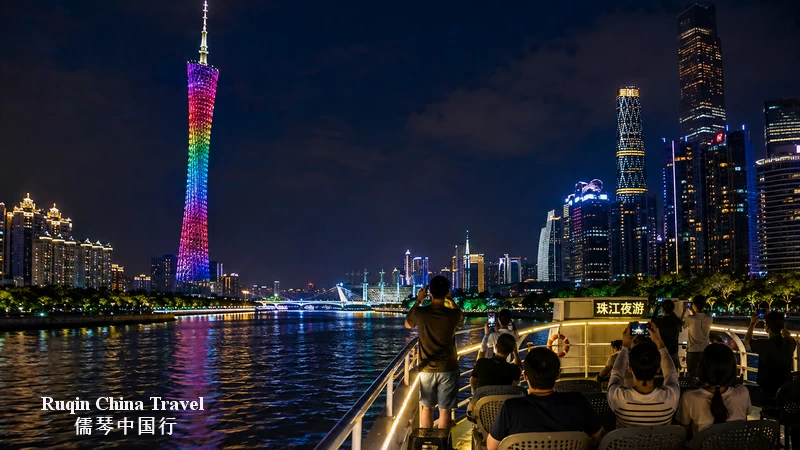
Take an optional Pearl River night cruise
Canton Tower and the surrounding skyline look especially striking after dark.
Overnight: Guangzhou
Day 13 – Guangzhou to Hong Kong by High-Speed Train
Morning – Guangzhou South Railway Station
After breakfast, check out and travel to Guangzhou South Railway Station.
Because this is a cross-boundary journey, allow more time than you would for an ordinary domestic train.
Keep your passport and any required travel documents ready.
High-Speed Train: Guangzhou → Hong Kong
Take the direct high-speed train to Hong Kong West Kowloon Station.
Current direct journeys from Guangzhou South can take roughly 50–60 minutes.
In less than an hour, you move from Guangzhou into the center of Kowloon.
This short final train journey makes a satisfying conclusion to the rail theme.
Afternoon – Victoria Harbour
Check into your hotel, then walk toward Victoria Harbour.
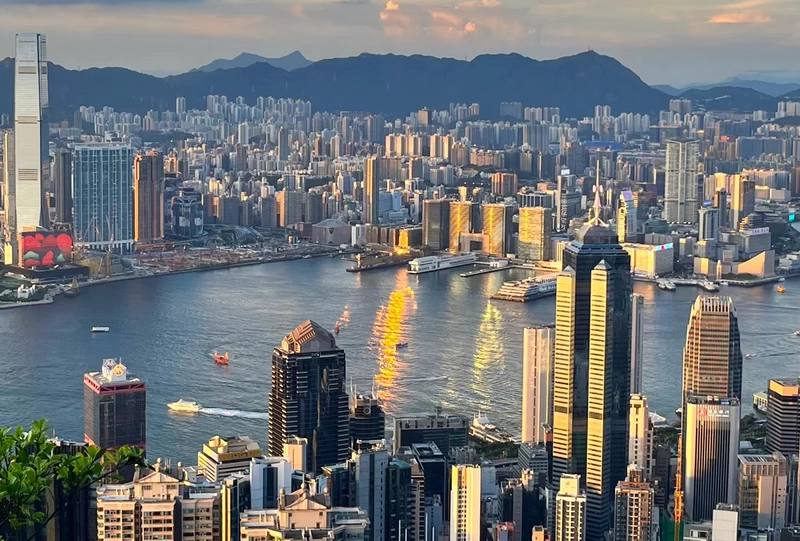
From Tsim Sha Tsui, look across toward Hong Kong Island.
Evening – Harbour Lights
Stay through dusk.
After nearly two weeks traveling south by rail, the illuminated harbour feels like a natural finish.
Overnight: Hong Kong
Day 14 – Hong Kong & Departure
Keep the final morning flexible.
Depending on your flight time, explore Kowloon, take the Star Ferry, ride the Peak Tram or simply have breakfast nearby.
Then transfer to Hong Kong International Airport.
Your cross-China rail journey ends here.
Train Journey Summary
The value of this itinerary becomes much clearer when you see the railway legs together.
| Route | Main Stations | Typical Current Journey |
|---|---|---|
| Beijing → Xi’an | Beijing West → Xi’an North | About 4–6 hrs |
| Xi’an → Chengdu | Xi’an North → Chengdu East | About 4 hrs |
| Chengdu → Guilin | Chengdu East → Guilin area | About 6–7 hrs |
| Guilin → Guangzhou | Guilin area → Guangzhou South | About 2–3 hrs |
| Guangzhou → Hong Kong | Guangzhou South → West Kowloon | About 1 hr |
These are planning ranges, not fixed schedules. Always check your actual travel date before booking.
Tickets / Transport / What to Bring
How to Book China High-Speed Train Tickets
For foreign travelers, the two most practical booking options are usually:
China Railway 12306 — the official booking system.
Trip.com — easier for some international travelers, with English support.
Train schedules and ticket availability change, so do not build your itinerary around a particular train number too early.
When Do Tickets Go on Sale?
China Railway normally releases tickets within a limited booking window rather than many months ahead.
Therefore, plan your preferred trains first, then purchase when booking opens.
Peak dates can sell quickly.
This is especially important around Chinese New Year, the May holiday period and National Day Golden Week.
Second Class or First Class?
For most travelers, I recommend second class.
Seats are comfortable, carriages are modern and luggage storage is practical.
First class gives you wider seats and more personal space.
On the long Chengdu → Guilin leg, first class can be worth considering if your budget allows.
Business class is excellent but usually unnecessary for a sightseeing itinerary.
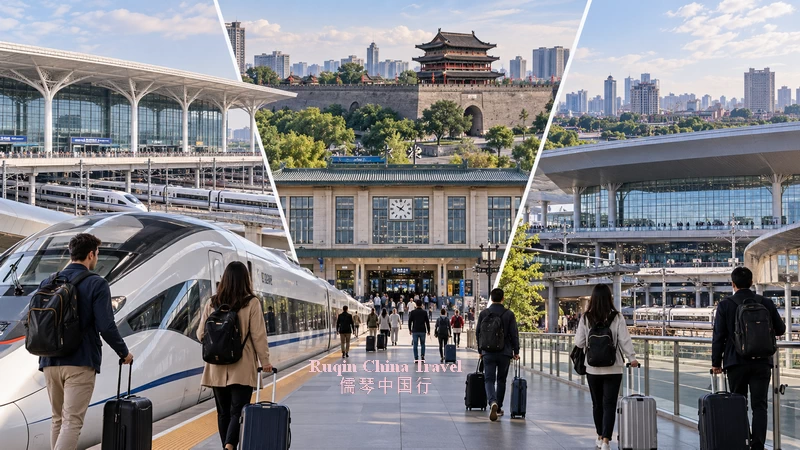
Understanding China’s Railway Stations
The biggest mistake foreign travelers make is assuming a city has only one station.
It often has several.
For example:
Beijing West is different from Beijing South.
Xi’an North is different from Xi’an Railway Station.
Chengdu East is different from Chengdu South.
Guilin may involve Guilin, Guilin North or Guilin West.
Always copy the exact station name from your ticket.
How Early Should You Arrive?
For ordinary domestic high-speed trains, I normally recommend arriving around 45–60 minutes before departure.
Large stations require security checks and walking.
During busy travel periods, allow more.
For the Guangzhou → Hong Kong cross-boundary journey, arrive earlier because immigration and boundary procedures add extra steps.
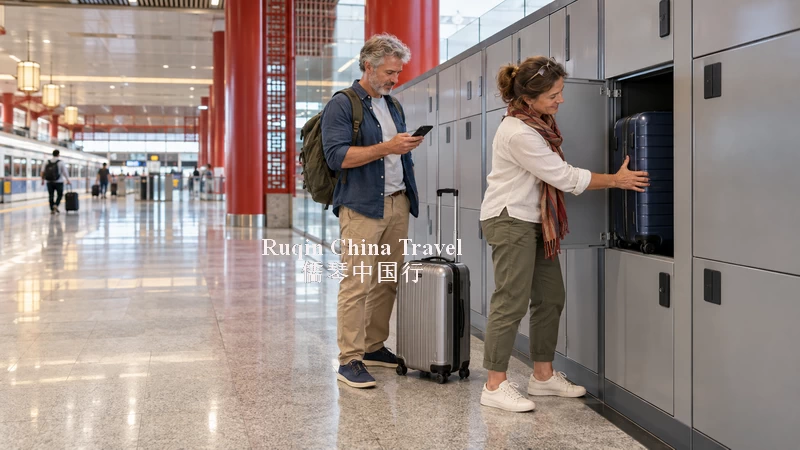
Luggage on High-Speed Trains
Travel light if possible.
You carry your own luggage onto the train and store it above your seat or in luggage areas at the ends of some carriages.
Large suitcases become tiring when you change hotels five or six times.
A medium suitcase plus a small day bag works much better than oversized luggage.
What to Bring on Long Train Days
For the Chengdu–Guilin journey, bring:
- Passport
- Phone
- Charging cable
- Power bank
- Water
- Light snacks
- Earphones
- Light jacket
- Something to read
- Essential medicines
Most high-speed trains also sell drinks and simple food.
However, I still prefer buying what I want before boarding.
Best Time for This Rail Tour
I particularly recommend April–May and September–October.
Spring and autumn bring more comfortable temperatures across Beijing, Xi’an, Chengdu and southern China.
Summer works, but expect heat and humidity in Guilin and Guangzhou.
Winter is also possible. High-speed trains operate year-round, and the rail system makes cold-weather travel much easier than long road journeys.
Why Travel China by High-Speed Train?
The biggest advantage is not simply speed.
It is door-to-door convenience.
Railway stations usually connect directly with city metro systems. You avoid long airport check-in times, baggage collection and many airport transfers.
Beijing–Xi’an is a good example. The fastest trains currently take a little over four hours, making rail highly competitive with flying once airport procedures are included.
You also see the country changing outside the window.
Northern plains become mountains. Sichuan gives way to southern hills. Later, karst landscapes disappear into the huge urban region around Guangzhou.
That gradual change is something you simply do not experience from an airplane.
Ruqin’s Trip Design Note
For a flagship Rail & Train Tour in China, I would not simply take a normal China itinerary and replace every flight with a train.
The railway itself should shape the route.
That is why I prefer Beijing → Xi’an → Chengdu → Guilin → Guangzhou → Hong Kong. Every stop brings a different side of China, and the rail distances remain realistic.
There is one deliberately long journey: Chengdu to Guilin.
I keep it because a true rail itinerary should include at least one day when you settle into your seat and actually cross a large part of the country. Current direct services make that possible in roughly six to seven hours.
The shorter legs then change the rhythm.
Beijing–Xi’an shows the speed of China’s main G-train network. Xi’an–Chengdu crosses difficult mountain country. Guilin–Guangzhou brings you rapidly from karst scenery into the Pearl River Delta.
Finally, Guangzhou–Hong Kong shows how the high-speed network now connects mainland Chinese cities directly with West Kowloon.
For me, that variety makes this a genuine China train journey, not simply a tour that happens to use trains.
Plan More of Your China Trip
This 14-day rail itinerary can stand alone or form the backbone of a longer China journey. You can add more time in Beijing at the beginning or continue exploring Hong Kong and southern China at the end.
Use the guides below to plan your high-speed train tickets, railway stations, luggage, mobile payments, hotels and local transport before you travel.